21 Sage Green Living Room Ideas, Built One Anchor at a Time
Sage green has a reputation for being the easy colour, the one that goes with everything. That is exactly how sage rooms go wrong. When the sofa, the walls, the cushions and the curtains are all sage, nothing stands out, nothing rests the eye, and the room turns into a soft green fog that feels flat by the second week.
The fix is one simple rule: let one piece lead. Pick a single anchor in each part of the room, set its tone first, and make everything around it answer to that decision. This list is built in that order, biggest anchors first, so you can stop after any idea and still have a room that looks finished on purpose.
First, the Anchor
1. Start with a sage sofa
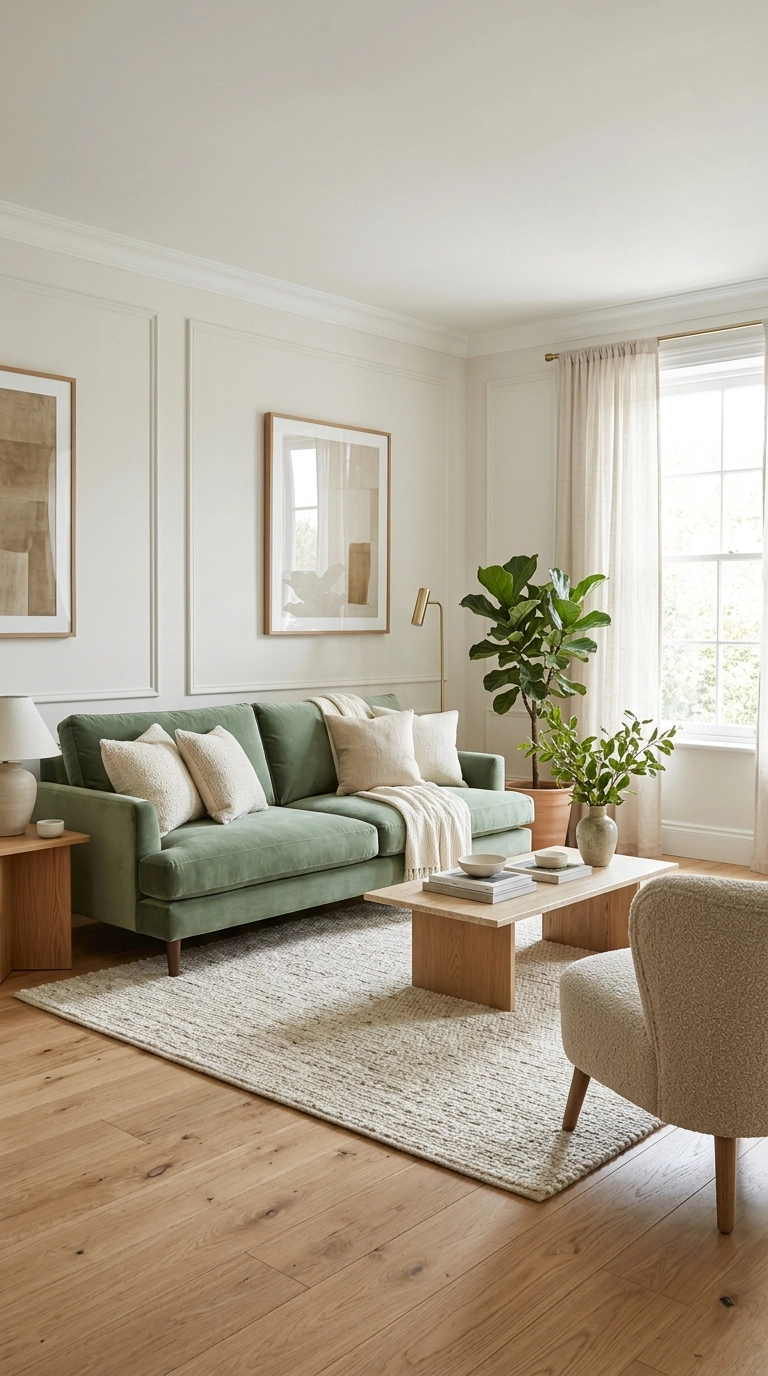
The anchor is the sofa, and everything else in this room takes its orders from it. Choose a mid tone sage, not so grey it disappears and not so yellow it turns lime in sunlight, in linen for a relaxed room or velvet if you want the evenings to feel richer. Once the fabric is home, pull your paler and deeper shades from it for paint, rugs and cushions.
Anchor rule: match every later layer to the sofa fabric in daylight, never the other way round.
Second, the Shell
2. Paint the walls two tones paler than the sofa
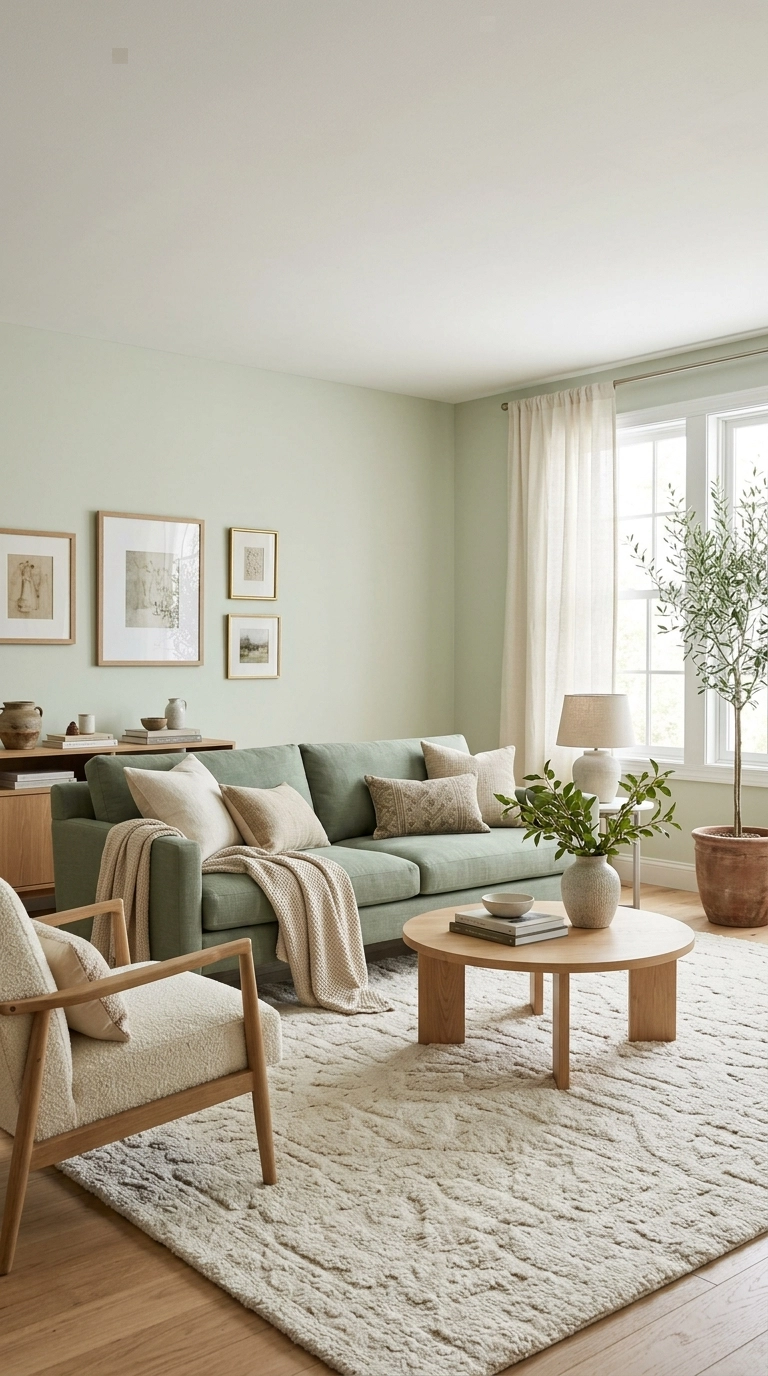
The anchor for the walls is a sage two tones paler than the sofa fabric. Paint brands arrange their colours in tonal strips, so find your sofa’s strip and move two steps lighter for the walls. The room stays calm and connected, but the sofa still reads as the deepest green in the space. Test the sample behind the sofa first, because that junction is the one your eye will compare all day.
Two tones apart keeps the two greens related without building a green box.
3. Or go deeper with one sage accent wall

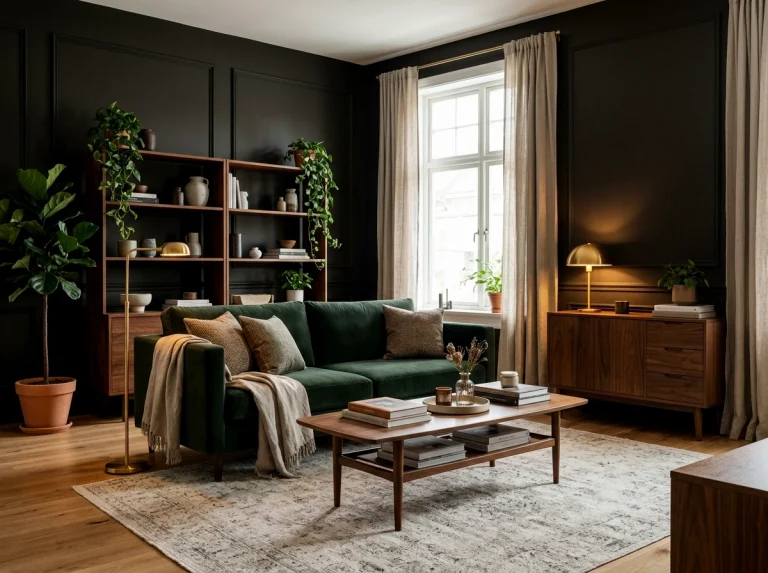
The anchor here is the wall behind the sofa, painted in the deepest sage you are brave enough to use. One strong wall gives the room a backdrop and makes pale furniture glow against it, while the other walls stay warm white so the room keeps its light. Deep green swallows lamplight, so plan one warm light source in front of this wall from the start.
Depth check: if the wall looks black by 7pm, the colour is fine and the lighting is not, add the lamp before you blame the paint.
4. Keep the trim cream, not bright white
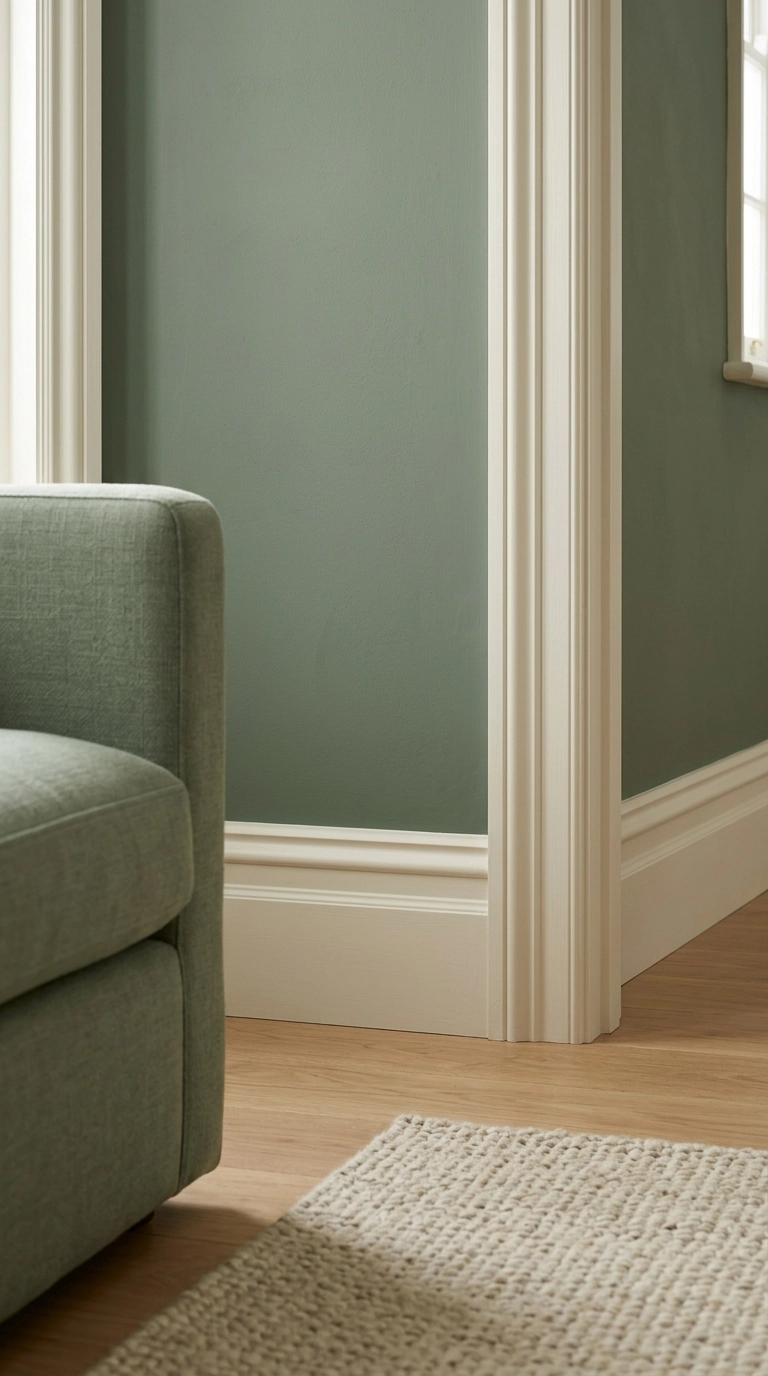
The anchor is the trim, and the rule is cream, never bright white. Stark white woodwork has a blue edge that makes sage look washed out and slightly clinical, like a showroom instead of a home. A soft cream sits in sage’s warm family, so skirting, door frames and window frames read as part of the scheme. It is also the cheapest paint job in the room: one afternoon, one tin, every door frame calmer.
Small change, big effect: cream trim is what makes pale sage walls look chosen rather than accidental.
5. Hang sage curtains high and wide
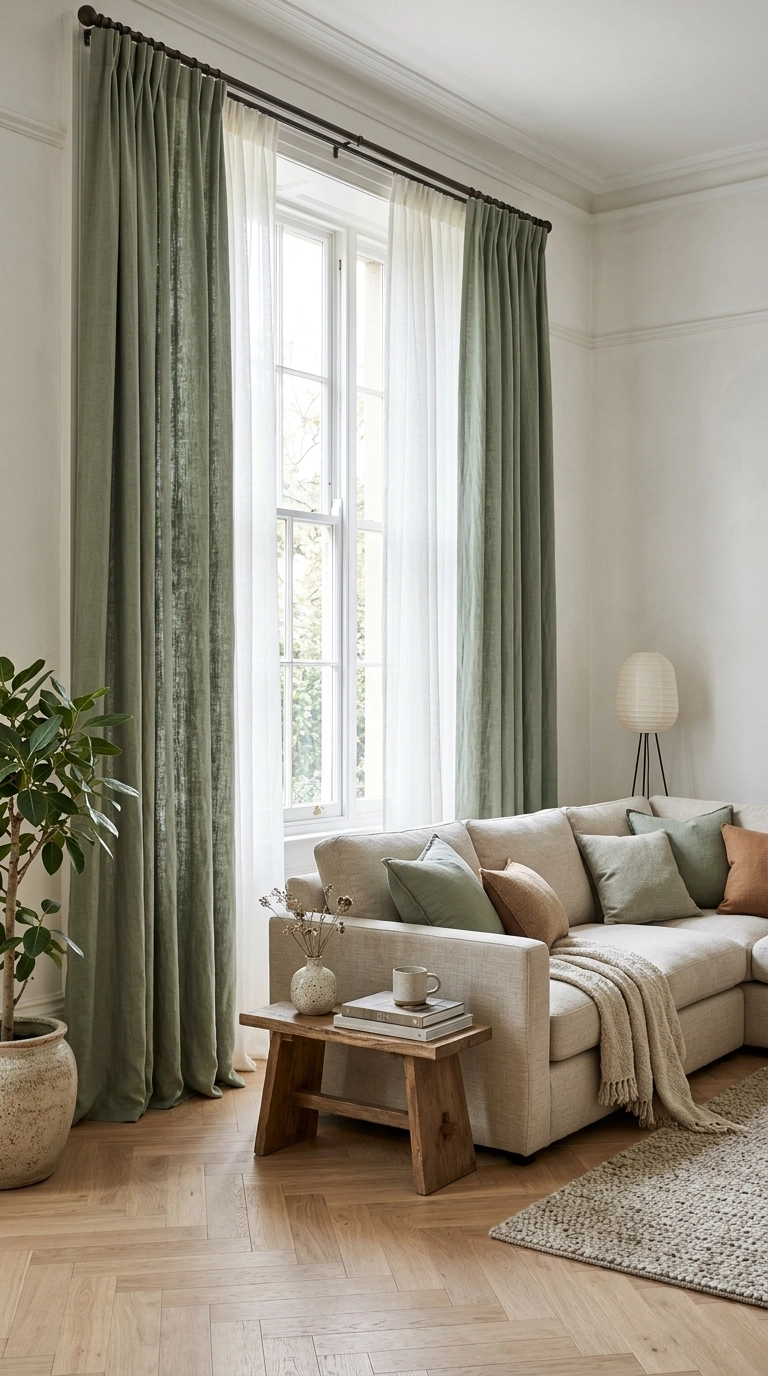
The anchor at the window is a pair of sage linen curtains, hung high and wide. Mount the pole close to the ceiling and past the frame on both sides, so the fabric stacks beside the frame and the window borrows height and width it does not have. A tone close to the sofa ties the window wall into the scheme. The same soft green also settles beautifully against the layered neutrals in these cozy neutral bedroom ideas.
Measure first: 10 to 15 cm above the frame and 15 cm wider each side creates the effect.
Third, the Ground
6. Lay a cream rug with a sage thread running through it
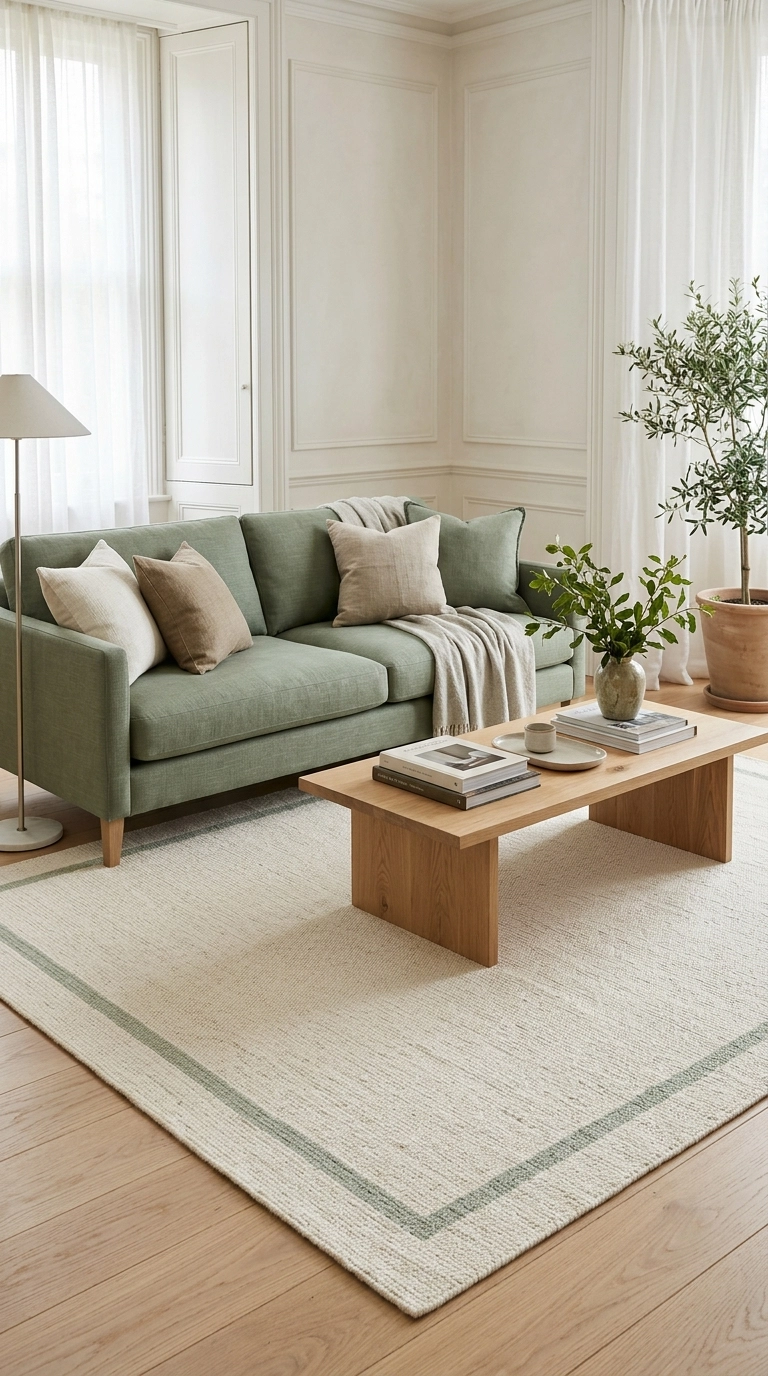
The anchor underfoot is a cream rug with sage running through it, in a border, a stripe or a quiet pattern thread. The floor stays light, which a sage scheme needs, while the green under your feet connects the sofa to the rest of the room. Cotton or a low wool pile keeps it practical in a room that gets used daily.
Size guide: the rug should reach under the front legs of every seat around it, or the group will look like it is floating apart.
7. Layer a sage patterned rug over natural jute
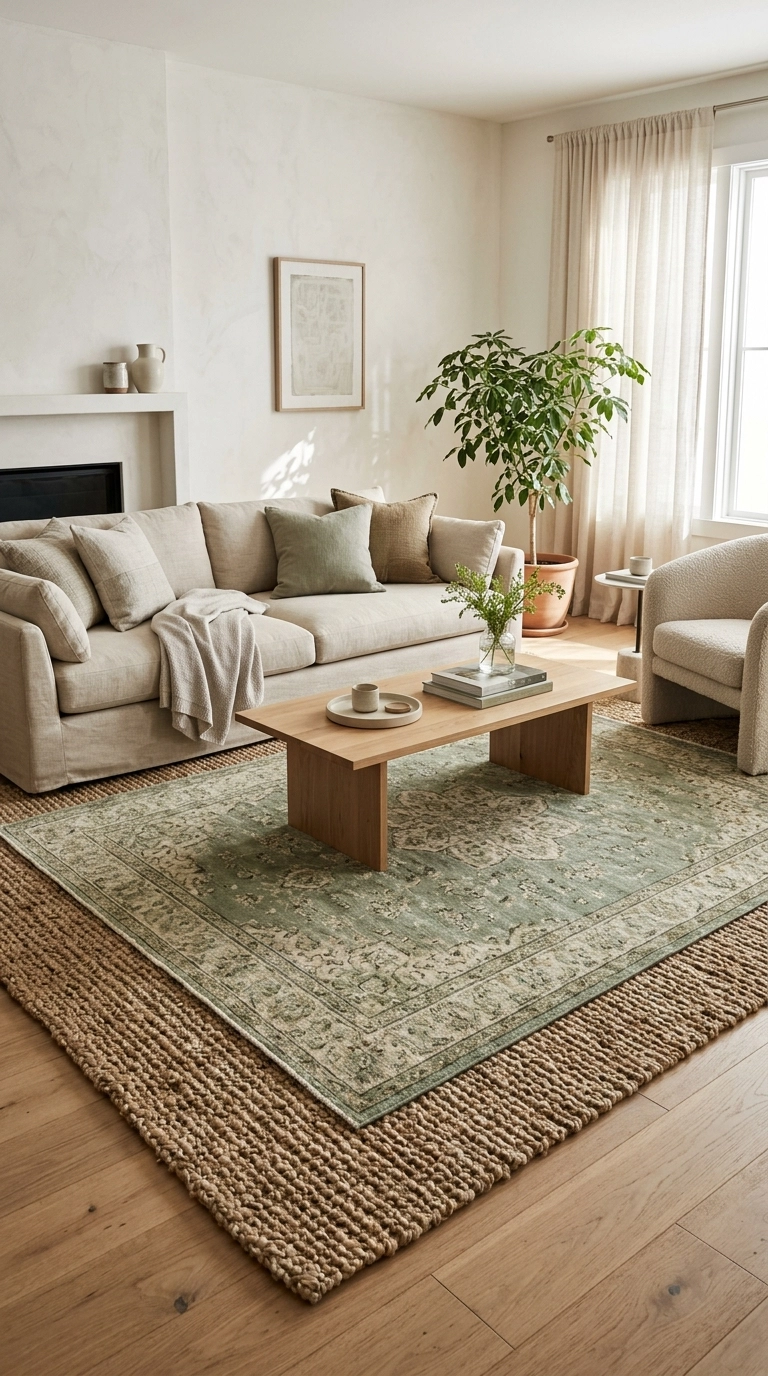
The anchor is a pair of rugs working as one: a large natural jute base with a smaller sage patterned rug layered on top. The jute brings texture and covers ground cheaply, and the patterned layer carries the colour and the design where eyes actually land. This is also the renter friendly version of a statement floor, because both layers roll up and leave with you.
Budget trick: a big plain base plus a small patterned top usually costs half of one large patterned rug.
What pairs with sage, at a glance
| Anchor | Best partner | Keep away |
|---|---|---|
| The sofa | Warm oak and brass | Grey washed wood |
| The walls | Cream trim | Stark blue white paint |
| The rug | Natural jute underneath | Cold grey carpet tiles |
| The cushions | One clay or terracotta tone | A fourth colour |
| The lamps and mirror | Brass frames and bases | Chrome and silver finishes |
Fourth, the Supporting Furniture
8. Bring in a warm oak coffee table
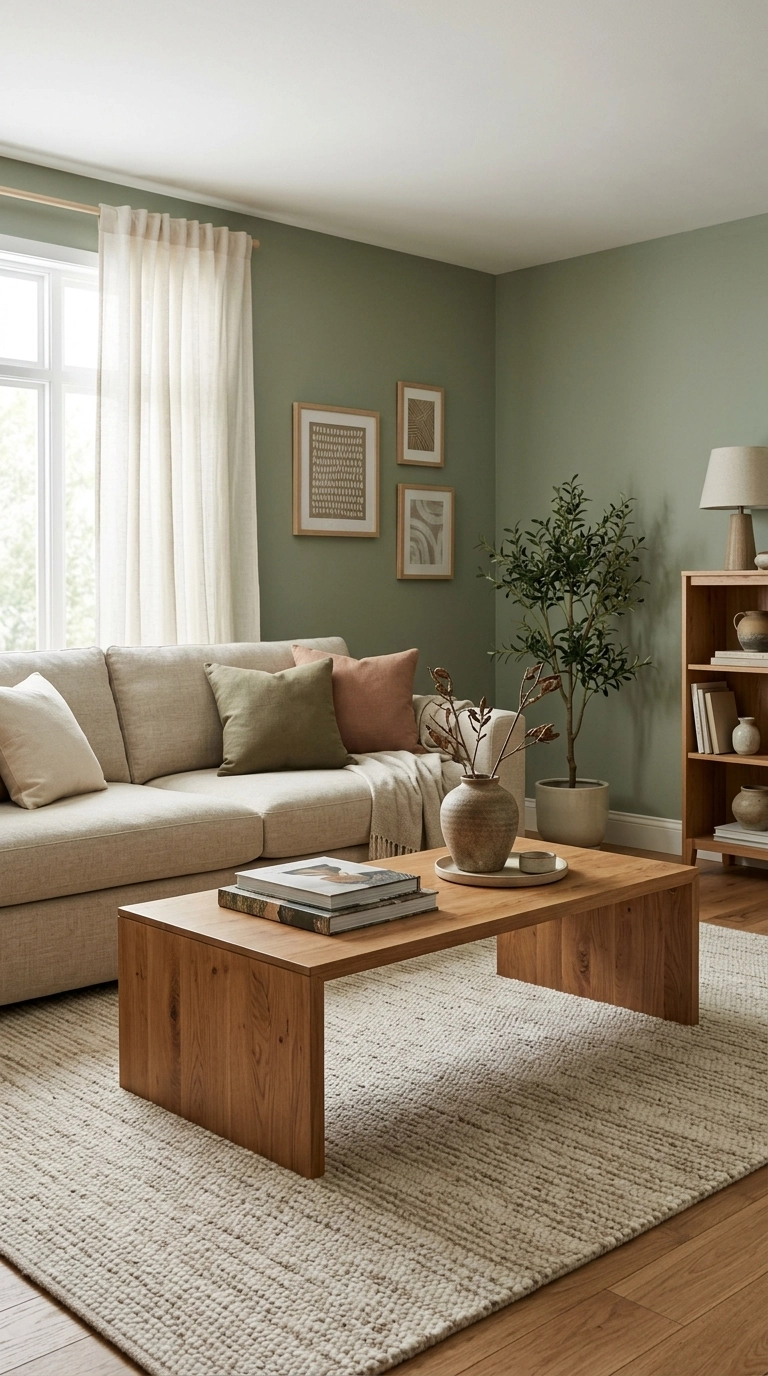
The anchor at the centre of the room is a warm oak coffee table. Sage sits on the cool side of green, so it needs wood with a golden undertone somewhere in the middle of the seating group to bounce off. Oak does that without shouting, and its grain gives a calm scheme some honest texture. Keep the top mostly clear so the wood itself does the work.
Pair it with: one pale stone tray to hold the remotes and a candle.
9. Add a sage armchair that does not match the sofa exactly
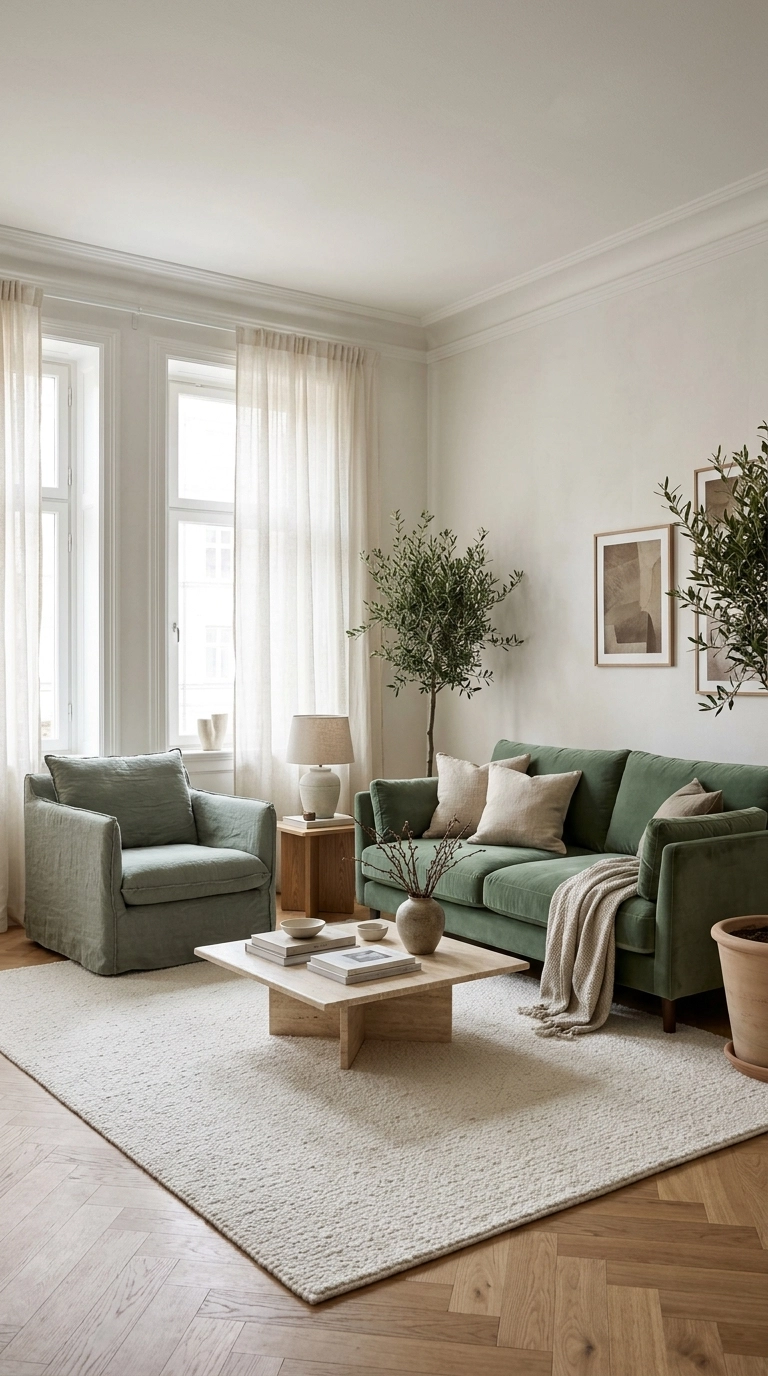
The anchor is a second seat, an armchair in a sage that relates to the sofa without matching it. Go a shade deeper, a touch dustier, or change the fabric entirely, linen against velvet being the easiest contrast to get right. Two identical greens side by side look like a furniture showroom; two cousins look collected over time. Angle it toward the sofa so the pair reads as a conversation, not a queue.
Pair it with: one cream cushion, so the two greens have a neutral resting between them.
10. Use a sage ottoman as the flexible piece
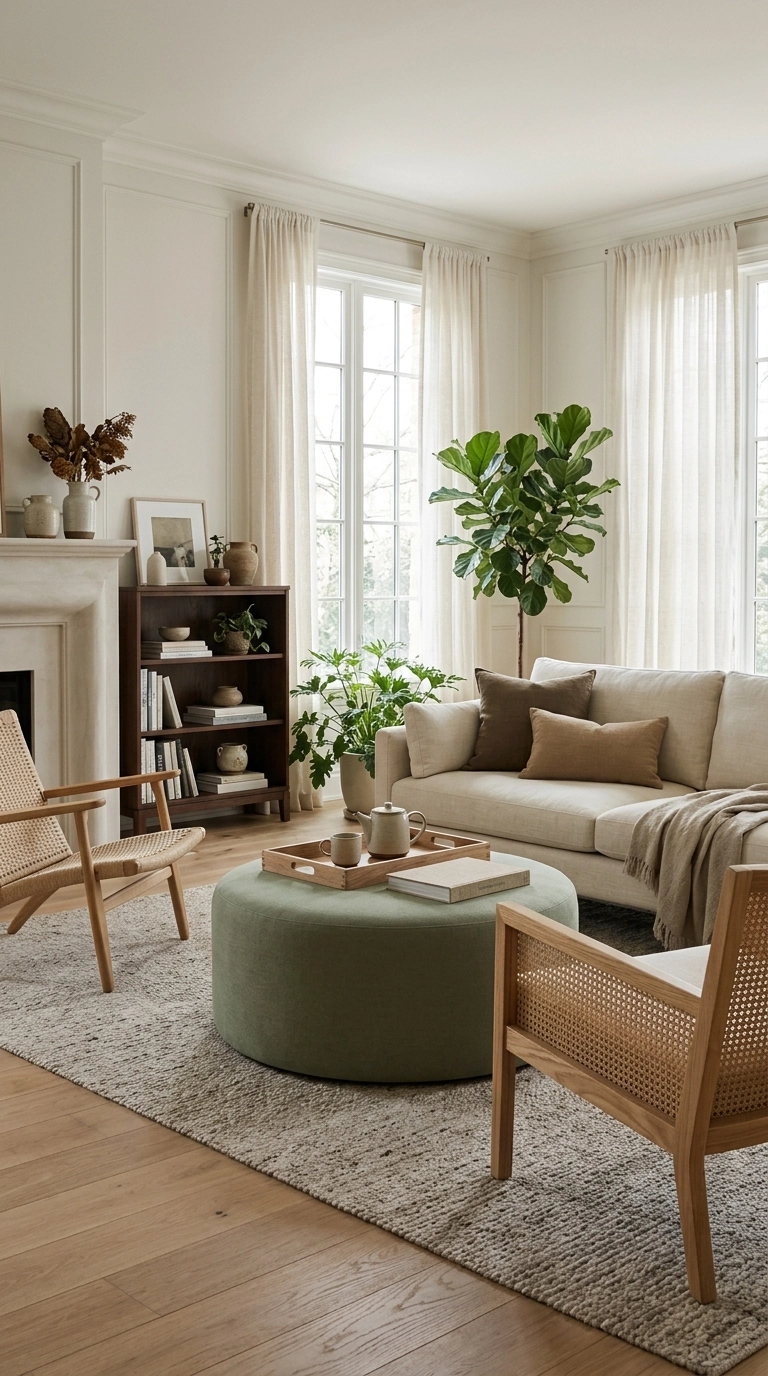
The anchor is a sage ottoman sitting in the middle of the room, doing three jobs at once. It repeats the anchor colour where schemes often go quiet, offers a spare seat when the room fills up, and gives tired feet a home every ordinary evening. Choose a firm, flat topped shape rather than a soft dome, because flat tops hold a tray steady and work as emergency coffee table space.
Pair it with: a flat oak tray that turns it into a table in ten seconds.
11. Style a stone side table with sage ceramics
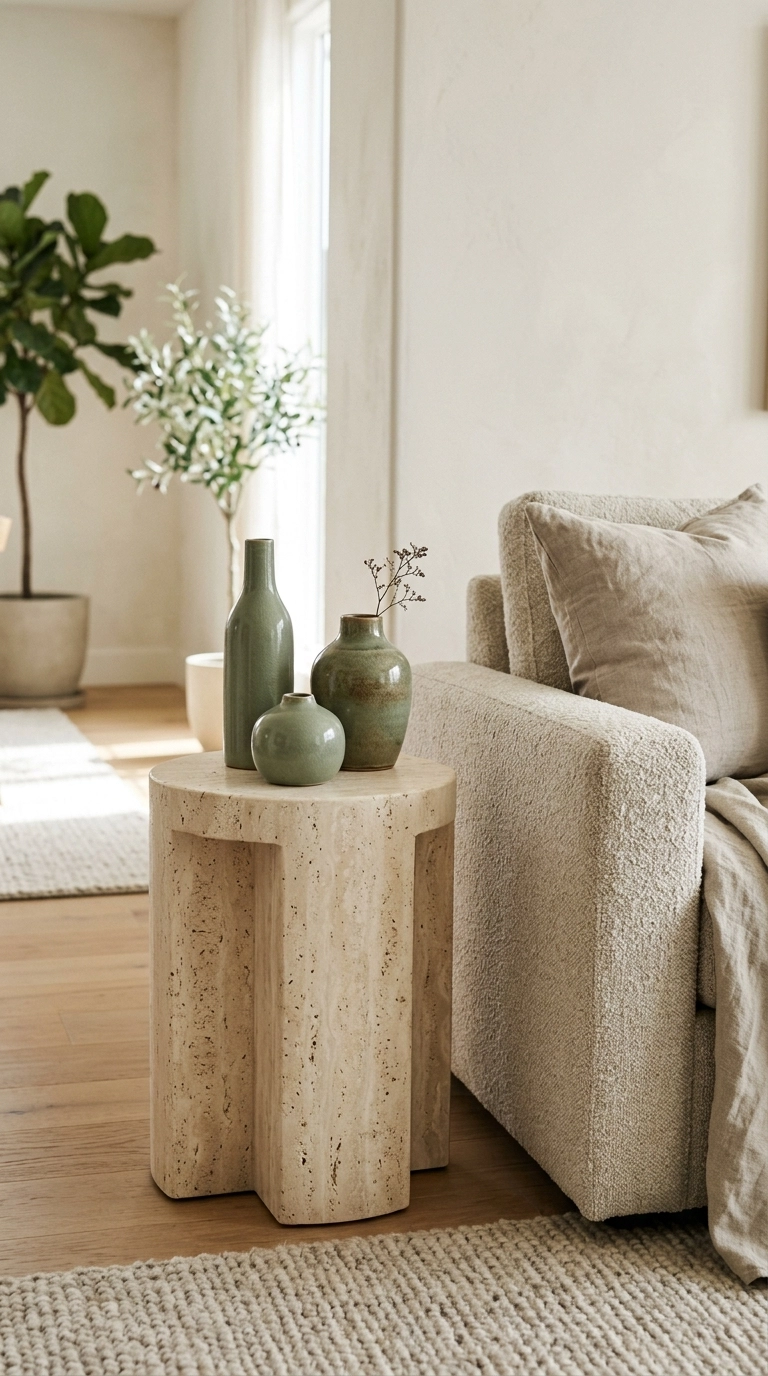
The anchor is a small stone side table, travertine or a pale marble look finish, standing beside the sofa. Stone keeps the palette light and cool to the touch, and it gives sage ceramics a surface where they belong to the scheme instead of decorating at random. Style it with two or three glazed pieces in different heights and then stop, because side tables tip into clutter faster than any other surface in the room.
Pair it with: one small brass lamp to warm the stone once the light drops.
Fifth, the Soft Goods
12. Mix cushions in sage, cream and one clay tone
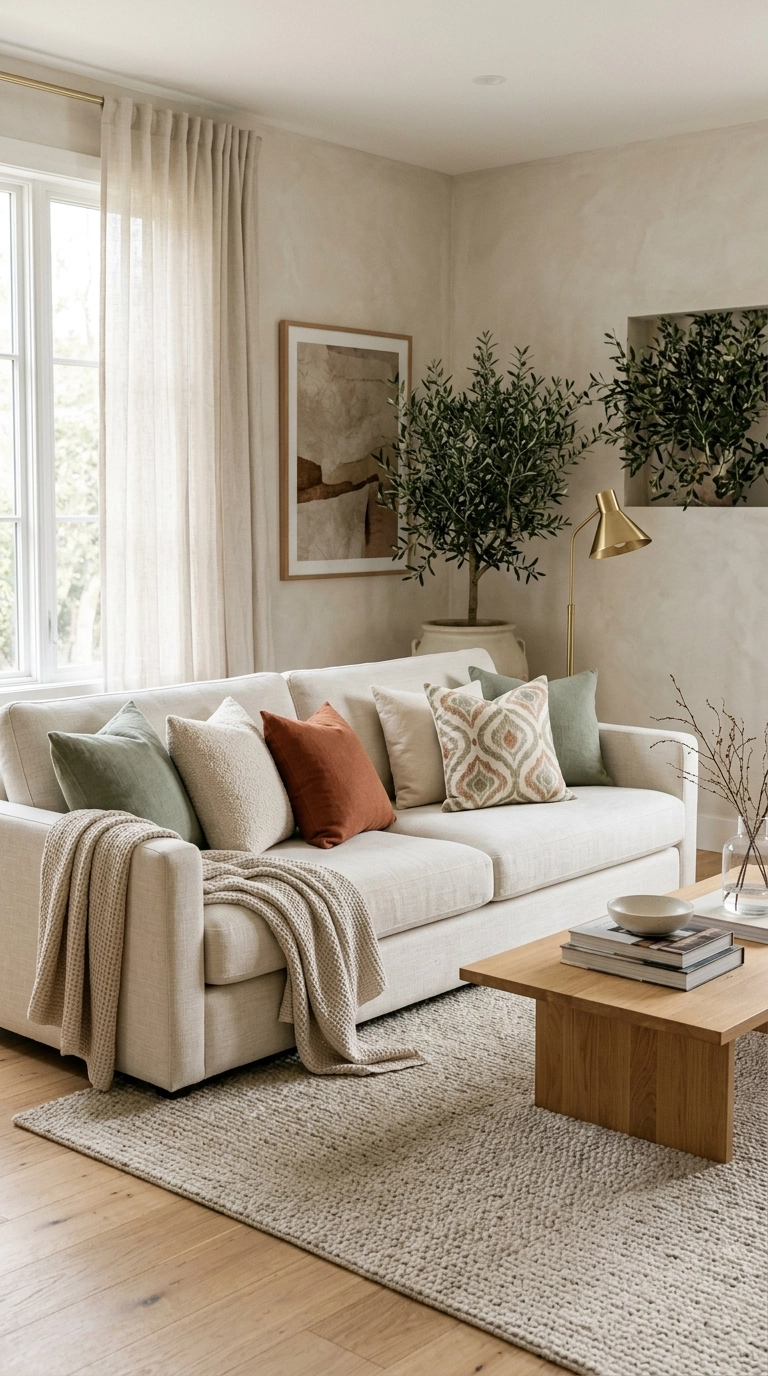
The anchor is the cushion mix, and it runs on a strict count: sage, cream and one clay tone, nothing else. Sage and cream carry the scheme quietly, while the single clay cushion stops the green cooling the room down. Vary the fabrics before you vary the colours, one velvet, one linen, one with a woven pattern, so the mix has texture doing the talking. Three cushions suit a two seater sofa and five a three seater.
Pair it with: a plain cream throw, so the clay cushion stays the loudest thing on the sofa.
13. Drape a sage throw where the eye lands
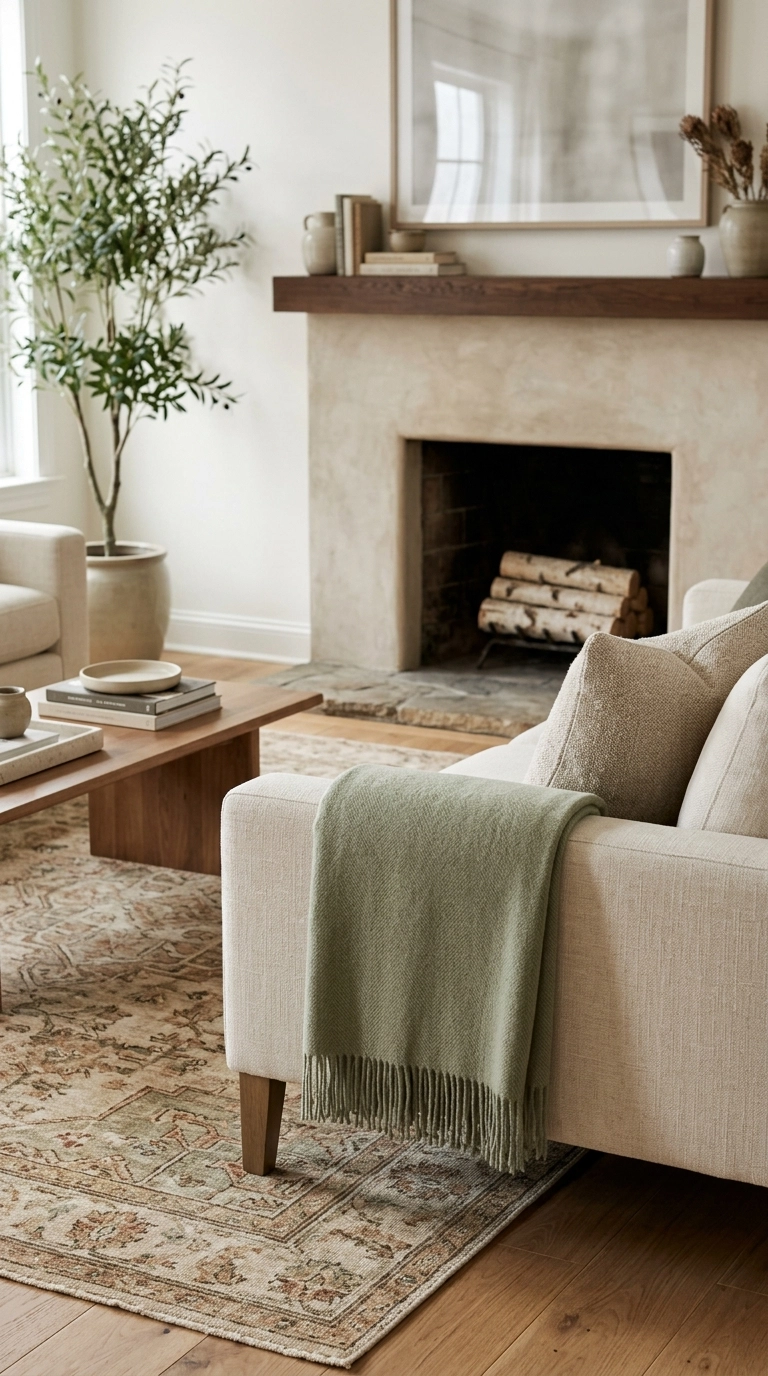
The anchor is the throw, placed where the eye lands first, folded over the arm of the sofa nearest the door. A heavy cotton or wool weave in sage reads as part of the scheme; a thin shiny throw reads as an afterthought you grabbed at the till. Drape it over the arm or across one corner of the seat, never spread flat across the cushions, which just looks like you are protecting the sofa from life.
Pair it with: one cushion in the same sage, a tone deeper, at the far end of the sofa.
Which sage commitment is right for you?
Renting, with no paint allowed? Work ideas 5, 6, 12 and 13 only. Curtains, a layered rug, cushions and a throw build the whole scheme in textiles, and every piece packs into a box on moving day.
Happy to paint, but keeping your neutral sofa? Take ideas 2 and 4, pale sage walls with cream trim, and let the sofa stay the calm base. Sage then arrives in the curtains, cushions and ceramics instead of the biggest piece of furniture.
Going all in on the full scheme? Start at idea 1 with the sofa and work down the list in order. Anchor, shell, ground, furniture, soft goods: each layer is chosen to match the one before it, which is why the finished room looks calm instead of busy.
Sixth, the Walls and the Light
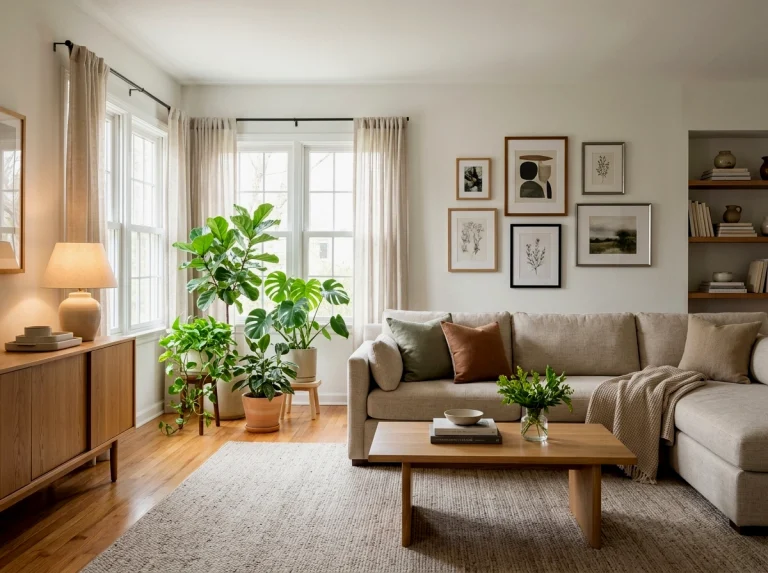
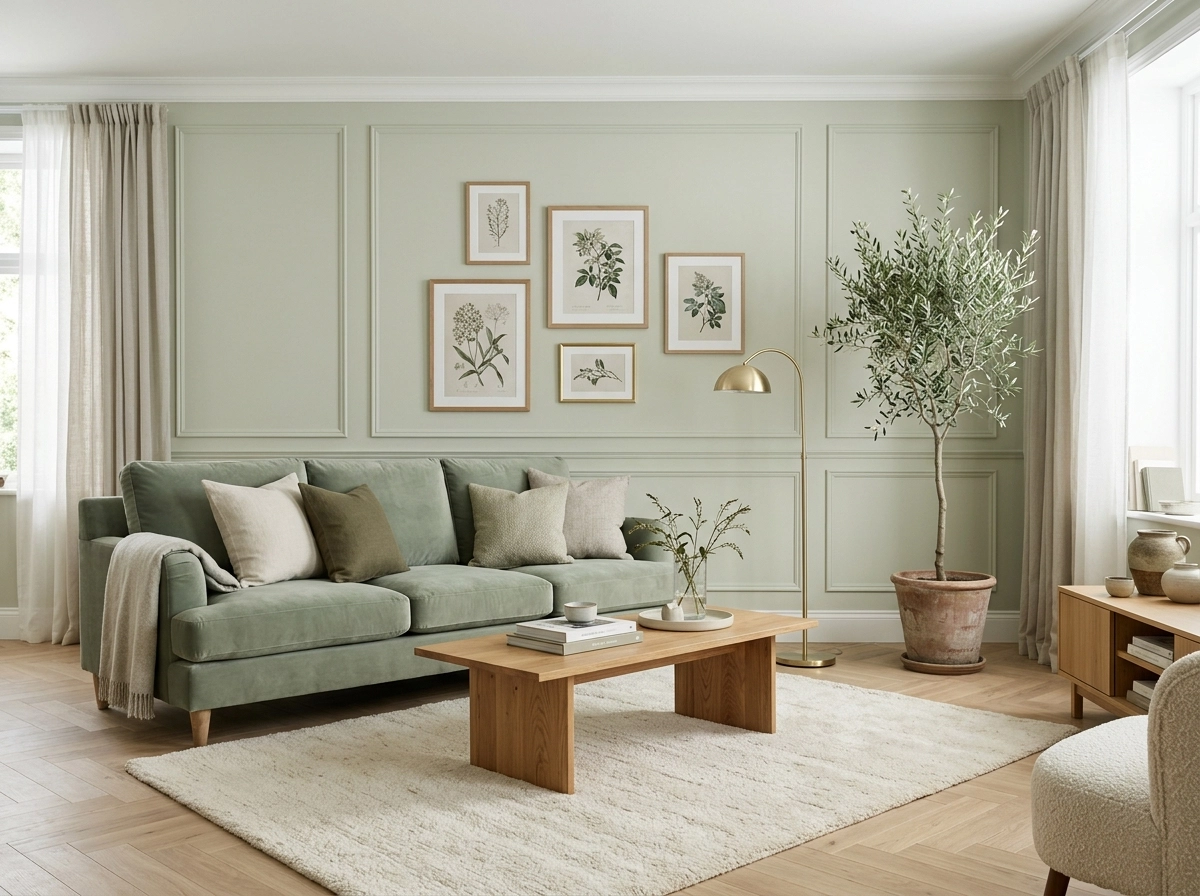
14. Build a botanical gallery wall with sage mounts
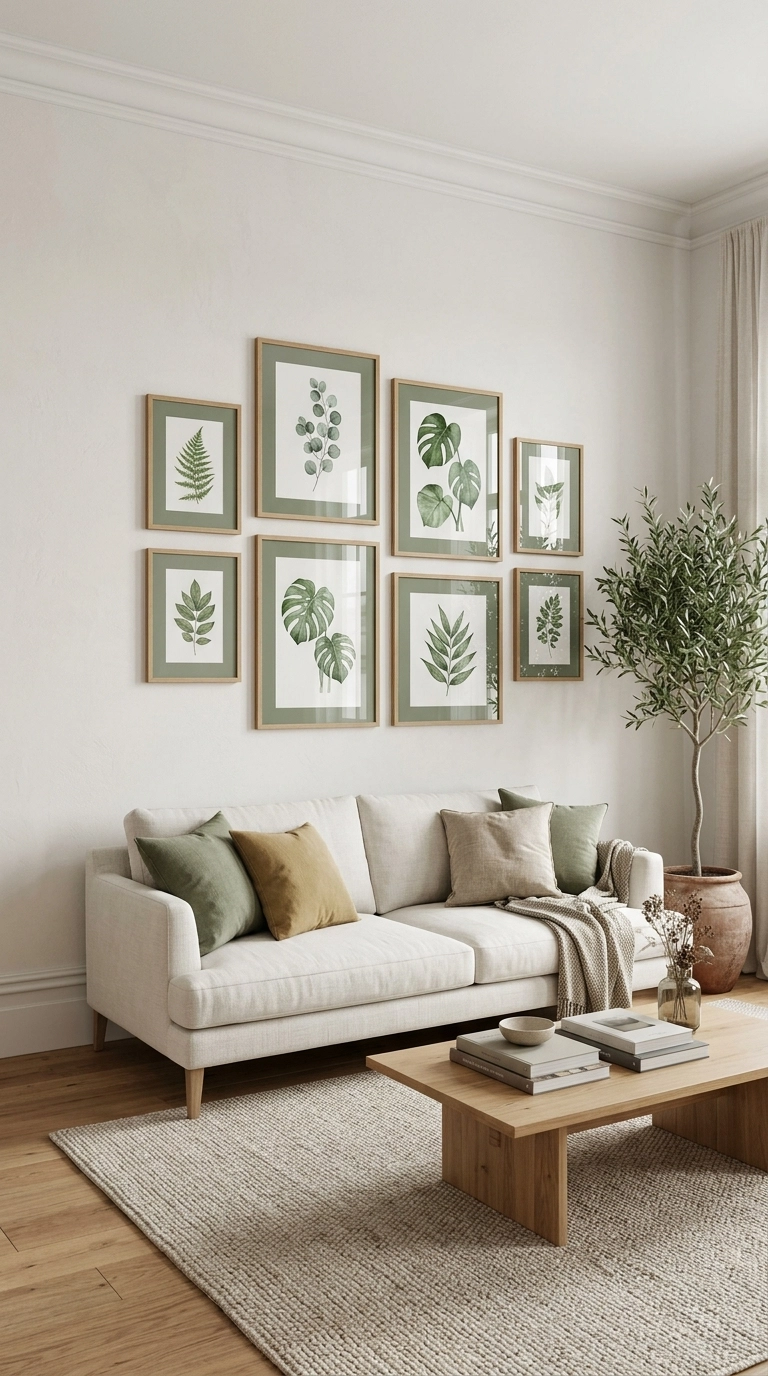
The anchor on the wall is a botanical gallery, prints in sage mounts or slim sage frames. Botanical art suits this colour, and matching mounts pull the set into the scheme instead of letting it float. Keep one frame style across the set so the variety lives in the prints, and hang the centre of the group at eye level, around 145 cm from the floor.
Pair it with: a brass picture light, or a lamp close enough to wash the prints in the evening.
15. Choose lampshades in sage linen
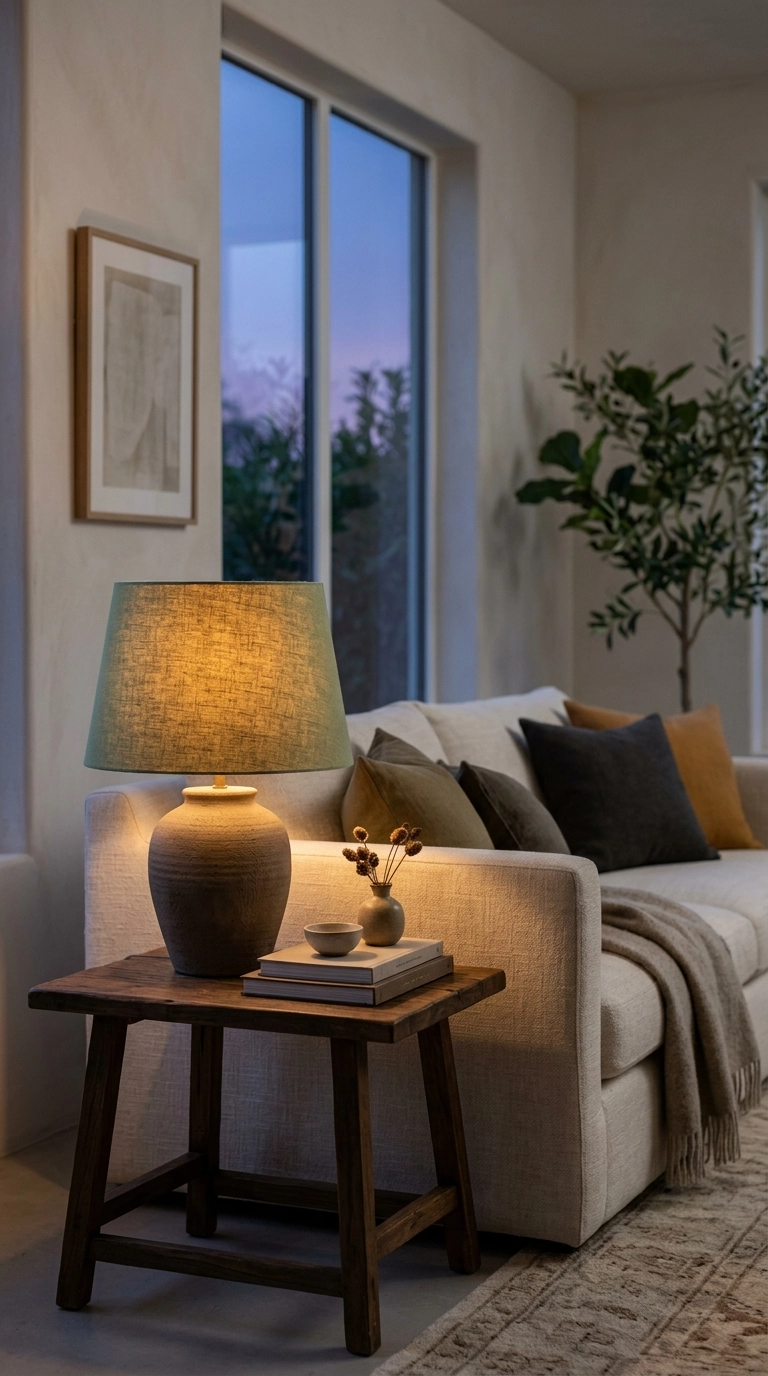
The anchor at eye level in the evening is a pair of lampshades in sage linen. Shades are the overlooked colour carrier in most living rooms: they repeat the scheme exactly where your eye rests after dark, and linen tints the light soft instead of glaring. Match the shade tone to the sofa rather than the walls, because the lamps usually stand closer to the seating than to the paint.
Bulb note: warm white bulbs around 2700K keep sage looking sage, while cool bulbs quietly turn it grey.
16. Hang a brass framed mirror over a console

The anchor over the console is a brass framed mirror, hung to borrow light. Position it opposite a window or a lamp and it doubles that light back into the room, while the warm metal lifts the sage around it. The console beneath can be a narrow table, or a painted piece revived from these dresser makeover ideas with a lamp and a stack of books on top.
Mirror test: if it reflects a blank wall or the television, move it, a mirror is only as good as its view.
Seventh, the Living Layer
17. Echo the colour with real plants
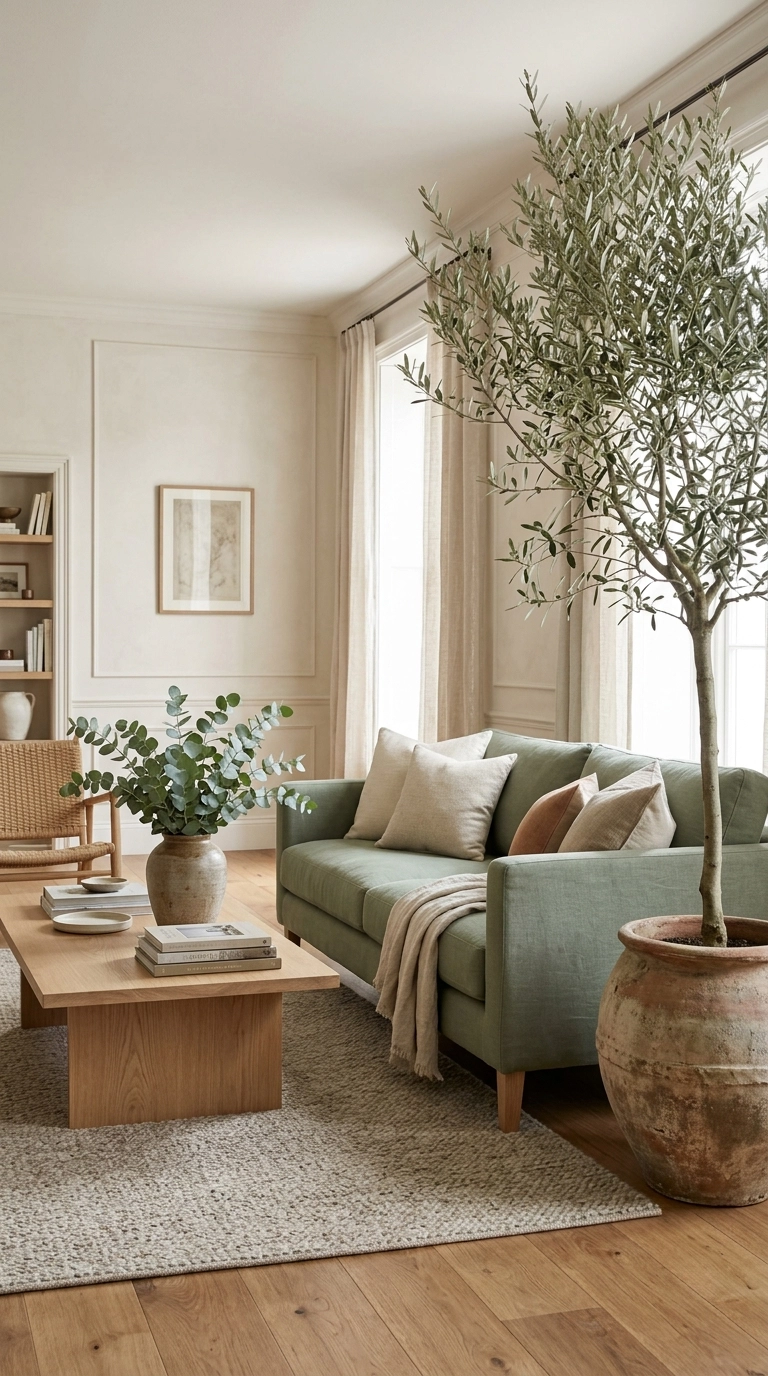
The anchor in the corners is real greenery, and it is the one accessory that can never clash with this scheme. Sage is a plant colour, so olive trees, eucalyptus stems and trailing pothos all sit inside the same tonal family while softening the straight edges of the furniture. Spend the plant budget on one large specimen in a good pot rather than five small ones scattered across every surface.
Honest note: plants read as a layer, not decoration, so place them where furniture ends, not where shelves have gaps.
18. Style the shelves with sage spines and ceramics

The anchor nobody plans is the shelving, which joins the scheme whether you style it or not. Pull the green and sage book spines together on one or two shelves, mix in cream ceramics and a small plant, and the colour suddenly belongs to the whole room instead of just the seating corner. Leave real empty space too, because packed shelves read as storage no matter how good the objects are.
Shelf ratio: roughly a third books, a third objects and a third air is what keeps shelving styled, not stored.
Eighth, the Pairings That Change Everything
19. Pair sage with terracotta for warmth
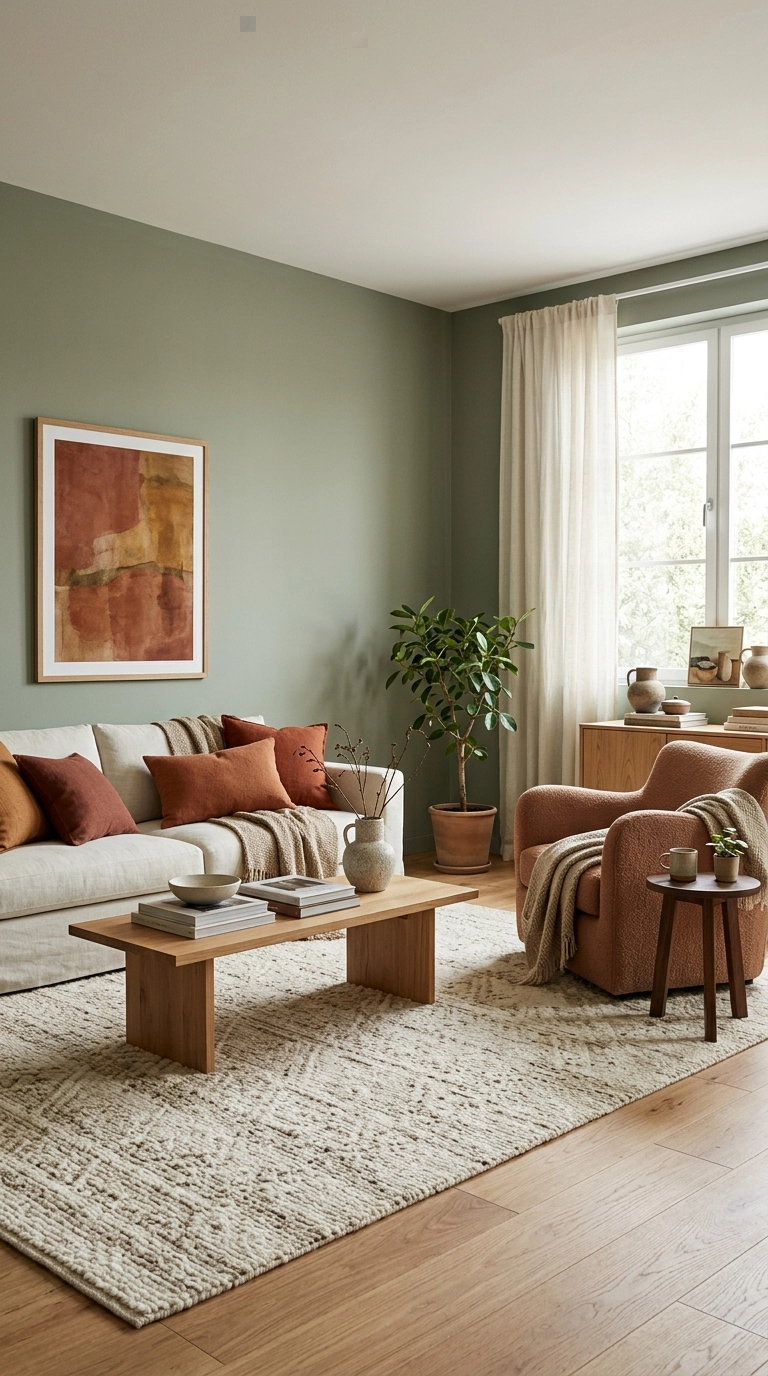
The anchor for warmth is terracotta, added in cushions, a clay toned chair or a rust coloured print. This is the pairing to choose if your room faces north or always feels a degree too cool, because the baked earth tones warm sage like late sunlight. Terracotta is strong, so it works as the supporting act, roughly a third of the colour in the room against two thirds sage and neutrals.
Balance point: past a third, the room stops feeling calm and starts feeling themed.
20. Pair sage with navy for depth
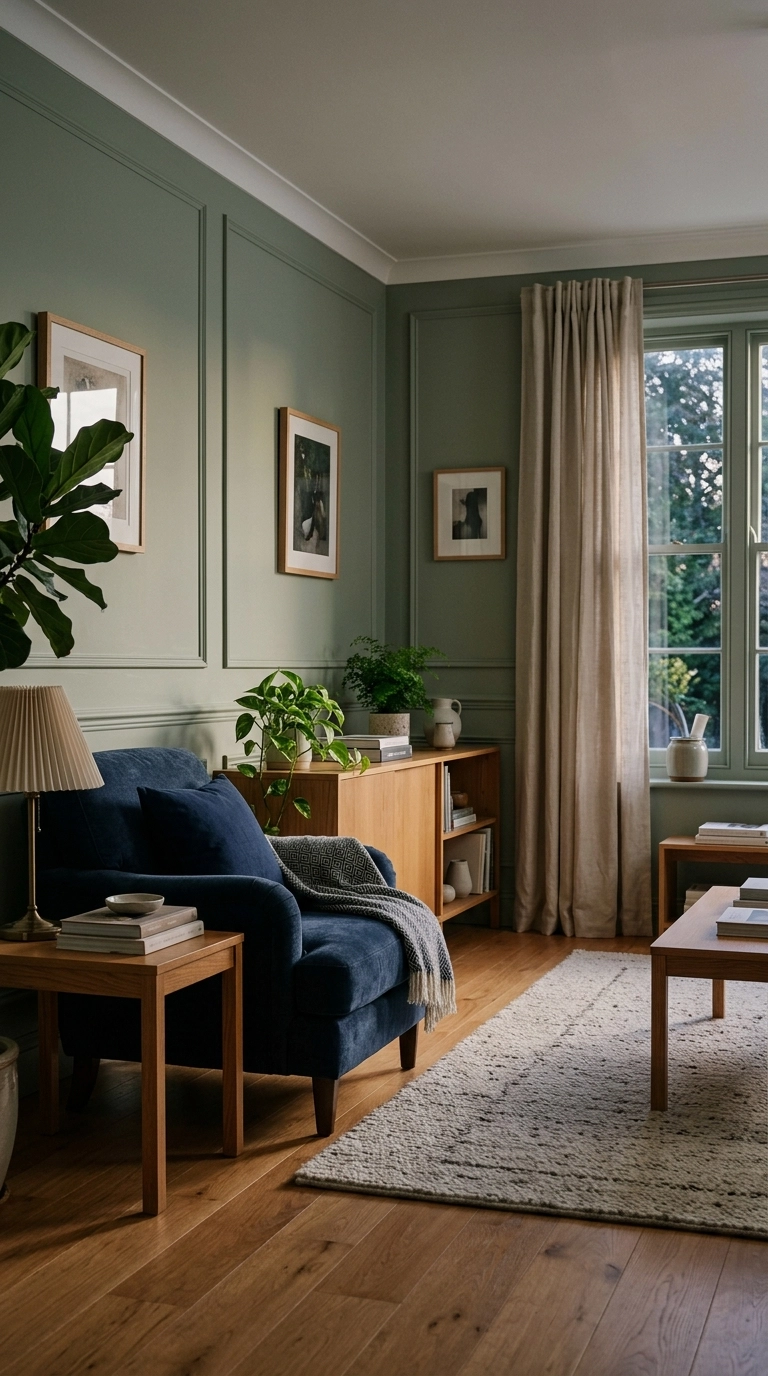
The anchor for the evening version of this room is navy, in cushions, one deep chair or dark framed art. Navy gives sage the contrast it politely lacks, and after dark the two colours make each other look richer, the green softer and the blue deeper. It suits rooms that live at night, films, reading and low lamps. Keep warm oak from idea 8 in the mix, because navy and sage together tip cold without wood nearby.
Keep it grounded: one navy piece is depth, three is a competing scheme.
Last, Keep It Fresh
21. Keep the sage base and swap the accents by season

The anchor that changes is the accent layer, cushions and the throw, swapped with the seasons over a sage base that never moves. The expensive decisions, sofa, paint and rugs, stay put for years, while summer brings cream and linen and winter brings deeper clay tones and wool. Because the scheme was built in layers, each swap takes twenty minutes and the room feels newly decorated twice a year for the price of two cushion covers.
The whole point: a room built one anchor at a time can evolve, a room bought in one day usually gets replaced in one day.
By dusk the room explains itself. The lamps come on, the sage deepens a shade, the brass warms up and the sofa still sits at the centre of it all, exactly where you put it first. Nothing matches perfectly and nothing needs to, because every layer was chosen to answer the one beneath it. That is the whole method: one anchor at a time, and permission to stop the moment the room feels finished.