21 Sage Green Living Room Ideas, Built One Anchor at a Time
Sage green works in a living room for one simple reason: it behaves like a neutral but still gives the room a point of view. The mistake most people make is buying twelve sage accessories at once and hoping they add up to a scheme. They rarely do. The rooms that look pulled together were built in an order, one anchor decision at a time, with each next layer chosen to match the layer before it.
That is how this list is organised. Start at the top with the biggest commitment and work down to the five minute swaps. You can stop after any layer and the room will still look finished, which is exactly how a colour scheme should work. If you are renting, skip the paint ideas and start at idea 5, the order still holds.
First, the Anchor
1. Start with a sage sofa
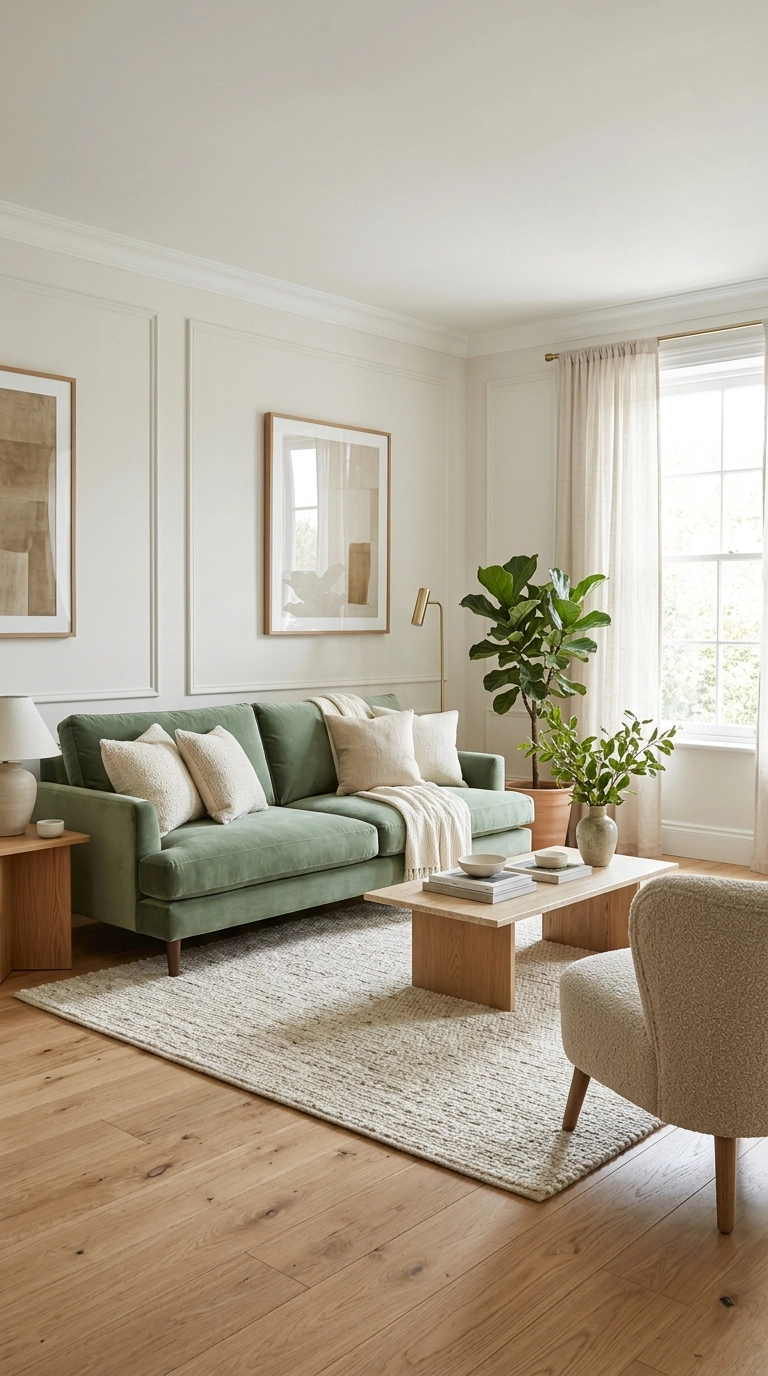
Everything else in the room gets easier once the biggest piece is settled. A sage sofa in a mid tone, not too grey and not too yellow, gives you a colour you can pull both paler and deeper shades from for the rest of the scheme.
Anchor rule: pick the sofa tone first, then match paint chips to the fabric in daylight, never the other way round.
Second, the Shell
2. Paint the walls two tones paler than the sofa
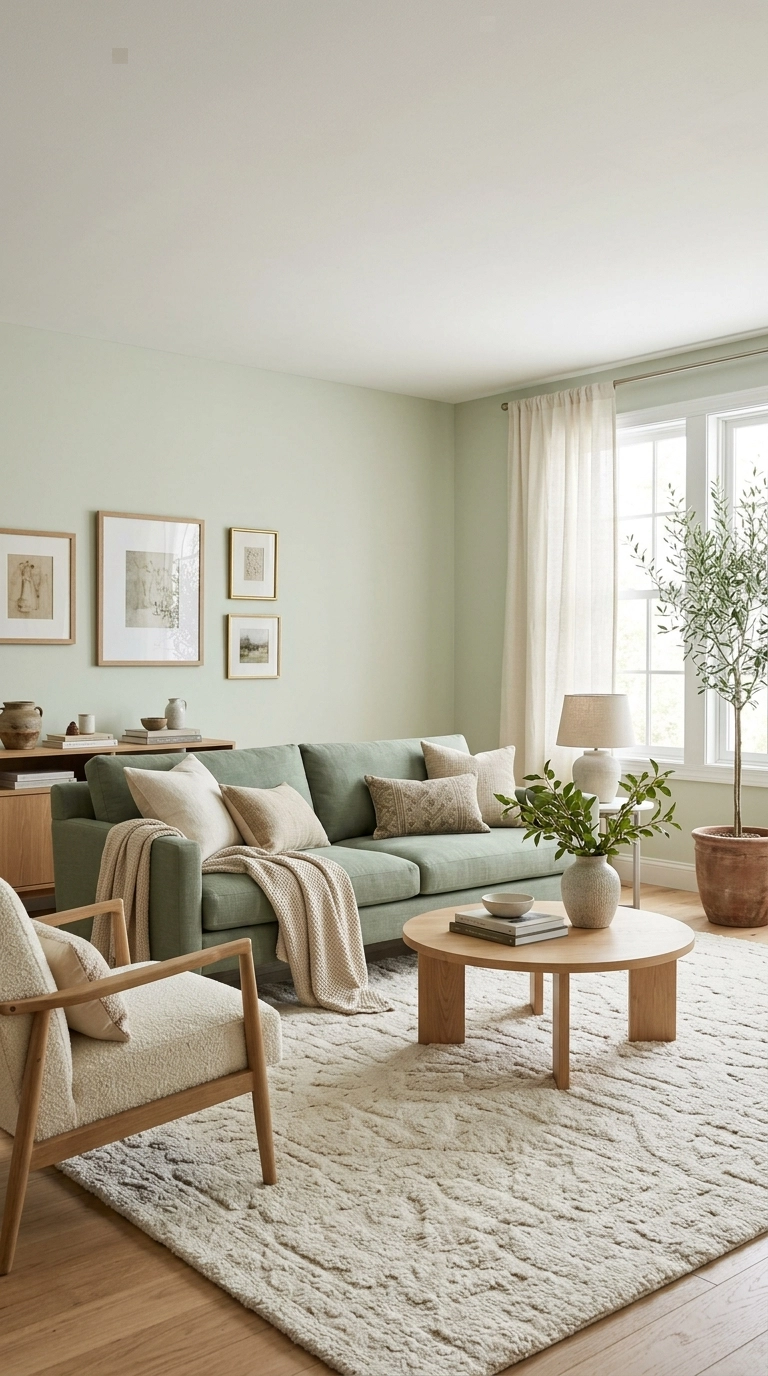
Walls a couple of shades lighter than the sofa keep the room calm without turning it into a green box. Most paint brands arrange colours in tonal strips, so stay on the same strip as your sofa fabric and move up two steps.
Try this order: sample the pale wall colour behind the sofa first, because that is where the two tones will be compared all day.
3. Or go deeper with one sage accent wall

If pale walls feel like a missed opportunity, put the deepest sage on the wall behind the sofa and keep the other walls warm white. One strong wall gives the room a backdrop without shrinking it the way four dark walls can.
Depth check: a deep sage wall needs one warm light source in front of it, or it reads cold after dark.
4. Keep the trim cream, not bright white
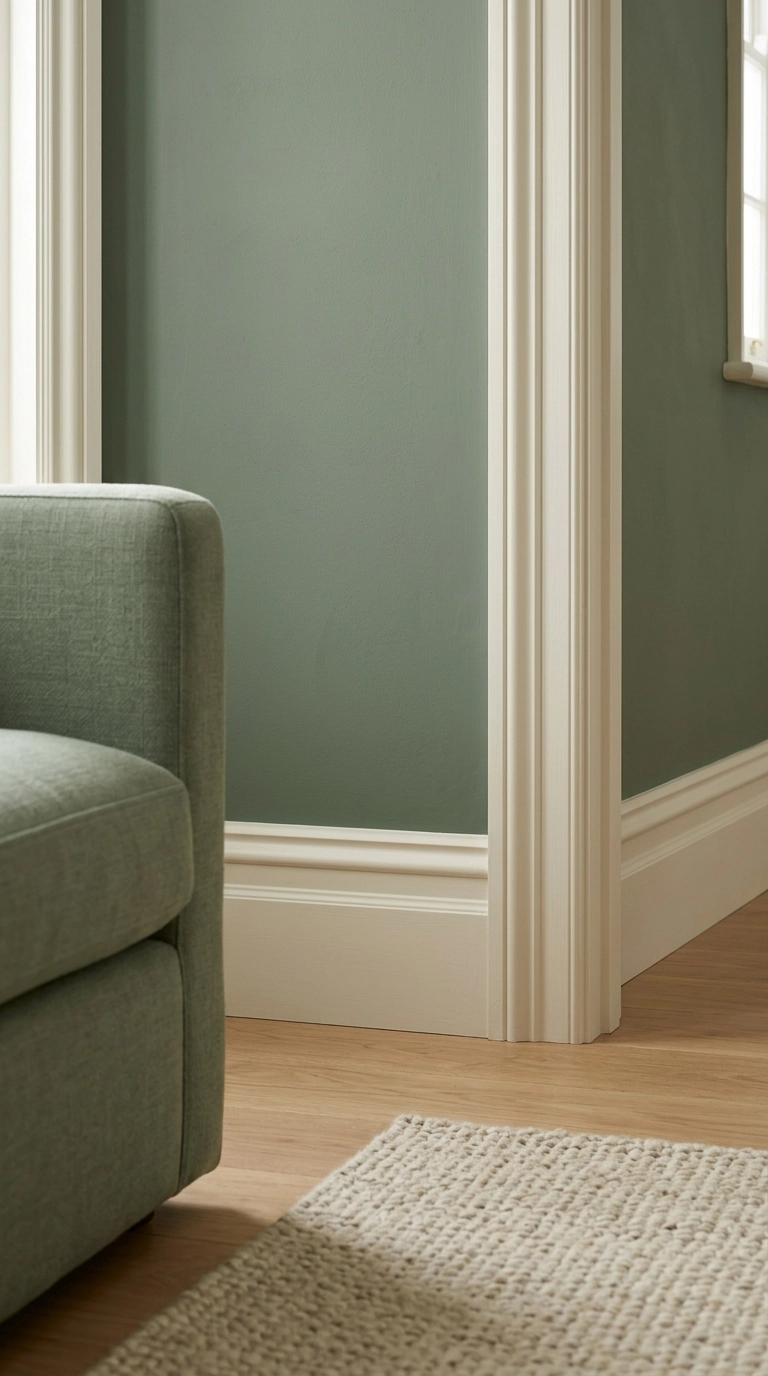
Stark white woodwork can make sage look washed out and a bit clinical. A soft cream trim sits in the same warm family, so the contrast looks deliberate instead of accidental.
Small change, big effect: repainting only the skirting and door frames takes an afternoon and changes how the whole scheme reads.
5. Hang sage curtains high and wide
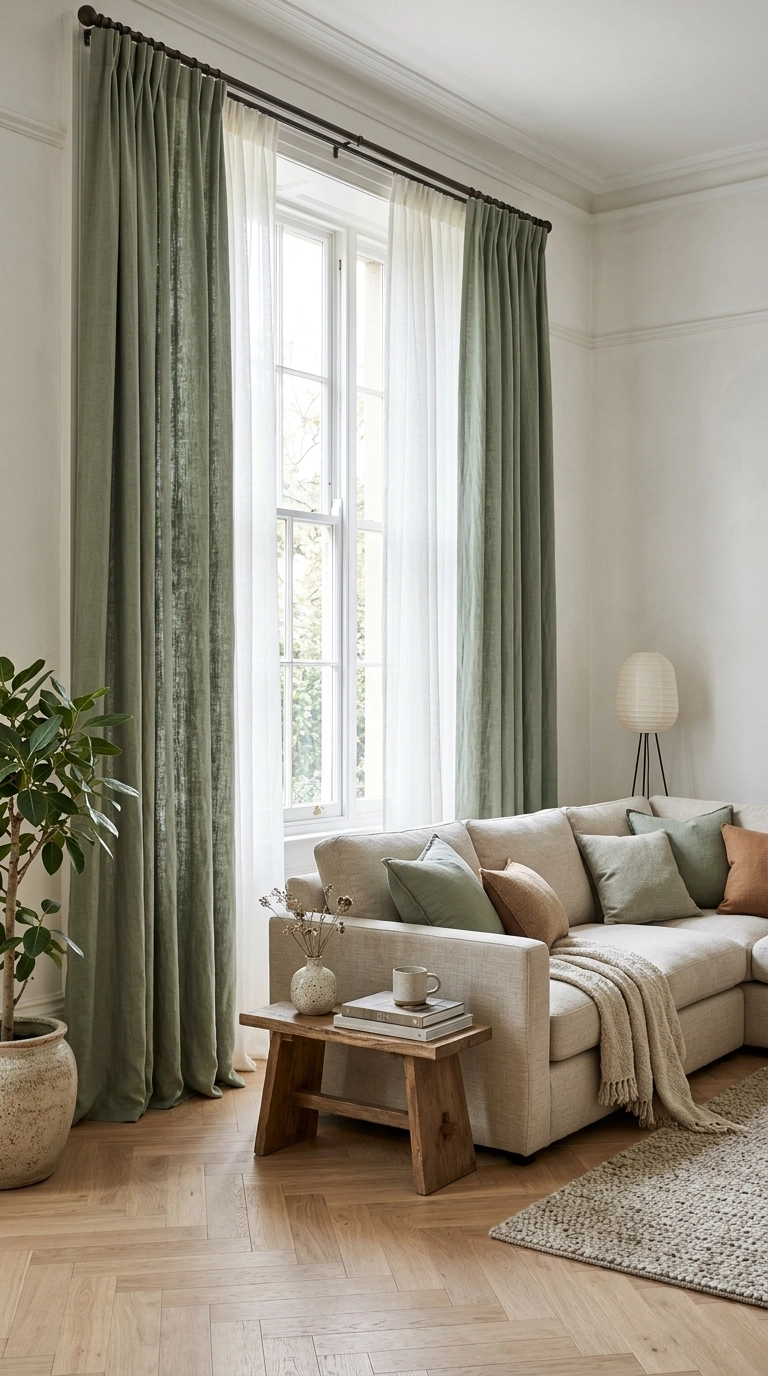
Linen curtains in a tone close to the sofa tie the window wall into the scheme without another paint decision. Hung just below the ceiling and wider than the window, they also make the window feel larger than it is.
Measure first: curtain poles placed 10 to 15 cm above the frame and 15 cm wider each side are what create that effect, not the fabric alone.
Third, the Ground
6. Lay a cream rug with a sage thread running through it
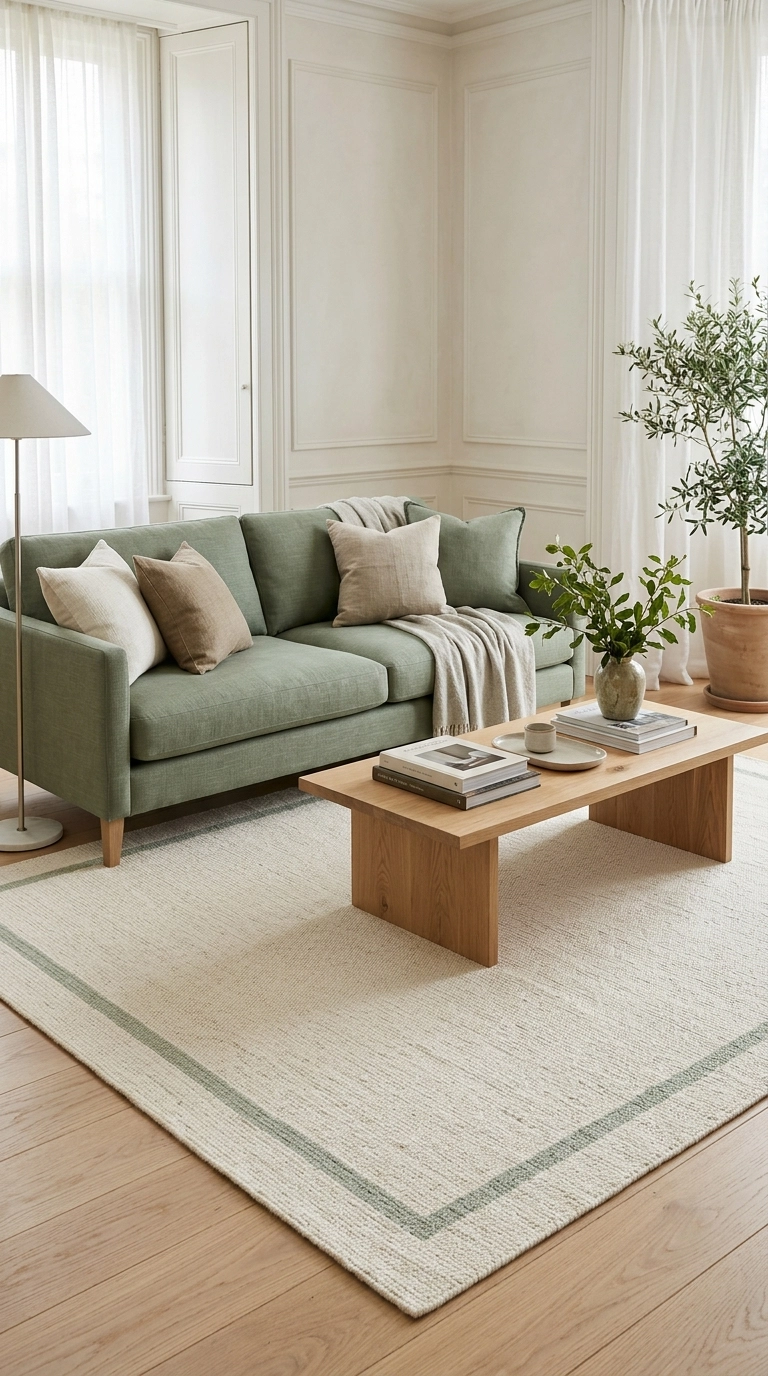
A mostly cream rug keeps the floor light while a sage border or pattern thread quietly repeats the anchor colour underfoot. It is the easiest way to connect a sage sofa to a room with pale walls.
Size guide: the rug should reach under the front legs of every seat around it, or the arrangement will look like it is floating apart.
7. Layer a sage patterned rug over natural jute
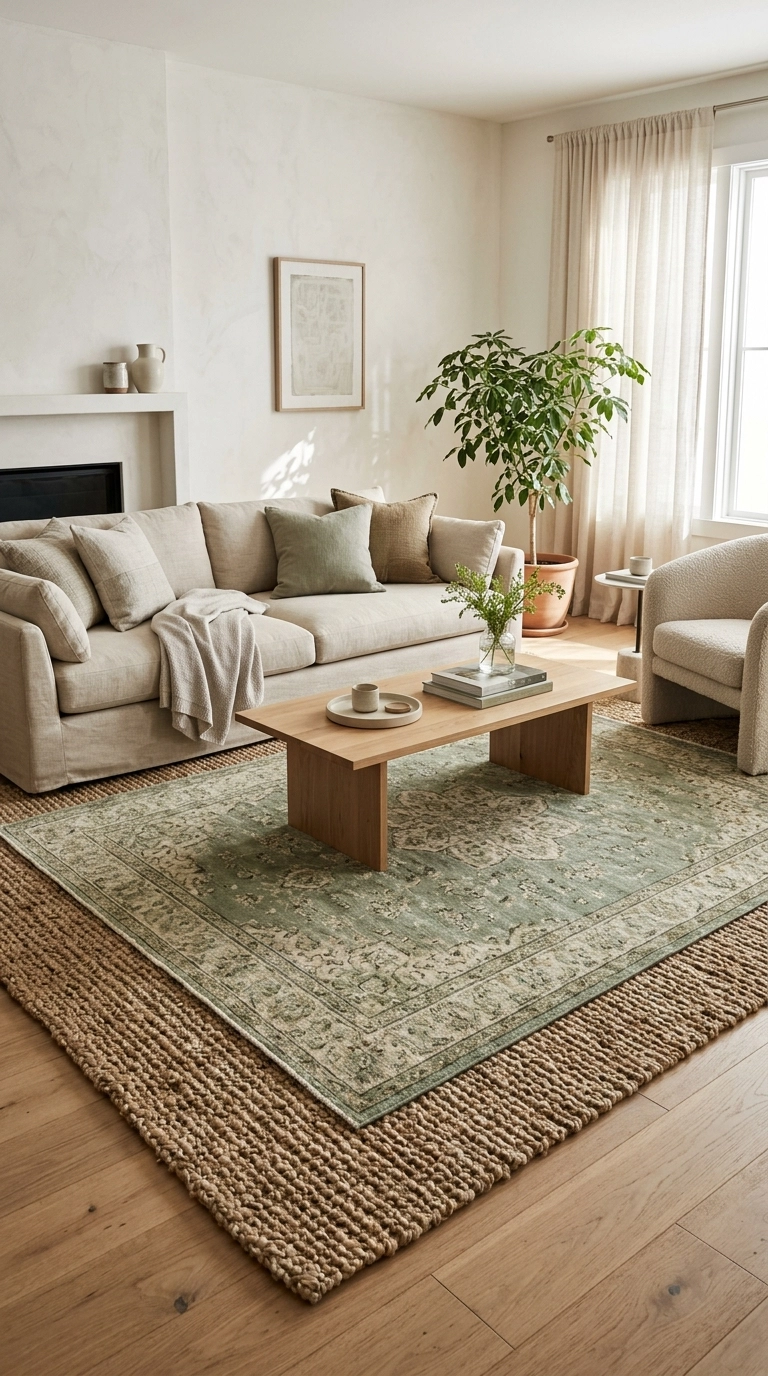
Layering is how you get pattern into a calm scheme without it shouting. A flat jute base gives texture and size for less money, and a smaller sage patterned rug on top carries the design.
Budget trick: buying the big layer plain and the small layer patterned usually costs half of one large patterned rug.
What pairs with sage, at a glance
| Partner | What it adds | Best used on |
|---|---|---|
| Warm oak | Warmth and grain against sage’s coolness | Coffee tables, shelving, floors |
| Brass | A soft metallic lift that stops sage looking flat | Mirrors, lamps, handles |
| Terracotta | Earthy contrast, the classic sage partner | Cushions, pots, one armchair |
| Navy | Depth for a moodier, evening room | Cushions, art, a single chair |
| Cream and boucle | Texture and light without new colour | Rugs, throws, upholstery |
Fourth, the Supporting Furniture
8. Bring in a warm oak coffee table
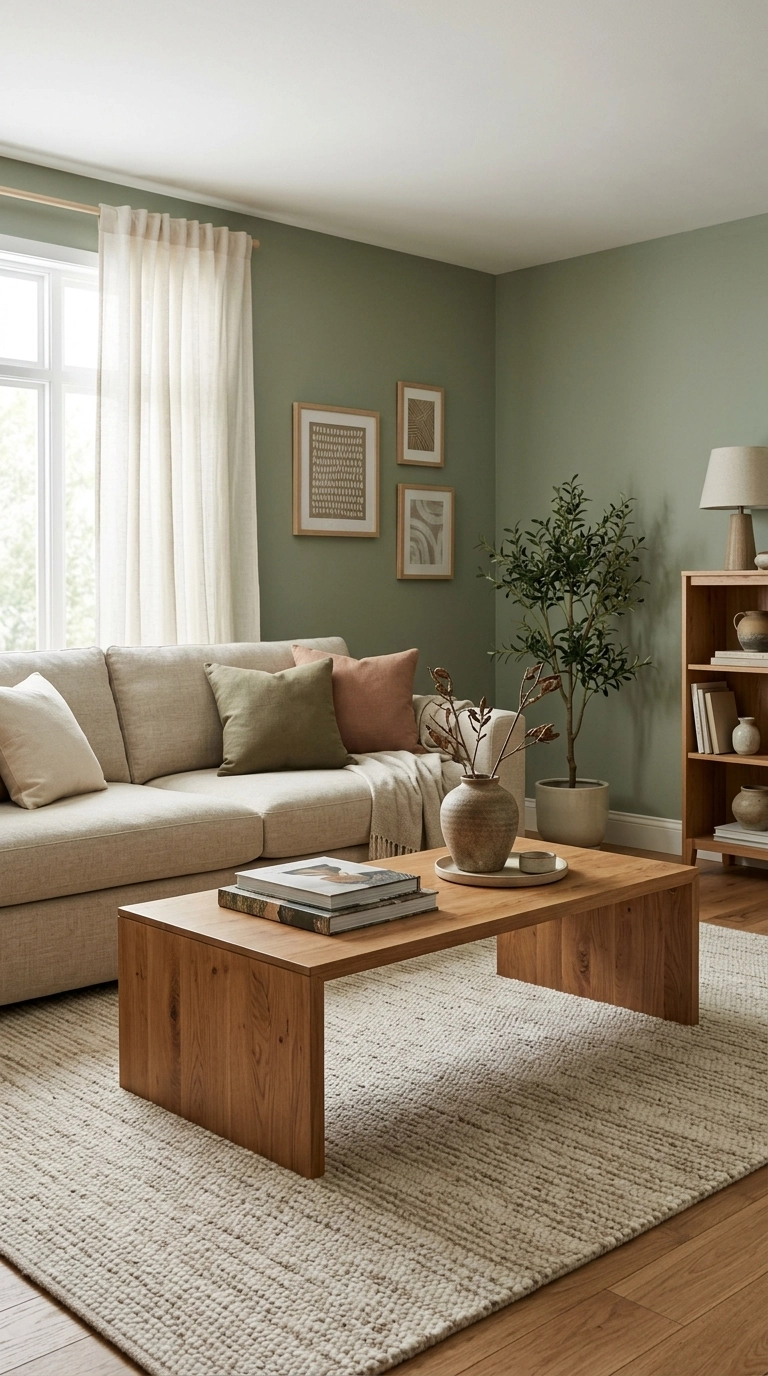
Sage sits on the cool side of the spectrum, so it needs wood with a warm undertone somewhere near the centre of the room. An oak coffee table does that job and gives the green something to bounce off.
Avoid this clash: grey washed wood and sage together can make both look muddy.
9. Add a sage armchair that does not match the sofa exactly
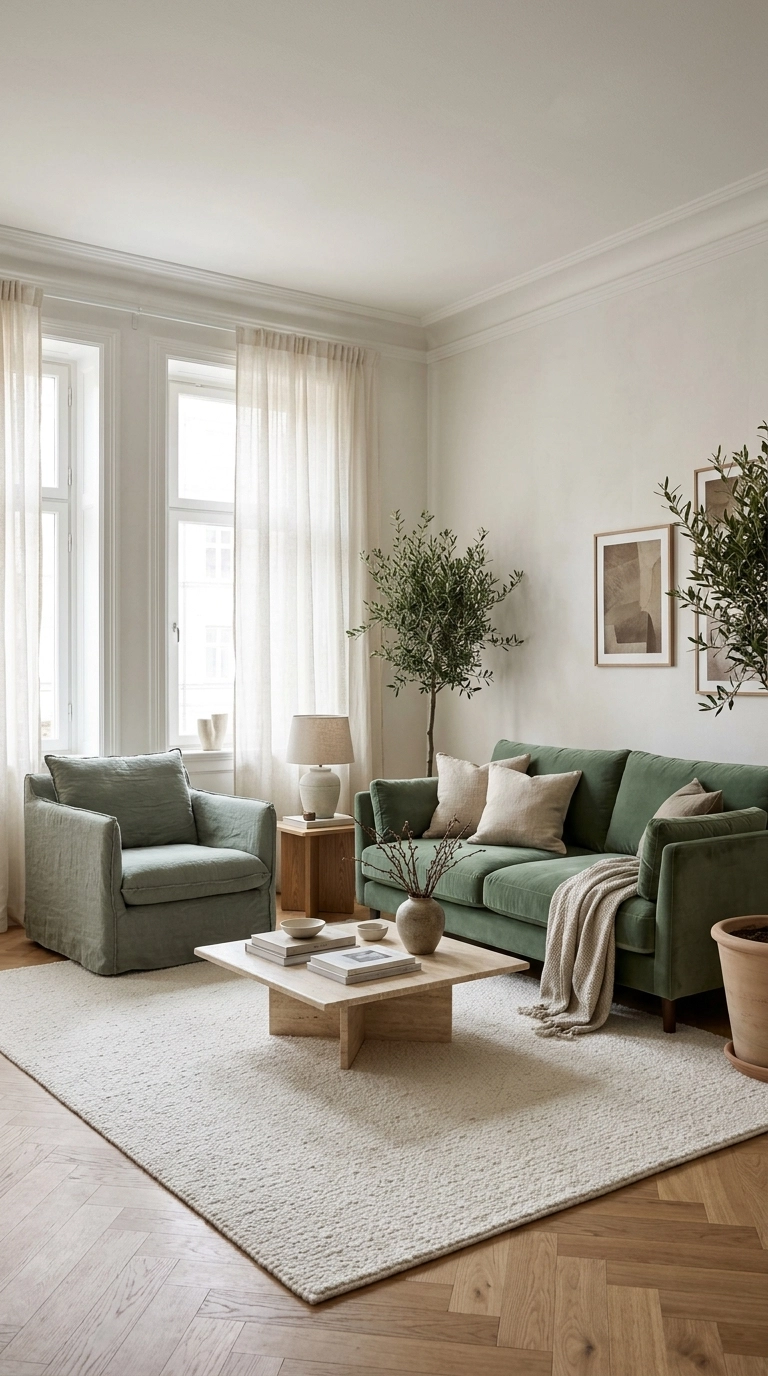
A second seat in a related but different sage, deeper, dustier or in a different fabric, looks collected rather than showroom matched. Linen against velvet is the easiest version of this contrast.
Matching rule: same colour family, different texture, is what separates styled from staged.
10. Use a sage ottoman as the flexible piece
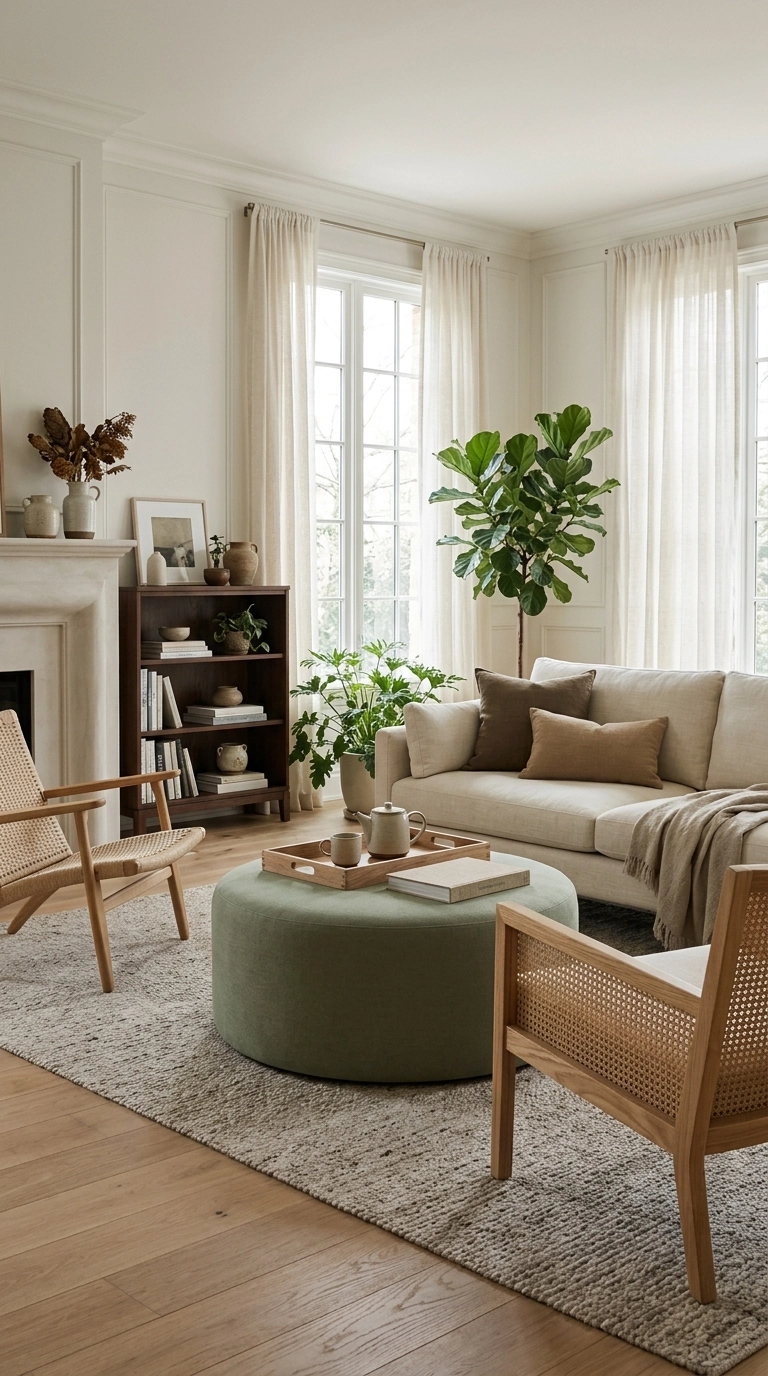
An ottoman in sage pulls spare seating, a footrest and an extra surface into one piece, and it repeats the anchor colour in the middle of the room where schemes often go quiet.
Practical pick: a flat topped ottoman with a tray on it works harder than a soft domed one.
11. Style a stone side table with sage ceramics
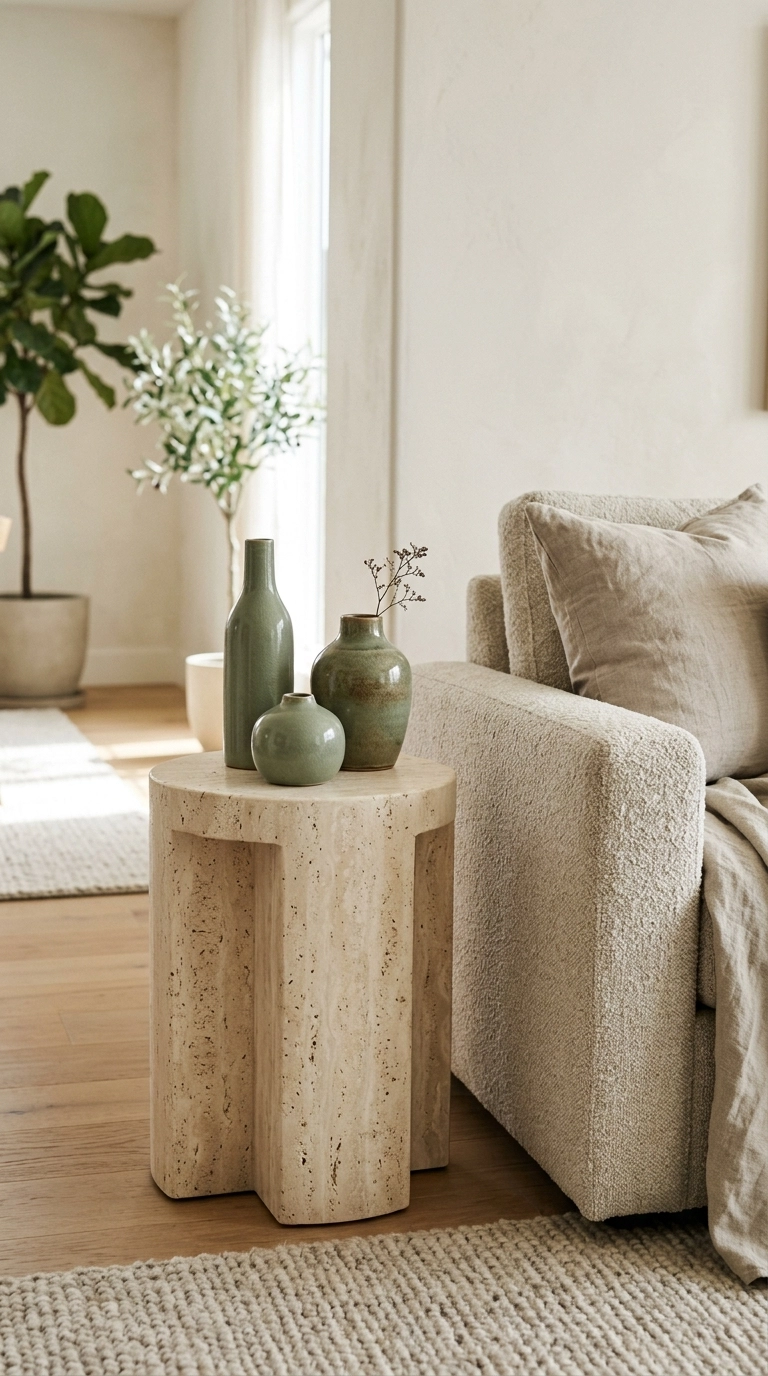
A pale stone or travertine side table keeps the palette light, and two or three sage glazed ceramics give it a reason to be in the scheme. Odd numbers and mixed heights are what make a small group like this work.
Stylist habit: group in threes, tallest at the back, and stop before the table looks like a shop display.
Fifth, the Soft Goods
12. Mix cushions in sage, cream and one clay tone
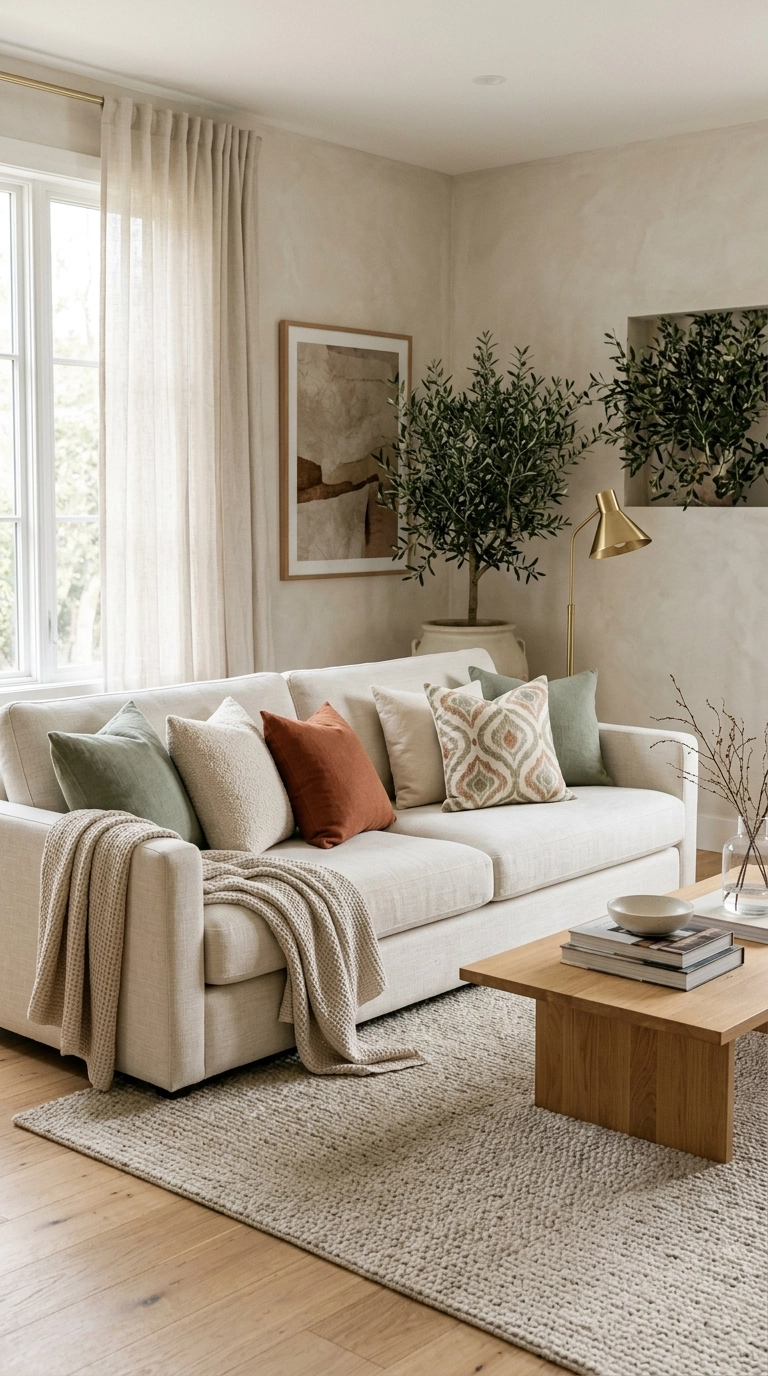
Three colours is the ceiling for a cushion mix that still feels calm. Sage and cream carry the scheme, and one clay or terracotta cushion keeps the green from going cold.
Count guide: three cushions on a two seater, five on a three seater, always with one patterned piece in the mix.
13. Drape a sage throw where the eye lands
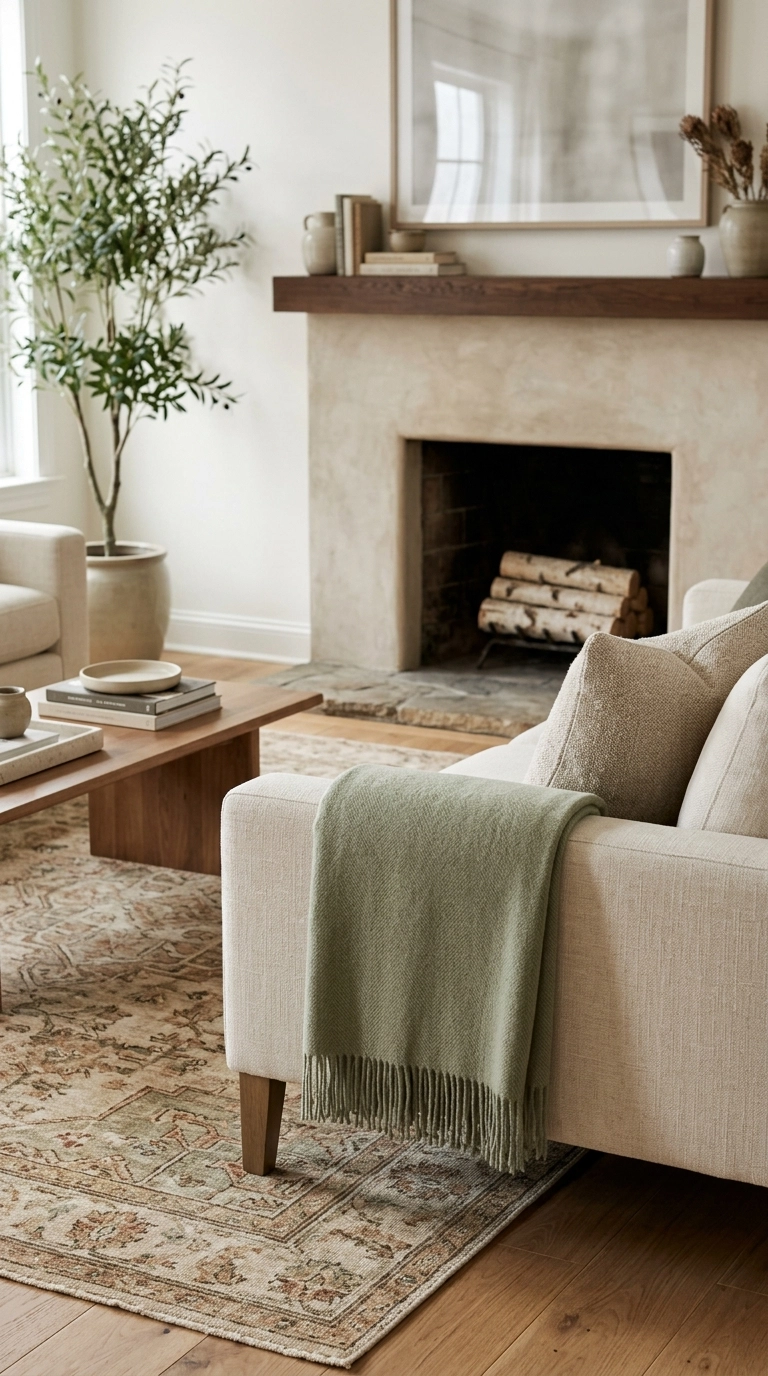
A throw folded over the arm nearest the door is usually the first textile anyone notices, so make it a good one. Wool or a heavy cotton weave in sage reads as part of the scheme, not an afterthought.
Placement matters: over the arm or across one corner works, spread flat across the seat cushions just looks untidy.
Which sage commitment is right for you?
The renter: ideas 5, 6, 12 and 13 only. Curtains, rug, cushions and a throw give you the scheme with zero paint and everything leaves with you.
The cautious painter: add ideas 2 and 4. Pale sage walls and cream trim, with the sofa staying neutral if you already own one you like.
The full scheme: start at idea 1 and work down the whole list. Anchor sofa, tonal walls, layered rugs and paired accents in one planned order.
Sixth, the Walls and the Light
14. Build a botanical gallery wall with sage mounts
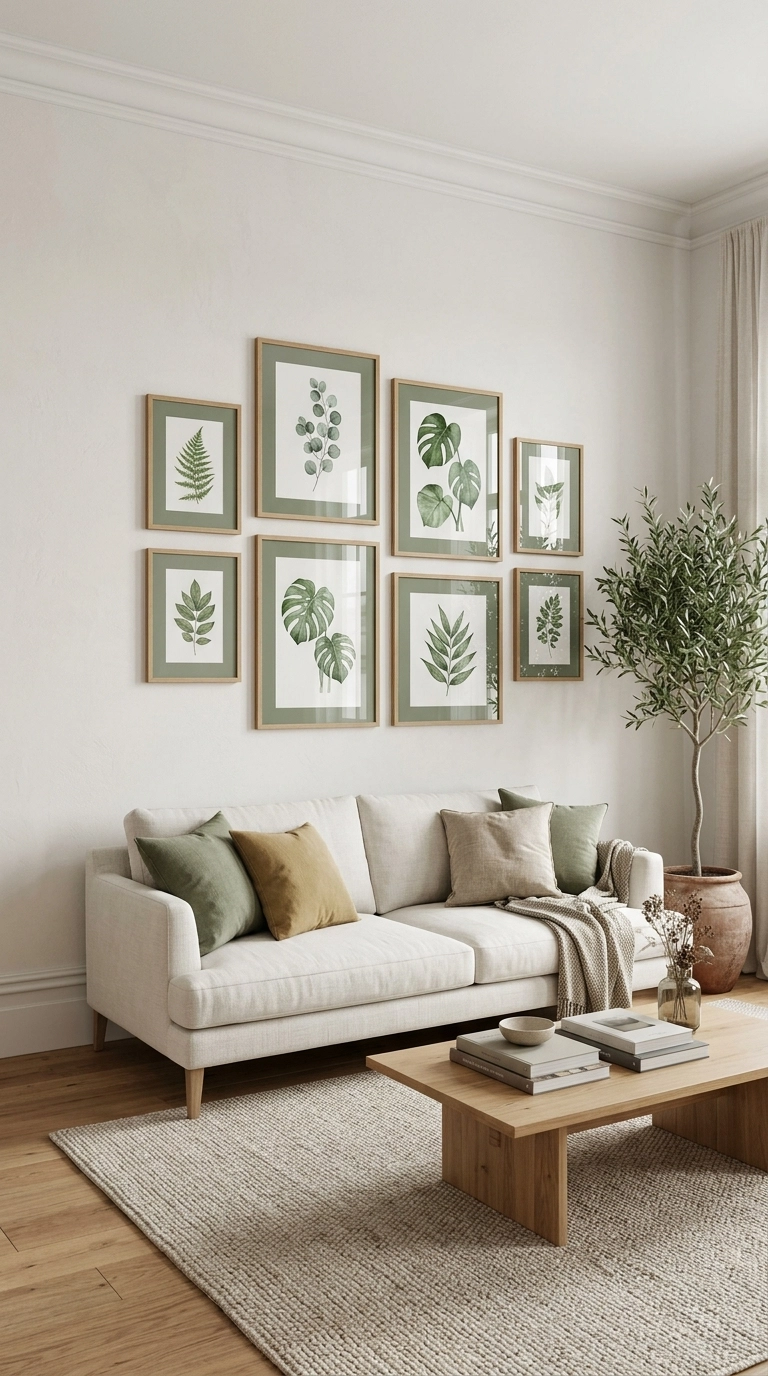
Botanical prints are the natural art choice for this colour, and sage mounts or frames pull them into the scheme instead of letting them float on a white wall. Keep one frame style across the set so the variety stays in the prints.
Hanging height: the centre of the arrangement should sit at about 145 cm from the floor, average eye level.
15. Choose lampshades in sage linen
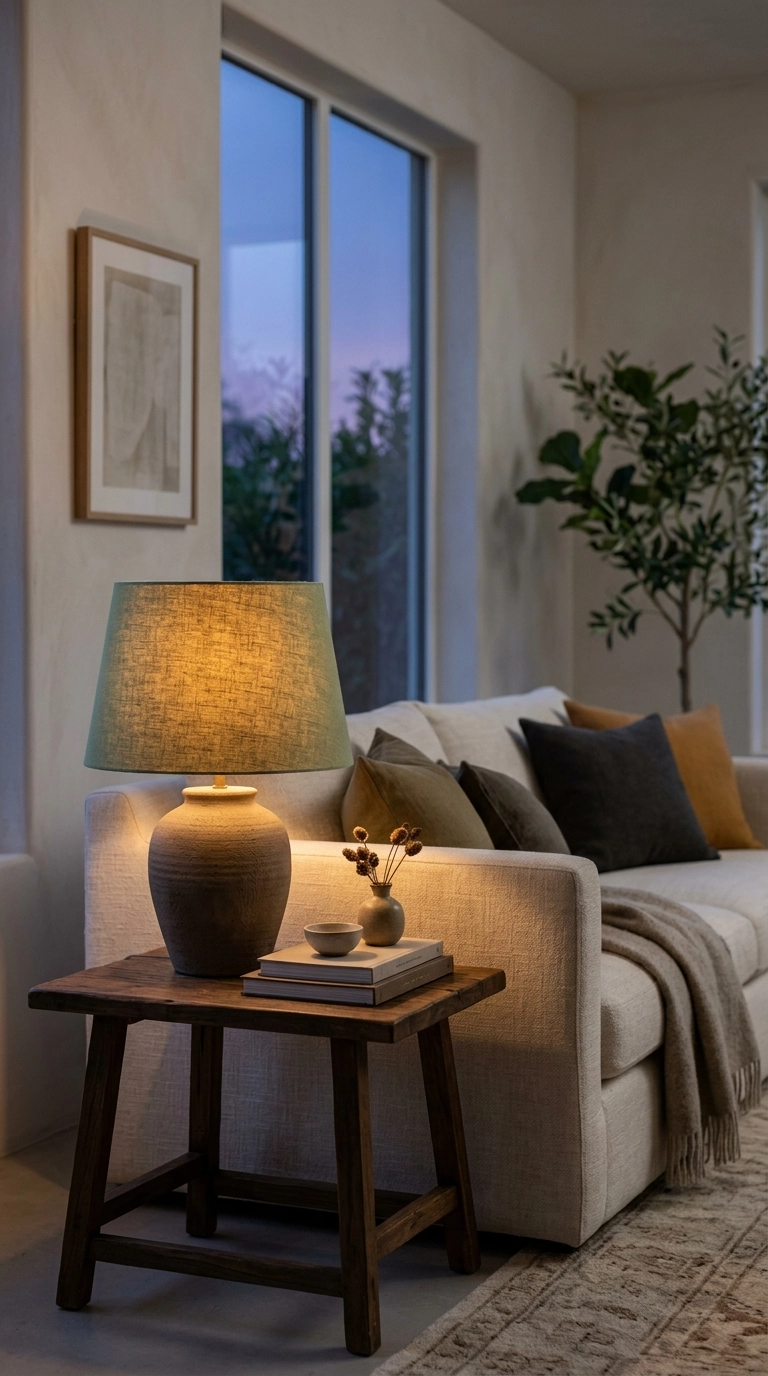
Lampshades are the overlooked colour carrier in most living rooms. Sage linen shades tint the light slightly warm and repeat the scheme at eye level in the evening, when paint colour does the least work.
Bulb note: warm white bulbs around 2700K keep sage looking sage, cool bulbs turn it grey.
16. Hang a brass framed mirror over a console

Sage and brass is the pairing that makes this colour look expensive. A round brass mirror over a narrow console bounces light into the room and gives you one more styled surface for a lamp and a stack of books.
Mirror test: hang it to reflect a window or a lamp, never a blank wall or the television.
Seventh, the Living Layer
17. Echo the colour with real plants
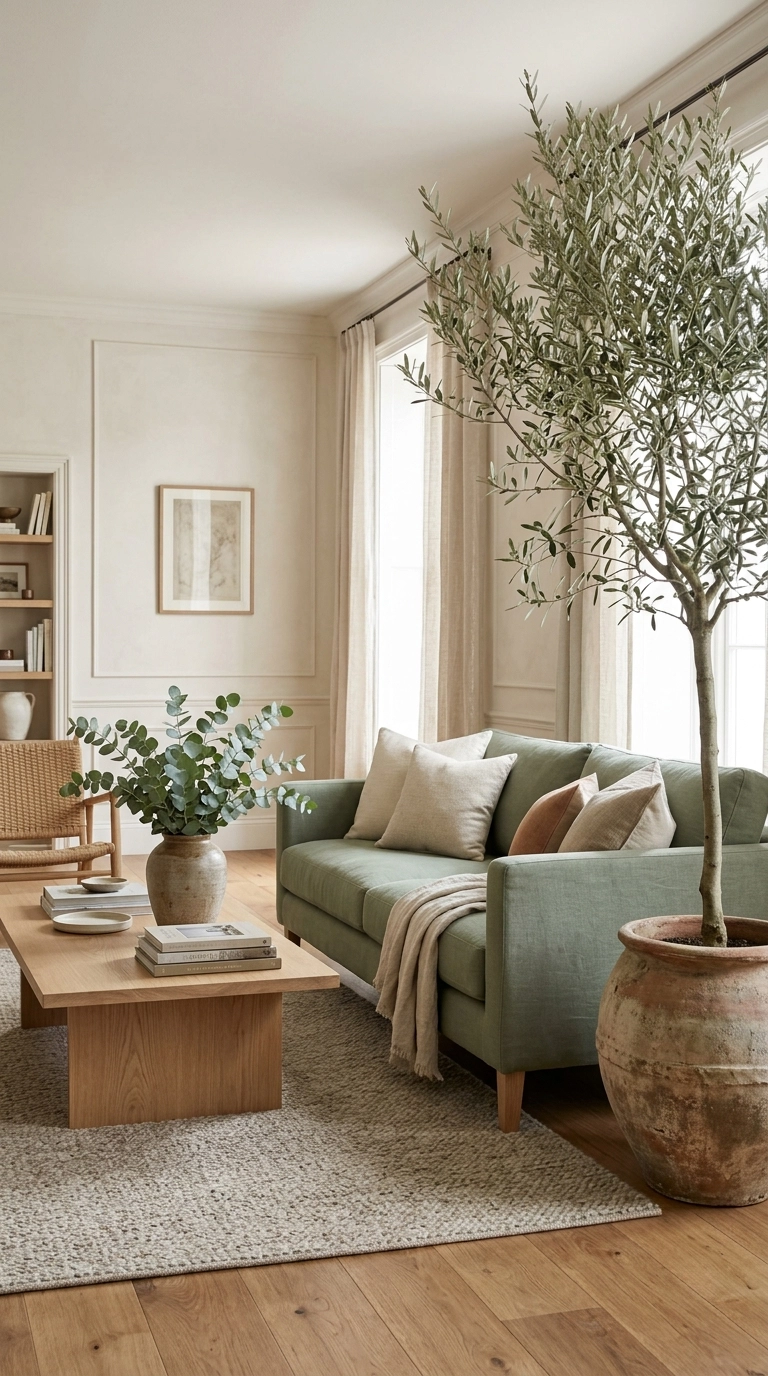
Sage is a plant colour, so real greenery is the one accessory that can never clash with it. Olive trees, eucalyptus stems and trailing pothos all sit in the same tonal family and soften the edges of the furniture.
Honest note: one large plant in a good pot beats five small ones scattered on every surface.
18. Style the shelves with sage spines and ceramics

If you have shelving, it is part of the scheme whether you plan it or not. Pulling out the sage and green book spines to style one or two shelves, mixed with cream ceramics, makes the colour feel like it belongs to the whole room.
Shelf ratio: roughly one third books, one third objects, one third empty space is what keeps shelves looking styled, not stored.
Eighth, the Pairings That Change Everything
19. Pair sage with terracotta for warmth
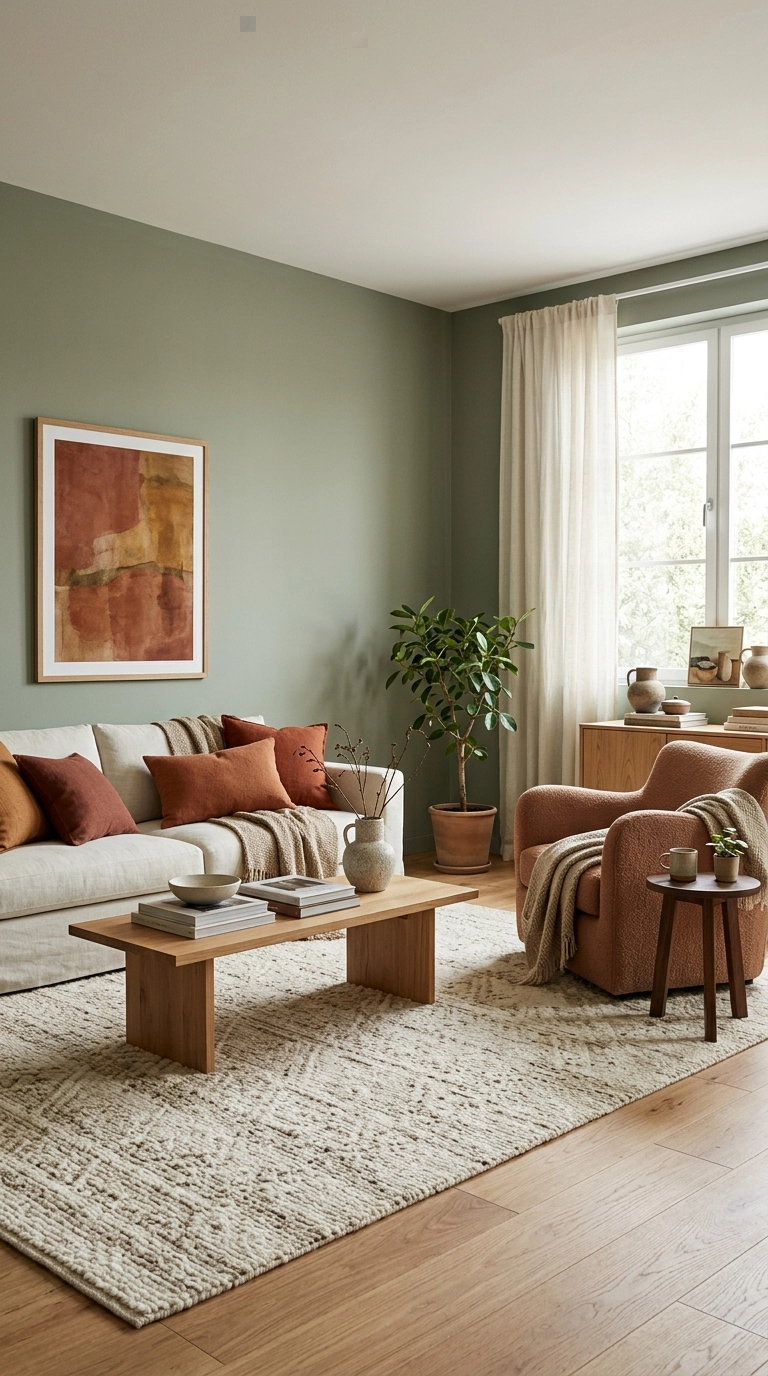
This is the combination to choose if your room faces north or feels cool. Terracotta cushions, a clay toned chair or even one rust coloured art print warms sage instantly and gives the room a Mediterranean softness.
Balance point: about 70 percent sage and neutrals to 30 percent terracotta keeps it warm, not themed.
20. Pair sage with navy for depth
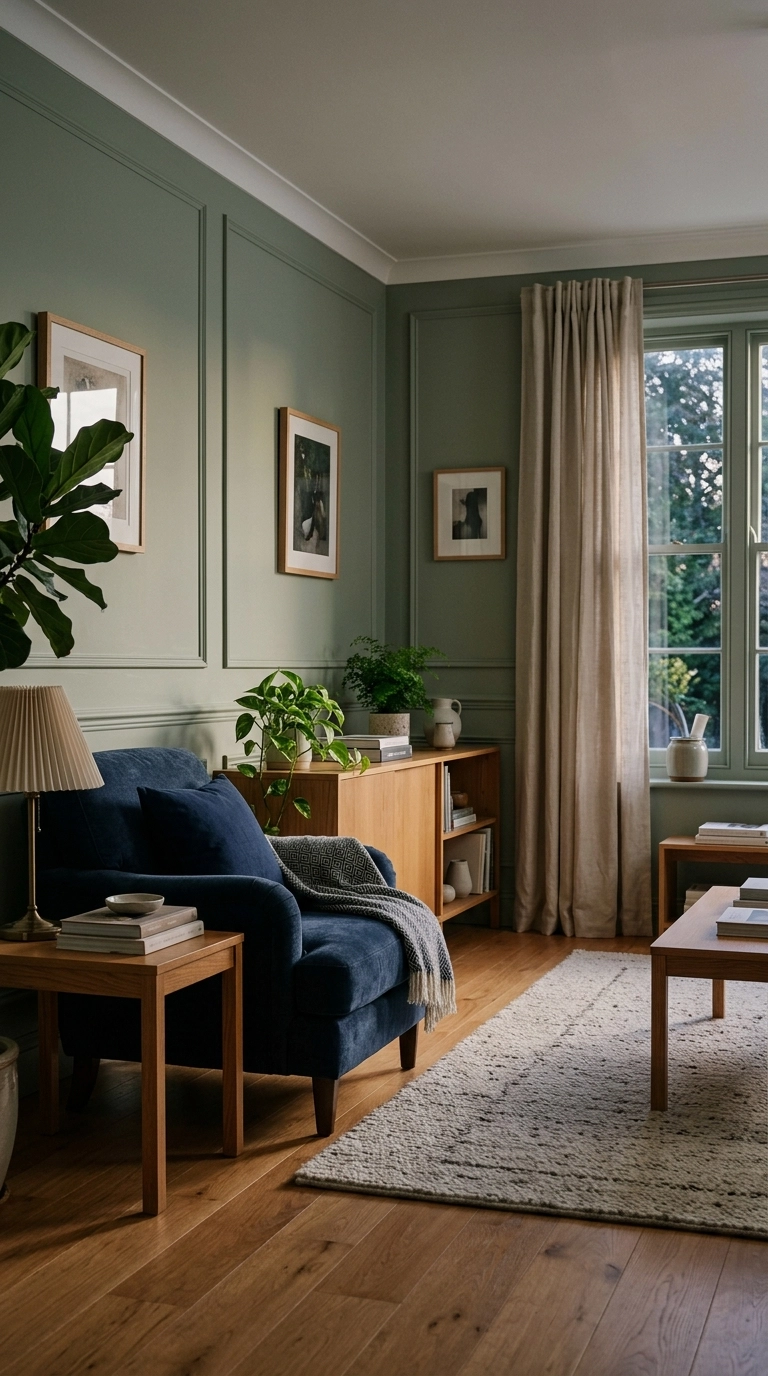
Navy is the evening version of the same room. Deep blue cushions, a navy chair or dark framed art against sage walls creates contrast that makes both colours look richer after dark.
Keep it grounded: navy needs the warm wood from idea 8 in the room too, or the scheme tips cold.
Last, Keep It Fresh
21. Keep the sage base and swap the accents by season

The real advantage of building in this order is that the expensive layers, sofa, paint and rug, can stay put for years. Swap cushions and the throw between cream and linen for summer and deeper clay and wool for winter, and the room changes without a new scheme.
The whole point: a colour scheme built in layers can evolve, a colour scheme bought in one day usually gets replaced in one day too.
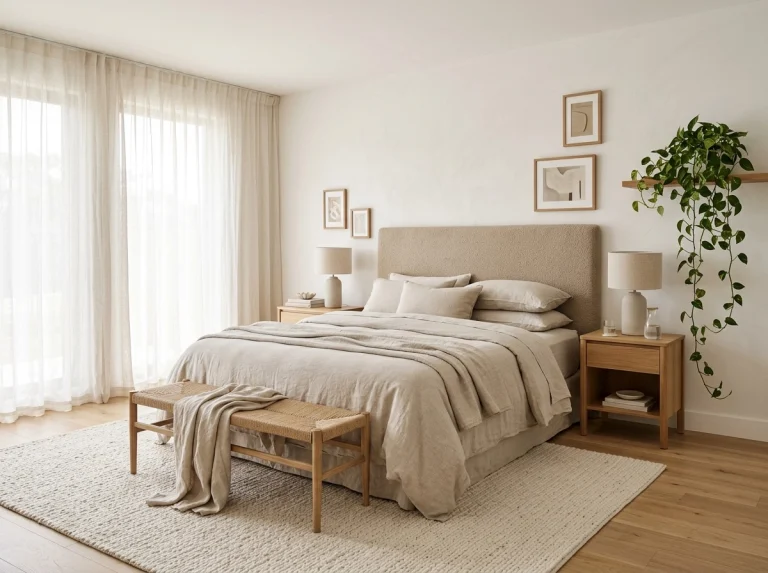
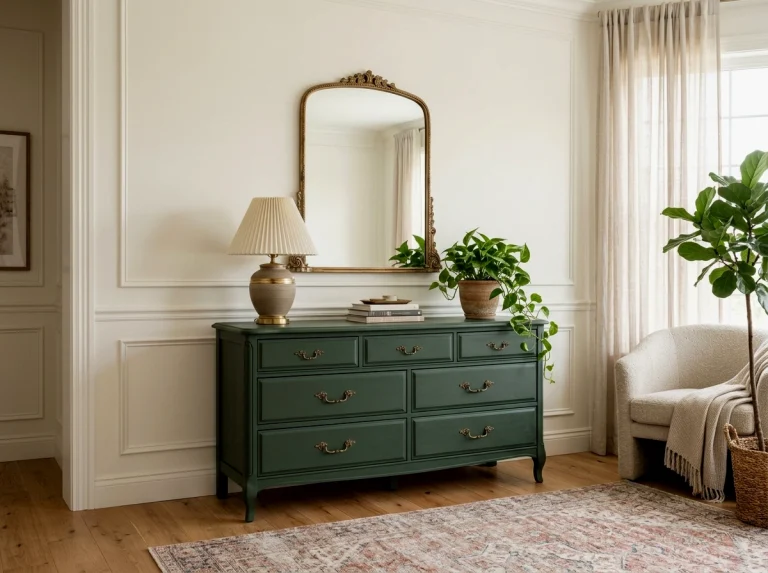
A sage living room does not need everything on this list. Pick the anchor, add layers in order, and stop when the room feels finished to you, that stopping point is the whole method. If the sage bug spreads, the same calm palette works beautifully in a cozy neutral bedroom, and a thrifted dresser makeover is the cheapest way to add a painted piece that matches.