20 Cozy Neutral Bedroom Ideas, Layer by Layer
Neutral bedrooms fail in a predictable way: everything is beige, nothing has texture, and the room ends up looking like a hotel that gave up. The fix is not more colour. It is layers, added in the right order, with each layer bringing a different texture so the neutrals stay interesting.
This list follows the order you would actually build the room: palette first, then the bed, then the textiles, the windows, the floor, the light, and the small calm details at the end. Work down it and stop whenever the room feels right, every layer is designed to sit happily on the ones before it.
Layer One: The Palette Base
1. Start with warm white walls, not stark white
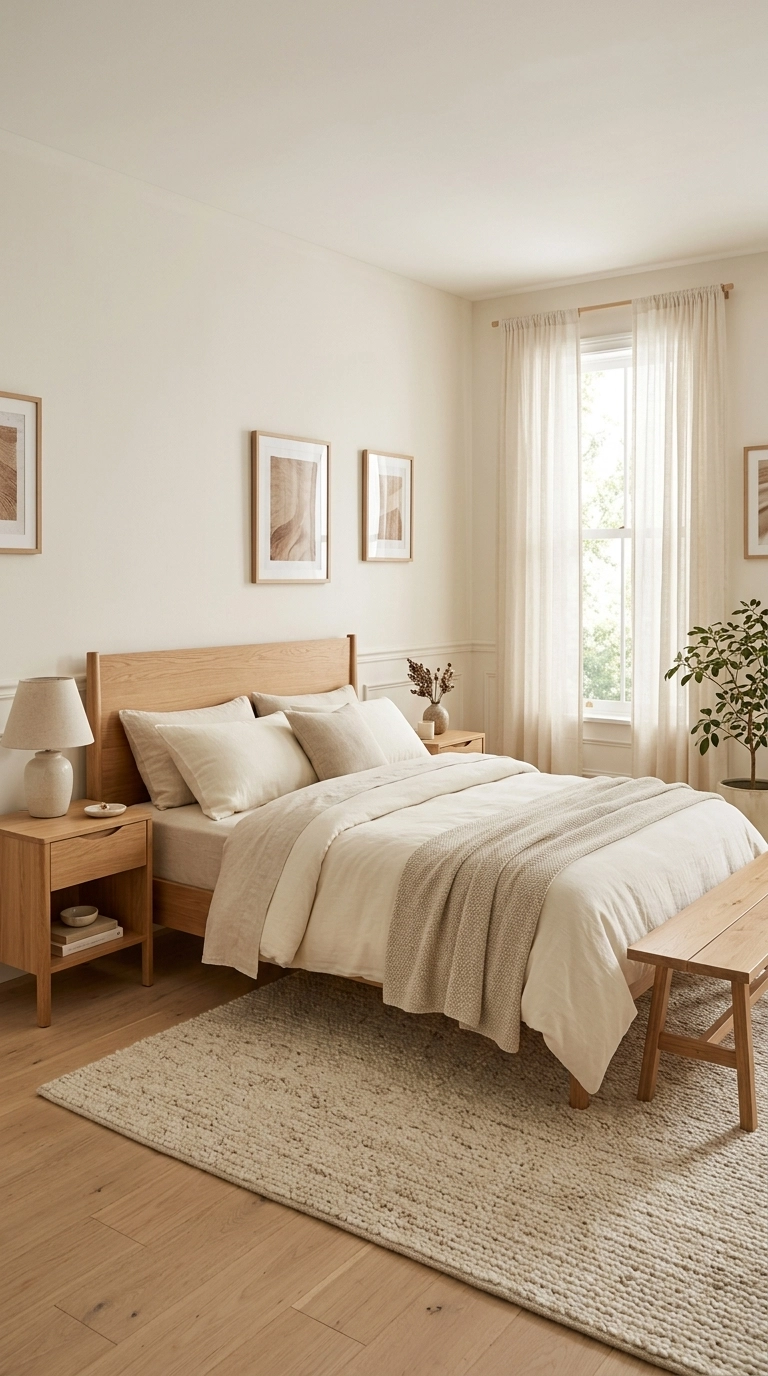
Pure white paint has a blue undertone that fights against warm bedding and wood. A warm white, the kind with a hint of cream in it, makes every neutral you add afterwards look richer instead of washed out.
Undertone check: hold your bedding fabric against the paint sample. If the fabric suddenly looks dirty, the white is too cool.
2. Use greige as the bridge colour
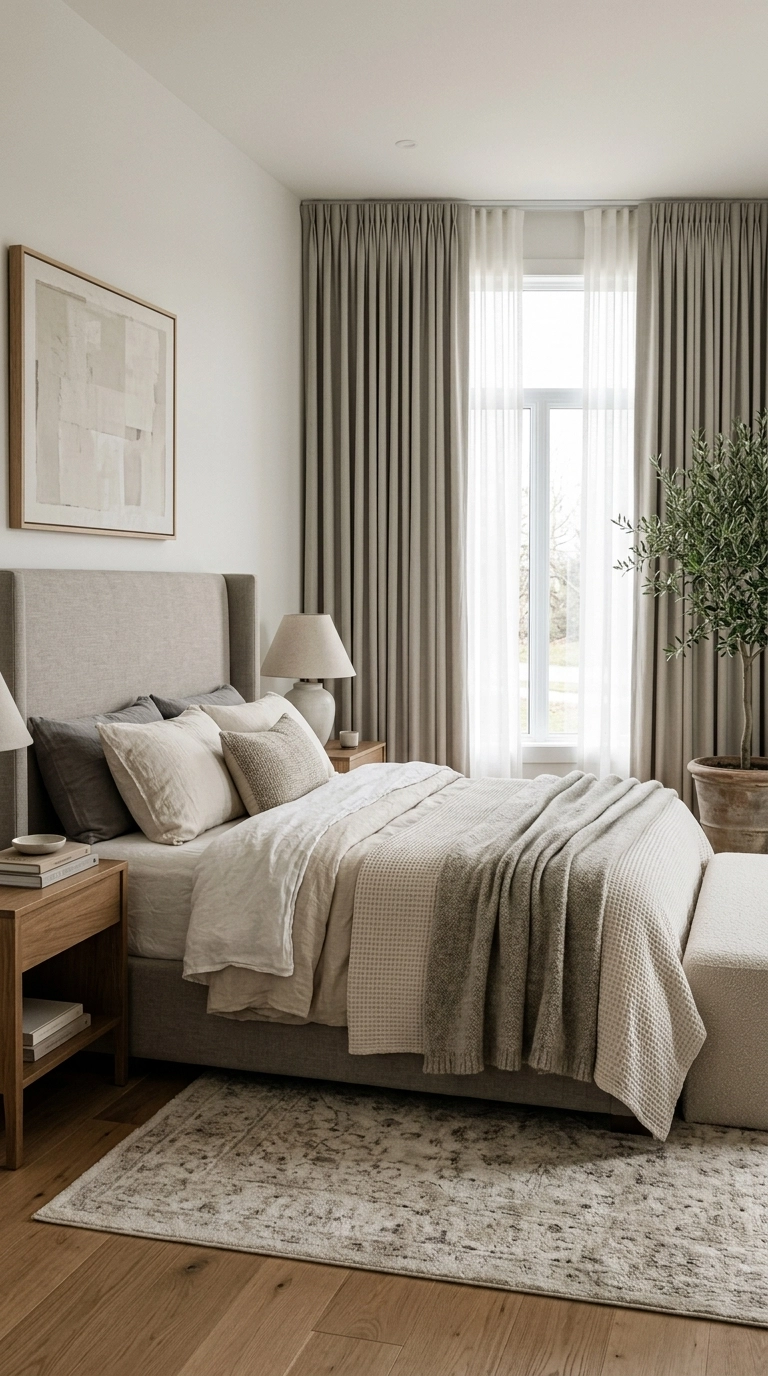
Greige, the grey beige middle ground, is what stops a neutral room splitting into a warm half and a cool half. Use it on the biggest soft pieces, the headboard or the curtains, so both undertones have something in common.
One bridge is enough: two or three competing mid tones is how neutral rooms start to look muddy.
Layer Two: The Bed Frame
3. Choose an upholstered linen headboard

A fabric headboard in natural linen is the single biggest cosiness upgrade a neutral bedroom can get. It softens the whole wall behind the bed and gives the bedding layers something textured to lean against.
Height guide: a headboard around 110 to 130 cm suits most beds, tall enough to show above stacked pillows, short enough not to dominate the wall.
4. Keep the frame low and wooden

A low frame in warm oak or a similar mid wood grounds the soft palette and stops the room floating away into pale nothingness. The contrast between linen above and wood below is the room’s basic structure.
Skip the matching set: a bed frame and bedside tables in identical wood looks furnished by catalogue, not collected.
Layer Three: The Bedding Stack
5. Build on a white bedding base
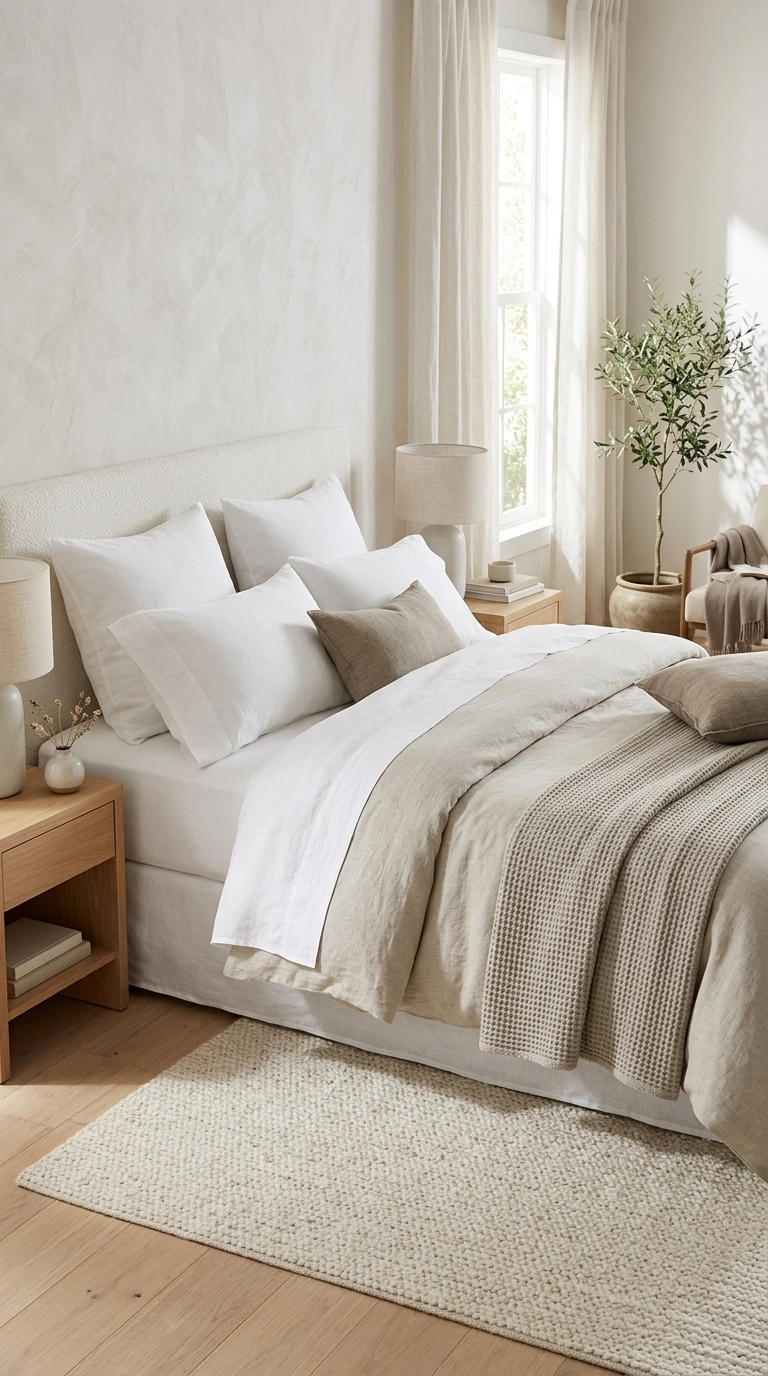
Whatever else changes season to season, plain white sheets and pillowcases underneath keep the bed looking fresh and let every layer on top read clearly. It is the same reason hotels do it.
Practical note: white base bedding can be washed hot together, which no coloured set survives for long.
6. Add an oatmeal linen duvet cover

Linen in a natural oatmeal tone is the workhorse layer of the neutral bed. It is warm without colour, textured without pattern, and it looks better slightly rumpled than pressed, which suits real life.
Weave matters: stonewashed linen softens with every wash, so this is one of the few layers that improves with age.
7. Finish the foot of the bed with a knitted throw
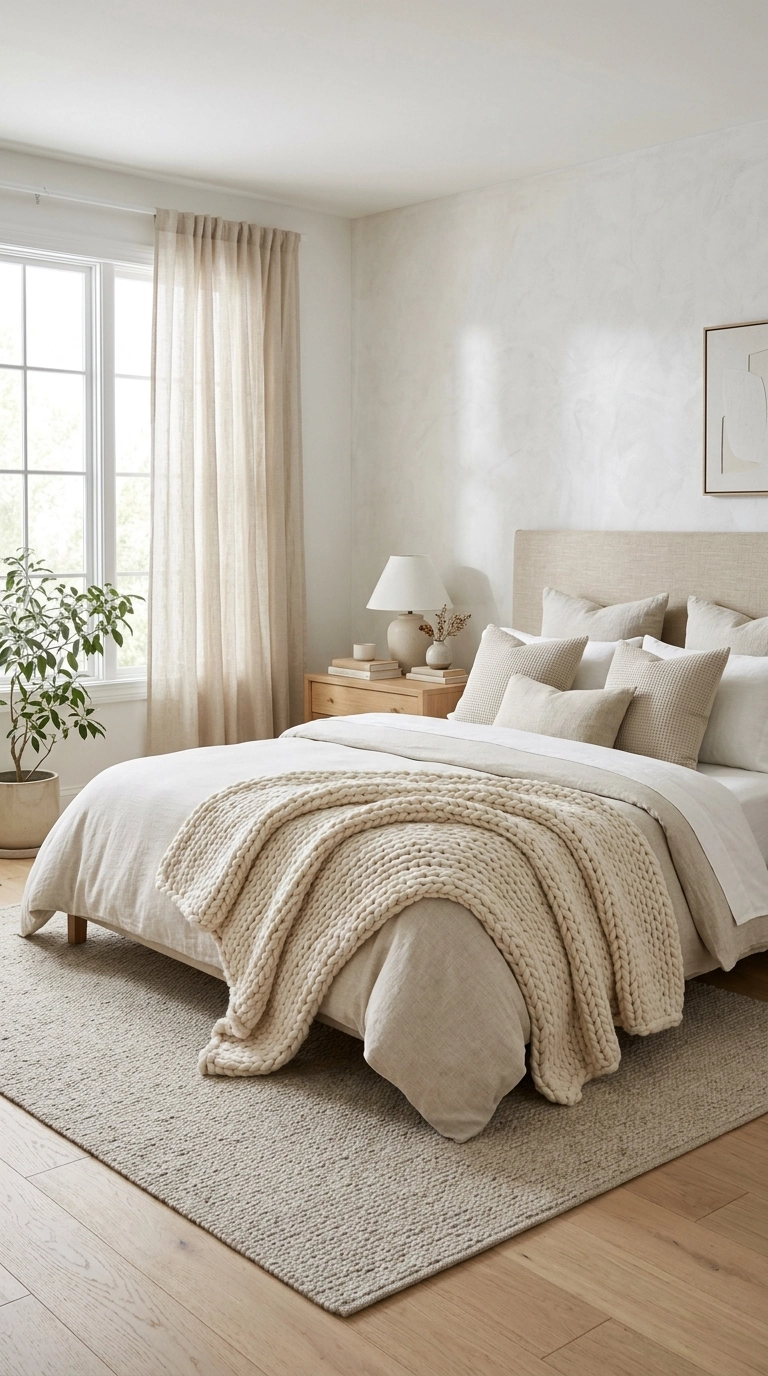
A chunky knit or waffle throw across the foot of the bed is where the eye lands first, so give it the strongest texture you own. Cream, camel or a deep taupe all work over an oatmeal base.
Proportion: the throw should cover the bottom third of the bed, folded or draped, never spread over the whole duvet.
8. Use the five pillow formula

Two sleeping pillows at the back, two larger square cushions in front of them, and one long lumbar cushion at the front. That arrangement gives a dressed bed depth without the cushion mountain that has to be cleared every night.
Storage reality check: if the extra cushions have nowhere to go at night, you will stop making the bed. Five is the ceiling.
9. Fold a deeper neutral quilt for cold months

A quilt in a deeper tone, mushroom, taupe or soft cocoa, folded at the foot of the bed adds the weight a neutral scheme needs in winter and layers straight over the summer stack.
Layer logic: each new textile should be one step deeper or one step more textured than the one under it, never both at once.
The Layer Checklist
Palette: warm white walls, one greige bridge piece, no stark white anywhere.
Frame: fabric headboard for softness, low warm wood for grounding.
Bedding: white base, oatmeal linen, one strong texture, five pillows maximum.
Windows: full length curtains, sheers behind for soft morning light.
Floor: one large rug the bed sits on, not a small one it hides.
Light: two bedside lamps and one warm overhead, all around 2700K.
Details: one artwork, one plant, clear surfaces, nothing else.
Layer Four: The Windows
10. Hang floor length curtains in flax linen
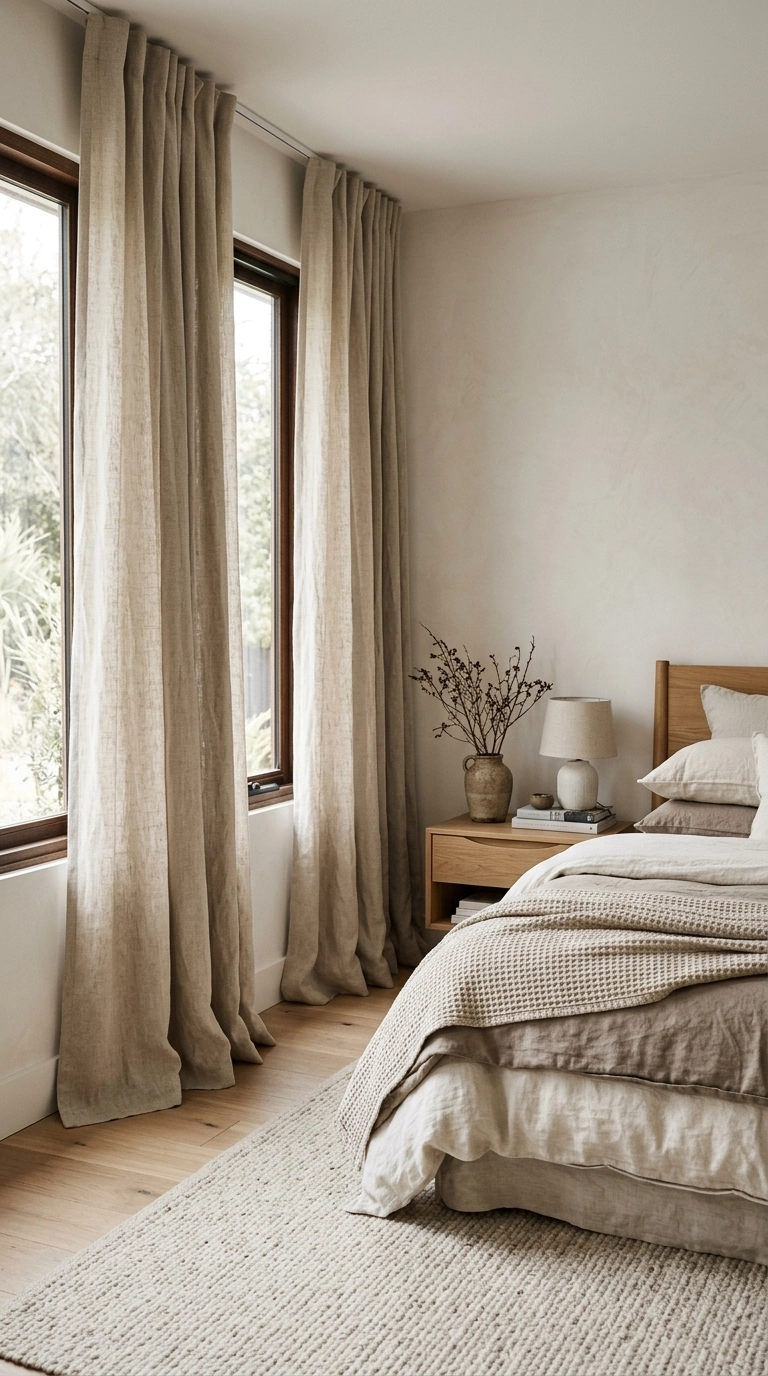
Curtains that stop at the windowsill chop a bedroom wall in half. Full length flax linen, hung wide so the fabric stacks on the wall not the glass, makes the window feel taller and the room calmer.
Length guide: curtains should just kiss the floor or break 1 cm above it, pooling belongs in ballrooms, not bedrooms you vacuum.
11. Add sheers behind for the morning
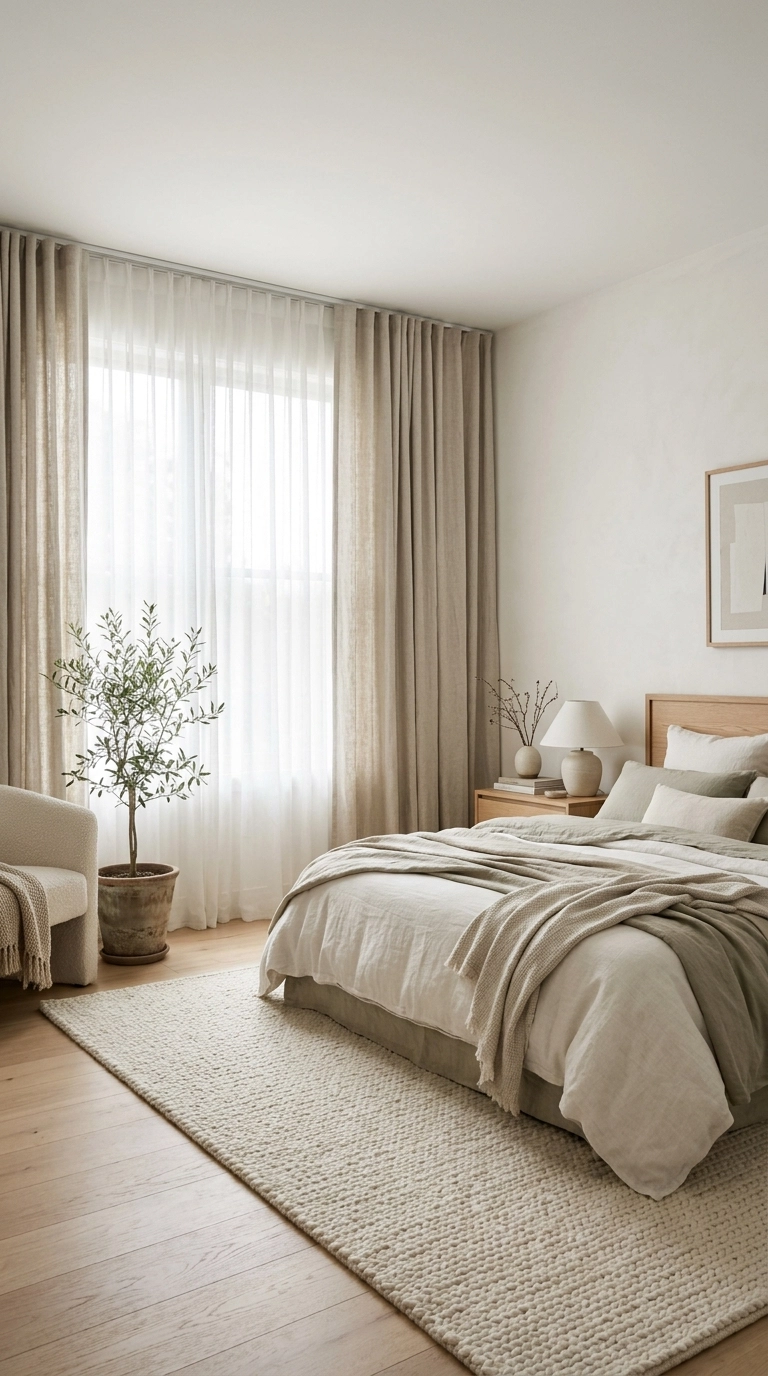
A sheer layer behind the main curtains is what gives a neutral bedroom its soft morning light instead of a hard wake up glare. It also adds privacy without closing the room down.
Double track note: a simple double curtain track costs little and is what makes this two layer setup work day to day.
Layer Five: The Floor
12. Put one large ivory rug under the bed
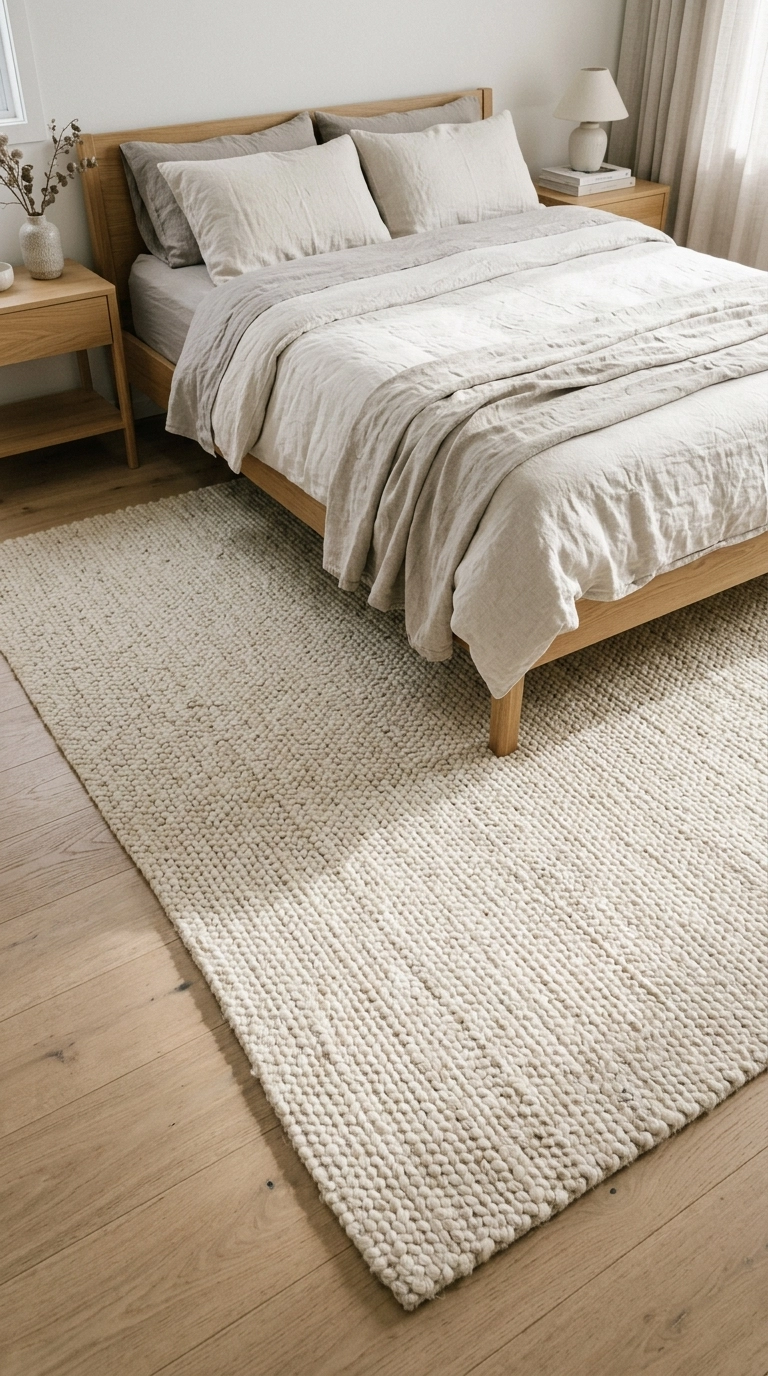
The rug is the layer most neutral bedrooms get wrong by going too small. A large, low pile ivory or wool blend rug should sit under the bed and extend well beyond it on both sides, so your feet land on it every morning.
Measure before buying: you want roughly 60 to 75 cm of rug showing on each side of the bed and at the foot.
13. Layer a runner on the side you use most
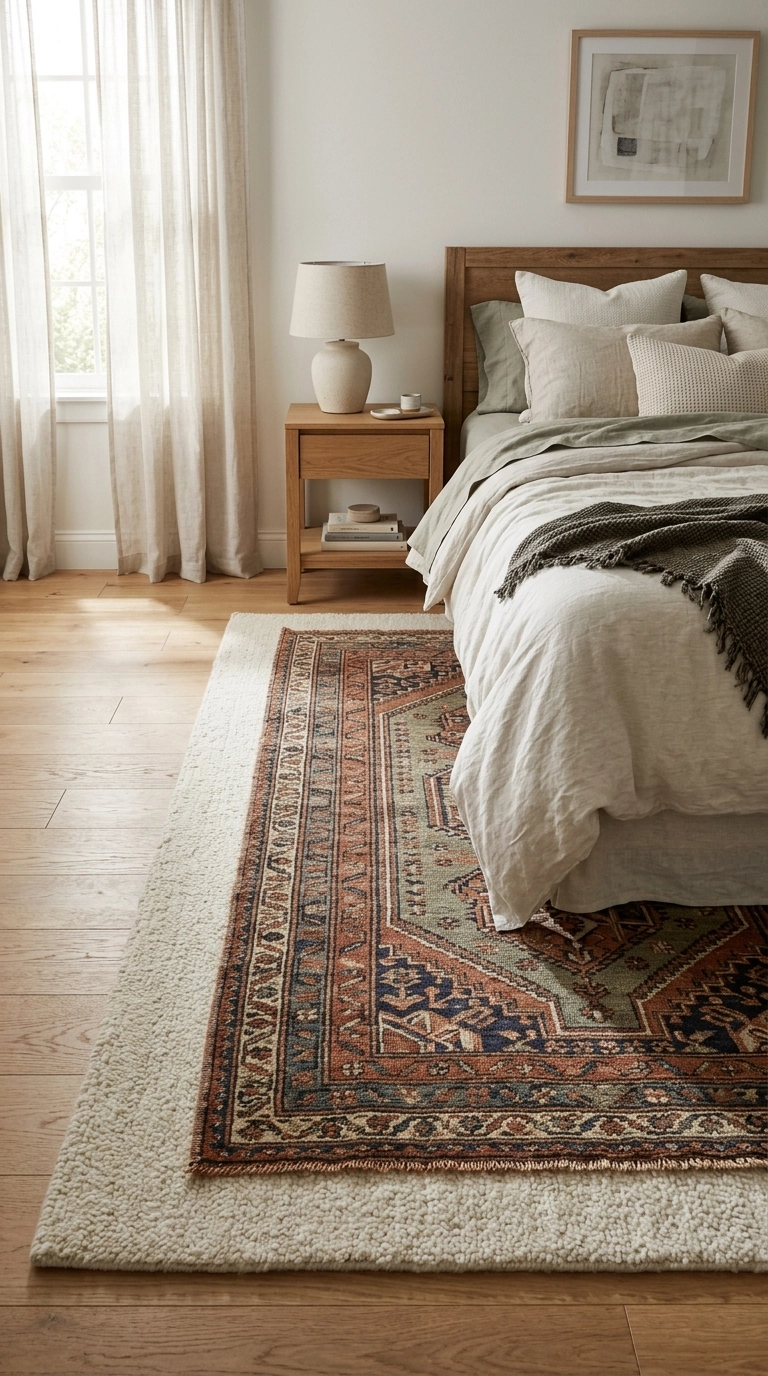
A smaller patterned runner or a sheepskin style layer on your side of the bed adds the second floor texture and marks the route you actually walk. It is a small layer with an outsized effect on how finished the floor looks.
Asymmetry is fine here: dressing only one side is honest styling, and it looks more collected than forced symmetry.
Layer Six: The Light
14. Match two bedside lamps, loosely
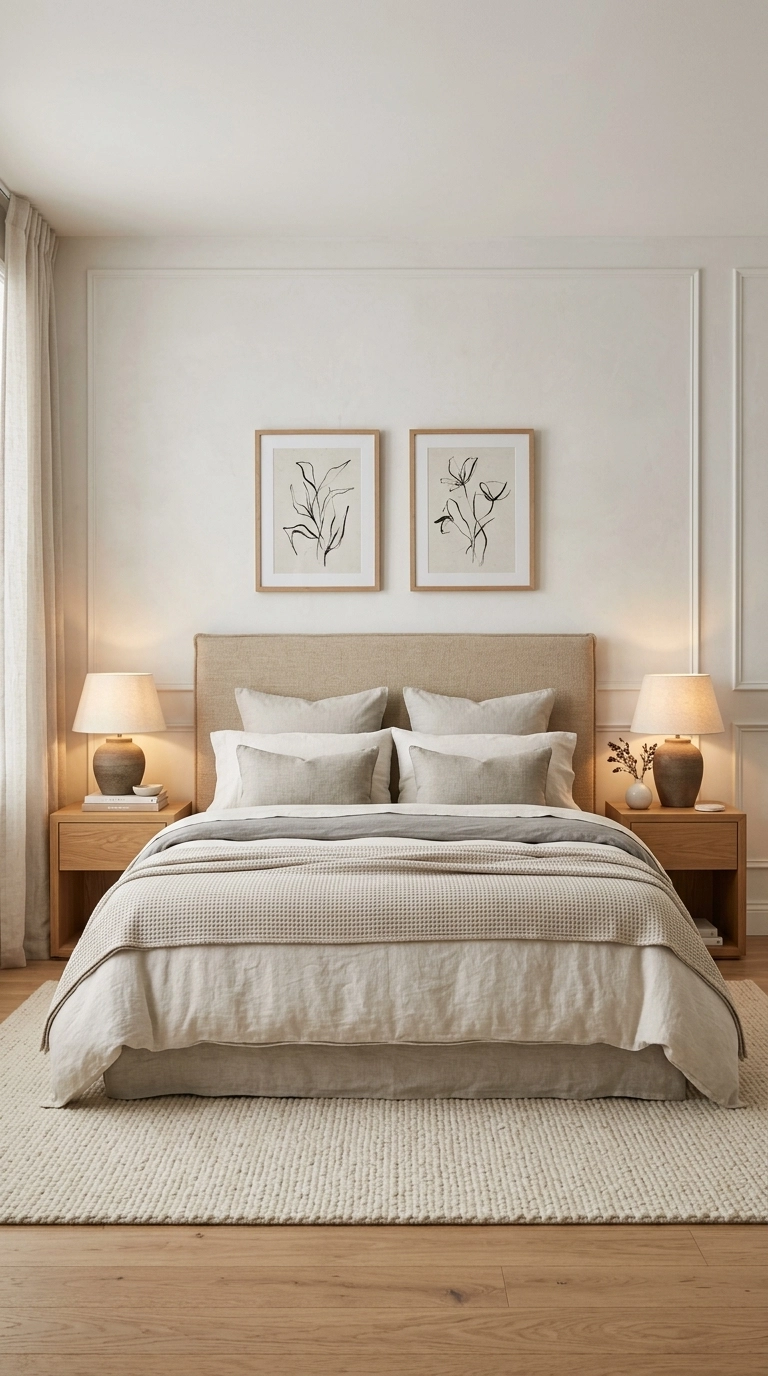
Bedside lamps are the one place a neutral bedroom benefits from near symmetry, because the bed itself is symmetrical. Same height and shade colour matters more than identical bases.
Shade rule: warm white or natural linen shades at around 2700K keep neutrals golden. Cool bulbs turn the whole palette grey.
15. Add one soft overhead light
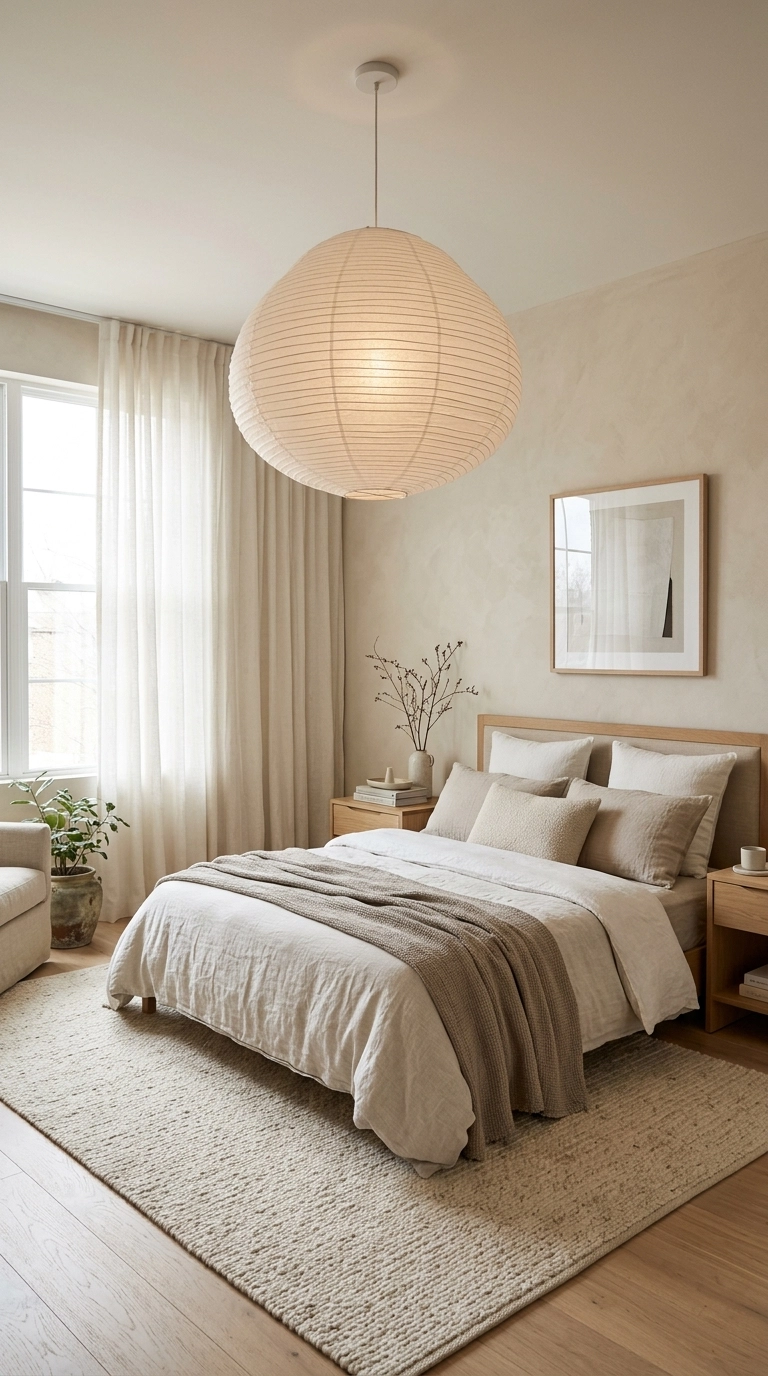
A paper lantern style pendant or a fabric drum shade diffuses light across the whole room and kills the harsh shadows that make neutrals look dingy. On a dimmer, it becomes the evening layer.
Electrician note: swapping a pendant shade is usually a no rewiring job, but anything beyond the shade itself belongs to a qualified electrician.
Where the money matters: the cost split
Spend on: the mattress and pillows you sleep on, the linen duvet cover you touch every night, and the rug, because a thin rug cheapens every layer above it.
Save on: cushions, throws, artwork and the bench. These are the layers you will rotate and replace as your taste moves, so they should be the cheapest things in the room.
The logic: money belongs in the layers closest to your skin and under your feet. Everything decorative can be thrifted, swapped or upgraded later without rebuilding the room.
Layer Seven: The Calm Details
16. Put storage at the foot of the bed
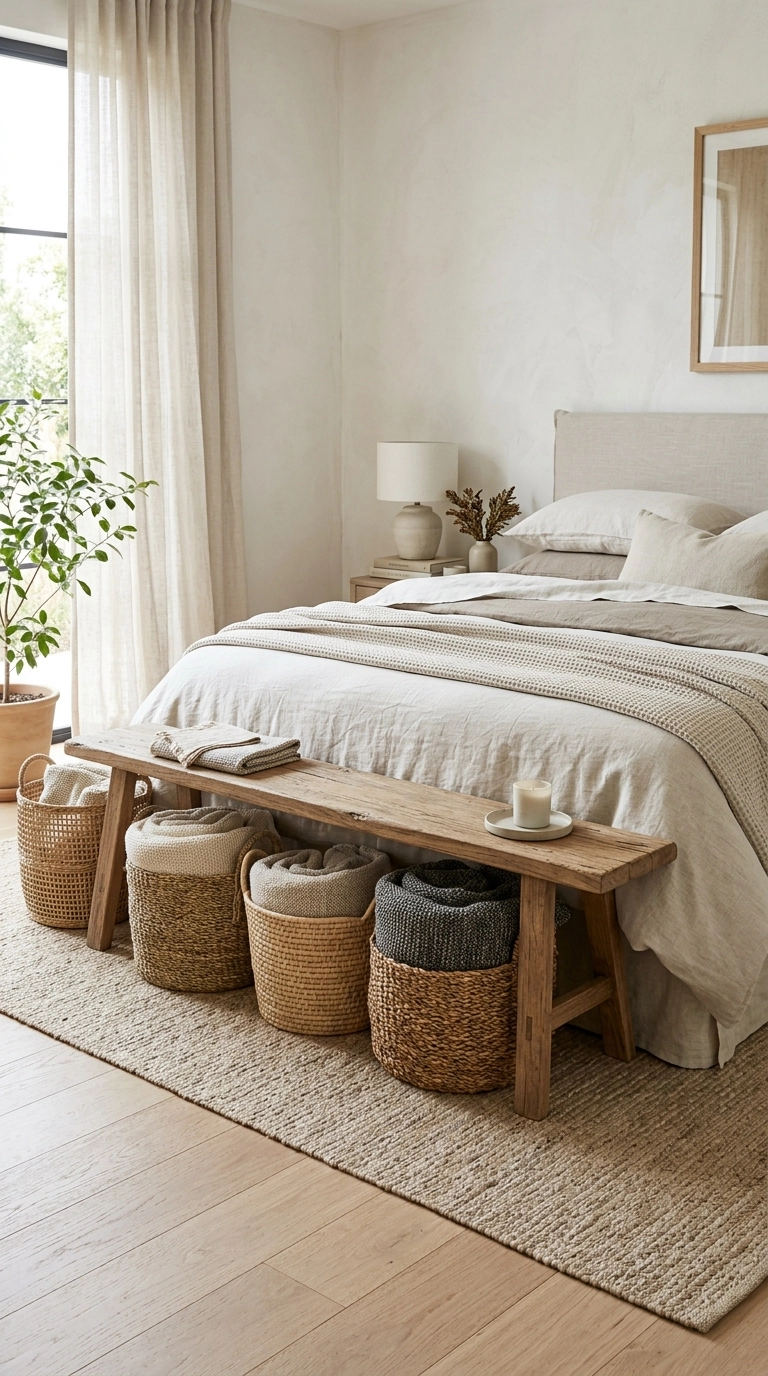
A bench, trunk or pair of baskets at the foot of the bed catches the throw, the extra quilt and the clothes that otherwise colonise a chair. In a neutral room, hidden clutter matters as much as colour.
Dual purpose: a lidded trunk stores the winter quilt in summer and the light layers in winter, so the layer system runs itself.
17. Hang one calm artwork above the bed
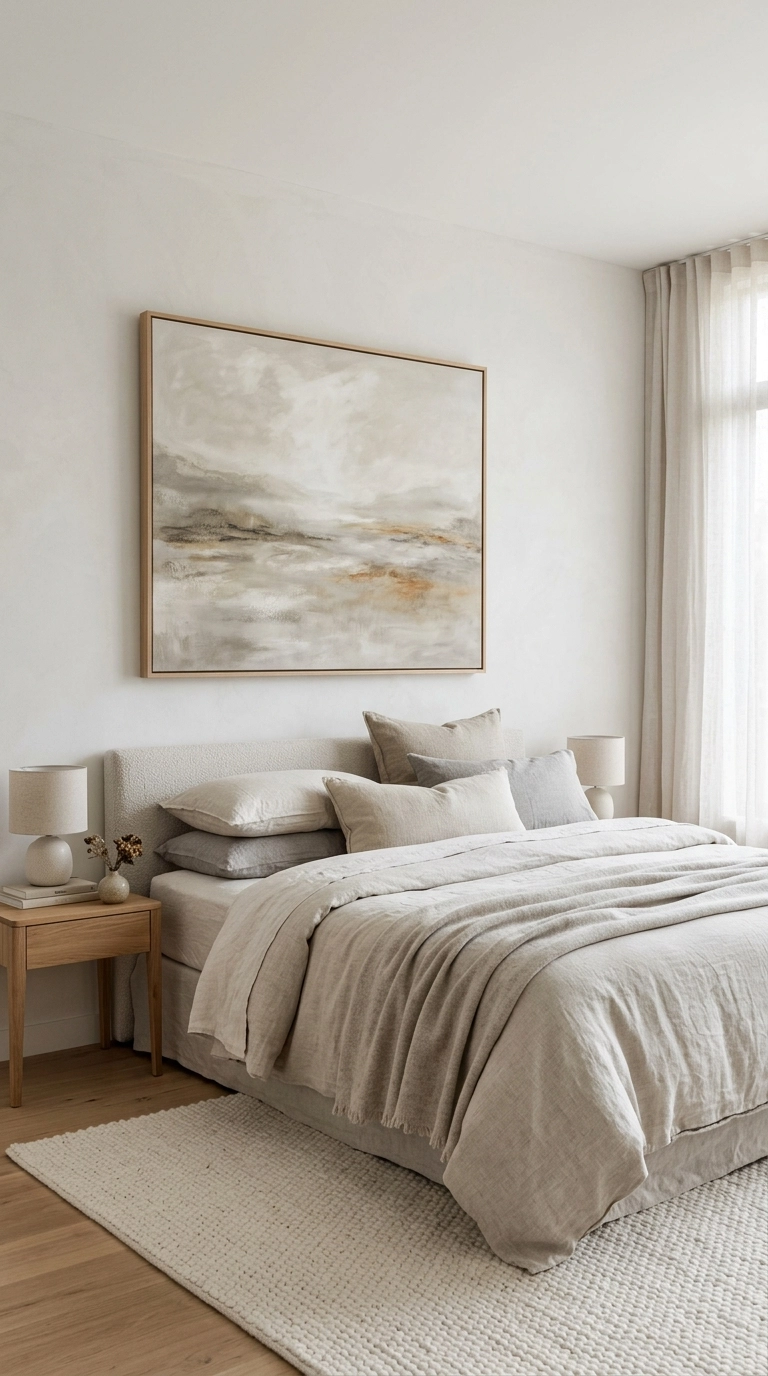
One large piece in soft neutral tones, an abstract landscape, a line drawing or a woven wall hanging, finishes the bed wall without introducing a competing palette. Oversized and quiet beats a gallery of small loud pieces here.
Width guide: artwork around two thirds the width of the bed looks intentional. Much narrower and it floats.
18. Bring in one trailing plant
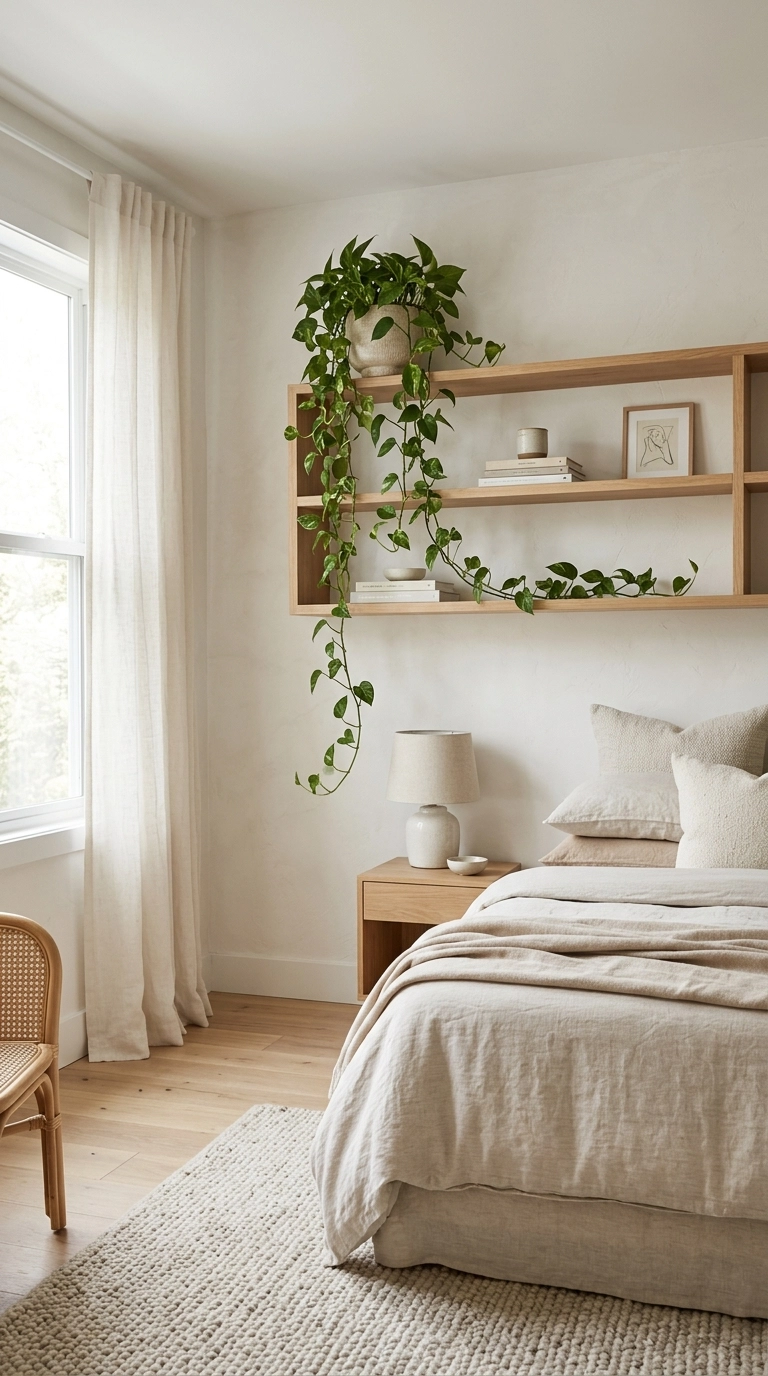
A pothos or similar trailing plant on a high shelf or wardrobe top softens the room’s straight lines and is the only strong colour a neutral bedroom needs. Keep it to one or two plants so the calm survives.
Light honesty: trailing plants tolerate the medium light of most bedrooms. If yours is north facing and dark, a good quality faux stem beats a dying real one.
19. Style the bedside surfaces, then stop
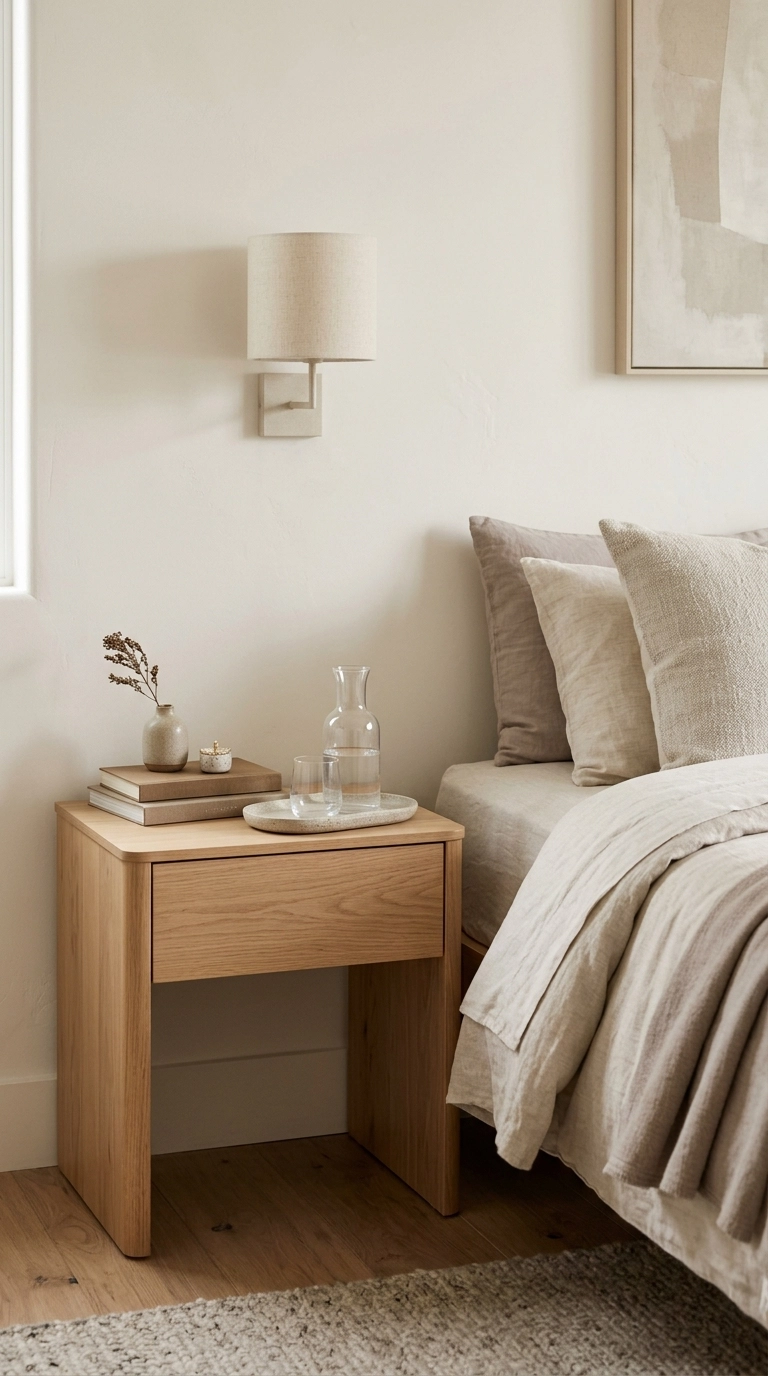
A small stack of books, a carafe or a tray that corrals the phone charger and hand cream is enough. Neutral rooms show clutter faster than colourful ones, because there is no pattern to hide it in.
The tray rule: if it fits on the tray it can stay out, if it does not, it lives in the drawer.
20. Line the curtains for real darkness
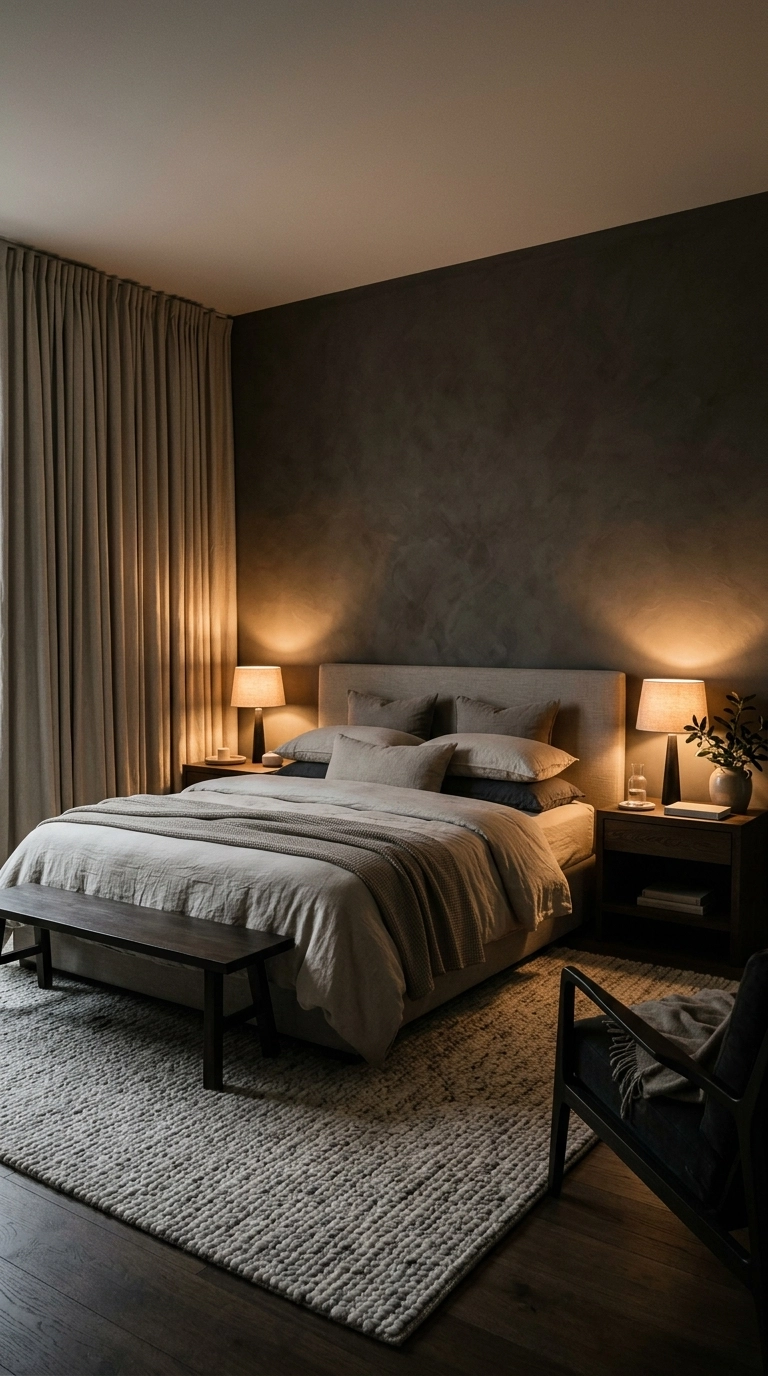
The final layer is invisible: blackout lining behind the linen curtains. A neutral bedroom only feels restful if it sleeps dark, and lining upgrades the curtains you already chose for looks into curtains that also work.
Fitting note: detachable blackout linings clip or hook onto existing curtains, so this layer needs no new curtains and no sewing.
A neutral bedroom built this way has seven layers, and you can remove any one of them without the room falling apart. That is the difference between a palette and a scheme, the scheme holds together because every layer was chosen to sit on the one beneath it. Carry the layered neutrals into shared spaces with sage green living room ideas, and steal the zone thinking from these kitchen counter decor ideas for your own dresser top.