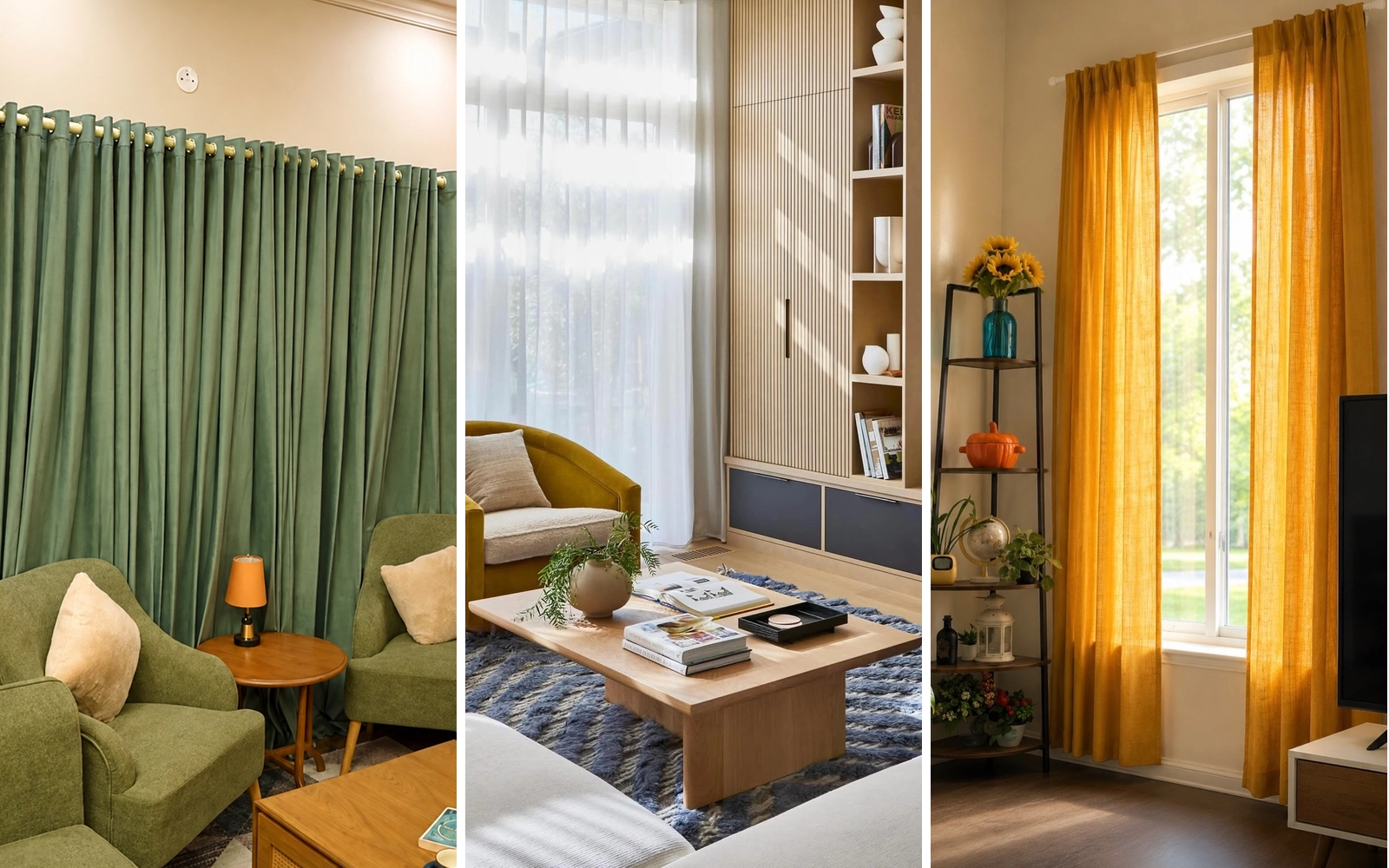
24 Small Living Room Curtain Ideas for Bigger, Brighter Rooms
Curtains are the cheapest renovation a small living room can get. They change the light, the height, and the mood of the room without moving a single piece of furniture, and they cost less than the rug. Get them right and the room feels taller, brighter, and finished.
The twenty-four ideas below are grouped by the job the curtains do. Let the light in is for rooms that need brightness. Add warmth and weight is for rooms that feel bare. Layer them is for the best of both. Make a statement is for windows that deserve the attention. Pick your job, then steal the curtain.
Let the light in
For the room that needs brightness. Sheers that glow instead of block.
Run white sheers floor to ceiling
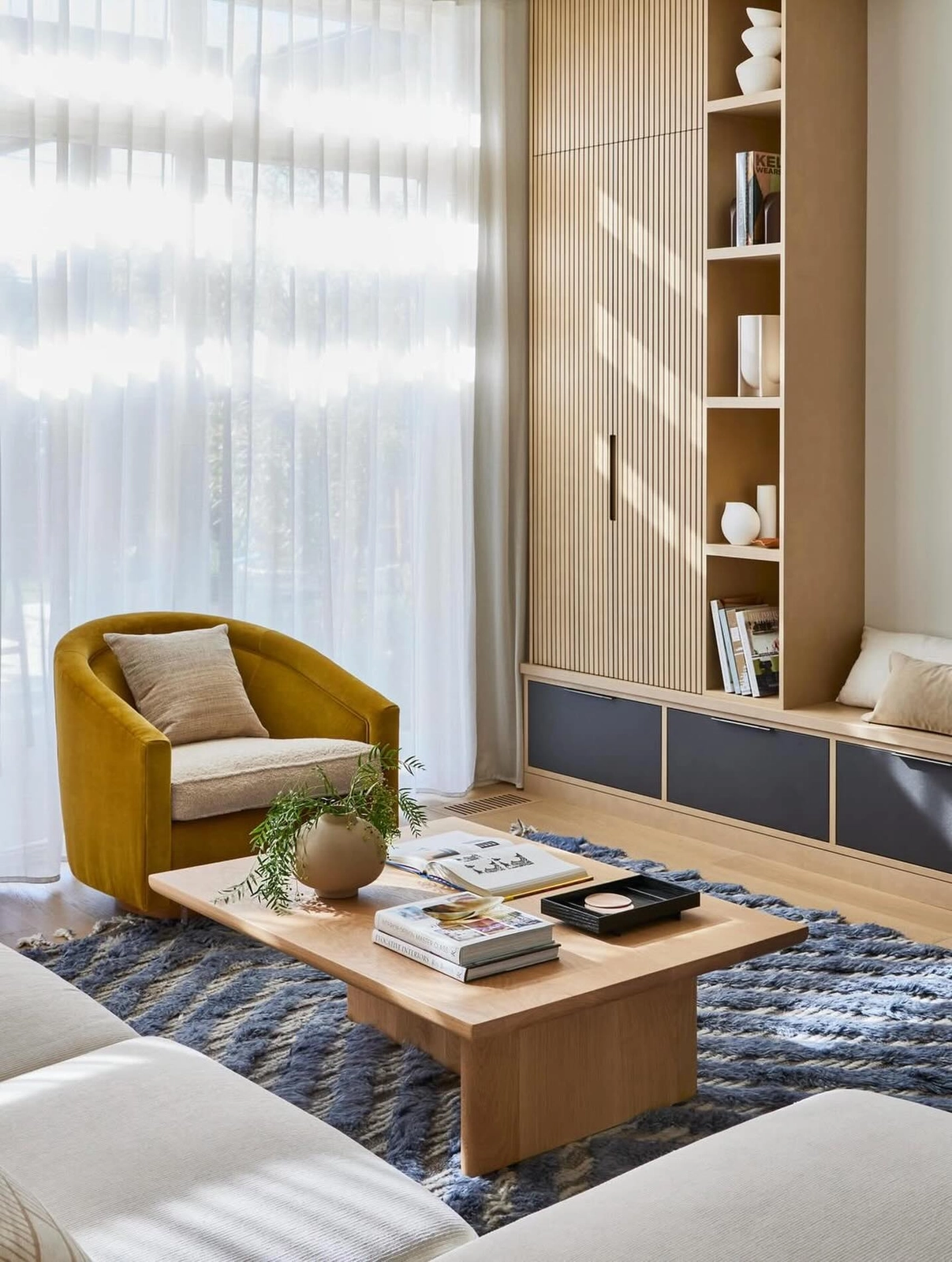
Photo: @theshadestore on Instagram
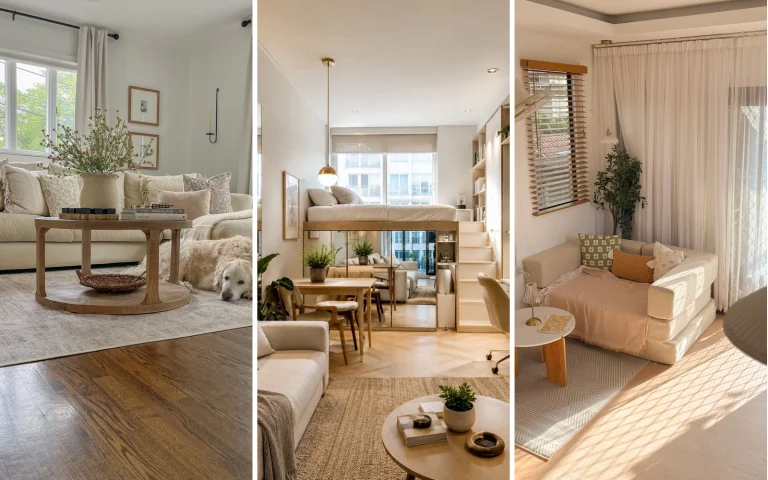
Floor-to-ceiling white sheer curtains turn a window wall into a light source. The sheers diffuse the sun instead of blocking it, the room glows all day, and the window looks twice its size. This is the single highest-impact curtain move for a small living room.
Floor-to-ceiling means the rod sits near the ceiling, not near the window frame. The extra fabric above the window is what makes the ceiling feel higher, and it costs nothing but longer panels. Sheers are also the backbone of the look-bigger playbook, if you want the full set.
Sheer the whole wall, not just the window
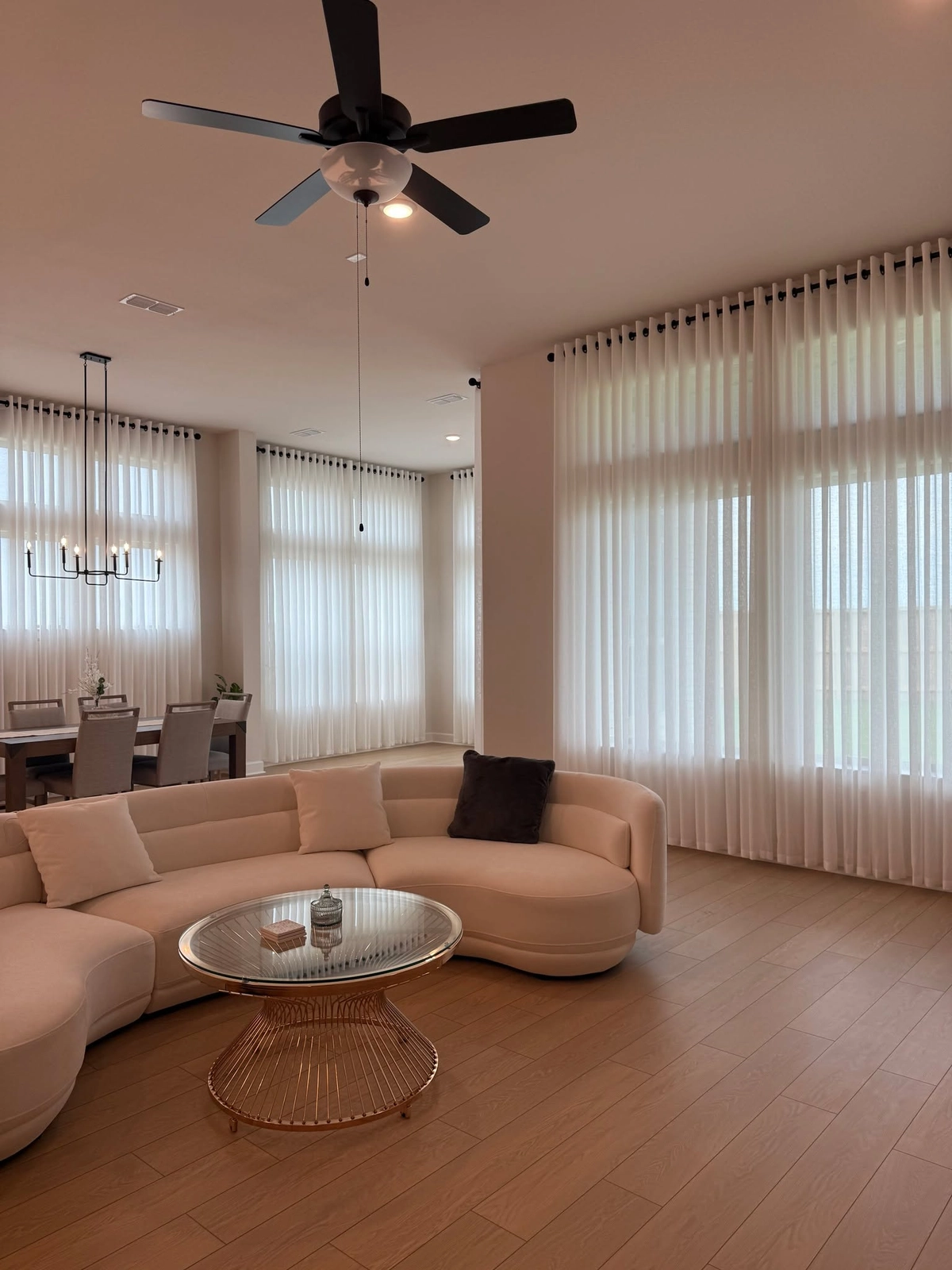
Photo: @curtainitytexas on Instagram
White sheer curtains stretched across the entire wall make the window’s exact size irrelevant. The wall becomes one soft glowing surface, the room’s edges blur, and the small space feels like it continues past the glass. Measure the wall, not the window.
Wall-wide sheers need a ceiling-mounted track or a rod that spans the full width. The track disappears, the fabric does the work, and the installation looks custom for the price of ready-made panels.
Soften the fireplace with sheers
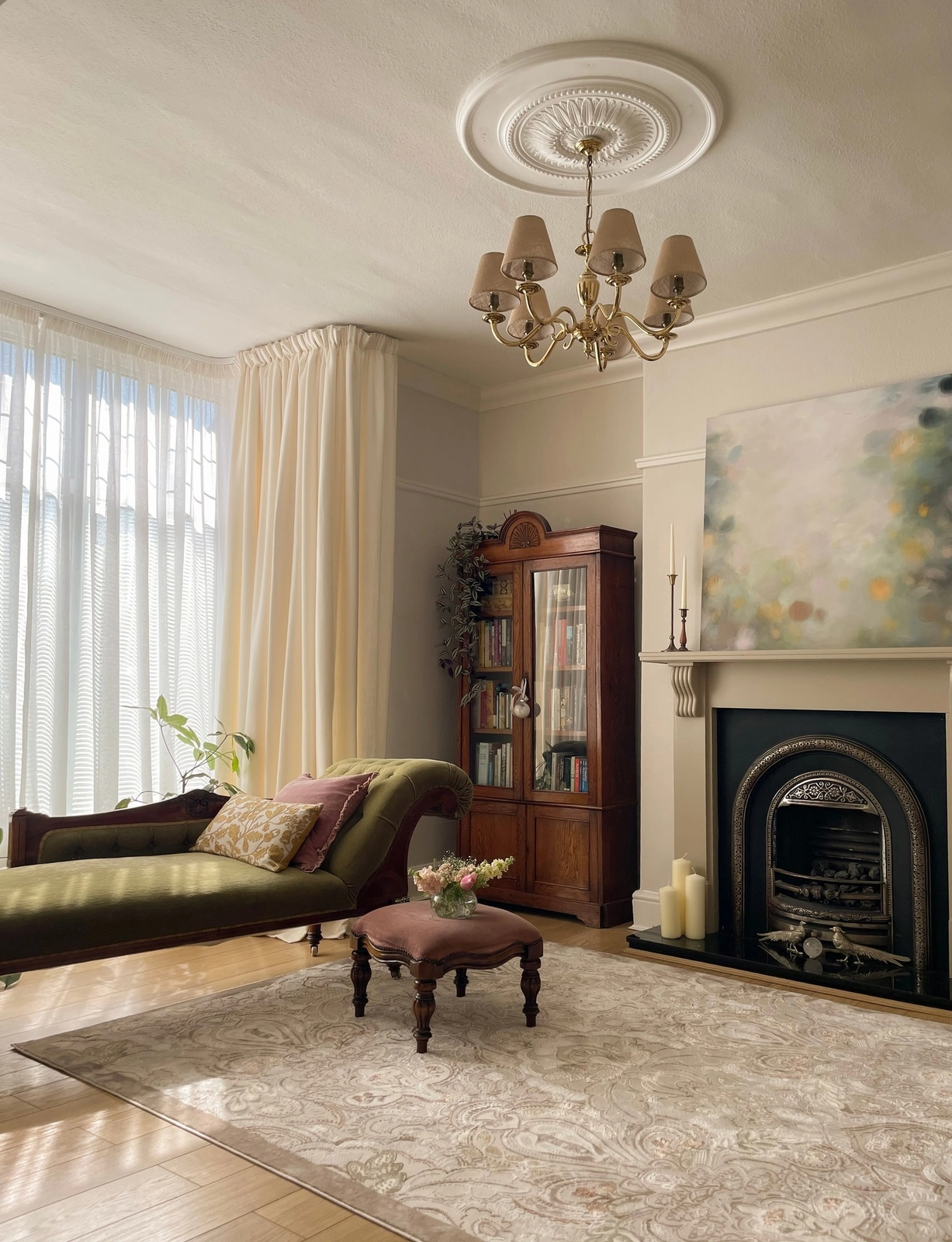
Photo: @blinds2go on Instagram
White sheers hung in front of a fireplace wall prove that curtains are not only for windows. The sheers soften the hard masonry, the light filters through, and the fireplace becomes part of the room’s soft architecture instead of a dark hole.
Sheers near a working fireplace need clearance from the heat and the sparks. Keep them tied back when the fire is lit, or hang them on the adjacent wall where they soften without risk.
Cover the wide wall in one sweep
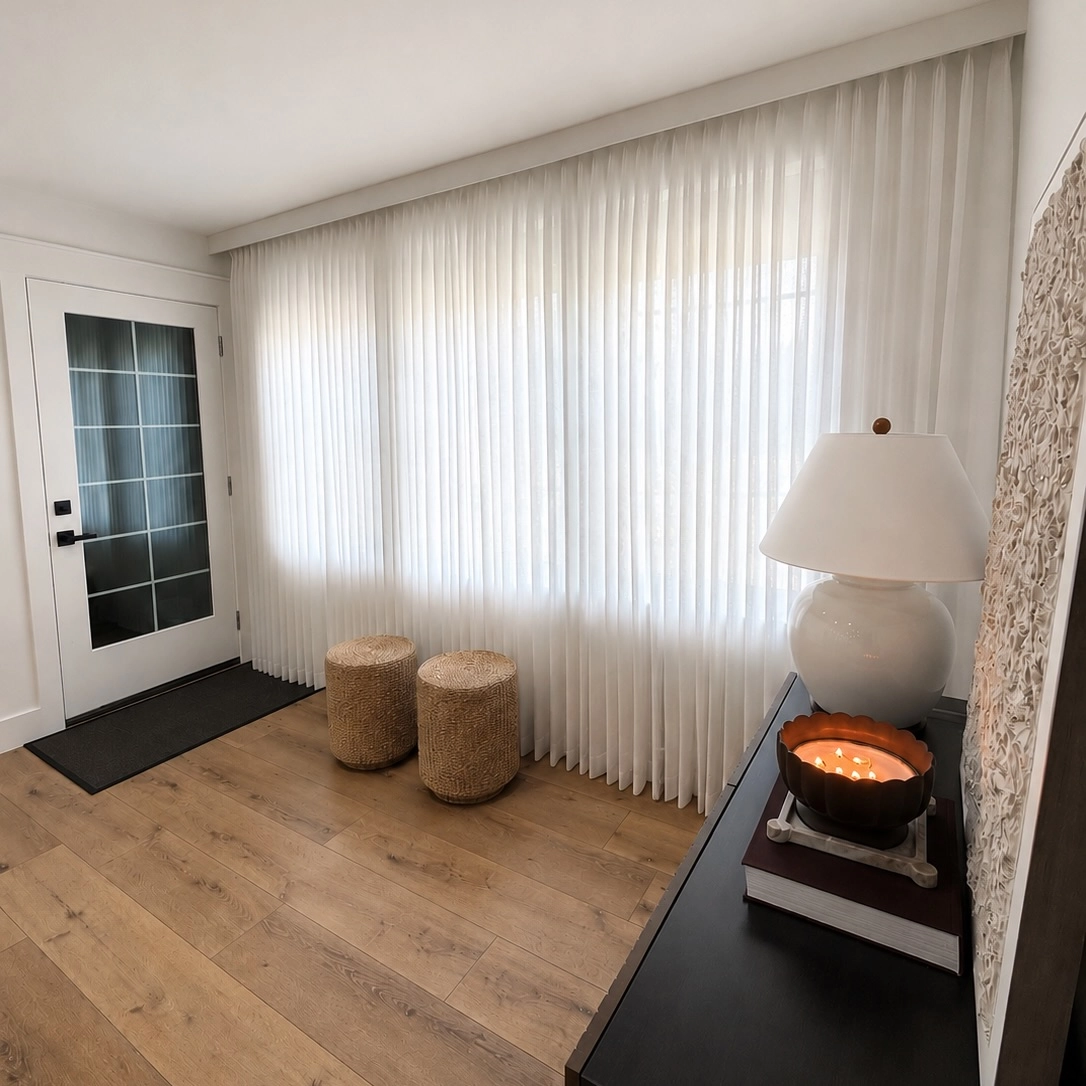
Photo: @momto7_ on Instagram
Floor-to-ceiling white sheers across a wide window wall erase the wall’s boundaries. There is no start and no end to the window, just light, and the small living room borrows all of it. Wide walls want wide curtains, always.
One sweep of sheers beats three separate panels on a wide wall, because the seams break the glow. Buy the widest panels you can find, or sew two together, and let the wall be one piece of light.
Keep it bright and simple
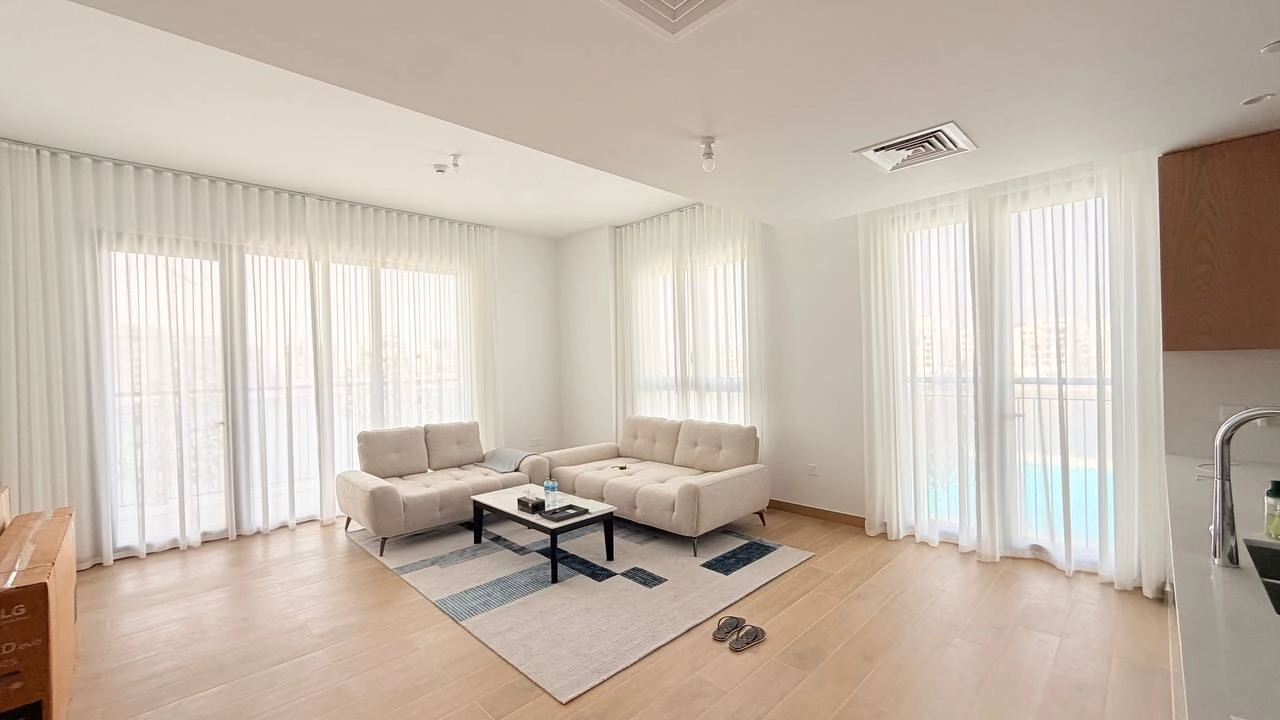
Photo: @diamond_blindscurtains on Instagram
White sheer curtains in a bright room are the quietest idea in this list, and sometimes quiet wins. The sheers take the glare off, the room stays luminous, and nothing competes with the furniture. Not every window needs a statement.
Simple sheers need good fabric to avoid looking cheap: a linen-look weave, a weighted hem, no shine. The fabric is the whole design here, so spend the savings from skipping the drapes on better sheers.
Let the sheers pool just slightly
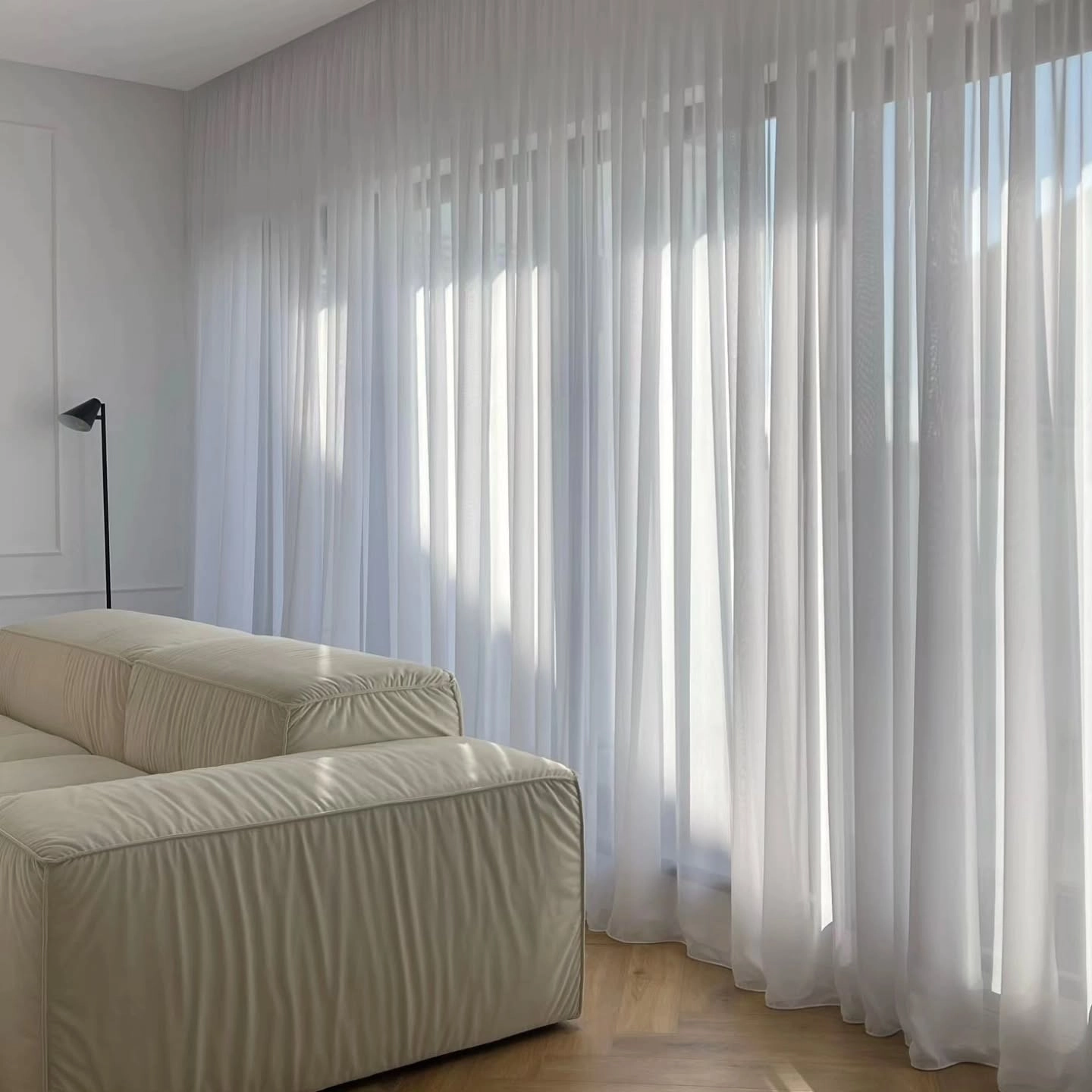
Photo: @home_line_by_eva on Instagram
Floor-to-ceiling white sheers that kiss the floor, or pool just an inch, make a small room feel tailored. The slight puddle says custom, the clean line says calm, and the window looks finished instead of dressed.
The kiss-versus-pool decision is about pets and robots: pooling sheers collect both. If the vacuum runs daily, hem to kiss the floor; if not, the inch of puddle is worth the luxury it reads as.
Add warmth and weight
For the room that feels bare. Drapes with body, colour, and presence.
Go sage velvet for instant richness
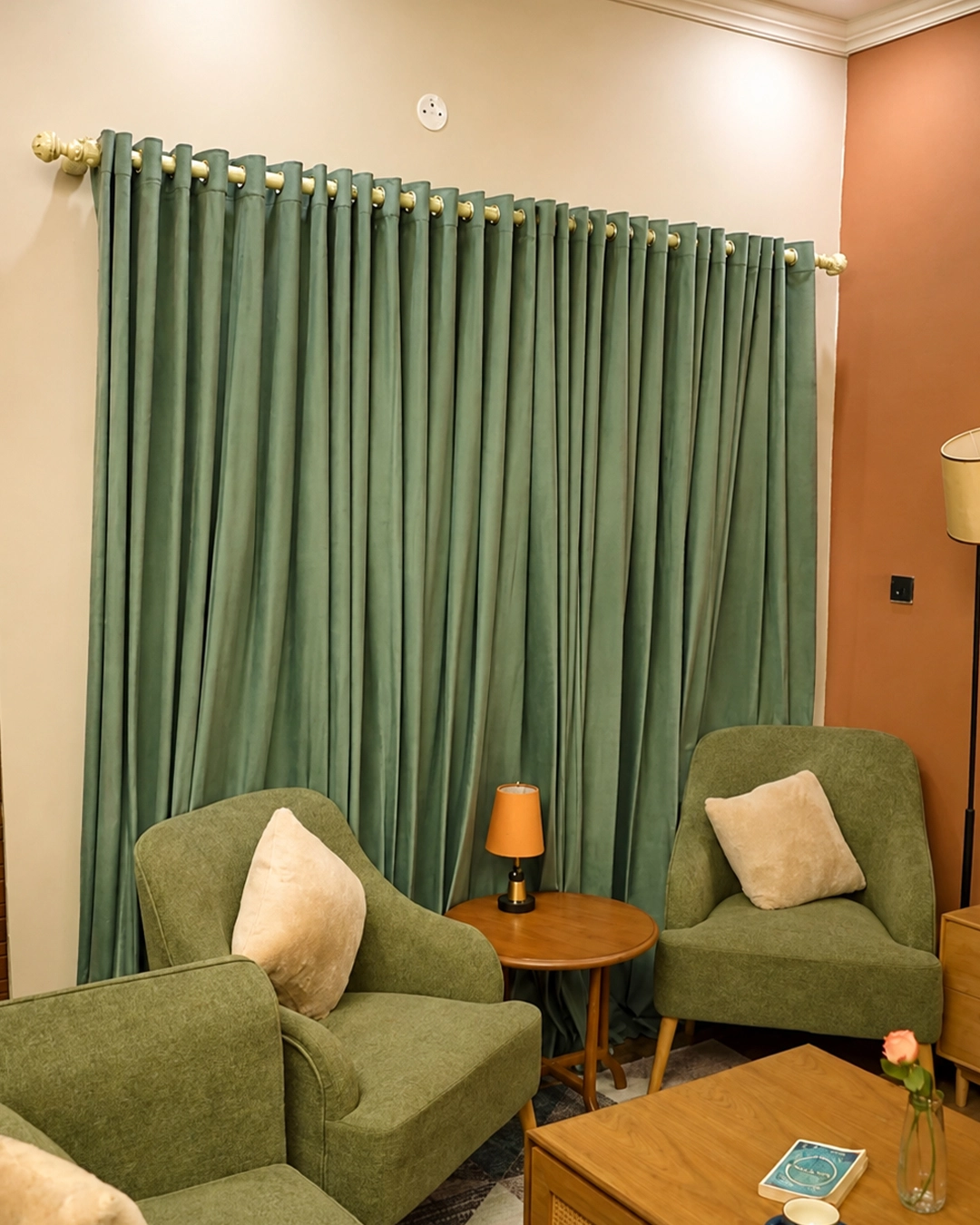
Photo: @the_linen.pk on Instagram
Floor-length sage-green velvet drapes give a small living room the richness of a room twice its budget. The velvet catches the light, the sage sits calmly with everything, and the window becomes the room’s jewellery. Heavy fabric is the fastest warmth there is.
Velvet in a small room wants to be the only heavy thing, or the room gets weighed down. Keep the furniture light, let the drapes carry the weight, and the balance holds.
Choose grey-blue for calm weight
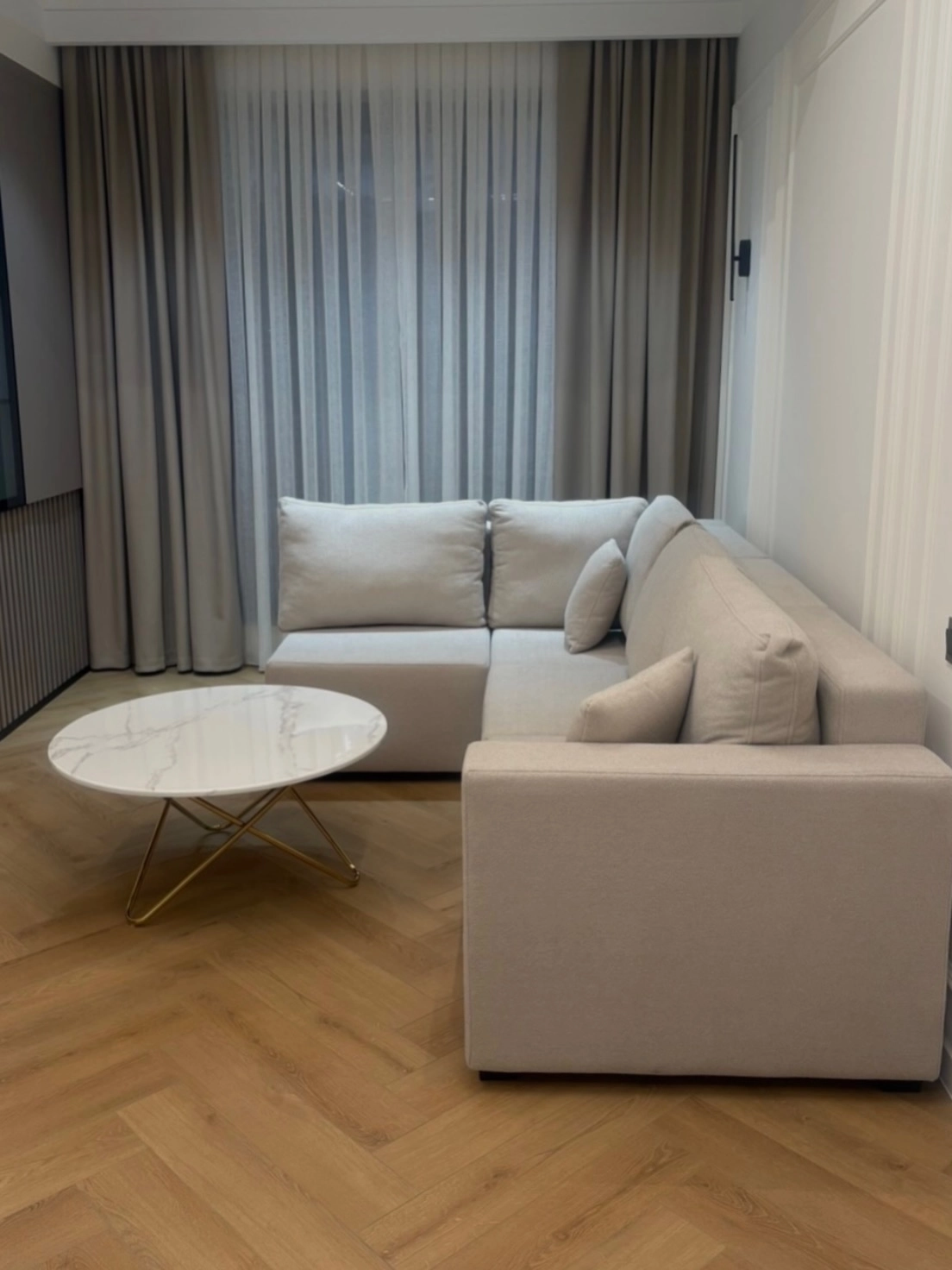
Photo: @luxedraperystudio on Instagram
Grey-blue drapes with a white sectional add weight without adding darkness. The colour grounds the light furniture, the fullness of the panels softens the walls, and the small room feels settled. Cool colours can be warm when the fabric is right.
Grey-blue works because it borrows from both the sky and the sea: it calms like blue and neutrals like grey. It is the safe bold choice, the colour for people who want colour without commitment.
Go dark and dramatic
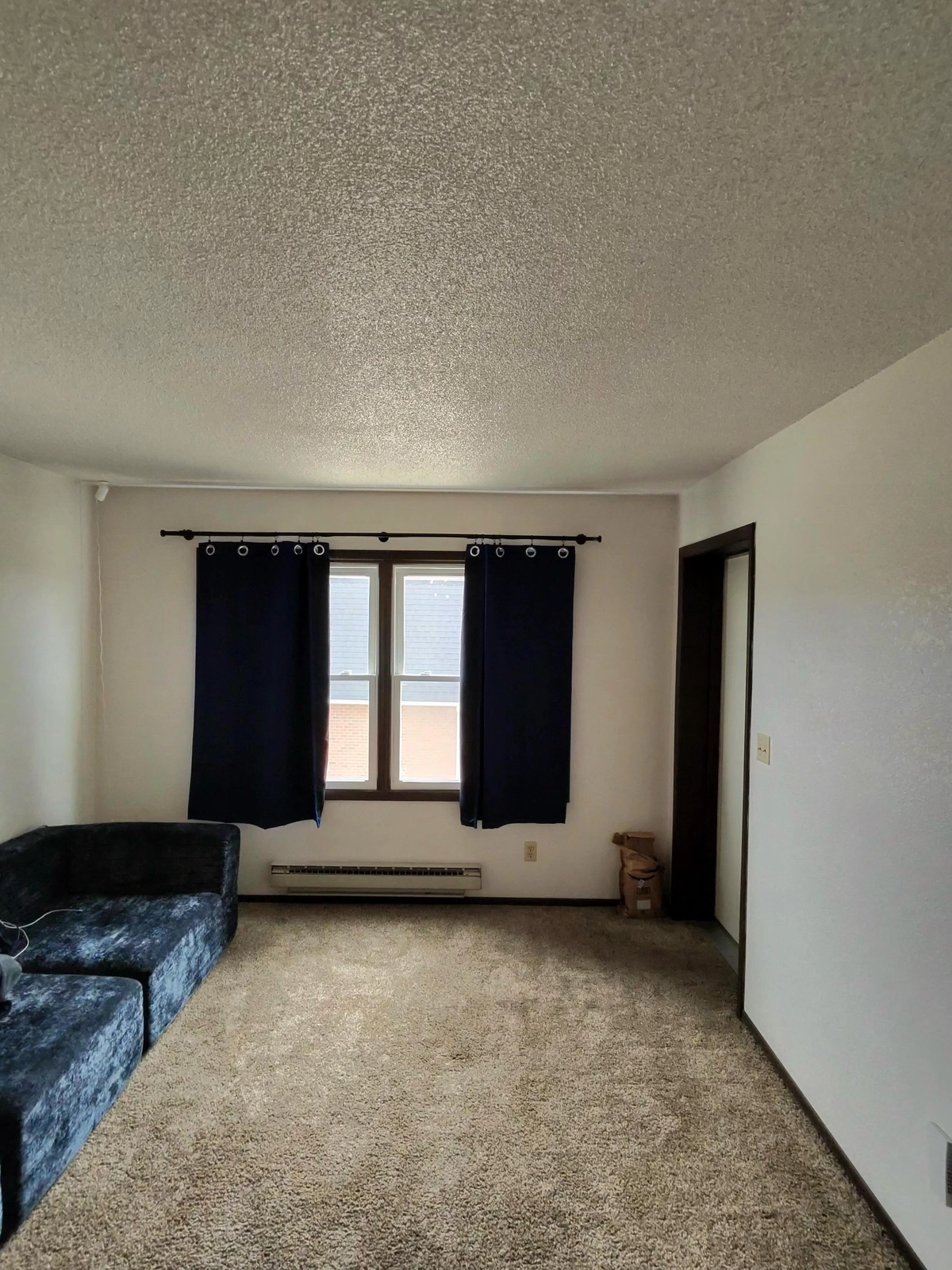
Photo: @stallionvibe on Instagram
Dark blue-black drapes in a moody room prove that small spaces can take drama. The dark frames the window like art, the contrast makes the light outside look brighter, and the room feels intentional instead of small.
Dark drapes need the rod and the wall around them to be considered: a dark panel on a white wall with a chrome rod looks unfinished. Match the hardware to the mood, dark with dark, and the drama reads as design.
Keep it easy with grommet tops
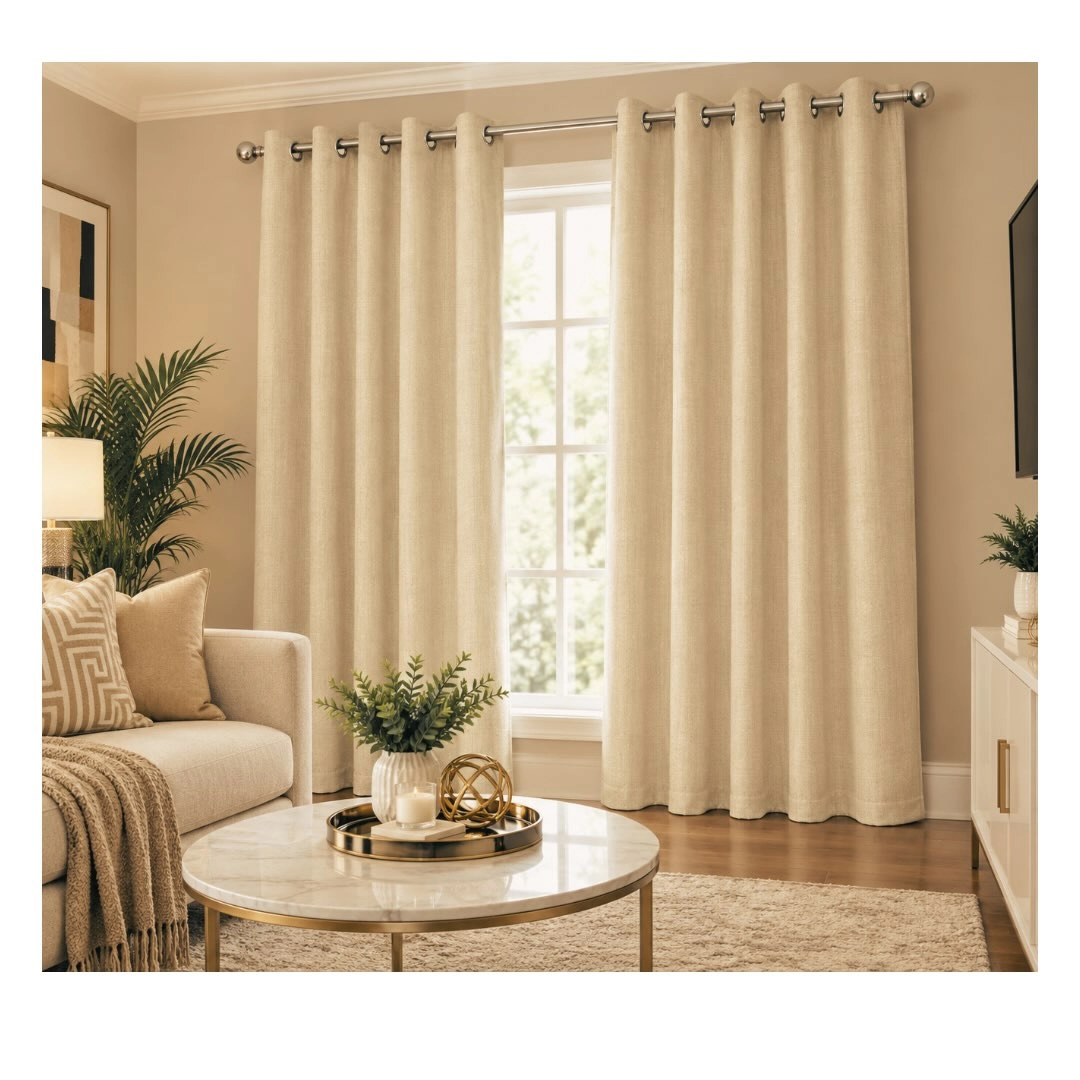
Photo: @sasdepartmentstore on Instagram
Beige grommet-top curtains are the weeknight dinner of window treatments: easy, reliable, and better than they sound. The grommets slide, the beige goes with everything, and the small room gets finished windows in an afternoon.
Grommets read casual, which suits relaxed rooms and fights formal ones. If the room leans traditional, swap grommets for a back tab or a pinch pleat and keep the same beige.
Hang beige on a metal rod and stop there
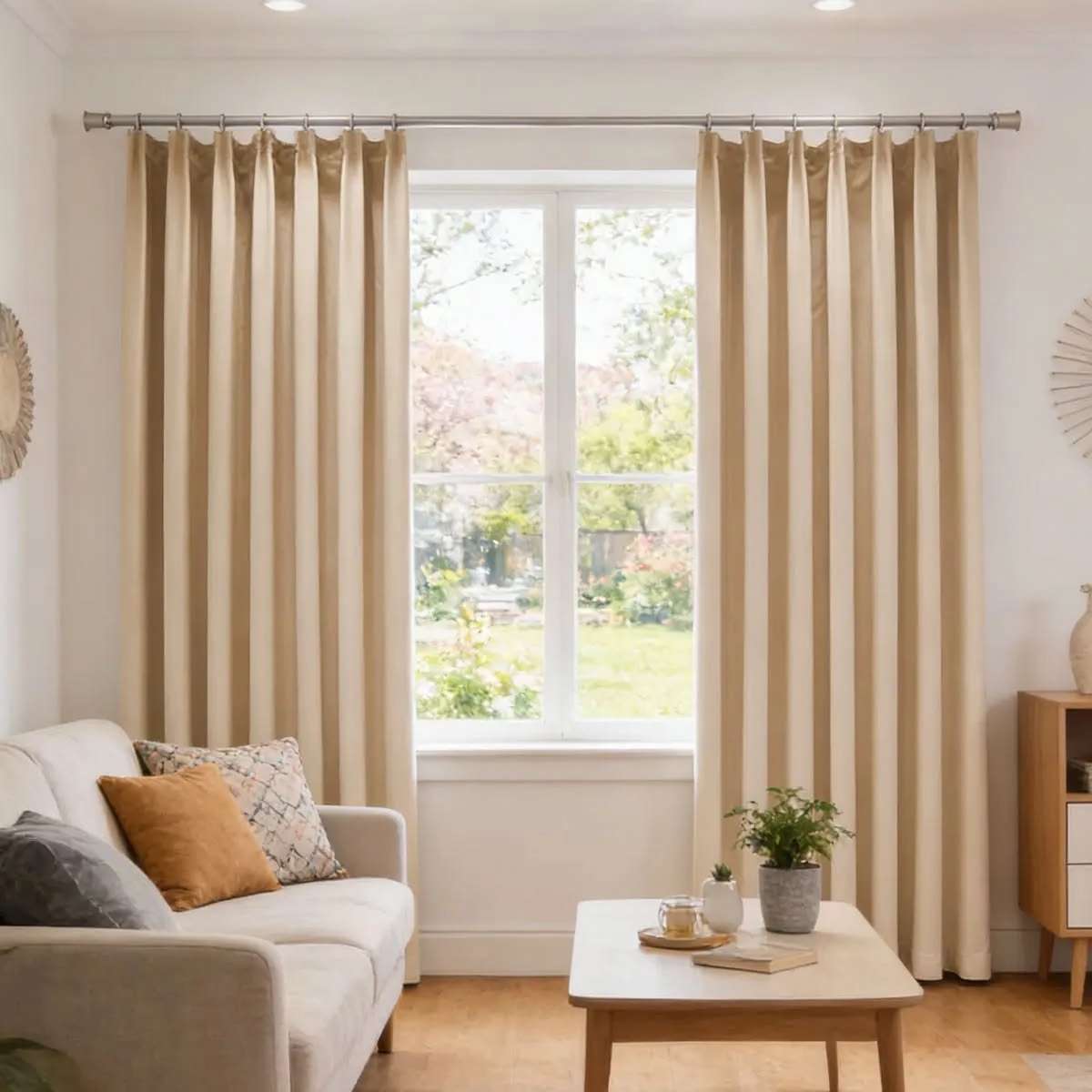
Photo: @junipertide.shop on Instagram
Beige curtains on a simple metal rod are the honest minimum, and the minimum is often enough. The rod is straight, the panels hang clean, and the window is dressed without a design degree. Small rooms do not need window theatre.
The honest minimum still needs the right length: hem to just kiss the floor. Too short is the one unforgivable curtain sin, and no rod style saves it.
Pair dark drapes with white blinds
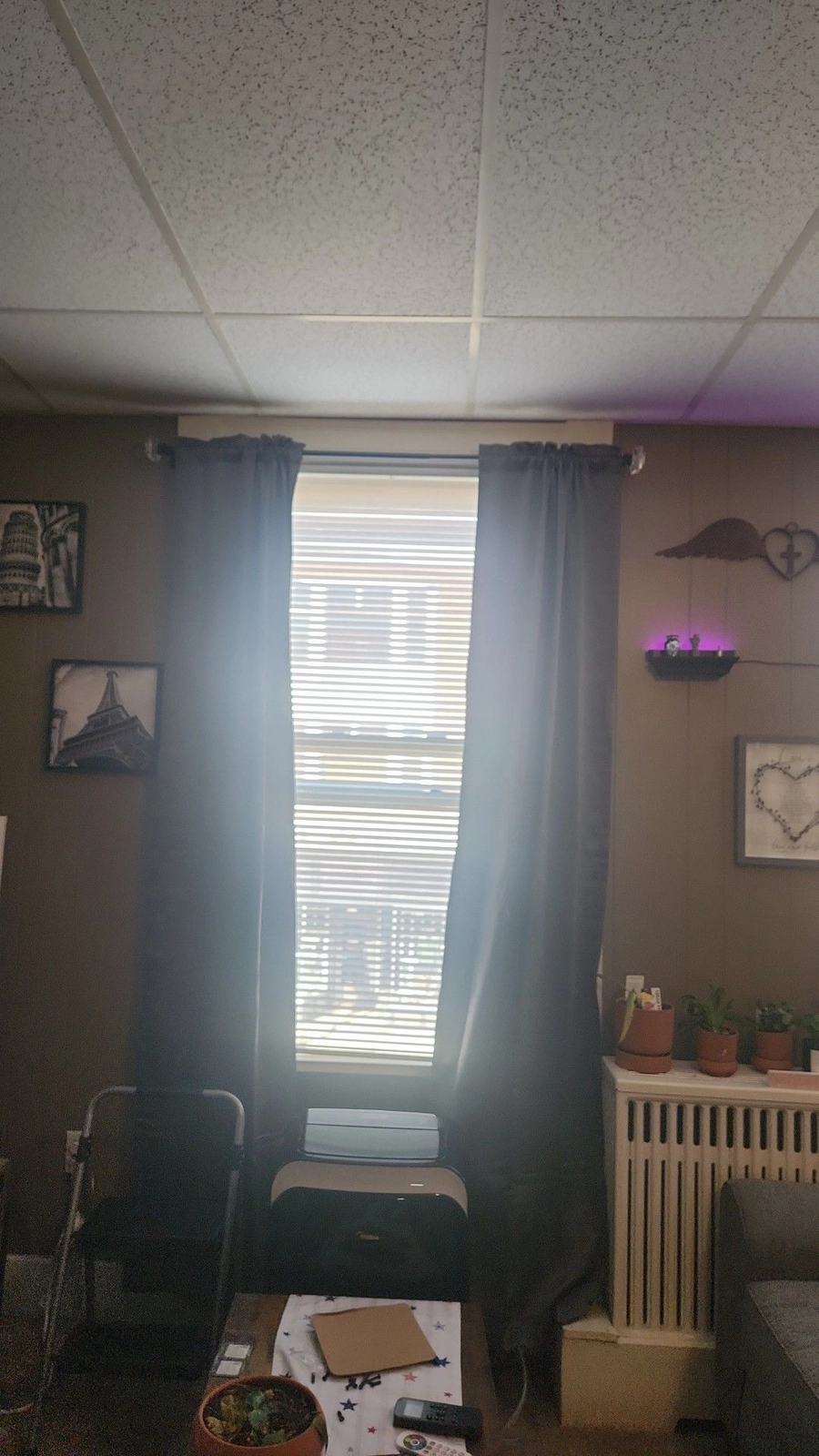
Photo: @tpotvin1974 on Instagram
Dark gray curtains layered over white blinds give the window two moods: bright by day, private by night. The blinds handle the light, the drapes handle the looks, and the small room gets flexibility that one layer cannot give.
Drape-plus-blind is the practical answer for street-facing windows. Close the blinds, keep the drapes open, and the room stays bright and private at once.
Buy the panels too long on purpose. Hemming is cheap and easy; stretching a too-short panel is impossible. When in doubt, buy the next length up and hem to kiss the floor.
Layer them
For the best of both: sheers for the day, drapes for the night.
Pair linen drapes with woven shades
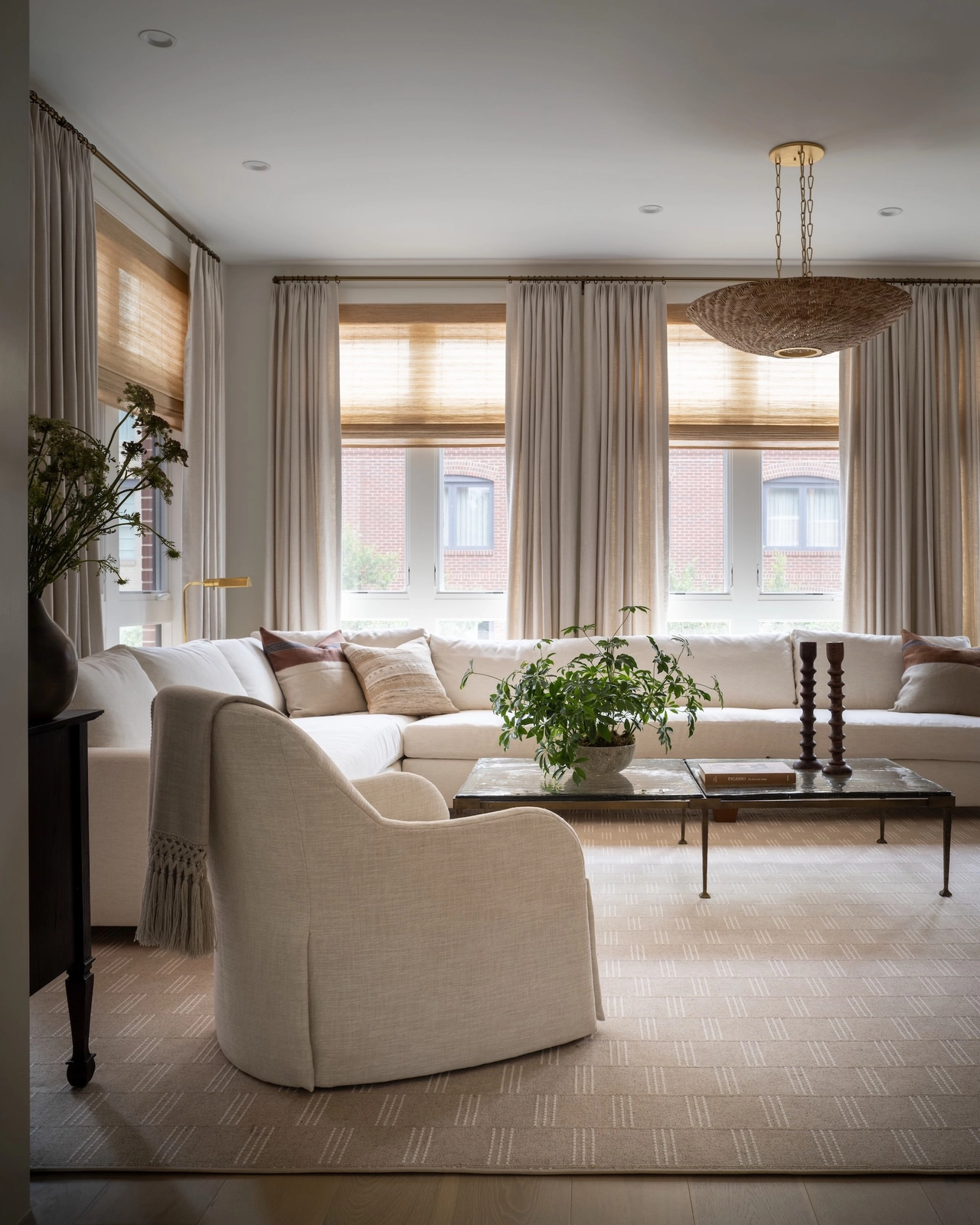
Photo: @theshadestore on Instagram
Layered beige linen drapes with woven wood shades give the window texture in two registers. The shades filter the light, the linen softens the edges, and the small room gets a window with depth. Two thin layers beat one thick one.
Linen plus woven wood is the warm minimalism formula: natural fibres, neutral colours, nothing shiny. It suits every small living room that wants calm without cold.
Tie the drapes back over the sheers
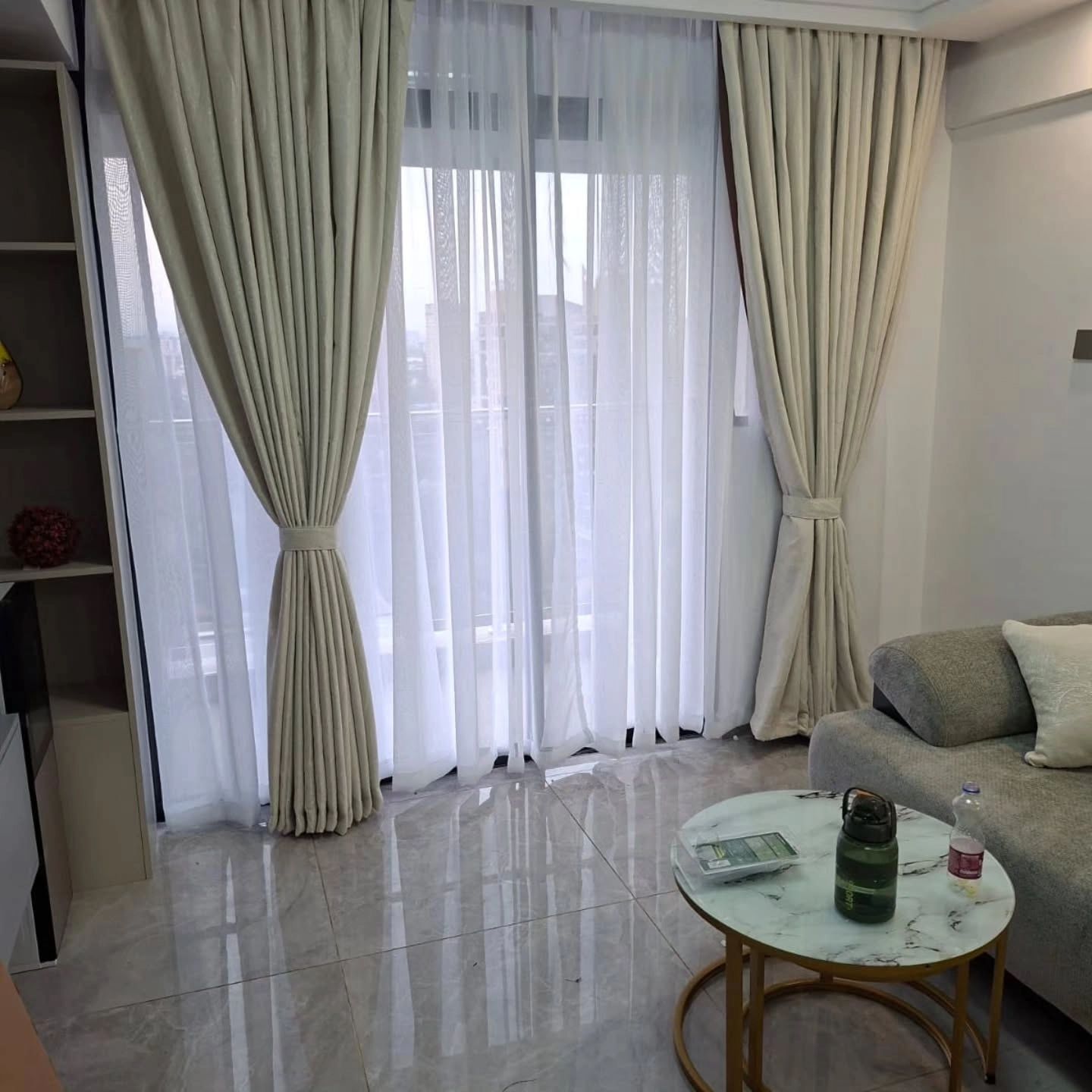
Photo: @sudi_curtains on Instagram
Beige pleated drapes tied back over white sheers frame the window like a picture. The tiebacks hold the view open, the sheers keep the privacy, and the window is dressed even when the drapes are not closed. Tied back is a look, not a compromise.
Tiebacks want to sit at two-thirds height, not halfway. Higher tiebacks make the window look taller; halfway tiebacks make it look pinched.
Soften wood shades with sheers
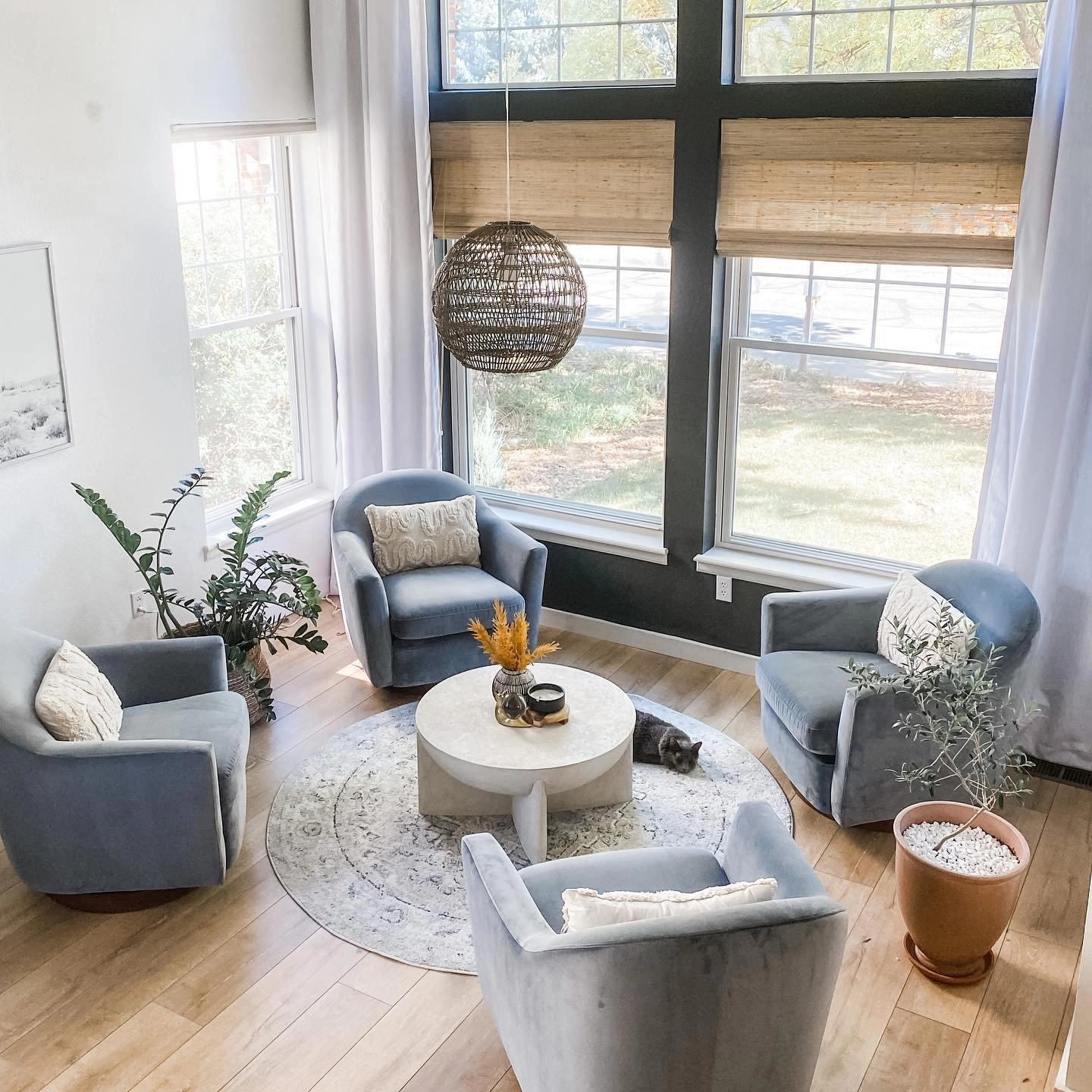
Photo: @blindsdotcom on Instagram
White sheer curtains layered over woven wood shades take the edge off the rustic. The shades give texture, the sheers give softness, and the window reads as designed rather than cabin. Sheers civilise every hard treatment they touch.
Sheer over shade needs the sheer on its own rod or track in front. One rod with both layers crammed on it never hangs right; give each layer its own hardware.
Double up sheer and drape in beige
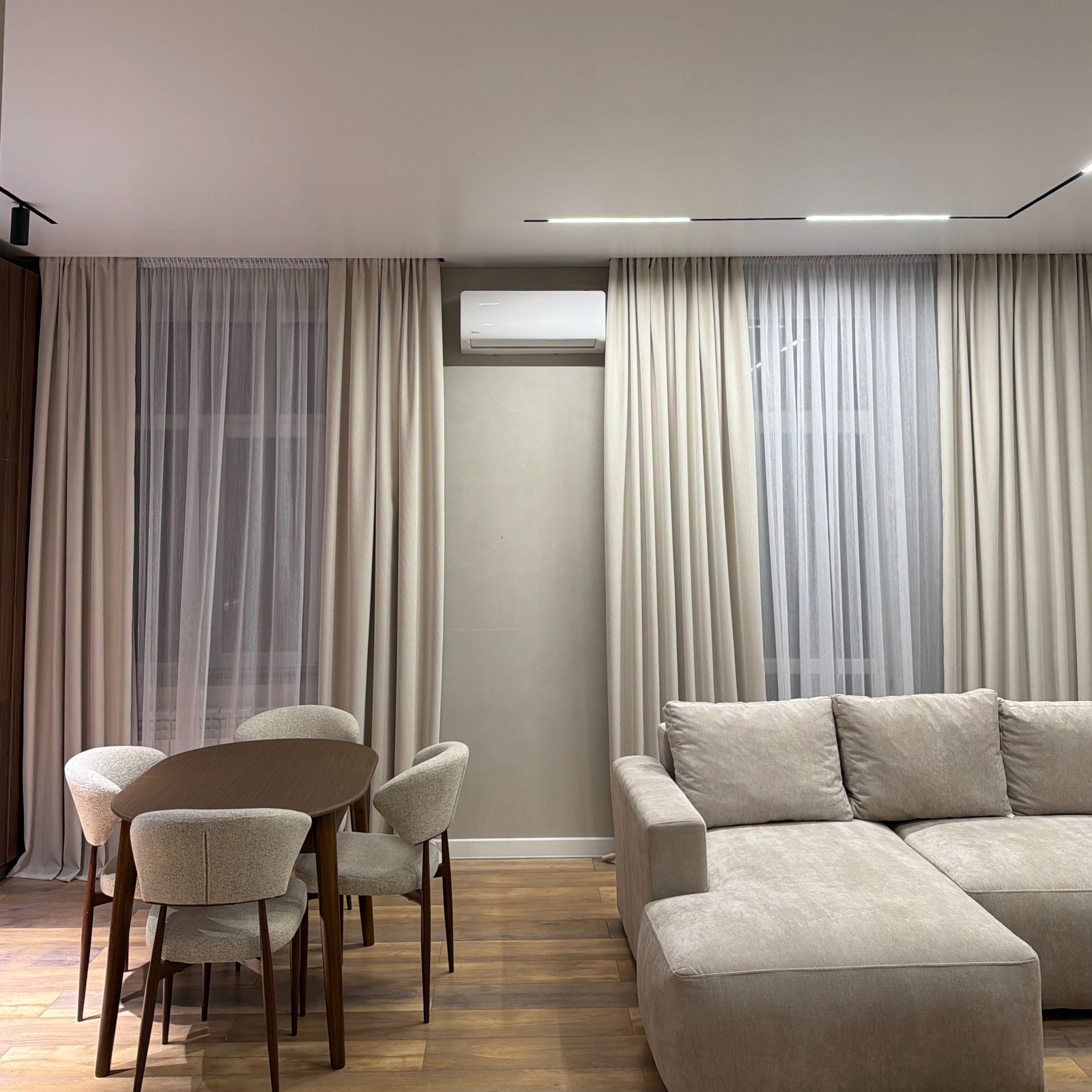
Photo: @shtory_store_pvl on Instagram
Layered sheer curtains with beige drapes in one tonal family make the window feel deep. The sheer glows, the drape frames, and the small room’s window has the richness of a much bigger treatment for the price of two ready-made panels.
Tonal layering, sheer and drape in the same colour family, is the safest double layer. Contrasting layers need confidence; tonal layers just need the right beige.
Frame the sheers with beige drapes
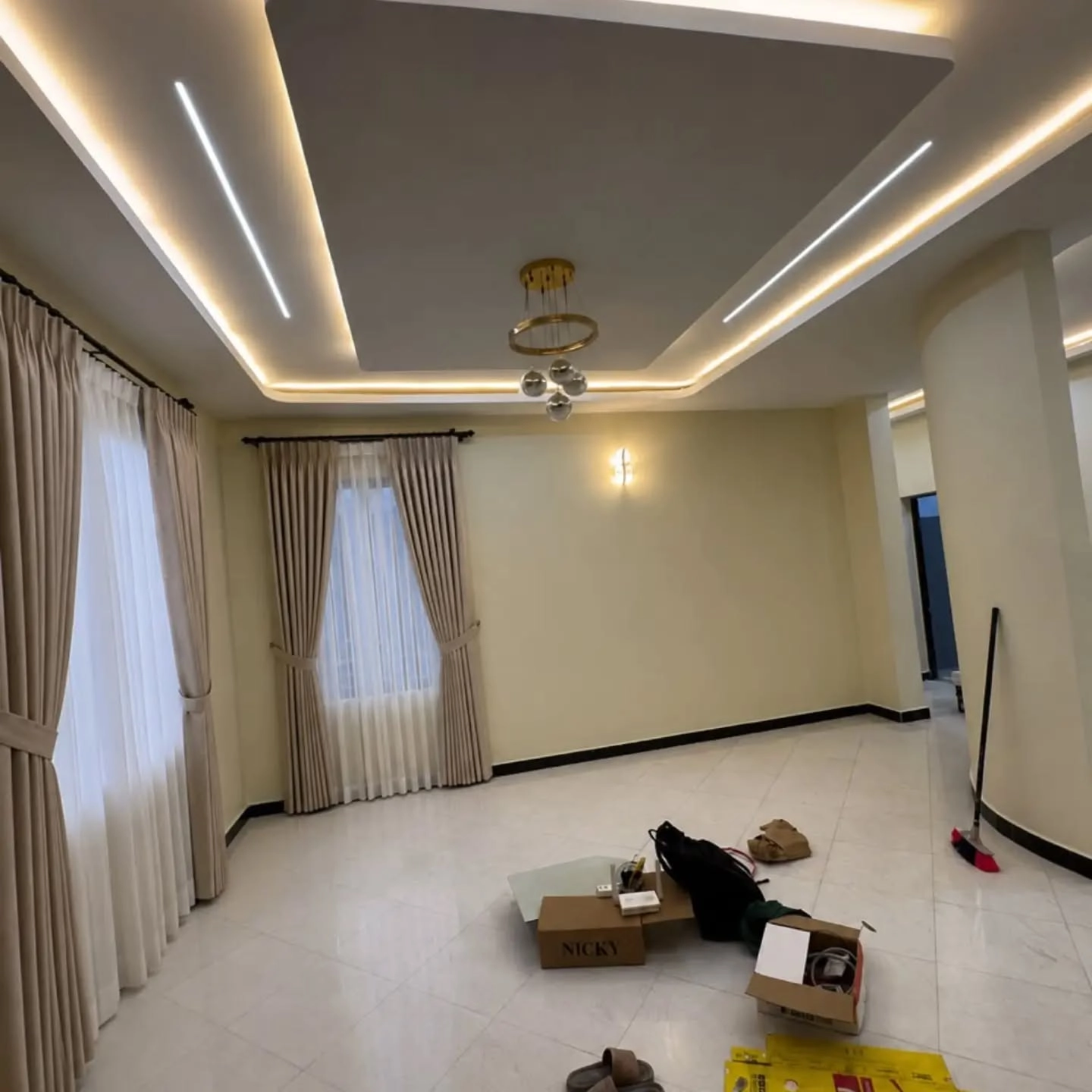
Photo: @rashidi_pazia on Instagram
Beige drapes framing white sheers is the classic hotel window, and hotels know windows. The drapes give the structure, the sheers give the light, and the small living room gets the most flattering window treatment ever standardised.
Hotel windows work because the drapes are full: two to three times the window width in fabric. Skimpy drapes are the difference between hotel and motel, so buy the fullness.
Run the double layer on a track
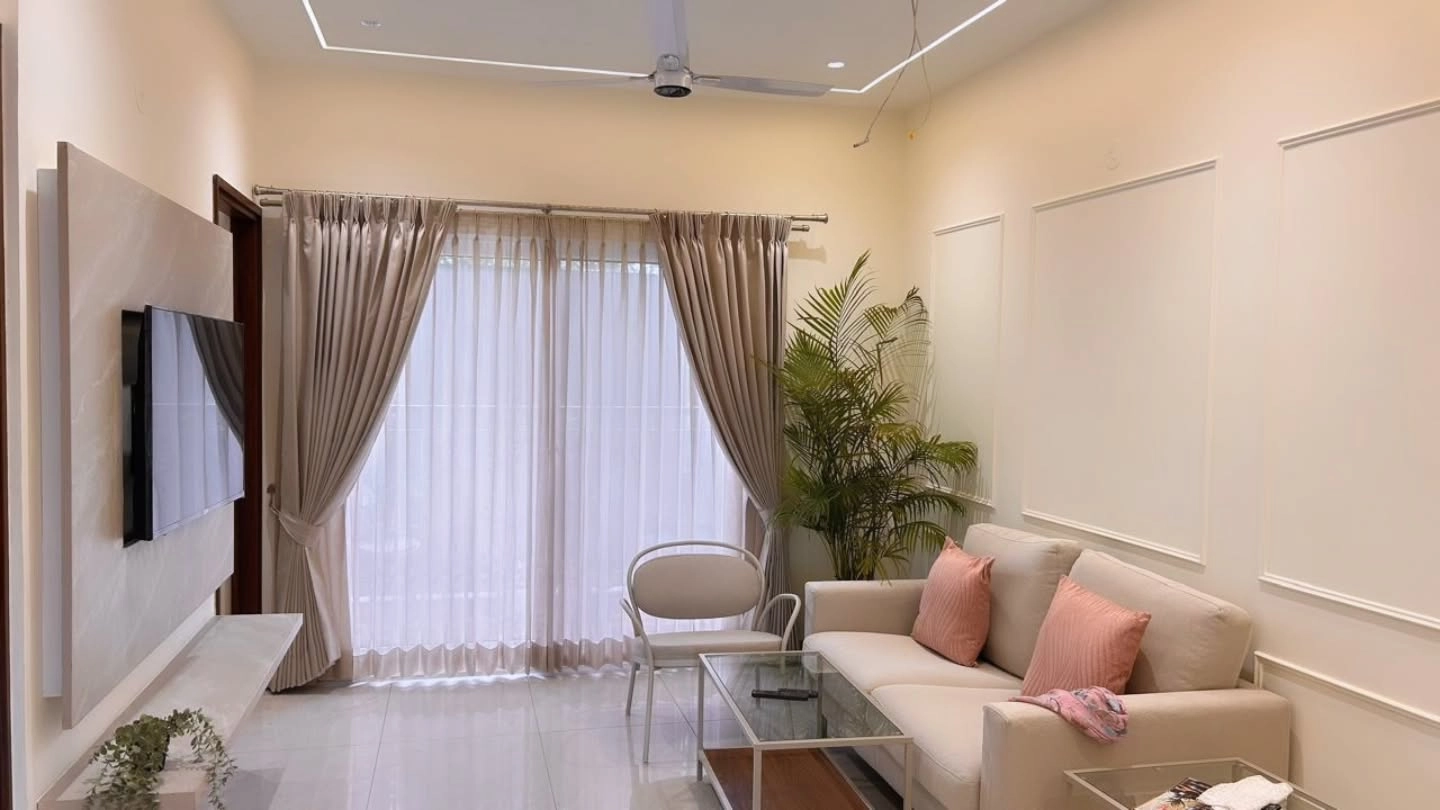
Photo: @indiacarpethouse on Instagram
Beige drapes with white sheers on a ceiling track make the double layer look built in. The track disappears, the layers glide, and the window wall reads as architecture. Tracks are the designer’s secret for small rooms.
Ceiling tracks suit rooms where a rod would fight the cornice or the ceiling height. If the rod looks crowded up there, the track is the answer.
Make a statement
For windows that deserve the attention. Colour, pattern, and one glorious valance.
Go golden and glow
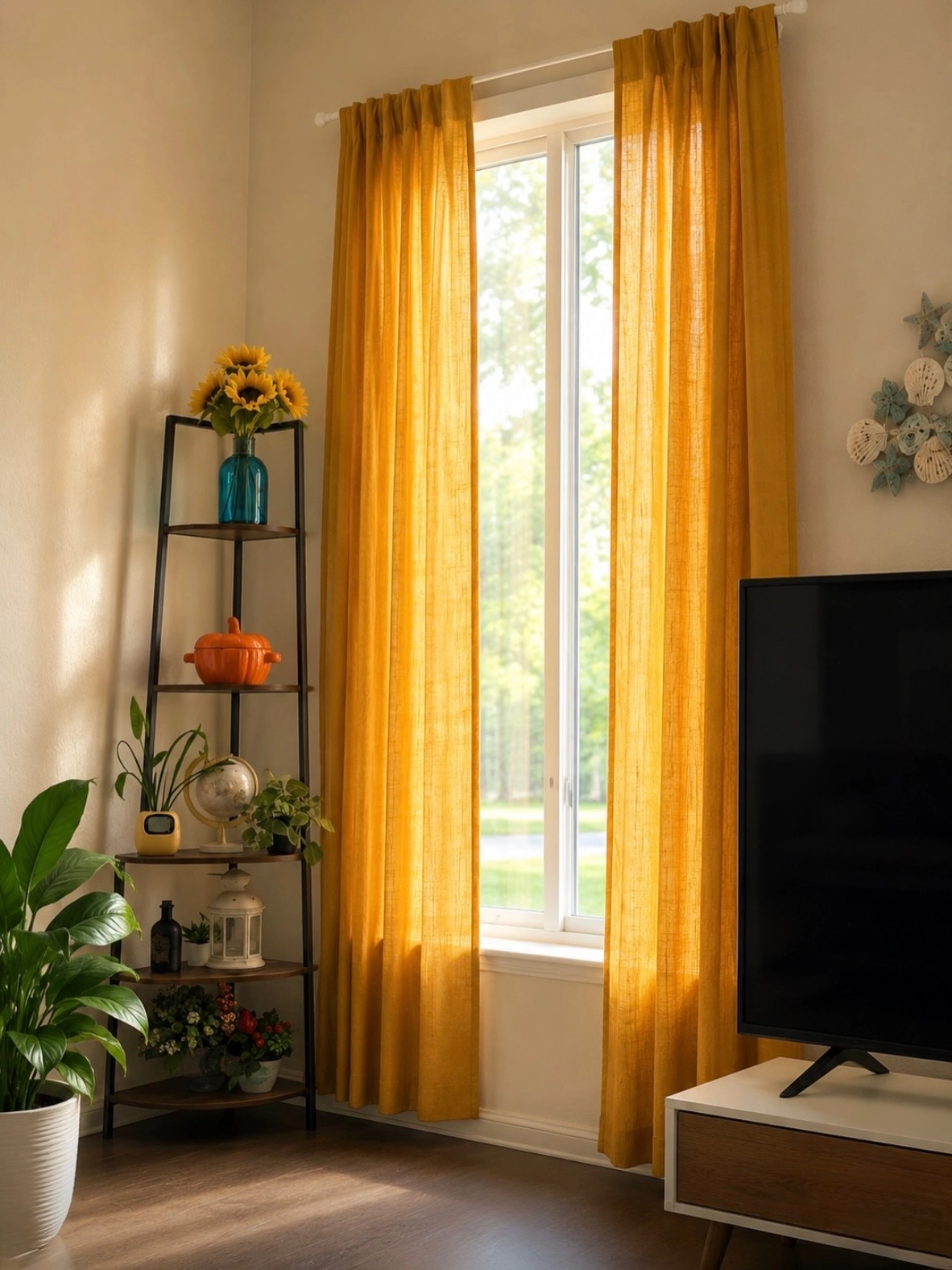
Photo: @moonpriyaa on Instagram
Golden-yellow drapes turn the window into a sunset that never sets. The colour warms the whole room, the light through the fabric glows amber, and the small living room gets a permanent golden hour. Bold curtains are the bravest cheap thrill in decorating.
Golden drapes want everything else quiet, or the room becomes a spice market. White walls, calm furniture, and let the window be the one loud thing.
Try a checkered cafe curtain
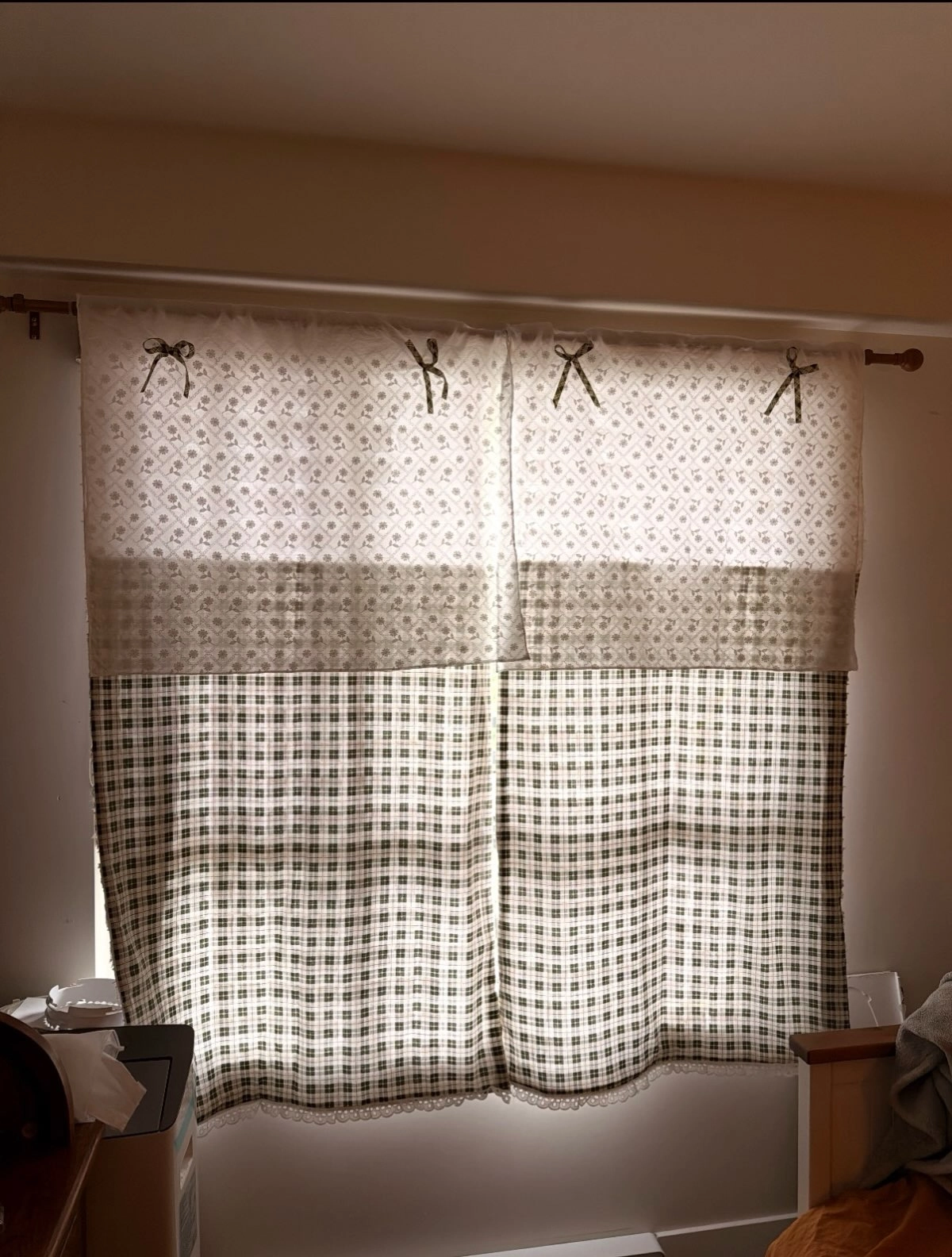
Photo: @laras_hearts_and_crafts on Instagram
Small checkered cafe curtains on a lower window are the cottage answer to full drapes. They cover what needs covering, they leave the top light free, and the check adds pattern without overwhelming the small room. Half the curtain, half the commitment.
Cafe curtains suit kitchens and street-facing lower sashes best. In a living room, use them where the view above is worth keeping and the privacy below is what matters.
Choose an embroidered sheer
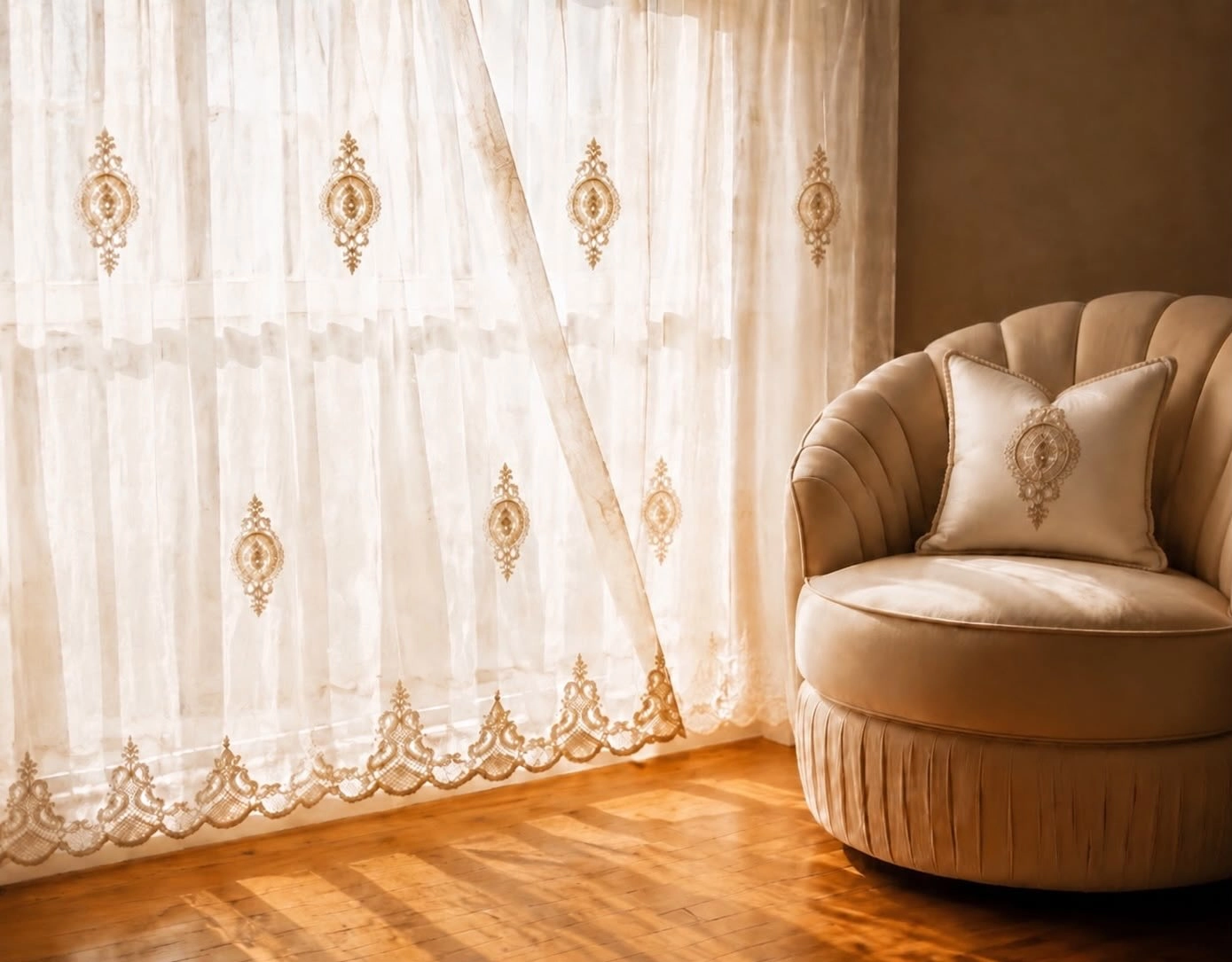
Photo: @seasonshomefurnishings on Instagram
An embroidered sheer with gold motifs makes the window treatment the art. The pattern catches the light, the sheer keeps the brightness, and the small room gets decoration that does not take a single inch of floor or wall.
Embroidered sheers are the pattern for people afraid of pattern: it reads as texture from across the room and only reveals itself up close. Safe drama, if there is such a thing.
Pattern the sheer with diamonds
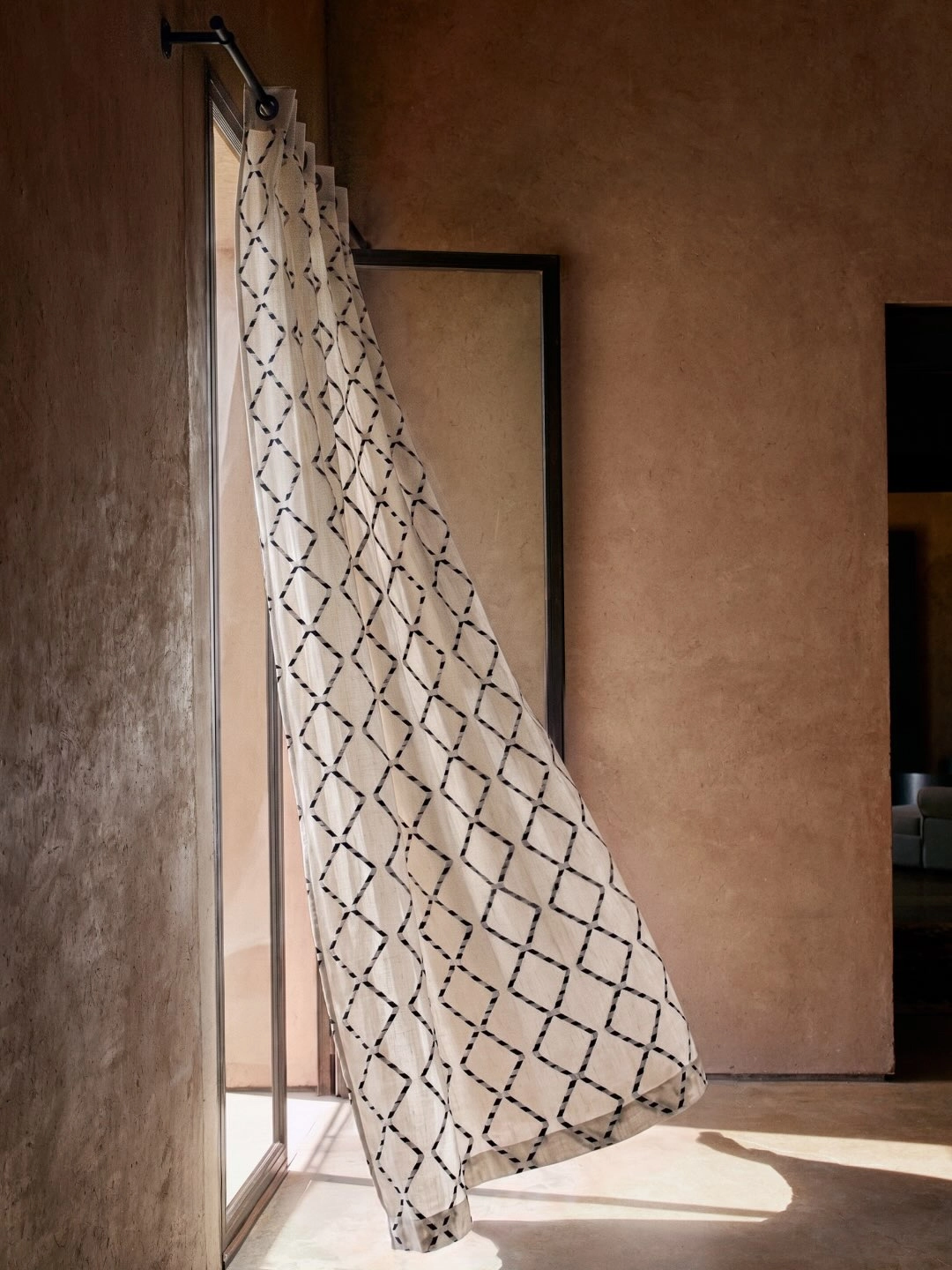
Photo: @bonsoirs_home on Instagram
A cream sheer curtain with a black diamond pattern gives the window a graphic punch without blocking light. The diamonds draw the eye up, the sheer keeps the glow, and the small room gets edge. Pattern on a sheer is pattern without the weight.
Graphic sheers need the pattern scaled to the room: small diamonds for small rooms. Oversized prints on a small window shout; small prints whisper, and whispering suits the scale.
Cover the wall in verticals
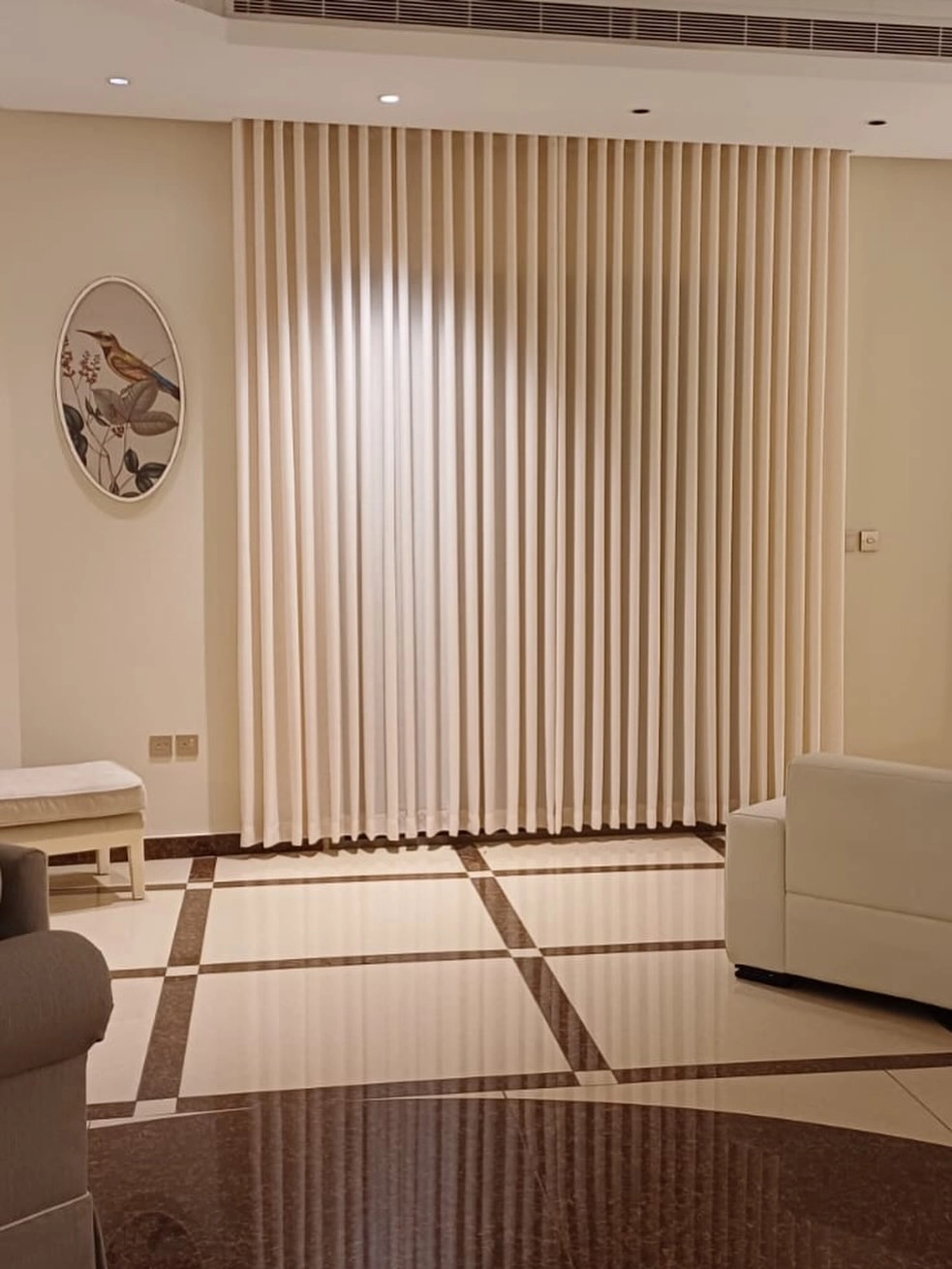
Photo: @curtains.maker333 on Instagram
A wall of cream vertical curtains makes a wide window look endless. The vertical lines stretch the eye upward, the cream keeps it calm, and the sliding panels handle a span no drape could cross gracefully. Wide windows are vertical territory.
Verticals have a reputation problem from cheap office blinds, but fabric verticals are a different species. The fabric is what separates drapery from office supply.
Finish with rope tiebacks and a valance
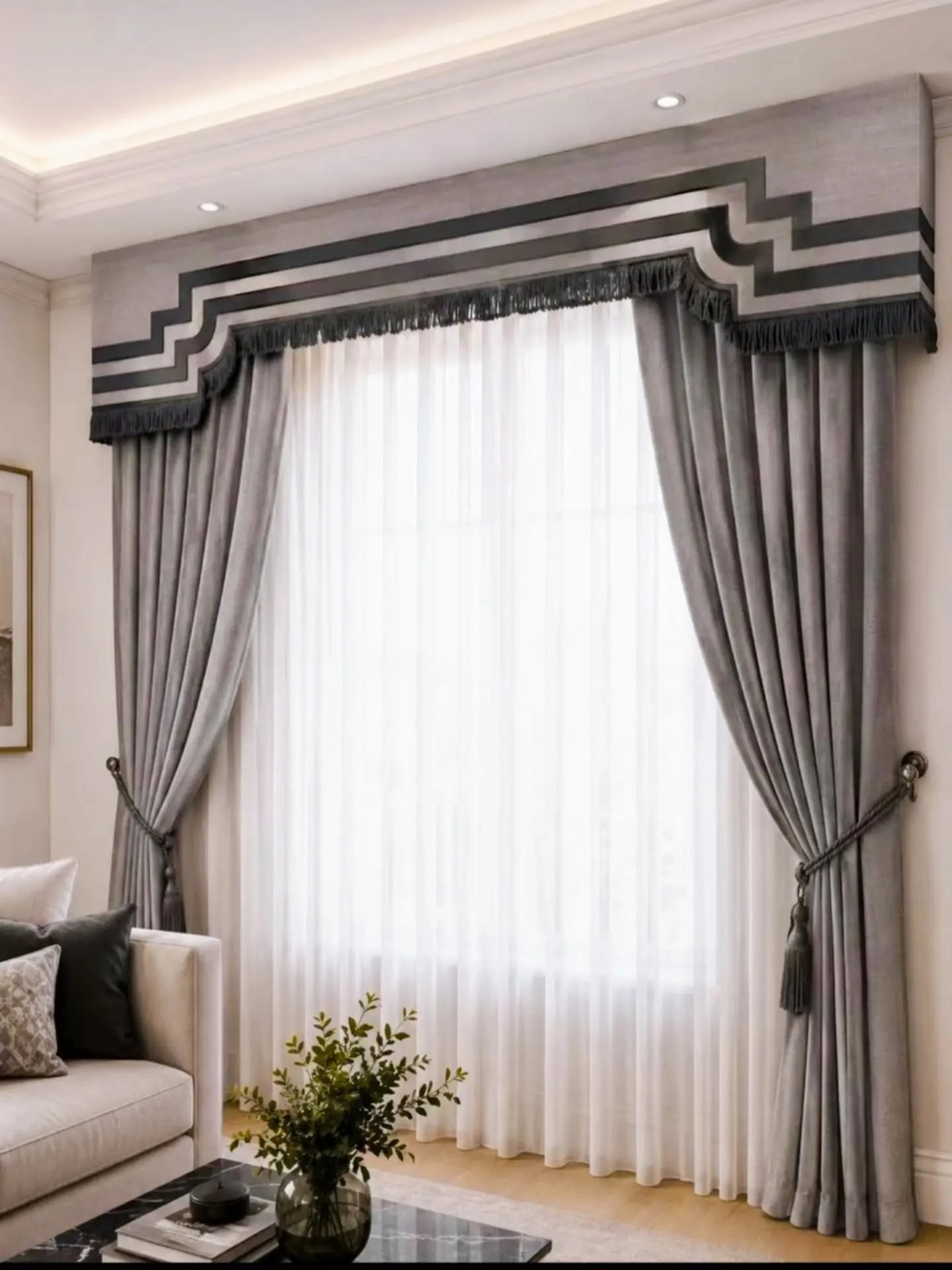
Photo: @curtaincatalog on Instagram
Grey drapes with rope tiebacks and a fringed valance are the full traditional ceremony, and some windows deserve the ceremony. The tiebacks shape the panels, the valance crowns the top, and the small room gets a window with presence. Maximalism has its place, and it is here.
Full-dress windows need the ceiling height to carry them: the valance eats visual height. In rooms under eight feet, skip the valance and keep the tiebacks; the ceremony still reads.
The three numbers that matter
Every curtain in this article obeys three measurements. Get these right and almost any panel looks custom.
Hang the rod 4 to 6 inches above the frame. Higher than feels natural. The eye reads the rod as the top of the window, so every inch above the frame is an inch of fake ceiling height.
Extend the rod 8 to 12 inches past each side. Wider than feels natural too. The panels stack back over wall, not glass, so the window shows fully and looks twice its width when the curtains are open.
Hem to kiss the floor, or pool one inch. Never hover. A floating hem makes the window look short and the room look unfinished, no matter how good the fabric is.
Pick the job, then hang them high
Every curtain in this list was chosen for a job: light, warmth, both, or drama. Pick the job your window needs, take the three measurements, and hang the rod higher than feels natural.
Curtains are the cheapest renovation because they change the architecture without touching it. The window stays the same size. The room does not.