How to Make a Small Living Room Look Bigger: 12 Tricks That Actually Work
A small living room rarely feels small because of its measurements. It feels small because of where the eye stops: at a curtain rod mounted on the window frame, at the edge of a rug that floats like a bath mat, at the solid base of a sofa sitting like a boulder. Every trick in this guide works on the same principle. Remove the visual stopping points, and the same room, with the same furniture budget, reads noticeably bigger.
None of these need a renovation. Most cost little or nothing, a few are furniture swaps to make when you were going to buy anyway, and every one is shown in a real room so you can see exactly what it does before you try it.
1. Let the Light Run the Whole Wall
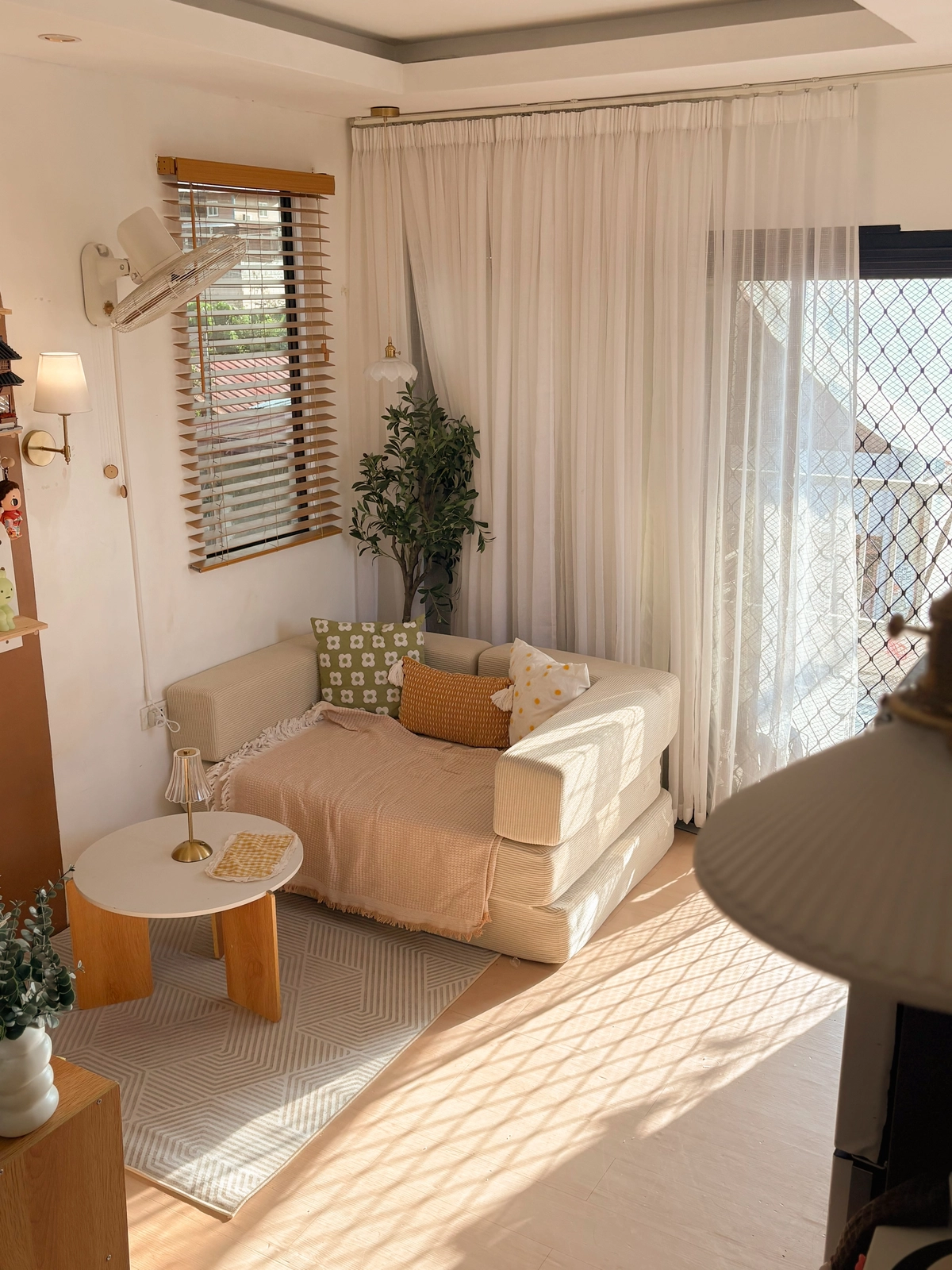
Photo: @_faithhome on Instagram
Thick drapes do two kinds of damage in a small room: they eat the light, and they chop the window wall into pieces. Sheers hung from the ceiling to the floor do the opposite. They blur the edges of the window itself, so instead of seeing a small window in a big wall, you see one soft, glowing plane of light. The room above has sheers running the full height of the wall, and the light spreads so evenly that the corners stop existing.
If privacy allows it, skip the blackout layer in the living room entirely, or push it wide during the day on a double rod. Light is the cheapest square footage there is, and this is the fastest way to buy some.
2. Put a Mirror Where It Has Something to Reflect
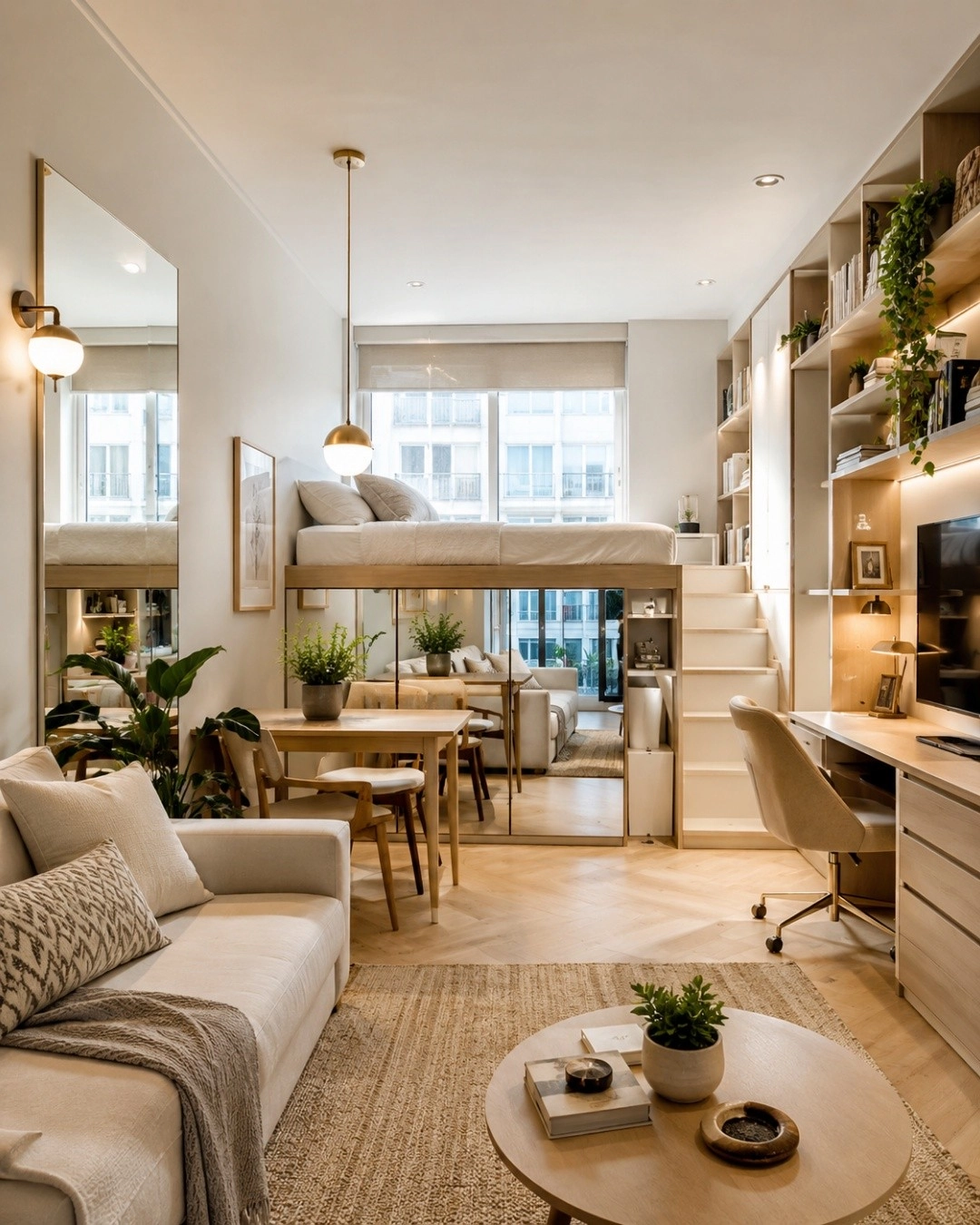
Photo: @jdsophisticatedstaging on Instagram
A mirror doubles whatever faces it, which is why placement matters more than size. Aimed at a cluttered corner, it doubles the clutter. Aimed at a window or the brightest wall, it doubles the light and fakes a second opening in the room. This studio runs mirrors under the loft bed and a full-height panel along the wall, and the reflections borrow the windows from across the room.
The working rule: opposite or beside a window, and big enough to matter. A leaning floor mirror counts, mirrored cabinet doors count, even a run of mirror tiles behind a shelf counts. Small decorative mirrors in a cluster do the least, because each one reflects a fragment instead of a view.
Mirror test: stand where you sit. If the mirror shows you a window or a lamp, it is working. If it shows you a pile of stuff, move it.
3. Hang the Curtains at the Ceiling, Not the Frame
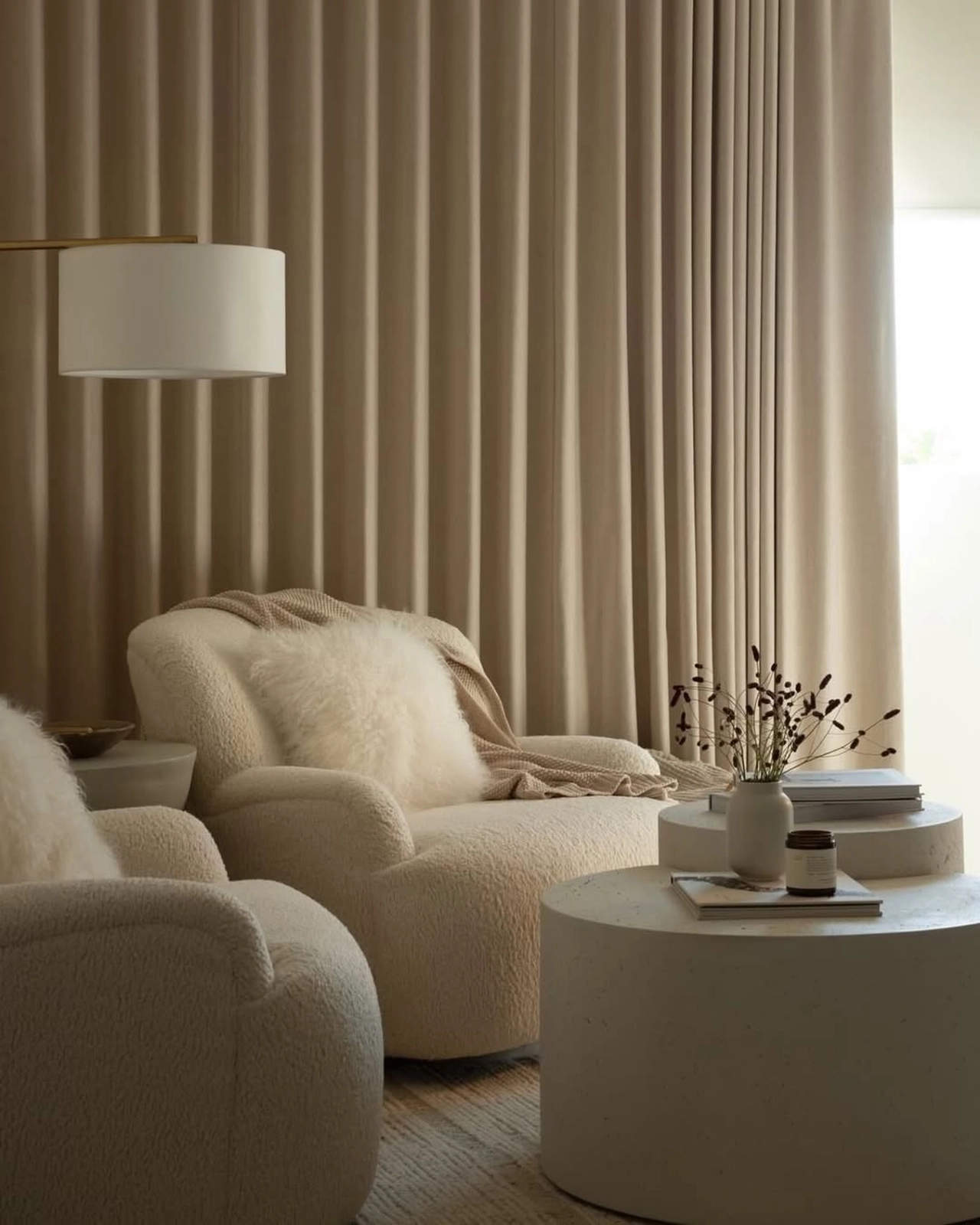
Photo: @nateberkuslifestyle on Instagram
A rod mounted on the window frame tells everyone exactly how short the window is. Move the rod up to a few inches below the ceiling and let the panels fall to the floor, and the eye reads the whole drop as window. The room feels taller without a single thing about it changing. The drapes here run the full height of the wall, and they make an ordinary ceiling feel like a tall one.
Two details make it work: the panels should just kiss the floor rather than stop short, and a fabric close in tone to the wall stretches the effect further. Ivory drapes on a pale wall, as here, nearly disappear, which is exactly the point.
4. Run One Pale Palette From End to End
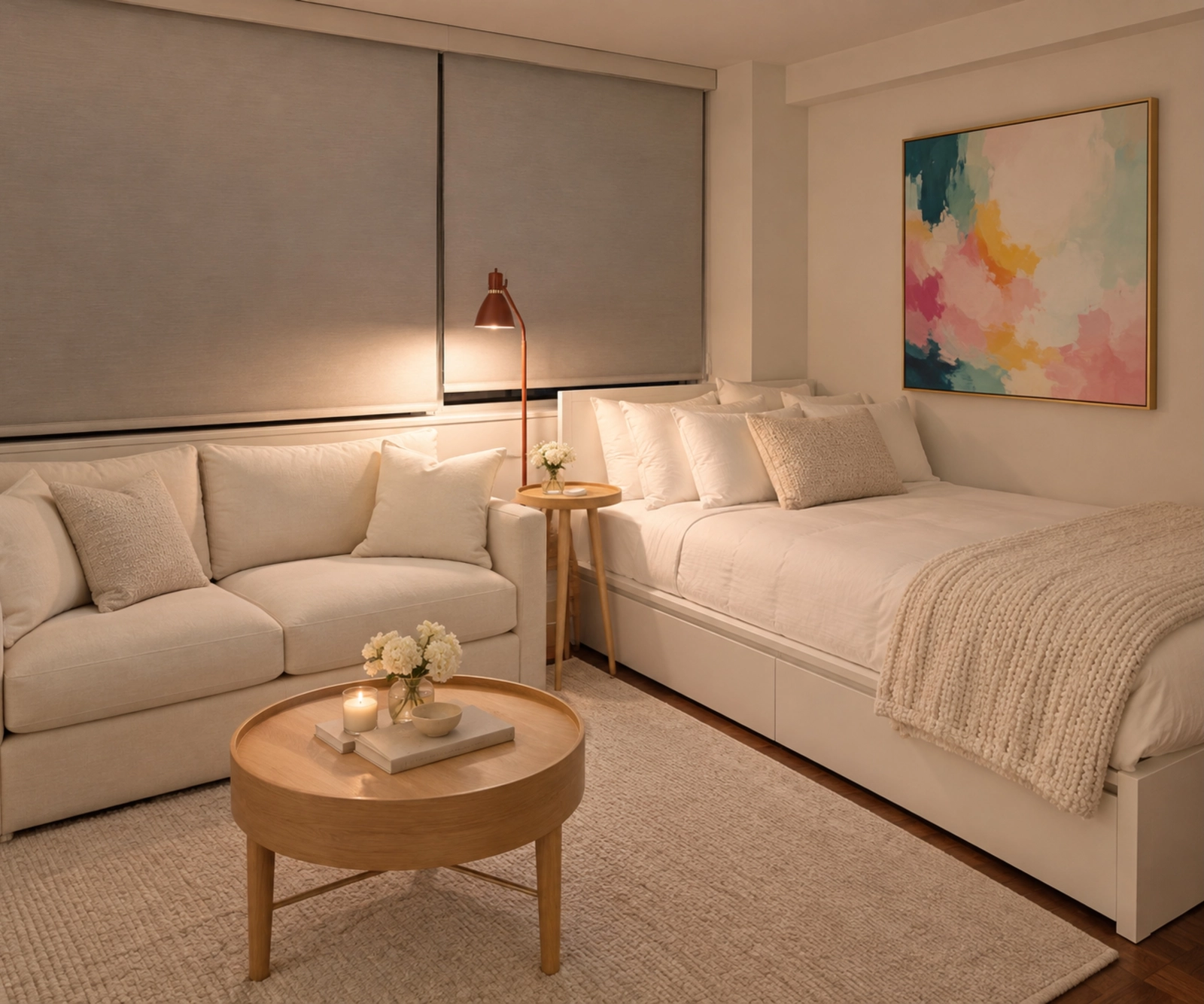
Photo: @arranged.space on Instagram
Every hard color change is a boundary, and the eye counts boundaries as edges of the room. Keep the sofa, the rug, the bedding and the walls inside one pale family and those internal edges dissolve: the space reads as one continuous volume instead of a row of boxes. In this studio the sofa and daybed sit shoulder to shoulder on one light rug, and because nothing interrupts the palette, a very small footprint reads as calm rather than cramped.
Pale does not have to mean plain. Let one piece carry the color, here it is the single large painting, and keep everything else related. Texture does the decorating work that color usually does: knit, boucle, linen and wood all read differently at the same lightness.
5. Buy the Rug One Size Bigger Than Feels Safe
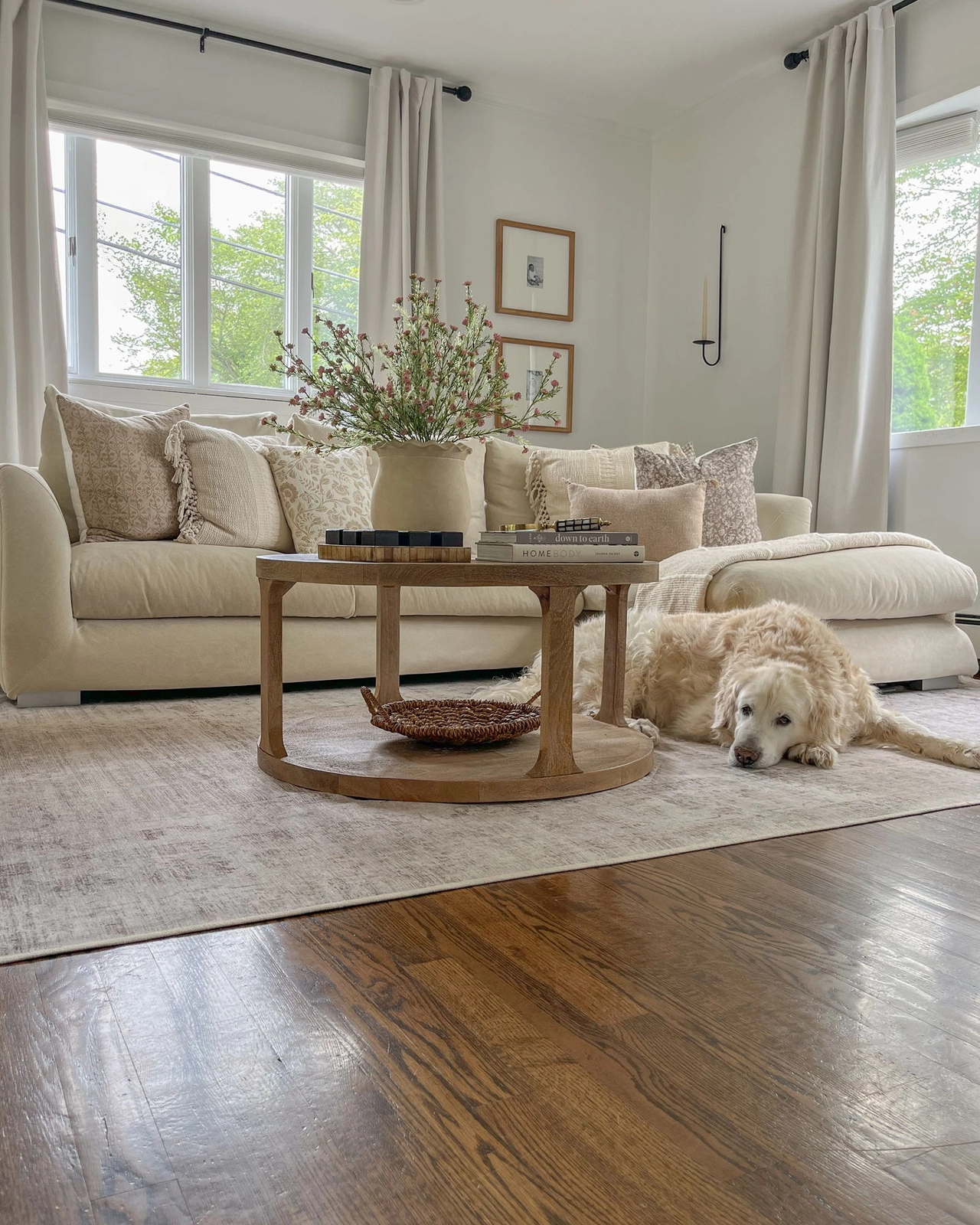
Photo: @tumblerugs on Instagram
A small rug announces a small room. When the rug is big enough to run under the front legs of every seat, and keep going past them, the brain measures the seating area by the rug, not by the walls. The pale rug in this room stretches well beyond the sectional on every side, and the whole arrangement reads as generous even though the furniture itself is large.
As a starting size, an 8×10 works for most small living rooms, and a 9×12 earns its keep under a sectional. If you are choosing between two sizes, the bigger one is almost never the mistake. Low contrast helps too: a gentle, faded pattern keeps the floor feeling like one surface. The same sizing rule works in small bedrooms, where a rug that escapes the bed on three sides changes the whole read of the room.
6. Choose Furniture That Stands on Legs
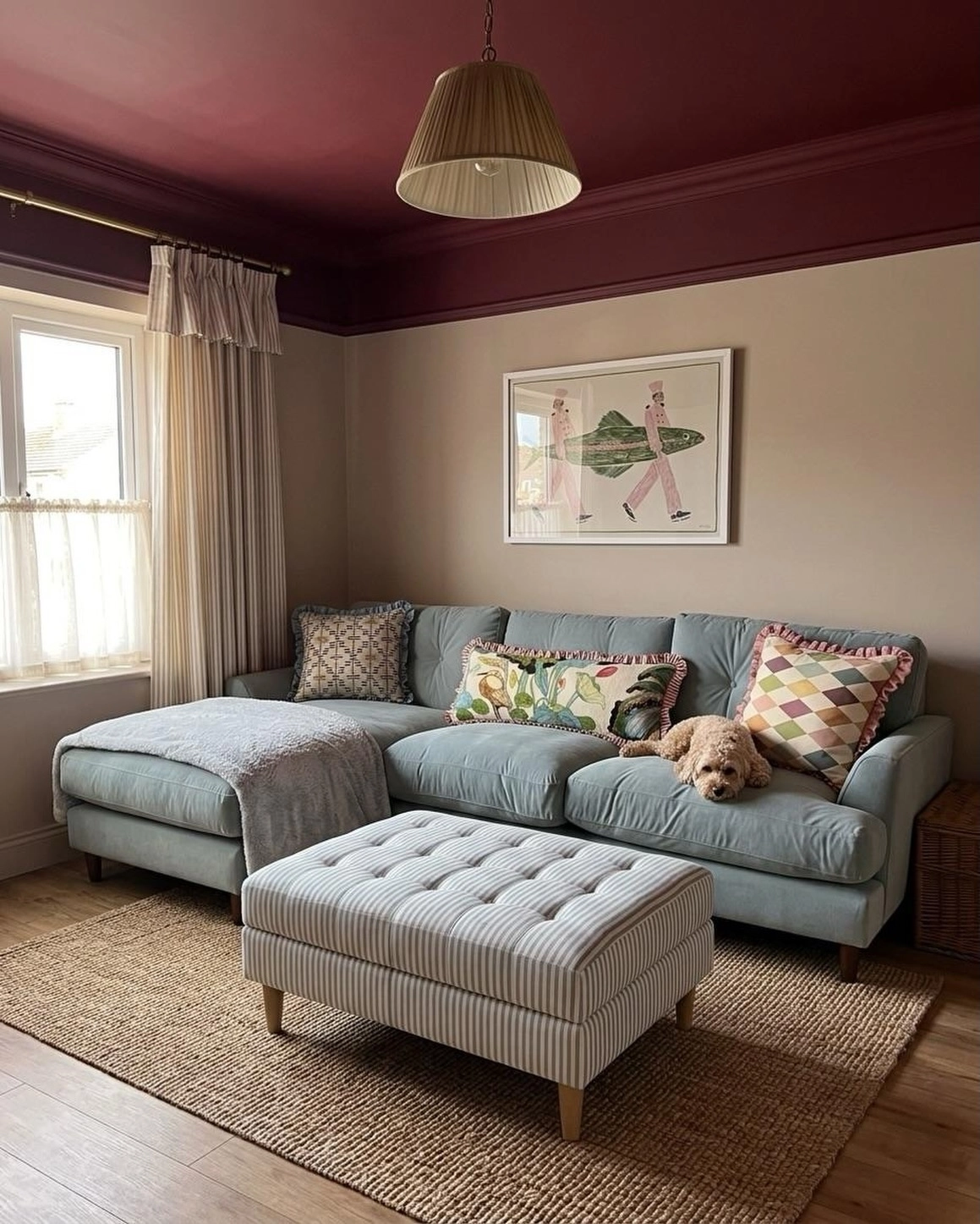
Photo: @dfs on Instagram
Floor is evidence of space, so show as much of it as you can. A sofa or ottoman raised on legs lets the eye travel underneath and count that floor as part of the room. A skirted or blocky base stops the eye at the furniture line. This sectional and its ottoman both stand on tapered wooden legs over a big jute rug, and the shadow line underneath them keeps the whole arrangement feeling light.
You do not need to replace everything. The biggest piece matters most, which is usually the sofa, then the coffee table and media unit. Even four to six inches of clearance underneath changes how heavy a piece feels.
The Five-Minute Room Test
Before you buy anything, run this test on the room you have. Stand in the doorway and answer honestly:
- Can you see floor underneath the biggest piece of furniture?
- Does every rug reach at least the front legs of the seating on it?
- Do the curtains start near the ceiling and end at the floor?
- Is the brightest thing in the room a window or a mirror, not a ceiling light?
- Can you count the color changes between the sofa, the rug and the walls on one hand?
Every no is one stopping point, and the tricks above are ordered so the early ones fix the most common no answers first. Most small rooms fail on three or fewer.
7. Let Them See Through the Furniture
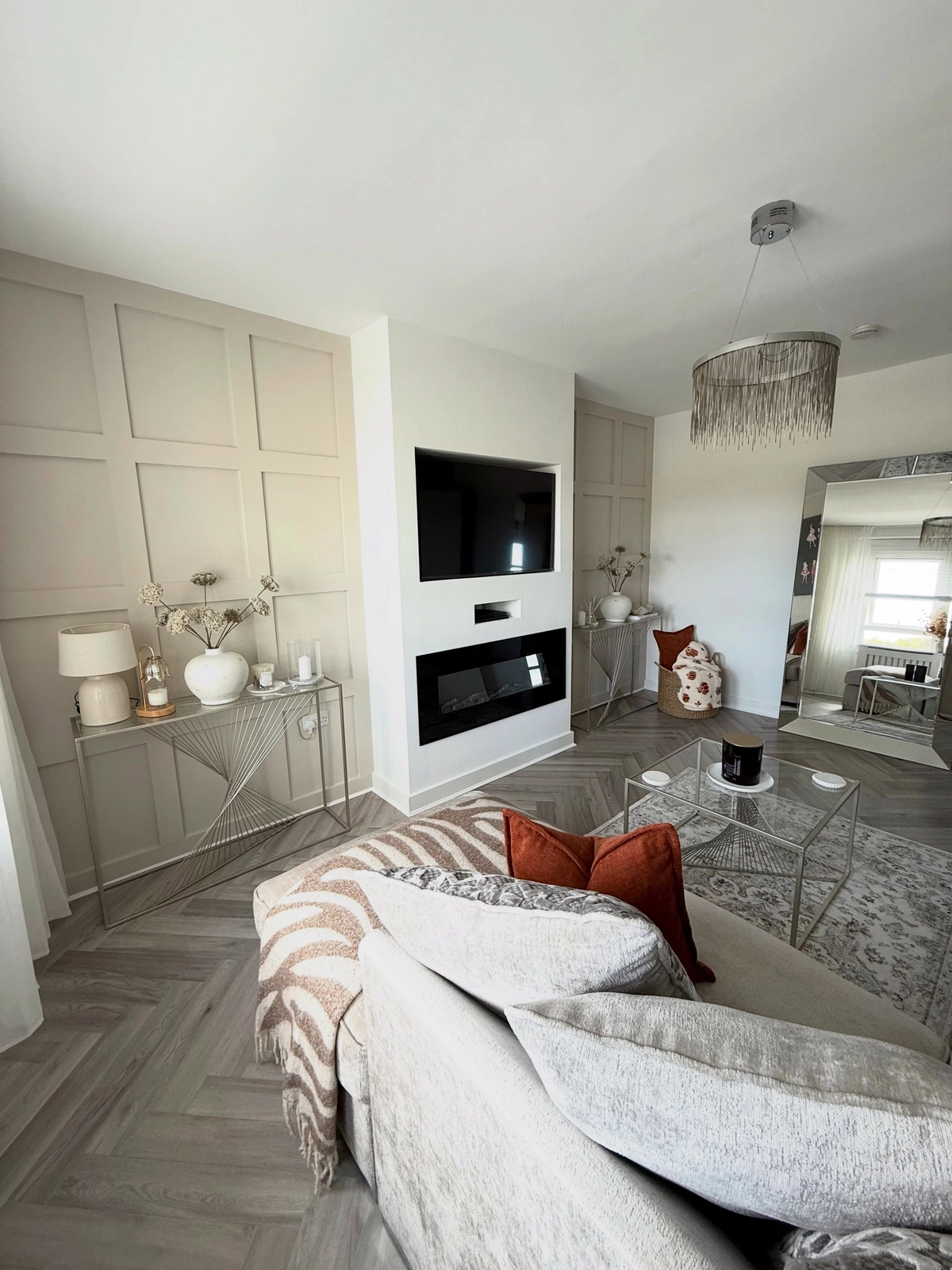
Photo: @cleaning_with_mario on Instagram
A glass or acrylic coffee table takes up almost no visual room, because the eye passes through it and keeps going to the floor and the wall behind. The same goes for open-frame consoles and lattice or cane pieces. This room pairs a glass coffee table with slim metal consoles, and almost nothing between the sofa and the walls registers as a barrier.
Start with the coffee table, since it sits in the middle of every sightline. If glass feels too cold or too fragile for your house, a table with an open lower shelf or thin legs gets you most of the same effect.
8. Keep the Big Pieces Low
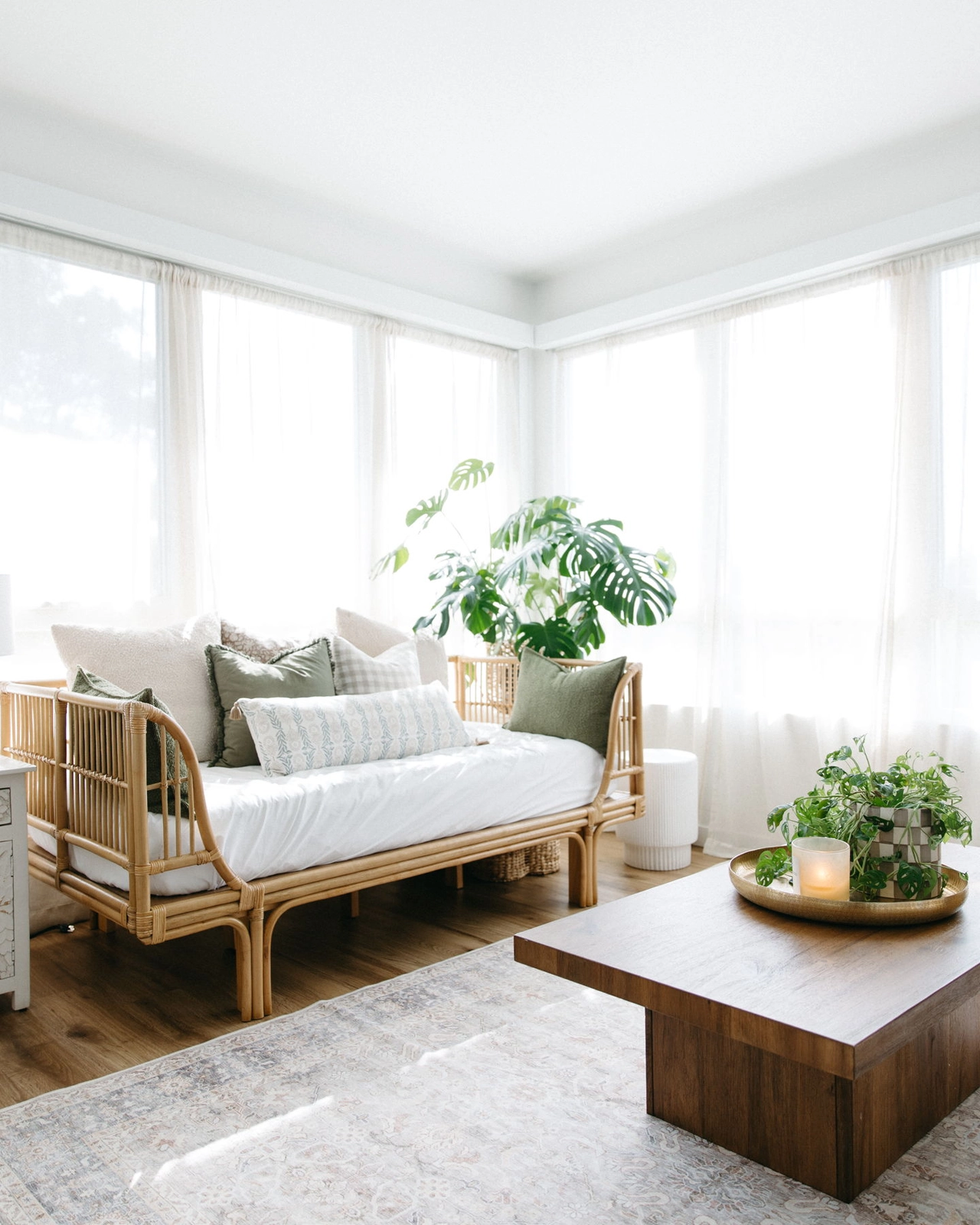
Photo: @tumblerugs on Instagram
Tall furniture in a small room blocks light and cuts sightlines. Keep the largest pieces below the window line and the room stays connected to its light and its views. The rattan daybed and low table in this corner sit well under the sheers on both window walls, so nothing interrupts the light coming from two directions.
This is the rule that makes tall bookcases and high-backed chairs the pieces to place carefully. Put height against a solid wall, never across a window, and let the middle of the room stay low and open.
9. Zone One Room Into Rooms
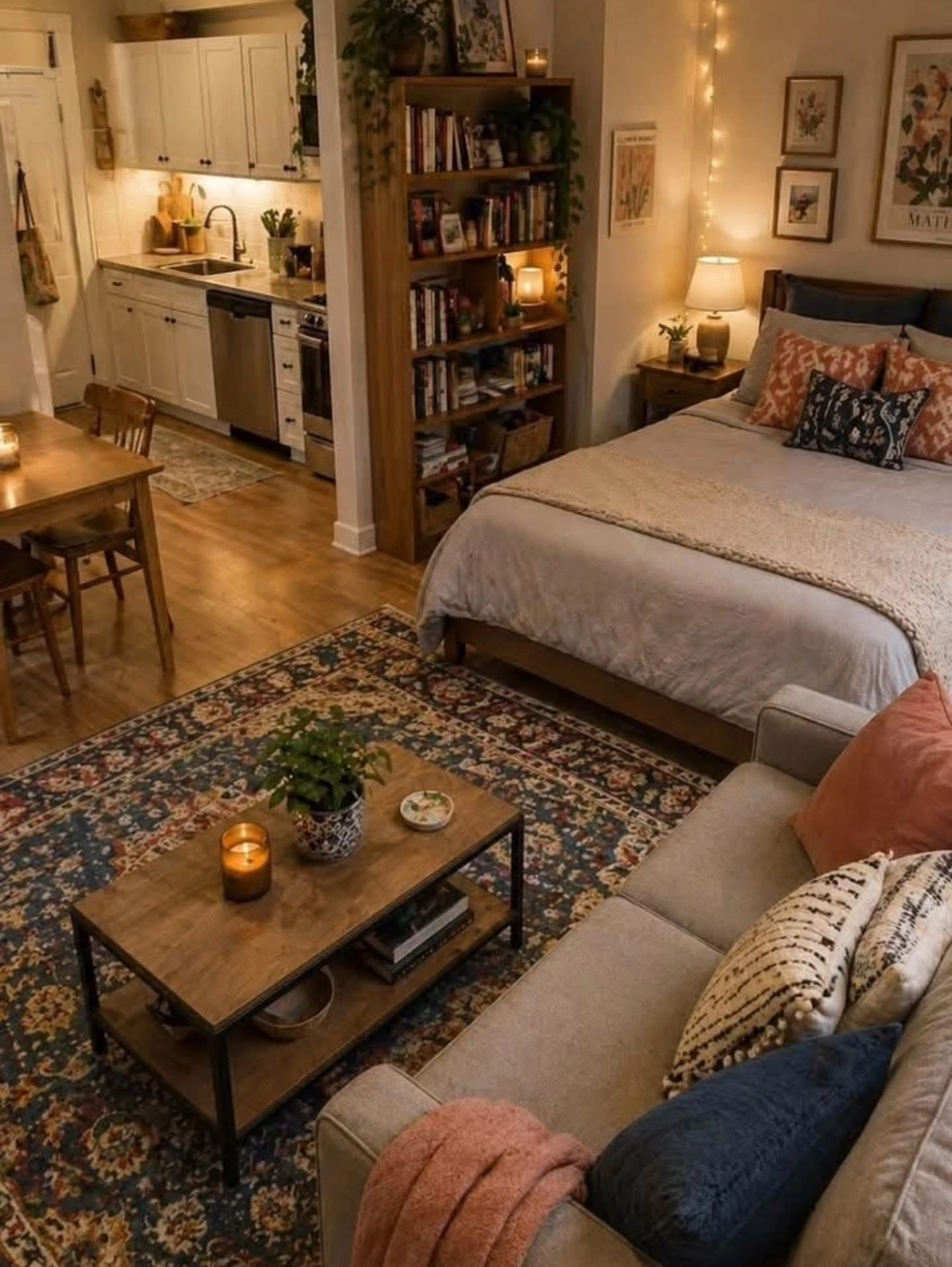
Photo: @arcxdesign on Instagram
It sounds backwards, but dividing a small space can make it feel bigger. Undefined space reads as leftover space. Given edges, the same footprint reads as two purposeful rooms. Here a bookshelf splits the bed from the sofa, and one large patterned rug pulls the living zone together underneath the coffee table, so the studio reads as a bedroom plus a living room instead of one box with furniture in it.
A divider you can see over or through, like open shelving, works best in the smallest spaces. The rug matters as much as the divider: it is the border that tells the eye where one room ends. More layouts like this live in studio apartments.
10. Take the Walls All the Way Up
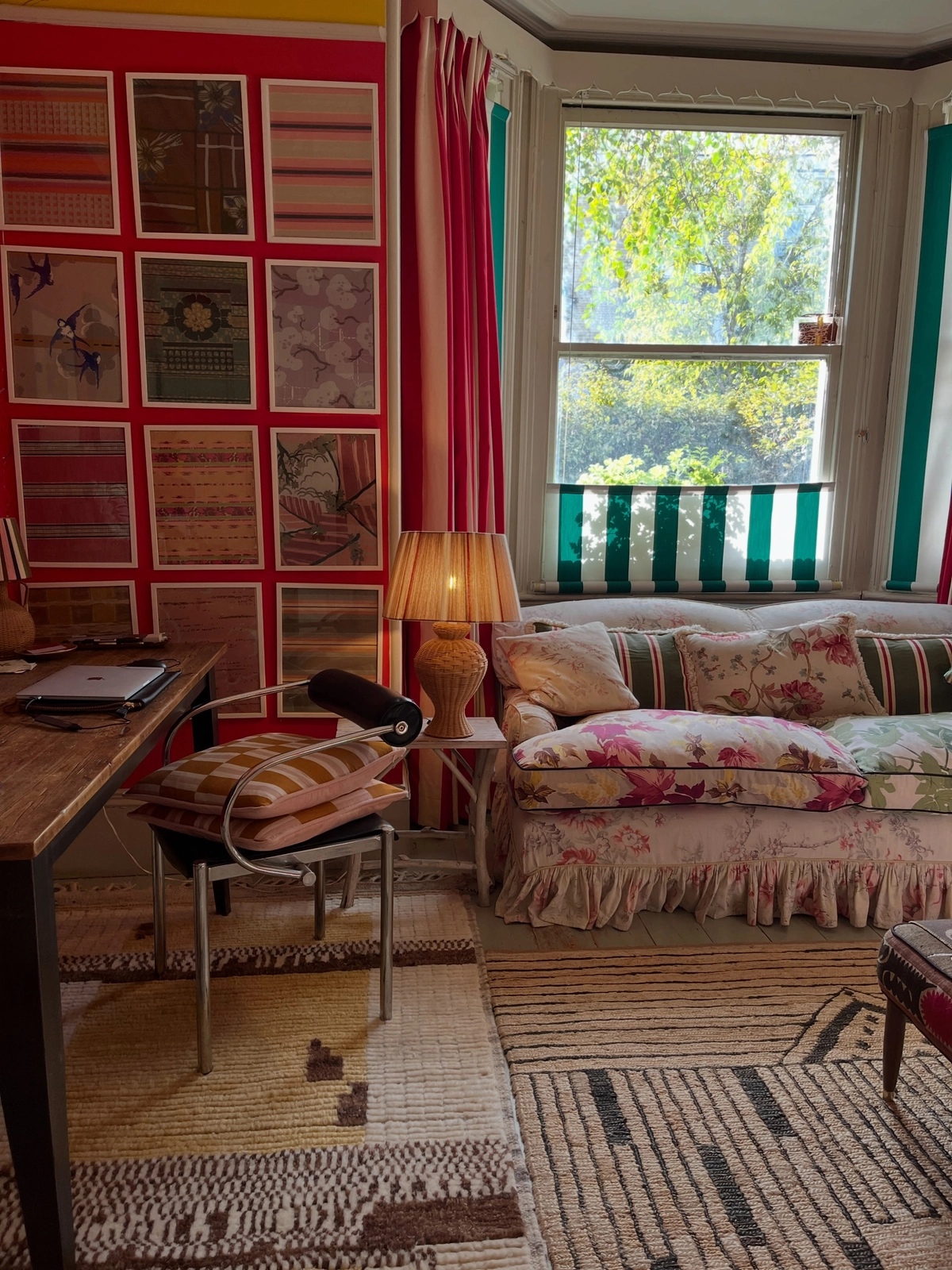
Photo: @lucindachambers on Instagram
The eye measures a room by where the decoration stops. Art hung in one horizontal band at eye level draws a line the ceiling never recovers from. Take a gallery wall all the way to the top, in a tight grid like this wall of framed textiles, and the eye travels the full height of the room. The room has not grown, but it is being measured honestly for the first time.
Notice, too, that this wall is red and busy, and it still works. Pale is a reliable route, not a law. What makes a bold wall expand rather than shrink a room is commitment: full height, full grid, no apologetic gaps.
11. Hide the Clutter Behind Doors
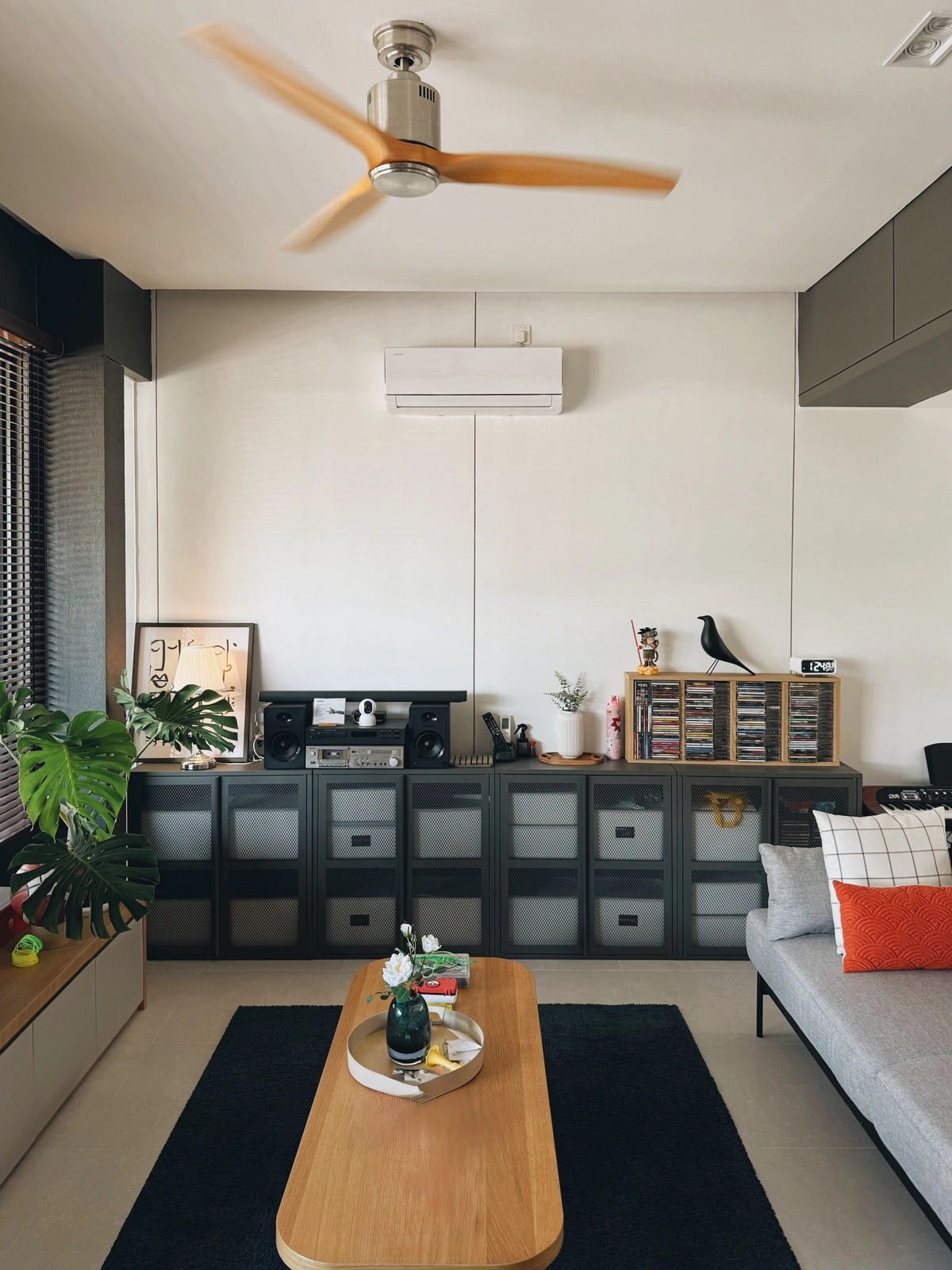
Photo: @stu.tyo on Instagram
Visual noise is a tax on space. Every visible charger, stack of paper and loose shoe makes the room feel smaller than it is, because the eye keeps stopping on objects. Closed storage removes the tax without removing the things. This room runs a full wall of mesh-front cabinets with everything boxed behind doors, and the surfaces that remain are nearly empty.
Open shelves are for the few things that look good out. Everything else earns a door, a box or a basket. If you are planning a storage wall, the storage and organization section is where the bigger systems live.
12. Layer the Light, Especially at Night
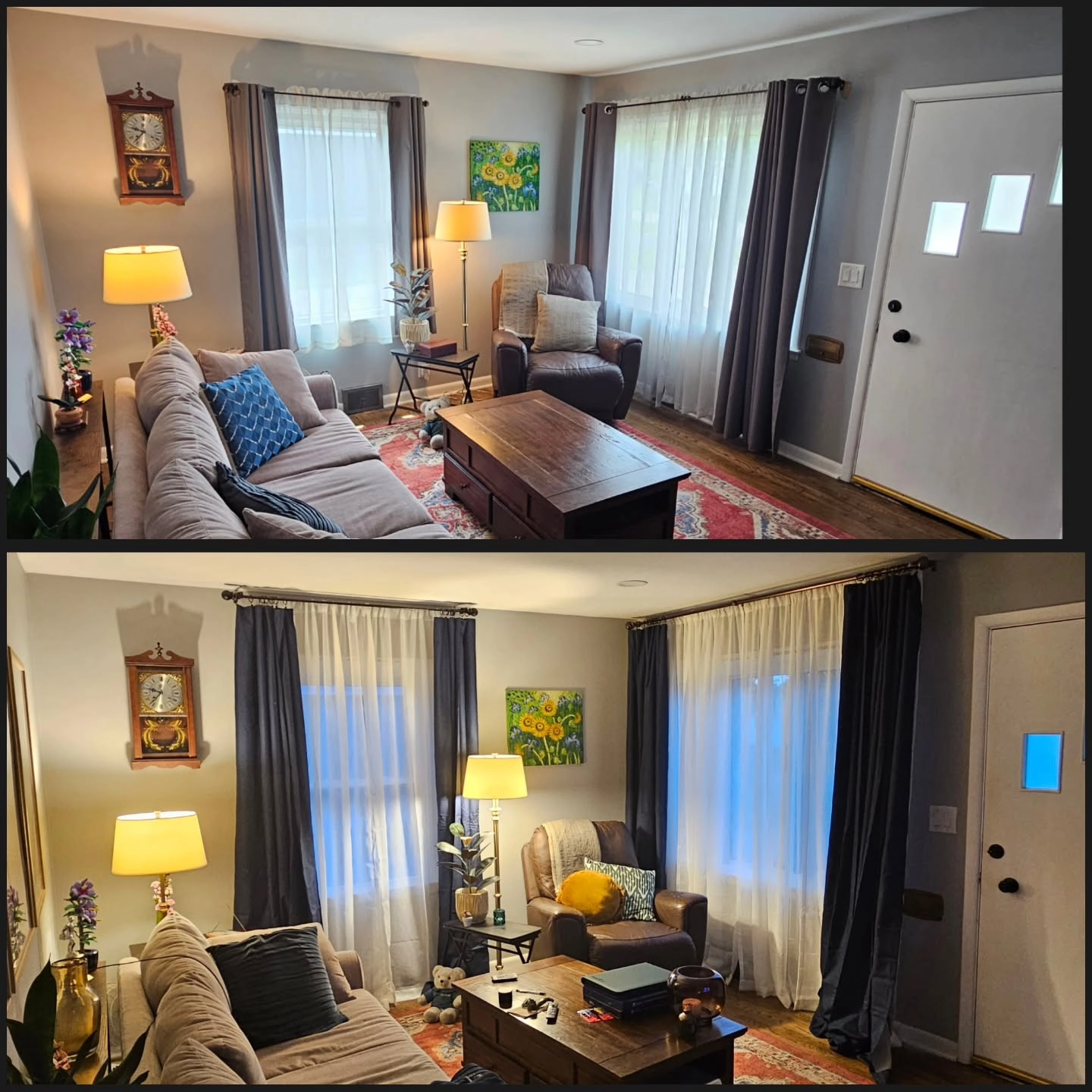
Photo: @mikesstuffandthings on Instagram
One ceiling light flattens a room and leaves the corners in shadow, and dark corners read as walls closing in. Light at three heights, table lamps, a floor lamp, something low and warm, pushes into those corners and redraws the boundaries further out. This is the same room by day and by evening: the tall curtains and sheers handle the daylight, and the lamps take over at night without the room shrinking back.
Warm bulbs help more than bright ones. Two or three gentle pools of light feel like a bigger, calmer room than one harsh overhead glare, and they make the seating area feel like a destination instead of a pass-through.
Small Living Room Questions, Answered
What color makes a small living room look bigger?
Pale, low-contrast colors work because they blur the boundaries between walls, furniture and floor. Whites, warm creams, pale greys and soft beige all do it. A dark color can work too, but only when it wraps the room completely, walls and woodwork together, with no pale ceiling line cutting across it.
How big should a rug be in a small living room?
Big enough that the front legs of every seat sit on it, with rug still showing beyond the furniture. For most small rooms that means starting at 8×10 rather than 5×7. If the rug floats in the middle with floor all around it, it is measuring the room down instead of up.
Do mirrors really make a room look bigger?
Yes, when they reflect light or open space. A large mirror opposite or beside a window effectively borrows a second window. A mirror facing a cluttered wall or a dark hallway does the opposite, so check what yours reflects from where you actually sit.
What is the cheapest trick that actually works?
Raising the curtain rod. Moving it from the window frame to just under the ceiling costs nothing if the panels are long enough, and it changes the proportions of the whole wall. Clearing the floor line comes second: pull the sofa a few inches off the wall and let its legs show.
The Order to Do Them In
Start with the free moves this weekend: raise the curtain rod, reposition the rug so the seating sits on it, and clear everything off the floor that has a door to live behind. Then the one-purchase fixes, sheers and a mirror with a view worth reflecting. Save the furniture swaps, legs, glass, lower profiles, for when pieces wear out or budget opens up.
Your room is probably not too small. It is just full of stopping points, and stopping points can be removed one at a time.