
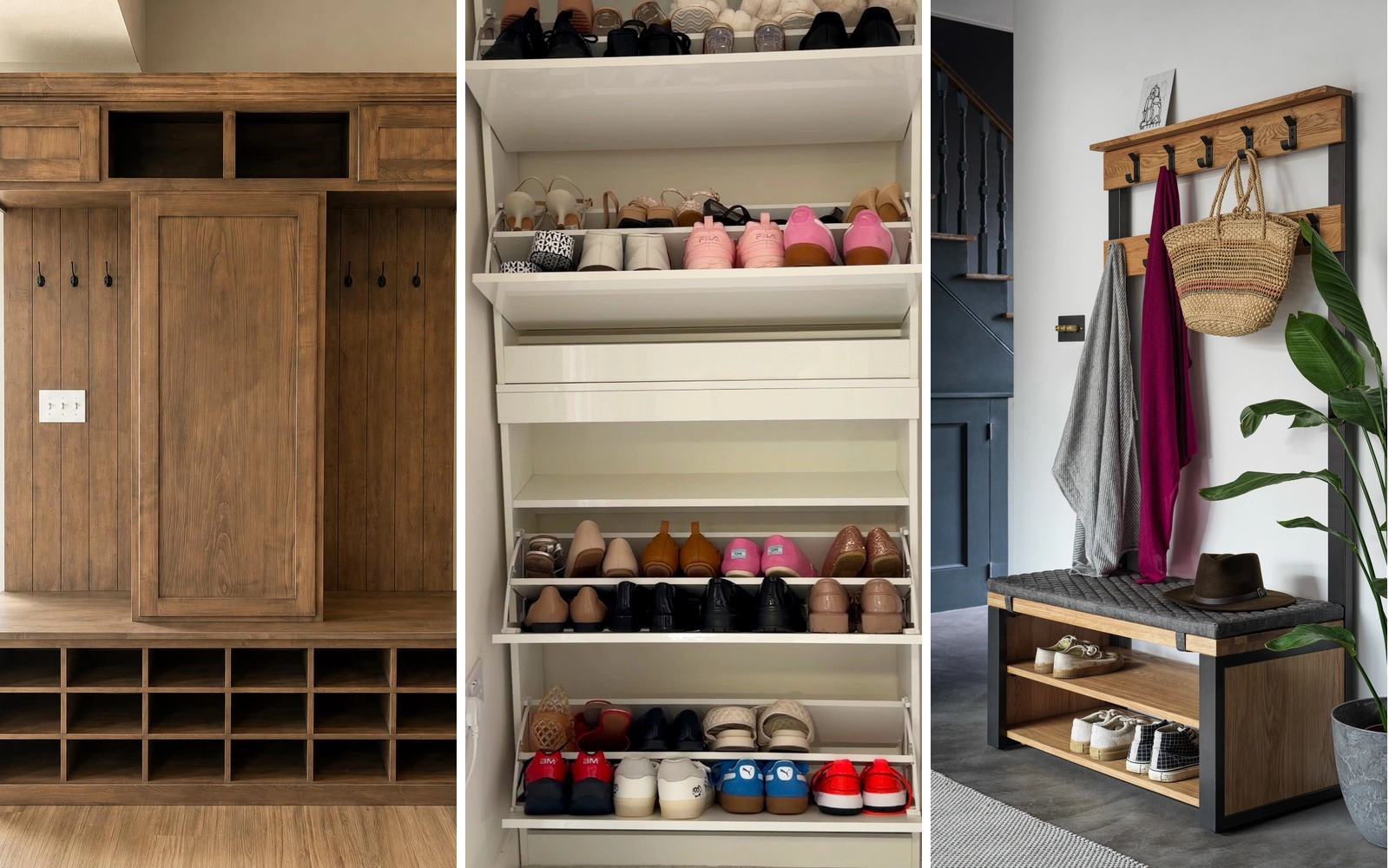
24 Shoe Storage Ideas for Small Spaces
Shoes are the first thing a small home loses control of. They multiply by the door, they migrate into the hallway, and no matter how many times you line them up, they are a mess again by Friday. The fix is not discipline, it is furniture: every pair needs a home that is easier to use than the floor, and the home has to fit the space you actually have.
The ideas below are grouped by capacity, so start with an honest count of the shoes that live by your door. The everyday edit holds a few pairs for one or two people. The family collection handles the whole household with benches and cubbies. Every shoe you own is for the full collection, in tall cabinets and built-ins that hide it all. Count your pairs, pick your group, and steal the pieces that fit.
The everyday edit: a few pairs by the door
For one or two people, or a second door that only needs the daily rotation. These pieces hold a few pairs and take almost no floor space, so the entryway stays an entryway.
Start with a simple two-door cupboard
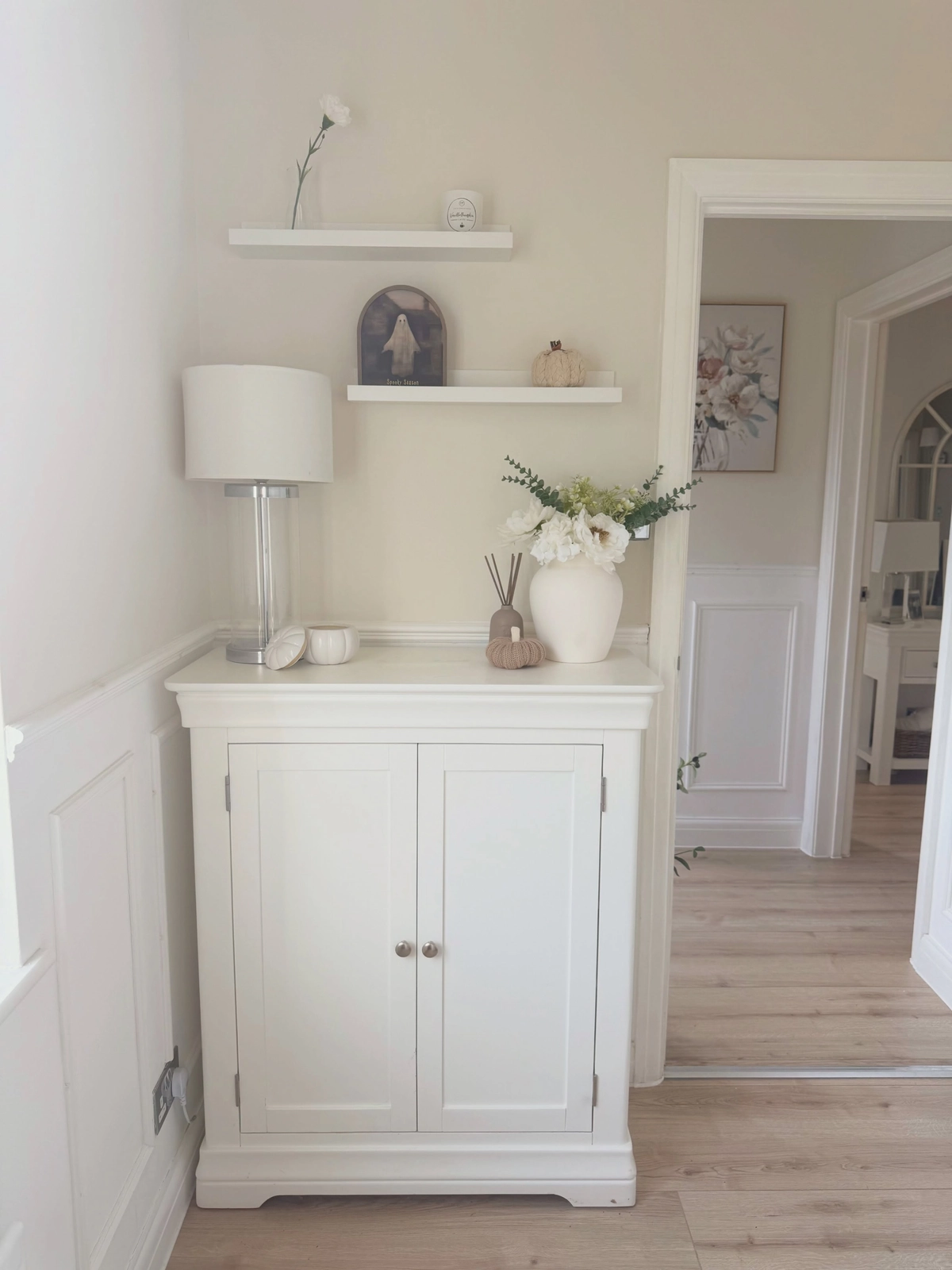
Photo: @thewisteria.home on Instagram
A white two-door shoe cupboard in a bright entryway is the smallest idea in this list and one of the best. It holds the daily pairs behind closed doors, the top works as a shelf for keys and a lamp, and the whole thing takes less floor than a doormat. Every small entryway should start here before buying anything bigger: a cupboard this slim is half the battle in making the room feel bigger.
A two-door cupboard works when you commit to the edit: the shoes you wear this week live inside, everything else lives elsewhere. If the cupboard is full, something has to leave before something new comes in. That rule, more than the furniture, is what keeps the door clear.
Use a low wooden rack for boots and sandals
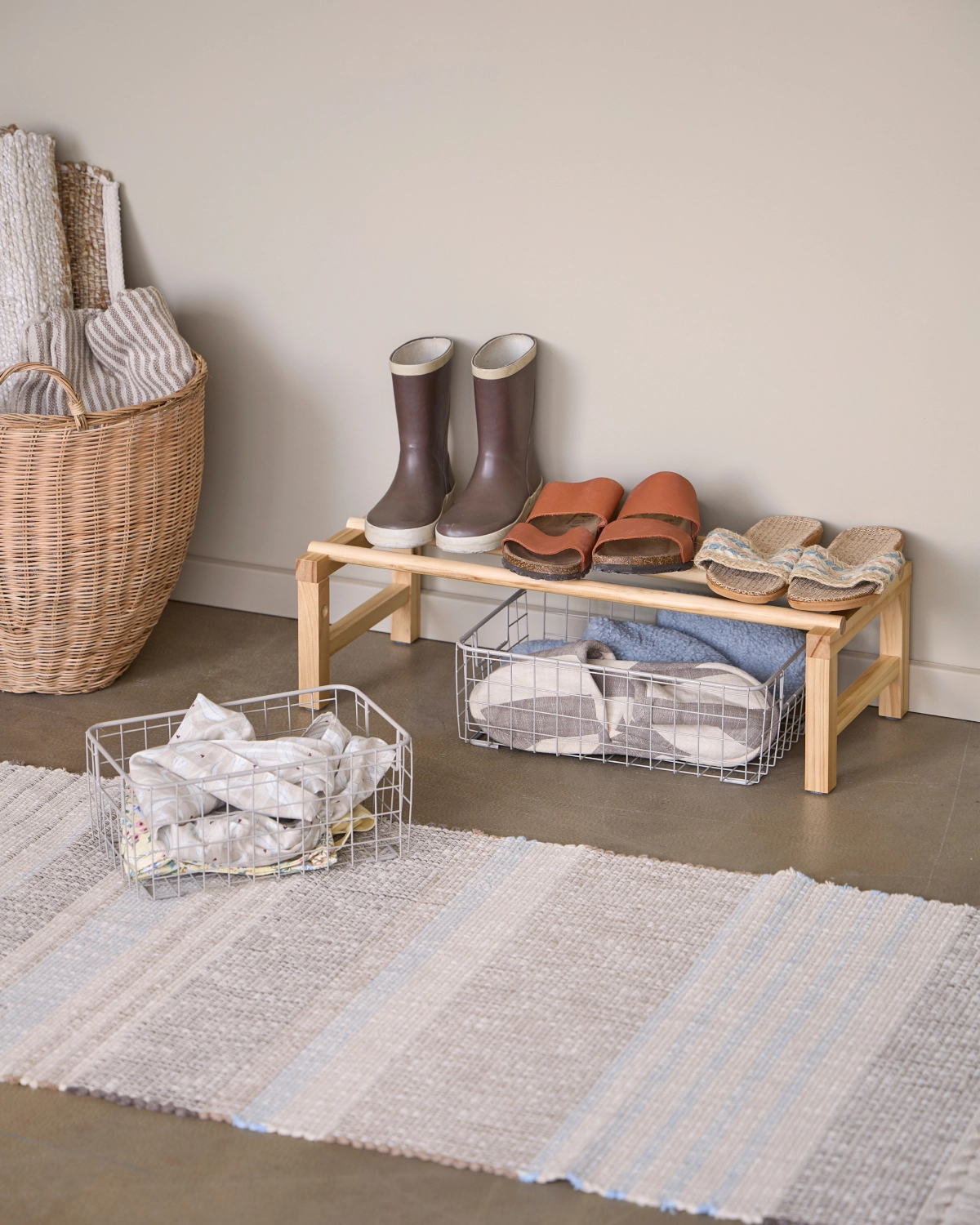
Photo: @sostrenegrene on Instagram
A low wooden shoe rack holds boots, sandals, and the pairs that never fit in a cupboard. This one sits in an entryway with a basket beside it, and the low height means it slides under a bench or a console if the room ever changes. Boots need height, and a rack gives it without a tall cabinet.
Low racks suit homes with a lot of boots best, because boots are the shoes that break every closed cabinet. Keep the rack to one row high, or it becomes a tower that topples; boots standing upright need a rack with tall clearance, not stacked shelves.
Mount a slim cabinet on the wall
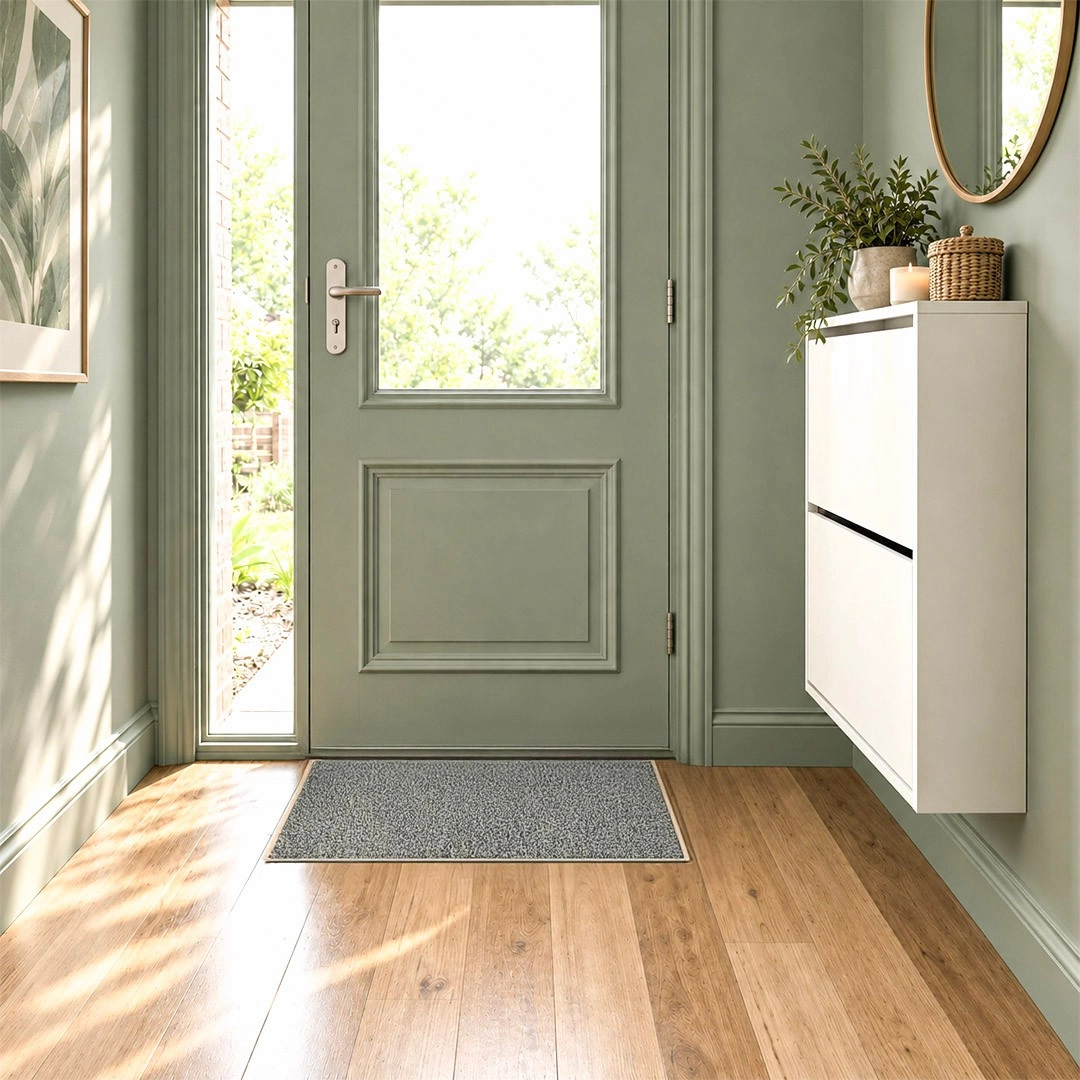
Photo: @vendline_ on Instagram
A wall-mounted white shoe cabinet beside the door holds several pairs and touches no floor at all. The slim depth keeps the hallway walkable, the wall mount keeps the floor clear for the robot vacuum, and the white finish disappears against a light wall.
Wall-mounted cabinets are the right call for the narrowest hallways, where even a slim cupboard on the floor would block the path. Mount it at a height you can reach without bending, and check the wall can take the weight before you load it with boots.
Expand a four-tier rack as the collection grows
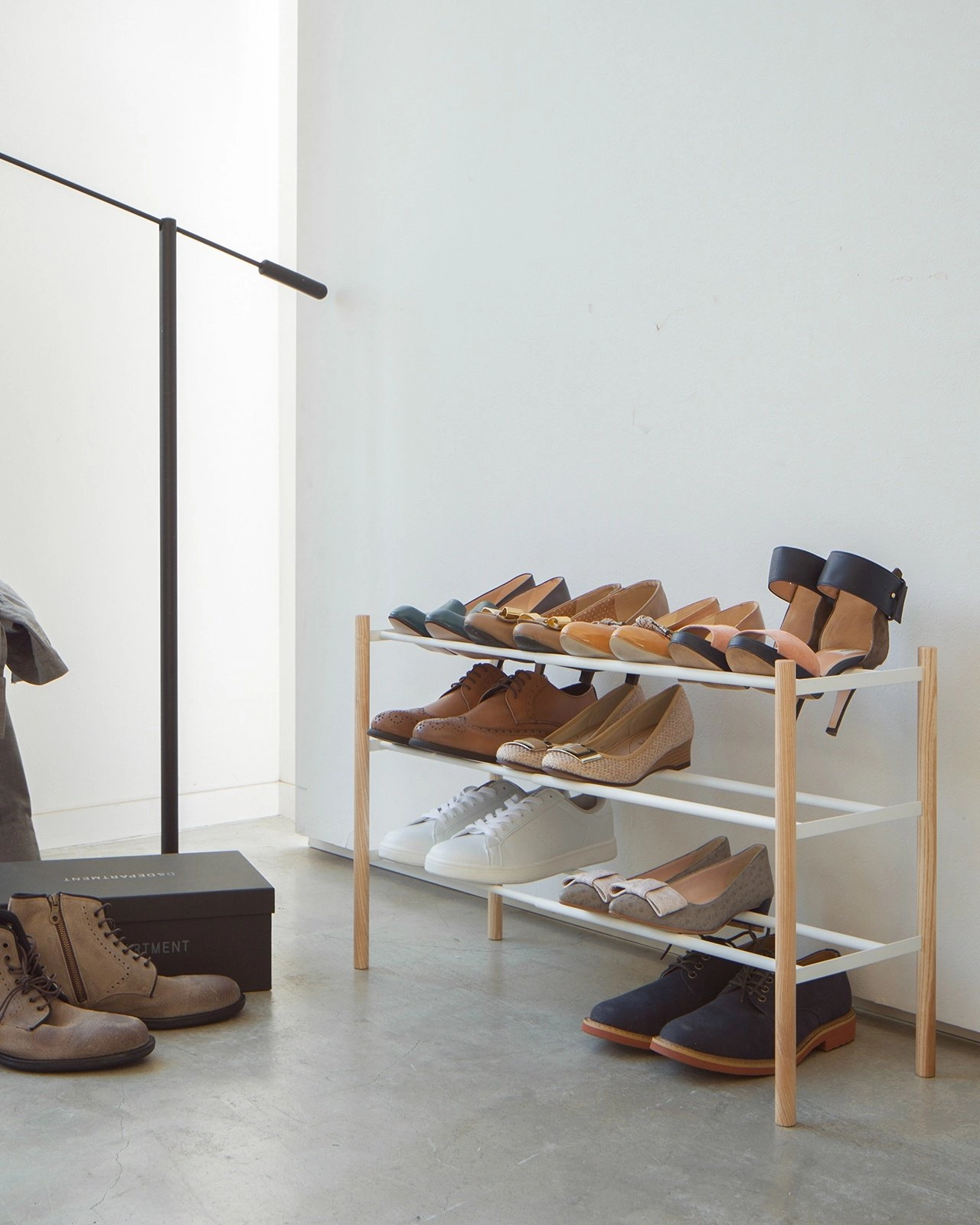
Photo: @yamazakihome on Instagram
A four-tier expandable shoe rack grows with the collection instead of against it. Start with two tiers for the daily pairs, add tiers as the household grows, and the rack fills the width you give it. This one holds a full family rotation in the footprint of a single doormat.
Expandable racks work because shoe collections change with the seasons: sandals in summer, boots in winter. An expandable rack absorbs the seasonal swell without a second piece of furniture, and when the collection shrinks, the rack shrinks with it.
Tuck two tall cabinets under the windows
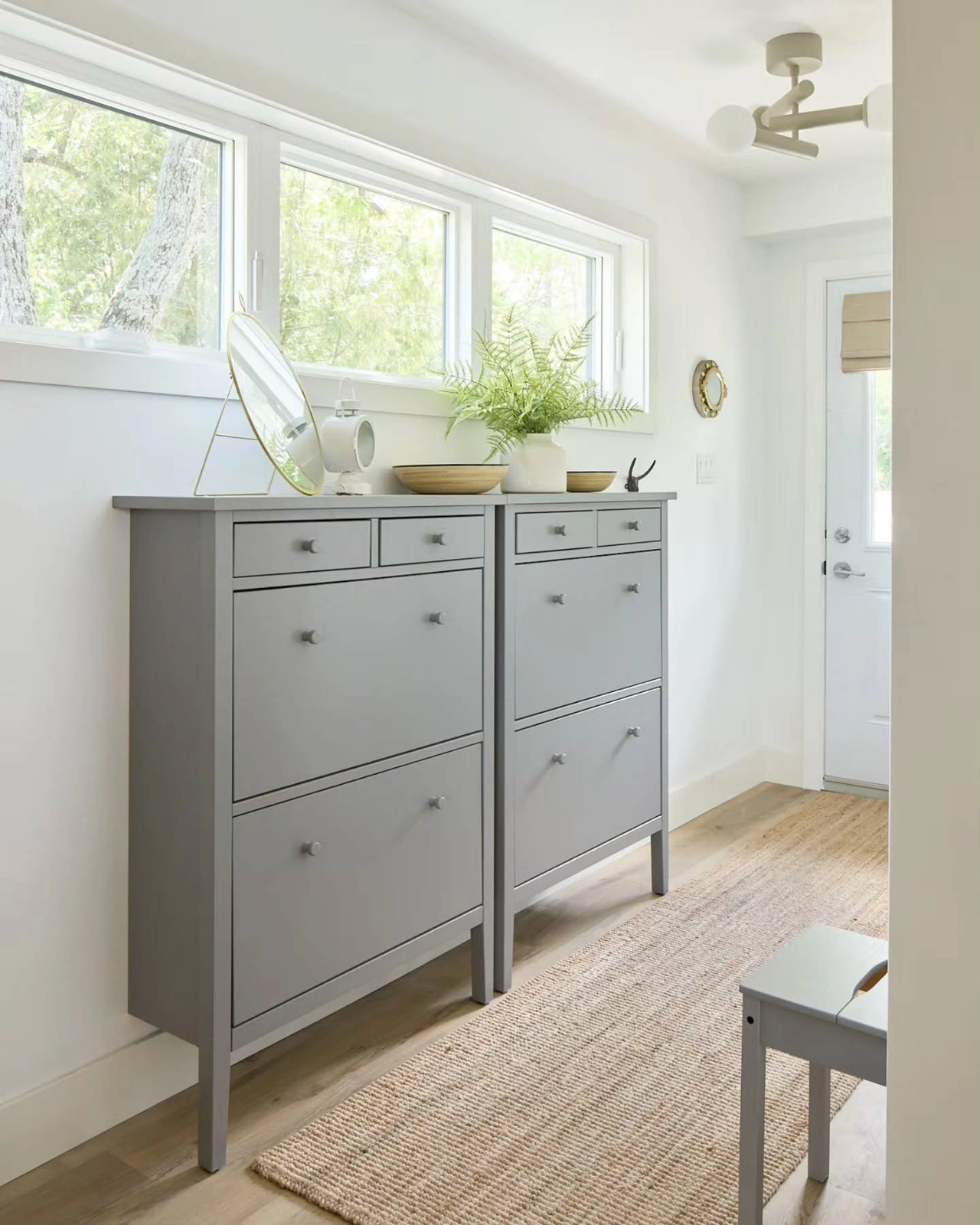
Photo: @jo_alcorn on Instagram
Two tall grey shoe cabinets under hallway windows turn dead wall space into a shoe wall. The windows light the cabinets, the grey finish sits quietly against the wall, and the height holds dozens of pairs in a strip of hallway that was doing nothing.
Under-window cabinets need a window sill high enough to clear the cabinet top, so measure before you buy. The payoff is a hallway that stores shoes without a single piece of furniture sticking out into the walkway.
Run wall-mounted cabinets down the hall
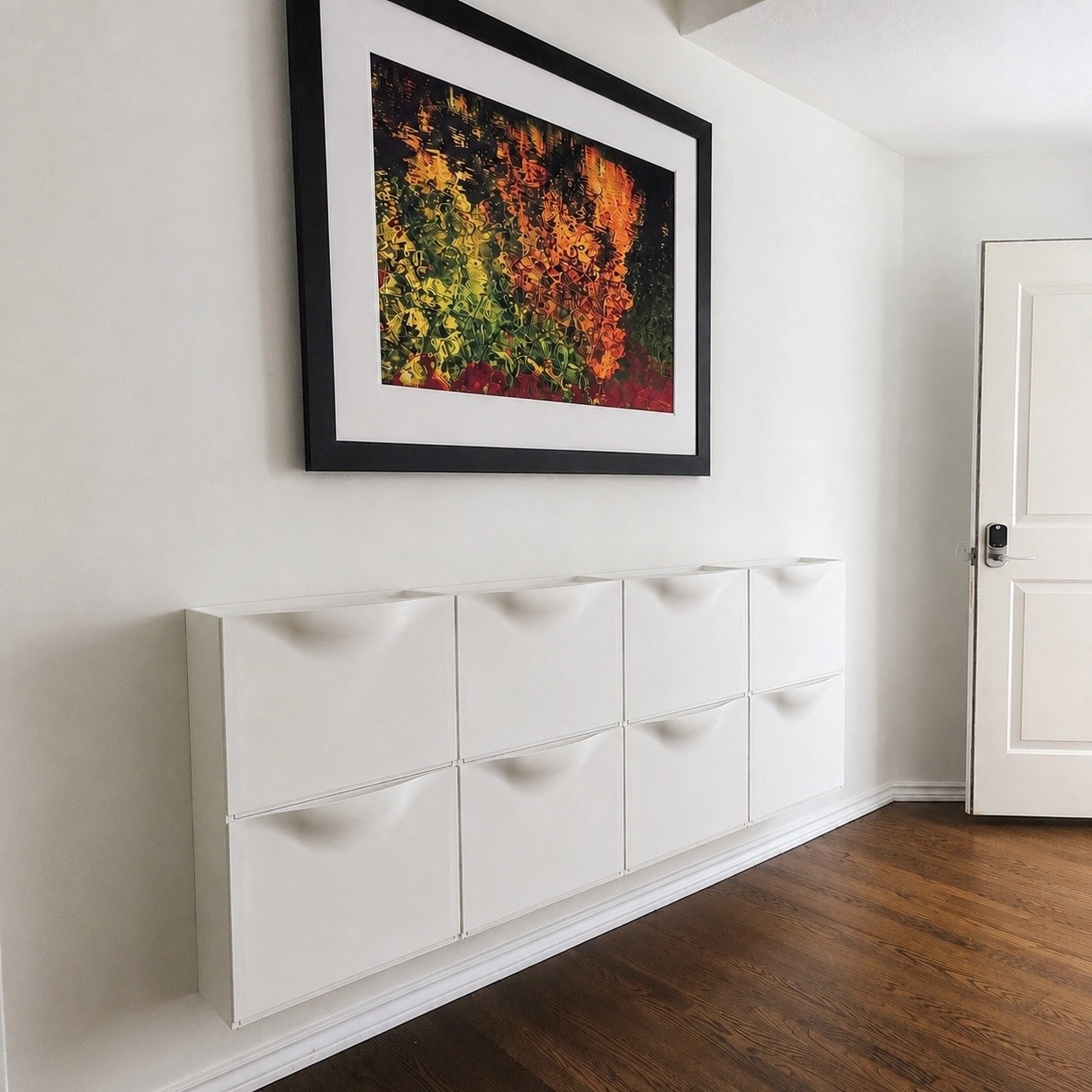
Photo: @theorganizedhouse.co on Instagram
Wall-mounted white cabinets running down a hallway wall hold the overflow without narrowing the walk. Each cabinet is slim and identical, so the run reads as panelling rather than furniture, and the hallway keeps its full width for walking.
A run of identical wall cabinets works in long hallways where one big cabinet would look lost. Space them evenly, keep them the same size, and the hallway gains storage that looks like it was always part of the architecture.
Float wooden shelves for the display pairs
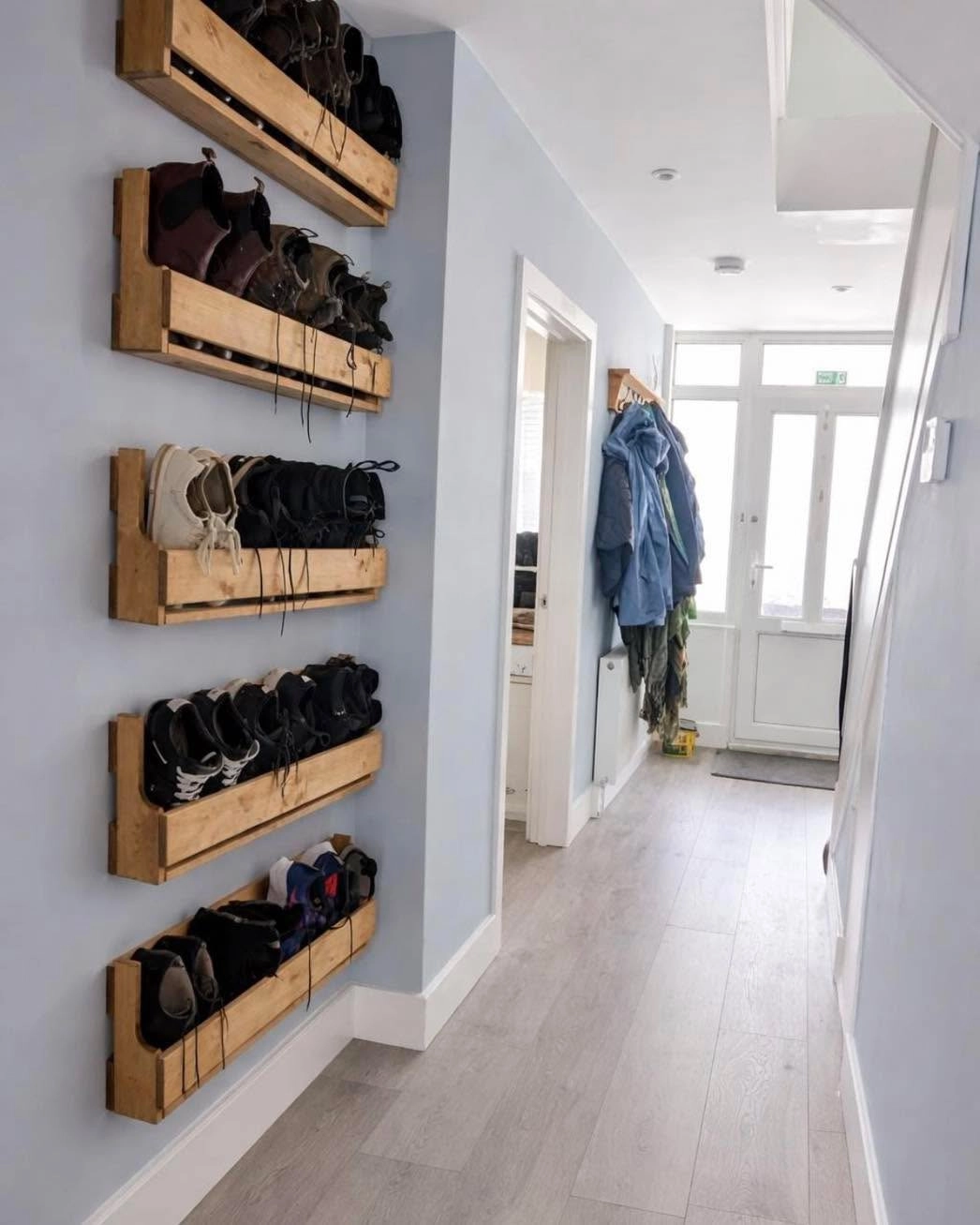
Photo: @ourhometoyours on Instagram
Five floating wooden shelves on the wall hold the shoes you actually like looking at. The shelves take no floor, the wood warms up the hallway, and the open display means you grab the right pair without opening anything. This is shoe storage for people who treat sneakers like art.
Floating shelves suit a small collection of good pairs, not the whole family pile. Keep it to the pairs you wear weekly, and let the rest live in closed storage, or the display becomes a cluttered shelf within a month.
Hide pairs behind flip-down doors
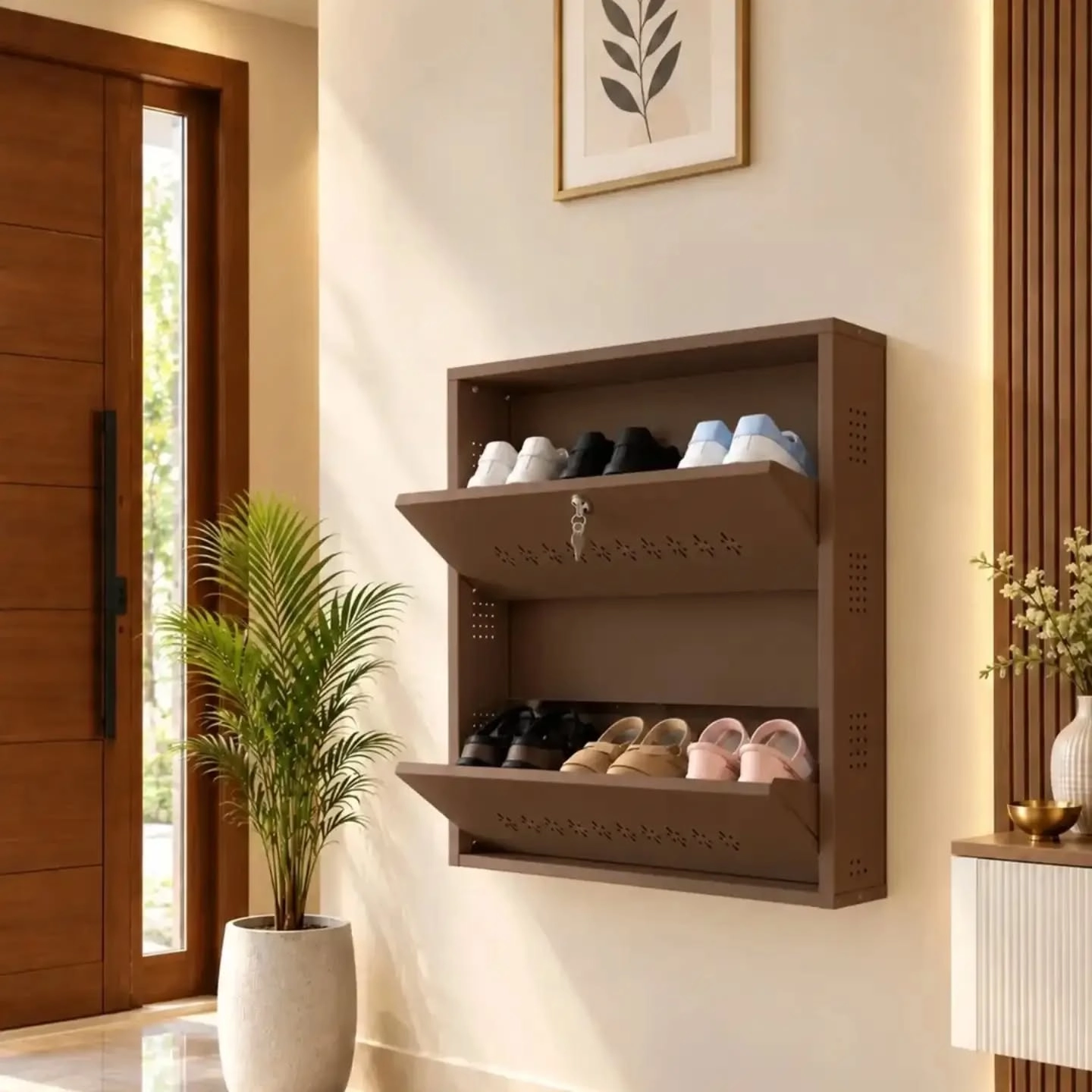
Photo: @_shoe_den_kerala__ on Instagram
A brown wall-mounted flip-down shoe cabinet hides the shoes and shows the wood. The flip-down doors open forward for access and close flush for calm, and the wall mount keeps the floor clear. The brown finish works like furniture, not utility storage.
Flip-down doors are the best mechanism for narrow halls because they need no swing space and no pull-out clearance. The trade is depth: flip-down compartments are shallow, so they suit flats and heels better than boots.
Count the pairs before you buy the furniture. The everyday edit holds a dozen pairs, the family collection holds thirty, and the tall cabinets hold fifty or more. Buy for the count you have, not the count you wish you had, and the furniture will fit the first time.
The family collection: benches and cubbies
When the whole household kicks off shoes at the same door, you need a bench to sit on and cubbies to sort the pairs. These pieces give everyone a spot and end the pile by the door.
Build the mudroom around a bench with open shelves
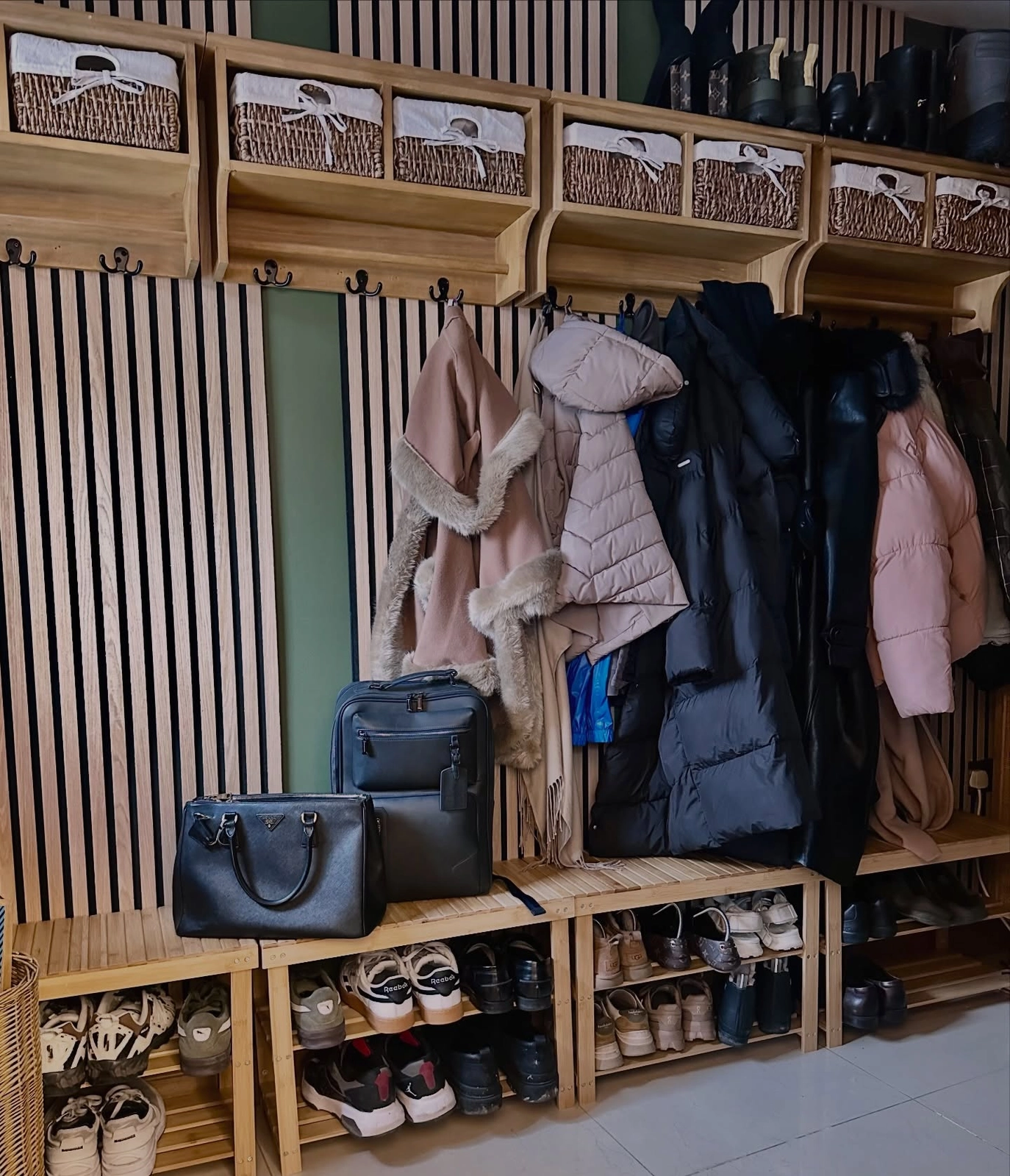
Photo: @theleafyhaus on Instagram
A mudroom bench with open shoe shelves underneath is the classic family entry: sit to put shoes on, slide them underneath when you take them off. The open shelves mean no doors to open with full hands, and every pair is visible, so the morning search for the missing shoe ends.
Open shelves under a bench work because they are faster than doors, and speed is everything with kids. Give each child one cubby or one shelf, and the bench becomes self-sorting: their shoes live in their spot, or they answer for the pile.
Choose a wooden bench with cubbies for a cabin feel
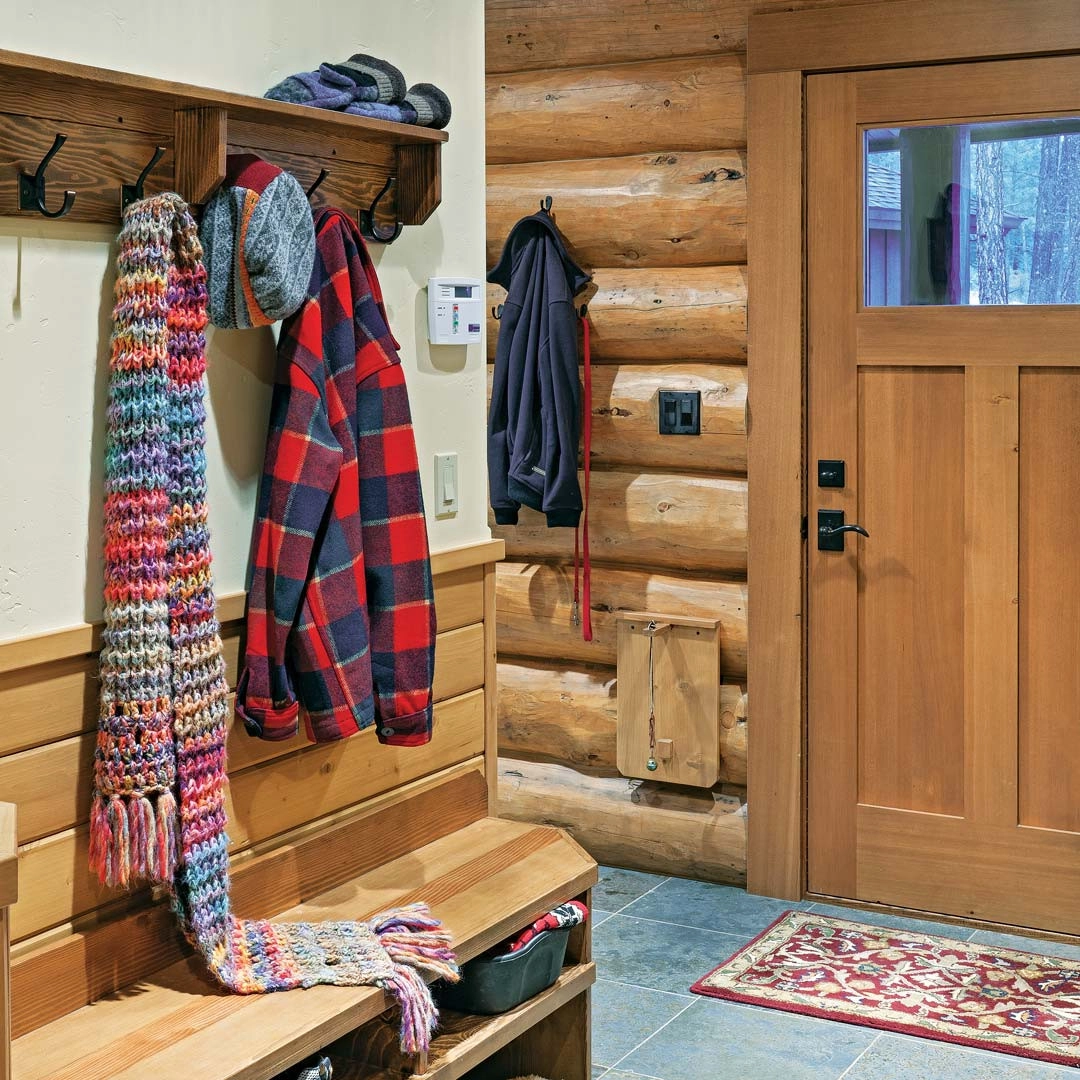
Photo: @loghomeliving on Instagram
A wooden entryway bench with shoe cubbies brings a cabin warmth to the door. The cubbies hold the daily pairs, the bench holds the sitting, and the wood hides the scuffs that a white bench would show within a week. It is the bench for homes where the door gets real weather.
Wooden benches suit back doors and mudrooms best, where muddy boots are the norm rather than the exception. Choose a bench with a wipeable finish, and put a boot tray underneath the cubbies for the wettest days.
Pair the bench with coat hooks above
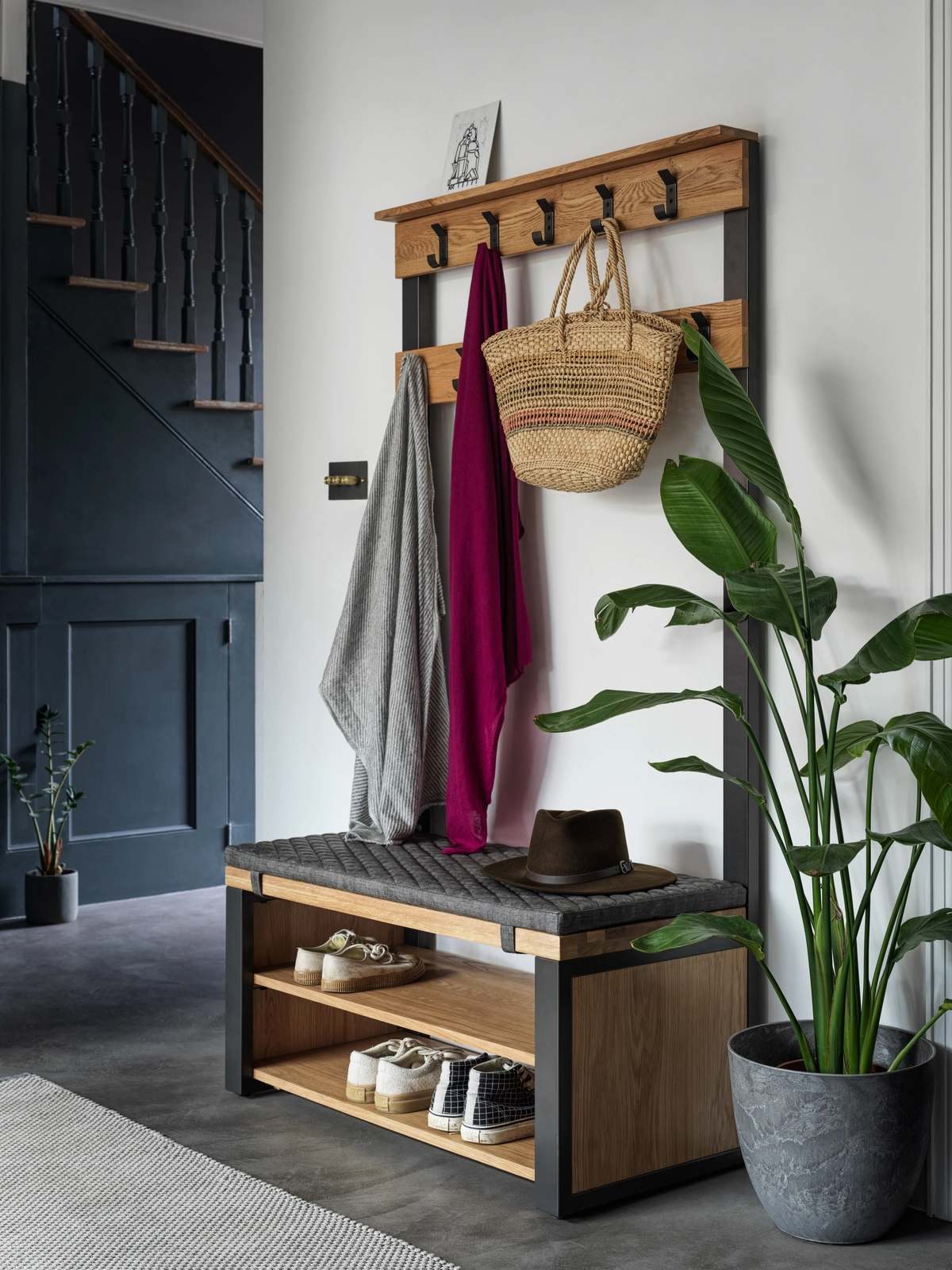
Photo: @furniturevillage on Instagram
An entryway bench with coat hooks above it is the complete arrival station: coats on the hooks, shoes under the bench, bags on the bench. Everything you take off at the door has a home within arm’s reach, and the wall above the bench stops being dead space.
Coat hooks above a bench need to sit high enough that hanging coats clear the bench seat. A good rule is hooks at standing eye height and the bench at sitting height, with enough gap between them for a winter coat to hang free.
Keep it simple: a shoe bench and hooks
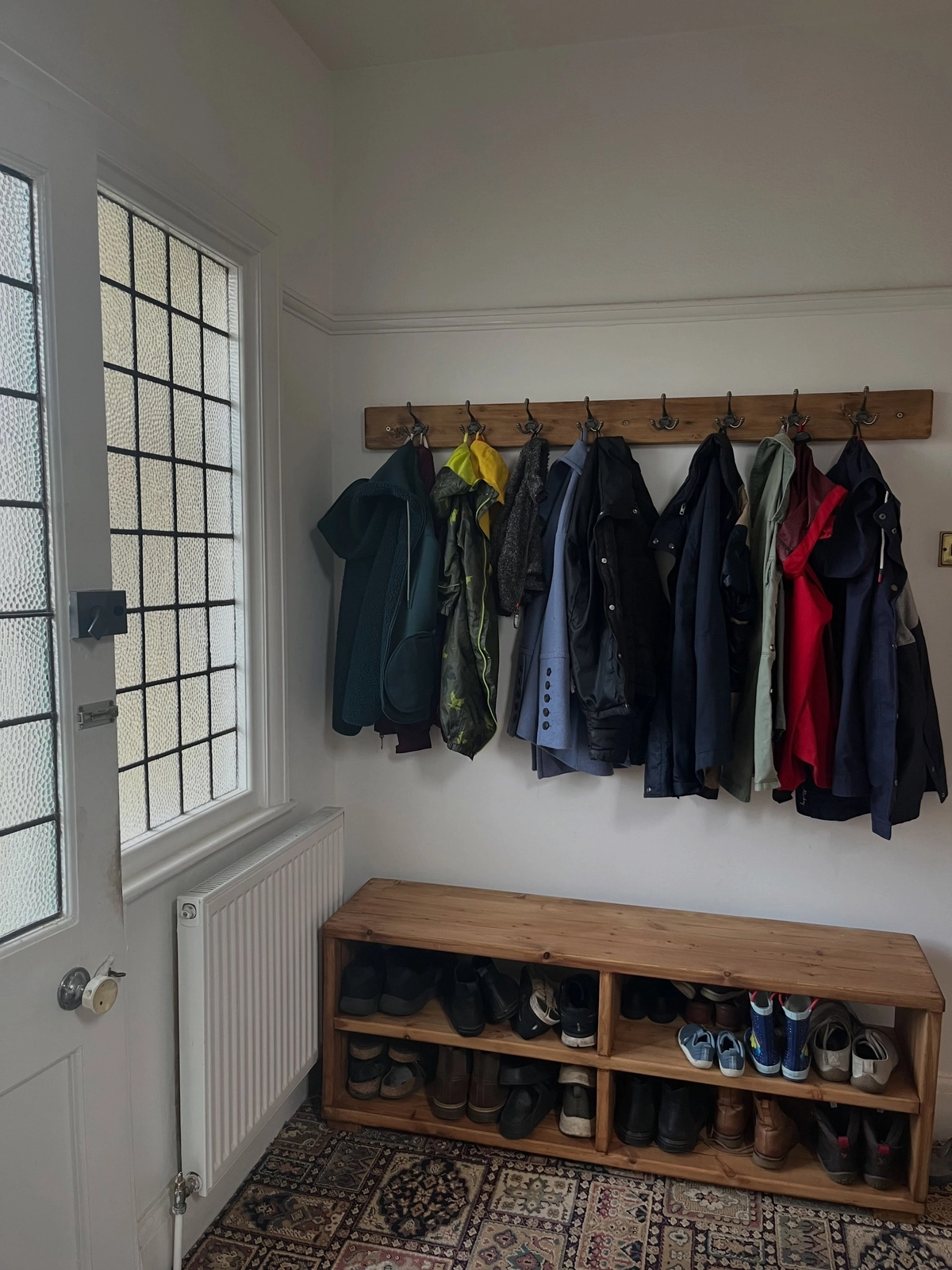
Photo: @thej0yfuldetails on Instagram
A wooden shoe bench with coat hooks is the same idea stripped to its essentials: a bench, open shoe storage below, hooks above. Nothing is built in, nothing is custom, and the whole station can move to a new house in one trip. It is the family collection for renters.
Freestanding bench-and-hook sets work because they commit to nothing. If the entryway layout changes, the set moves; if the family grows, a second set joins it. Buy the set before you buy anything built in, because it teaches you what the household actually needs.
Run a long low bench along the wall
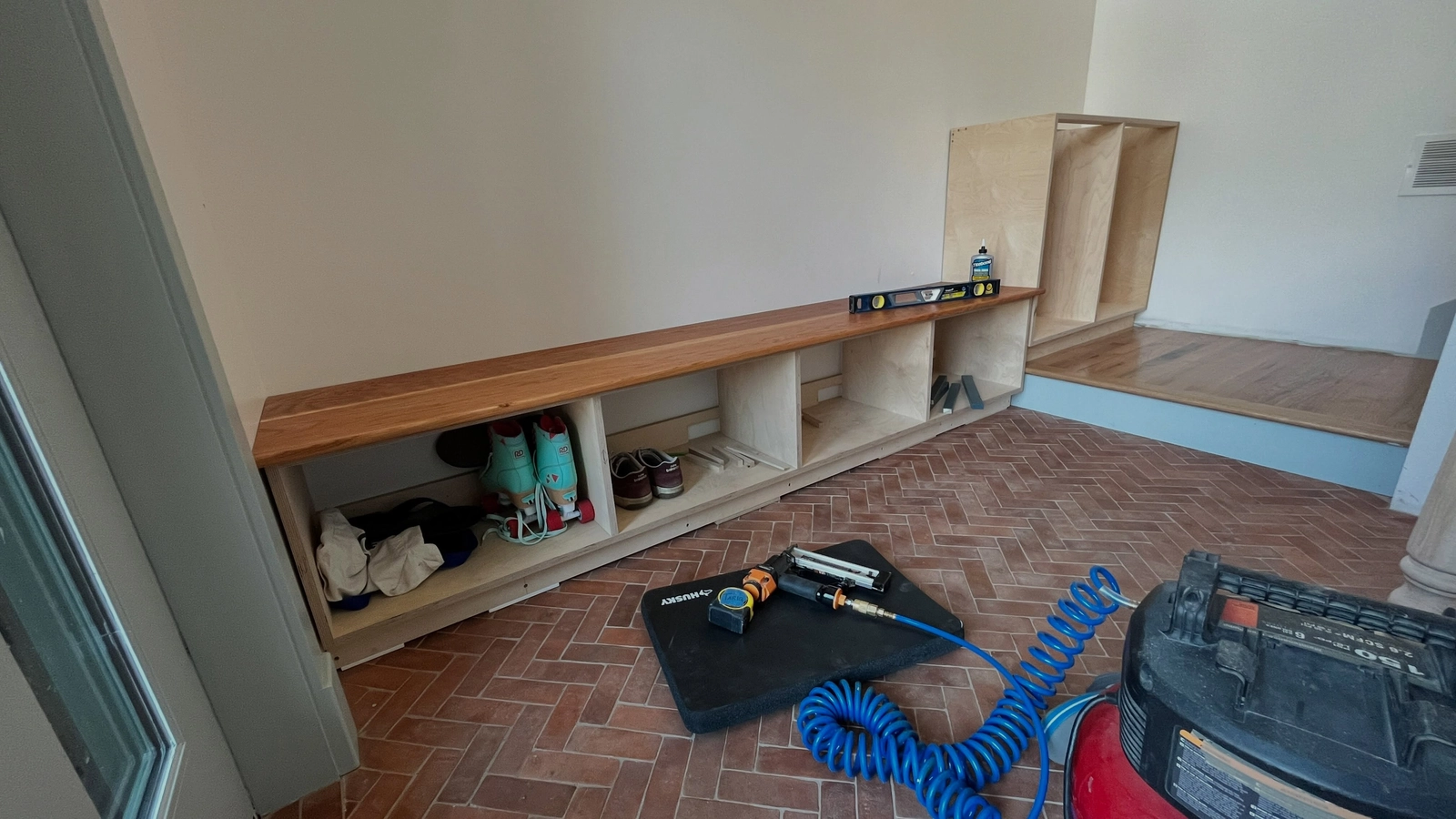
Photo: @tariqzehawi on Instagram
A long low built-in bench with open shoe storage beneath it turns a whole wall into the family station. The bench seats two or three at once, the open storage below holds everyone’s daily pairs, and the low height keeps the wall feeling open above it.
Long benches suit wide entryways and mudrooms where the door wall is the longest wall in the space. Build the bench at a height adults can sit on comfortably, and leave the storage open, because doors on a bench this long would need a map.
Go floor to ceiling with bench and cubbies
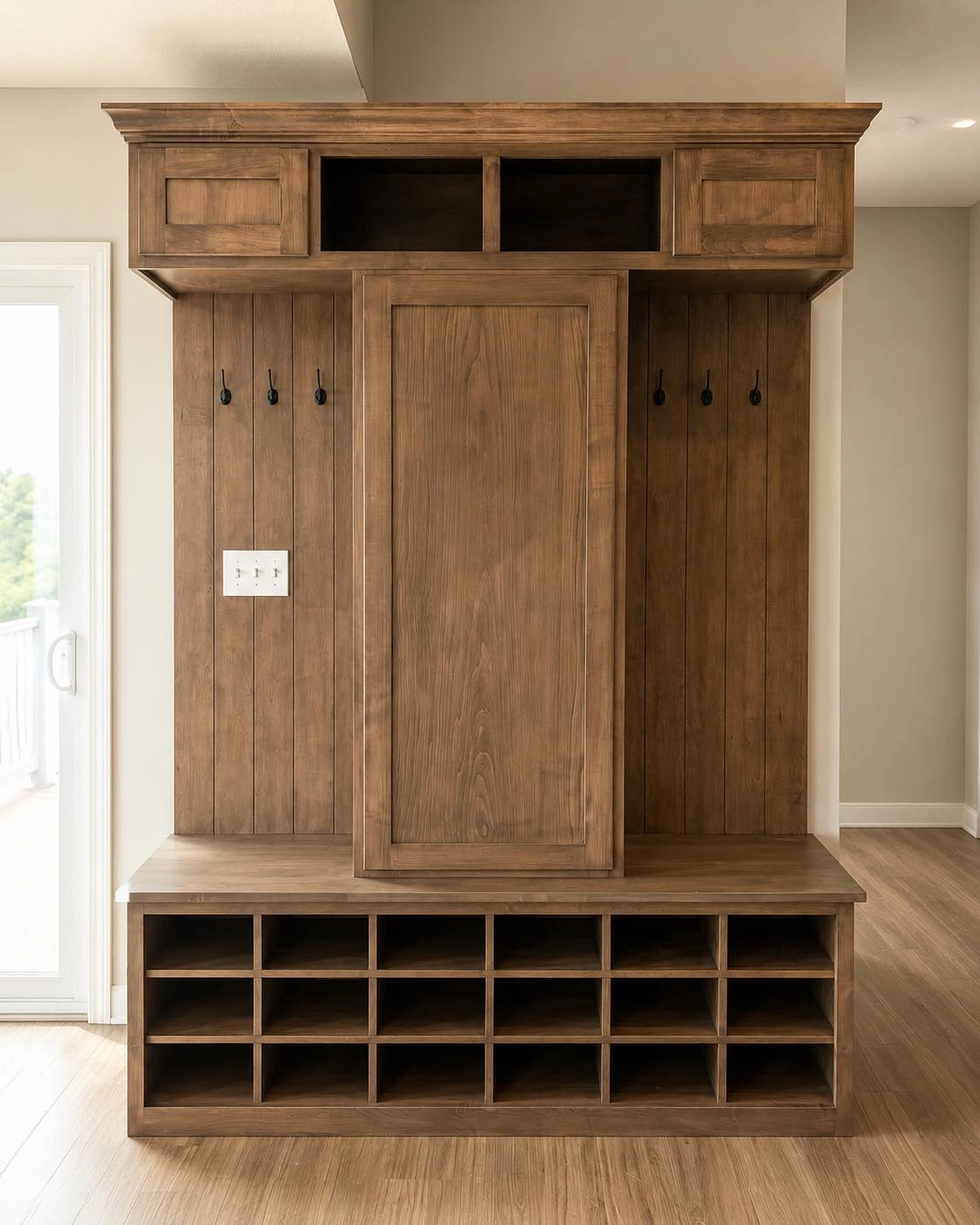
Photo: @thewoodenwhale on Instagram
A floor-to-ceiling wooden entryway unit with a bench and shoe cubbies is the full family system in one piece of furniture. The bench and cubbies handle the daily pairs, the upper cabinets hold the out-of-season shoes and the spare bags, and the wood finish makes it look like part of the house.
Floor-to-ceiling units earn their size when the entryway has no closet, because they replace the closet entirely. Keep the daily shoes at bench level and below, and the seasonal shoes up high where a step stool is a fair price for tidiness.
Label the cubbies and end the arguments
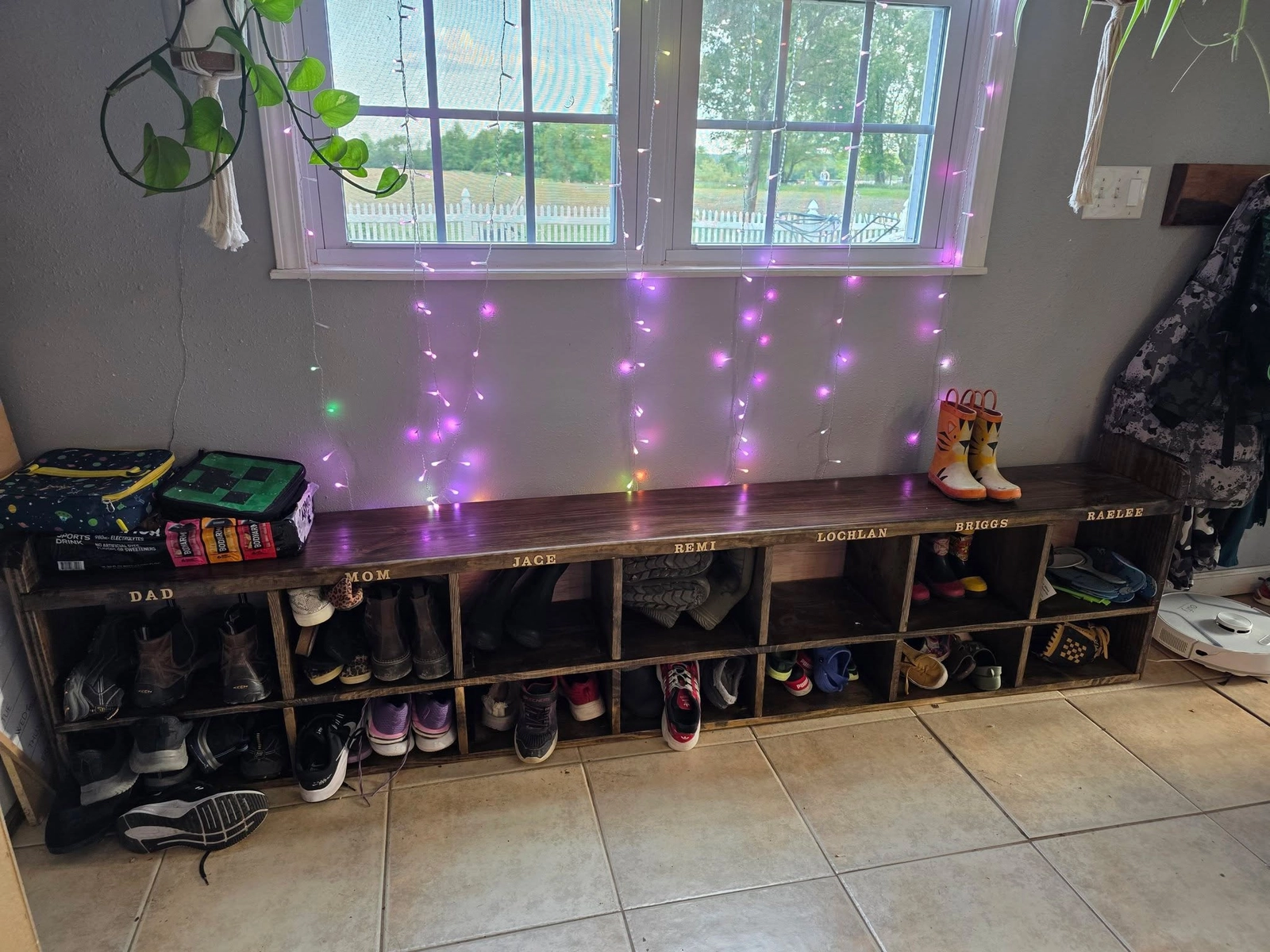
Photo: @rjones7711 on Instagram
A dark wood family mudroom bench with labeled cubbies is the most organised idea in this list. Each cubby has a name, each name has its shoes, and the labels end the household debate about whose mess is whose. The dark wood hides the wear, and the bench holds the whole routine.
Labels work on any cubby system, built in or freestanding: a label maker and five minutes turn a shared bench into assigned seating for shoes. Label the cubbies when the bench goes in, not after the arguments start.
Finish it white with drawers and baskets
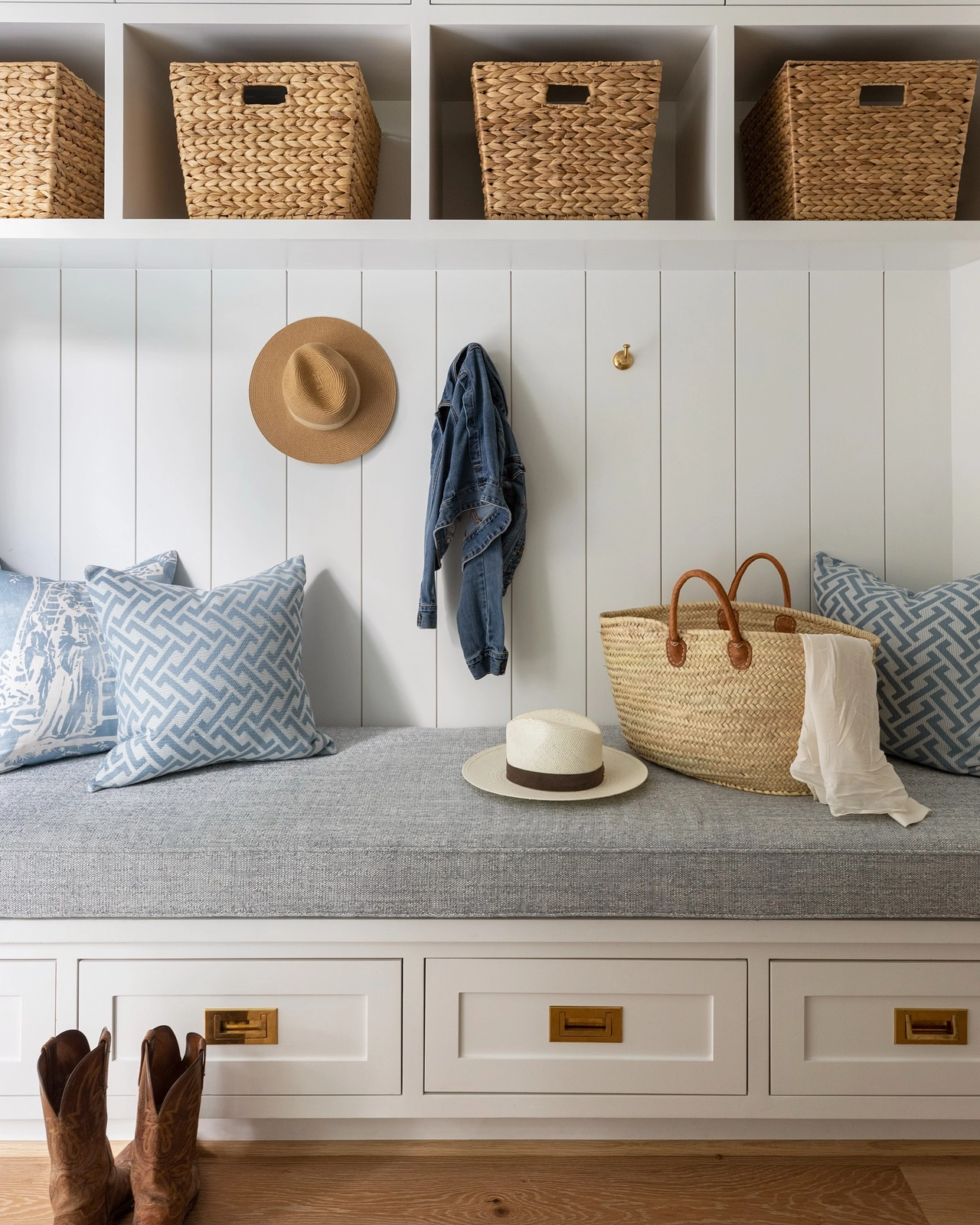
Photo: @palomacontrerasdesign on Instagram
A white mudroom bench with drawers below and wicker baskets above is the polished end of the family collection. The drawers hold the small things, gloves, hats, dog leads, the baskets hold the spare shoes, and the white finish keeps a busy mudroom feeling calm.
Baskets above a bench are the overflow valve: when the cubbies are full, the spare pairs go up, not onto the floor. Choose baskets with handles so they lift down easily, and keep them to the shoes you wear monthly, not daily.
Every shoe you own: tall cabinets and built-ins
For the full collection, or a household where shoes are a hobby. Tall cabinets and built-ins hold dozens of pairs behind closed doors, so the entryway looks calm no matter how many shoes live in it.
Stack a tall multi-compartment cabinet
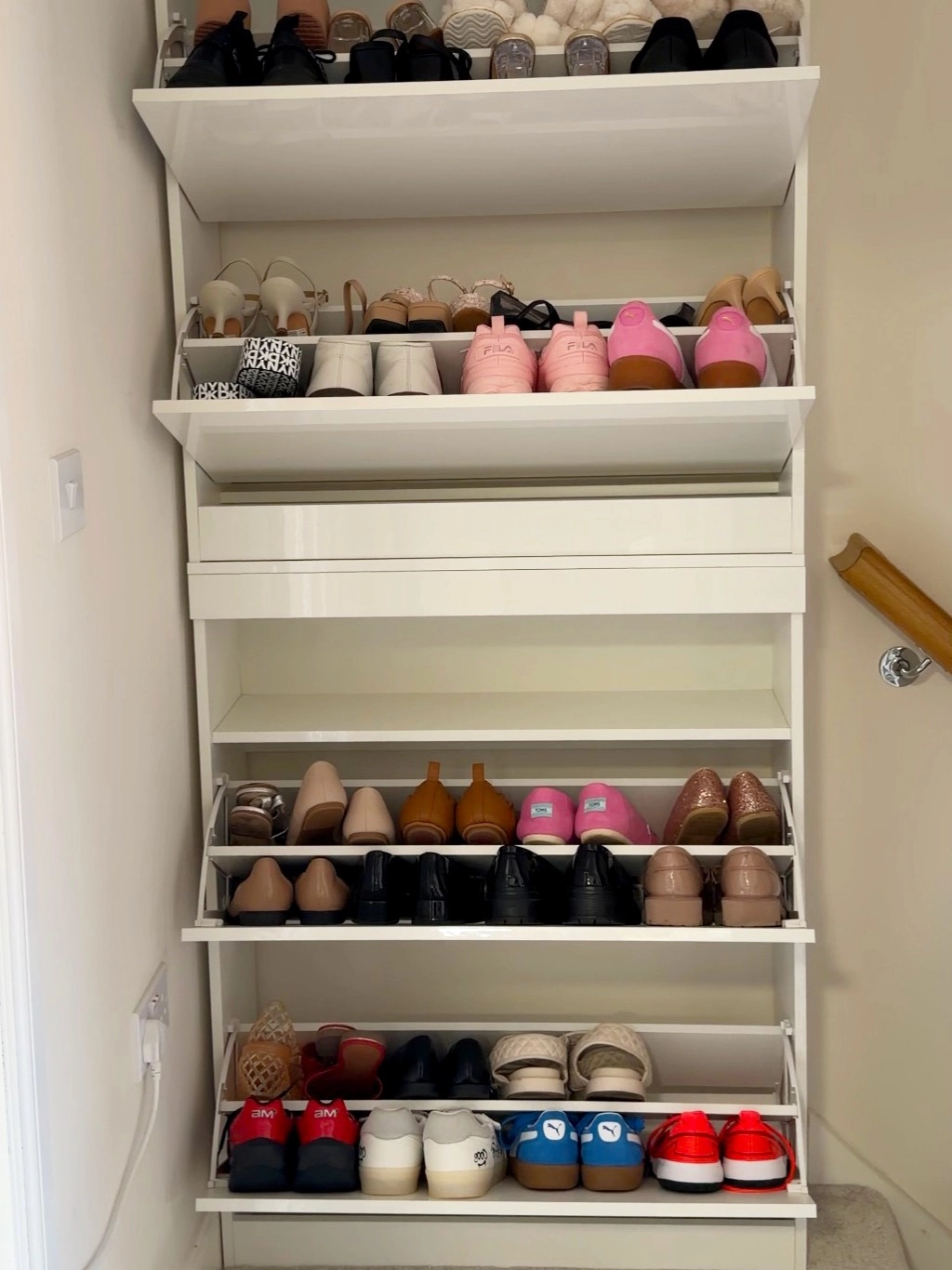
Photo: @aosomuk on Instagram
A tall white multi-compartment shoe cabinet with pull-out compartments holds a serious collection in a narrow footprint. Each compartment pulls out to show its pairs, the white finish keeps the tower light, and the height uses the wall all the way up. This is the most shoes per square foot in this list.
Tall pull-out cabinets suit collectors best, because every pair is visible when its compartment opens and invisible when it closes. Anchor a tall cabinet to the wall, because a loaded shoe tower is top-heavy and hallways get bumped.
Build cupboards floor to ceiling with brass pulls
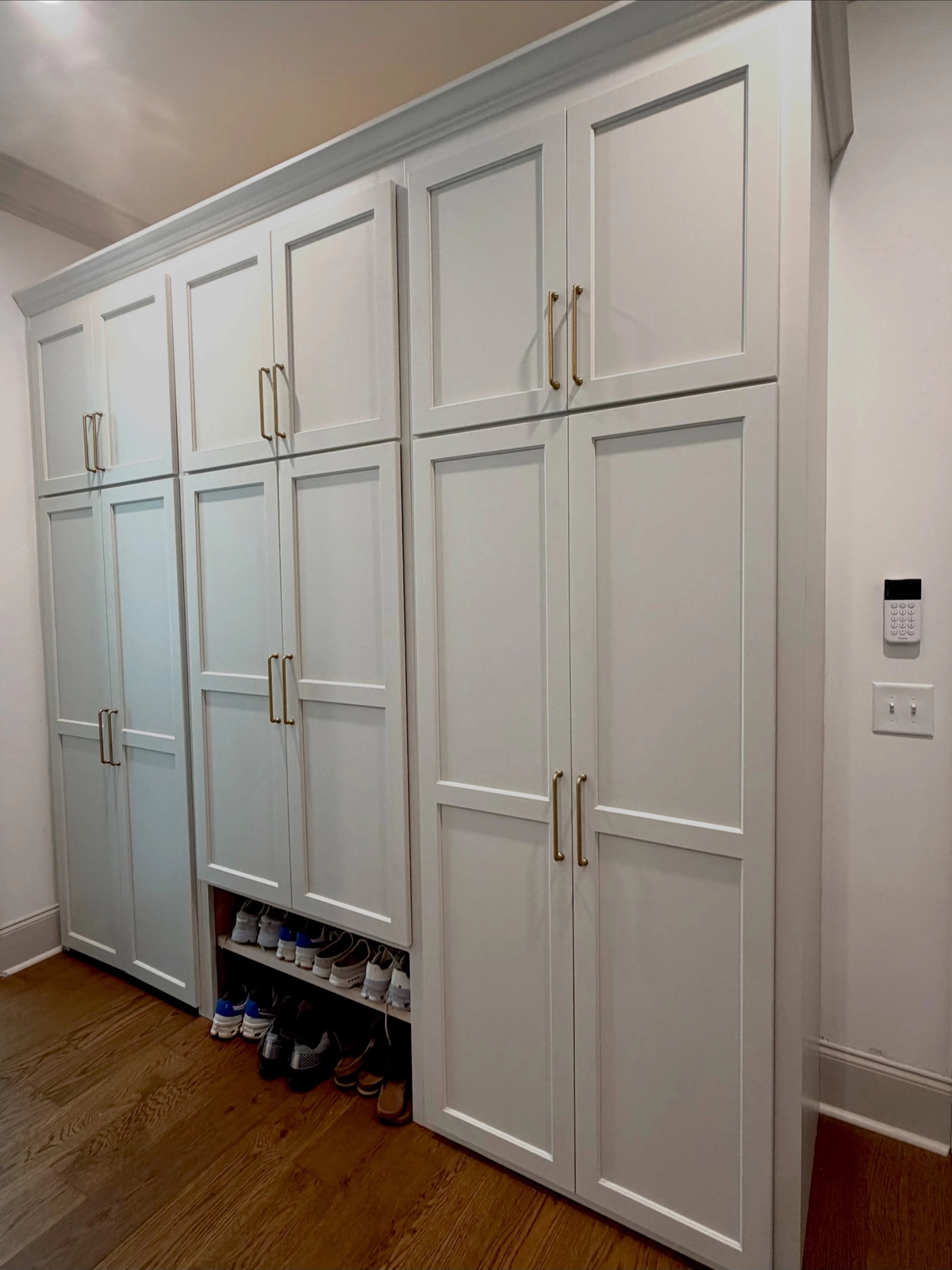
Photo: @auburncabinetrydesign on Instagram
Floor-to-ceiling built-in cupboards with brass pulls and an open shoe shelf at the base are the architectural answer to shoe storage. The cupboards hold the collection behind panelled doors, the open shelf at the bottom holds the daily pairs, and the brass pulls tie the whole wall together. The storage disappears into the house.
Built-in cupboards are worth the joiner when the entryway has no closet and never will. The open shelf at the base is the detail to insist on: it holds the shoes you wear today, so the cupboard doors stay closed and the system stays honest.
Choose an arched cabinet for a softer tall
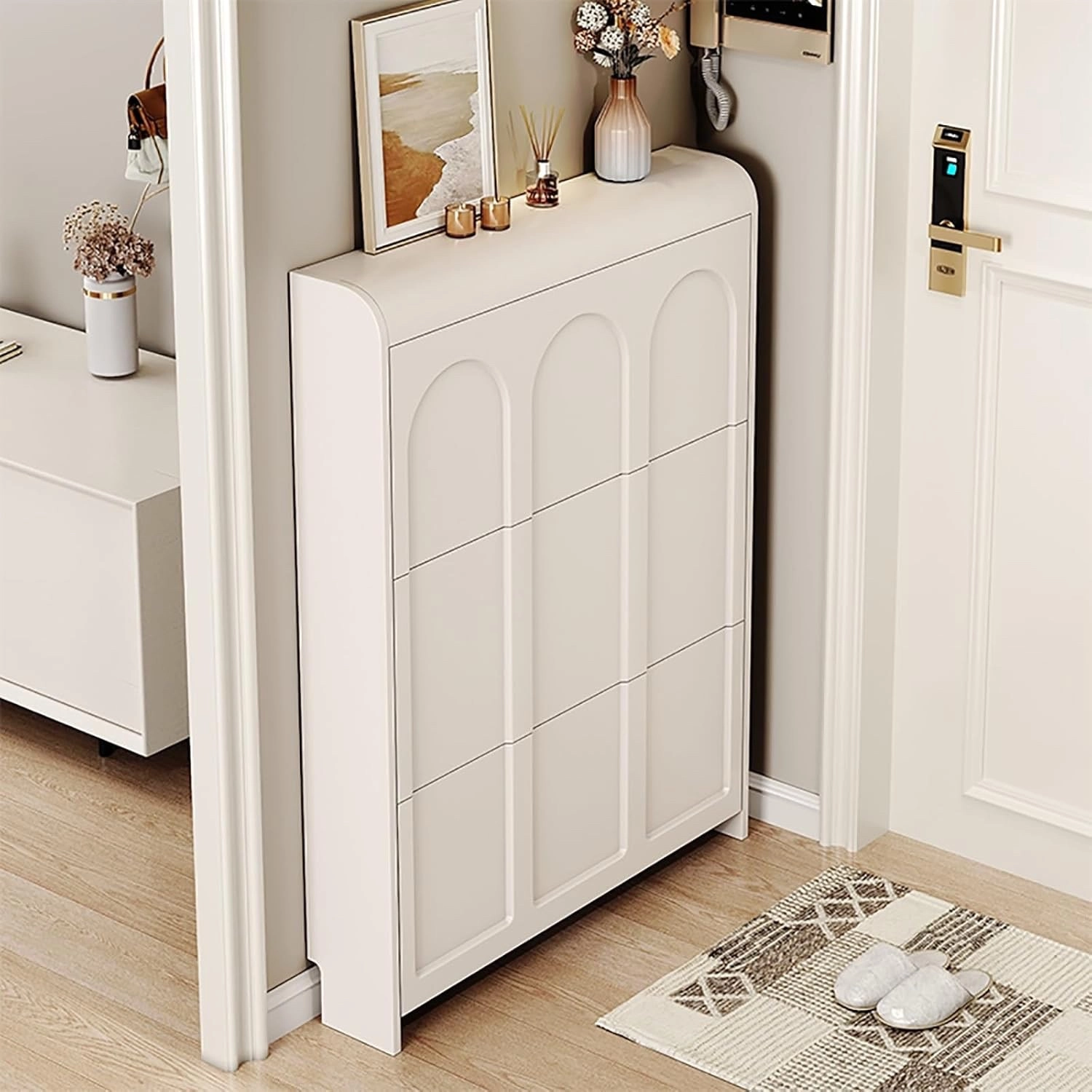
Photo: @zenafindsandfavorites on Instagram
A tall off-white arched shoe cabinet softens the tower with a curved top. The arch breaks up the rectangle of a tall cabinet, the off-white sits easily in a hallway, and the height still holds the full collection. It is the tall cabinet for homes where every other line is straight.
Arched tops suit hallways with other curves, an arched doorway, a round mirror, a curved bench. One arch is a feature; pair it with the curves the hallway already has and it looks intentional instead of lonely.
Paint the built-in blue-grey and open one door
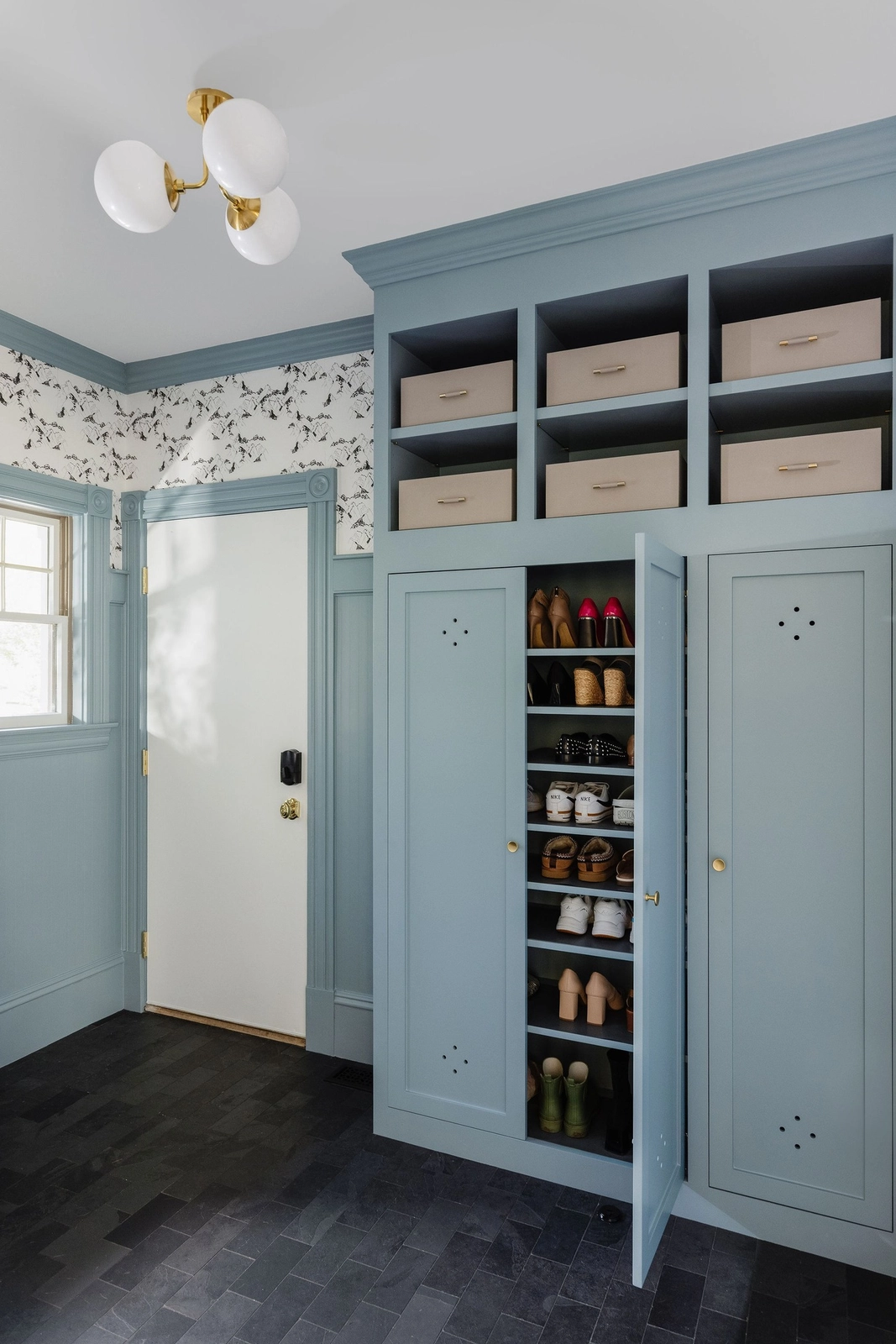
Photo: @pellegrinidesignllc on Instagram
A blue-grey built-in entryway unit with one door open shows the system working: shelves of shoes inside, storage boxes above, and the blue-grey paint making the whole wall a feature. The open door is the invitation; the closed doors are the calm.
A painted built-in earns its keep in an entryway that opens straight into the living room, because the colour makes it part of the decor. Choose the paint to match the room beyond the door, so the entryway and the living room read as one space.
Mix open shelving with closed doors
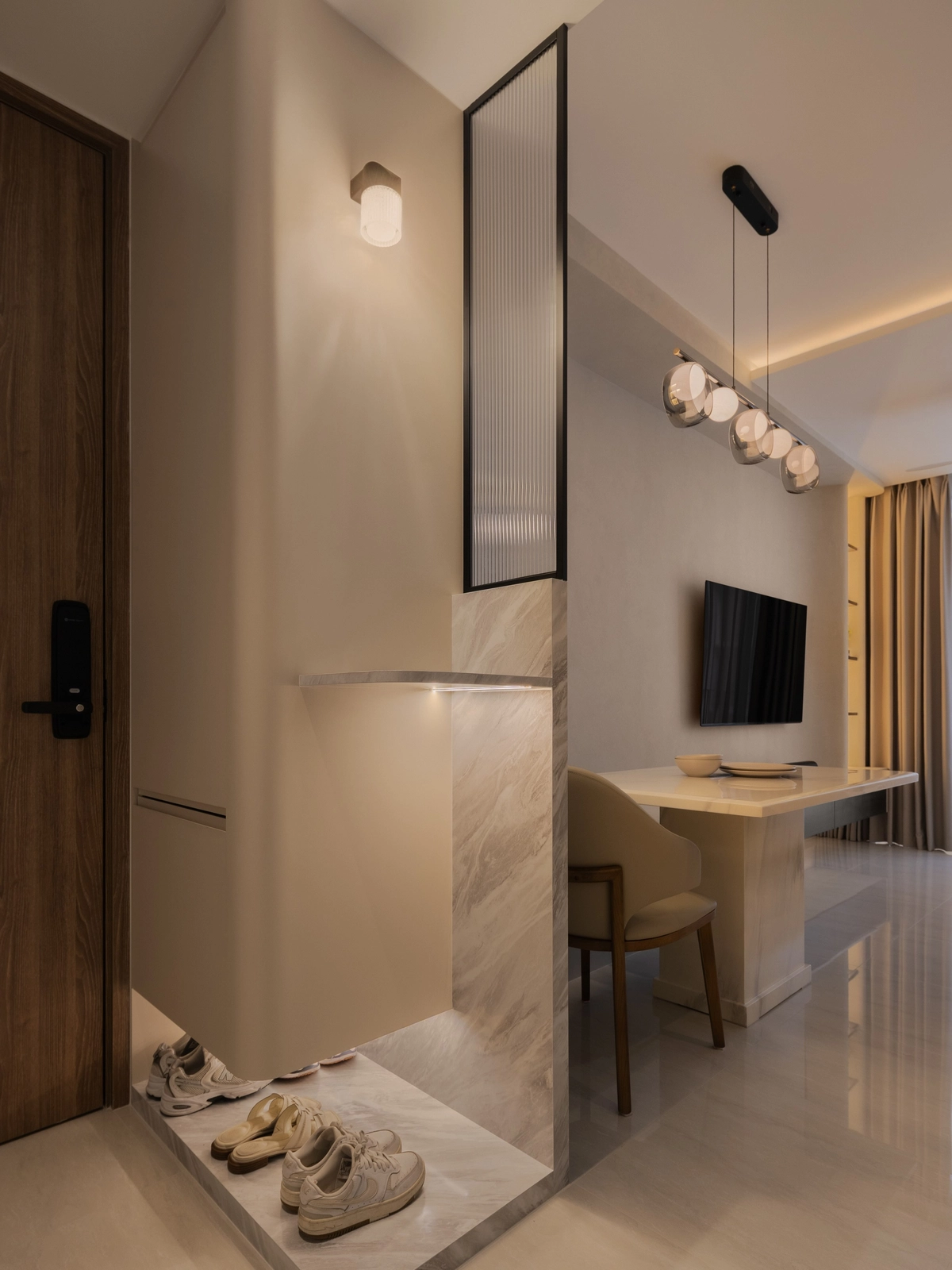
Photo: @twothreedesign on Instagram
A built-in entryway shoe unit with open shelving beside closed doors gives every pair its right home. The open shelves hold the daily rotation where you can grab it, the closed doors hold the rest of the collection, and the mix keeps the wall from feeling like a wall of doors.
Open-plus-closed is the most forgiving layout for a growing collection, because the open shelves absorb the daily churn and the closed doors absorb the growth. Put the open shelves at grabbing height and the closed doors above and below.
Go dark with a marble-look built-in
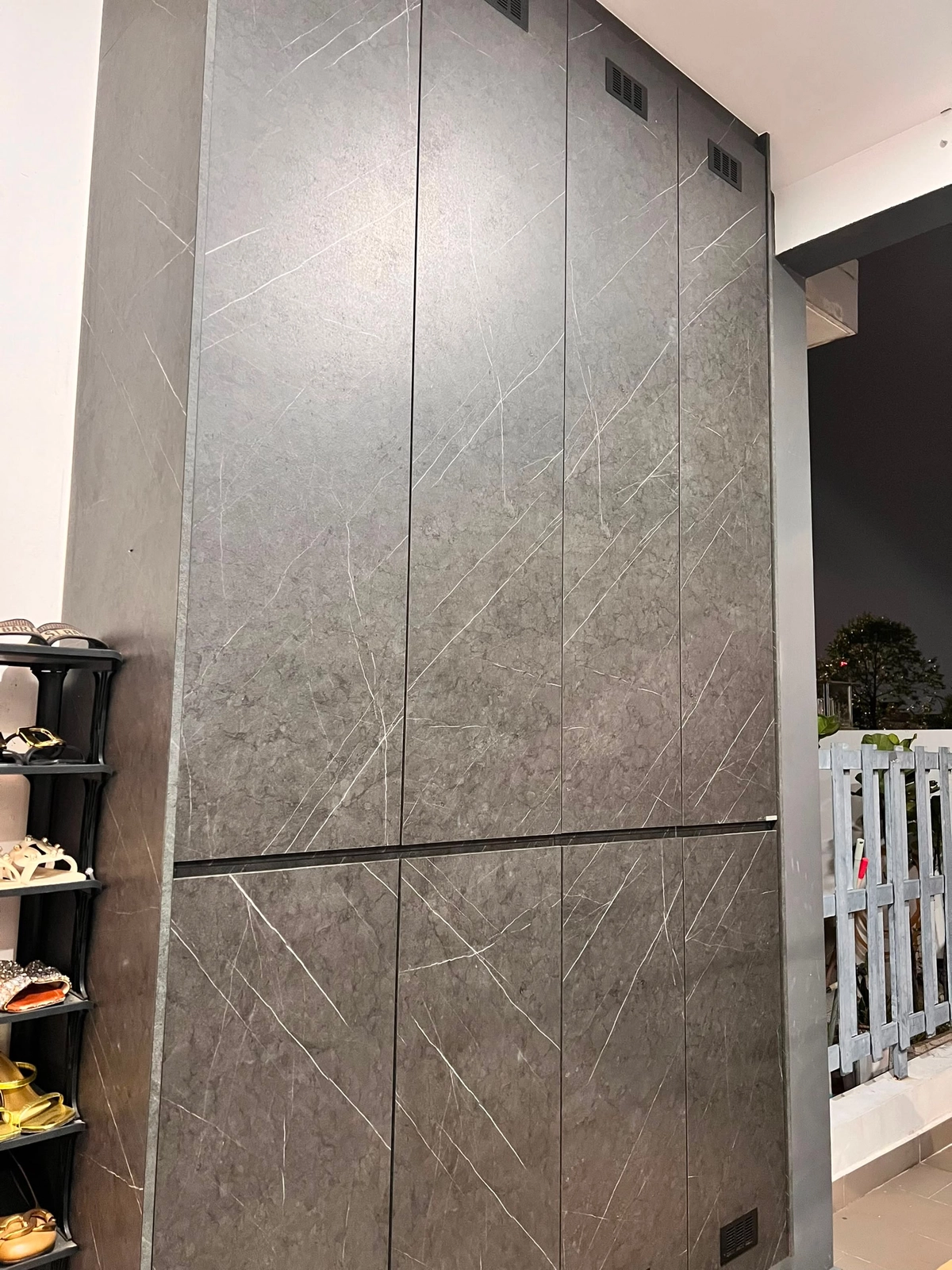
Photo: @fadbocey on Instagram
A floor-to-ceiling built-in shoe cabinet in a dark marble-look finish with vent grilles is the boldest idea in this list. The dark finish makes the cabinet read as architecture, the vent grilles keep the shoes aired, and the height holds everything. It is a statement wall that happens to store shoes.
Ventilation is the detail most shoe cabinets miss, and this one gets it right: shoes need air, or the cabinet becomes a cupboard of smells. If your cabinet has no vents, leave the doors ajar for an hour after the shoes go in, or fit vents before the smell fits itself.
Flip down tall and slim
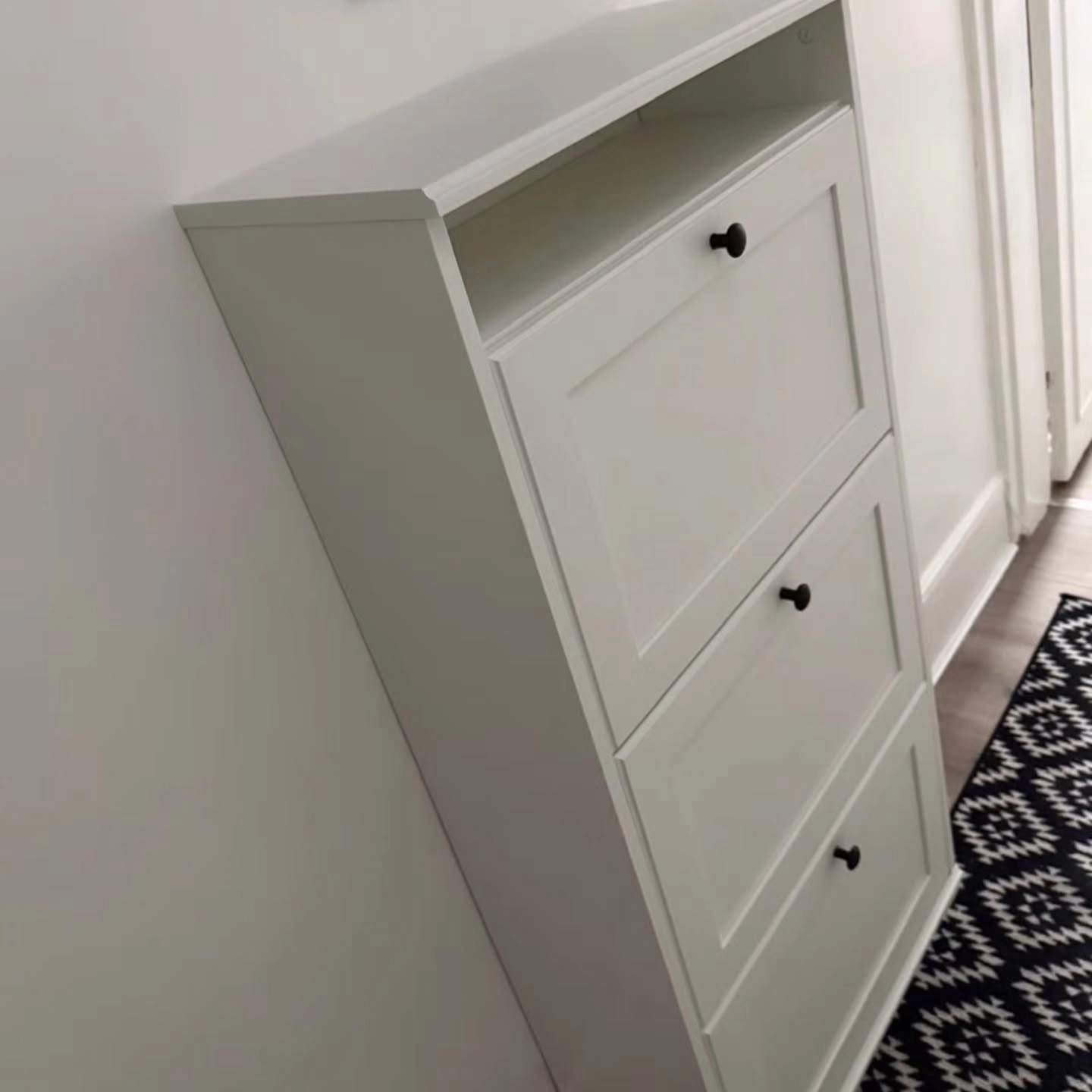
Photo: @aathomefix on Instagram
A tall white flip-down shoe cabinet with an open top shelf is the slim tower for narrow halls. The flip-down compartments hold the pairs, the open shelf on top holds the keys and the post, and the slim depth keeps the hallway walkable. Tall, slim, and quiet.
Tall flip-down cabinets work in hallways too narrow for pull-outs or hinged doors, because the flip mechanism needs almost no clearance. Keep boots out of the flip compartments, they are too tall for the shallow tilt, and give boots the open shelf or a separate rack.
Paint it green and open the base
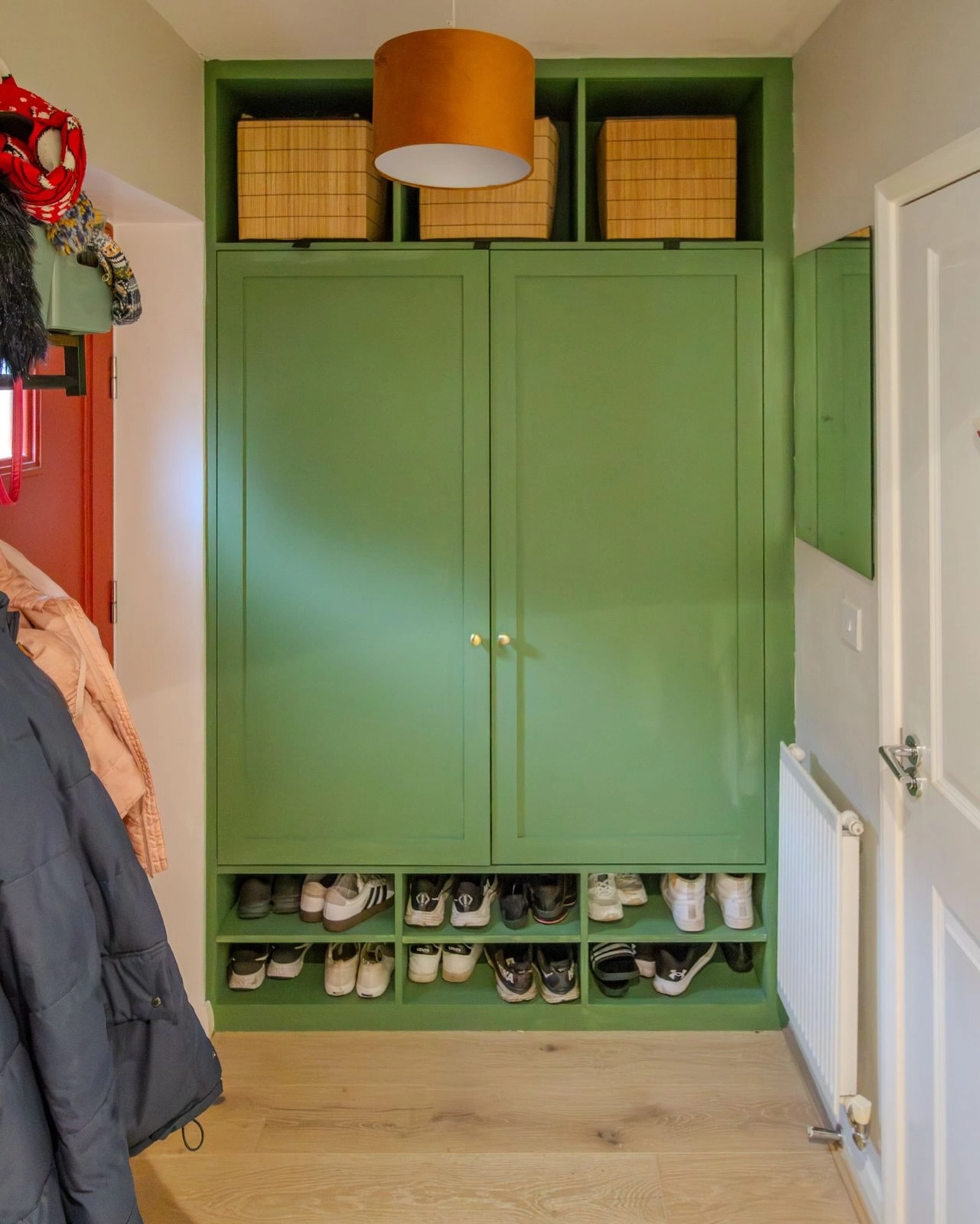
Photo: @shakercarpentry on Instagram
A matte-green custom hallway shoe cabinet with open cubbies at the base and wicker baskets on top is the friendliest tall cabinet in this list. The green makes it a feature, the open base holds the daily pairs where they are easy to grab, and the baskets on top hold the spares. Custom, colourful, and completely practical.
Open cubbies at the base of a tall cabinet are the best of both worlds: the daily shoes live in the open where they are fast, and the rest of the collection lives behind doors where it is calm. This is the layout to copy if you only copy one thing from this article.
Three shoe-storage rules that actually work
The furniture matters less than the rules. These three keep any system in this list working past the first month.
- One in, one out. A new pair comes home only when an old pair leaves, or every cabinet in this list fills up within a year.
- Daily pairs live at grabbing height. The shoes you wear today go on the open shelf, the bench, or the lowest cubby, never behind a door you have to open with full hands.
- Seasonal pairs live elsewhere. Boots in summer and sandals in winter do not belong by the door; they belong in a closet, a box, or the top of the tall cabinet.
Start at the door you actually use
Every home has a real door and a decorative door, and the shoes only pile at the real one. Put the storage at the door you actually use, not the one guests see, because the pile follows your feet, not your intentions.
Start with the everyday edit even if you plan the full mudroom later. A two-door cupboard this weekend teaches you the household count, and the count tells you which big piece to buy next. The best shoe storage is the one that fits the shoes you have, by the door you use, with a rule that outlives the furniture.