24 Small Bedroom Furniture Ideas That Fit Without Crowding the Room
Furnishing a small bedroom is a different job from decorating one. The room is not short of style, it is short of inches, and every piece you bring in has to earn its floor space twice: once by looking right, and once by holding something. A nightstand that only holds a lamp is a luxury this room cannot afford. A bed that hides drawers underneath is two pieces of furniture for the price of one.
The ideas below are sorted by commitment, not by room, so you can start where your budget and your landlord allow. Level 1 swaps a single piece and needs no tools. Level 2 replaces the bed or adds a desk, the two moves that change the room most. Level 3 builds furniture into the walls, which costs more and takes longer but gives back the most space of all. Pick a level, steal the pieces that fit your room, and leave the rest.
Level 1: swap one piece, no tools needed
Start here if you rent, or if you just want the room to feel better by the weekend. Every piece in this level comes through the door finished, and none of them needs a drill.
Hang a nightstand on the wall and keep the floor
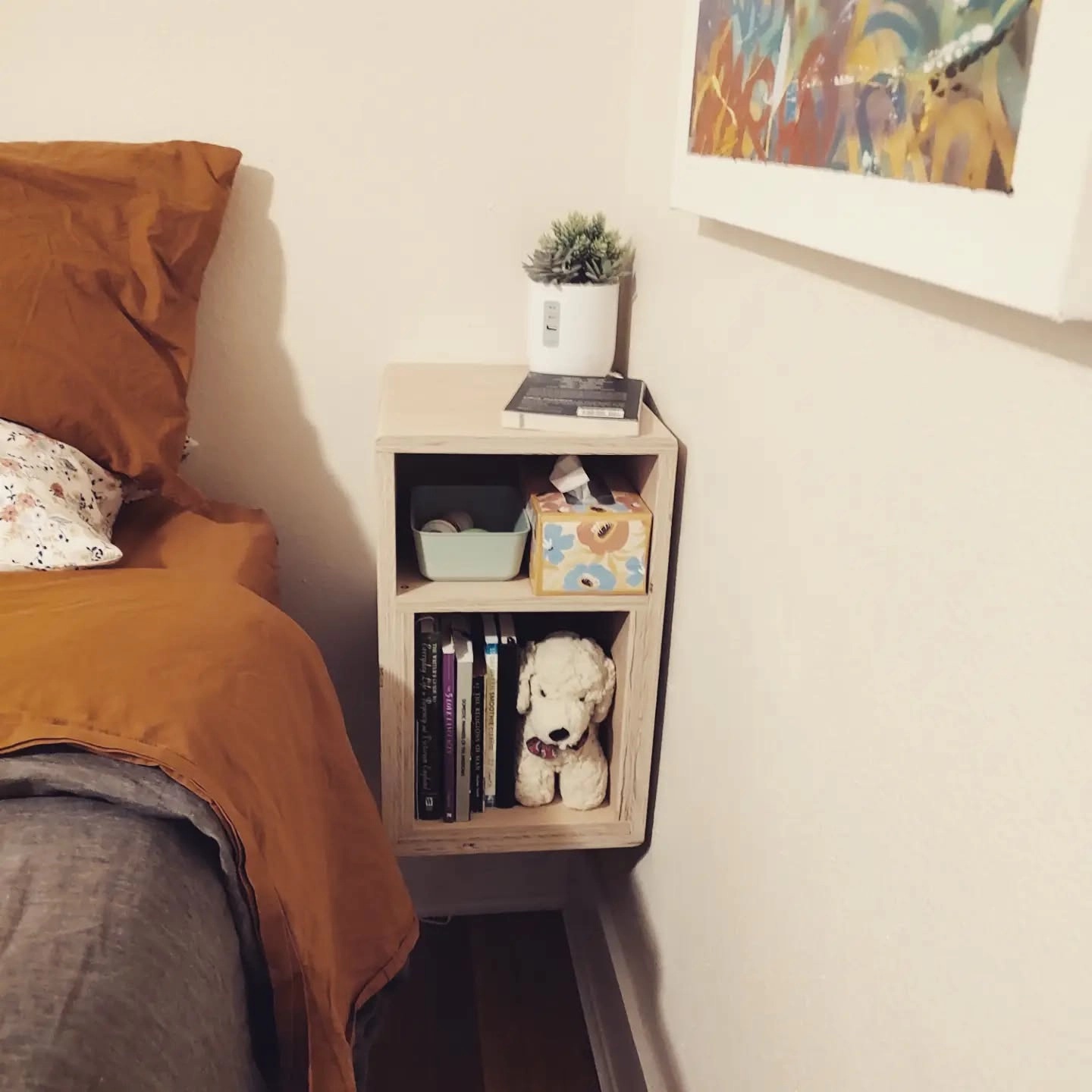
Photo: @thatssomeabq on Instagram
A wall-mounted shelf beside the bed does everything a nightstand does and takes up zero floor space. This one holds books, a small bin, and a plant, with the bed’s rust bedding warming up the corner beside it. The floor underneath stays clear, which matters more than it sounds: a clear strip of floor along the bed is what makes a small room feel walkable instead of cramped.
Mount it at mattress height, not higher, so you can reach a book or a glass of water without sitting up. One shelf per side is plenty, and if you share the bed, give each side its own. A wall-mounted shelf also works where a nightstand cannot, in the gap between the bed and the wall that is too narrow for legs.
Float a curved nightstand for a softer corner
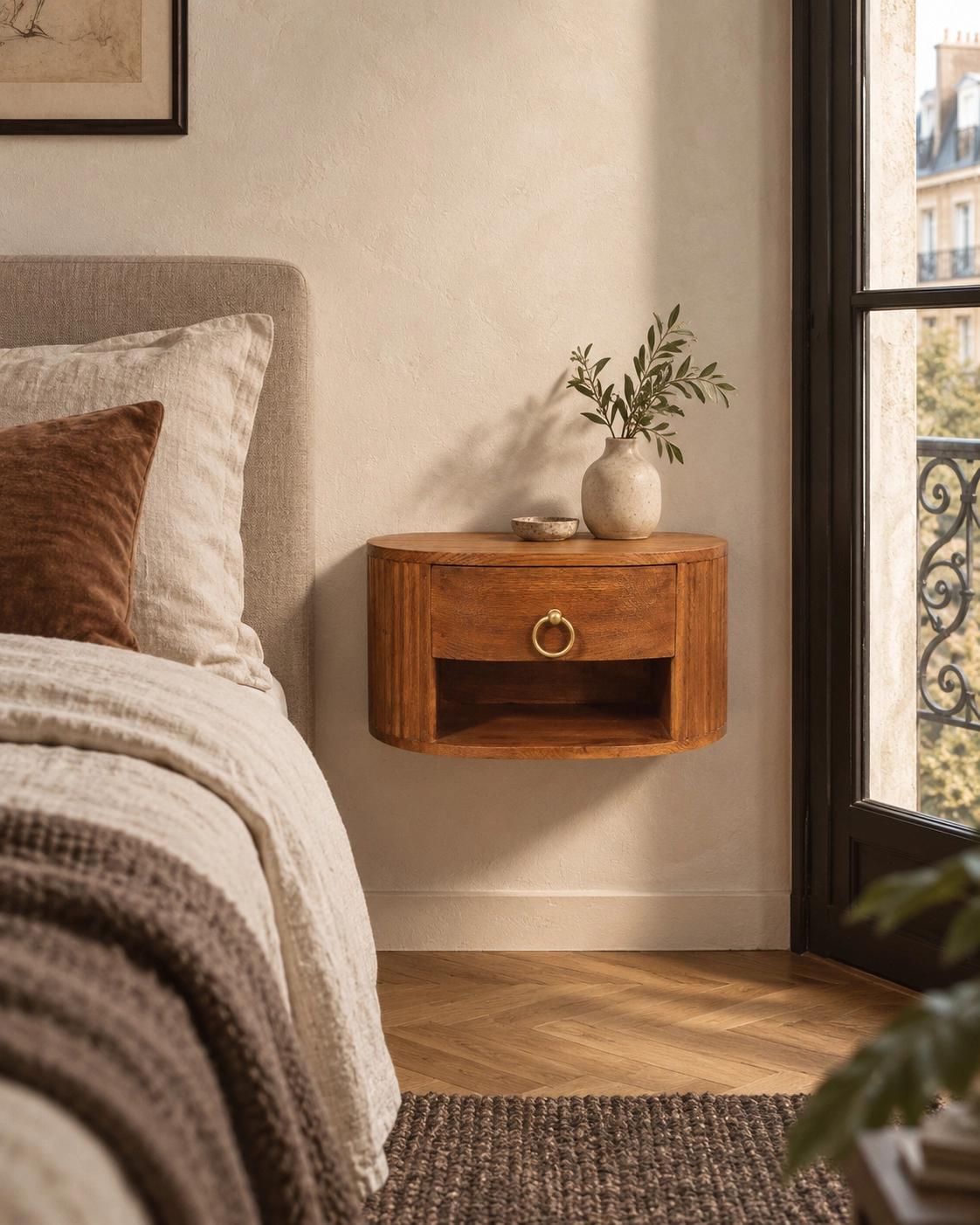
Photo: @duxbert.furniture on Instagram
A floating nightstand with a curved front softens the hardest corner of a small bedroom: the sharp edge of a bedside table at shin height. This oval wood piece has a drawer for the things you want hidden and an open shelf below for the book you are reading, and it hangs on the wall so the floor runs clean underneath it.
Curves matter in a small room because you brush past furniture more often. A rounded front forgives a bump in the dark in a way a square corner never does. Keep the top to three things, a lamp or a vase and one small dish, or the floating effect disappears under clutter.
Use a dresser as a nightstand and double its job
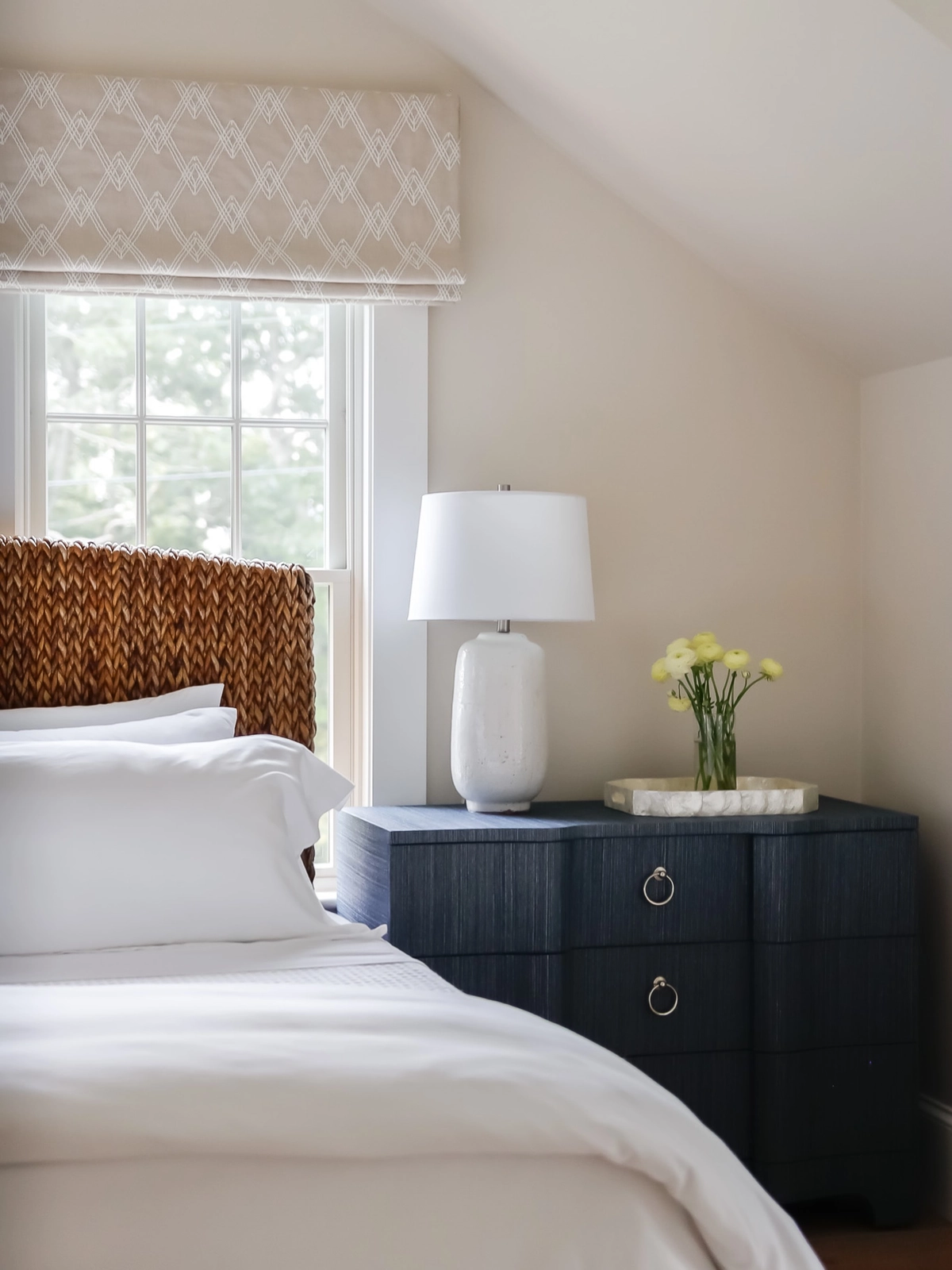
Photo: @sarahhollingsworthdesigns on Instagram
A dresser beside the bed is a nightstand with four times the storage. This navy dresser holds a lamp, a tray, and flowers on top, with drawers below for everything a small nightstand could never hold. It also looks intentional in a way a small table never does: it anchors the bed the way a headboard does.
The trick is proportion. The dresser should sit no higher than the top of the mattress plus a few inches, or reaching for a lamp becomes a stretch. A low, wide dresser works better than a tall one here, because it keeps the wall above it free for art or a mirror instead of looming over the bed.
Pick a three-drawer nightstand and skip the dresser
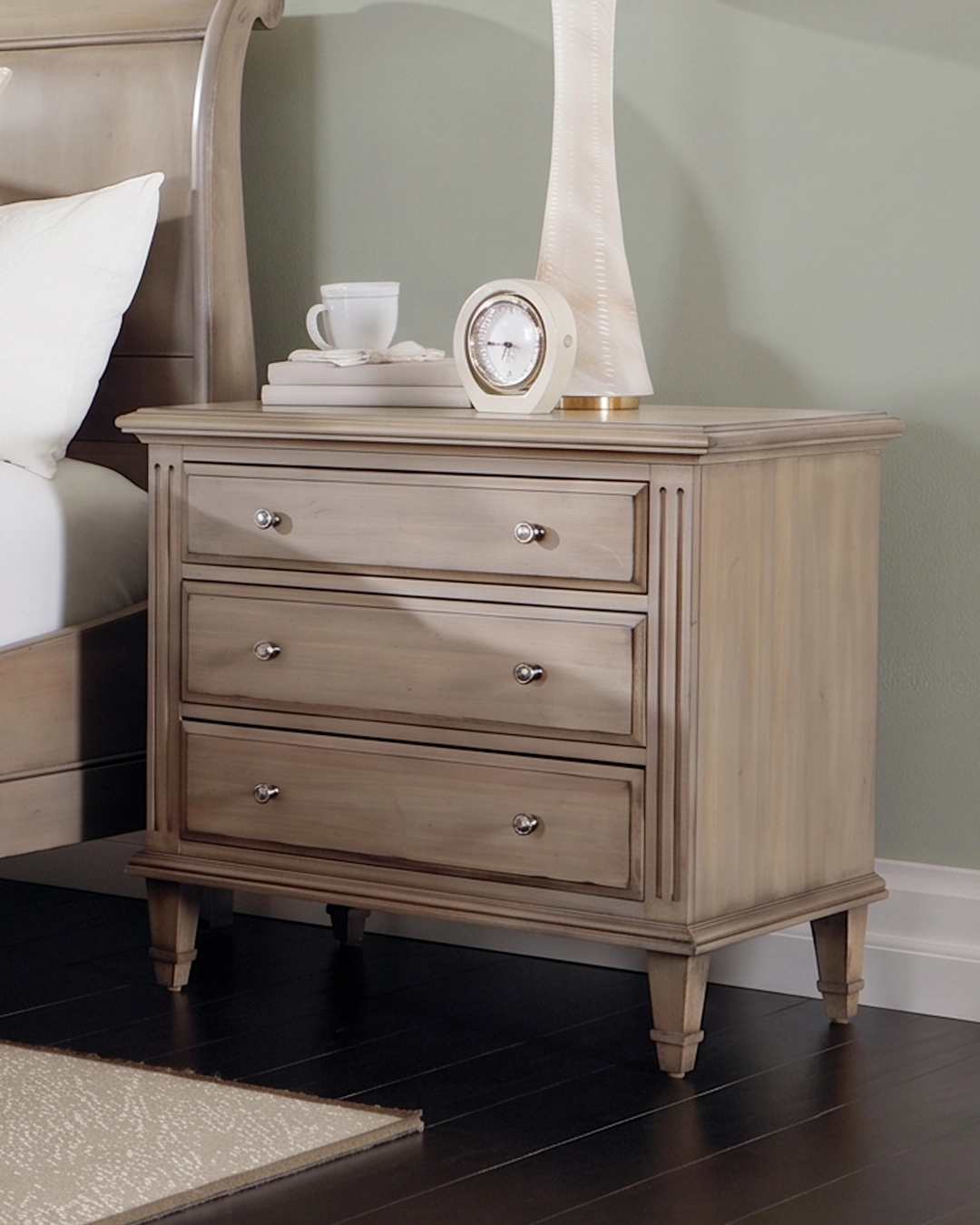
Photo: @ethanallen on Instagram
If the room has no space for a dresser at all, a three-drawer nightstand is the compromise that works. This light wood piece beside a sleigh bed holds folded clothes, chargers, and books in three deep drawers, with room on top for a clock and a cup. One good nightstand can replace a whole chest of drawers in a room this size.
Buy the nightstand before you buy anything else for the bedroom, because it sets the height of everything beside the bed. Drawers beat doors here: a drawer shows you everything inside at a glance, while a cupboard door hides a pile you will forget about.
Go modular and change it as the room changes
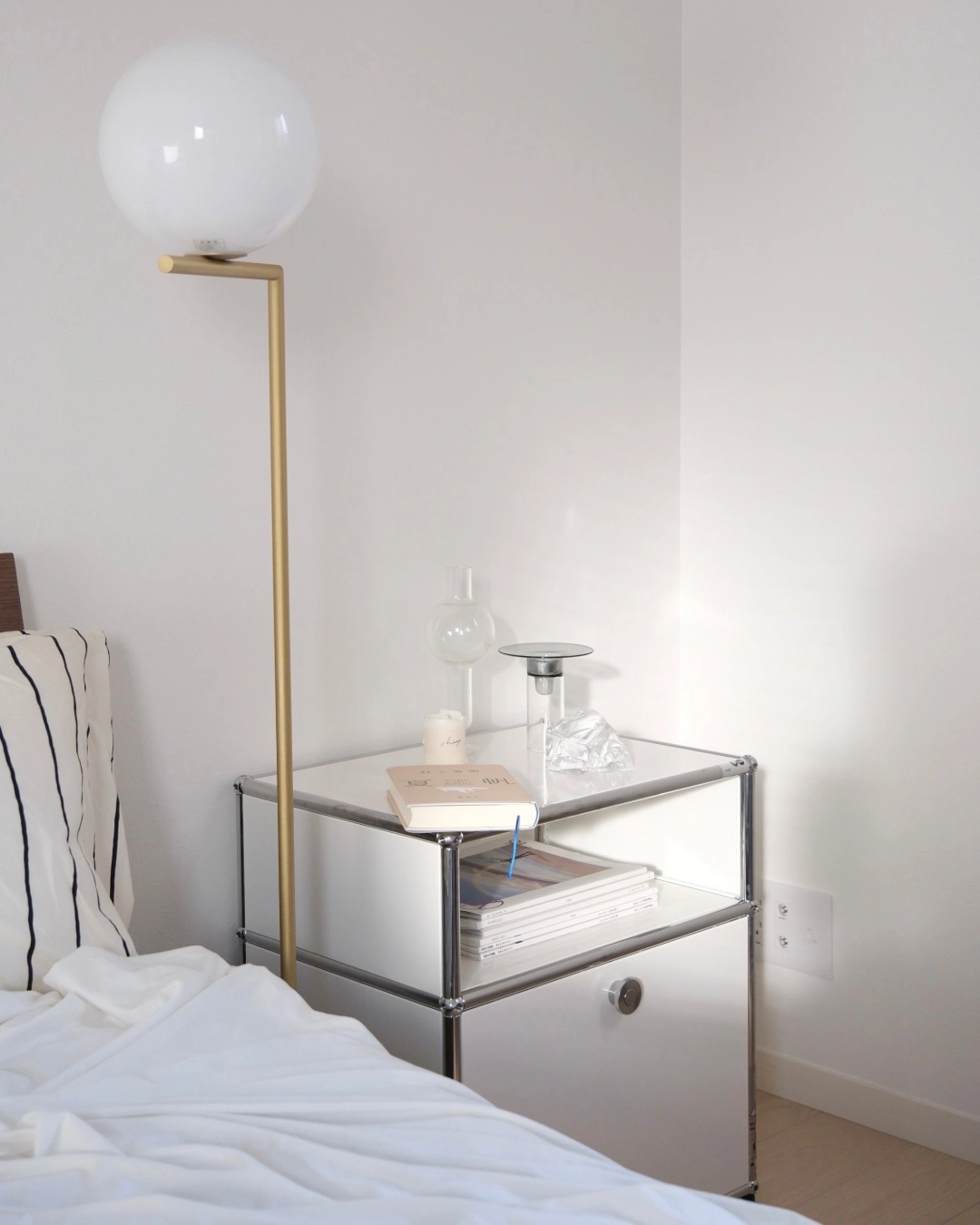
Photo: @usmmodularfurniture on Instagram
Modular furniture is the small-room cheat code, because it grows and shrinks with the room. This white modular nightstand beside the bed holds books and magazines on its open shelf, with a closed drawer below, and it can stack with a second unit if the room ever gets bigger. The globe floor lamp beside it does the job of a table lamp without taking any surface at all.
Modular pieces also survive moves, which matters if you rent. A unit that works as a nightstand in this flat works as a side table in the next one. Buy the system, not the single piece, and add units one at a time instead of guessing the whole room at once.
Let a dark wood nightstand anchor a moody room
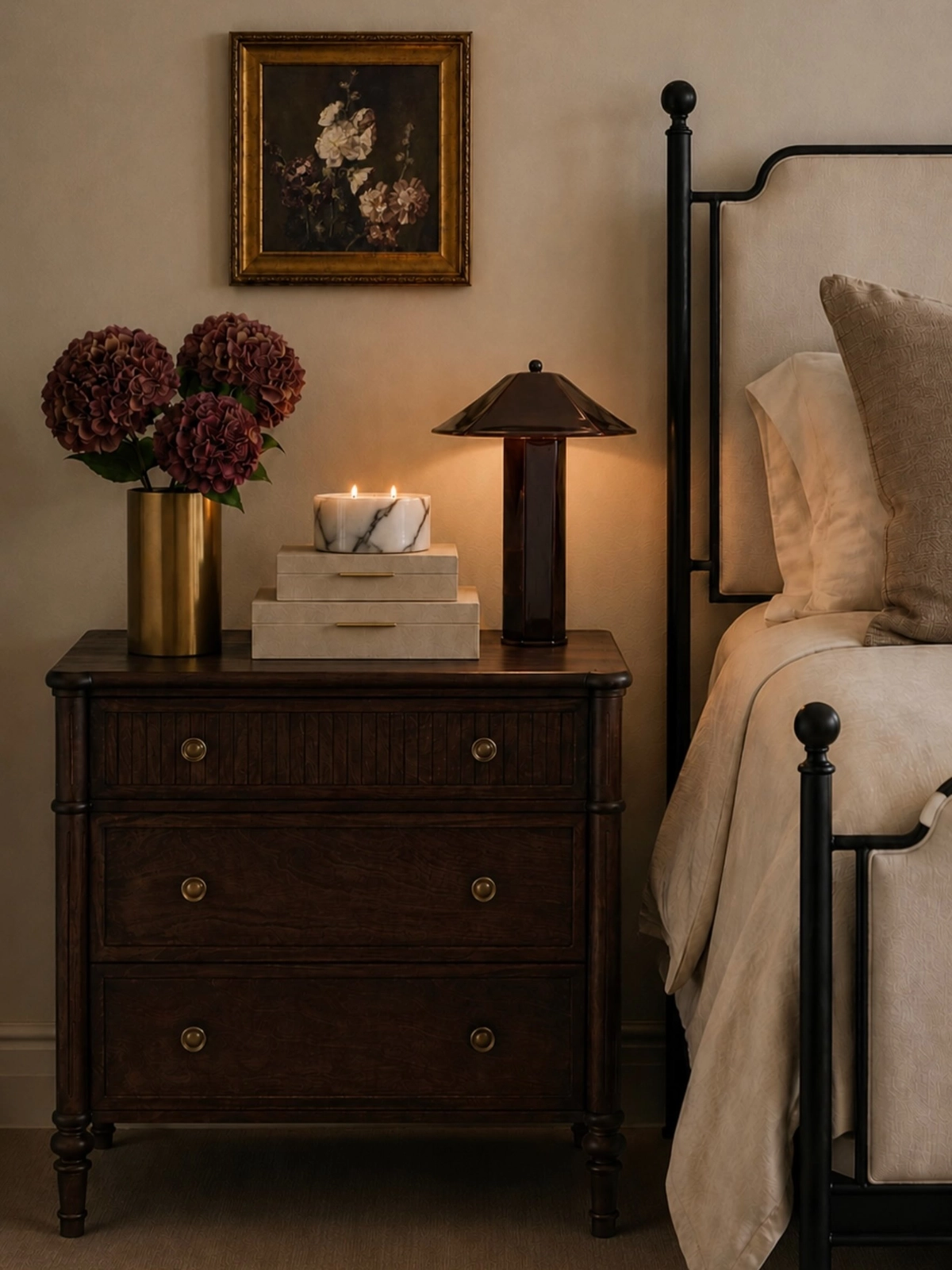
Photo: @herhavendesign on Instagram
A dark wood nightstand does for a bedroom what a dark rug does for a living room: it grounds the space and stops pale bedding from floating away. This one beside a black metal bed frame holds a candle, stacked boxes, and a lamp, with three drawers below. The brass vase of dried flowers on top keeps the dark wood from feeling heavy.
Dark furniture needs light beside it, so pair it with a lamp that actually gets used, not a decorative one. A lit lamp on a dark nightstand is the warmest corner of a bedroom, and it draws the eye away from the size of the room entirely.
Choose a low dresser and a round mirror to widen the wall
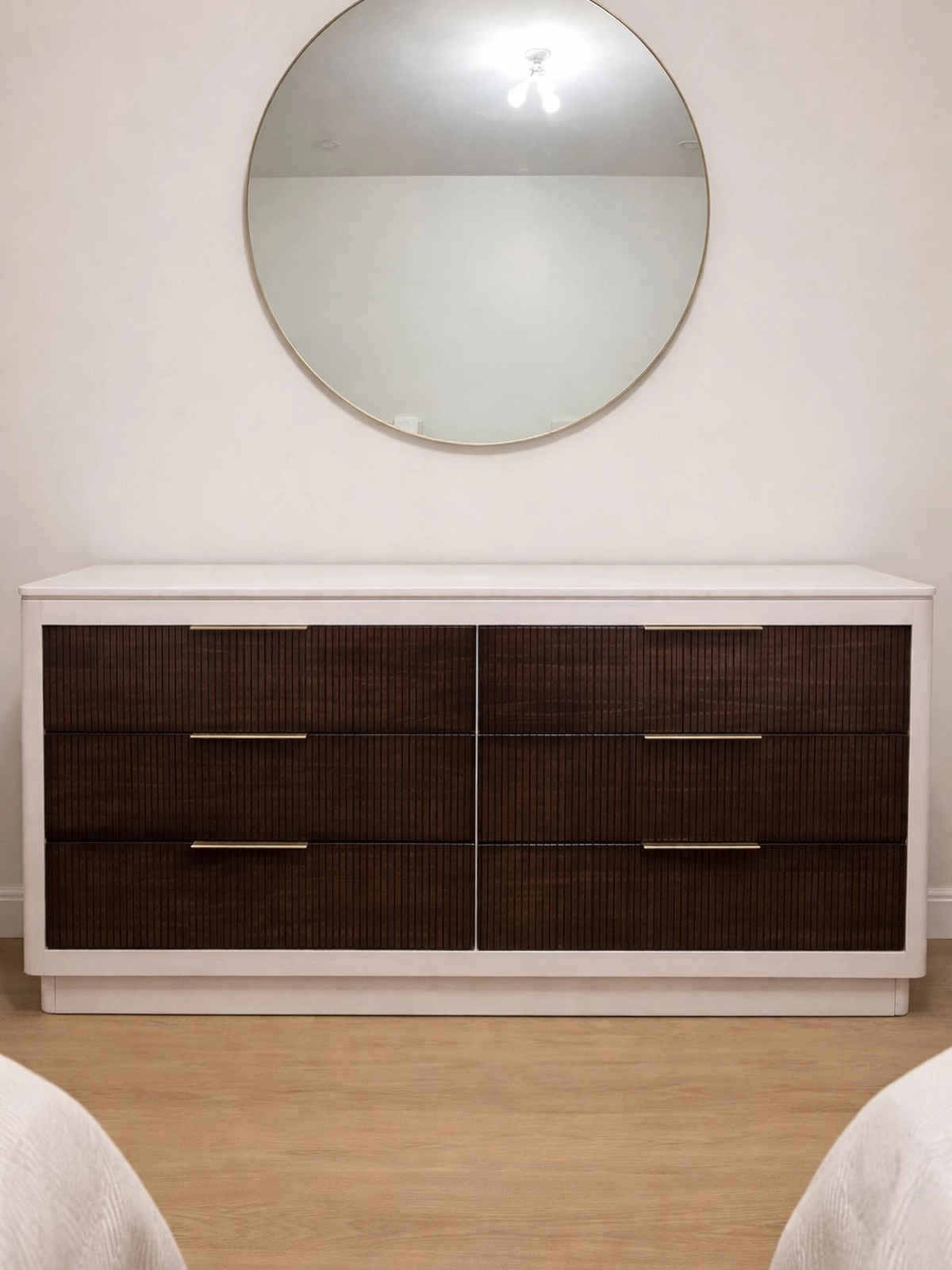
Photo: @finishingstyles on Instagram
A low, wide dresser under a round mirror is the best wall in a small bedroom, because it does three jobs at once: storage, a dressing table, and a light-bouncing mirror. This two-tone piece has six drawers in a footprint a tall chest would envy, and the round mirror above it breaks up the straight lines of the drawers without taking any floor space.
Keep the top of a low dresser nearly empty. One tray for jewelry or keys, nothing else. A dresser top that stays clear reads as a surface, and a surface that stays clear makes the whole room feel bigger. The mirror does the rest: a round mirror doubles the light in a room in a way a rectangular one never quite manages.
Share one nightstand between twin beds
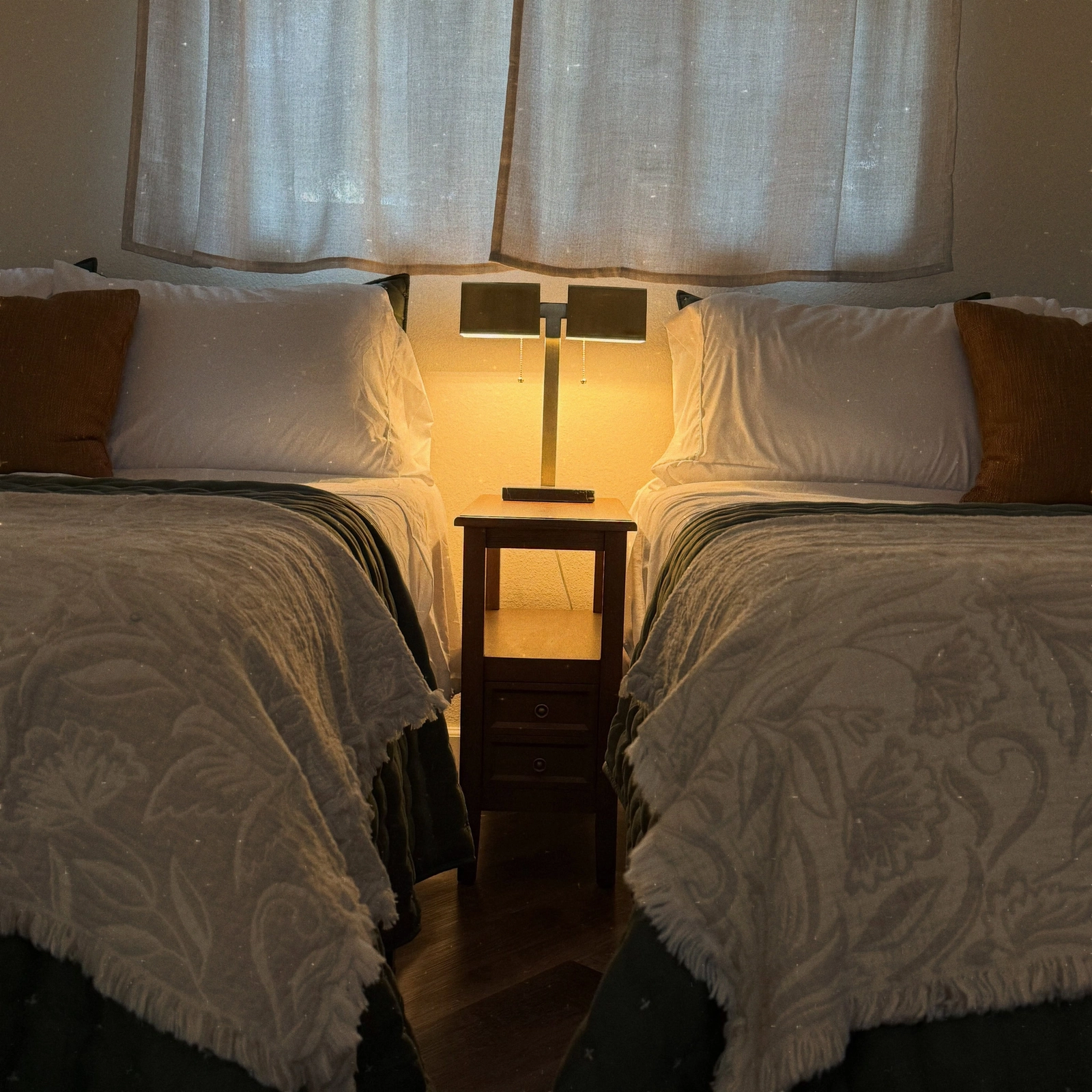
Photo: @cozycottagecv on Instagram
Two beds in a small room usually mean two nightstands, and that is one too many. This pair of twin beds shares a single wood nightstand between them, topped with a dual-head lamp that lights both beds at once. One piece serves two sleepers, and the floor space the second nightstand would have taken stays open.
A shared nightstand works when each sleeper gets a drawer or a shelf of their own, so nothing gets mixed up. The dual-head lamp is the detail to steal even with two nightstands: one lamp, two reading lights, half the clutter on the surface.
Measure the wall, not the furniture. Every piece in this list works only if it fits the wall it stands against, so measure the wall first, then shop for the piece that fills it. A nightstand that leaves a six-inch gap beside the bed is a dust trap, not a nightstand.
Level 2: replace the bed or add a desk
The bed and the desk are the two biggest pieces in a small bedroom, so changing either one changes the whole room. These nine ideas are the highest-impact swaps you can make.
Buy a bed frame with a shelf built into the headboard
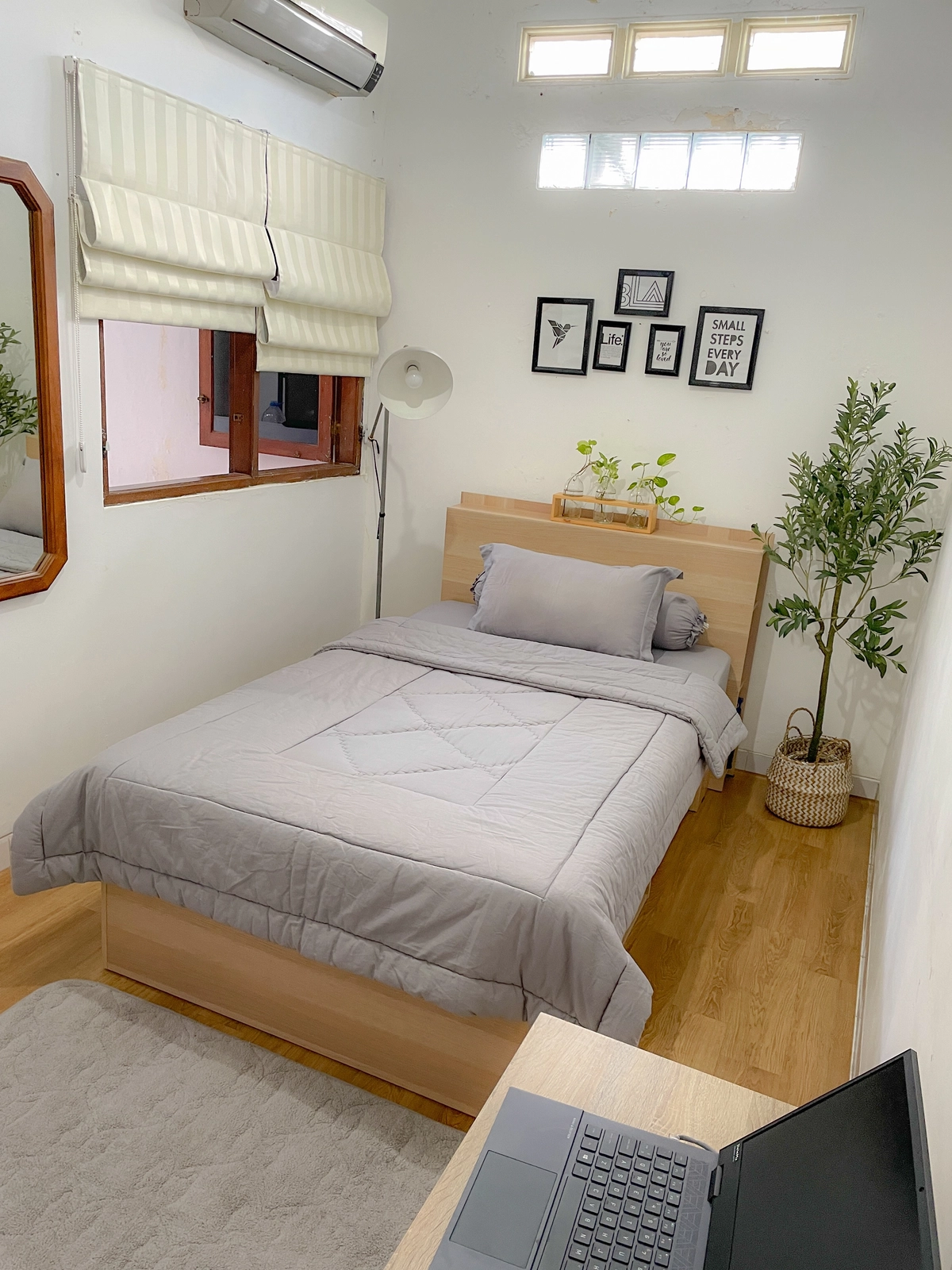
Photo: @evieninon on Instagram
A headboard with a shelf is a nightstand you never have to make room for. This light wood frame has a deep shelf across the top of the headboard, holding plants and small bottles, with framed prints above it. The shelf replaces a bedside table entirely, which frees the floor on both sides of the bed.
Headboard shelves work best for light things: plants, a book, a phone. Heavy things belong in a drawer, not on a shelf above your head. And measure the shelf depth before you buy: a shelf shallower than a paperback is decoration, not storage.
Get a storage bed and hide a dresser underneath it
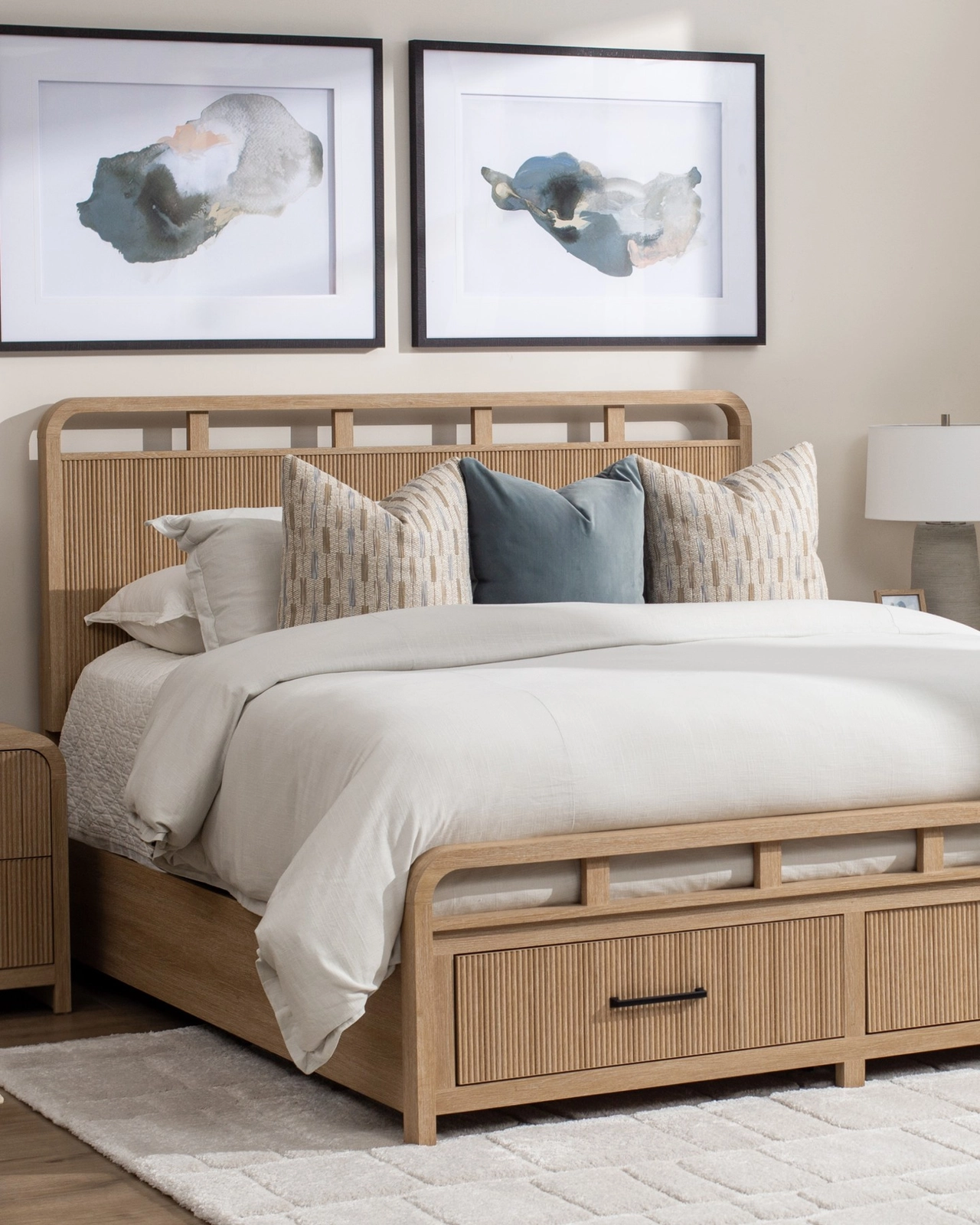
Photo: @mathishome on Instagram
A storage bed is the single biggest storage upgrade a small bedroom can get, because the space under a bed is the largest unused area in the room. This light wood bed has deep drawers in the footboard and a reeded headboard, and the drawers hold what a whole dresser would hold. Pair it with a storage plan for the rest of the room, and the wardrobe suddenly has room to breathe.
Footboard drawers beat side drawers when the bed sits against a wall, because you can still open them. Side drawers need clear floor on both sides, which a small room rarely has. Keep out-of-season clothes and spare bedding in the bed drawers, and daily clothes in the wardrobe, so you are not digging under the bed every morning.
Go low with a platform bed and let the walls do the talking
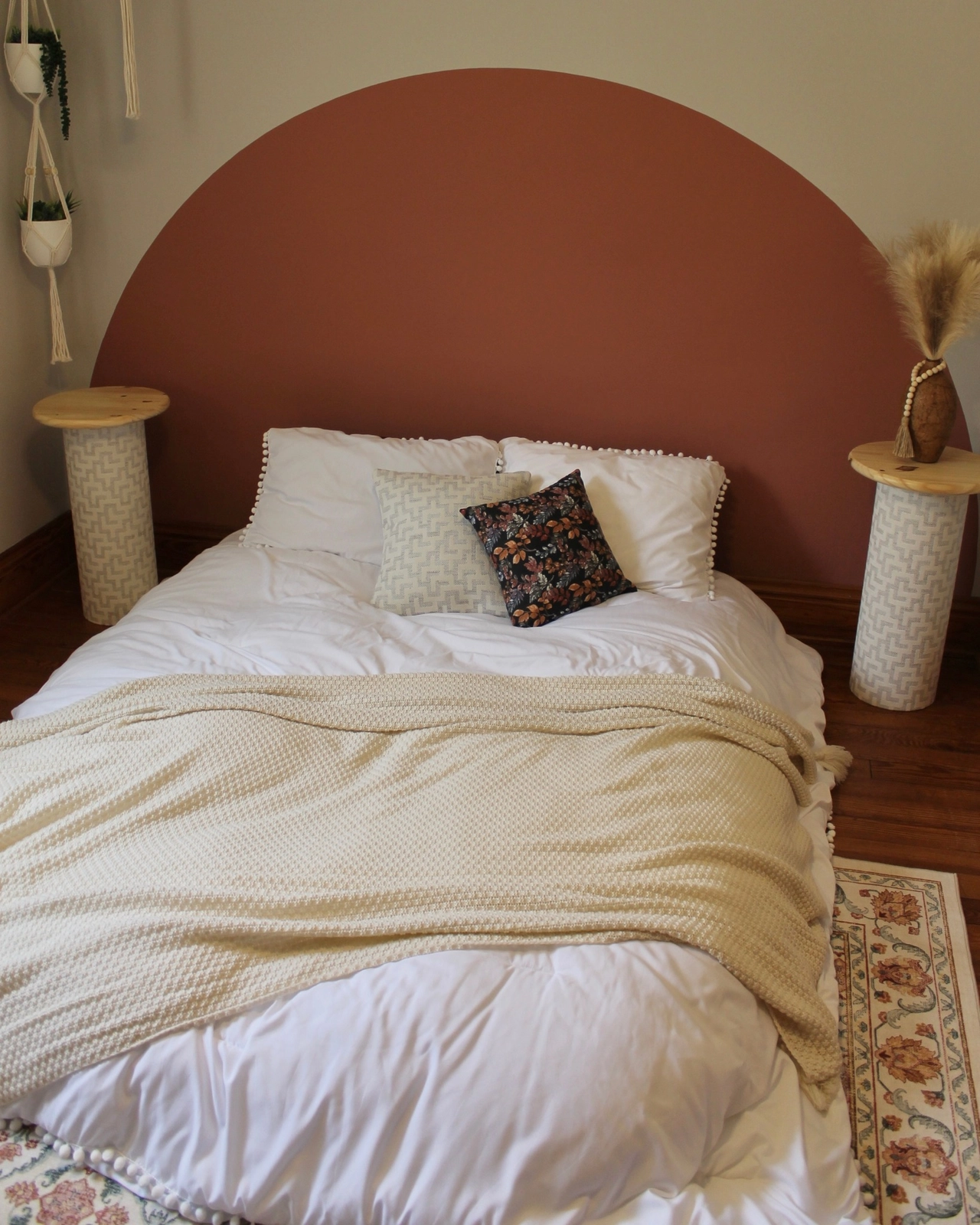
Photo: @cordaroys on Instagram
A low platform bed makes a small bedroom feel taller, because it drops the sightline and leaves more wall visible above it. This one sits close to the floor with white linens and a knitted throw, and the terracotta arch painted on the wall behind it does the decorating that a tall headboard would have done. Two small side tables finish the room without crowding it.
Low beds suit rooms with low ceilings best, and they make a small room feel calmer because there is less furniture to look at. The trade is storage: a platform bed this low has no room for drawers underneath, so pair it with a good wardrobe or a tall chest elsewhere in the room.
Pick a brass bed frame for a room with character
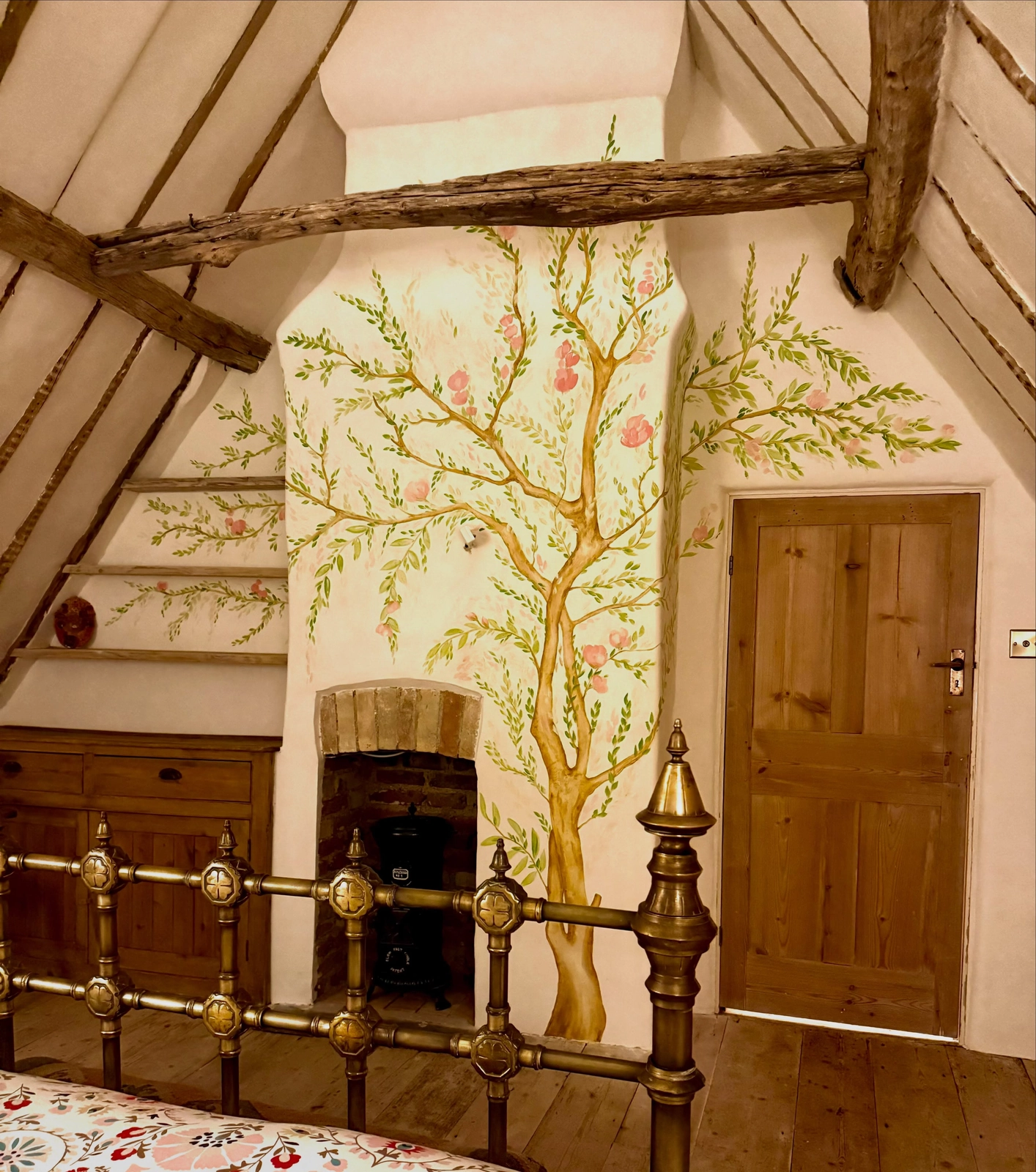
Photo: @ant_anstead on Instagram
A brass bed frame is a statement piece that takes up no more room than a plain one, which is exactly what a small bedroom with character needs. This attic room pairs the brass footboard with a wood dresser, exposed beams, and a painted tree mural, and the brass catches the light in a way that makes the whole room glow. The bed is the decoration, so nothing else needs to be.
Metal frames also suit attic rooms because they are narrow: a brass frame has thinner posts than a wooden one, so it steals fewer inches from a tight space. Keep the bedding simple when the frame is this ornate, or the room starts to compete with itself.
Pair an upholstered bed with a vanity desk
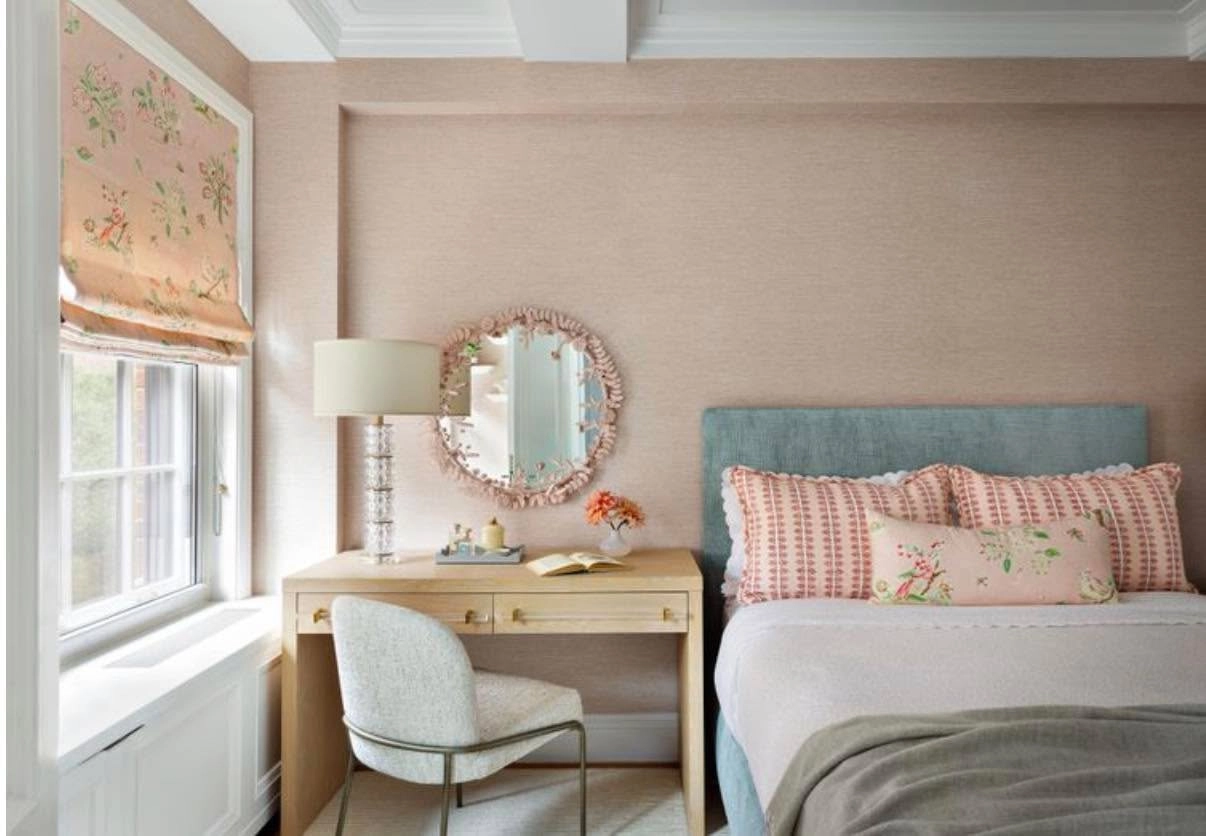
Photo: @cavendishlane on Instagram
An upholstered bed and a vanity desk are the two softest pieces in this list, and together they make a small bedroom feel like a dressing room. The blue upholstered headboard softens the wall, and the light wood desk beside it holds a lamp, a mirror, and a chair, so getting ready has a proper place instead of happening on the edge of the bed.
A vanity desk earns its floor space twice: it is a desk for work and a dressing table for mornings. Keep it narrow, no deeper than a laptop and a mirror, and put it by the window if you can. Natural light is the best makeup light there is, and it costs nothing.
Run an L-shaped desk along two walls
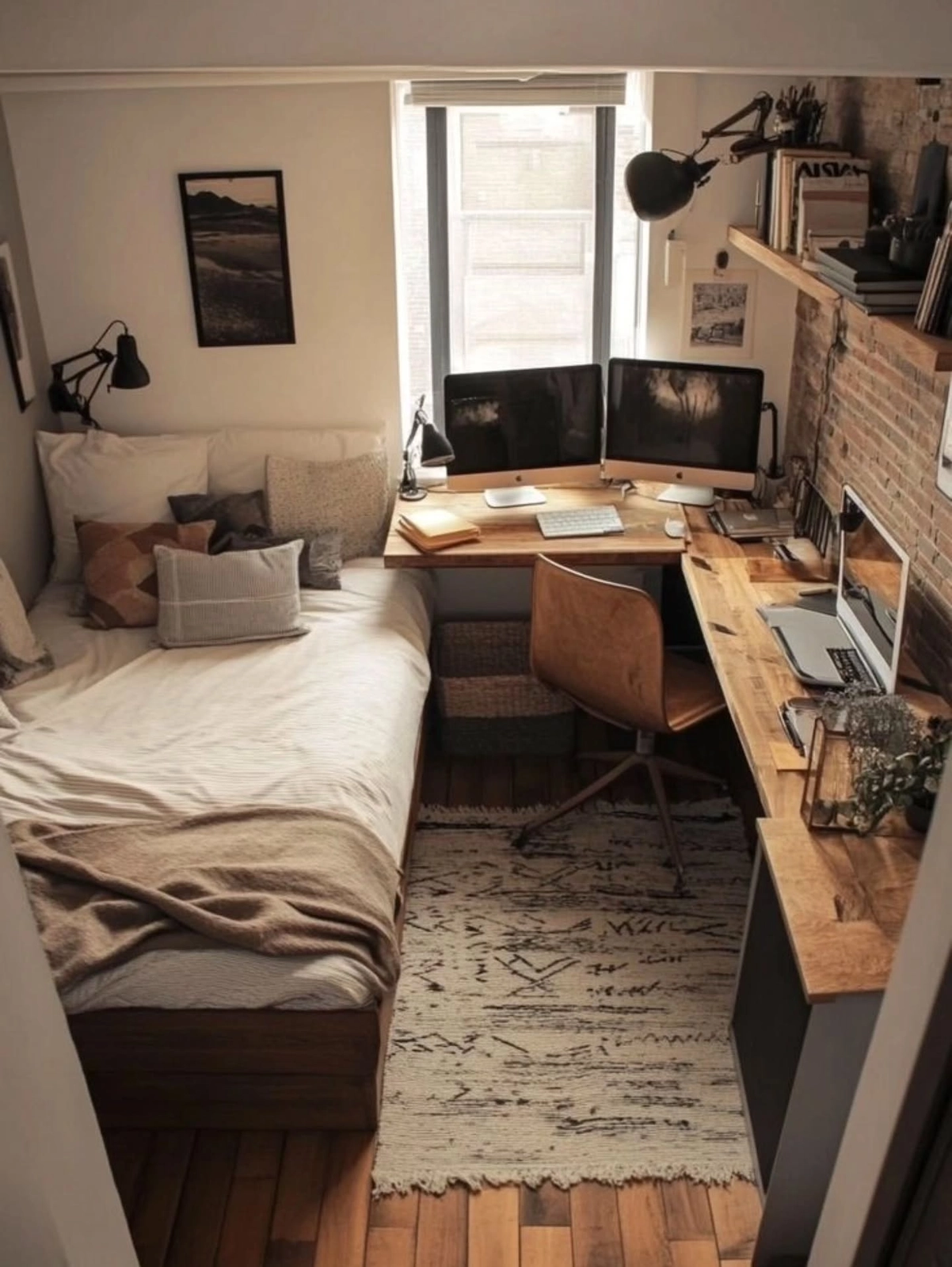
Photo: @arcxdesign on Instagram
An L-shaped desk turns a corner into a workspace without taking over the room. This wooden L-desk runs along the brick wall and the window wall, with two monitors, a laptop, and floating shelves above, while the bed takes the other side of the room. The corner that would have held nothing now holds a whole office.
L-desks work because the return arm holds the second monitor or the printer, so the main desk stays clear for writing. If the room is too small for a full L, a wall-mounted return shelf gives you the same shape for a fraction of the footprint.
Choose a writing desk with drawers, not a table
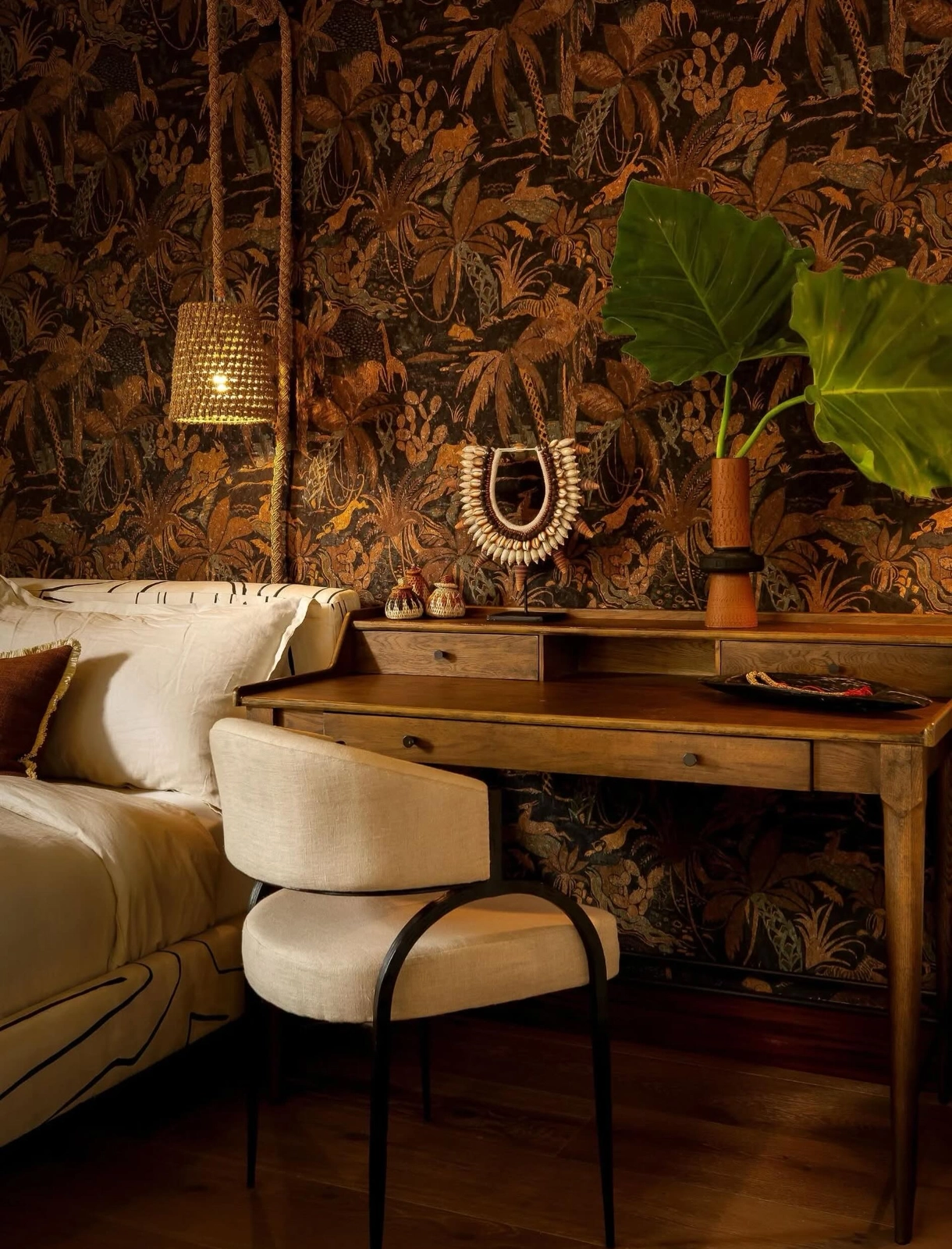
Photo: @arteriorshome on Instagram
A writing desk with drawers beats a plain table in a small bedroom, because the drawers hold the pens, chargers, and notebooks that would otherwise live on the surface. This mid-century wood desk has drawers in the top and the pedestal, with an upholstered chair that slides fully underneath, so the desk disappears into the room when it is not in use.
A chair that slides fully under the desk is the detail that matters most here. A chair left sticking out into the room is a tripping hazard and a visual block, while a chair tucked away returns the floor to the room. Measure the chair height against the desk apron before you buy, or the tuck will not happen.
Use a five-drawer desk for a real home office
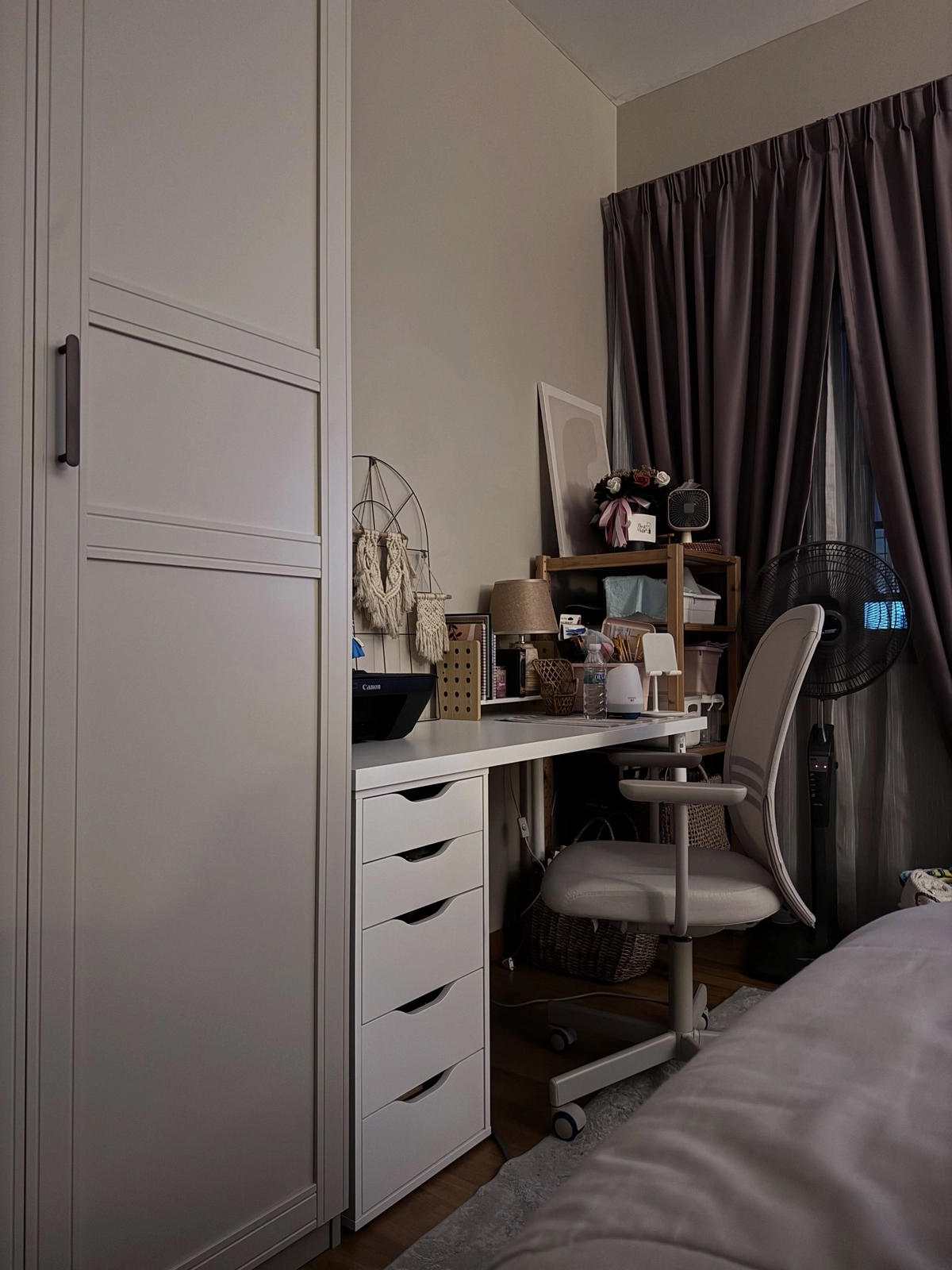
Photo: @qas_home on Instagram
A five-drawer desk is a desk and a filing cabinet in one piece, which is why it suits a bedroom that has to be an office all day. This white desk sits beside a wardrobe with an ergonomic chair, and its five drawers hold everything a home office needs, from paper to chargers to the printer supplies. The room stays a bedroom at night because the work disappears into drawers.
White furniture keeps a workspace corner from feeling heavy in a small room, and a drawer unit on one side only leaves legroom on the other. If the desk faces a wall, put a shelf above it for books, or the wall becomes dead space you stare at all day.
Put a simple desk by the window and let the view work
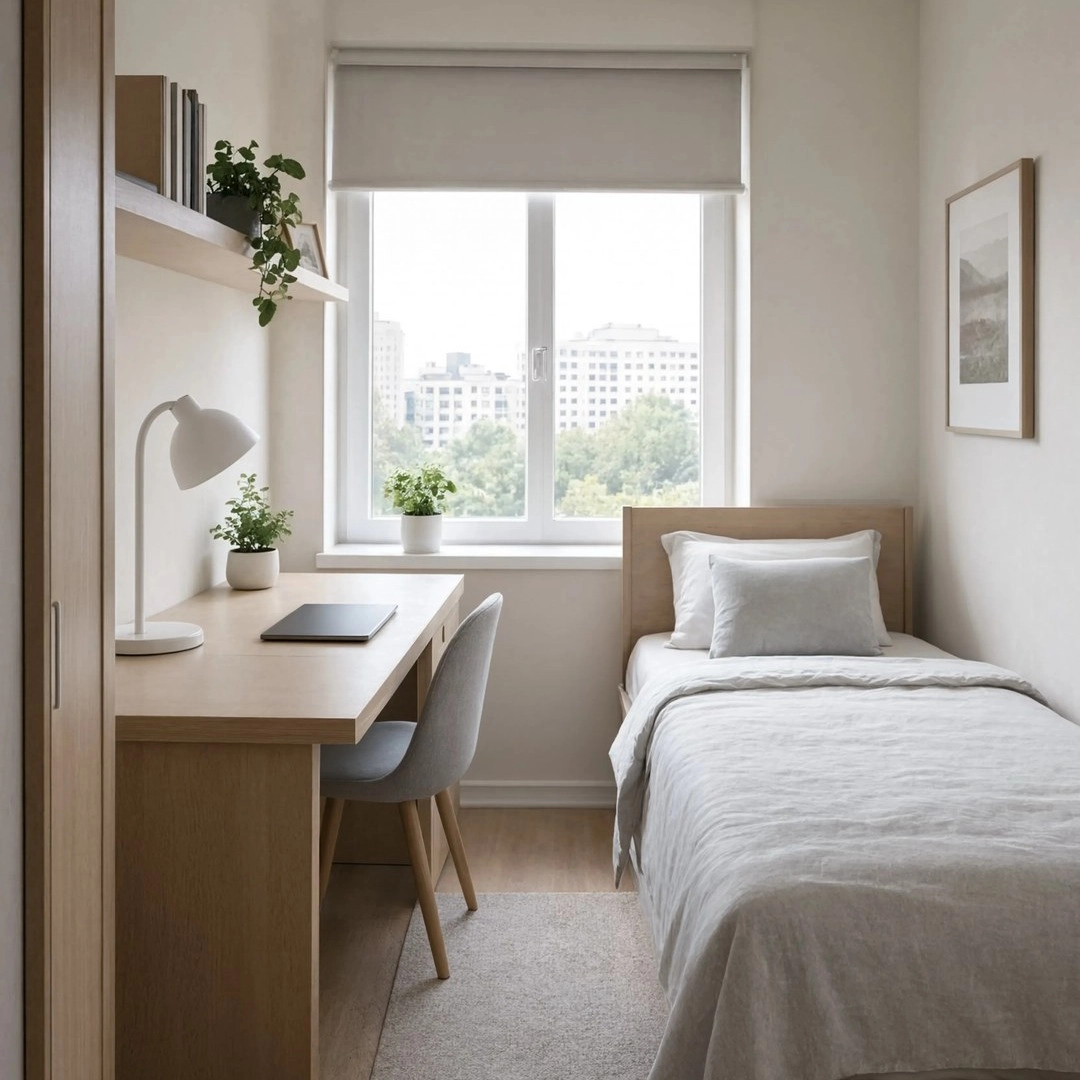
Photo: @rocfurnituredeco on Instagram
The simplest desk in this list is also one of the best: a light wood desk, a grey chair, and a window with a city view. No shelves, no hutch, no drawers, just a clear surface and daylight. The single bed beside it keeps the room feeling like a bedroom first and an office second.
A window desk works when the desk is no wider than the window, so the light falls on the work instead of beside it. Keep one plant on the sill and nothing else on the desk, and the smallest workspace in the house becomes the one you actually want to sit at.
Level 3: build it in
Built-in furniture costs more and takes longer, but it gives back the most space of all, because it uses every inch of wall it touches. These seven ideas are the ones worth saving up for.
Fit sliding mirrored wardrobes wall to wall
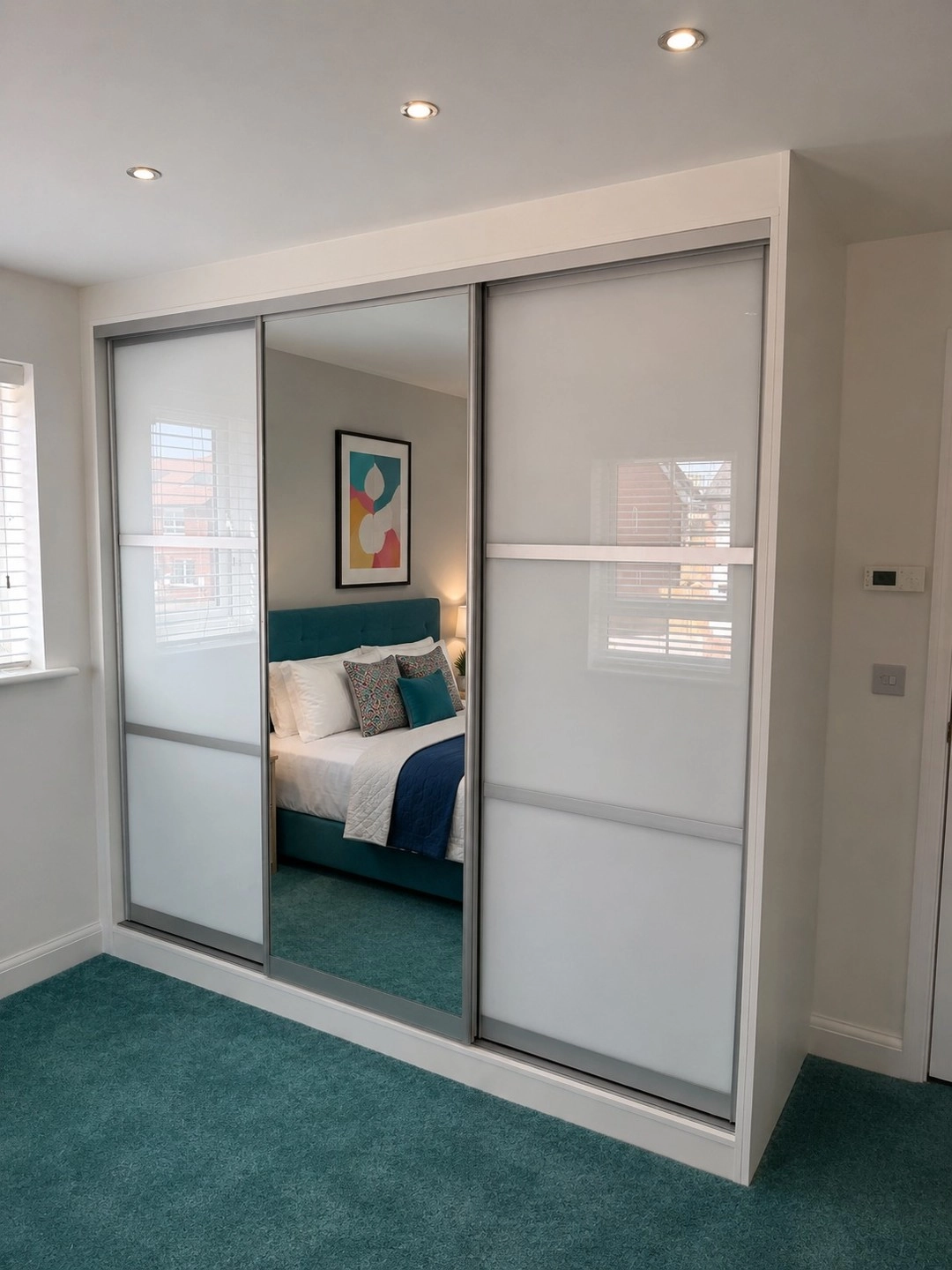
Photo: @myfittedbedroom on Instagram
Sliding mirrored wardrobes are the built-in that changes a small bedroom most, because they do three things at once: they hold a whole wardrobe, they need no door swing, and the mirrors double the room visually. This floor-to-ceiling wall reflects the bed and the window, so the room looks twice as deep as it is.
Sliding doors are the key detail. A hinged wardrobe door needs two feet of clear floor to open, and a small bedroom does not have two feet to spare. Mirrored sliders give that floor back, and the reflection does the decorating, so the wall needs nothing else.
Build a workspace into sage-green wardrobes
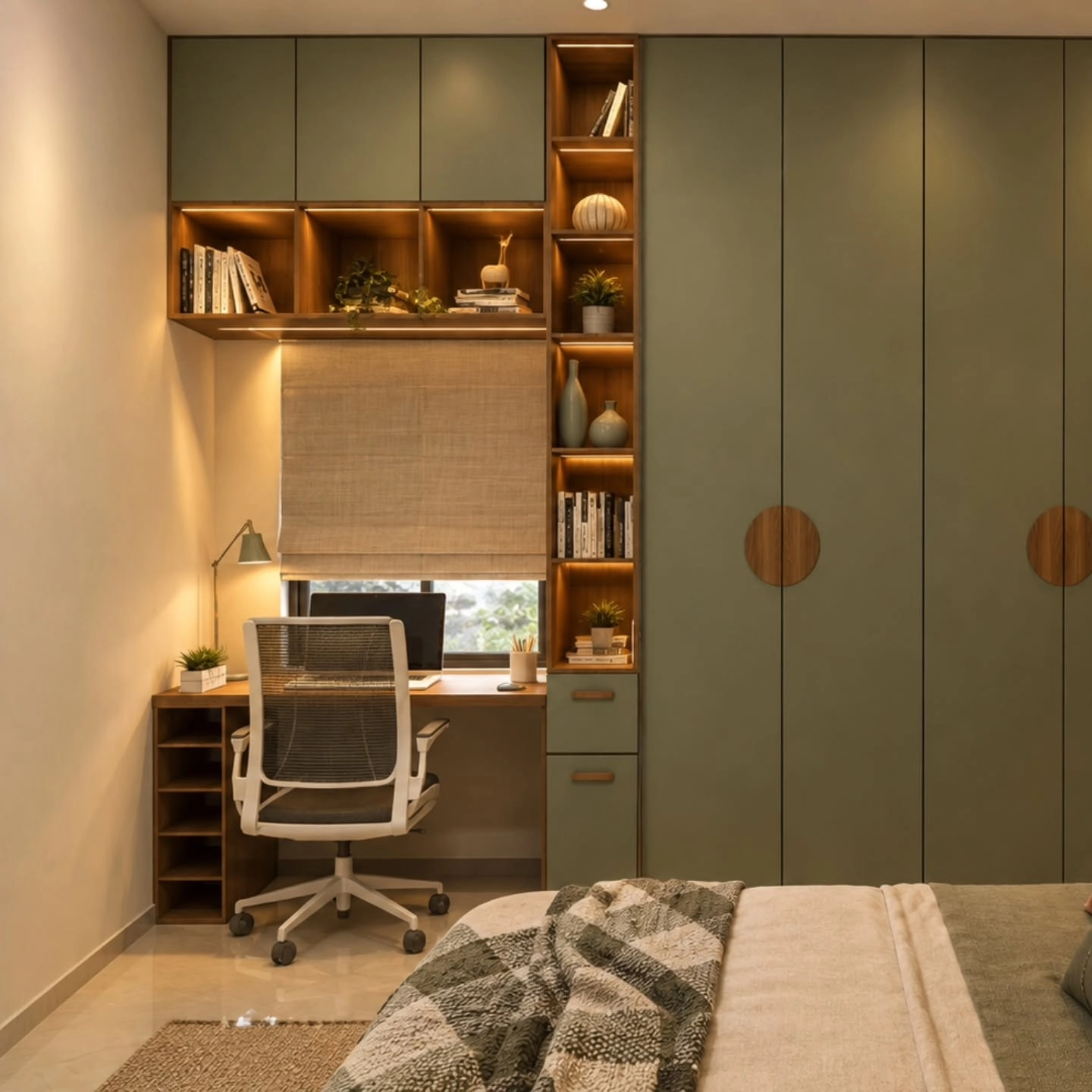
Photo: @parppidam_design_studio on Instagram
A built-in workspace inside a wardrobe wall is the tidiest home office a small bedroom can have. This sage-green wall holds wardrobes on the right and a desk with lit shelves on the left, with a mesh office chair that slides underneath. The desk is part of the wall, not furniture in front of it, so it takes no floor space at all.
Built-in desks work best when the shelves above them are lit, because a dark desk corner is a corner you will avoid. The sage green keeps the whole wall calm, and the wooden desk top warms it up. If you are building one wall, build the desk into it from the start: adding a desk later never fits as well.
Run a walnut desk wall with floating shelves
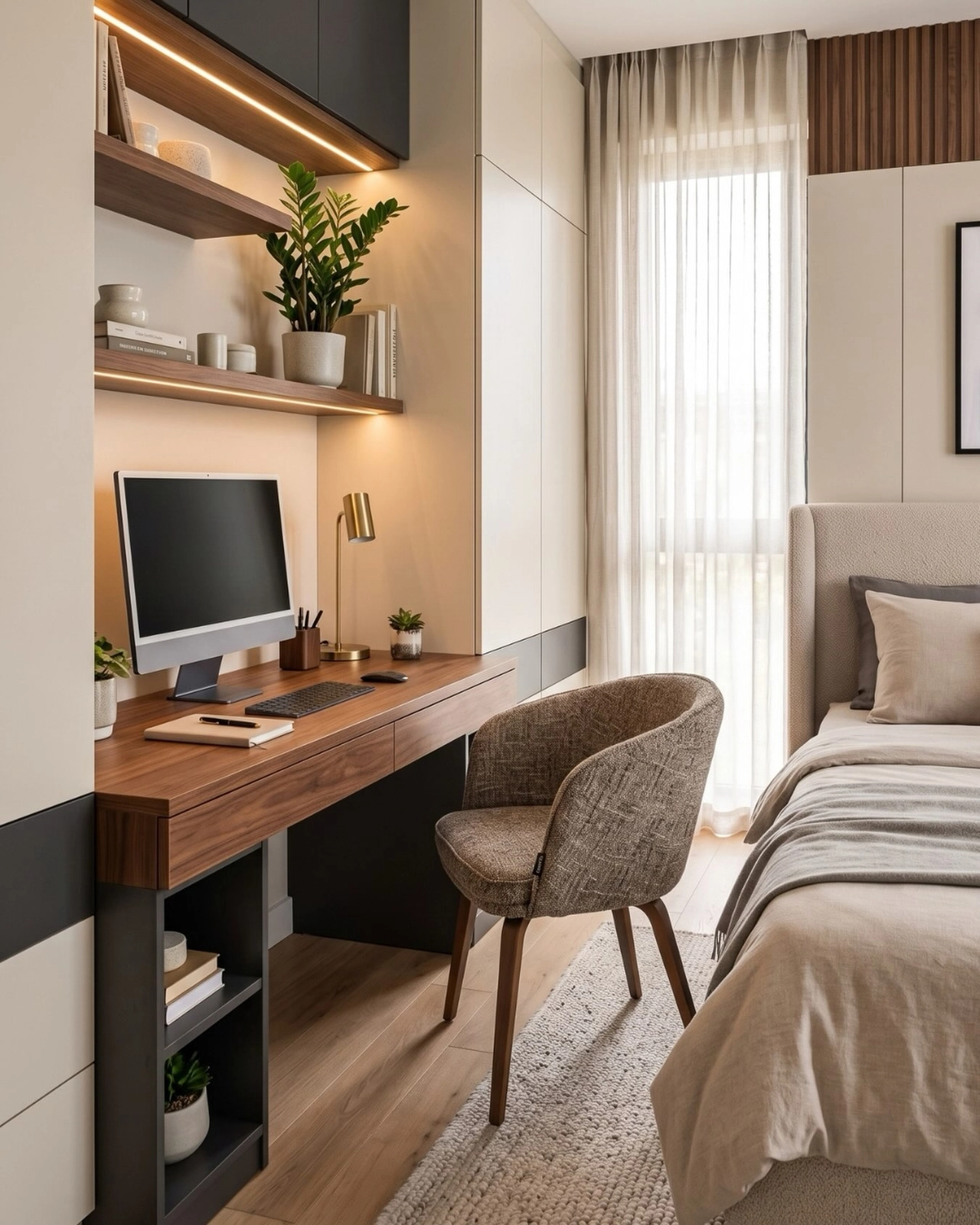
Photo: @mosso_enterijeri on Instagram
A walnut desk wall with floating shelves is the grown-up version of a freestanding desk: the desk top, the shelves, and the wardrobes are one continuous run of joinery. This one pairs a walnut top with lit shelves, an upholstered chair, and a bed at the side, and the whole wall reads as furniture rather than a collection of pieces.
Floating shelves above a built-in desk hold books and plants without taking any surface, and the LED strip under each shelf lights the work below. Keep the shelves shallow, no deeper than a paperback, or they start to loom over the desk. The walnut top is the luxury here, and it is worth it: you touch the desk every day.
Install a fold-down desk that disappears
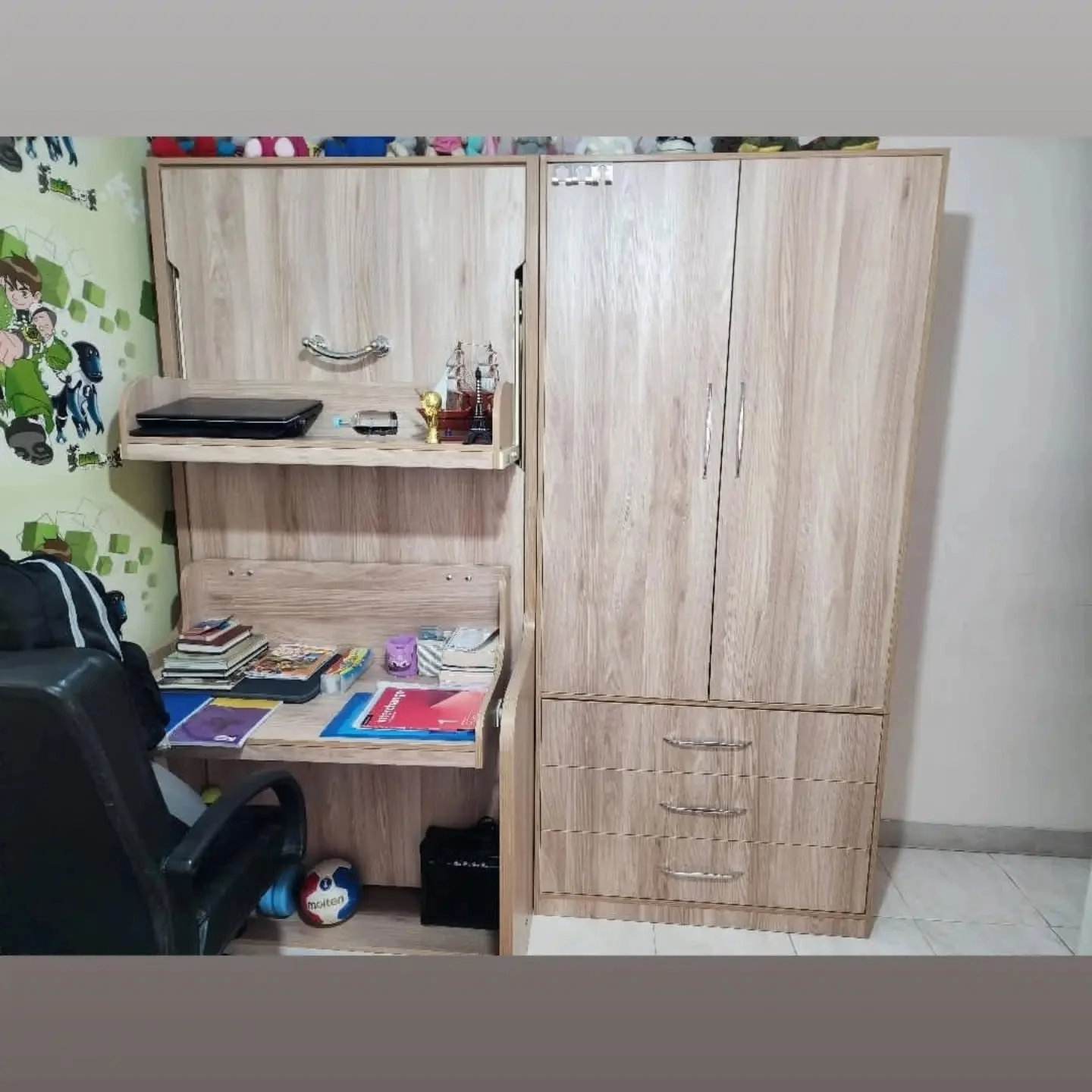
Photo: @arzan.shik.kala1 on Instagram
A fold-down desk is the best idea in this list for a room that cannot spare a desk at all. This oak system pairs a wardrobe with a desk that folds down for homework and folds up when it is done, with a shelf above for books. When the desk is up, the wall is just a wardrobe, and the floor is completely free.
Fold-down desks suit children’s rooms and guest rooms best, where the desk is used for hours, not all day. Check the mechanism before you buy: a good fold-down desk locks flat and holds the weight of a laptop and books without sagging, and a bad one wobbles from the first week.
Raise a platform loft and store underneath it
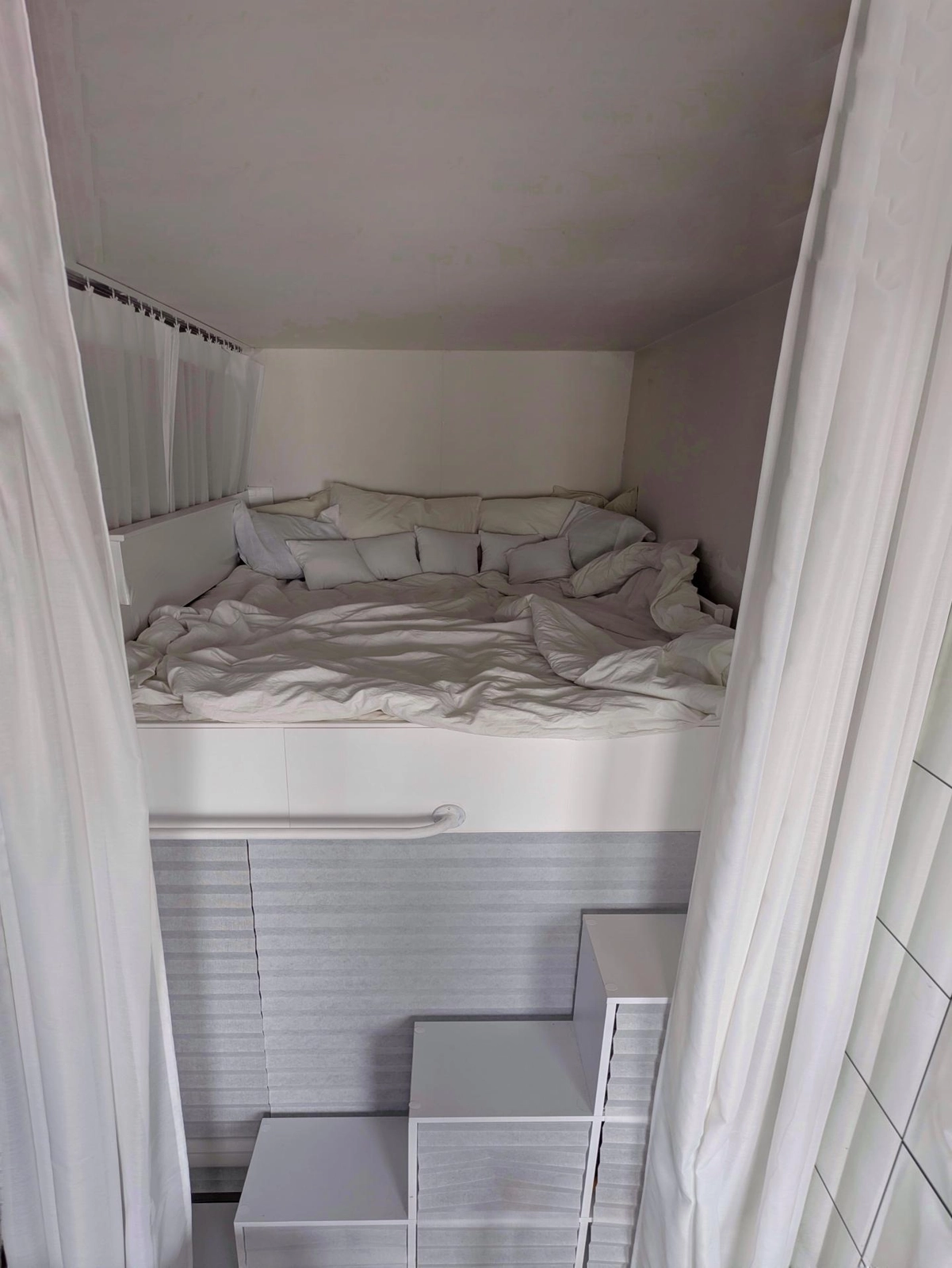
Photo: @ak.designliving on Instagram
A platform loft bed raises the sleeping space high enough to store underneath it, and the steps up to it are storage too. This white platform is reached by storage steps, with the space below it closed off for wardrobes or drawers. The bed takes the same footprint as any bed, but the room gains a whole wall of storage underneath it.
Loft platforms need ceiling height: you must be able to sit up in bed without hitting your head, and climb the steps without ducking. Measure twice, because a loft that is too low is a bed you cannot sit up in, and that is a bed you will hate within a week.
Put a loft bed over a desk and double the room
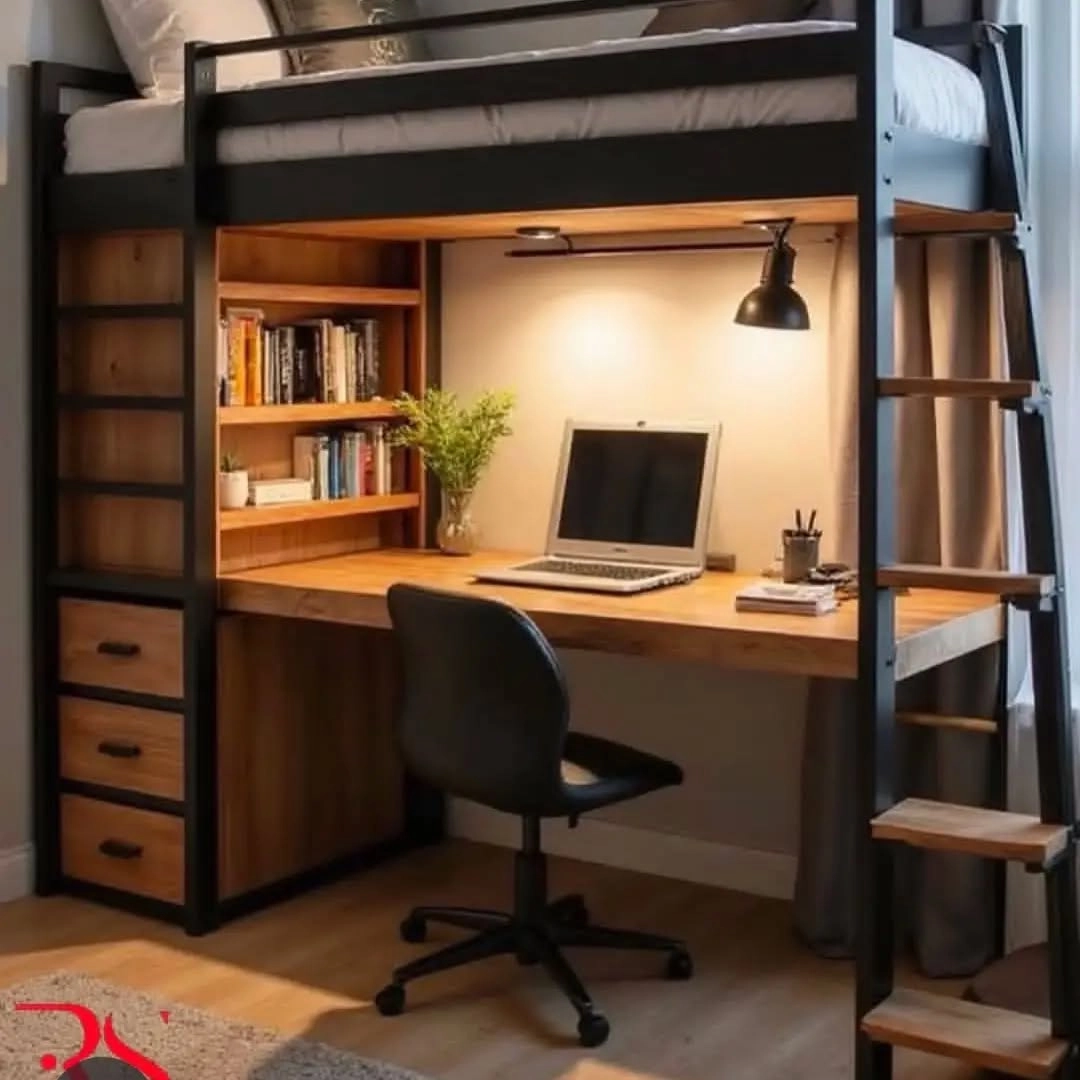
Photo: @reza_barati1405 on Instagram
A loft bed over a desk is the same trick studio apartments use to fit a whole flat into one room: sleep up top, work underneath, one footprint for two rooms. This black metal frame holds a bed above and a full desk with shelves, drawers, and a lamp below, with a ladder at the side. The desk gets its own walls, its own light, and its own identity.
Loft beds suit teenagers, students, and anyone working from a small bedroom, and the metal frame keeps the whole thing narrow. The desk underneath needs its own light, because the bed above blocks the ceiling light. A clip-on lamp under the frame solves it for the price of a takeaway.
Build a child’s room around a desk and a storage bed
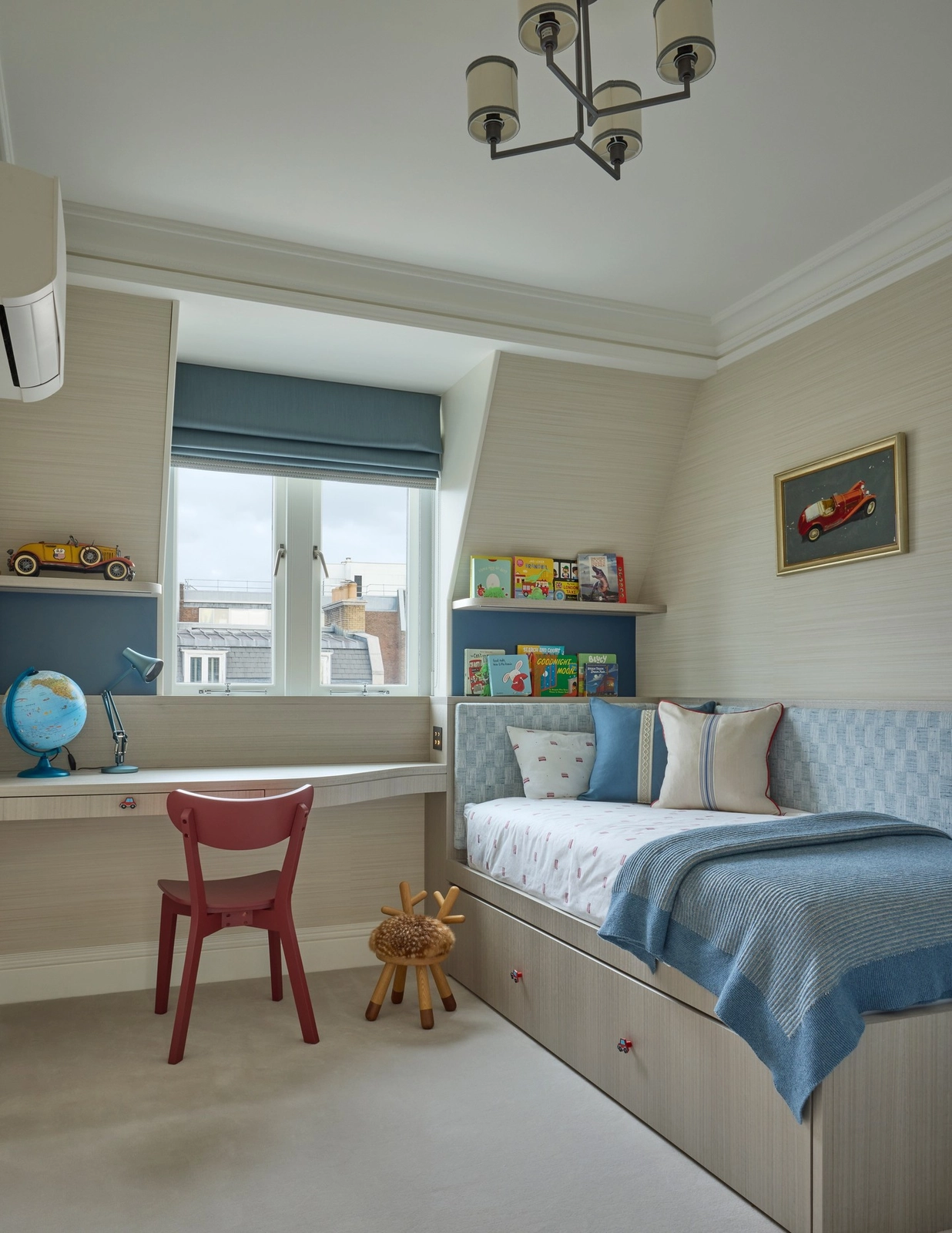
Photo: @katharinepooleyltd on Instagram
A child’s bedroom has to hold sleep, homework, and play in one small room, and the only way to do all three is to build the furniture in. This room pairs a built-in desk with a red chair under the window and a storage bed with drawers beside it, with bookshelves above the bed. Every job has its own piece, and the floor in the middle stays free for playing.
Built-in children’s furniture should be planned to last: a desk at the right height for a ten-year-old is too low for a teenager, so build the desk at adult height and use an adjustable chair. The storage bed is the piece that never goes wrong, because children never stop needing drawers.
Start with one level
If you only buy one thing, buy the nightstand that holds the most. It is the smallest piece in the room and the one you touch every single day, so it sets the standard for everything else.
Pick the level that matches your situation, not your ambition. Renters should start at Level 1 and stop when the room feels better. Homeowners planning to stay should save for one Level 3 piece, because a single built-in wall changes a small bedroom more than ten freestanding pieces ever will.
Whatever level you start at, measure first, buy second, and leave one wall mostly empty. A small bedroom needs one quiet wall the way a sentence needs a pause, and the furniture you do not buy is just as important as the furniture you do.