The Anthropologie Look for Less: Pattern, Patina and One Weird Piece
Walk the home floor of the store slowly and it is hard not to fall for it: the patterned rugs, the aged brass, the strange little animal objects you never knew you wanted. Then your fingers find a price tag and the spell breaks. Here is the good news the store does not advertise. The look is only ever three signatures working together, pattern mixed like a garden, patina that looks lived in, and one genuinely weird piece. All three can be hunted second hand and on a budget, and this guide tells you exactly what to look for.
Signature One: Pattern, Mixed Like a Garden
1. Lay the large pattern first and let it choose the palette
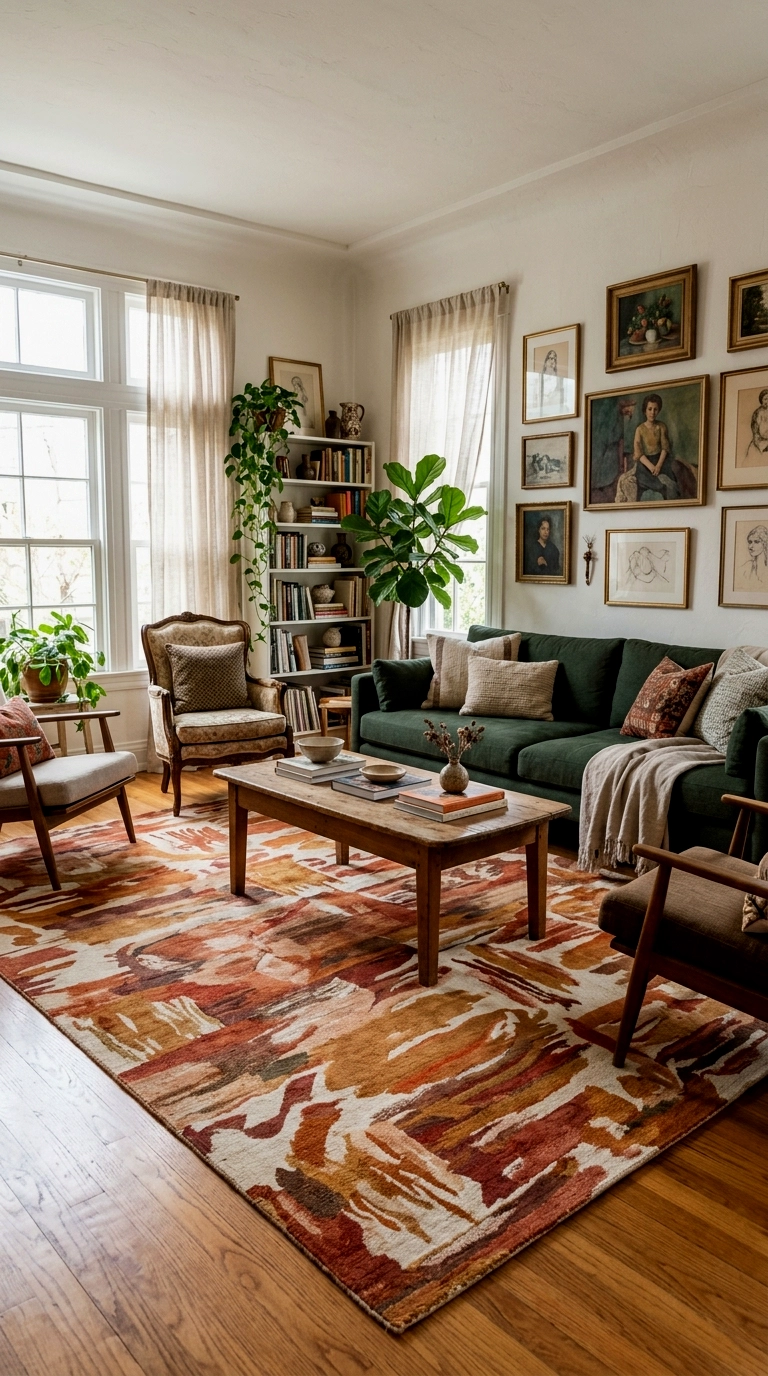
Every room in this style starts with one big, confident pattern: a rug, a pair of curtains or a bedcover with a painterly, slightly imperfect design. Florals that look hand painted and block prints that wobble a little are the spirit of it, not crisp geometry. Once that piece is in place it chooses your palette for you, because every solid colour you add later gets pulled from inside it. Buy this piece first and let it make the decisions.
Look for: a second hand rug, curtain pair or bedcover in a floral or block print design, faded is fine, in colours you genuinely love living with.
2. Add the medium pattern in the same colour family
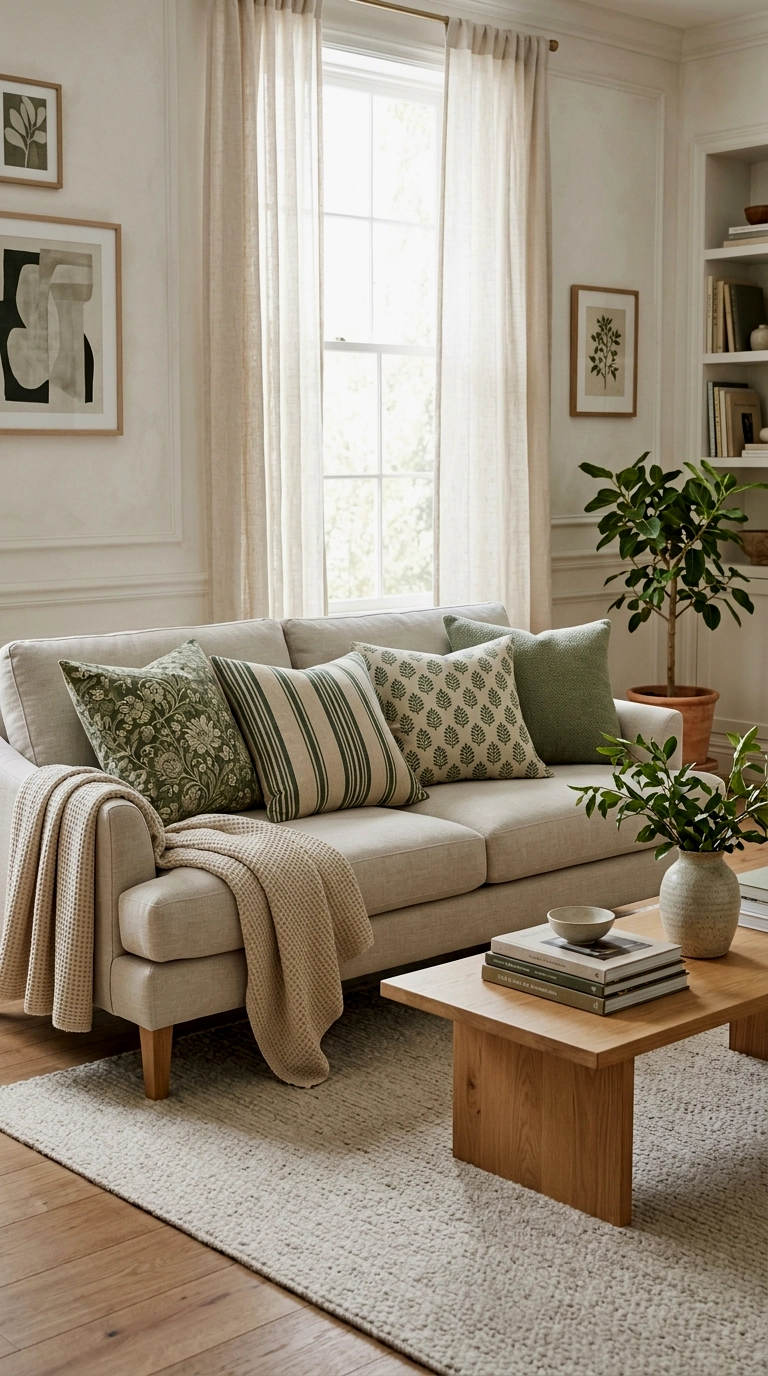
The second pattern should be smaller in scale and related by colour, not by design. A stripe beside the big floral, an ikat beside a block print, a small check beside a paisley. The family resemblance lives in the shared colours, so the patterns feel like cousins who get along rather than twins competing for attention. Cushions and throws are the easiest place to add this layer, because they are cheap to swap when you miscount.
Look for: cushion covers or a throw in a different pattern from your big piece but sharing at least two of its colours.
3. Finish with a small pattern at reading distance
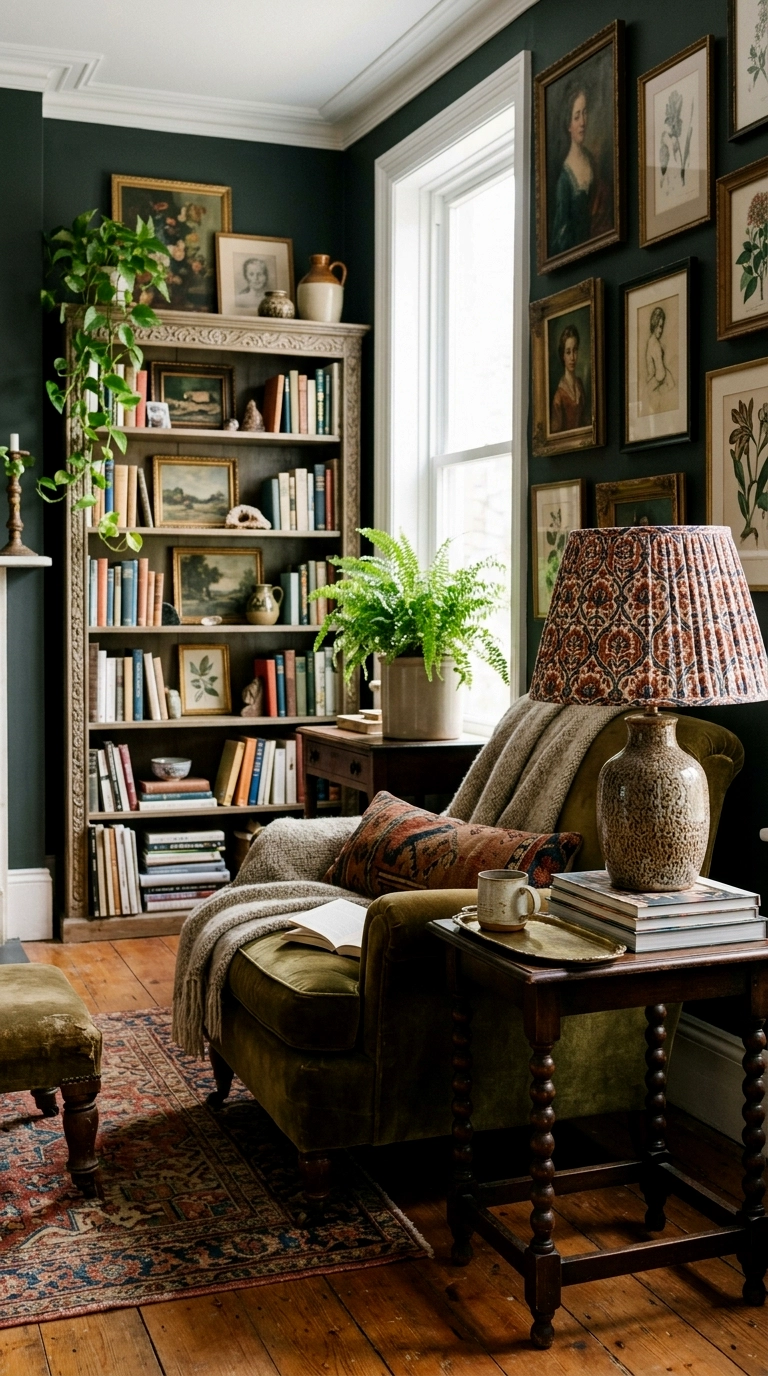
The third pattern arrives tiny and close to where people actually sit and linger: a lampshade, the front cushion on the sofa, a runner across the table. This is the layer most budget rooms skip completely, and it is the one the look is quietly famous for, because it rewards anyone who comes near. Small scale pattern at close range makes a room feel collected over time rather than bought in one trip.
Look for: a patterned lampshade, tea towels, napkins or one small cushion with a trim, in the same colour family as your larger patterns.
4. Rest the eye on textured solids between patterns

Patterns need quiet company or the room starts to shout. Between the patterned pieces, place solid things with plenty of texture: raw linen, boucle, woven cane, plain dyed wool, scrubbed wood. These pieces say almost nothing on their own, and that is their job. As a rough guide, every two patterns in a room deserve at least one solid breathing space beside them. Skip this and the garden turns into a jumble sale.
Look for: plain linen curtains, a boucle or wool cushion with no print, cane or rattan pieces, all texture and no pattern at all.
The pattern maths, written like a recipe, because this is the signature everyone gets wrong.
The Pattern Recipe
- One large pattern: the rug, curtains or bedcover, carrying about half of all the pattern in the room.
- Two medium patterns: cushions, a chair or a throw, sharing about a third between them.
- One or two small patterns: a shade, a runner, a single cushion, making up the rest.
- One colour in common: every pattern in the room shares at least one colour with the large piece.
- One solid for every two patterns: textured, plain pieces placed between patterns as breathing space.
Signature Two: Patina, Finishes That Look Lived
5. Hunt aged brass, never bright gold
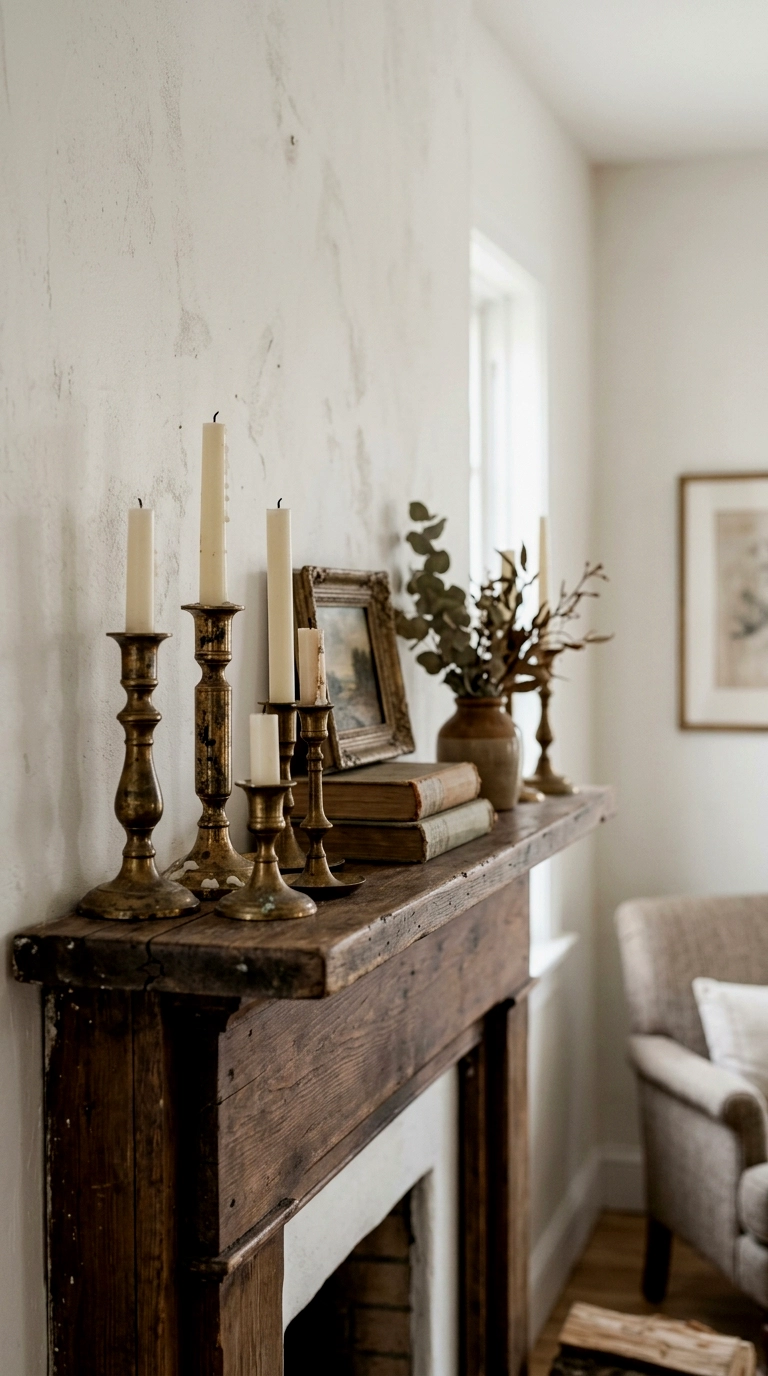
Shiny new gold reads as costume jewellery in a room. The look runs on brass that has lived a little: candlesticks with soft tarnish, frames with darkened edges, handles that glow rather than glare. Second hand shops are full of exactly this, priced by people who think the tarnish is a flaw. Give pieces a gentle wash and stop there, because polishing them back to mirror bright throws the age away.
Look for: solid brass candlesticks, picture frames and cabinet handles with natural tarnish, heavy in the hand, at charity shops and house clearances.
6. Choose distressed wood with honest wear
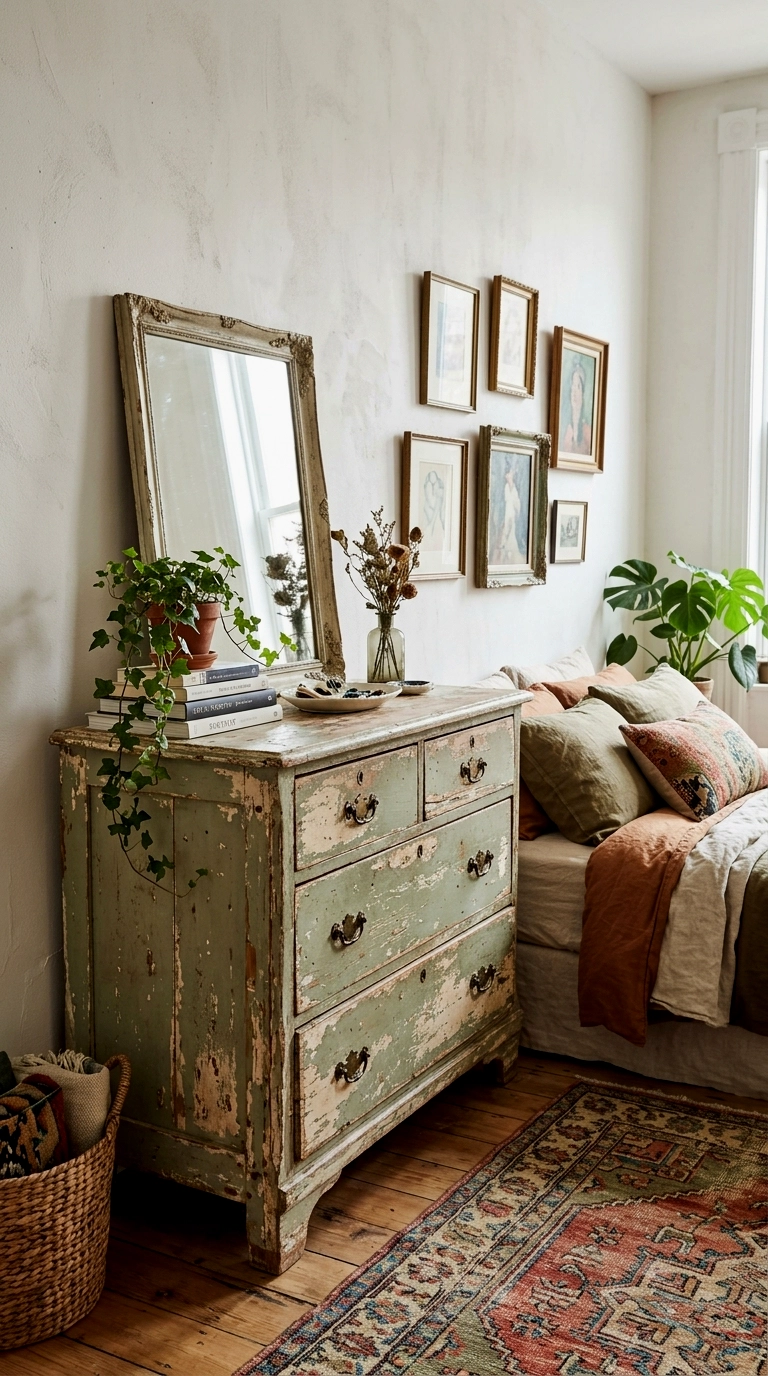
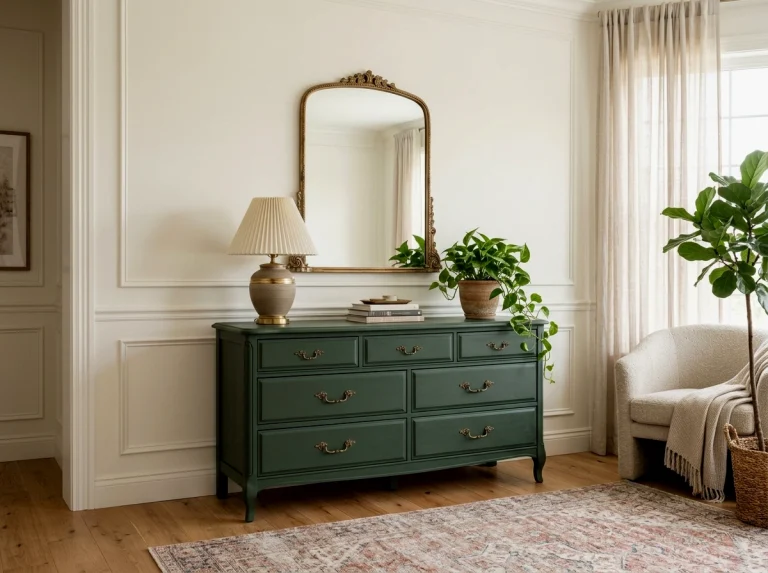
Real wear happens where life touches: edges rubbed pale, a ring where mugs landed, scratches around the handles. Hunt for that, and walk past anything distressed evenly all over, which is a factory pretending. A worn dresser, a chipped painted stool or a scrubbed pine table will do more for this look than any new piece in the store. It is the same instinct that makes cheap decor look expensive, honest materials quietly outclassing shiny ones.
Look for: second hand wood furniture worn at the edges and handles, solid and a little heavy, never evenly sanded fakes.
7. Mix one handmade ceramic in, bumps and all
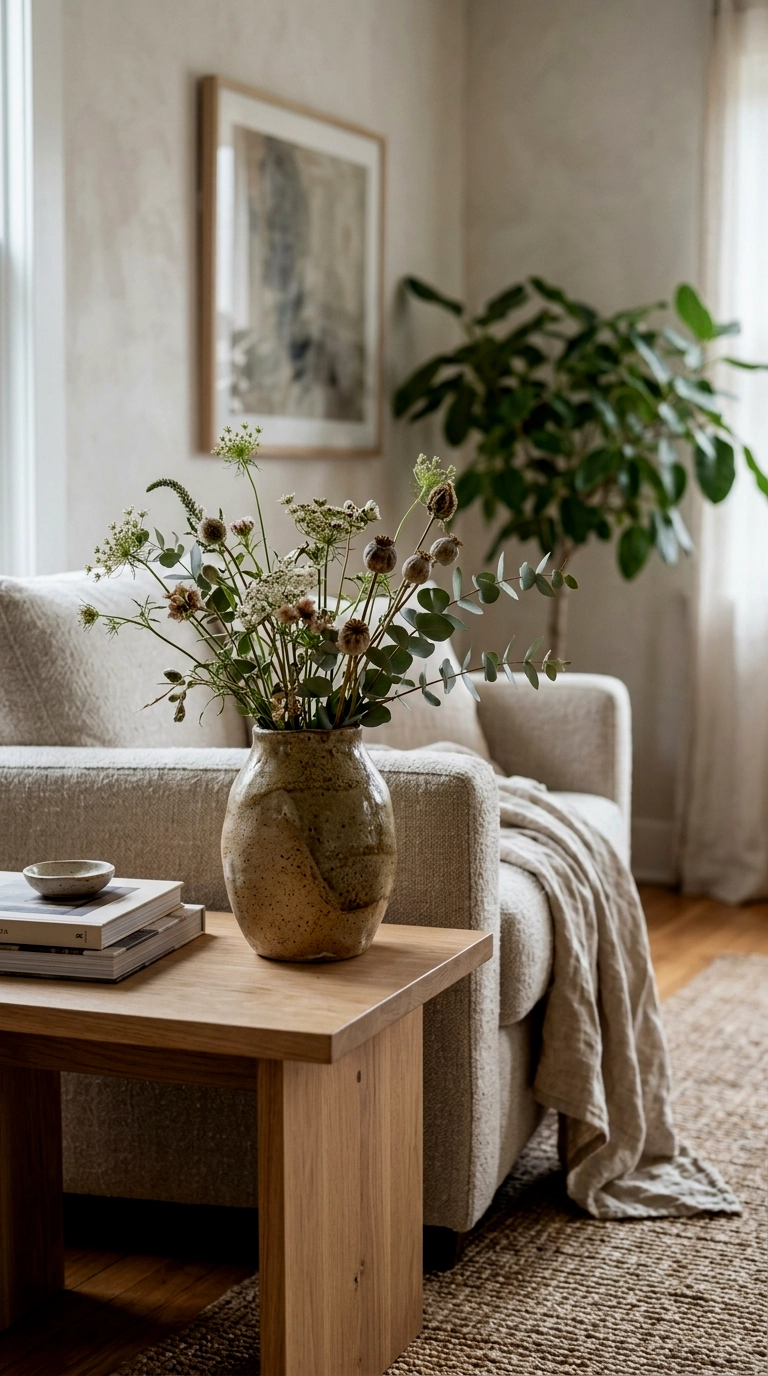
Factory perfect rooms feel like nobody lives in them. One slightly uneven handmade vase, bowl or jug breaks that spell instantly, because your eye can tell a person shaped it. Studio pottery seconds, craft fair stalls and the bric a brac shelf of a charity shop are full of pieces with a wobble, a drip in the glaze or a thumbprint in the clay. That is not damage, that is the entire point.
Look for: handmade or studio style ceramics with visible unevenness, glaze drips or an unglazed base, sold cheap as seconds or second hand.
8. Layer an old textile over a new one
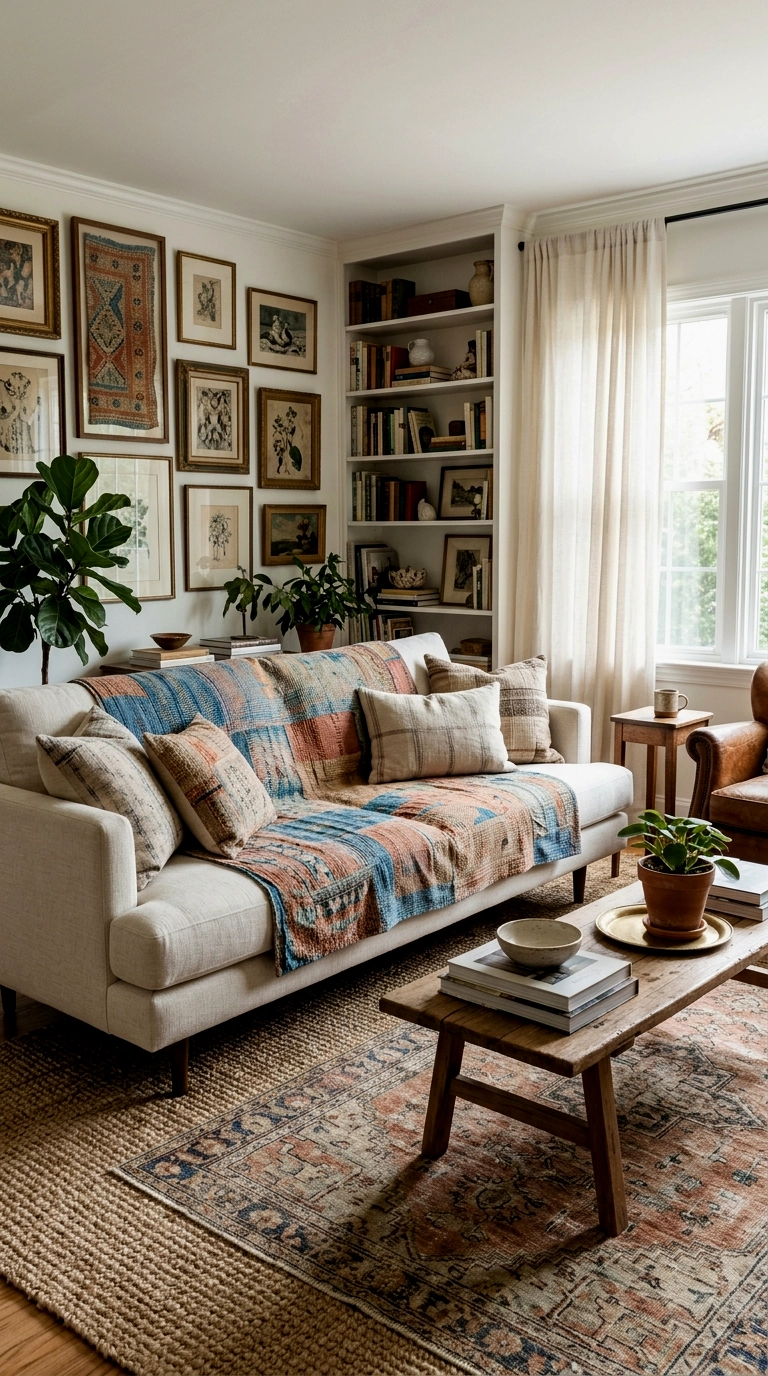
The look’s favourite sentence is an old cloth over a new base: a faded kantha quilt across a plain modern sofa, an embroidered cloth over a new side table, a vintage woven throw at the foot of a fresh white bed. The order matters. Age on top brings the story, the new piece underneath keeps everything clean and sturdy. It also means your newest, plainest furniture is one market find away from fitting in.
Look for: kantha quilts, embroidered tablecloths, faded woven or tapestry throws at markets, vintage shops and online second hand listings.
Where to Find It
So where does all of this actually come from? Charity shops and estate sales are the home ground for aged brass, wobbly ceramics and honestly worn wood, usually priced by the box. Online marketplaces are best for second hand patterned rugs and large textiles, which are heavy and therefore cheap to buy used. Fabric remnant bins and sample sales supply the medium and small patterns without full price yardage. Craft fairs and pottery seconds sales provide the handmade pieces. Work the sources in signature order, pattern first, patina second, weird last, and a room that photographs like the catalogue comes together for a fraction of the receipt.
Signature Three: One Weird Piece
9. Give the room one animal or botanical oddity

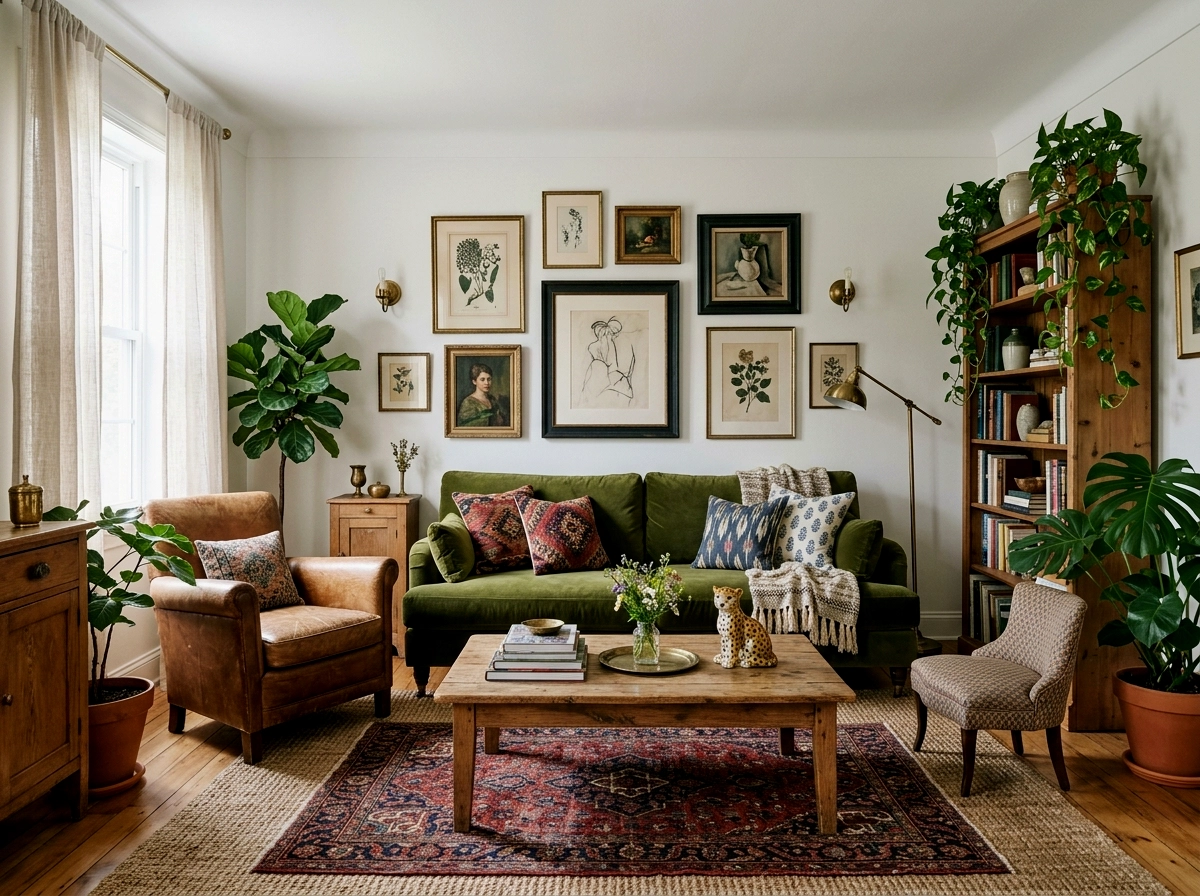
Every room in this style keeps a small creature somewhere: a brass bird on the shelf, a ceramic leopard guarding the books, a framed print of beetles or mushrooms. It should be tasteful, a little funny and completely unmistakably alive. One is charm, five is a theme park, so choose the single oddity you would genuinely save in a fire. Guests will find it, and they will ask about it, which is rather the point.
Look for: a brass or ceramic animal, a framed insect or botanical print, or an unusual plant marker at a flea market or vintage stall.
10. Hang something unexpected where art should be
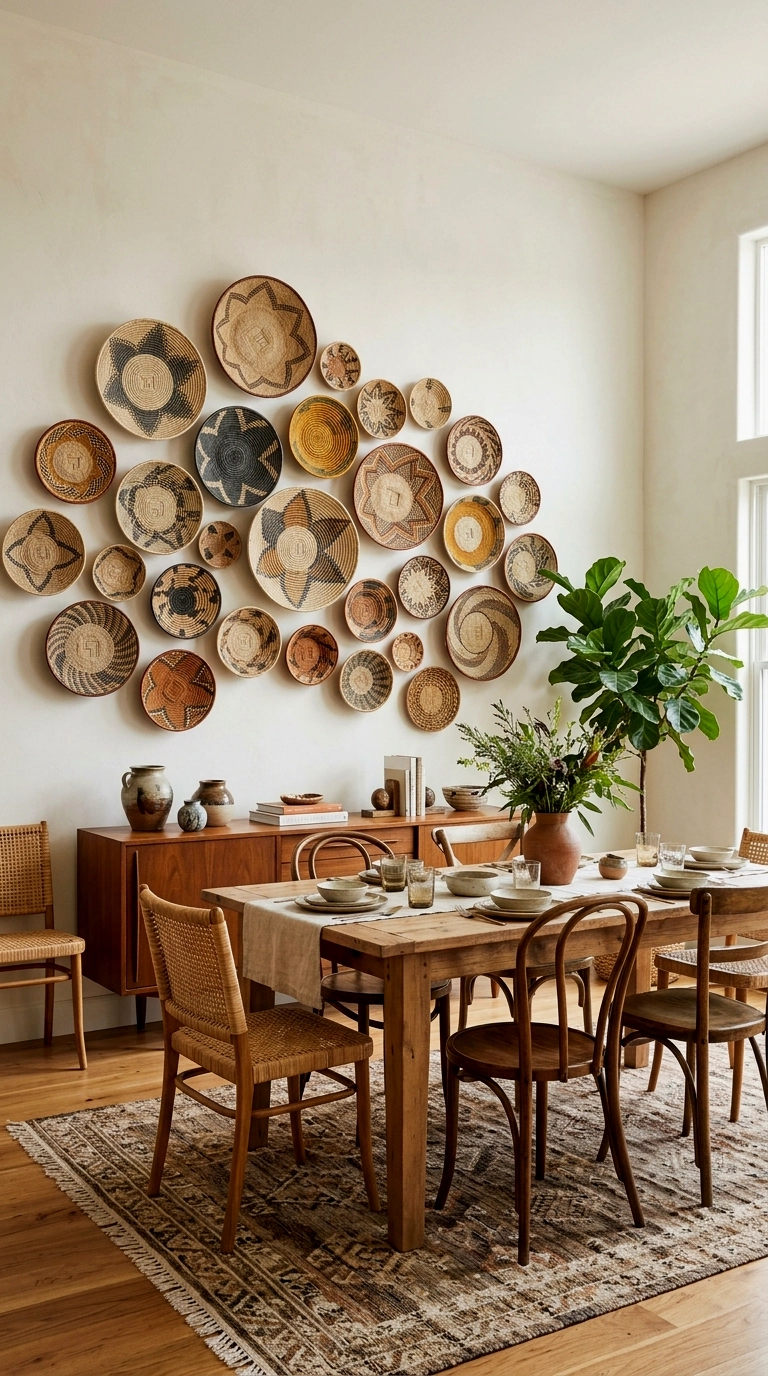
The wall moment in this look should surprise before it pleases. A woven hanging, a cluster of baskets, a vintage mirror with foxed and cloudy glass, a row of beautiful hats on hooks. If the piece could hang unnoticed in a hotel corridor, it is too safe. A no paint living room makeover leans on this trick heavily, because one surprising wall can carry a whole room while the walls stay exactly as they are.
Look for: woven wall hangings, basket collections, old mirrors with aged glass, or anything flat and characterful enough to hang.
11. Style books like they are read, not displayed

Shelves in this look are always mid conversation. Books sit in stacks at slight angles, one lies open, a pair of glasses or a bookmark rests on top where a reader left it. Perfectly lined up, colour sorted shelves belong to a different style entirely. Let the books you actually read live in the open, with their worn spines showing. Believability is the whole effect, and it cannot be bought, only left lying around convincingly.
Look for: clothbound second hand books with worn, characterful spines in colours that suit your palette, bought by the armful at charity shops.
12. End with living green in an interesting pot
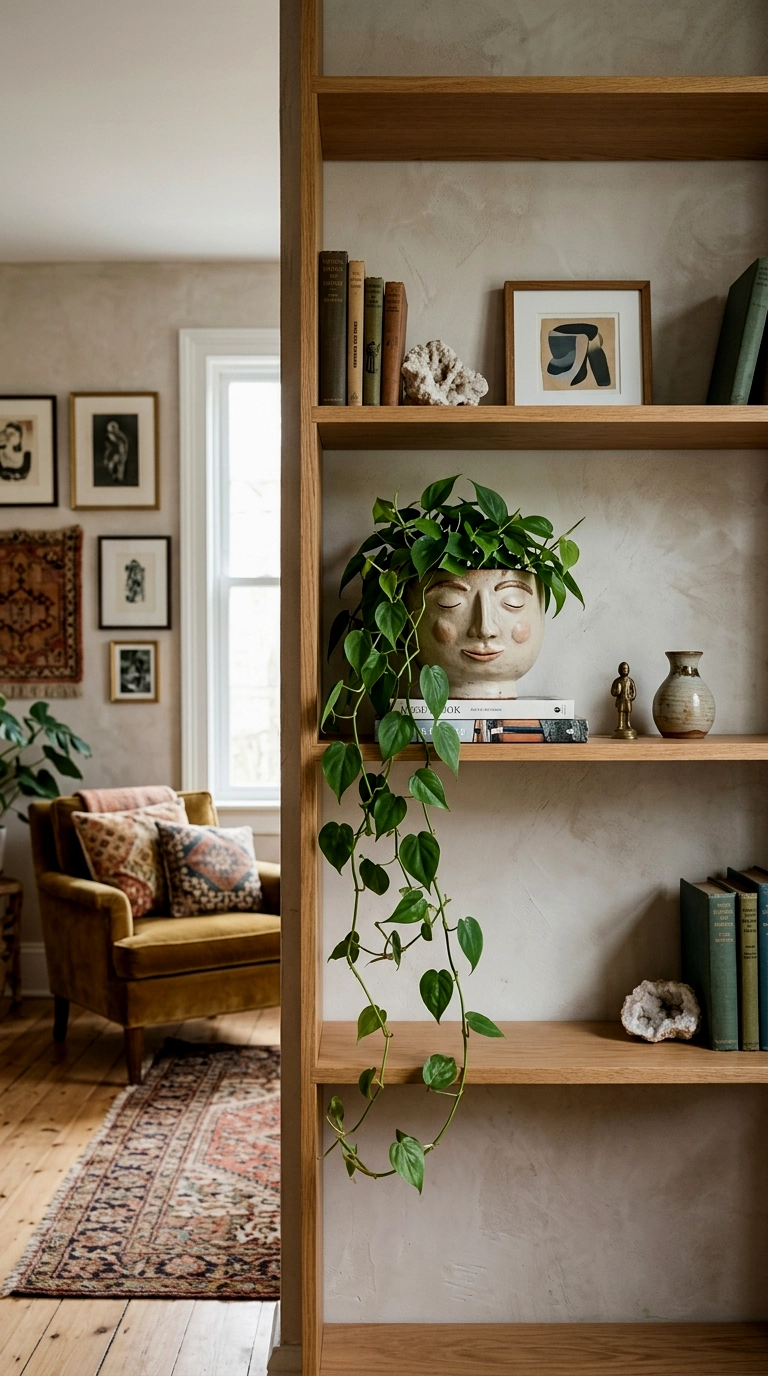
Green is the fourth pattern in this look, and it should arrive in a pot with a personality: a trailing plant in a face pot, herbs in a chipped enamel jug, a fern in terracotta with moss softening the rim. The plant itself can be any hardy supermarket survivor. The pot is where the style hides, so spend your hunting energy there and let the green do what green always does.
Look for: face pots, aged terracotta, chipped enamel jugs or brass planters, interesting enough to be noticed before the plant is.
In the end the room comes together around the weird piece, because it is the one thing that could only belong to you. The patterns mix like they grew there, the brass and worn wood look settled rather than staged, and then the little brass bird, or the foxed mirror, or whatever your oddity turns out to be, signs the whole room like a name on a painting. That signature is the part the store was really selling, and you found yours in a market for the price of lunch.