Living Room Makeover Without Painting: Change the Colour Story Instead
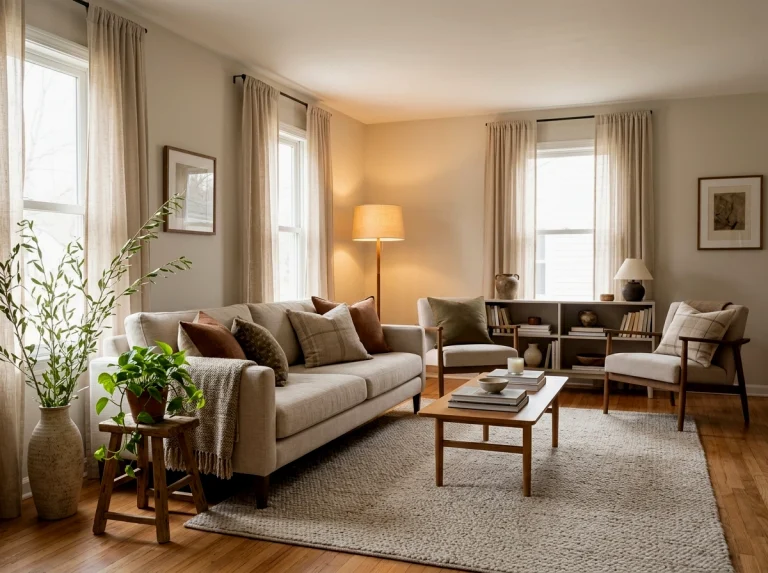
It is Saturday, half past nine, the coffee is going cold on the arm of the sofa, and the living room looks exactly as tired as it did last month. The walls are that rental beige that photographs grey, the sofa is a polite nothing, and every cushion seems to come from a different decade. Nothing is broken and nothing is truly ugly. It is just a room with no point of view, and painting is either not allowed or not a bill you fancy paying.
So here is the idea this whole makeover hangs on: pick one colour and let it tell the story instead. Ours is warm clay, the colour of flowerpots and baked earth, chosen because it flatters beige walls, grey sofas and wood floors without arguing with any of them. You will thread clay through the room in three shades, layer by layer, until the walls stop being the subject and quietly become the backdrop. Choose a different colour and every step below still works exactly the same way.
Pick the Thread
1. Choose the colour from something you already own
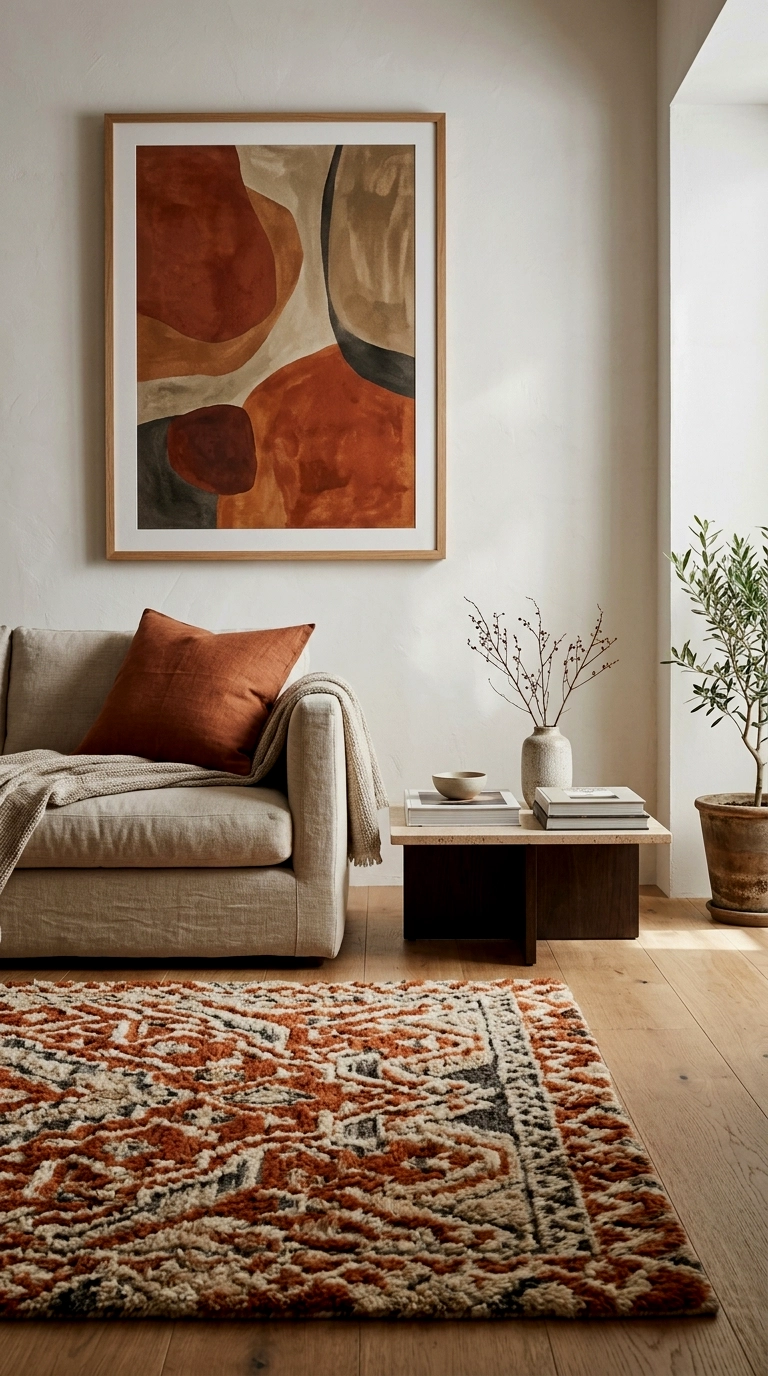
Before you buy a single cushion, stand in front of the things in this room you genuinely love. It might be the faded rug from the flea market, the print above the sofa, or the one cushion you always rescue from the wash first. Somewhere inside that favourite piece is a colour worth stealing, and that is your thread, because a colour that already lives in the room never arrives like a stranger. Trends come from shop windows, but threads come from your own shelves, and they settle in within a day instead of fighting the furniture for a month.
Start from an object you love, and the room will always end up looking like you.
2. Test the triangle before committing
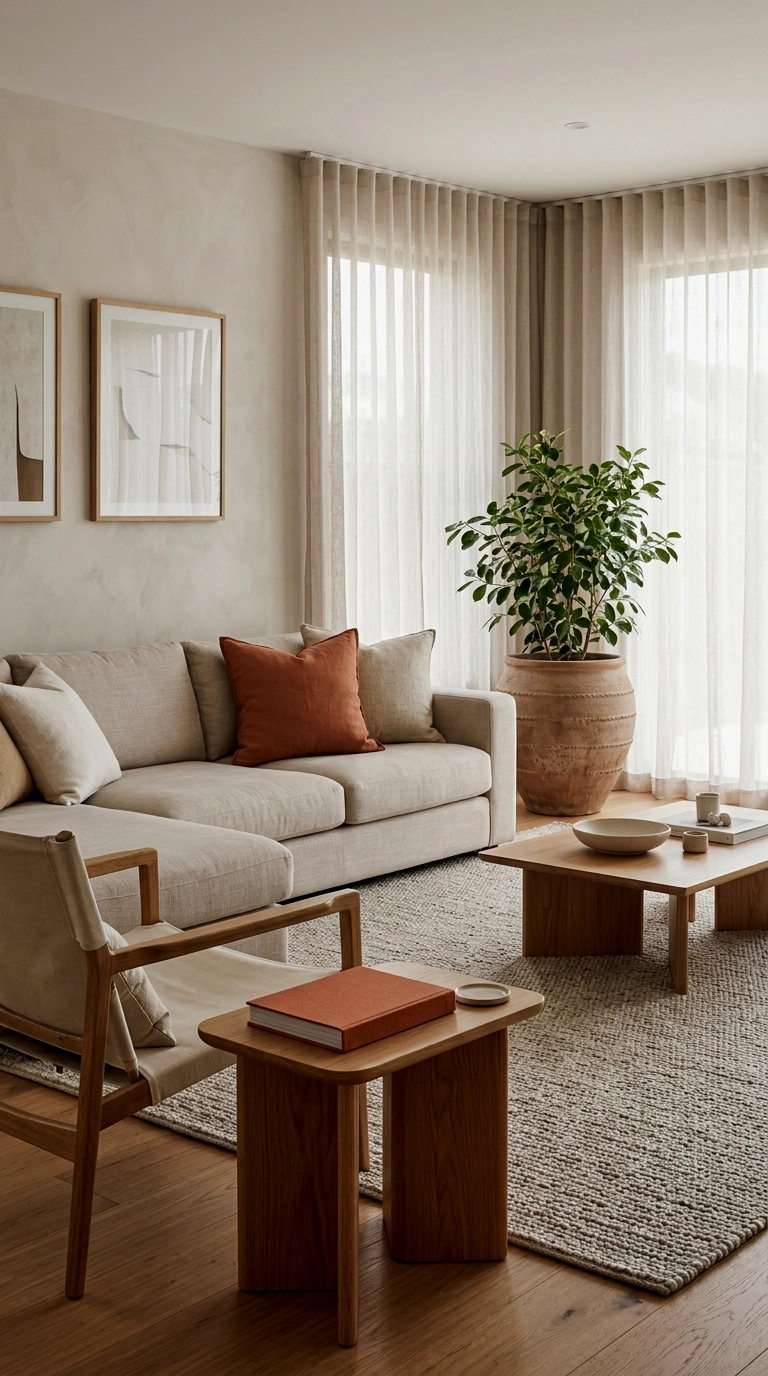
Commitment is the scary part, so test the colour at room scale first. Set three clay toned things at three points of the seating area, say a book on the coffee table, a pot beside the chair and a cushion on the sofa, then live with the arrangement through one whole evening of lamps and television. If your eye keeps travelling happily from point to point, the colour can carry the room.
The trick: photograph the triangle before and after, because the camera notices a working thread much faster than your eyes do.
The Floor Layer
3. Layer a clay toned rug over the existing one
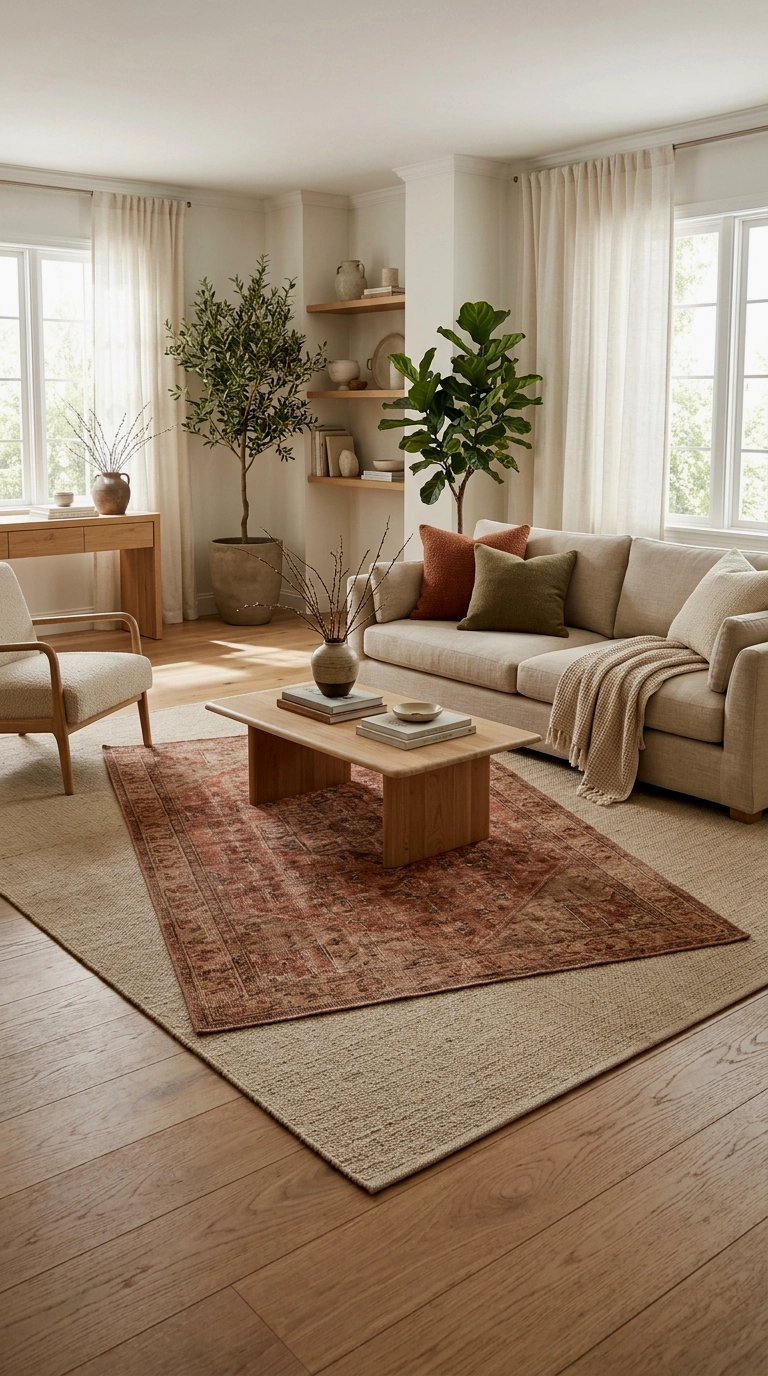
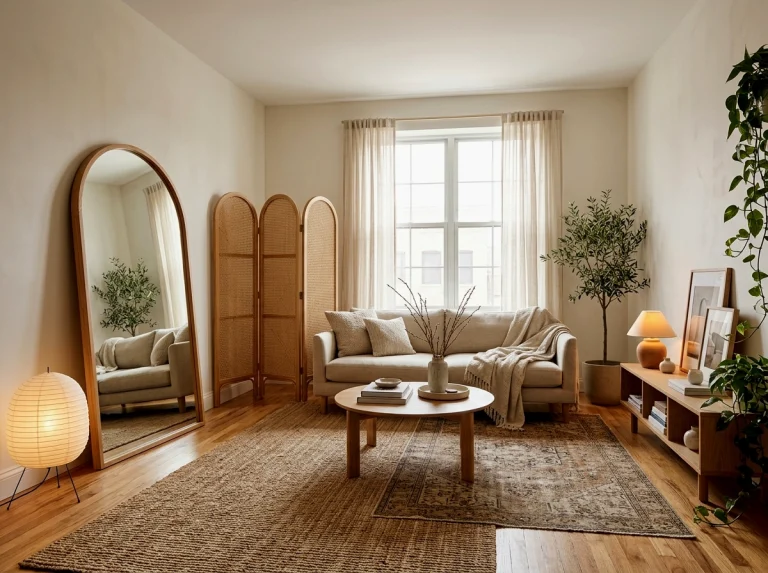
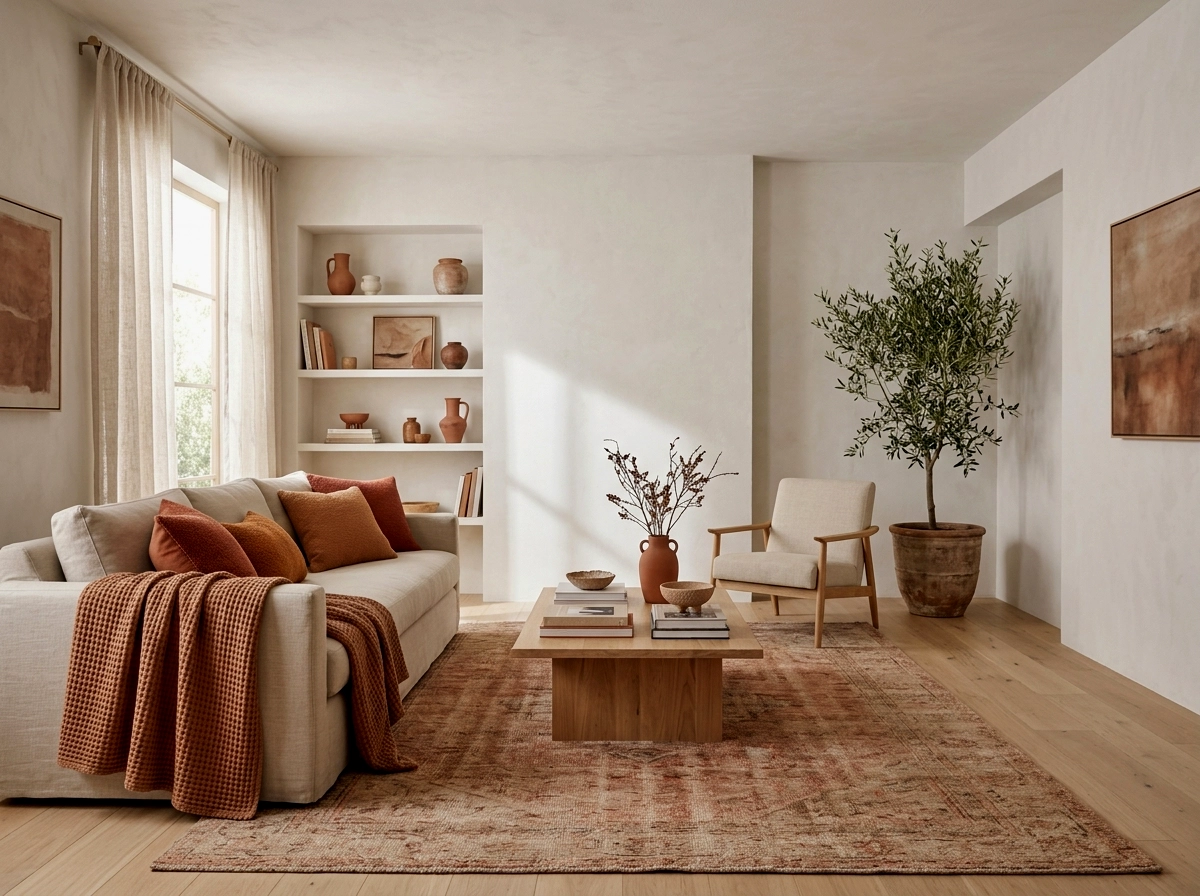
Floors set the temperature of a room before anything else gets a vote, and a full sized new rug is the expensive way to change them. Instead, lay a smaller clay toned rug over the plain one you already own, straight or at a slight angle, so the border of the old rug frames the new colour the way a mount frames a picture. The layering adds a depth one flat rug never has, it hides the worst of the worn patch, and on moving day both rugs roll up and leave with you.
Two rugs read as a decision, one rug just reads as flooring.
4. Add a floor cushion or pouf in the deepest shade
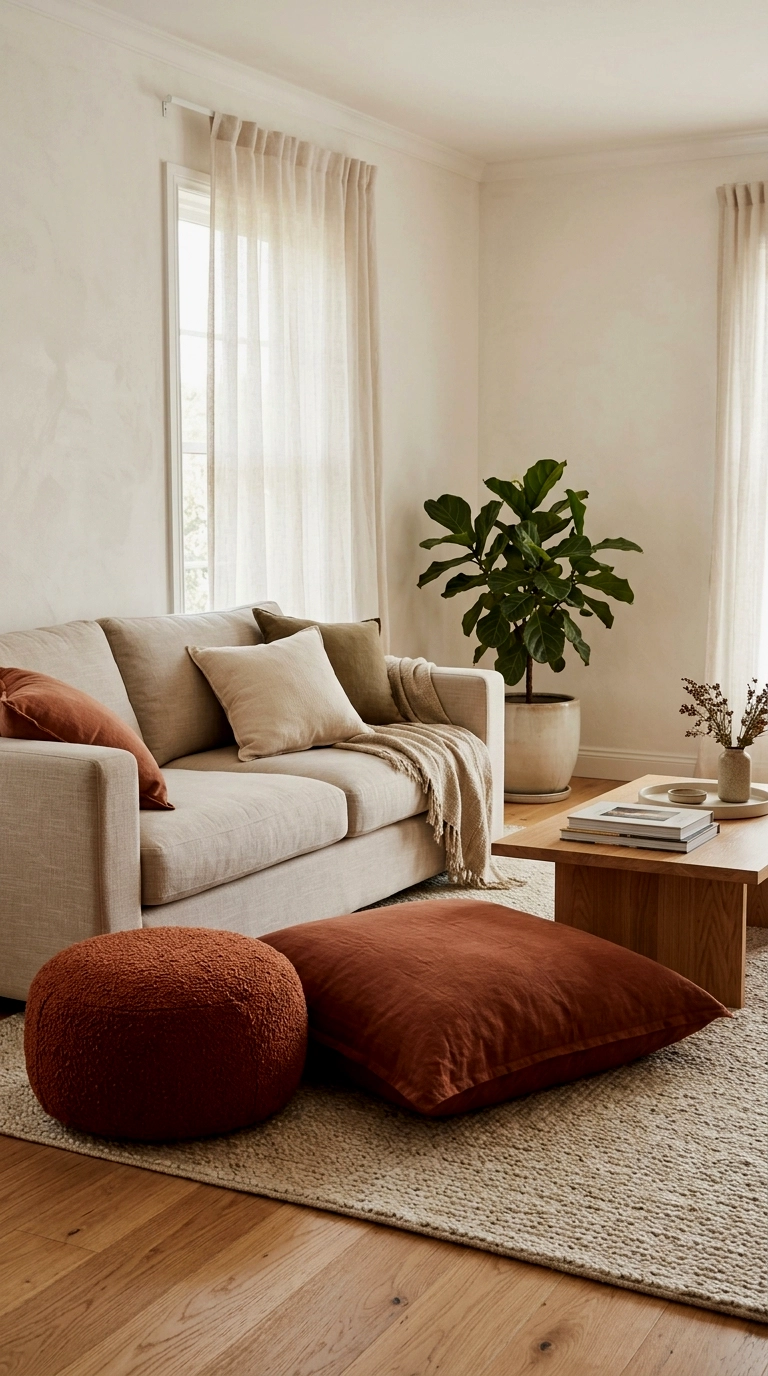
Every thread needs an anchor, and the deepest shade of clay should sit low, where it grounds everything floating above it. A floor cushion or a pouf in that rich, dark version of the colour, parked beside the sofa, gives the whole scheme its weight and quietly earns its keep as a footrest, a spare seat and the spot the cat will claim by Tuesday.
The trick: go one shade deeper than feels safe, because colours always read lighter once they are spread across a whole room.
The Colour Thread Formula
Pin this where you can see it while you work:
- One colour only, chosen from something you already own and love
- Three shades of it, light, middle and deep, so nothing looks bought as a matching set
- Five or more appearances around the room, because fewer reads as an accident
- At least one appearance at floor level and one at eye level
- One neutral resting place, a plain cushion or a clear surface, so the eye gets a break
The Soft Layer
5. Work a throw across the sofa arm
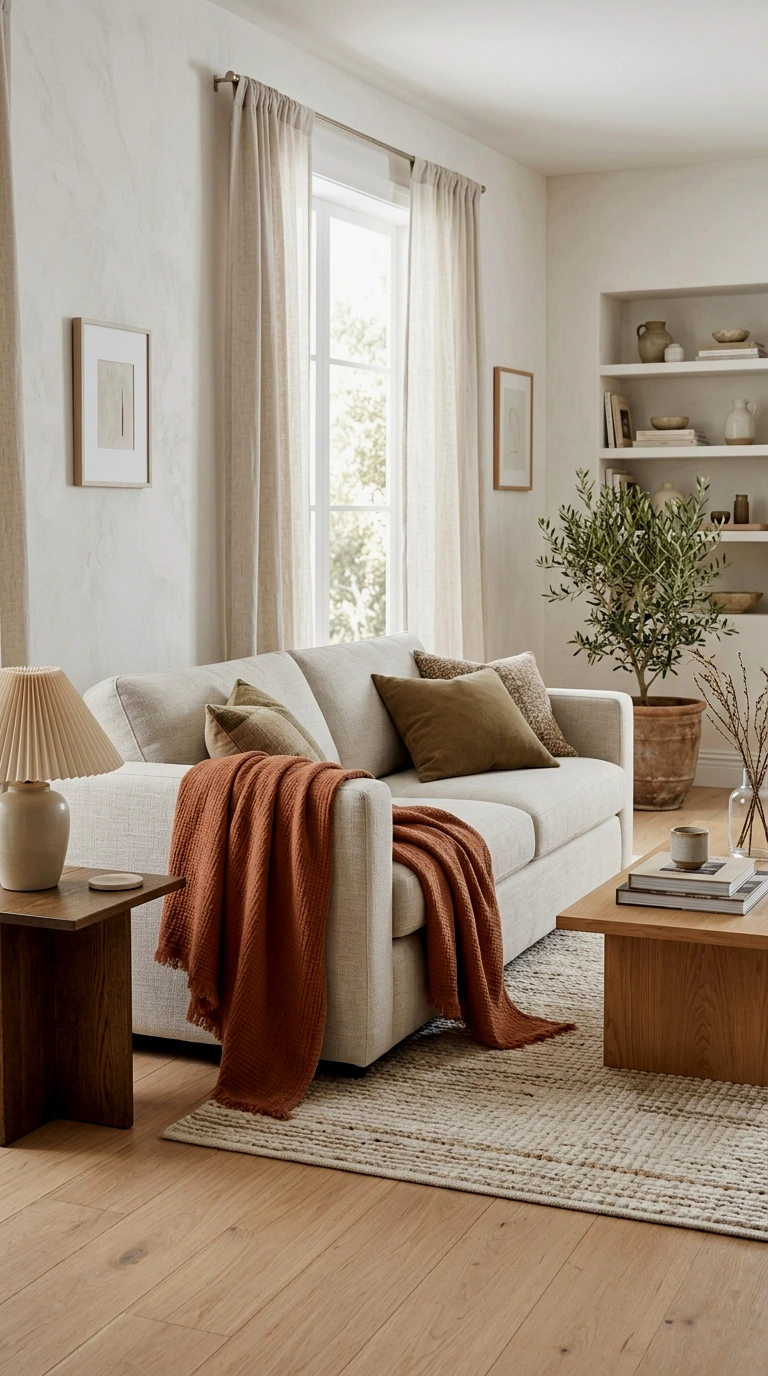
The sofa arm nearest the door is prime real estate, because the first soft thing a person sees sets the temperature for the whole room. Drape a clay throw over that arm and let it fall the way a blanket lands after a film night, not folded into a showroom rectangle. One well placed throw outperforms a matched pair every time, and it is the cheapest square metre of colour in this entire makeover. If this little thread leaves you hungry for the bigger job, the full weekend home refresh runs on the same edit first thinking, just scaled up.
Drape it like you live here, because that is the whole point.
6. Mix cushion covers in two shades of the thread
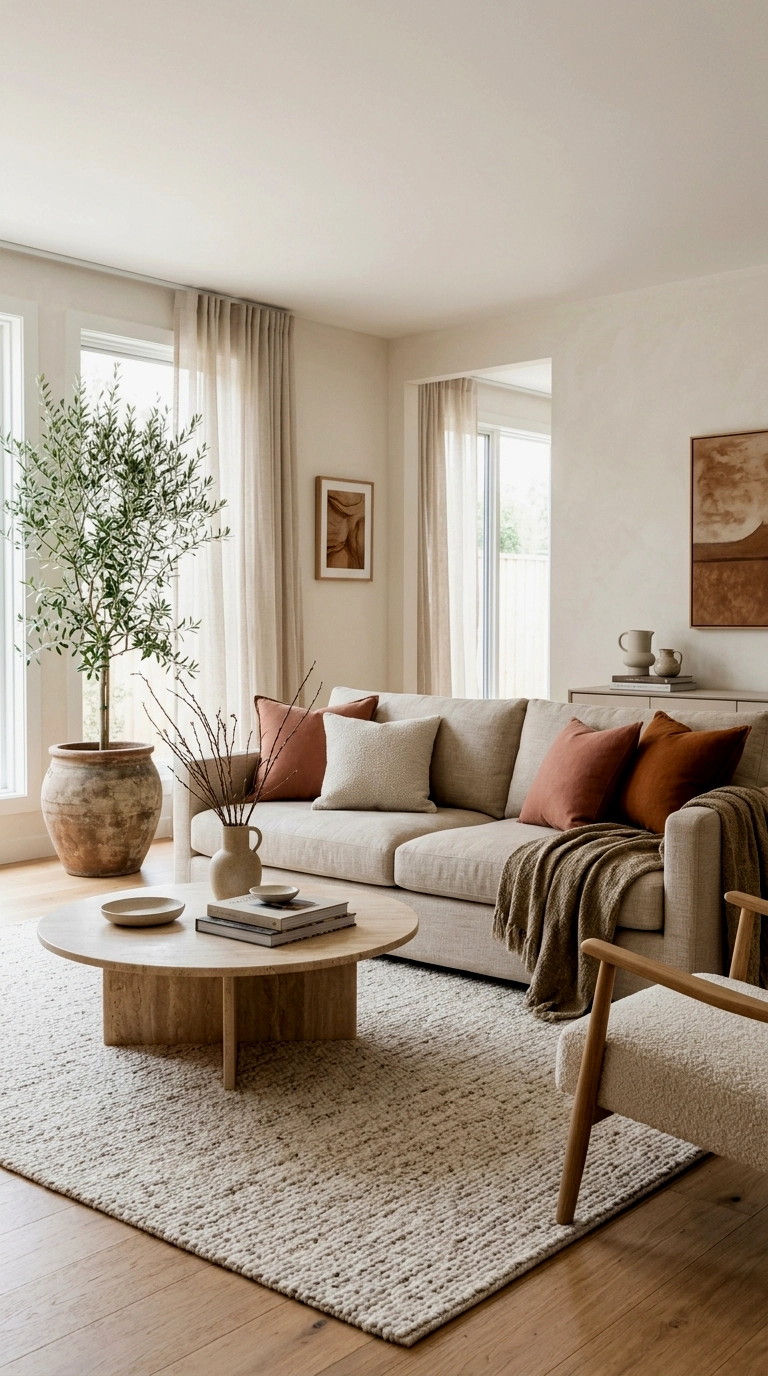
Cushions are where a thread either becomes a scheme or becomes a souvenir shop. Use two shades, pale clay and deeper rust, spread in odd numbers across the sofa, and keep one plain neutral cushion in the middle as a resting place for the eye. Odd numbers stop the arrangement looking bought as a kit.
The trick: buy covers, not cushions, and stuff them with the inserts already sitting on your sofa.
7. Swap or line the curtains with the pale shade
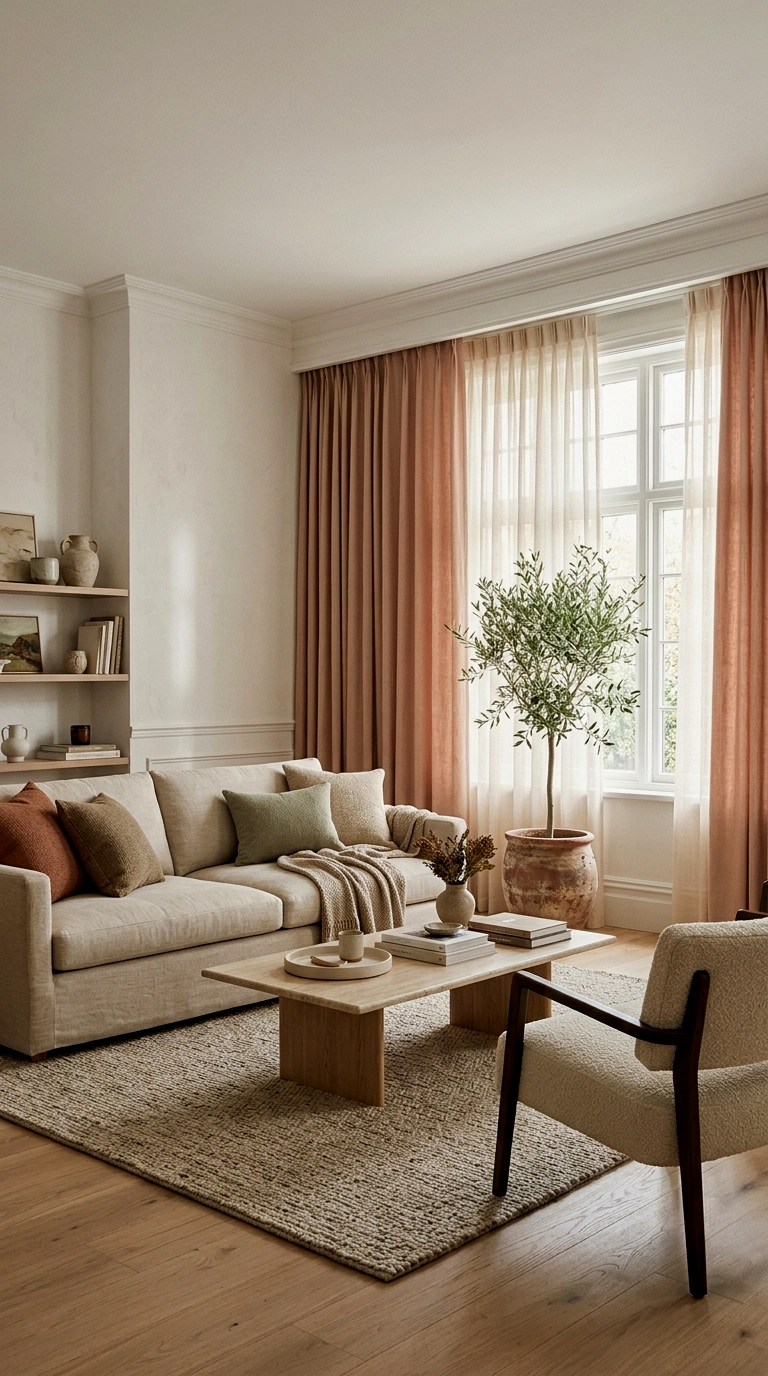
Windows are the largest soft surface in most living rooms, and they frame every glance outside. Hanging the palest shade of clay at the windows, even as a simple panel behind the sheers you already own, tints the daylight coming through it and quietly recolours the whole room for free, all day long. Full replacement curtains work too if the budget stretches, but the lining trick delivers most of the effect for the price of a flat sheet.
Coloured daylight is a wall colour you can hang on hooks.
The Object Layer
8. Group books and boxes in the thread colour
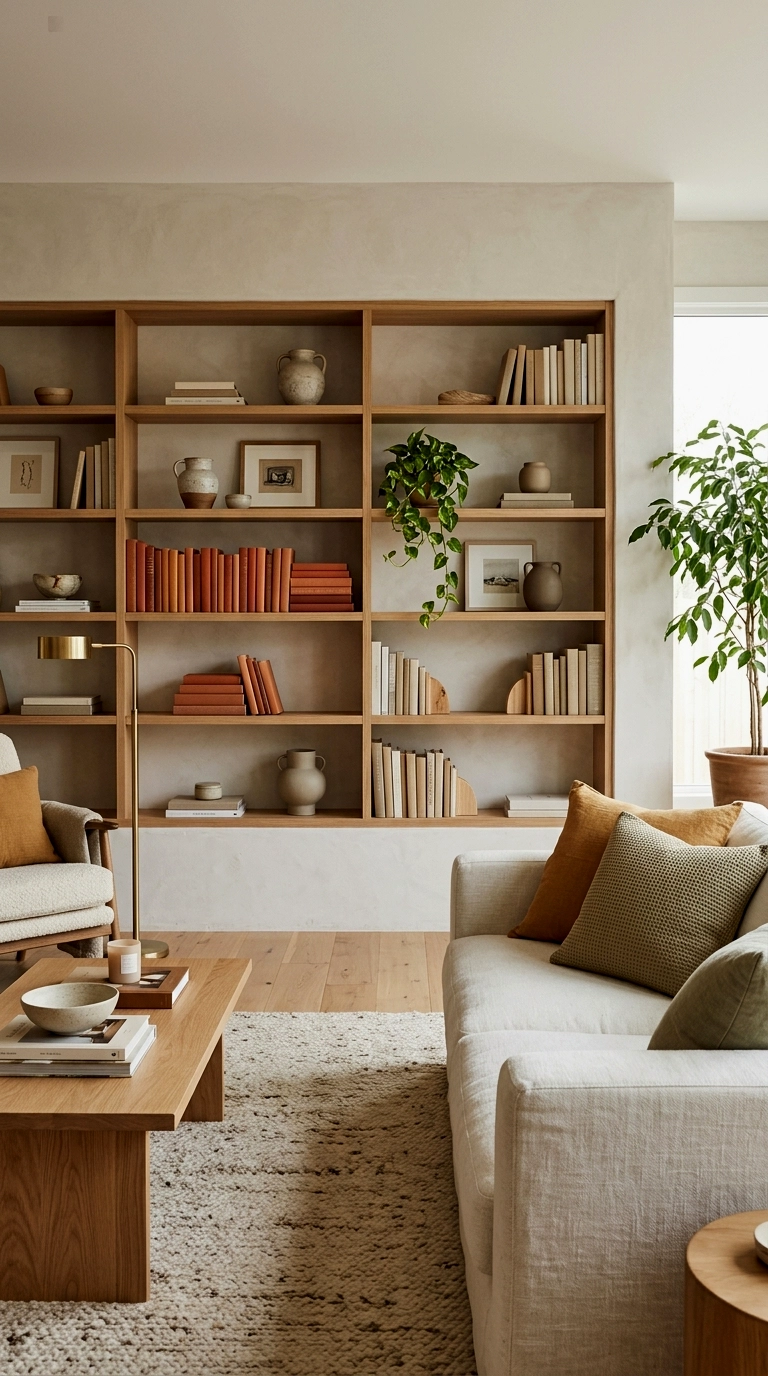
Shelves are where a colour thread proves it is deliberate, because shelves get read at arm’s length and slowly. Go through your books and pull every clay, rust and terracotta spine into one run instead of scattering them, then stack two lidded boxes in the middle shade on the coffee table to swallow the remote and the coasters. None of this costs anything and it takes twenty minutes, but it is the moment visitors start saying the room looks designed.
Small colour, repeated at reading distance, is what designed actually means.
9. Set one ceramic piece where hands land
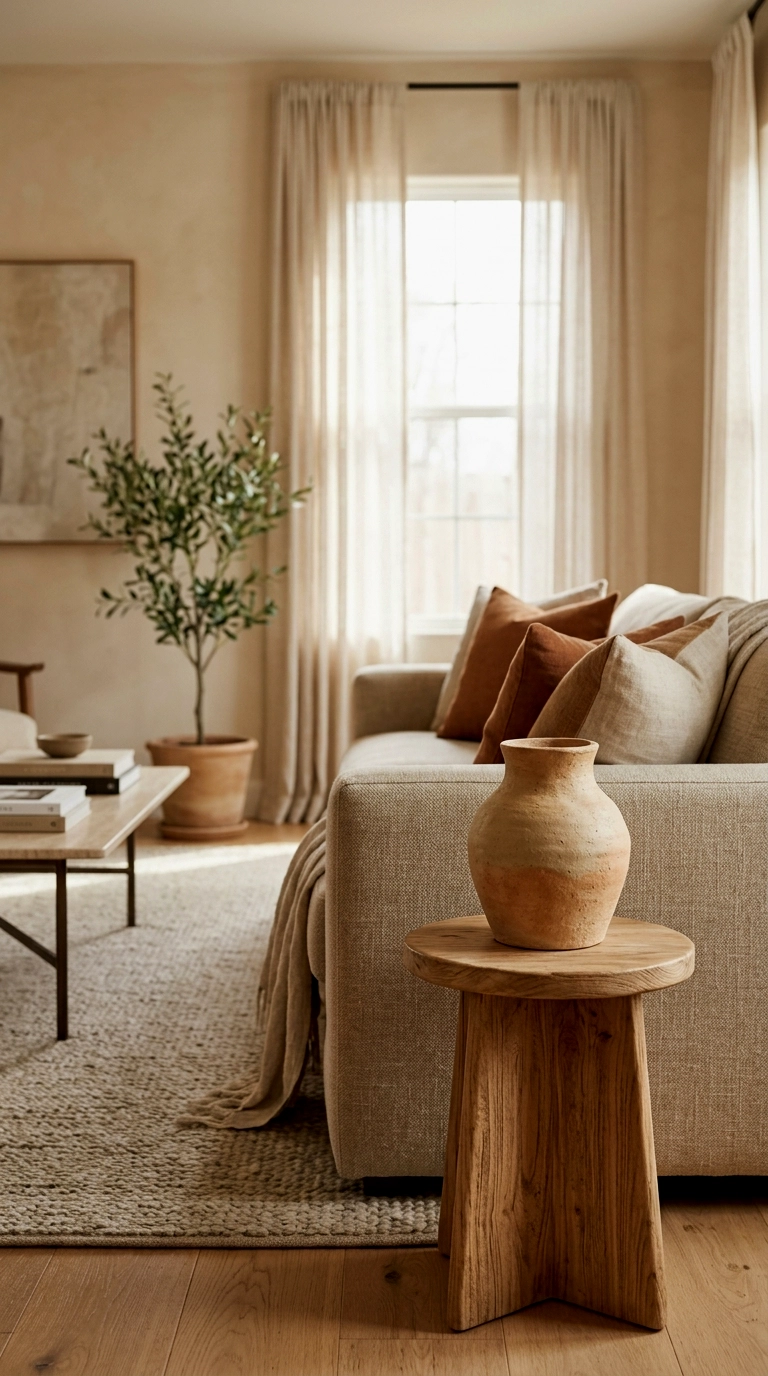
There is one surface in every living room that every hand finds: the side table beside the best chair. Put your single finest clay ceramic there, a vase, a bowl for keys, a heavy little dish, and the colour stops being decoration and becomes part of daily life. One real, weighty piece in the right spot beats five small accessories scattered thinly across every shelf in the room.
Choose the object for the surface people actually touch.
10. Swap one print for art that holds the colour
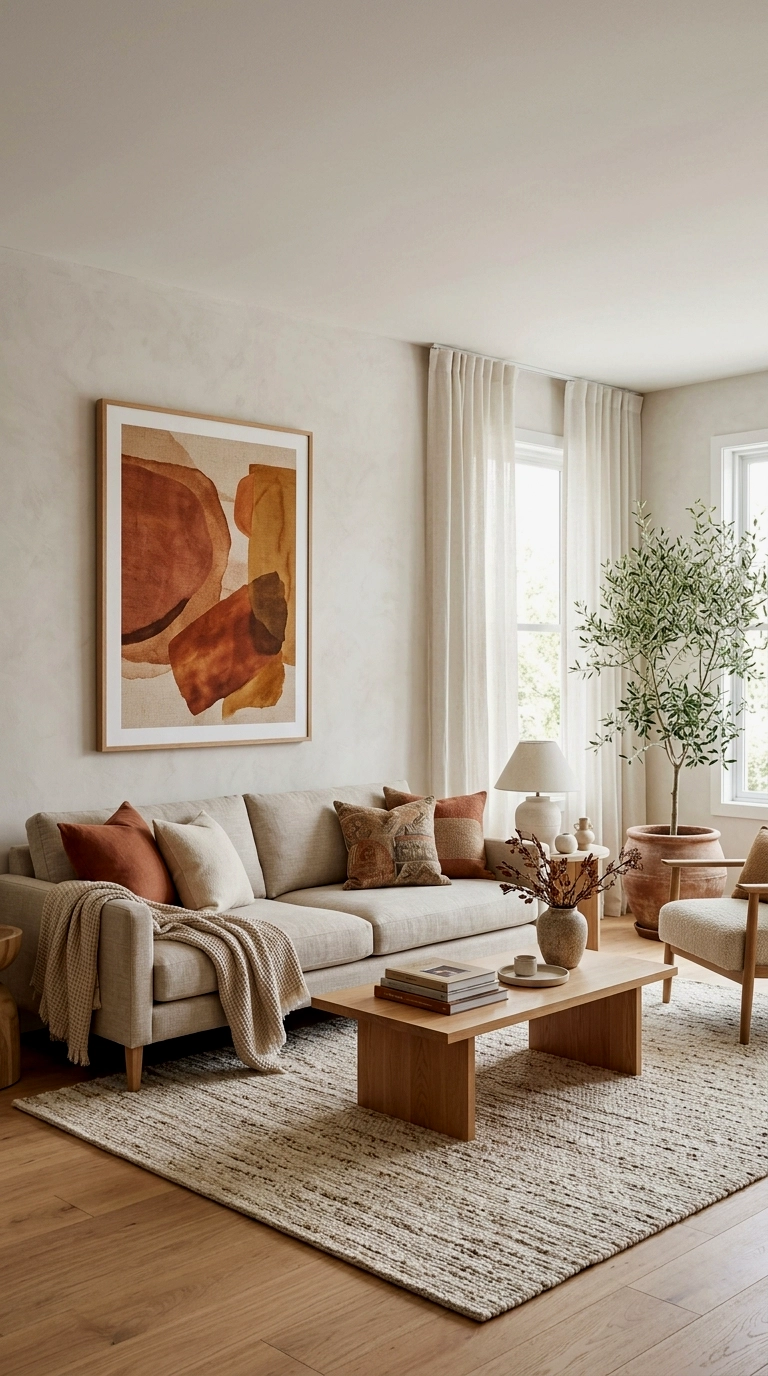
The print above the sofa has been ignoring the room for years, so trade it for any piece elsewhere in the house where clay or rust shows up even once. The art does not need to be about the colour, it just needs to contain it, the same way the rooms in these blue couch living rooms always let their anchor colour turn up inside the artwork too. Swapping costs nothing, and the wall suddenly belongs to the room again instead of floating above it.
Art that nods to the thread ties the wall back into the room.
The Light Layer
11. Warm the bulbs so the colour glows
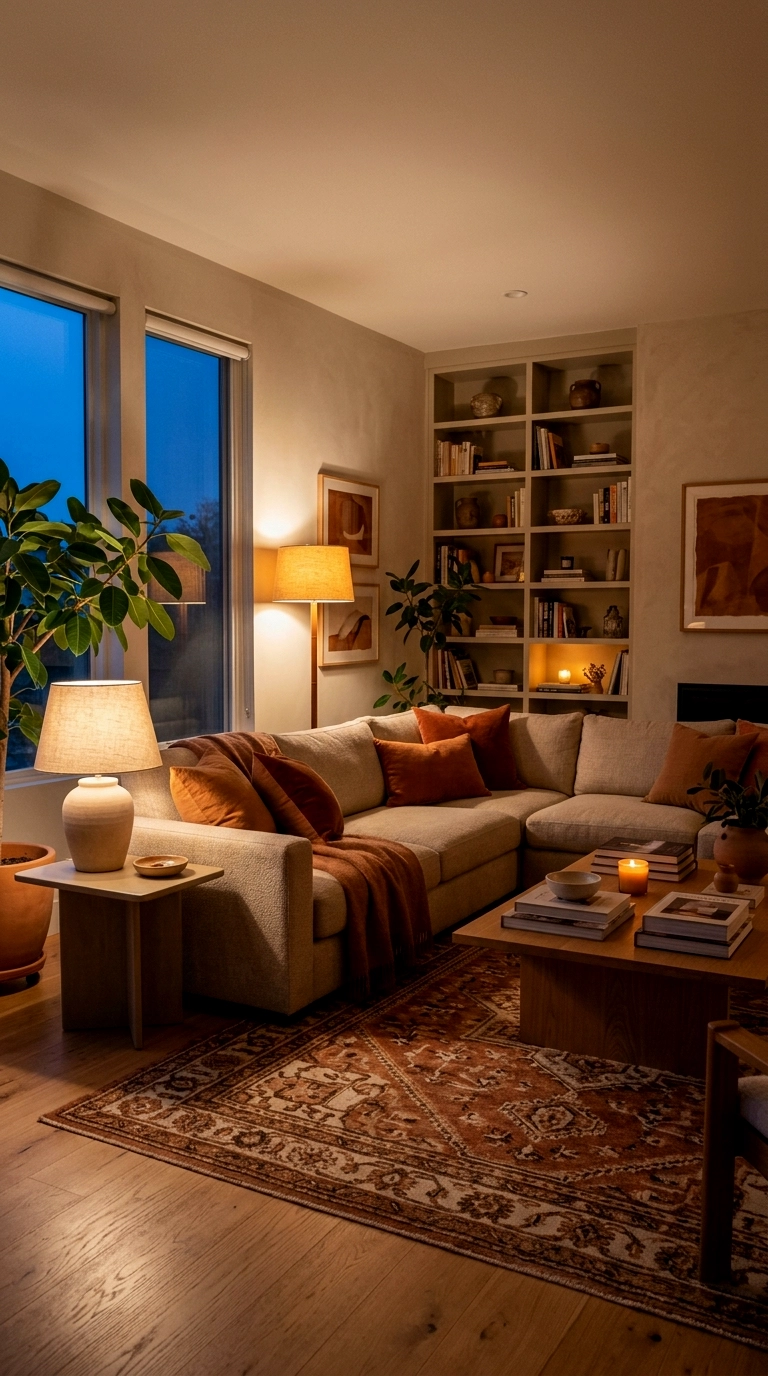
Clay is a colour that lives or dies by light. Under cold, blueish bulbs it turns muddy and grey, but under warm 2700K light it glows the way it does in late afternoon sun. Swap the bulbs in the two lamps you use most, then live with the room through one full evening before you judge anything, because evening is when this room actually earns its living.
Never judge a colour story at noon, nobody lives in a living room at noon.
12. Finish with one plant in a clay pot
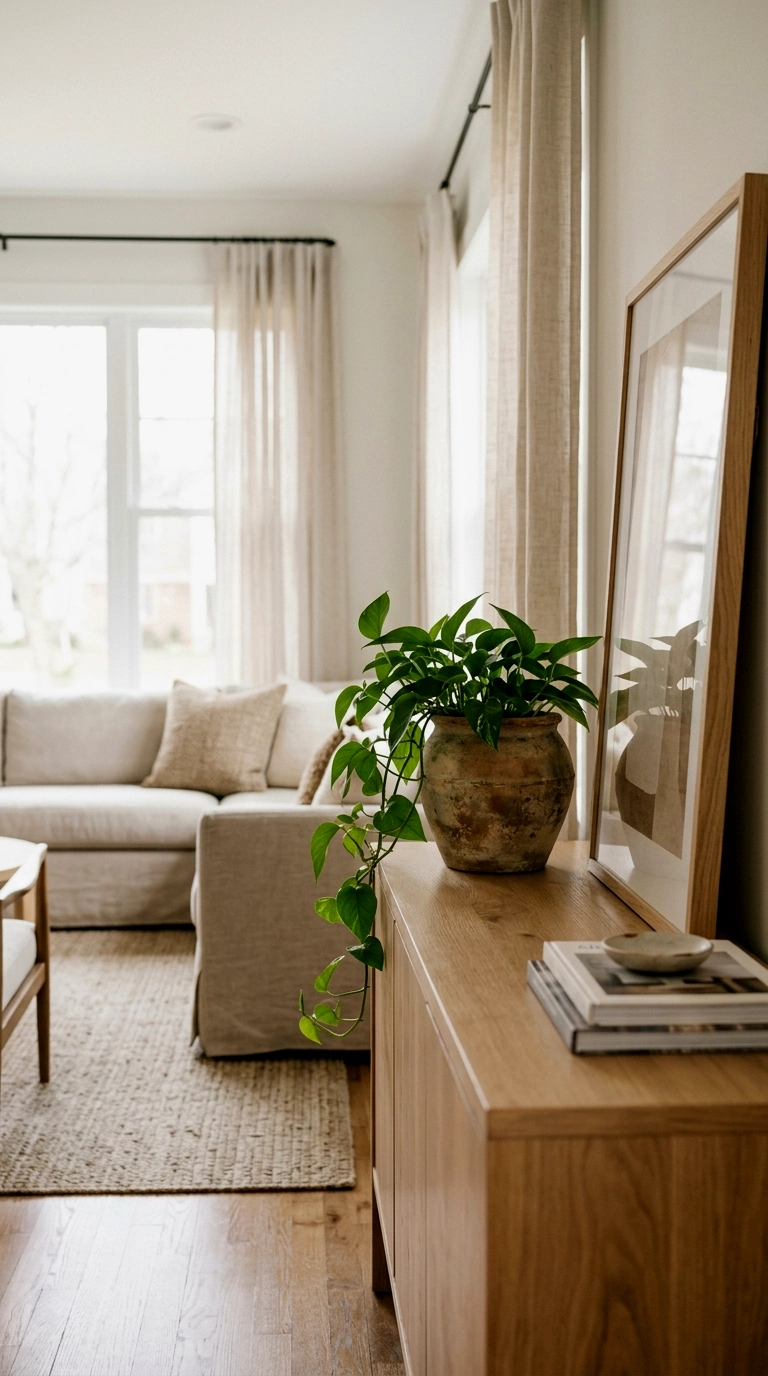
The last appearance of the thread should land where the eye lands first, and it should bring the colour’s oldest partner along with it. A green plant in a weathered clay pot, set at eye level near the art, stacks colour, living green and picture into a single glance and softens every hard edge around it.
The trick: a plain terracotta pot from the garden centre weathers beautifully indoors and costs less than any glazed imitation of itself.
Renter Rules
Renters, nothing in this makeover can cost you a penny of deposit. Every layer sits, leans, drapes or hangs from hooks that were already there. Both rugs roll up, every textile packs into one box, and the walls come out of it completely untouched. Photograph the room before you start and again on moving day, and the deposit conversation becomes very short indeed.
Come back at seven in the evening and stand in the doorway again. The lamps are on, the clay is glowing in five places at once, the throw is over the arm where it fell, and those beige walls have quietly stopped being the story. They are just the calm behind the colour now, which is all they ever needed to be.