How to Fit a TV in a Small Living Room: 12 Steps in the Right Order
Fitting a TV into a small living room is a sequencing problem, not a shopping problem. Buy the TV first and you will spend the next year working around it. Work through the decisions in the right order, wall, size, mount, height, cables, and the TV slots into the room instead of taking it over.
The twelve steps below run in project order, each one decided before the next begins. Answer them in sequence and you will end up with a TV that fits the room you have, not the room you wish you had. Skip ahead and you will be moving a wall-mounted TV, which is nobody’s idea of a good weekend.
Step 1: Pick the wall before you pick the TV
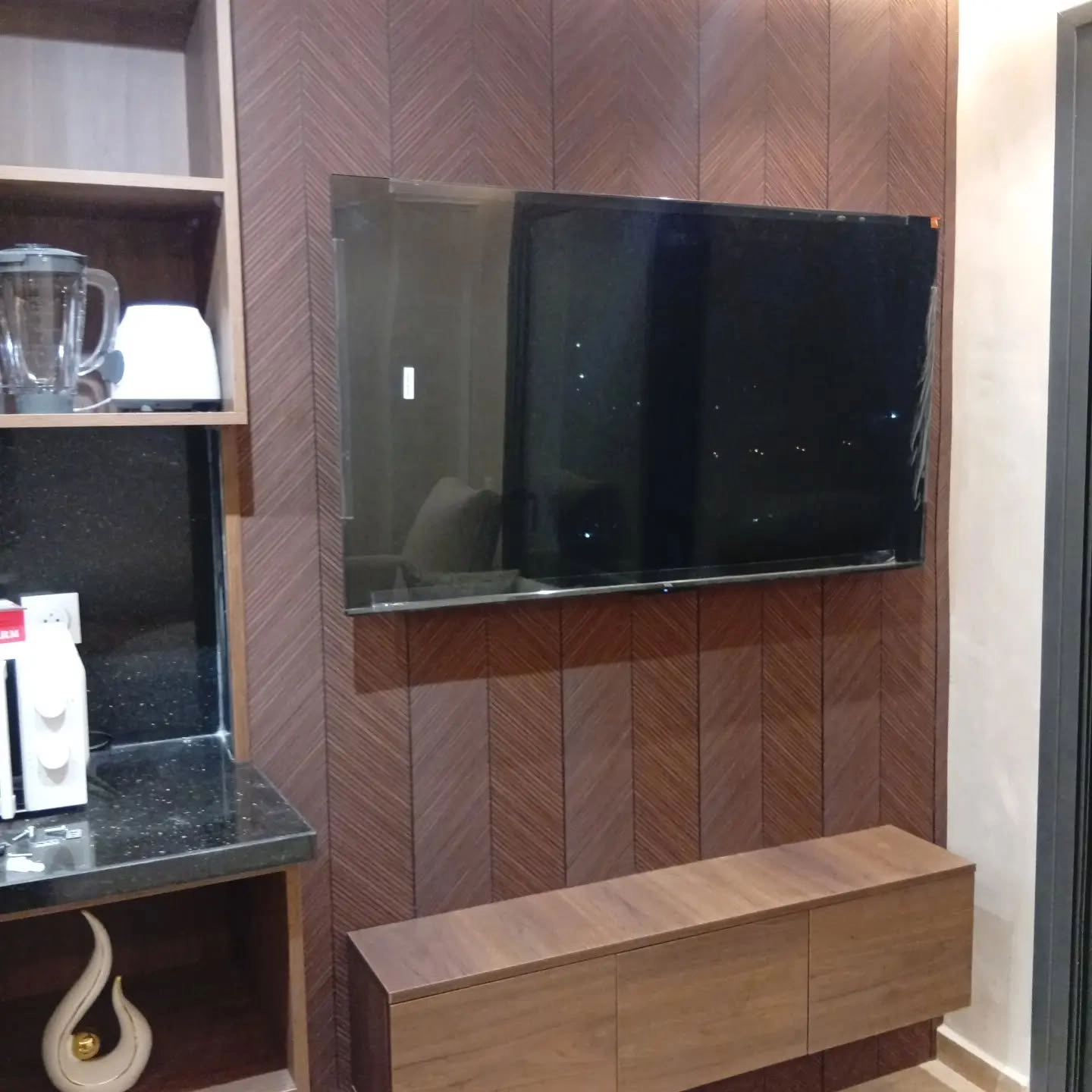
Photo: @chakafm on Instagram
One wall in every small living room can take a TV gracefully, and it is rarely the biggest wall. Look for the wall the sofa already faces, the one with no windows and no doors, and check it can hold a mount: studs, brick, or solid block. This herringbone panel wall was built for the job, with the TV centred and a floating console beneath it.
Decide the wall first because every other decision hangs off it: the size comes from the viewing distance to the sofa, the mount comes from the wall material, and the cables come from what sits below. A TV bought before the wall is picked is a TV that ends up too big, too high, or on a stand that eats the floor.
Step 2: Size the TV to the sofa, not the wall
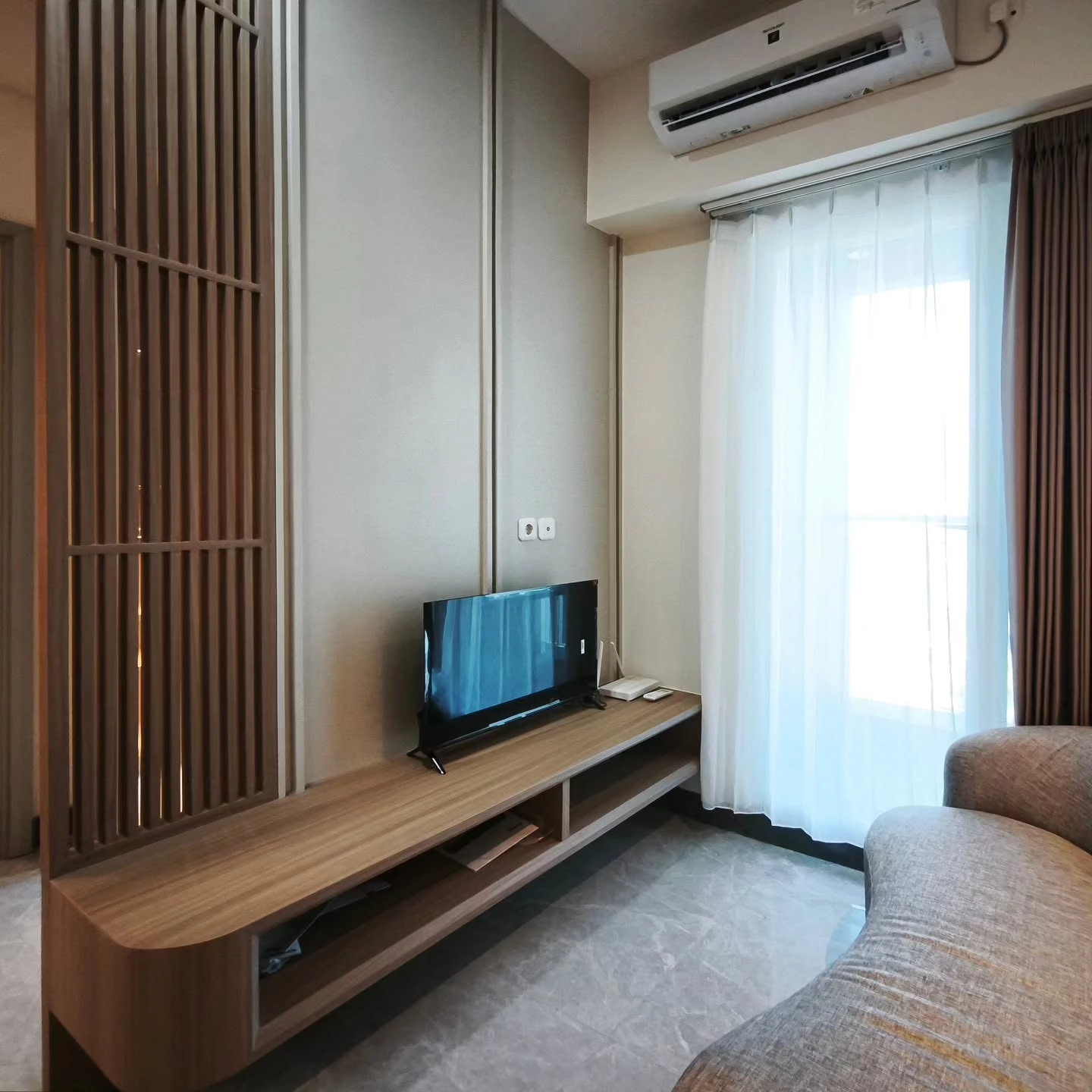
Photo: @mgm_interior_design on Instagram
The right TV size comes from how far you sit, not how much wall you have. In a small living room the sofa is usually six to eight feet from the screen, which lands most rooms on a 43 to 55 inch TV. This modest set on a console is the right call for its room: big enough to enjoy, small enough not to dominate.
We worked out the full TV size and viewing distance pairing in our TV placement guide, with the table that matches screen size to sofa distance. Measure the distance, read the table, and buy the size it gives you, even if the next size up is on sale.
Step 3: Mount it, don’t stand it
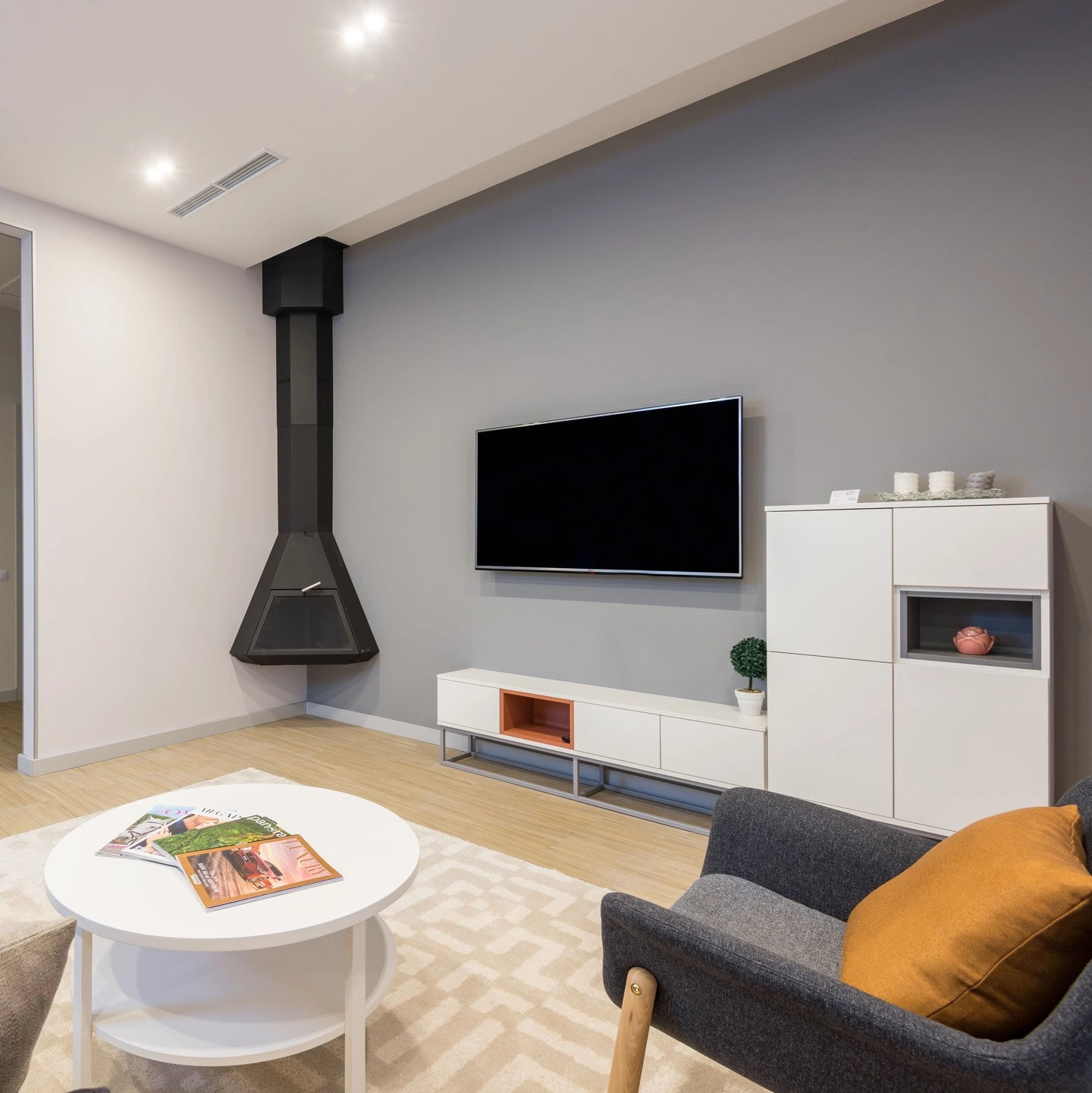
Photo: @lenoreinar on Instagram
Wall-mounting is the single best move in a small living room, because it takes the TV off the floor and off the furniture. This set floats above a low white console, and the floor beneath it stays clear and cleanable. A TV on a stand needs a stand; a TV on the wall needs four bolts.
Mounting also fixes the viewing angle permanently, which a stand never does. Once the mount is level and tight, the TV never drifts, never gets knocked, and never collects the clutter that gathers on top of a TV stand. The console below holds the boxes, and nothing else is required.
Step 4: Hang it at eye level from the sofa
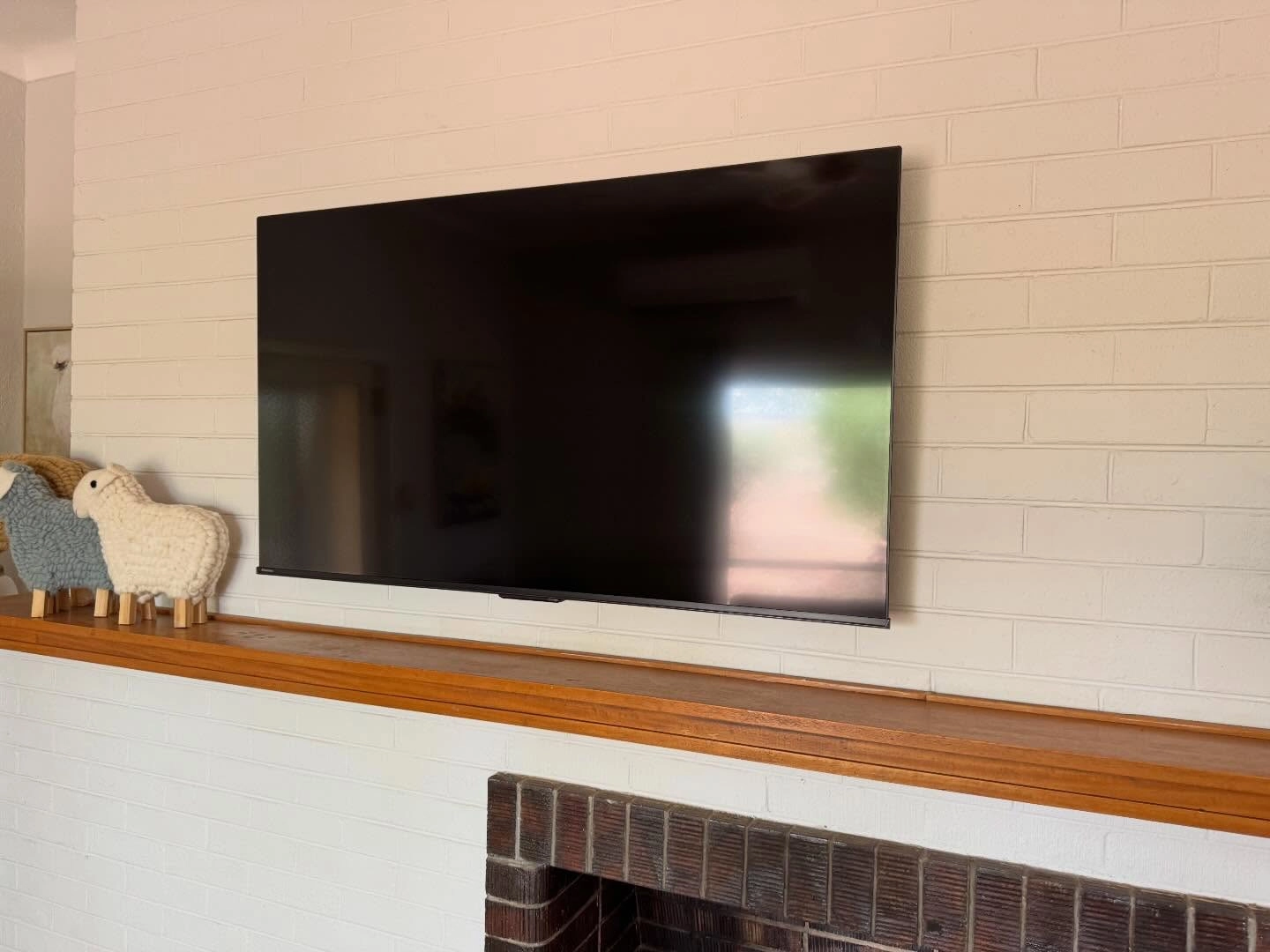
Photo: @winproelectrical on Instagram
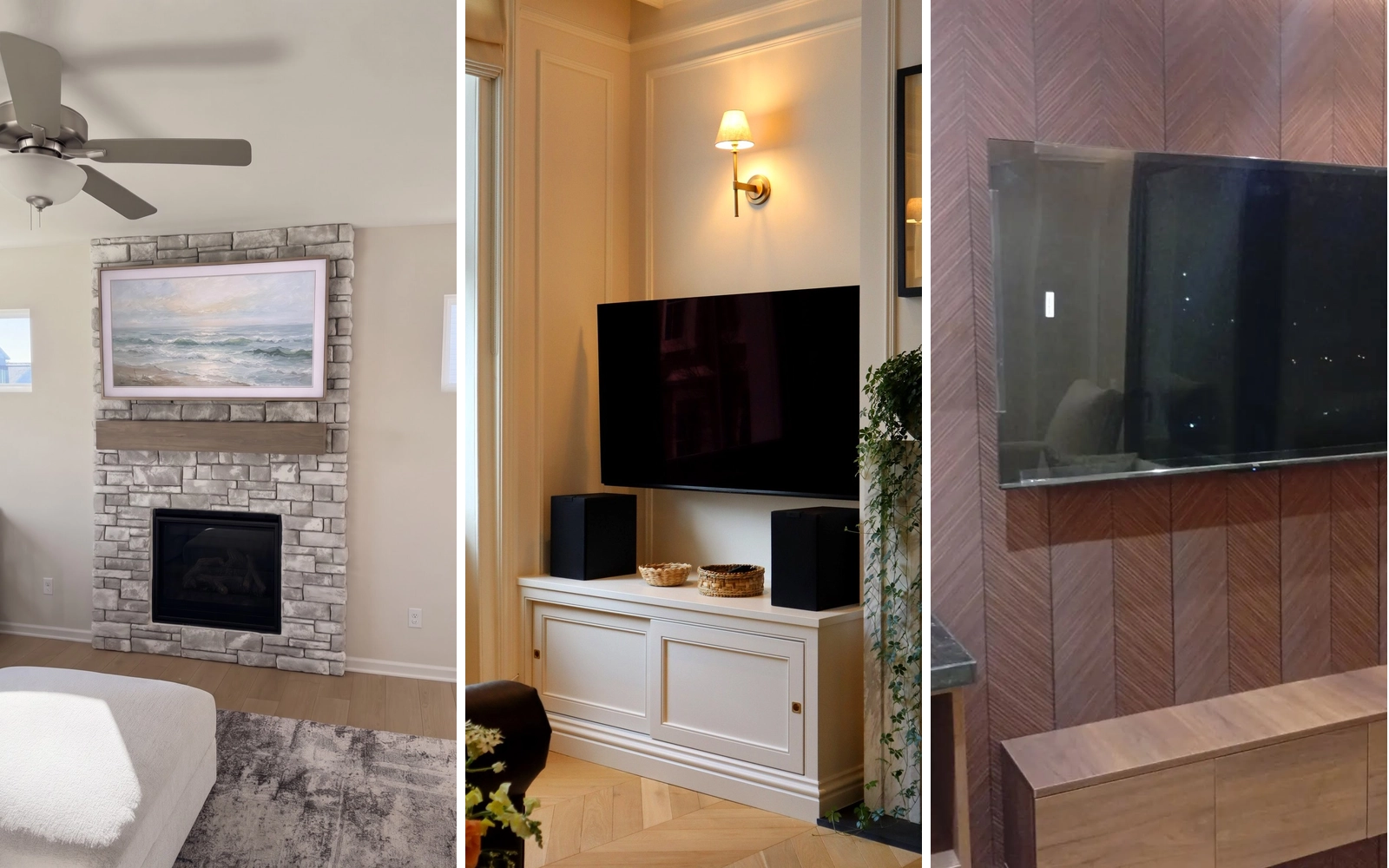
The centre of the screen should sit at the eye level of a seated viewer, which is lower than most people mount their first TV. Sit on the sofa, look straight ahead, and that is the height. This set above a white brick fireplace sits right in the zone: comfortable for a film, no neck craning.
Too high is the classic small-room mistake, because it usually means the TV went above the fireplace without checking. If the mantel puts the screen above eye level, either lower the mount with a pull-down bracket or pick a different wall. Your neck will thank you every evening.
Measure twice, drill once. Sofa-to-wall distance, seated eye height, stud positions, and mantel height are the four numbers that decide everything. Write them on one piece of paper before you buy anything, and the twelve steps take care of themselves.
Step 5: Choose the mount for the room you have
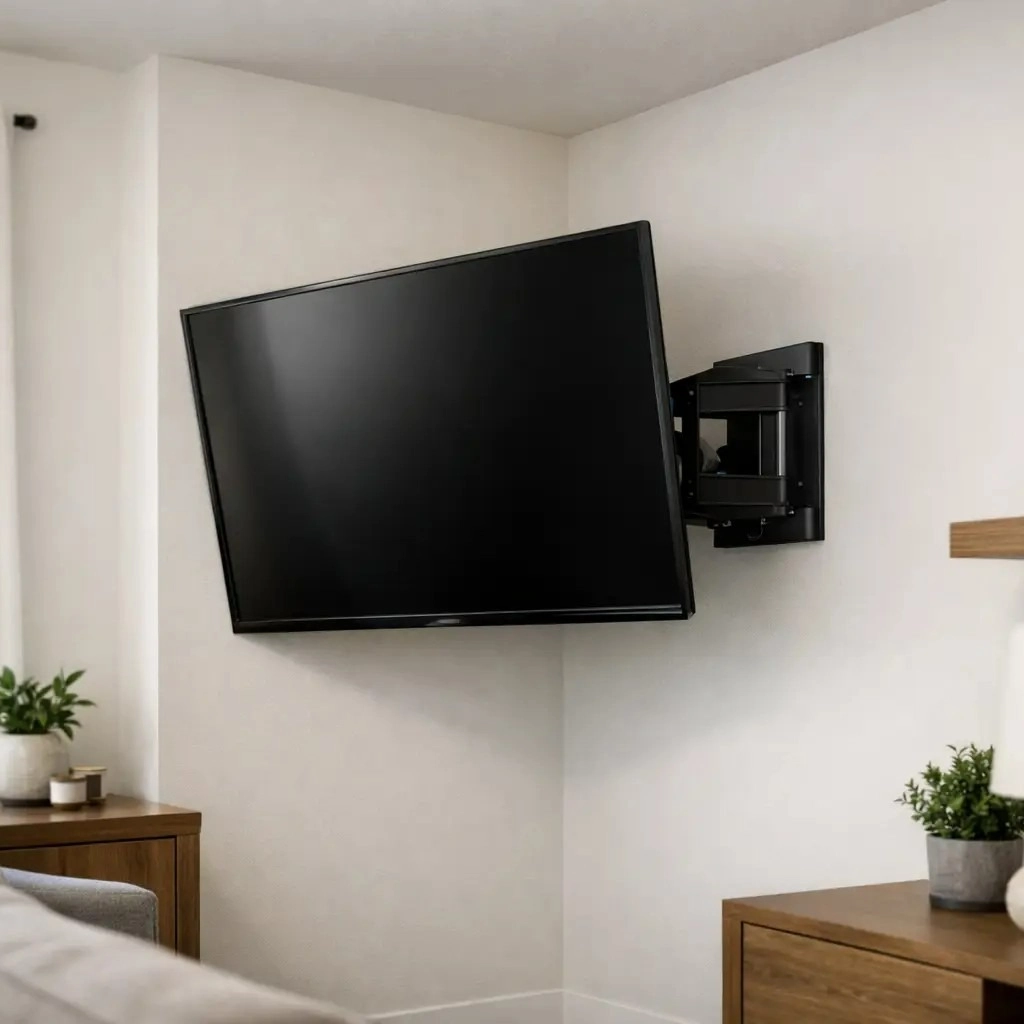
Photo: @tvmountingdallastx on Instagram
A fixed mount is cheapest and slimmest, a tilting mount angles the screen down from a high position, and a full-motion mount pulls out and swivels, like this one angled into a corner. In a small living room the full-motion mount earns its money: it lets one TV serve a sofa and an armchair that do not share a wall.
Buy the mount for the wall material as well as the movement. Brick and block take almost anything; stud walls need the bolts in the studs, not the plasterboard between them. A full-motion mount puts leverage on the wall, so this is the one step where a cheap bracket is a false economy.
Step 6: Settle the fireplace question honestly
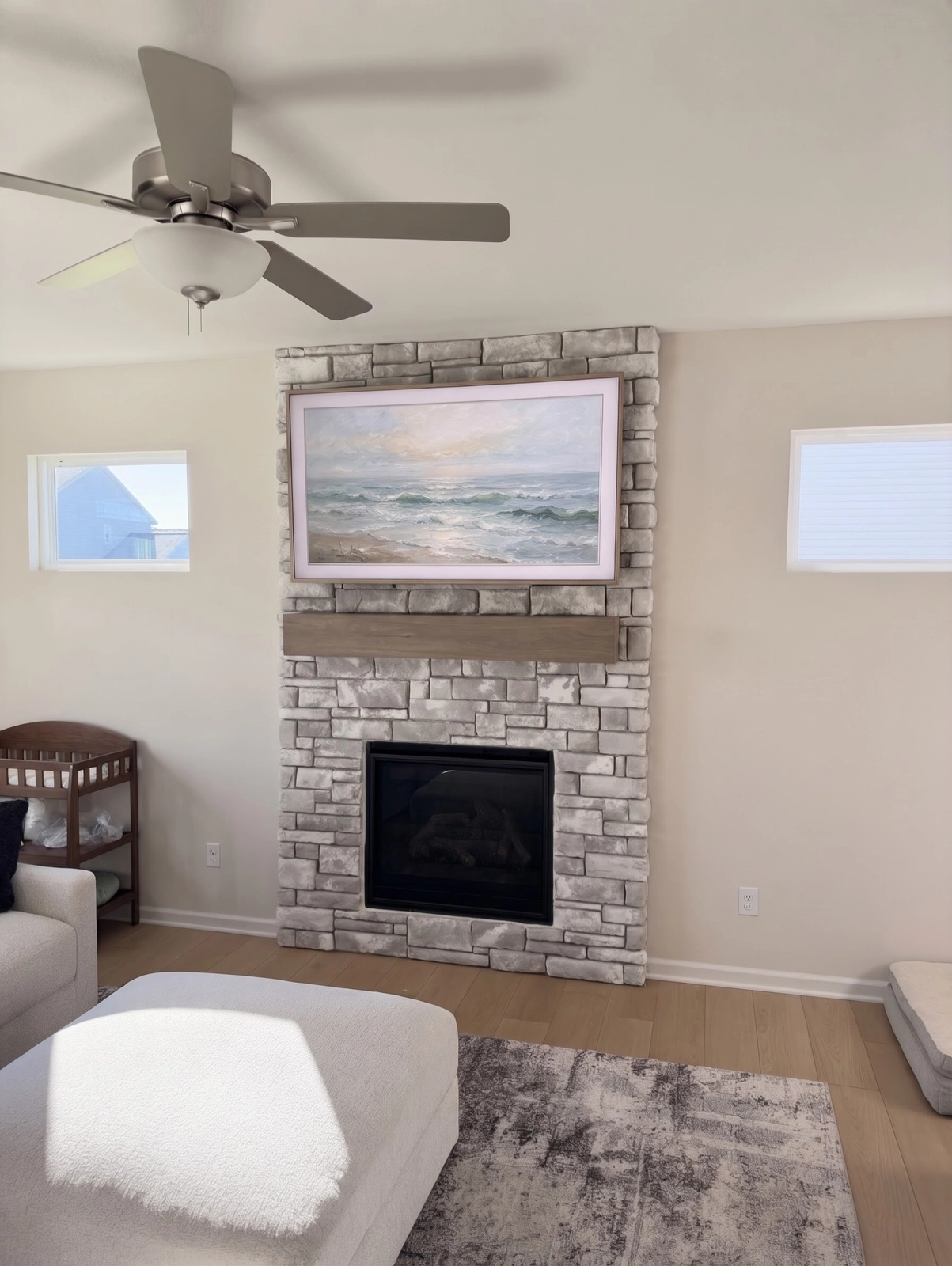
Photo: @royaltytvmounting on Instagram
Above the fireplace is the most popular TV spot in a small living room and the most argued about. It works when the mantel keeps the screen near eye level and the fireplace is gas or electric, not roaring wood. This Frame TV above a stone fireplace shows the best case: the screen sits low, the mantel is deep, and the art mode makes it look intentional.
It fails when the fireplace is tall, the mantel is high, or the fire is real wood throwing heat at electronics. Be honest about your fireplace: measure the mantel height against your seated eye level, and if the numbers do not work, the fireplace is a no and the corner is your friend.
Step 7: Steal the corner when no wall works
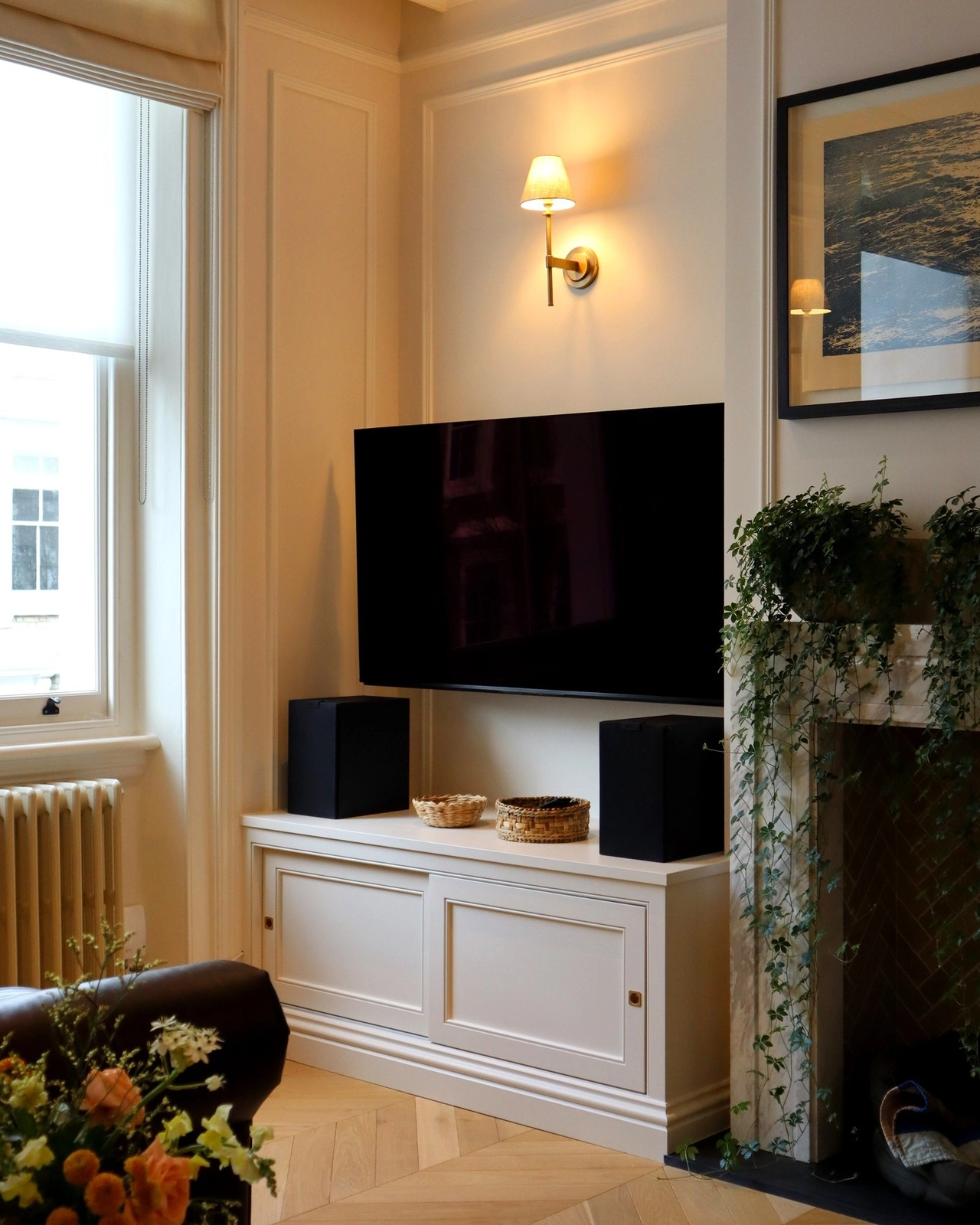
Photo: @h.m.joinery on Instagram
When every wall has a window, a door, or a radiator, the corner is the answer. A corner-mounted TV above a cabinet uses the deadest space in the room and angles the screen at the seating. This one sits in a panelled corner beside the fireplace, with the cabinet below grounding it.
Corners need a full-motion or corner-specific mount, because a flat fixed mount cannot sit across an angle. The payoff is a TV that faces the room instead of fighting it, and a corner that finally has a job.
Step 8: Hide the cables and go flush
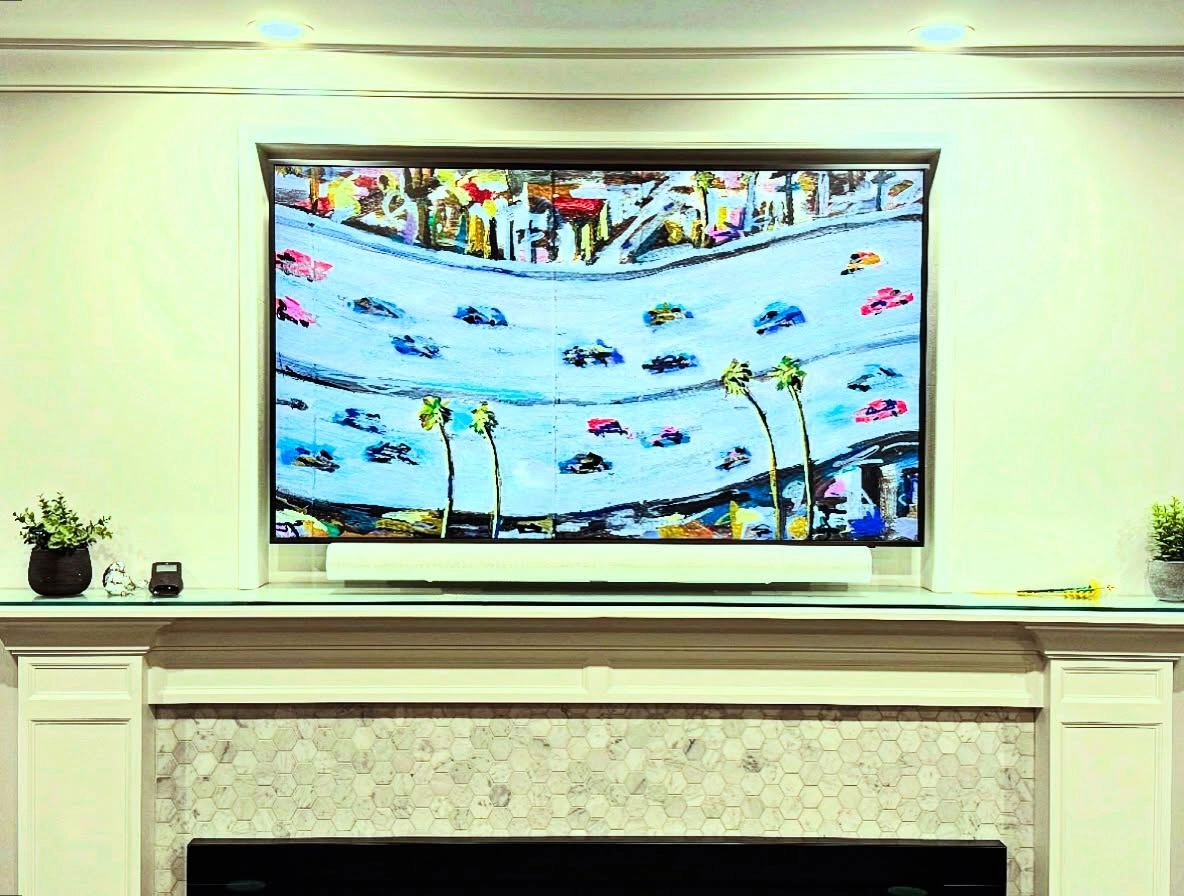
Photo: @tv_mounters_ on Instagram
Visible cables undo every other step, because the eye goes straight to the mess. Run the cables inside the wall to a socket behind the TV, or trunk them in a paintable channel if the wall cannot be chased. This set recessed in a wall niche sits perfectly flush, with not a cable in sight.
Plan the cables before the mount goes up, not after, because retrofitting means taking the TV back down. Count the boxes that need power and signal, the console, the soundbar, the streaming stick, and make sure the hidden route fits them all. One visible cable is a project unfinished.
Step 9: Ground it with something underneath
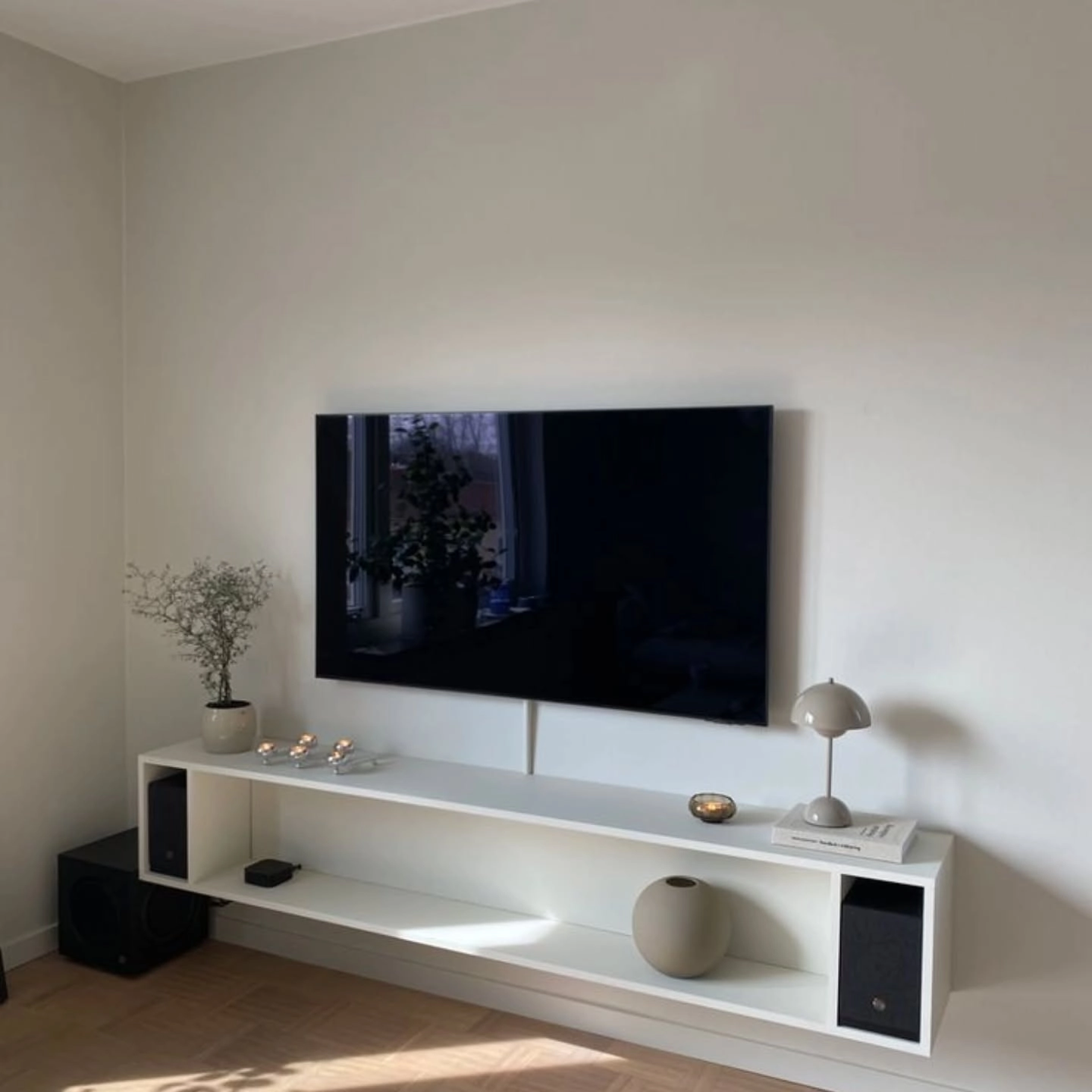
Photo: @elitehome_and_officefurniture on Instagram
A floating TV with nothing beneath it looks lost, even at the right height. A console, a fireplace, or a low unit under the screen gives the eye a base and hides the boxes. This media console under the TV does both jobs: the screen is anchored, and the gear is out of sight.
The unit underneath should be wider than the TV, or at least as wide, or the proportions look top-heavy. In a small room a low, wide console is the best choice: it holds everything, it doubles as a shelf, and it keeps the wall composition calm.
Step 10: Make it disappear when it’s off
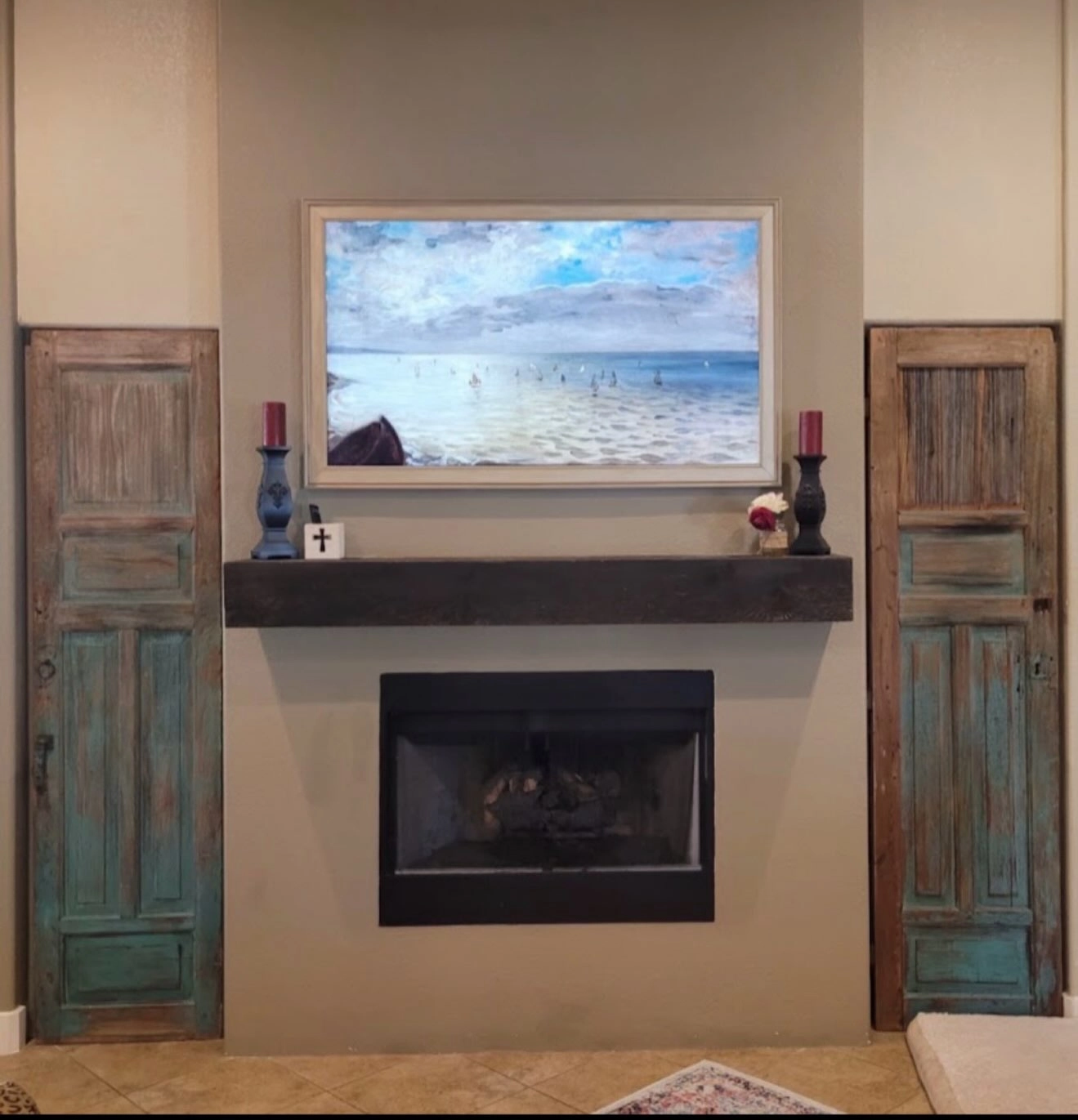
Photo: @zilkerav on Instagram
A big black rectangle dominates a small room even when it is off, which is most of the day. A Frame-style TV showing art, like this seascape above a dark wood mantel, turns the screen into a picture when nobody is watching. The room keeps its calm, and the TV stops being the first thing you see.
Art mode works best on a TV that sits flush to the wall with a thin bezel, because the illusion needs the frame to read as a frame. If a new TV is not in the budget, the cheaper version is a dark wall behind the set: the black screen dissolves into it, and the rectangle stops shouting.
Step 11: Light the wall, not the screen
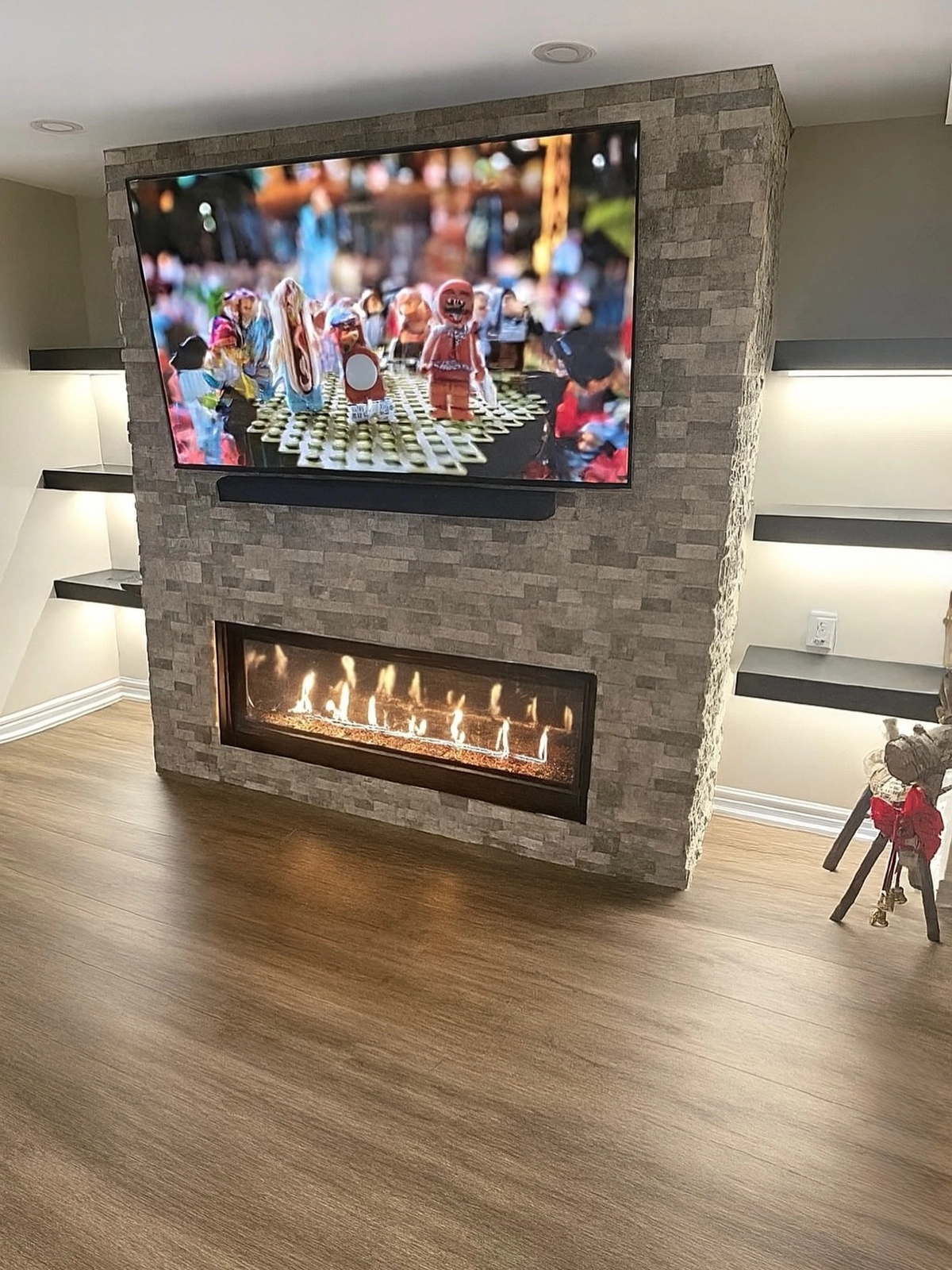
Photo: @tvwallmounting.ca on Instagram
A little light on the wall around the TV makes the screen easier to watch and the room feel bigger at night. The warm glow around this set above a linear fireplace does the job: the wall is lit, the screen is not washed out, and the corner feels designed rather than dark.
Bias lighting is the cheapest upgrade in this whole list: an LED strip behind the TV or a picture light above it. It cuts eye strain, kills the cave feeling of a dark wall with a bright screen, and costs less than the takeaway you will eat in front of it.
Step 12: Keep the floor clear and enjoy the room
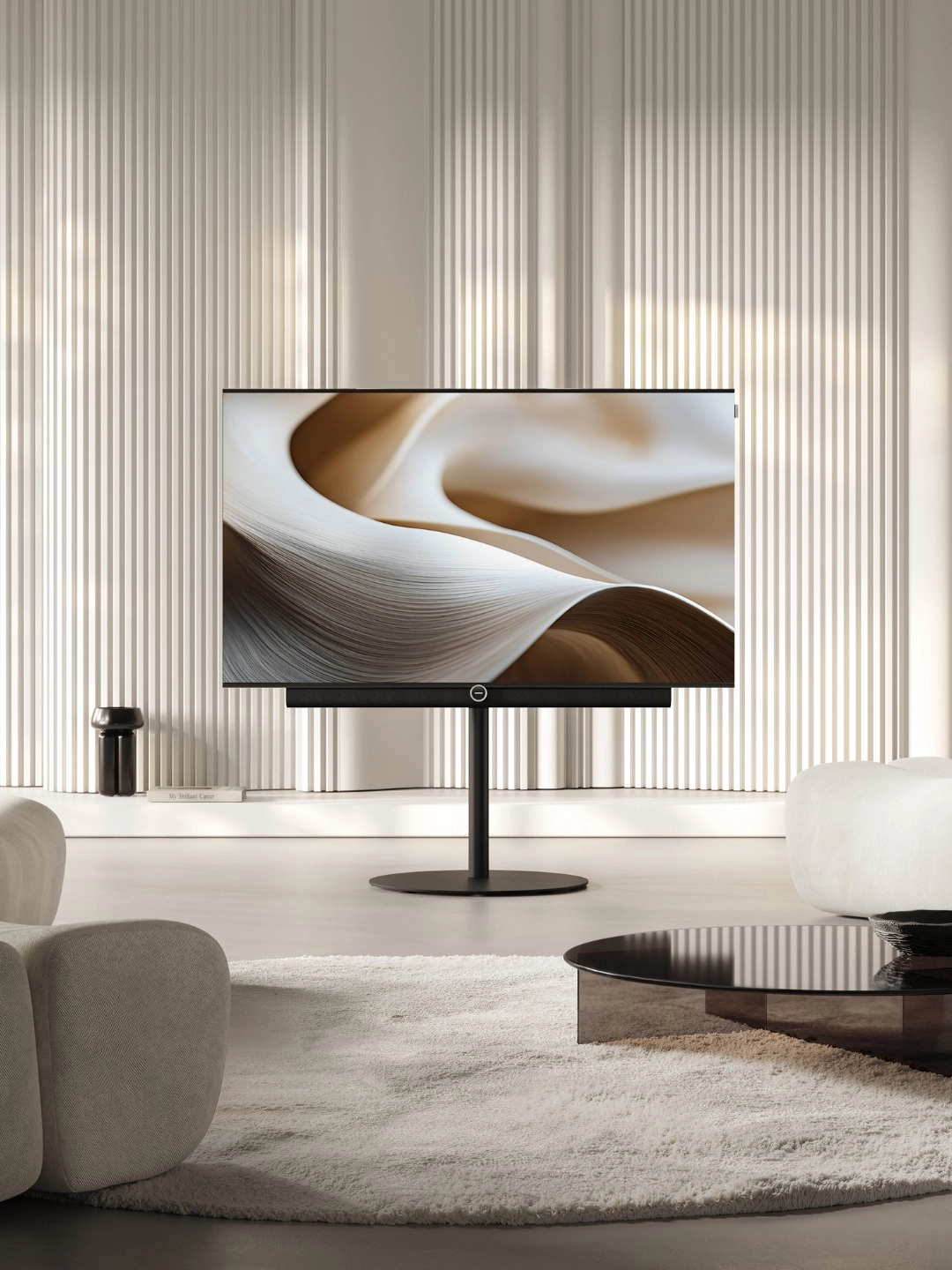
Photo: @loewe.international on Instagram
The final test of a well-fitted TV is the floor: if you can see it, the TV fits. This set on a slim pedestal stand leaves the floor entirely clear, and the room reads bigger for it. Every cable hidden, every box housed, every inch of floor visible.
A small living room feels bigger when the big objects float and the floor runs uninterrupted. The TV is the biggest object in the room, so it sets the tone: mounted, flush, grounded, and gone when off. That is the whole project, in the right order.
3 mistakes that make a small room feel smaller
Every one of these shows up in small living rooms weekly. Dodge all three and the TV fits; commit any one and the room fights it.
- Buying the TV before measuring the sofa distance. The sale price is not a measurement, and a screen two sizes too big cannot be un-bought without a restocking fee.
- Mounting it where the cables cannot be hidden. A beautiful mount with a cable dangling down the wall is worse than an honest TV stand, because it draws the eye to the one unfinished thing.
- Putting it above a tall fireplace without checking the height. If the mantel puts the screen a foot above your eyeline, every film comes with a neck ache, and no mount fixes geometry.
Do it in order and it fits
Wall, size, mount, height, cables: that order is the whole secret. Each decision makes the next one obvious, and by step twelve the TV is simply part of the room, not an event in it.
Start this weekend with the tape measure, not the credit card. The four numbers take twenty minutes, and they are the difference between a TV that fits and a TV you spend a year working around.