19 Small Bathroom Storage Ideas That Renters Can Do First
Small bathrooms do not actually have a storage problem. They have an order problem: people buy the permanent solutions first, the cabinets and the drilling, before trying the ten reversible ones that solve most of it. So this list runs in the order you should attempt things. The whole first half needs no drill, no landlord permission and no making good when you leave. The second half is for owners, or renters whose tenancy is long and whose landlord says yes in writing.
Everything here is sized for genuinely small bathrooms, the kind where the door nearly touches the toilet. Real measurements are included throughout, because in a small bathroom a storage idea that is 5 cm too deep is not a storage idea, it is an obstacle.
Before anything: the measure-first box
Door swing: open the door fully and note what it hits or nearly hits. Anything you add inside that arc will be hit daily.
The toilet gap: the space between the tank and the wall is usually 1 to 3 cm, nothing goes there. The useful gaps are vanity to toilet and toilet to wall, often 12 to 20 cm.
Shelf depth over the toilet: 15 to 20 cm maximum. Deeper shelves hang over whoever sits down and feel oppressive in a small room.
Stud spacing: wall cabinets and loaded shelves must fix into studs or proper masonry anchors. Studs in most framed walls sit 40 or 60 cm apart. A stud finder costs less than the repair when a loaded shelf pulls out.
Adhesive ratings: adhesive shelves and hooks state a weight limit measured on clean, dry, smooth tile. Halve it in your head for steamy real life, and never hang glass or ceramics over a bath on adhesive alone.
Renters first: no drill, no trace
1. Stand a ladder shelf over the toilet
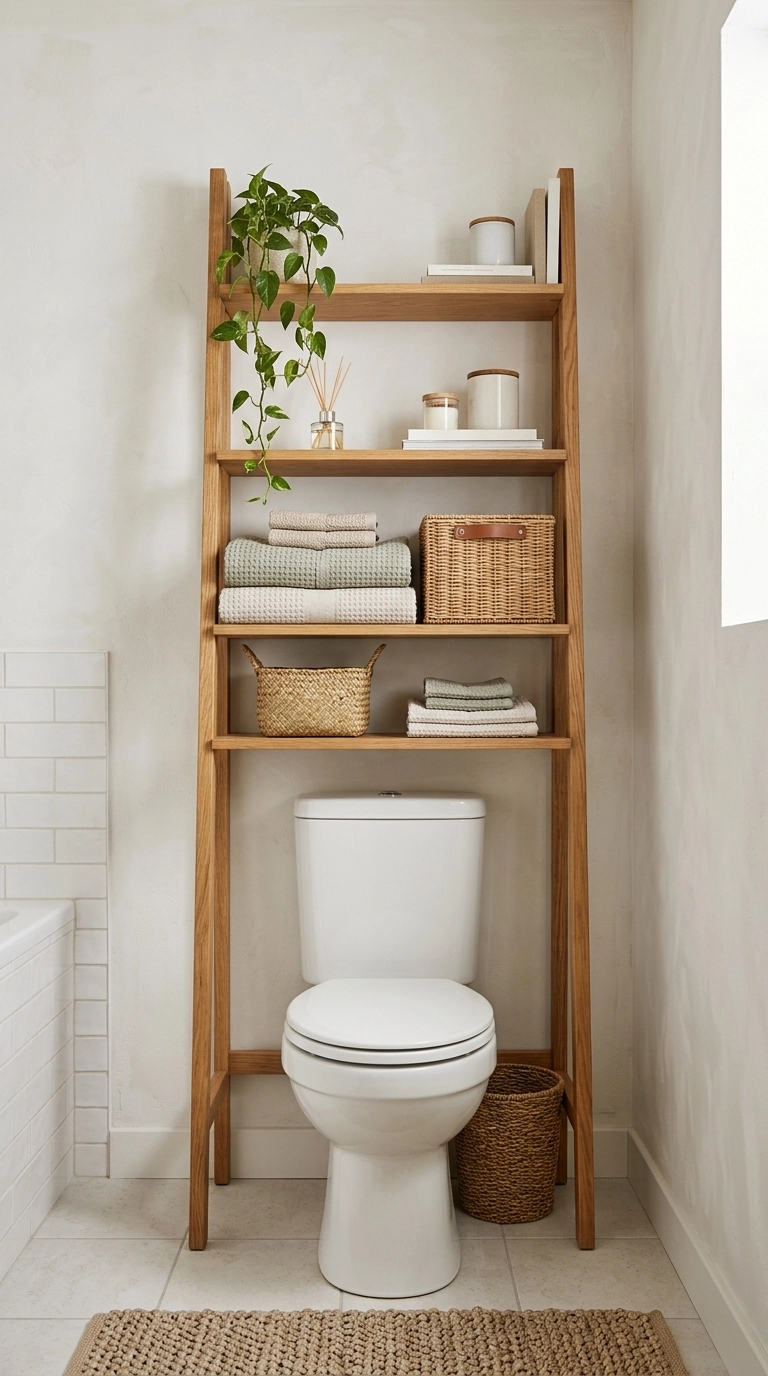
The space above a toilet tank is the largest unused volume in most small bathrooms, and a freestanding over toilet shelf claims it without touching a wall. Ladder styles lean back slightly, which keeps them stable and makes the top shelf the shallowest, exactly right for the sit down test.
Load order: heaviest items, spare towels and stock bottles, on the lowest shelf. Light and pretty at the top.
2. Put a tension pole caddy in the shower corner
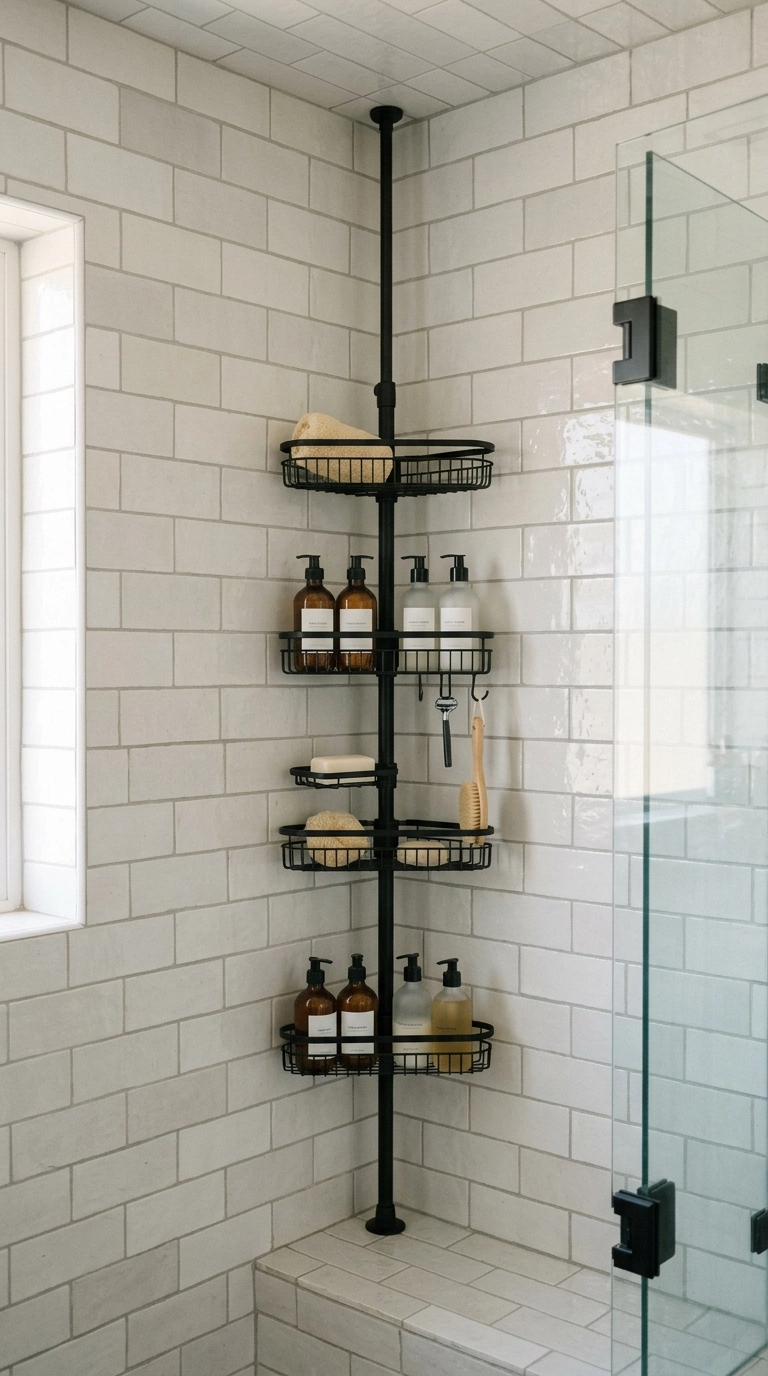
A spring loaded pole with two or three baskets turns a dead shower corner into the home for every bottle currently ringing the bath edge. Because it wedges floor to ceiling, it holds real weight and leaves nothing behind when removed.
Fit note: measure floor to ceiling before buying, poles come in ranges and a pole at the very end of its range wobbles.
3. Hang storage on the back of the door

An over door rack with hooks takes towels, robes and the hairdryer caddy, and clear pocket organisers take the bottles and tubes that crowd the sink. The door is the one surface in a small bathroom that is guaranteed to be empty.
Door check: confirm the door still closes cleanly with the hooks on, some frames have almost no clearance at the top.
4. Roll a slim cart into the vanity gap
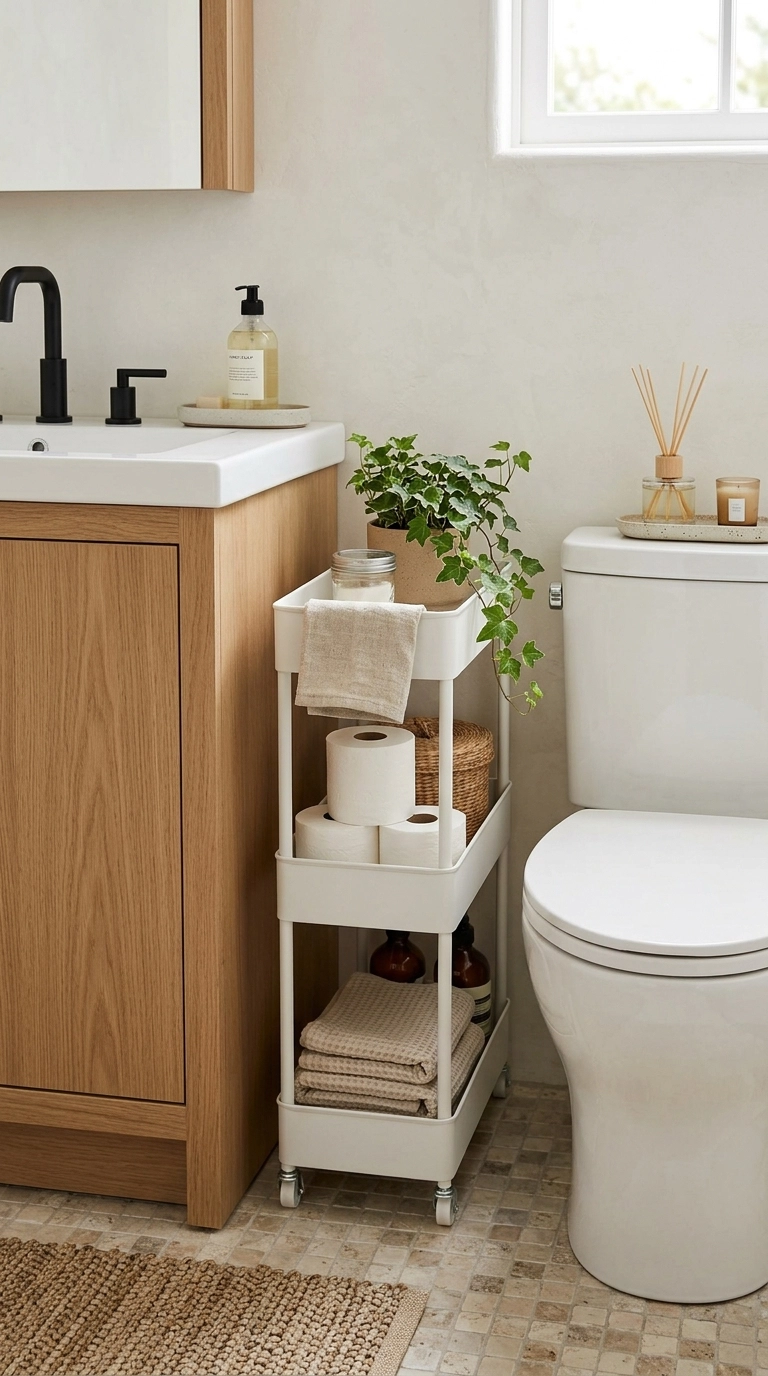
Measure the gap between your vanity and the toilet or wall. If it is 15 cm or more, a slim rolling cart with three tiers fits there and holds more than most bathroom cabinets, while pulling out like a drawer when you need it.
What lives here: the daily stuff. Hair tools, skincare, cleaning spray at the bottom. If it is on the cart, it does not need to be on the sink.
5. Stick shelves to the tile, properly
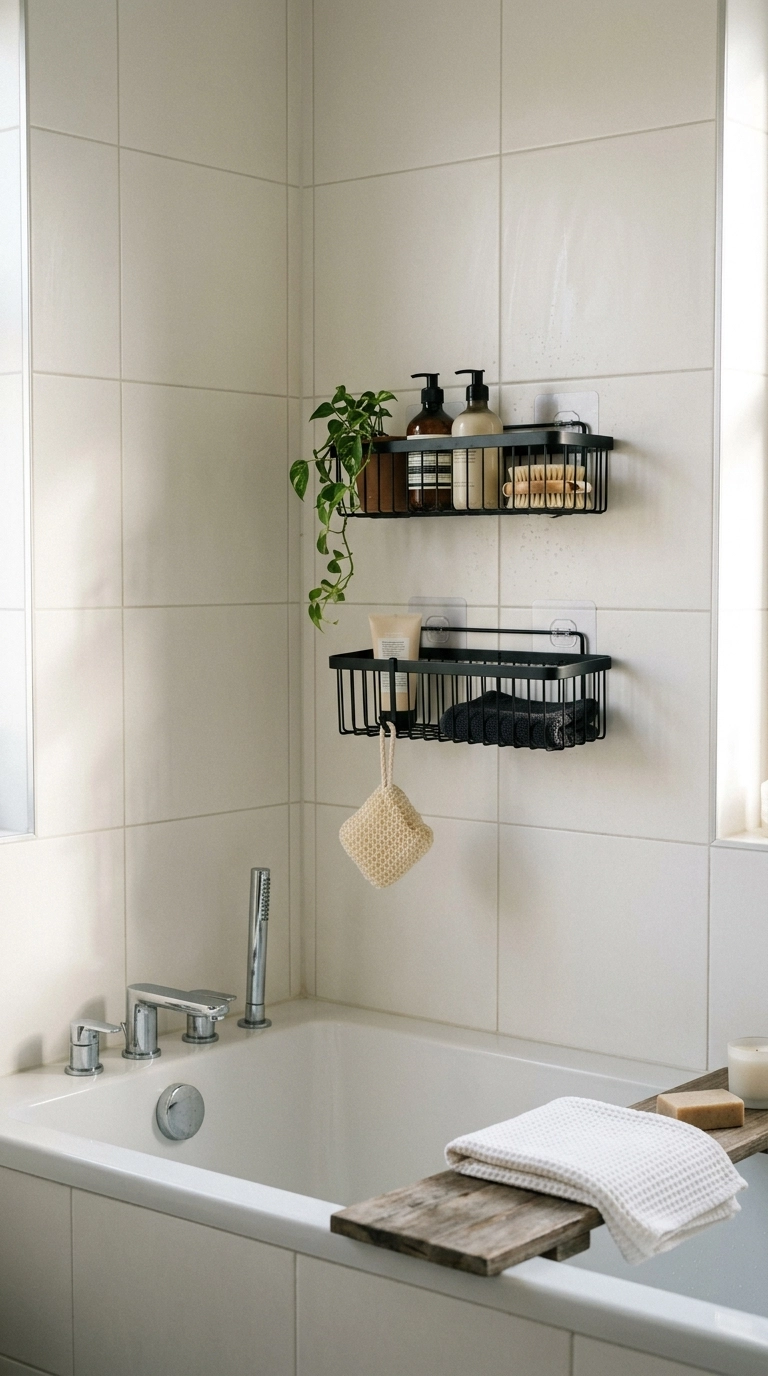
Modern adhesive shower shelves hold a genuinely useful amount on smooth tile and glazed surfaces, and they come off with heat and patience when you move. The trick is the prep: clean the tile with alcohol, apply, then wait a full day before loading them.
Steam rule: give adhesive 24 hours to cure before the shower steams the room, whatever the packet says about instant use.
6. Style the tank top with a tray
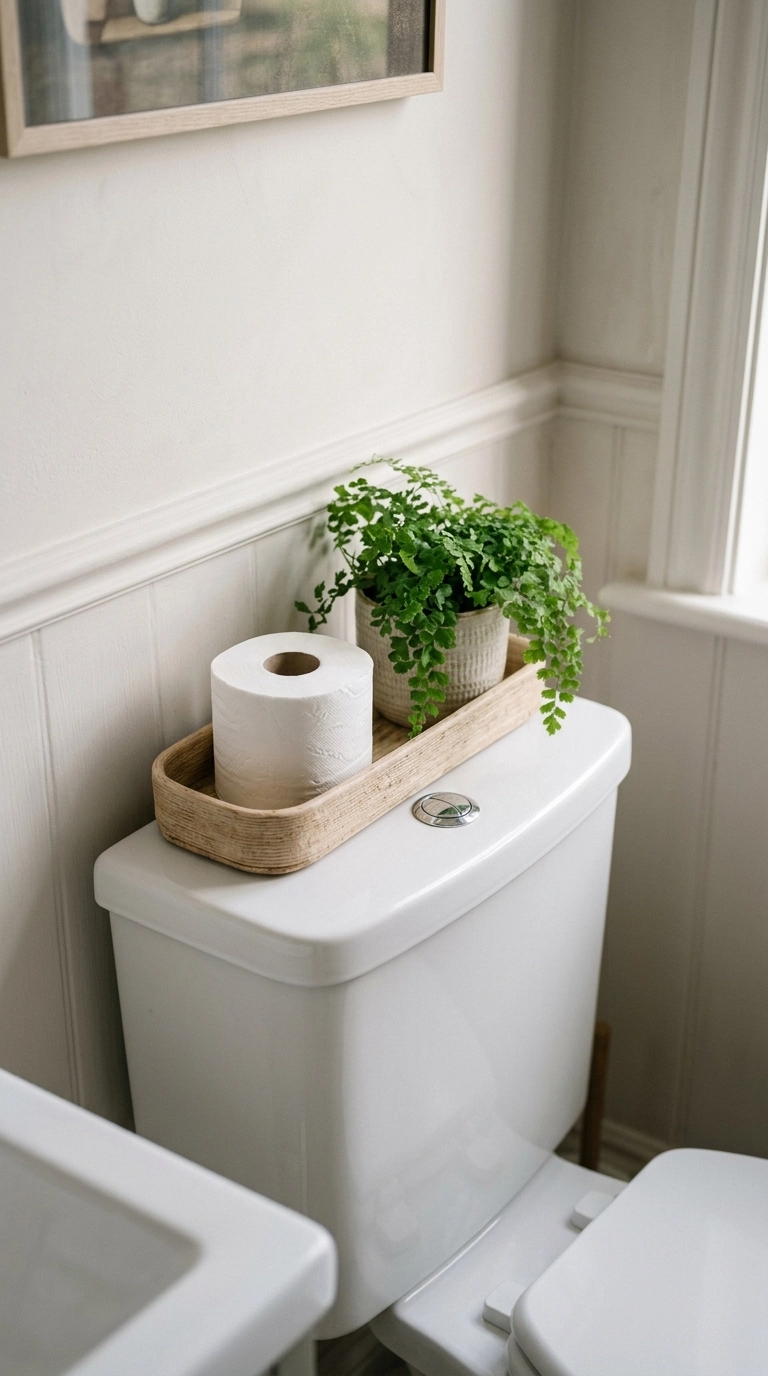
A narrow tray or small basket on top of the tank corrals the spare roll, a small plant and room spray into something that looks placed rather than stored. It also keeps the tank top from becoming the default shelf for everything in transit.
Width warning: leave the flush buttons or lever completely clear. A tray you must move to flush will end up on the floor.
7. Add a magnetic strip inside the cabinet door
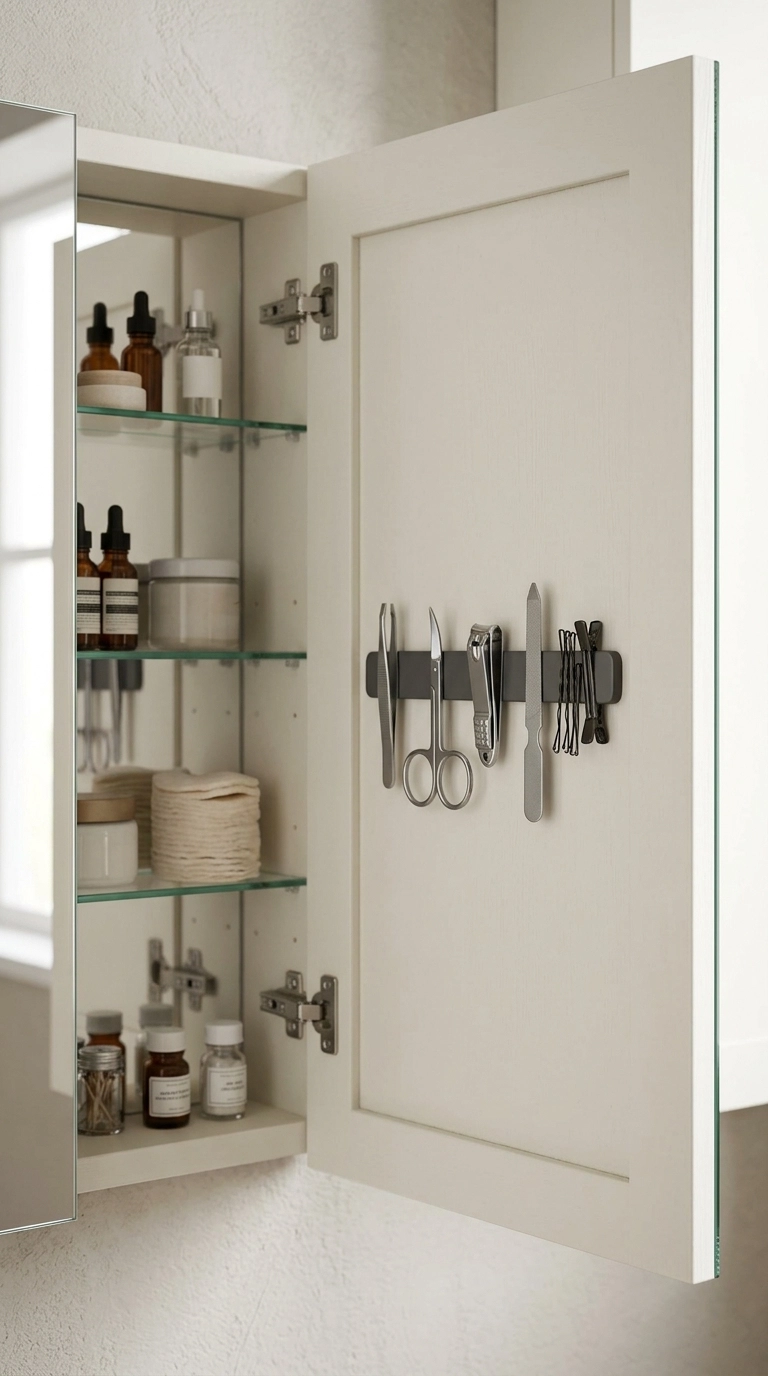
A self adhesive magnetic strip on the inside of the medicine cabinet door holds tweezers, nail scissors, clips and bobby pins in one visible row. Small metal things are the clutter that makes small storage feel chaotic, and this fixes them for almost nothing.
Renter note: adhesive strips remove cleanly. The screw in version is for the owners’ half of this list.
8. Organise under the sink with stackable drawers
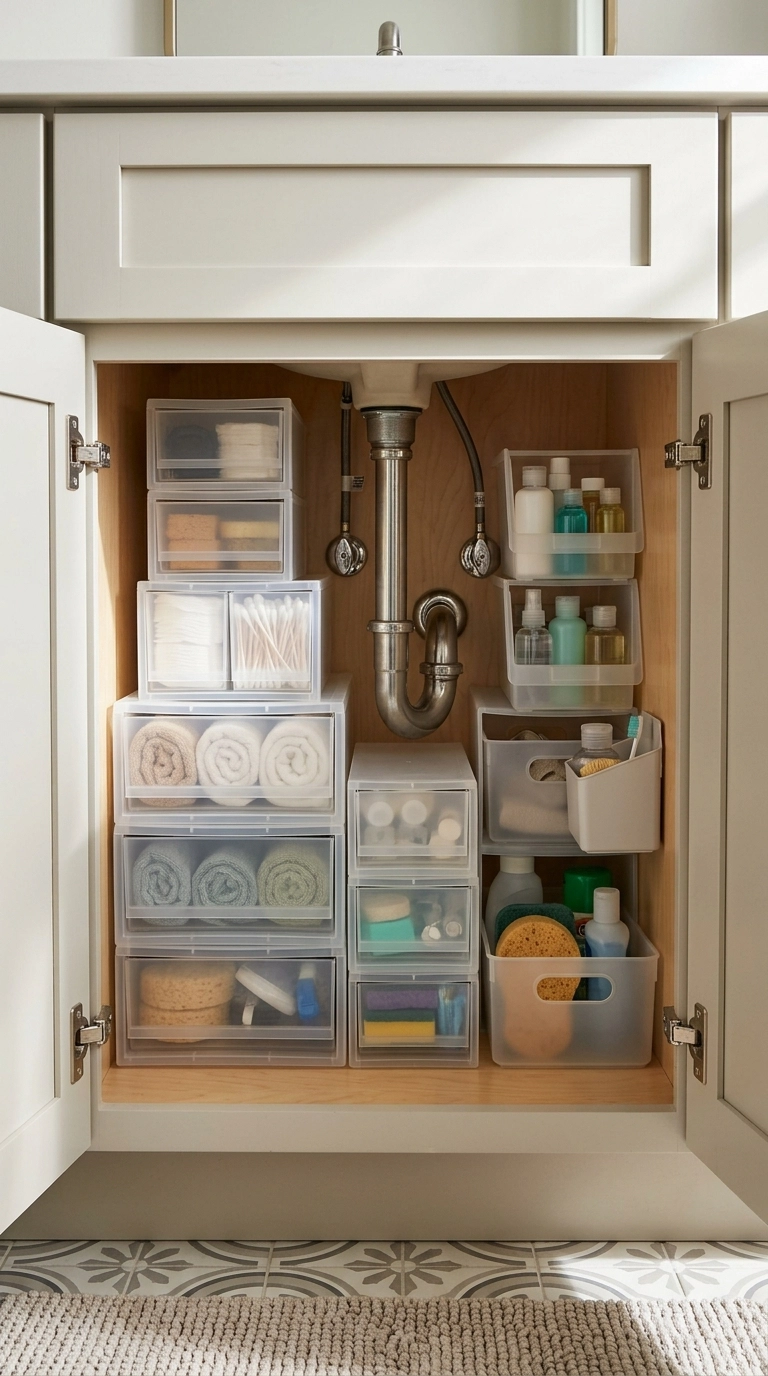
The space under a sink is awkward because of the pipes, which is why things get thrown in and forgotten. Two small stackable drawers or a stepped organiser work around the plumbing and turn the cave into layers you can see into.
Measure the pipes: note where the trap sits before buying anything. Organisers with an open back or offset shelves exist precisely for this.
9. Lean a towel ladder instead of drilling a rail
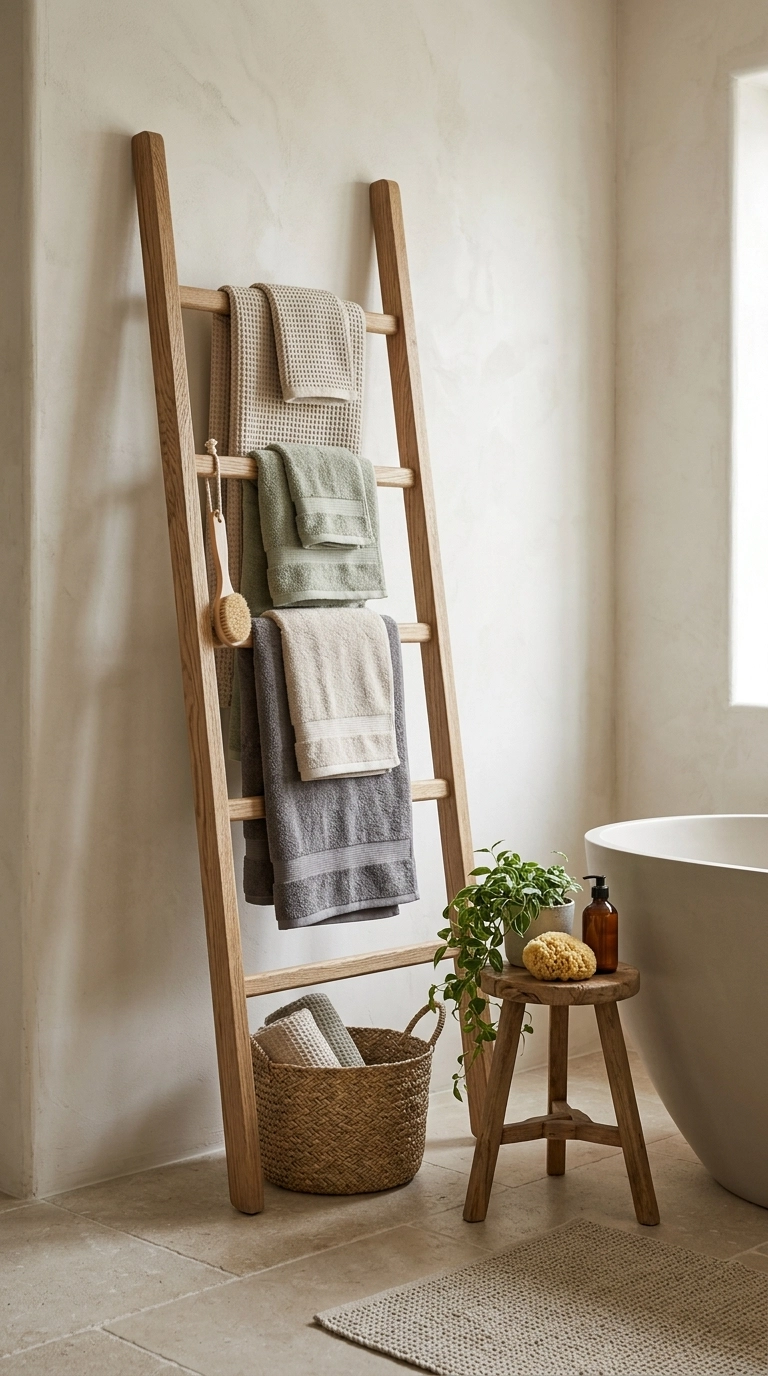
A leaning ladder rail holds three or four towels in the wall space a radiator or door usually wastes, and it walks out of the room with you when you move. In a rental it does the job of a heated rail without the plumbing or the permission.
Stability: lean ladders belong against a wall the door does not slam into, and felt pads stop them marking the paint.
The budget tiers: what each level actually buys
Under $50 total: the door hooks, the magnetic strip, the tank tray, under sink stacking and adhesive shelves. This tier alone fixes the visible clutter in most rentals.
$50 to $200: add the tension pole caddy, the slim rolling cart and the over toilet ladder shelf. This is the tier where the bathroom starts feeling twice the size.
$200 and up, owners: the mirror cabinet, a drawer vanity and one built in. Spend here only when the first two tiers are already working, or you will build storage around clutter.
Owners second: the permanent upgrades
10. Cut a niche into the shower wall
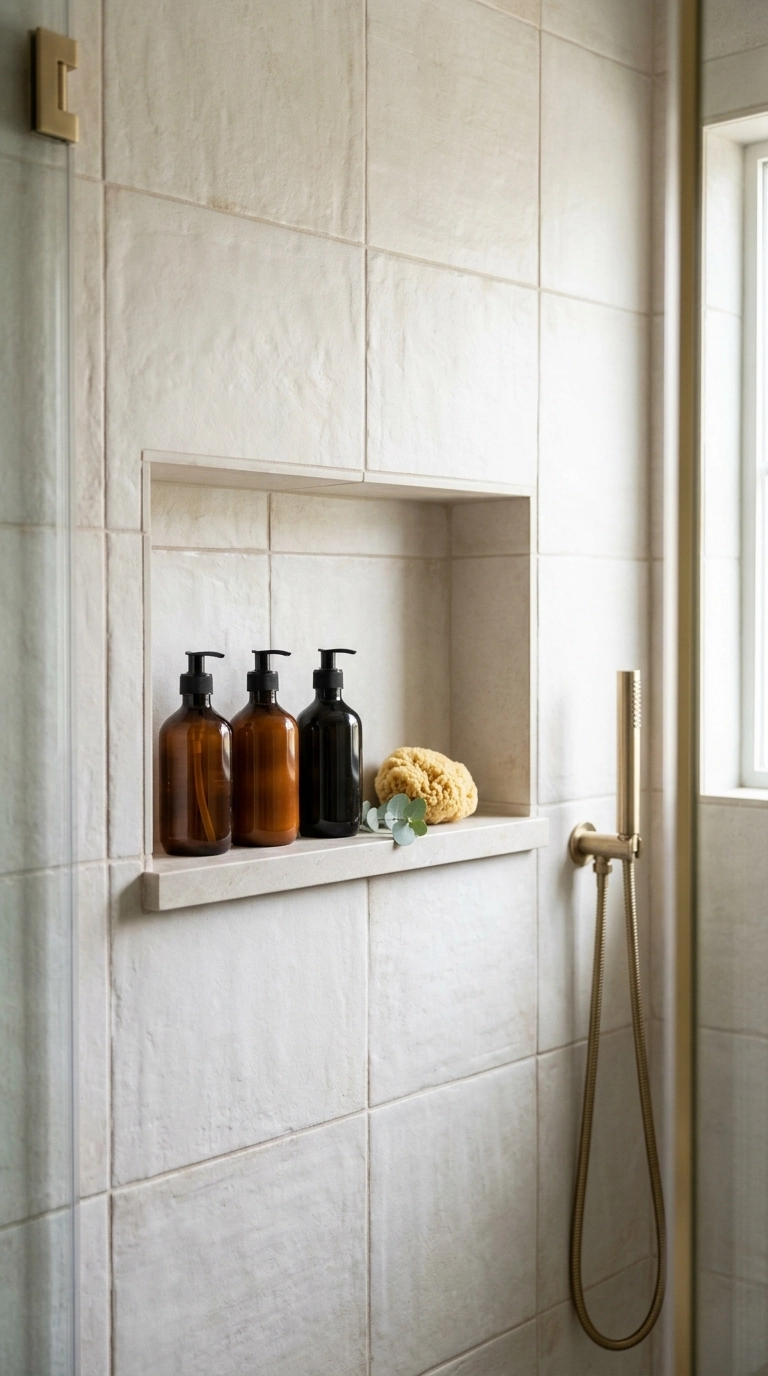
A tiled niche recessed between the studs gives shower storage that takes zero floor or shelf space and never gets knocked off. It is a during renovation job, waterproofed and tiled as part of the wall, not an add on.
Standard size: 30 to 40 cm wide and tall enough for your tallest bottle plus a hand’s width. Measure the bottles, not the catalogue.
11. Replace the flat mirror with a mirror cabinet
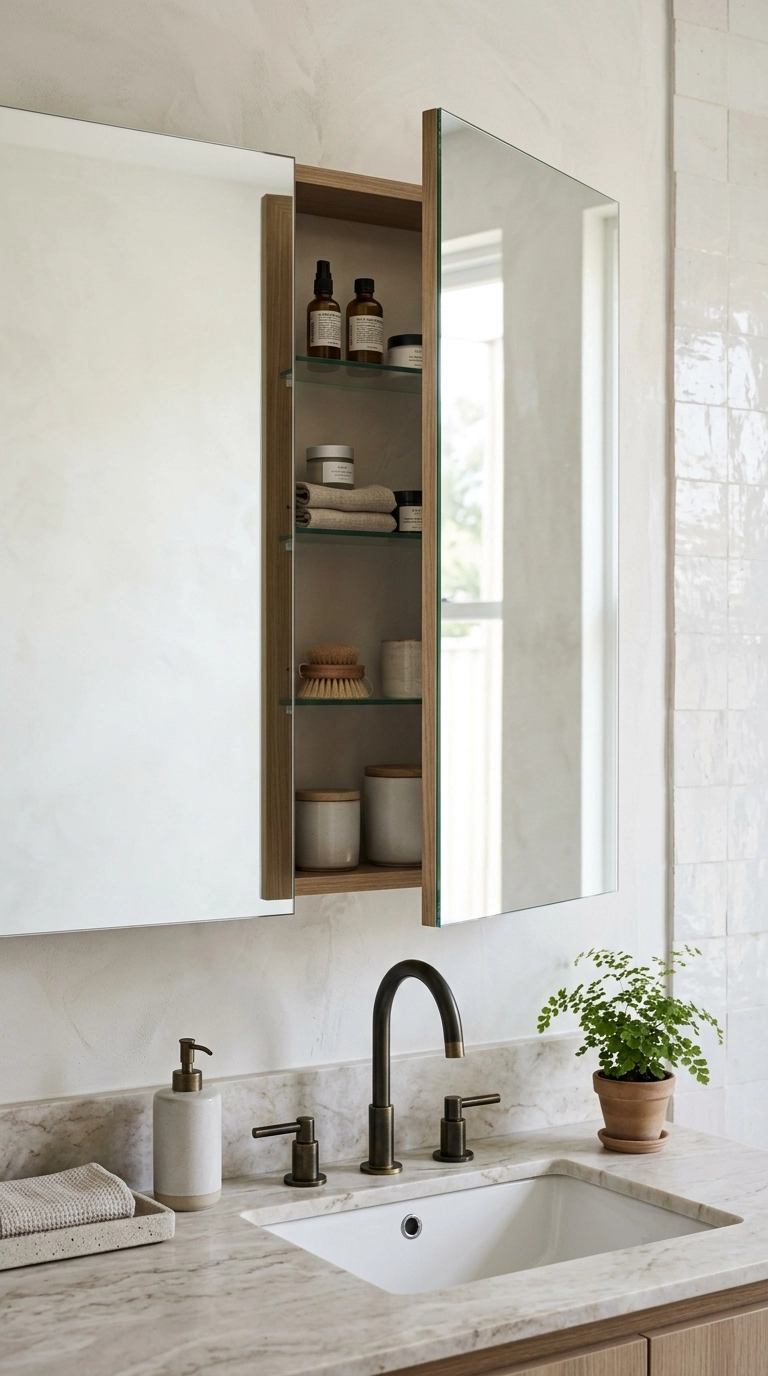
Swapping a flat mirror for a cabinet of the same width adds 10 to 13 cm of depth storage for every daily small item, behind the mirror you already look into. In a small bathroom this single swap can clear the entire sink surround.
Depth caution: in very small rooms choose a cabinet no deeper than 13 cm so it does not crowd you at the sink.
12. Float two shelves above the toilet
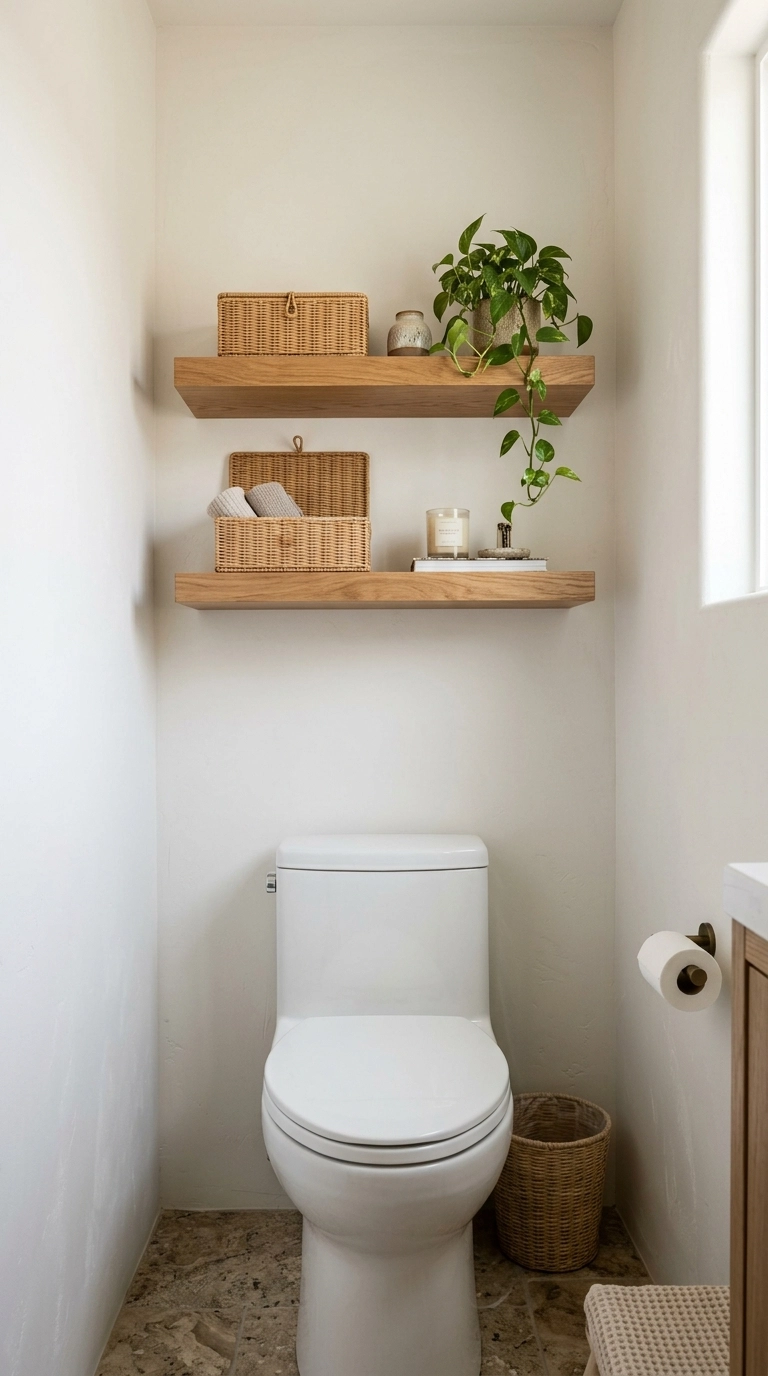
Owners can fix two proper floating shelves into studs where the renter’s ladder shelf stood, gaining the same storage with a cleaner line and room for baskets that match. Keep the shelves at that same 15 to 20 cm depth.
Basket rule: shelves store best in baskets and boxes. A shelf of loose bottles reads as clutter at eye level.
13. Choose a vanity with drawers, not doors
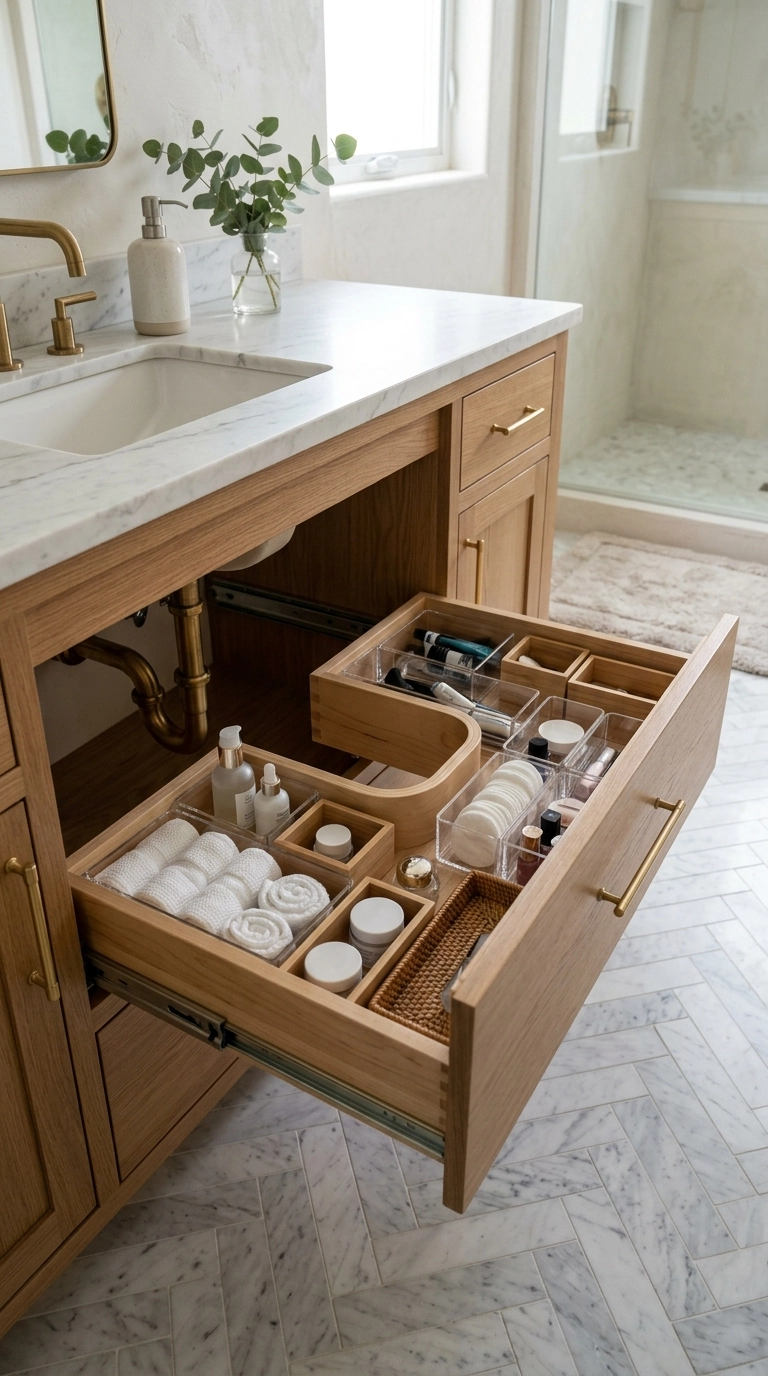
A cupboard vanity wastes its middle height and hides everything at the back. Drawers, especially a U shaped top drawer that wraps the plumbing, store the same volume in visible, reachable layers. It is the single biggest storage upgrade a small bathroom can get.
Swap timing: a vanity swap is a plumber half day in most cases. It only becomes a big job if you move the water or waste positions.
14. Hang a slim tall cabinet on the dead wall
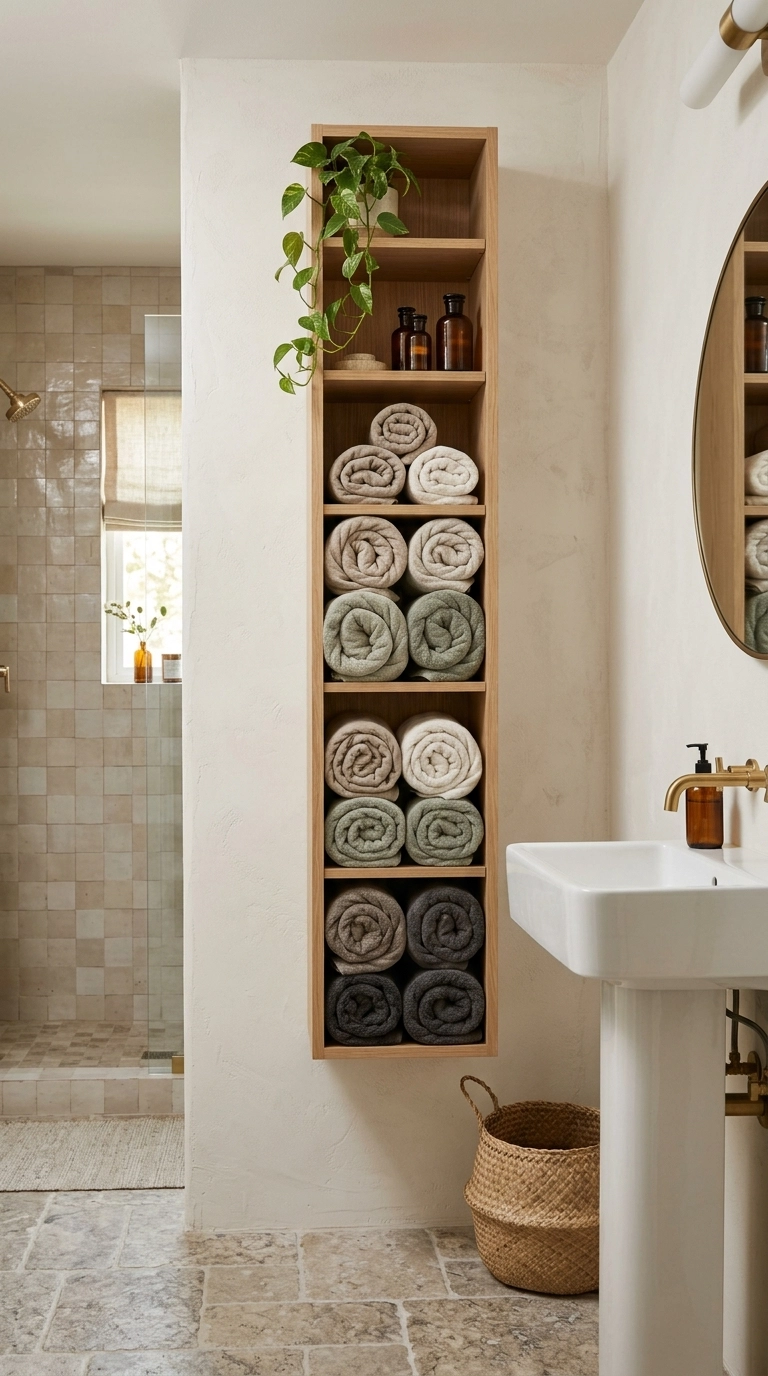
Most small bathrooms have one stretch of wall too narrow for anything standard, often beside the door or above the towel rail. A tall cabinet 20 to 25 cm deep fits stretches like this and stores towels vertically, which is how hotels fit so much into so little.
Door swing again: site the tall cabinet after checking the measure first box. Tall storage in a door arc gets opened into, daily.
15. Fit pull outs inside the under sink cupboard
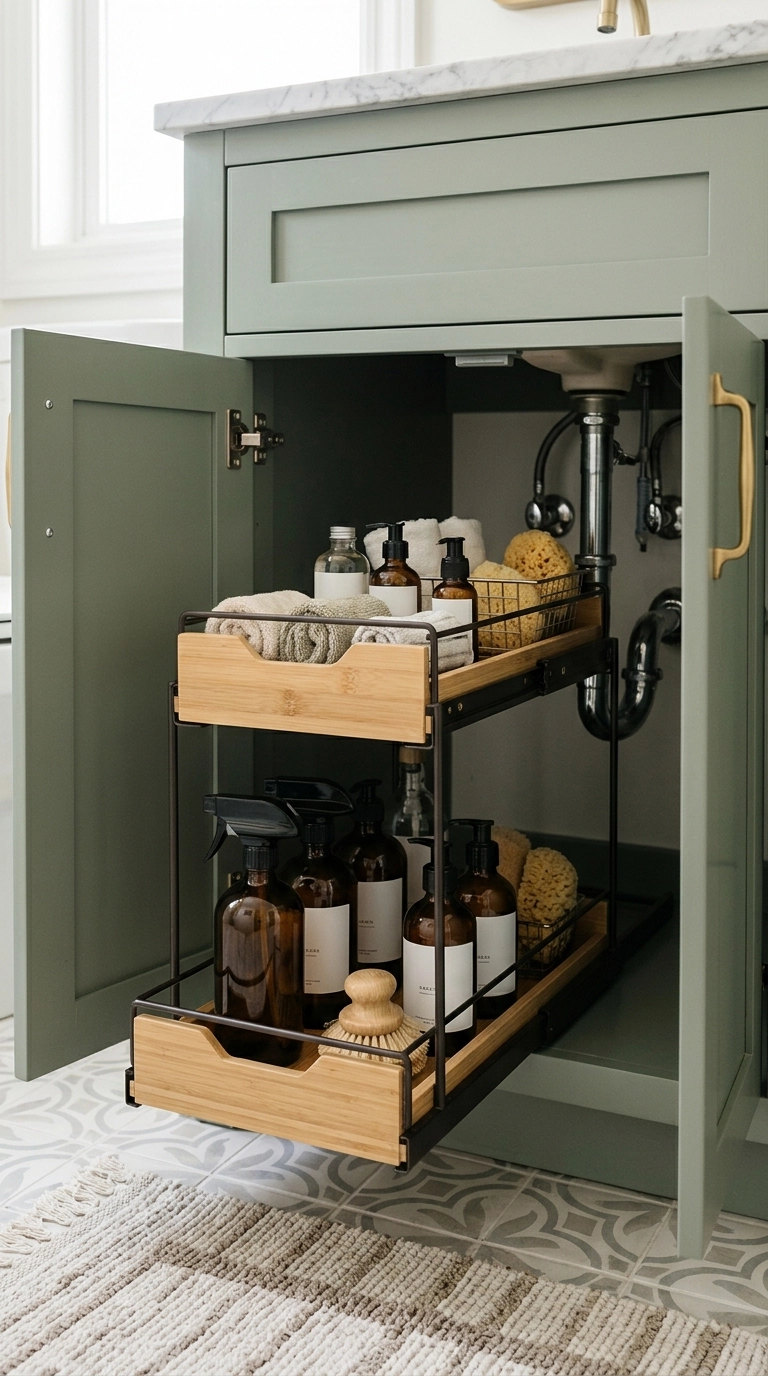
If the vanity stays, its interior can still work like drawers. Pull out rack frames that mount to the cupboard base bring the back row to you, and versions with a cut out clear the trap.
Measure twice here: pull outs are the least forgiving storage to buy. Width, depth and the trap position all have to clear at once.
16. Build a closed cupboard over the toilet
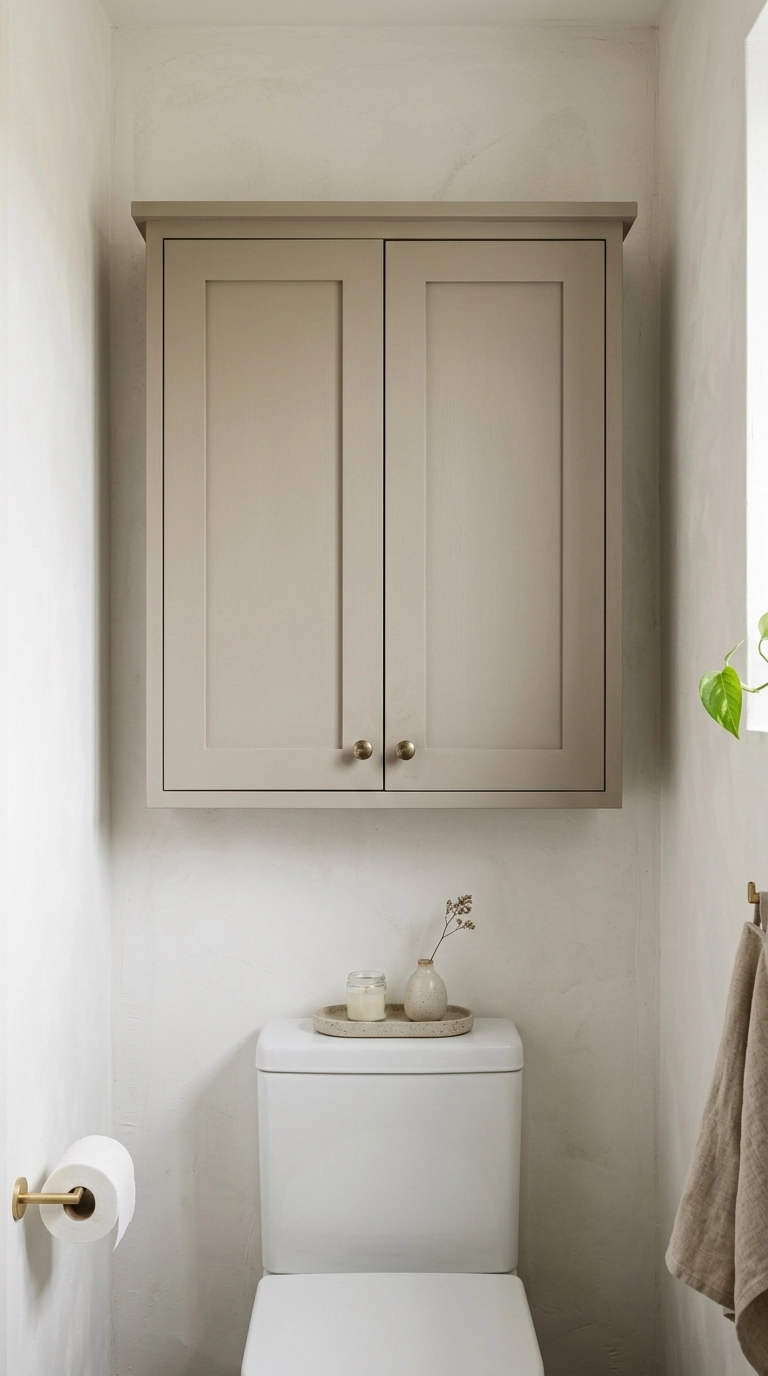
The permanent version of the ladder shelf: a shallow, door fronted cupboard above the toilet hides the stock bottles, medicines and cleaning products that open shelves display. Closed storage is what makes a small bathroom feel calm.
Head clearance: the cupboard base should sit at least 60 cm above the tank so nobody meets it standing up.
17. Add a tiled ledge along the bath or shower wall
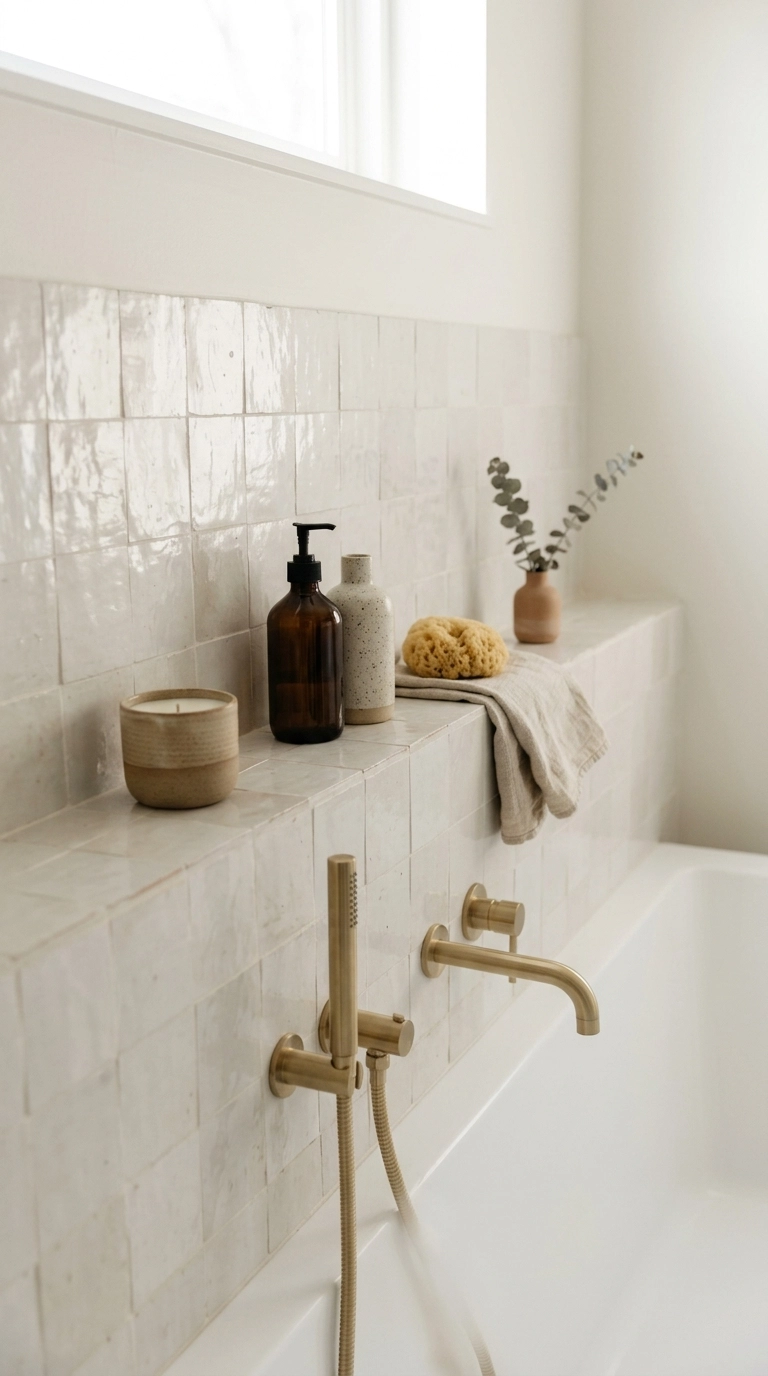
During a retile, a half height tiled ledge along the bath or shower wall creates a permanent shelf for bottles, candles and a plant, with no brackets and nothing to knock off. It is storage built into the architecture rather than added to it.
Fall matters: the ledge top needs a slight slope so water runs off it. A perfectly flat ledge becomes a permanent puddle.
18. Use the wall behind the door for a shallow cabinet
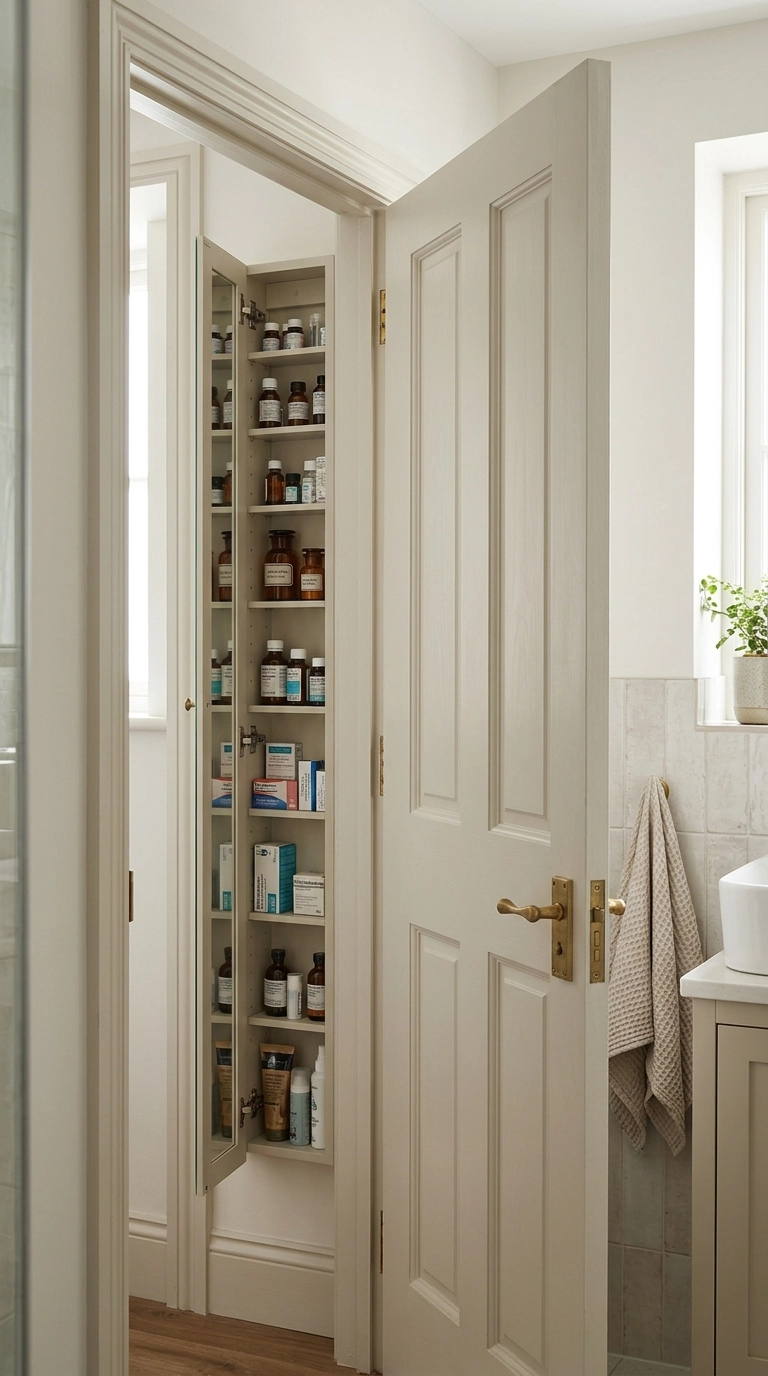
When the door stands open, the wall behind it is hidden and unused. A cabinet just 10 to 12 cm deep there holds medicines, first aid and flat items, and disappears completely when the door opens.
Handle choice: push to open fronts, no knobs. The door needs to open flat against or near the cabinet without a handle collision.
19. Keep one clear surface as a rule
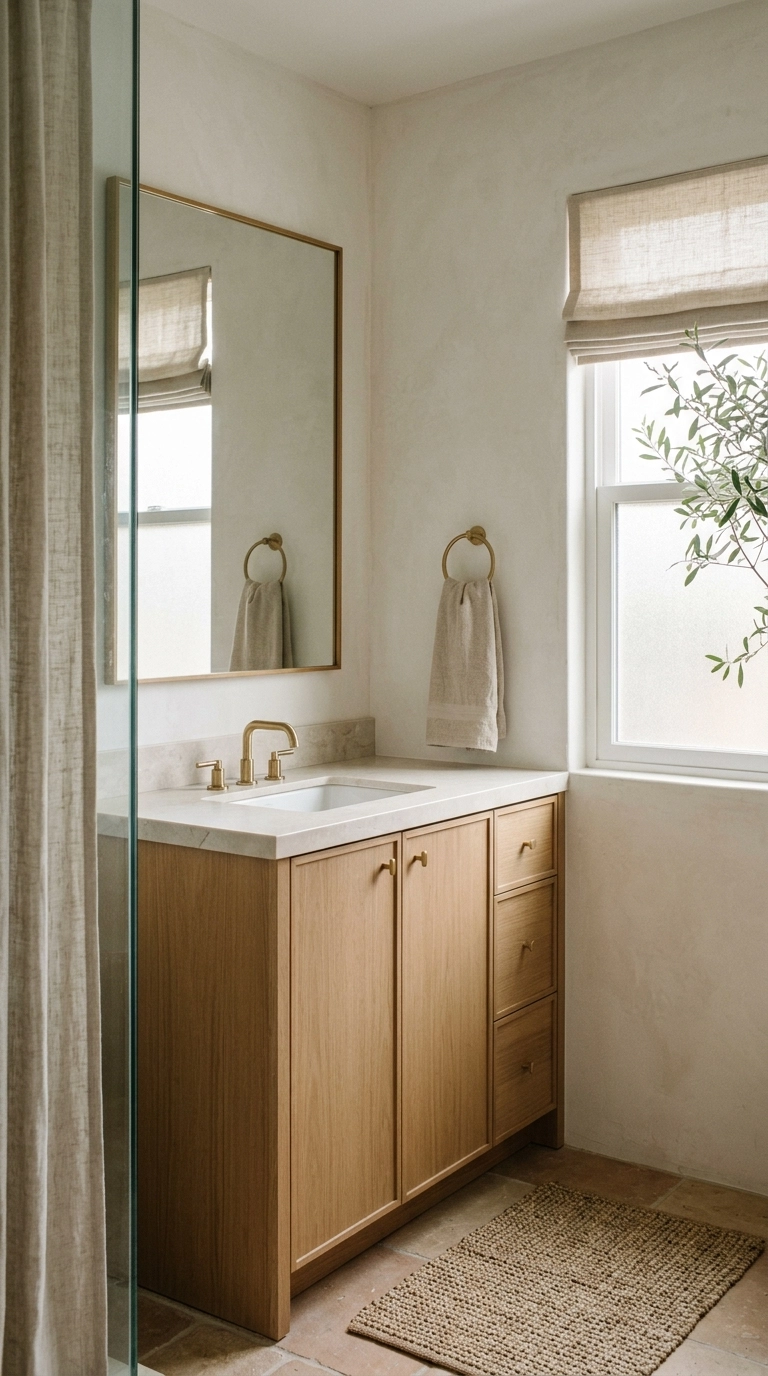
The last idea is a discipline rather than a product: whatever storage you add, defend one clear surface, usually the sink surround, where nothing lives permanently. Small bathrooms feel small because every surface is full, not because any single thing is big.
The test: if guests cannot put down a wash bag, the bathroom has storage but no room. Take one thing back out.
Start with the renter half even if you own the place. Half of those ideas usually solve the problem, and the ones that remain tell you exactly which permanent upgrade is worth paying for, and where. Small space thinking pays off everywhere: the kitchen counter zones run on the same rules, and a slim dresser makeover can become extra storage just outside the bathroom door.