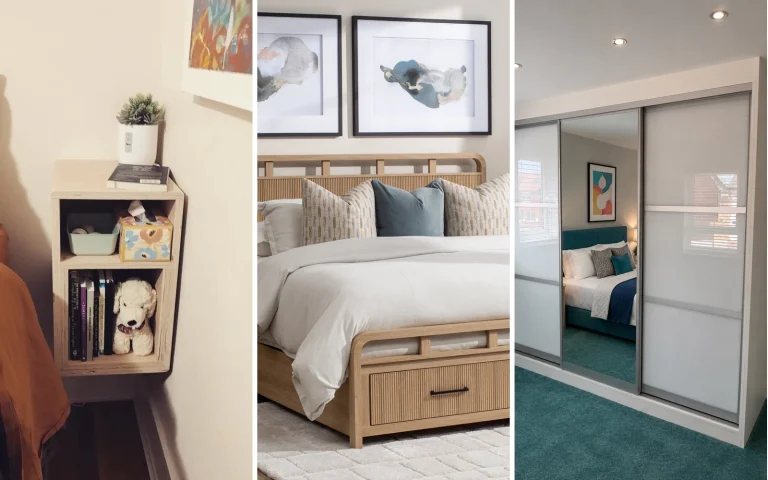
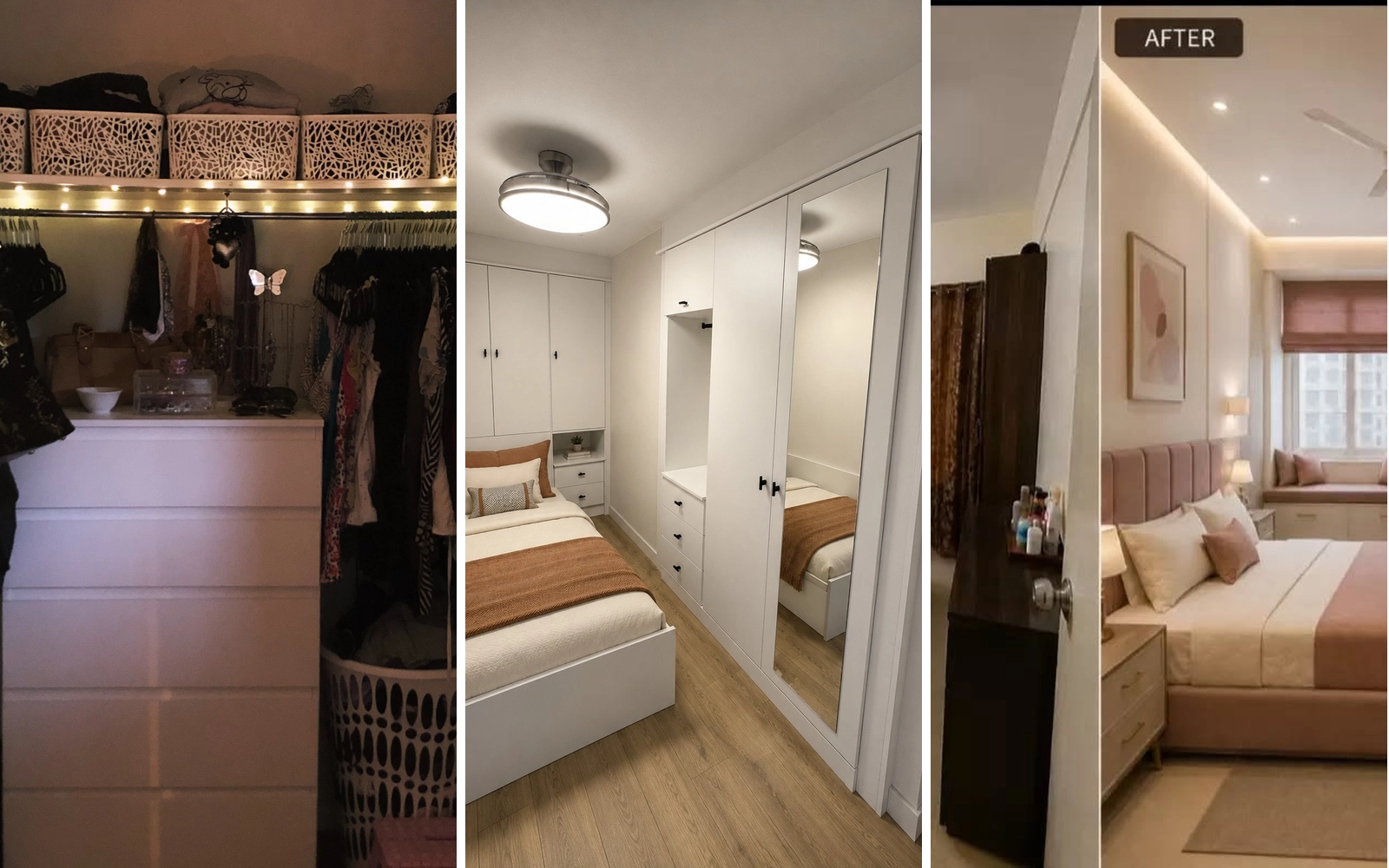
How to Organize a Small Bedroom in One Weekend: 16 Steps That Actually Stick
A small bedroom has to do more jobs than any other room in the house. It is a closet, a laundry station, a charging dock, and sometimes an office, all inside four walls that were probably designed for a bed and not much else. When it gets messy, it is not because you are untidy. It is because too many jobs are fighting for the same few feet.
This plan fixes that in one weekend, in the order that actually works. Saturday morning is the closet, because everything else depends on it. Saturday afternoon is the furniture. Sunday morning is the bed. Sunday afternoon is the walls and doors, the surfaces most people forget. Sunday evening is the two big moves that make the whole thing stick. Do the steps in order, and by Sunday night every single thing in the room will have a home.
Saturday morning: empty the closet and zone it
Take everything out before you organize anything
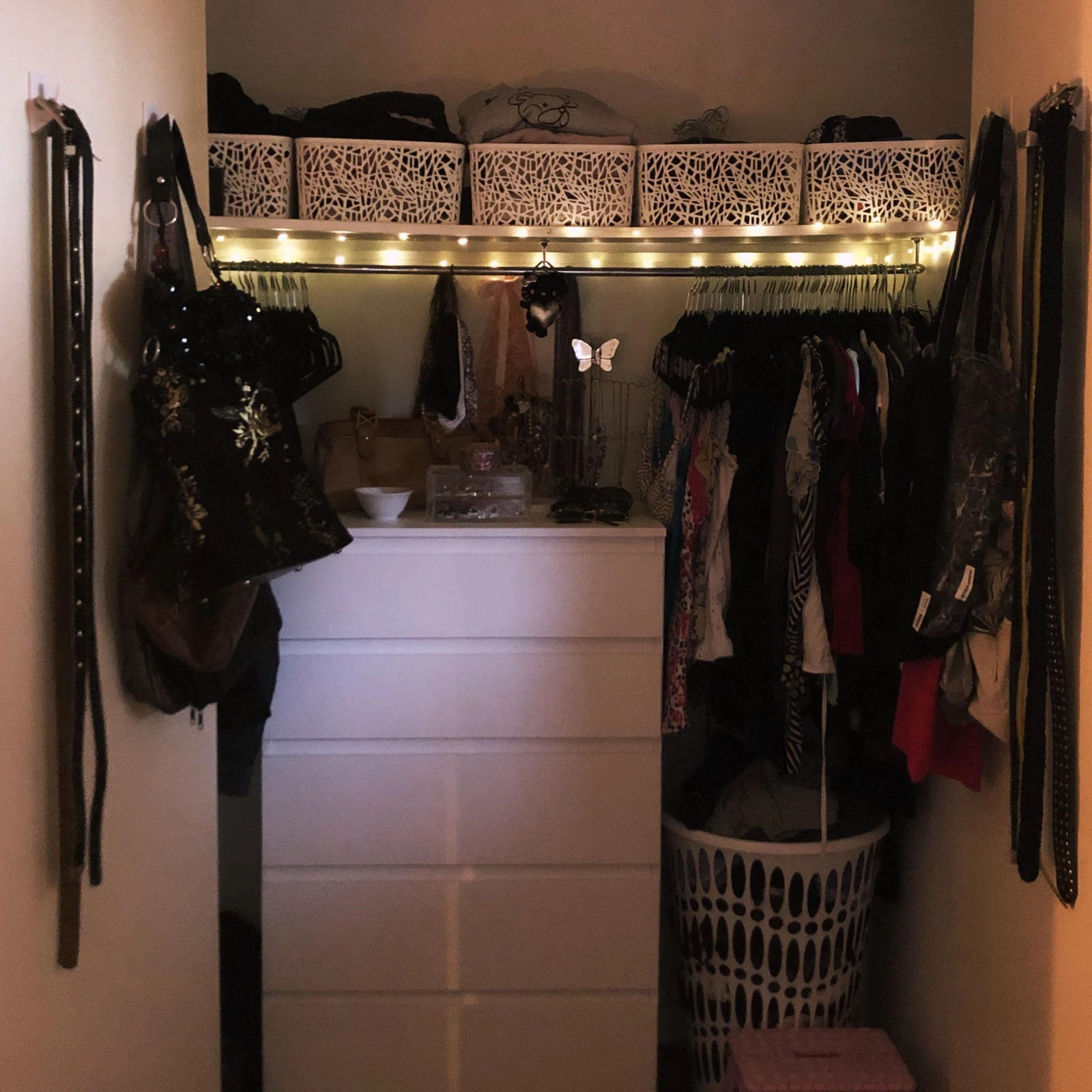
Photo: @jas.4ever on Instagram
Every organized closet starts with an empty one, and this is the step most people skip. Pull everything out of this small walk-in, every hanger, every bin, every bag on the hooks, and put it on the bed. You cannot zone a closet you cannot see, and you will be surprised how much of what was in there does not belong in a bedroom at all.
Sort what comes out into four piles: keep in this closet, move to another room, donate, and throw away. Be honest about the fourth pile, and be quick about the third. The goal is not a perfect closet by lunchtime. It is an empty closet you can measure, so every decision after this one is made with real numbers instead of guesses.
Fold by color and category, and use dividers to hold the line
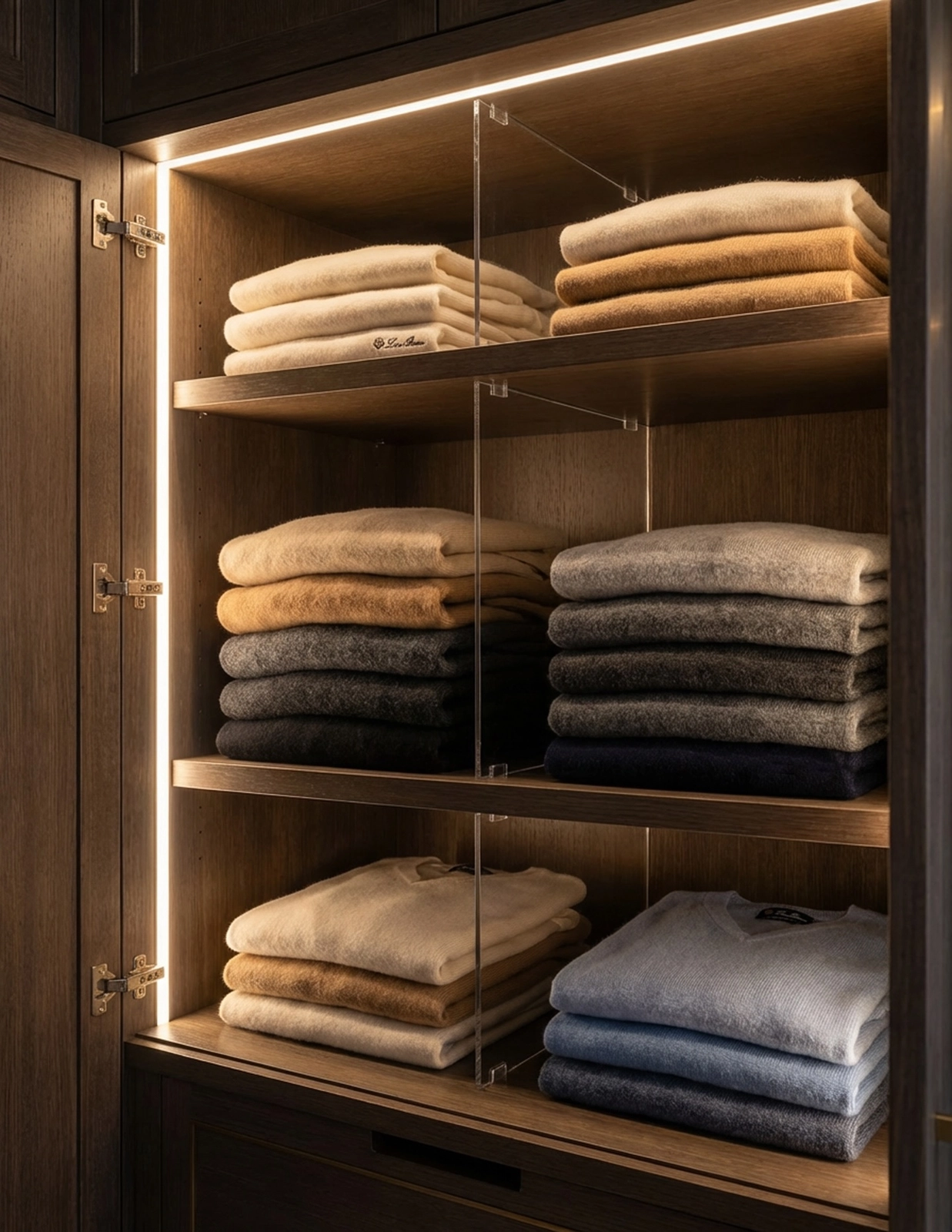
Photo: @laclosetdesign on Instagram
Once the closet is empty, put things back by category first and color second: all sweaters together, folded in the same direction, light to dark across the shelf. Clear dividers keep each stack from sliding into the next, which is what turns a tidy shelf back into a pile within a week. The LED strip is optional, but it earns its keep: you cannot put things back neatly in a closet you cannot see into.
Fold knitwear instead of hanging it. Hangers stretch sweaters out of shape and take up twice the rod space, while a folded stack of six sweaters fits on one shelf. Keep the everyday stack at eye level and the seasonal stack up high, and the closet starts to work the way a shop display does: you see everything you own, and you reach for what you actually wear.
Give every shelf a basket, and label nothing you can see
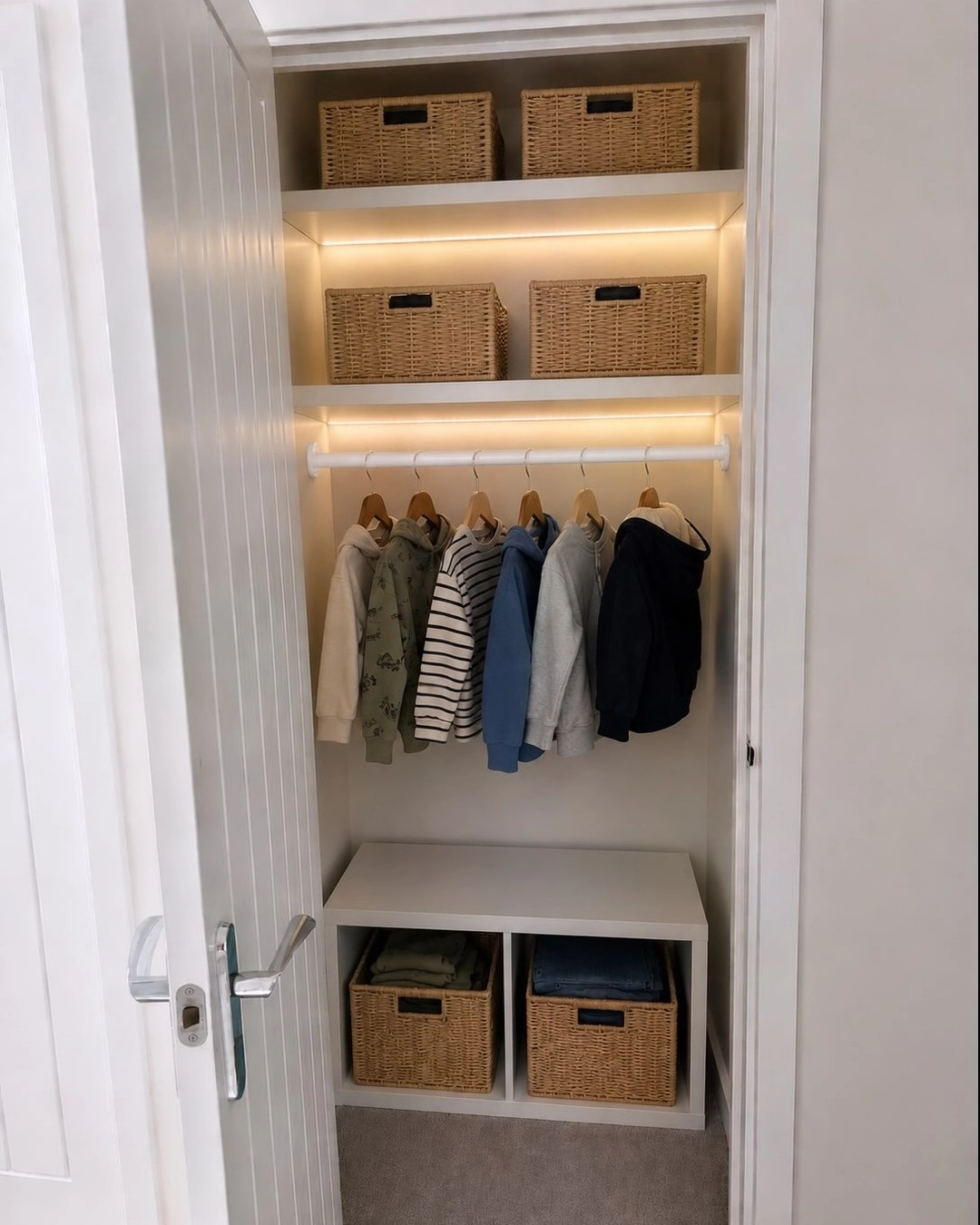
Photo: @persimmon_homes on Instagram
Baskets are the cheapest organization in this whole plan, and this closet shows why. Wicker baskets sit on every shelf, one per category, with the hanging rail in the middle for hoodies and the low cubby below for folded jeans. The baskets hide the mess without hiding the contents: you can see at a glance which basket holds what, so nothing needs a label.
Buy the baskets after you measure, not before. Measure each shelf’s width, depth, and height, then buy baskets that fill the shelf without gaps, because a half-empty shelf invites a pile. Two matching baskets look calmer than six different ones, and natural wicker warms up a white closet the way plastic bins never do.
Hang on matching hangers, and put bins on the top shelf
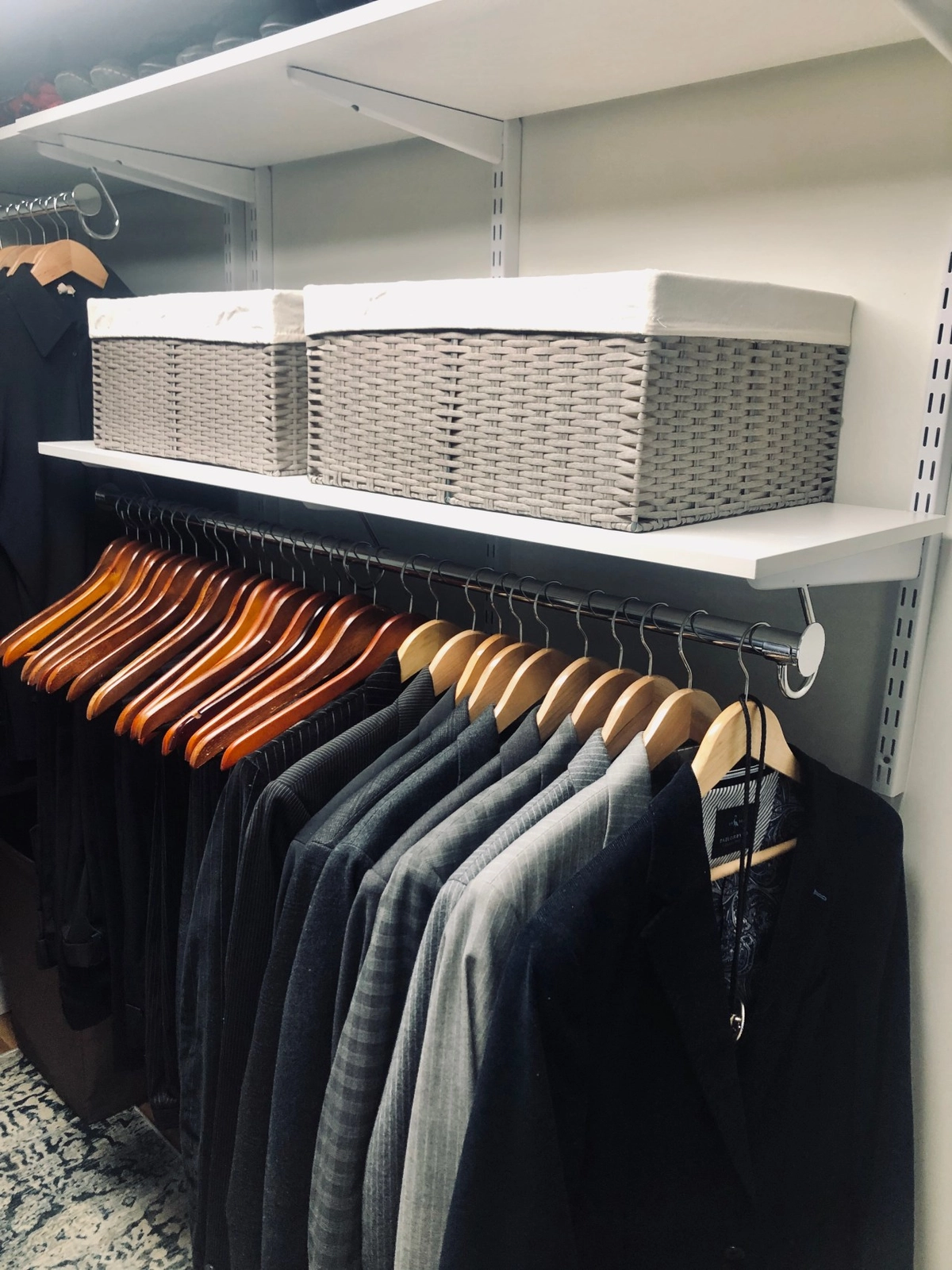
Photo: @woodtv on Instagram
Matching hangers are a small change with an outsized effect. Wooden hangers hold their shape, grip the rod, and make a row of suits look like they belong together instead of a jumble of wire and plastic. Keep the same hanger for everything you hang, and keep the rod for things that wrinkle: shirts, jackets, and trousers.
The top shelf is for the woven bins, and the bins are for everything that does not hang: out-of-season clothes, bags, and spare bedding. A bin with a lid keeps dust off the contents, and pulling down one bin is easier than digging through a loose pile on a high shelf. If you need a step stool to reach it, that is correct: the top shelf is storage, not daily access.
Saturday afternoon: let the furniture hold more
Run fitted wardrobes wall to wall, and let the mirror work
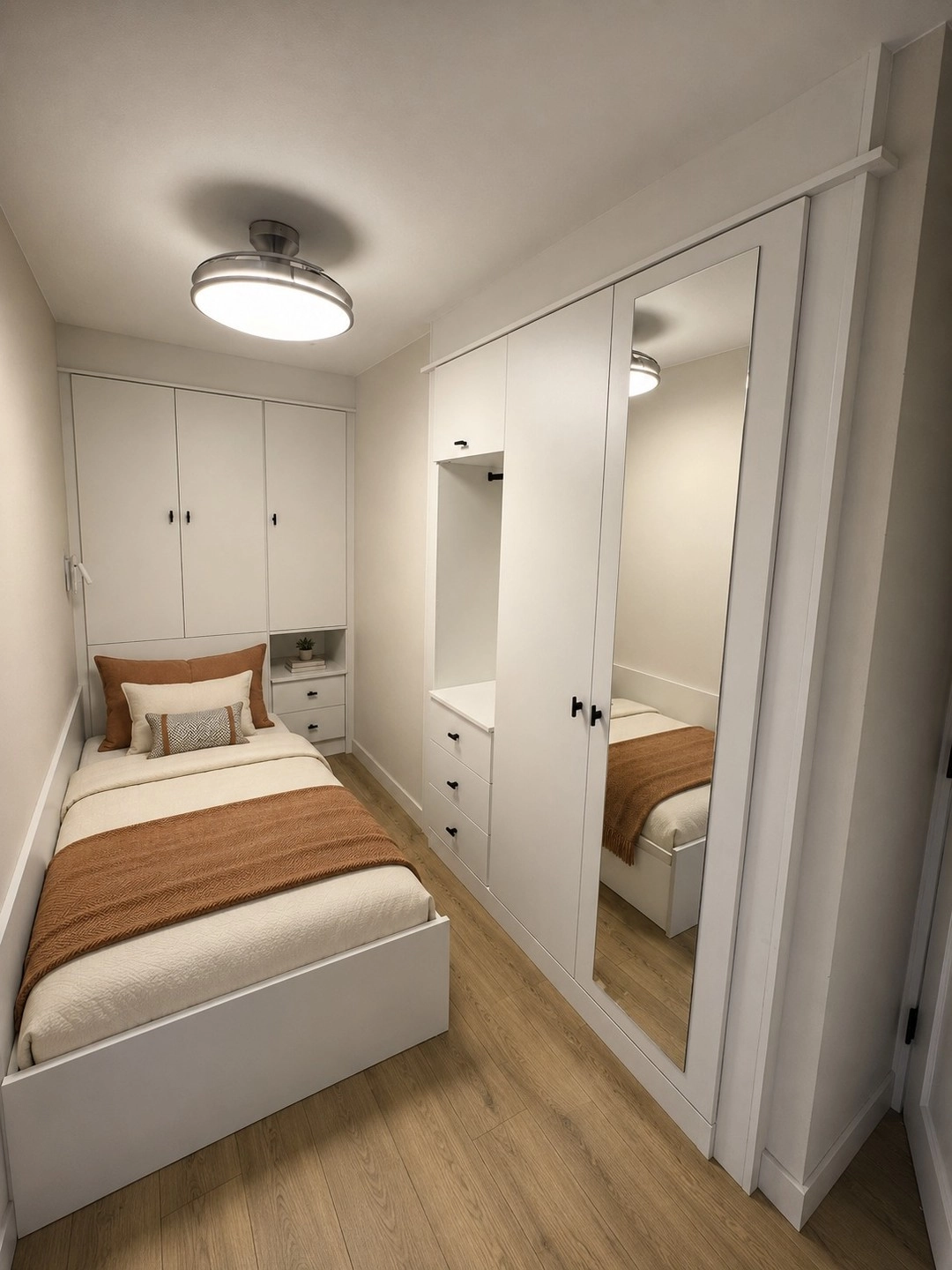
Photo: @myfittedbedroom on Instagram
A freestanding wardrobe wastes the inches on either side of it, and in a small bedroom those inches are the whole game. Fitted wardrobes run wall to wall and floor to ceiling, so there is no gap on top for dust and no gap at the sides for lost socks. The mirrored door in this compact room does a second job: it bounces light around and makes the room feel twice as deep.
If fitted wardrobes are out of budget, fake the look with two tall flat-pack wardrobes pushed tight together and a bridging shelf across the top. Paint the frames the same color as the walls and the separate pieces read as one wall. Leave a shallow niche in the middle for a book and a plant, or the wall of doors starts to feel like a corridor.
Go floor to ceiling, and keep one shelf open
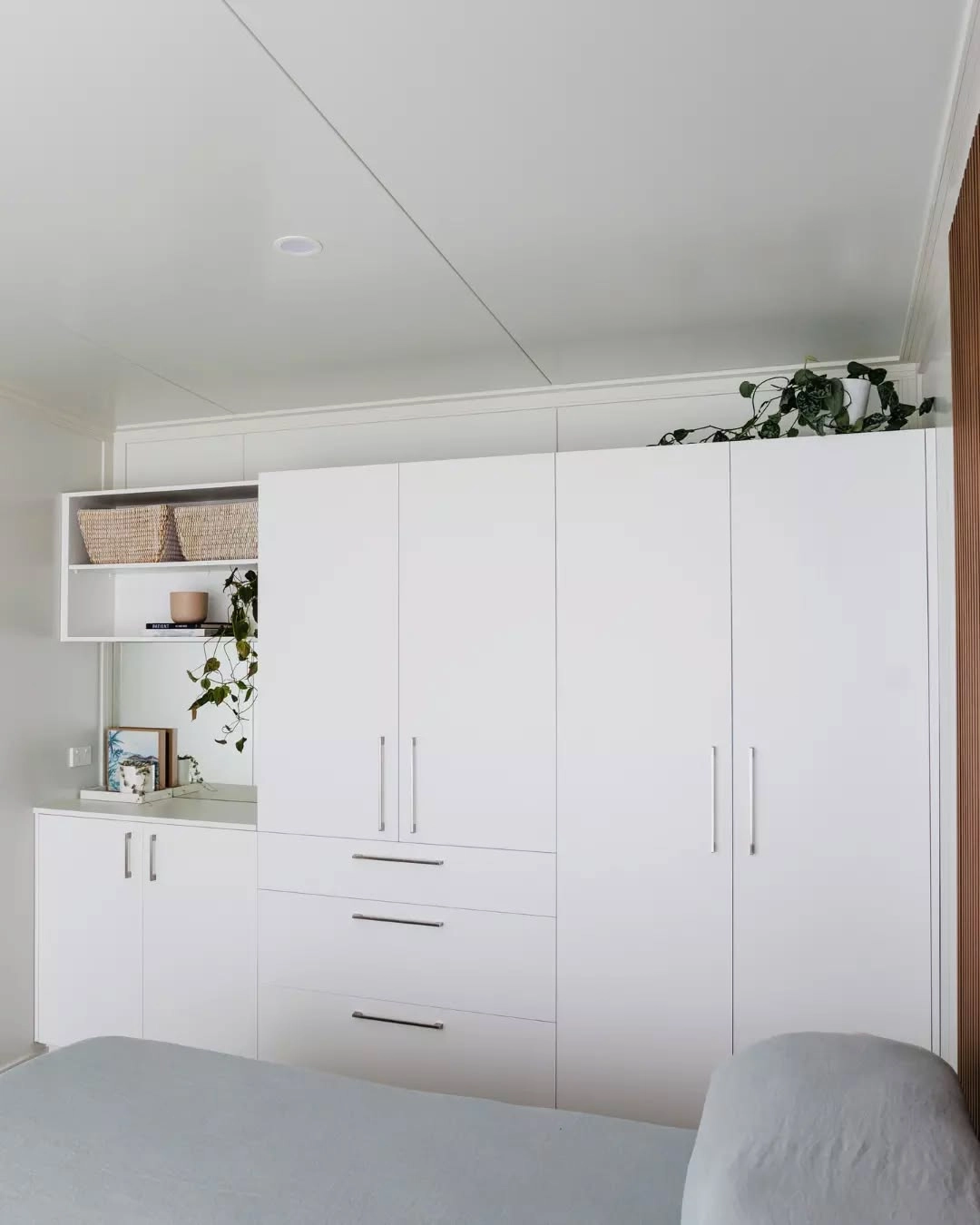
Photo: @podlifenz on Instagram
The top of a wardrobe is the most wasted space in a small bedroom, and this wall shows what happens when you claim it. The white units run to the ceiling, the drawers below hold the daily clothes, and one open shelf at the side breaks up the wall of doors with baskets and a trailing plant. Nothing sits on top gathering dust, because there is no top.
The open shelf is doing more than looking nice. It is the landing spot for the things you reach for every day, the book you are reading and the basket for tomorrow’s clothes, so they never end up on the floor or the bed. One open shelf per wall is enough. Two starts to look like a shop, and the whole point of closed doors is that most of it stays hidden.
Build into the box room, drawers first
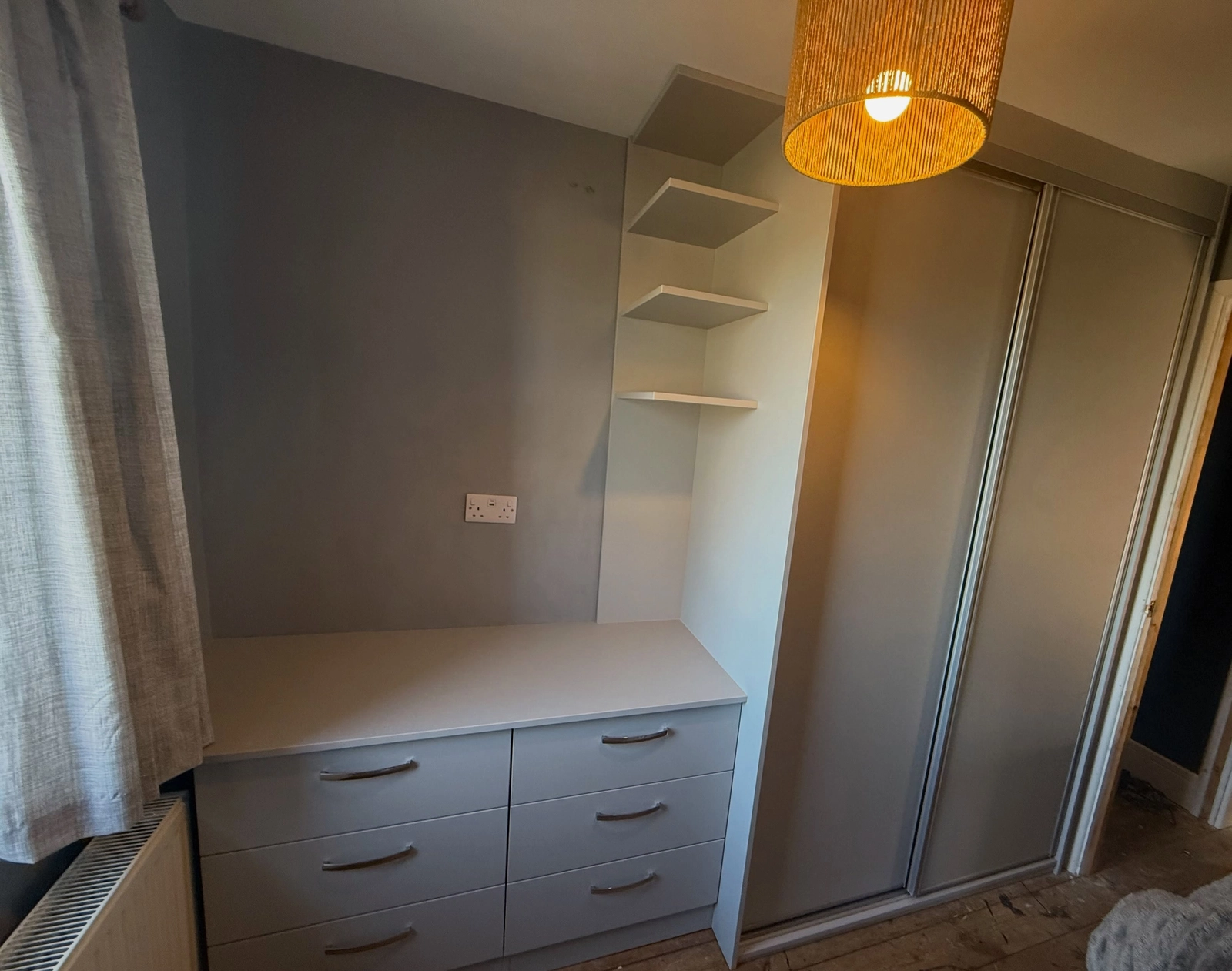
Photo: @mrspearsonshome on Instagram
A box room, the smallest bedroom in the house, needs drawers more than it needs hanging space. This grey built-in puts six drawers under a worktop, open shelves above for books, and a sliding wardrobe at the side that needs no swing space. Drawers hold folded clothes, underwear, and chargers in a footprint a wardrobe door could never match.
Sliding doors are the other half of this idea. A hinged wardrobe door needs two feet of clear floor to open, and a box room does not have two feet to spare. Sliding doors give that floor back to the room. If you are choosing between a bigger wardrobe and a bigger drawer unit, pick the drawers: folded clothes take up less room than hanging ones, and drawers never show a mess.
Use the corner, and stack the drawers there
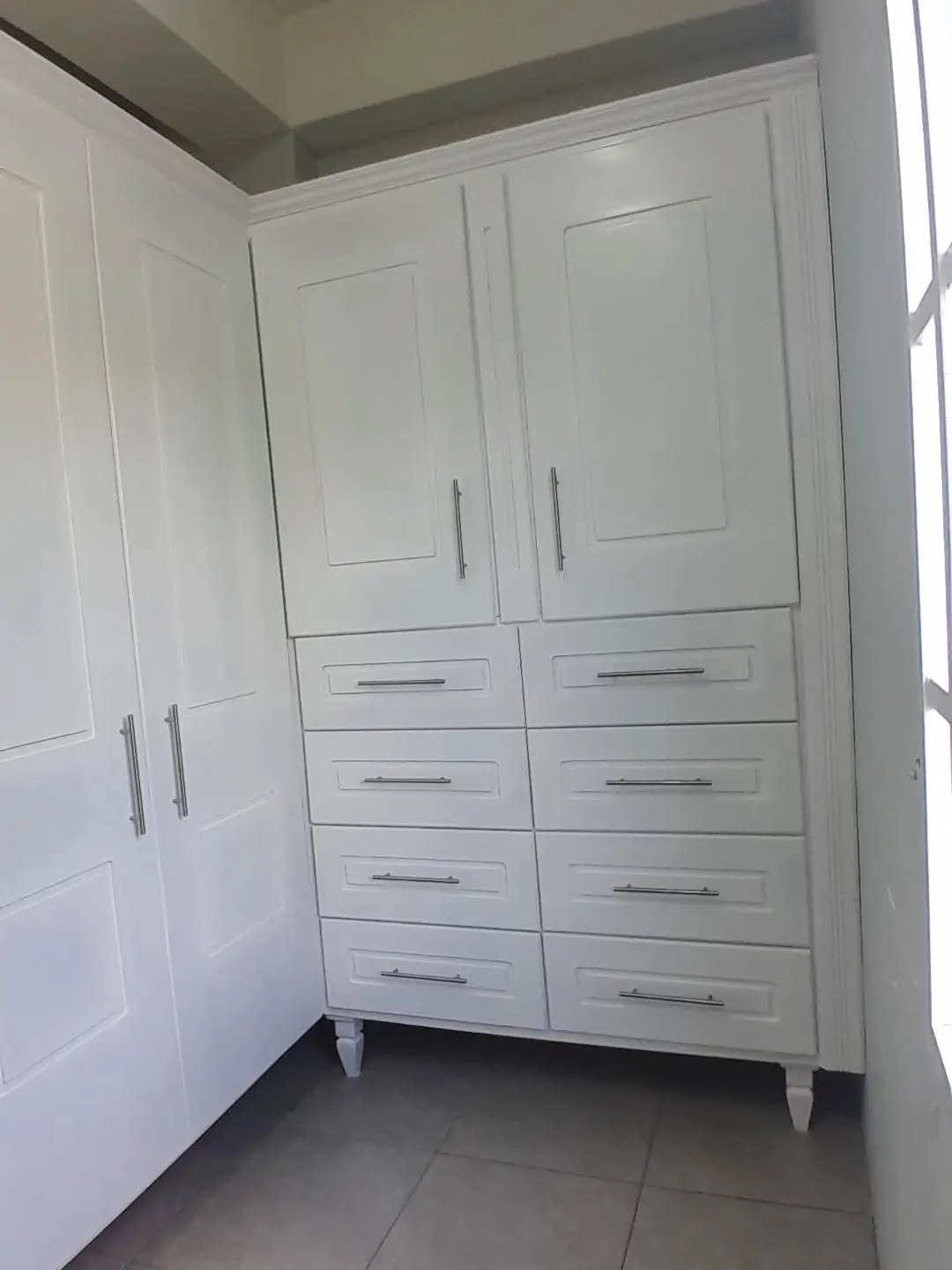
Photo: @tony_nailit on Instagram
Corners are where small bedrooms lose the most space, because a standard wardrobe cannot turn a corner. These white corner units can: two wardrobes meet at the corner, and the drawer stack in front of them holds eight drawers in the space a single chest would take. The corner stops being dead space and becomes the busiest storage in the room.
When you plan a corner, measure the door swing first. A corner unit that blocks a door or a radiator is worse than no unit at all. Keep the tallest section against the wall that gets the least light, and put the drawers where you stand to get dressed, so the morning routine never crosses the room.
The rule for the rest of the weekend: if it does not have a home by Sunday night, it does not live in this room. Put it in another room, donate it, or throw it away. A small bedroom stays organized only when everything in it has earned its place.
Sunday morning: make the bed work harder
Put drawers under the bed, and use them for the bulky stuff
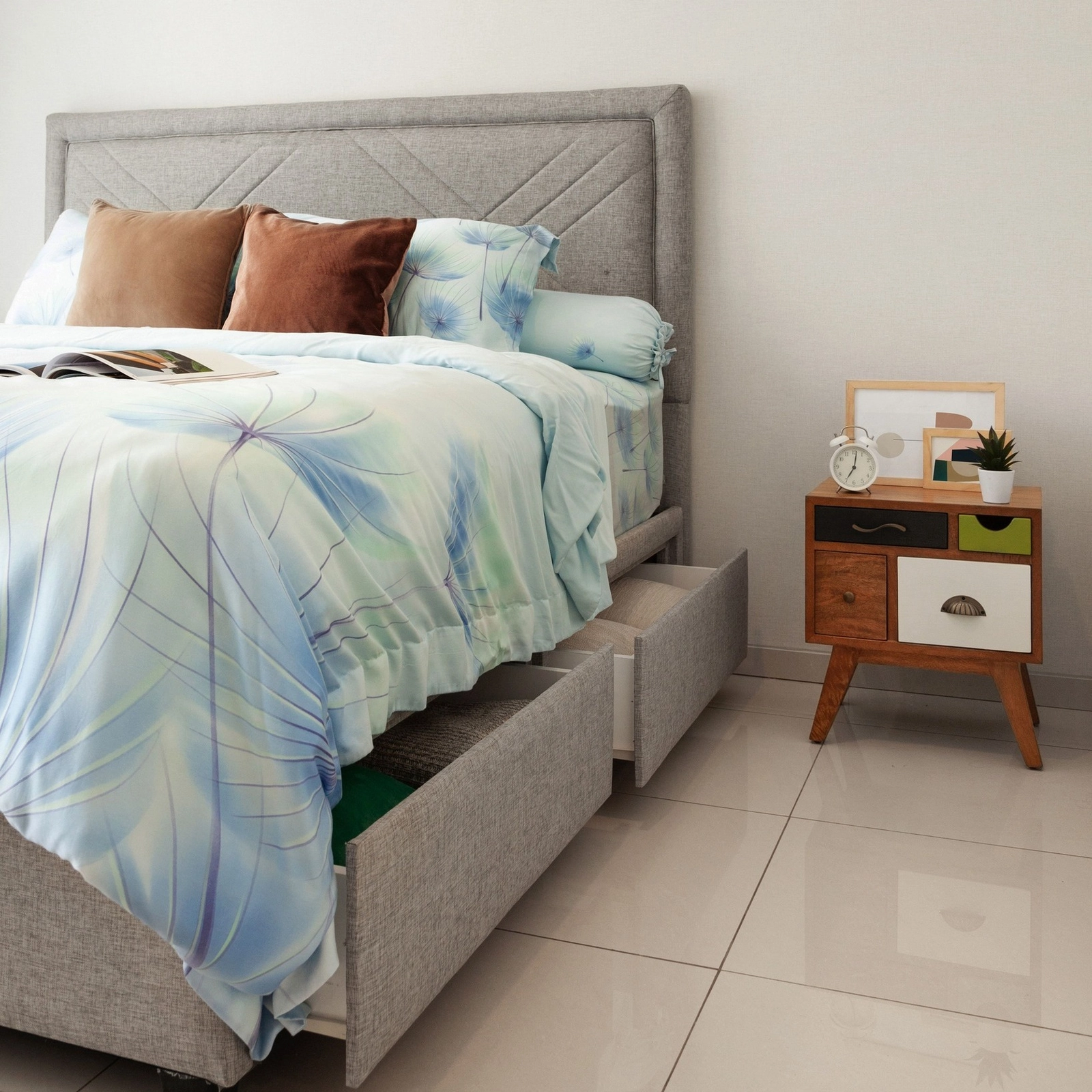
Photo: @_unboxinghome_ on Instagram
The space under a bed is the largest unused storage in most bedrooms, and drawers are the best way to use it. These pull-out drawers hold spare bedding and out-of-season clothes, and they slide out without moving the bed, which is the difference between storage you use and storage you forget. The multi-drawer nightstand beside the bed handles the small things, so nothing lives on top of it.
Under-bed drawers work best for things you need a few times a month, not every day: spare duvets, winter coats, and the guest bedding. Daily clothes belong in the wardrobe, where you can see them. And keep one drawer empty on purpose. An empty drawer is where the next thing you buy goes, instead of on the chair.
Add a storage bench at the foot of the bed
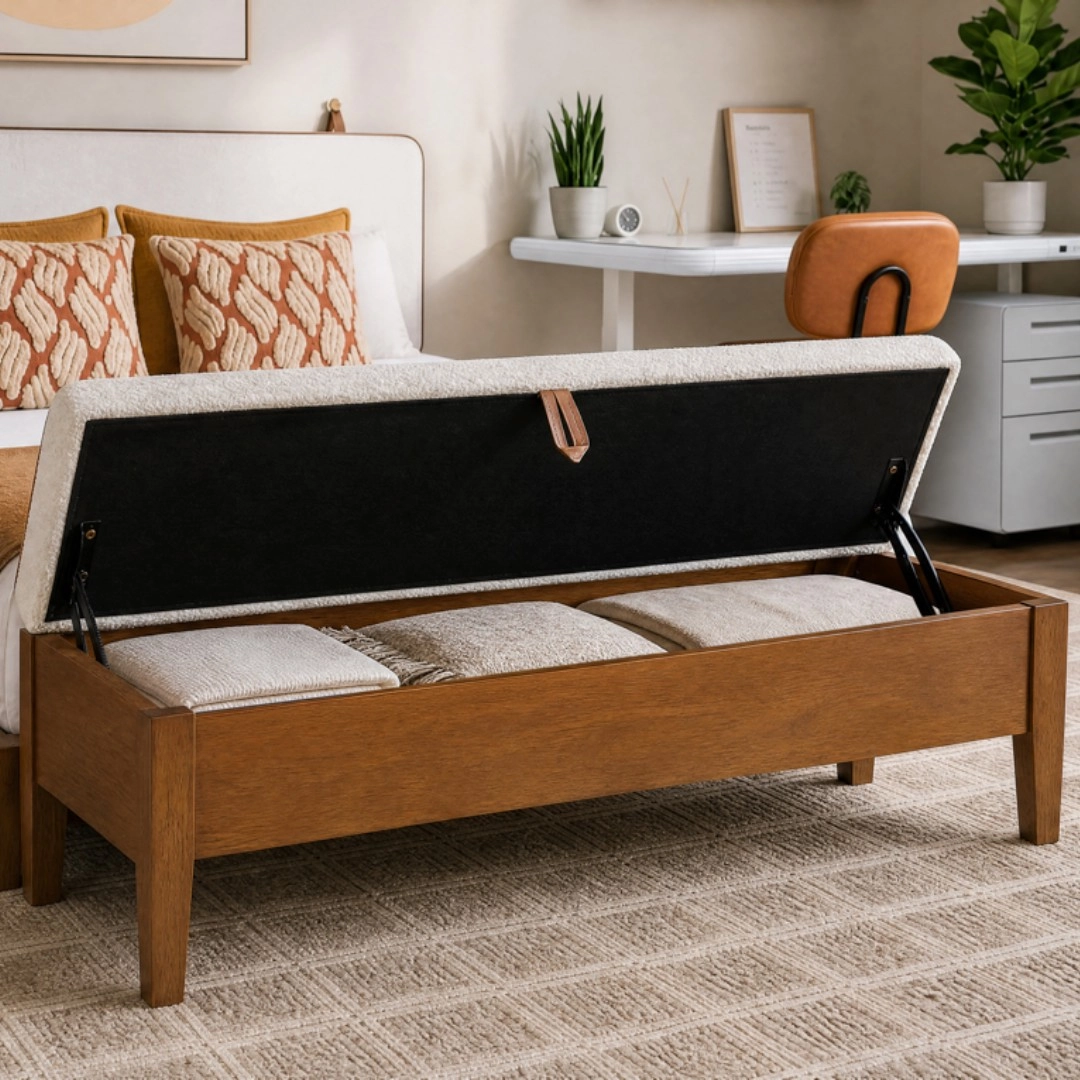
Photo: @structube on Instagram
A bench at the foot of the bed is three pieces of furniture in one: a place to sit while you put shoes on, a place to lay out tomorrow’s clothes, and a box for folded textiles. This one holds spare cushions and throws under a lift-up lid, and its wooden frame keeps it looking like furniture rather than a storage bin that wandered into the bedroom.
The bench also solves the chair problem. Every small bedroom has a chair, and the chair always ends up holding clothes. A bench gives those clothes a proper home with a lid, so the room looks tidy even when the bench is full. Keep the top clear except for the cushion, or it becomes a shelf, and the whole point is lost.
Sunday afternoon: use the walls and the doors
Hang a pegboard for the small stuff that has no drawer
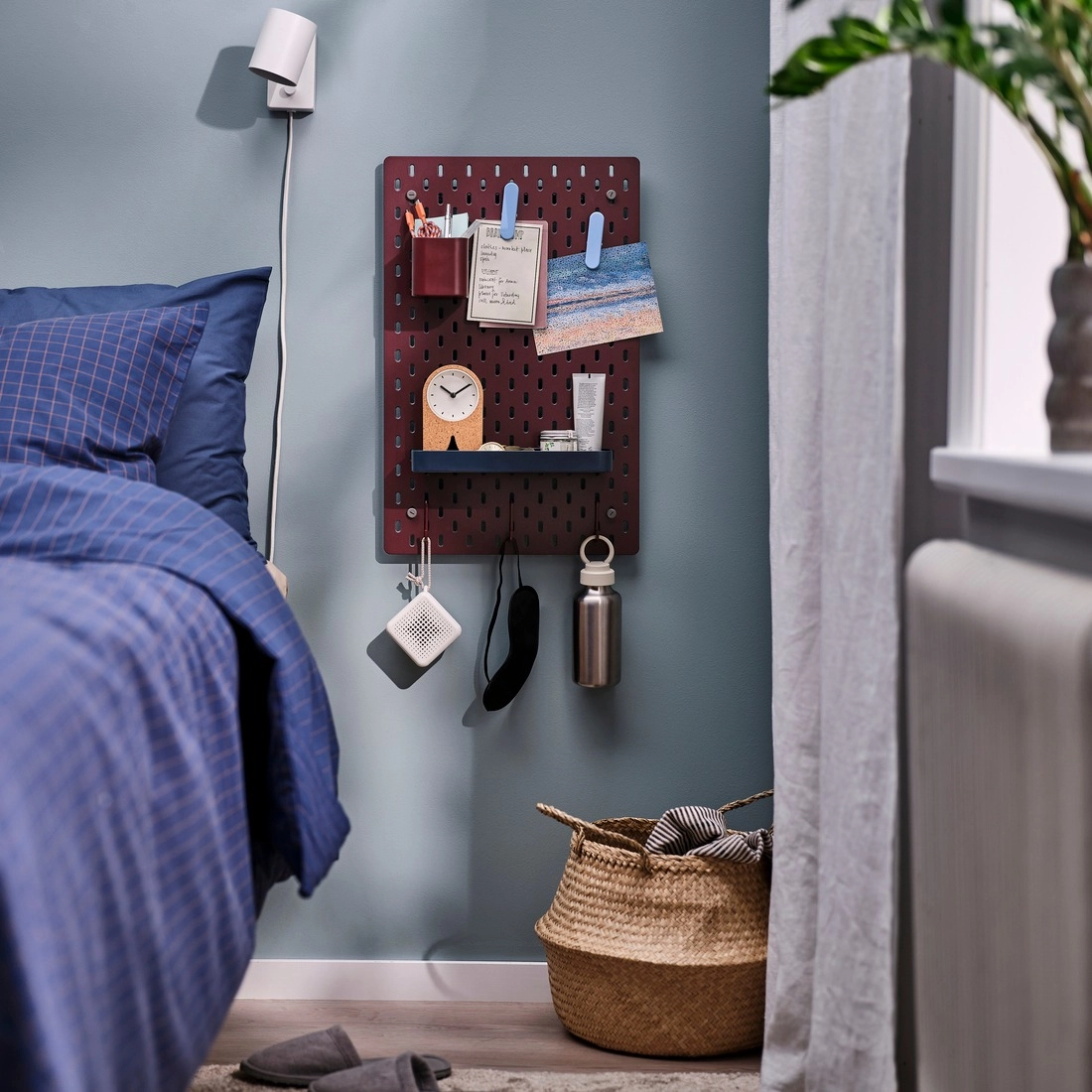
Photo: @ikeauk on Instagram
Some things are too small for a drawer and too useful to hide: keys, a sleep mask, a water bottle, the notebook you reach for at night. A pegboard on the wall beside the bed holds all of them on hooks and in a cup, and the woven basket below catches whatever does not fit. It is the smallest project in this plan and one of the most satisfying.
Pegboards work because they are flexible. Move a hook, and the board changes with you, which a fixed shelf never does. Hang it at arm’s reach from the bed, not across the room, and keep it to one board: a pegboard that spreads across a whole wall stops being organization and starts being a display.
Use the back of the door, and label every bin
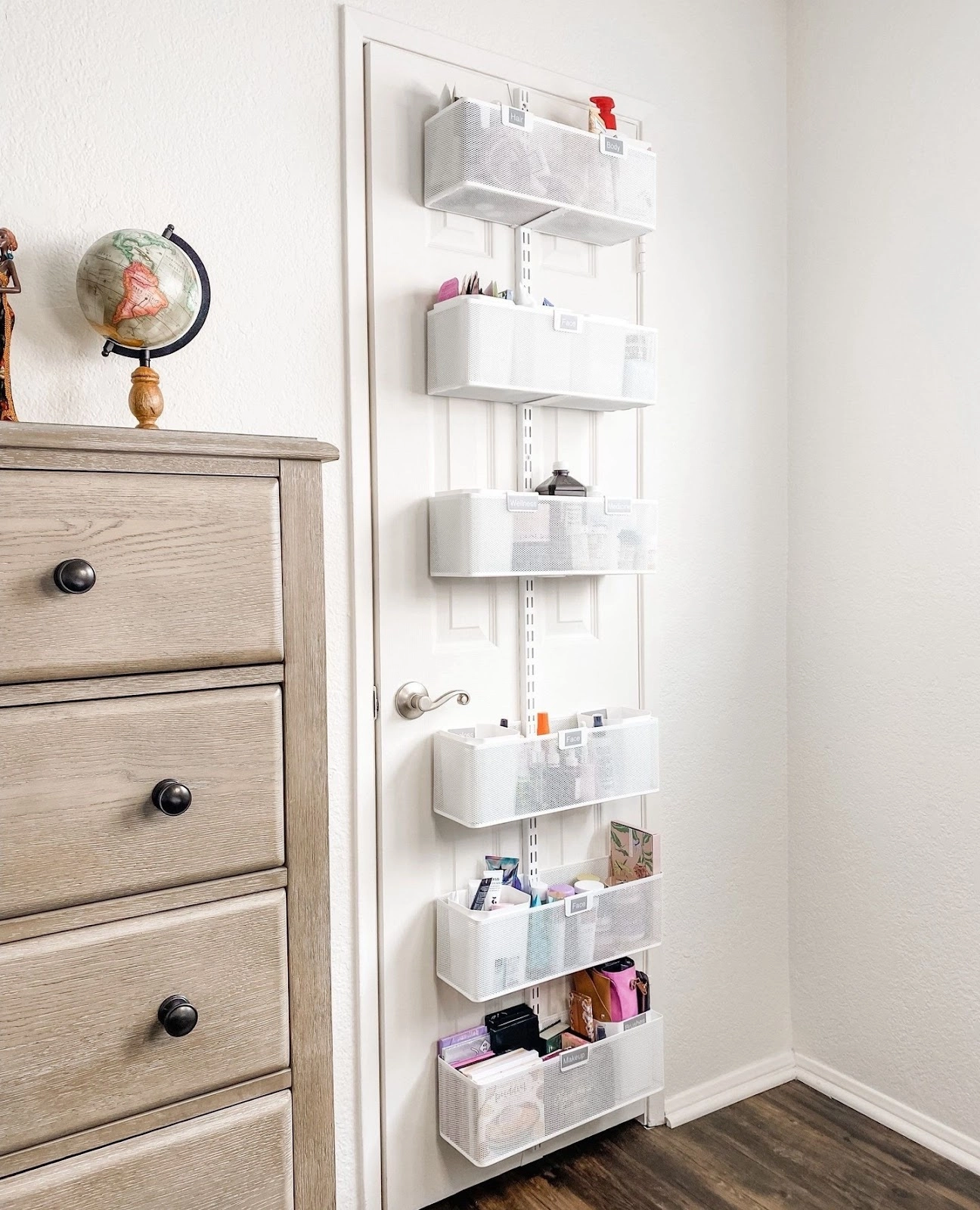
Photo: @simplyluxeorganizing on Instagram
The back of a bedroom door is a full wall of storage that most people never use. This mesh organizer hangs over the door without a single screw and holds six labeled bins, one each for hair, body, face, wellness, and makeup, with the dresser beside it free for a globe and a plant. It is the best no-drill project in this plan, and it takes ten minutes.
Labels matter here more than anywhere else, because door bins are deep and things sink. A label on each bin means you reach for the right one without pulling out three others first. If you rent, this is your project: it leaves no holes, holds a surprising amount, and comes with you when you move.
Add a bedside shelf for books, pencils, and the nightly bits
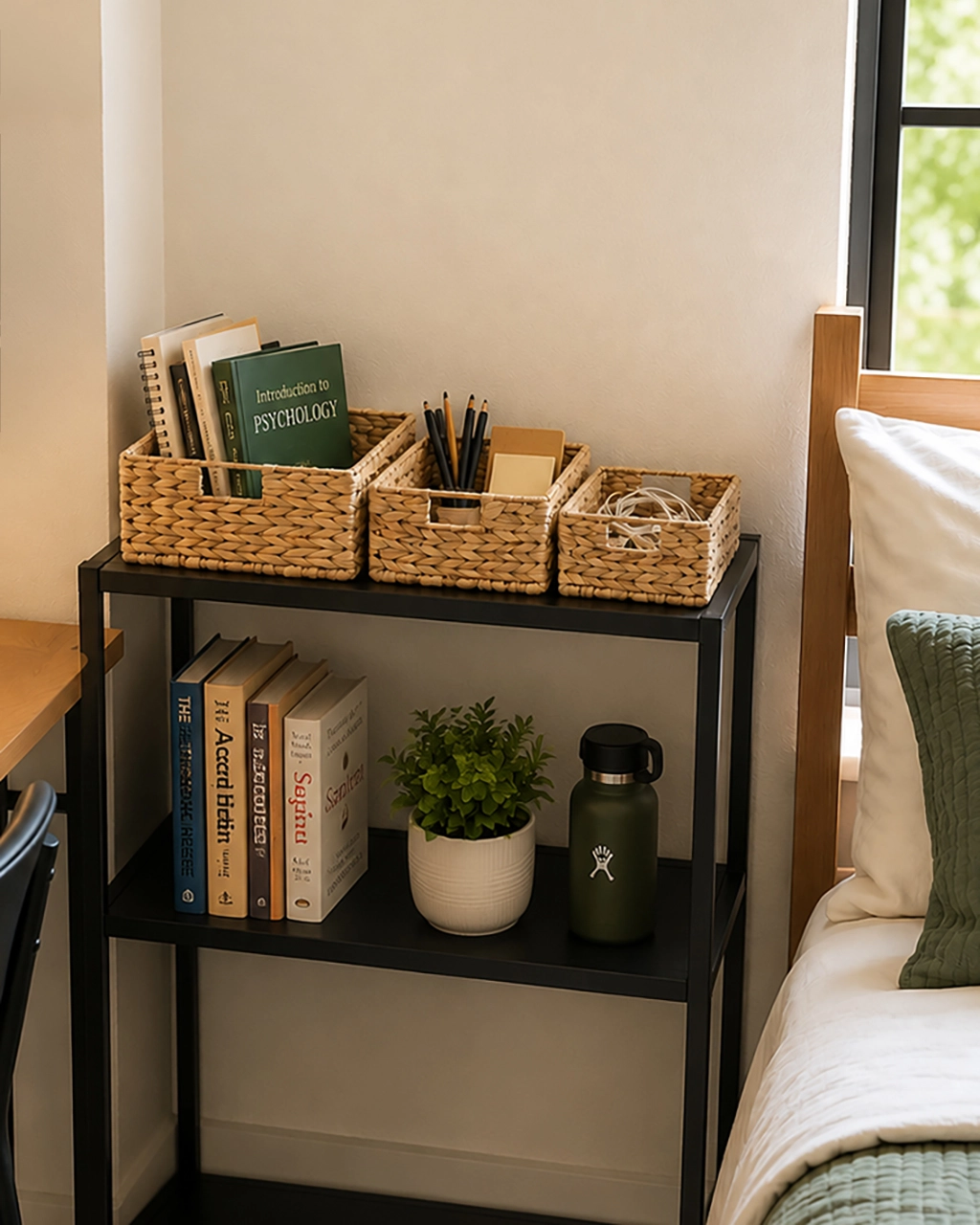
Photo: @rgihome on Instagram
A nightstand with one drawer is not enough for a reader, a student, or anyone who charges three things at night. This two-tier shelf beside the bed holds three woven baskets on top, one each for books, pencils, and cables, with more books and a plant below. The bed stays a bed, and the floor stays clear, because everything that used to live on the bed now lives on the shelf.
Keep the shelf narrower than the bed is long, or it crowds the room. And keep the top basket for the book you are reading now, not the ten you mean to read someday. A bedside shelf works when it holds tonight’s things, not a library.
Claim the awkward corner under the slope
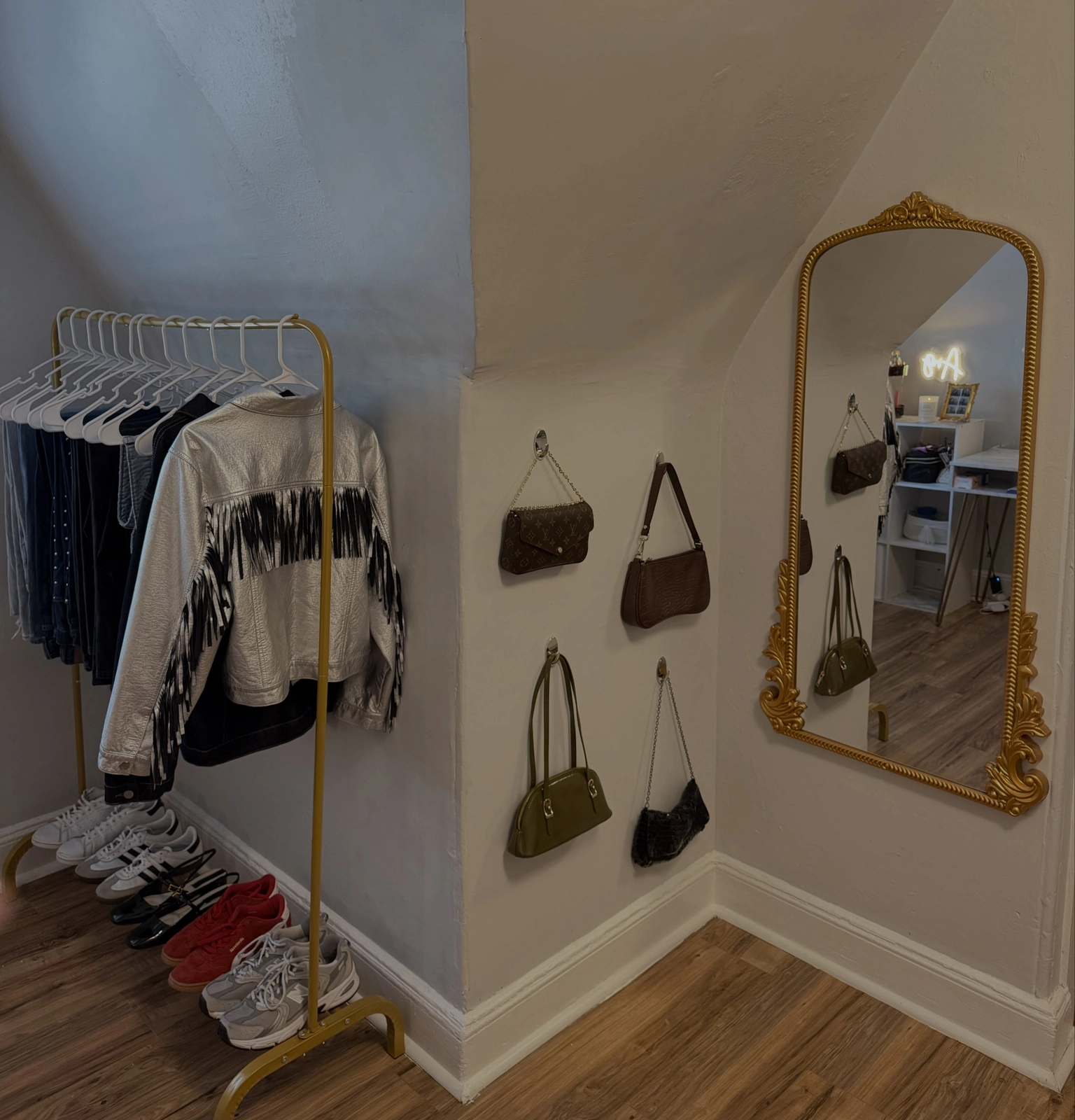
Photo: @angelasalbum on Instagram
A sloped ceiling makes a corner feel unusable, but a clothing rack and a row of wall hooks turn it into a dressing corner. The gold rack holds the week’s outfits at exactly the height the slope allows, shoes line up underneath, and bags hang on hooks on the flat wall beside it. The ornate mirror finishes the corner and makes it feel deliberate rather than leftover.
Measure the slope before you buy anything for it. A rack that is too tall will not fit, and a rack that is too short wastes the space. Put the shoes under the lowest part of the slope, where nothing else fits, and keep the mirror on the flat wall so you can actually use it. Awkward corners reward the rooms that measure first.
Sunday evening: finish with the big moves
Loft the bed and free the whole floor underneath
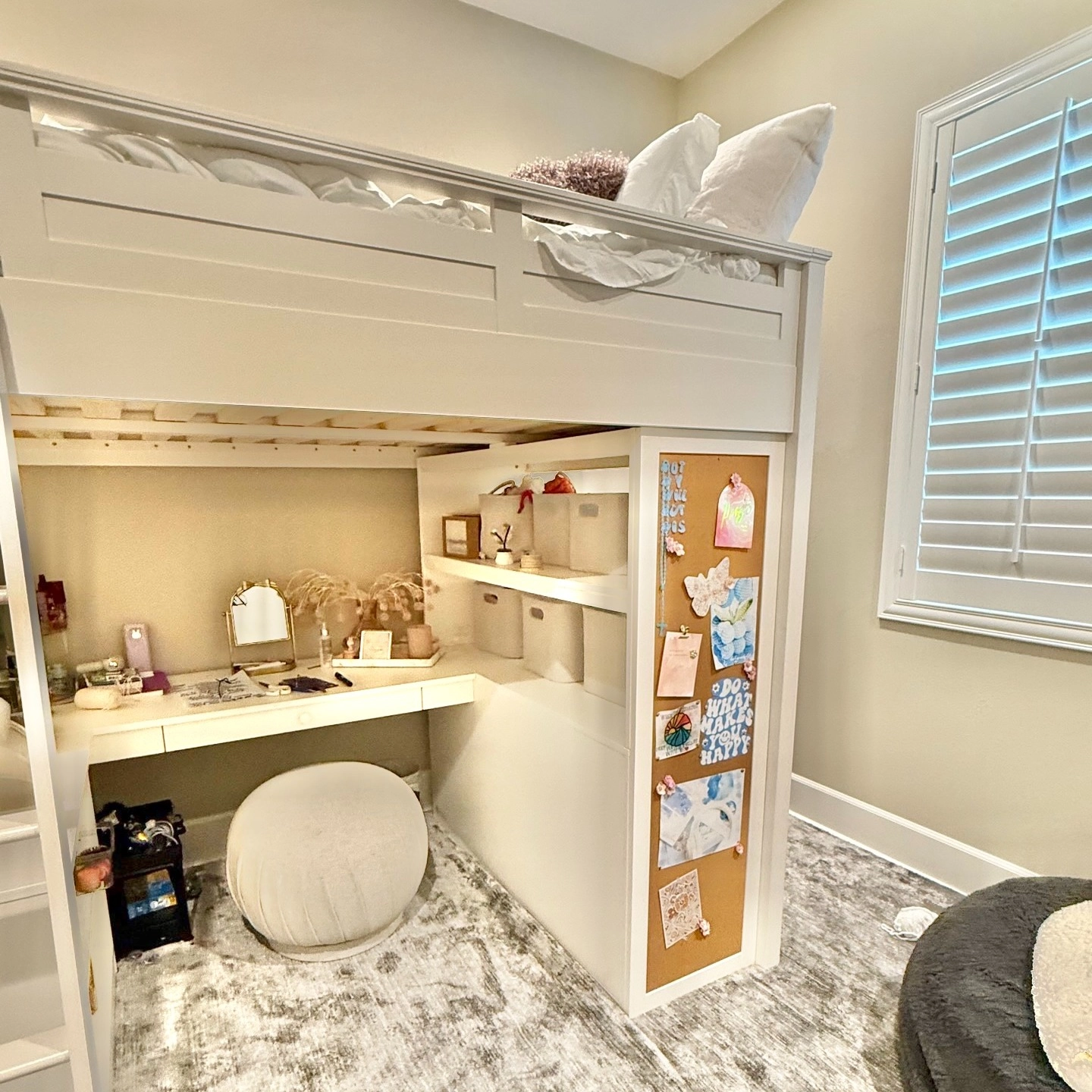
Photo: @beeorganizedtemecula on Instagram
When a bedroom is too small for both a bed and a desk, the answer is to stack them. This loft bed puts the sleeping space up top and a full desk nook underneath, with shelves and bins for supplies and a corkboard on the side for notes and pictures. One footprint now holds two rooms, and the floor space that a bed would have taken is a workspace instead.
Loft beds suit teenagers, students, and anyone working from a small bedroom, and they are the same trick studio apartments use to fit a whole flat into one room. Check the ceiling height first: you need enough room to sit up in bed without hitting your head, and a sturdy frame matters more than a pretty one. If the ceiling is too low, a storage bed with drawers is the safer version of the same idea.
Finish with a window seat that stores, and a room that finally fits
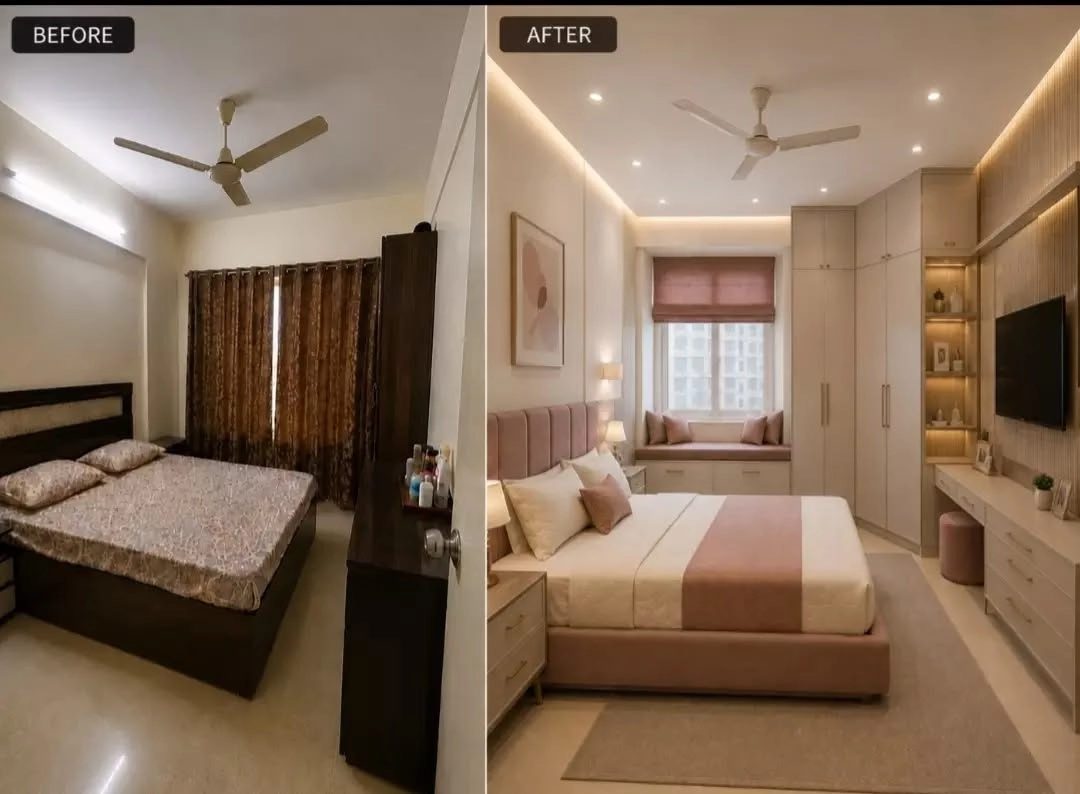
Photo: @ishaanyainnovation on Instagram
This is what the weekend is for: a room where everything finally has a place. The renovation put fitted wardrobes along one wall, a window seat with storage underneath it, and a desk with drawers along the other, and the before photo shows how far it came. The window seat is the detail to steal even without a renovation: a bench under a window with a lift-up lid holds a season of clothes and gives the room its favorite seat.
You do not need a renovation to get most of this. A freestanding bench under the window, a fitted-look wardrobe wall from flat-pack units, and the closet zones from Saturday morning will get you most of the way there. The point of the weekend is not perfection. It is that by Sunday night, nothing in the room is homeless anymore.
Keep it that way: the five-minute nightly reset
- Hang up or fold anything that landed on the chair or the bed.
- Return the nightstand and the bedside shelf to one item each.
- Put tomorrow’s clothes in the open shelf or on the bench.
- Drop dirty laundry in the basket, not on the floor.
- Close the wardrobe doors. An organized room you can see is a room you will keep organized.
Monday morning is the test
You will know the weekend worked on Monday morning, not Sunday night. Getting dressed should take five minutes, because everything is where the plan put it: folded clothes in the drawers, hanging clothes on matching hangers, shoes under the rack, and tomorrow’s outfit already on the bench. If you are still hunting for things, one zone needs another pass, and now you know which one.
Run the five-minute reset every night for a week, and the room will start to maintain itself. Organization is not a personality trait. It is a set of homes for your things, built one weekend at a time.