24 Small Living Room Fireplace Ideas Worth Gathering Around
A fireplace forgives a multitude of small-room sins. It gives the seating a reason to gather, the walls a focal point that needs no art, and the evenings a centre that is not a screen. Small rooms do not need big fireplaces; they need the right one.
Below are twenty-four fireplaces filed by type: the classics, the moderns, and the stoves. Every file carries one verdict, the single lesson worth stealing from that fire.
Every fireplace below is a case file: what it is, and the one lesson to steal.
The classics
Brick, stone, and mantels with history in them. The classics work because they look like they have always been there, even when they were installed last spring. They suit small rooms because they are visually quiet: the materials do the talking, so the room does not need much else. A classic fireplace is the lowest-risk focal point a small living room can have.
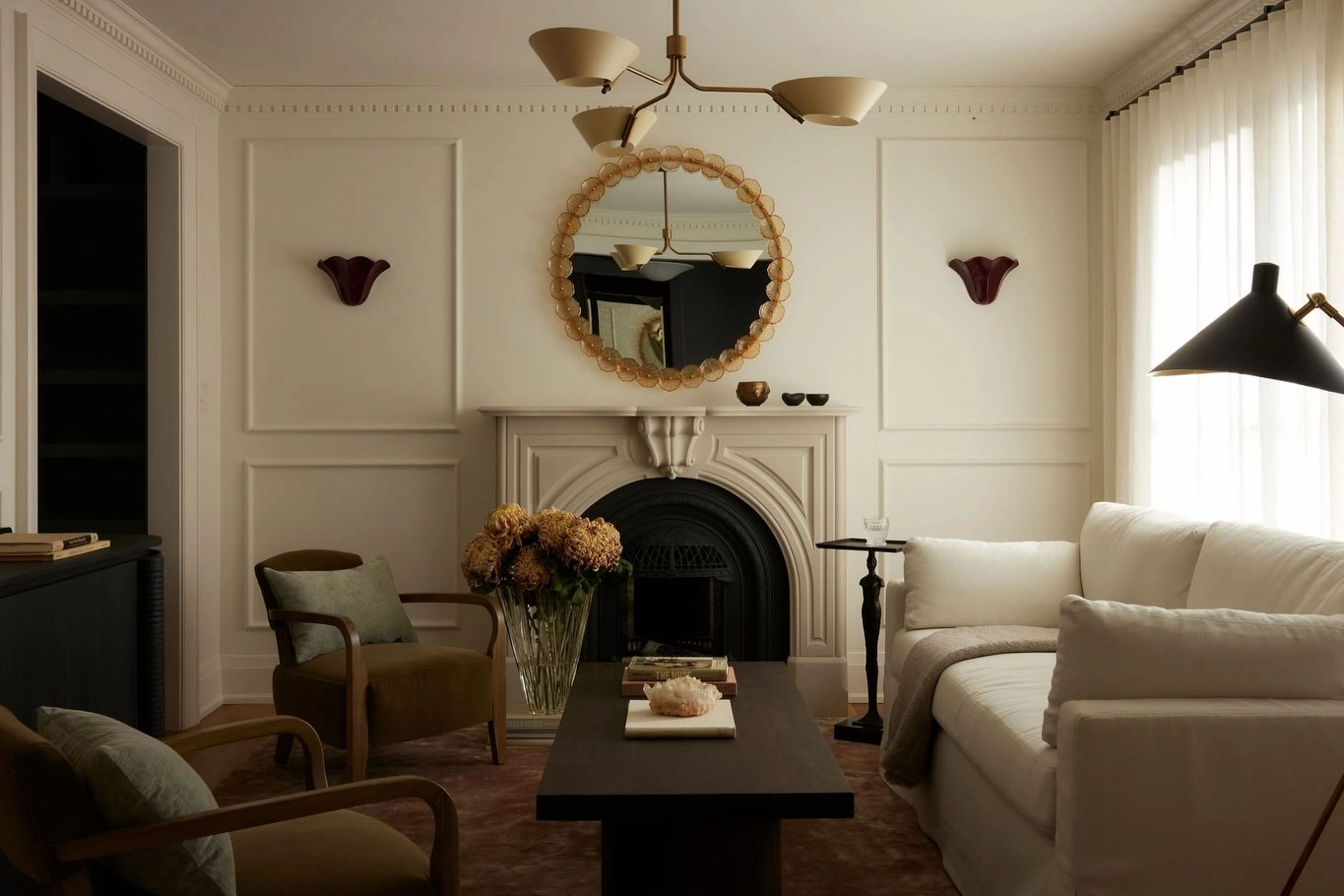
Photo: @jessicamcgouran on Instagram
File 1: Paint it white and let the fire do the talking
A white mantel fireplace keeps the architecture quiet so the flames can be loud. The white recedes, the fire advances, and the small room gets a focal point that takes no visual space. When in doubt, white it out.
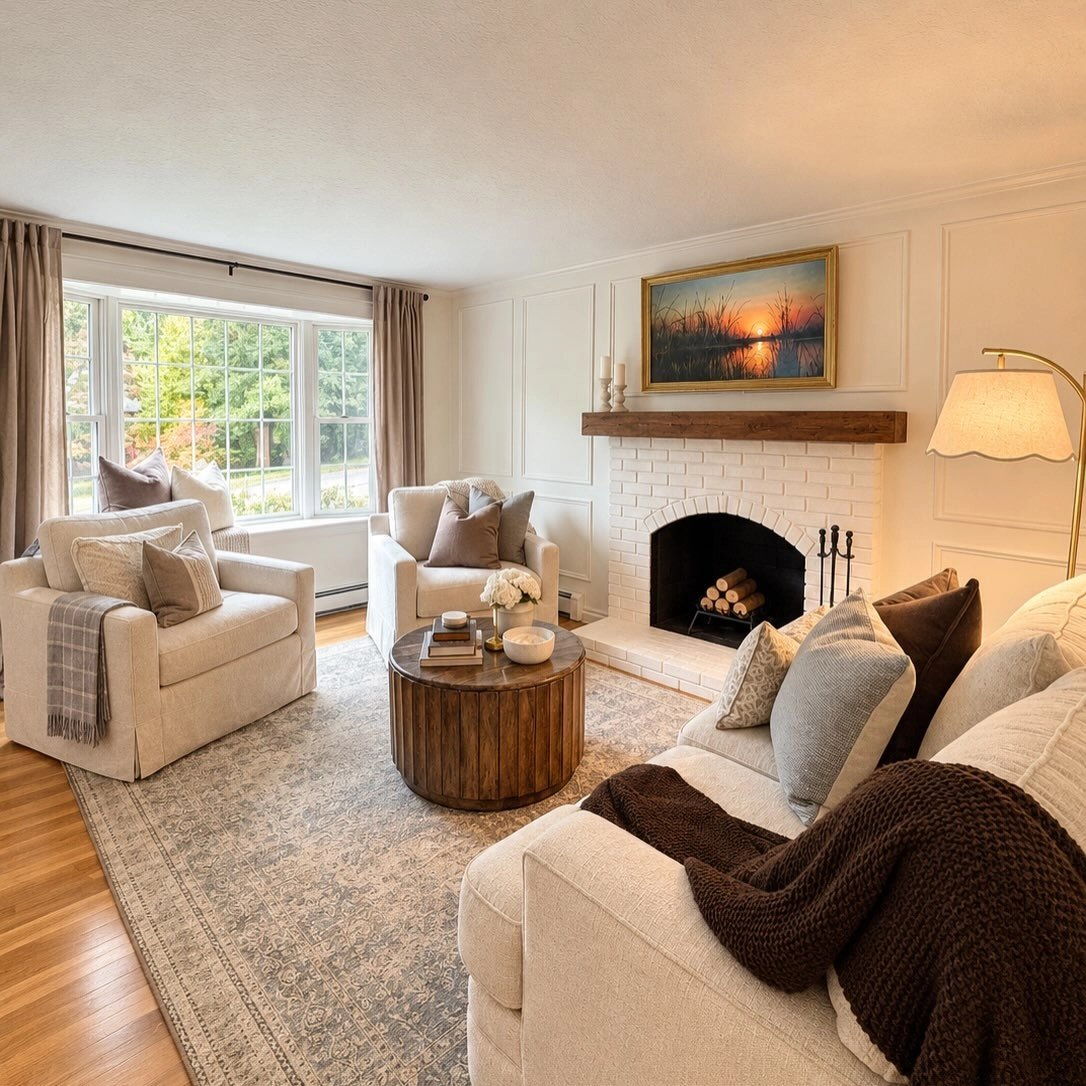
Photo: @homeby_nkm on Instagram
File 2: Whitewash the brick, keep the texture
A white-painted brick fireplace keeps every bump and groove of the brick while losing the heaviness. The texture gives the room character, the white gives it air, and the small space gets both. Paint the brick, never the charm.
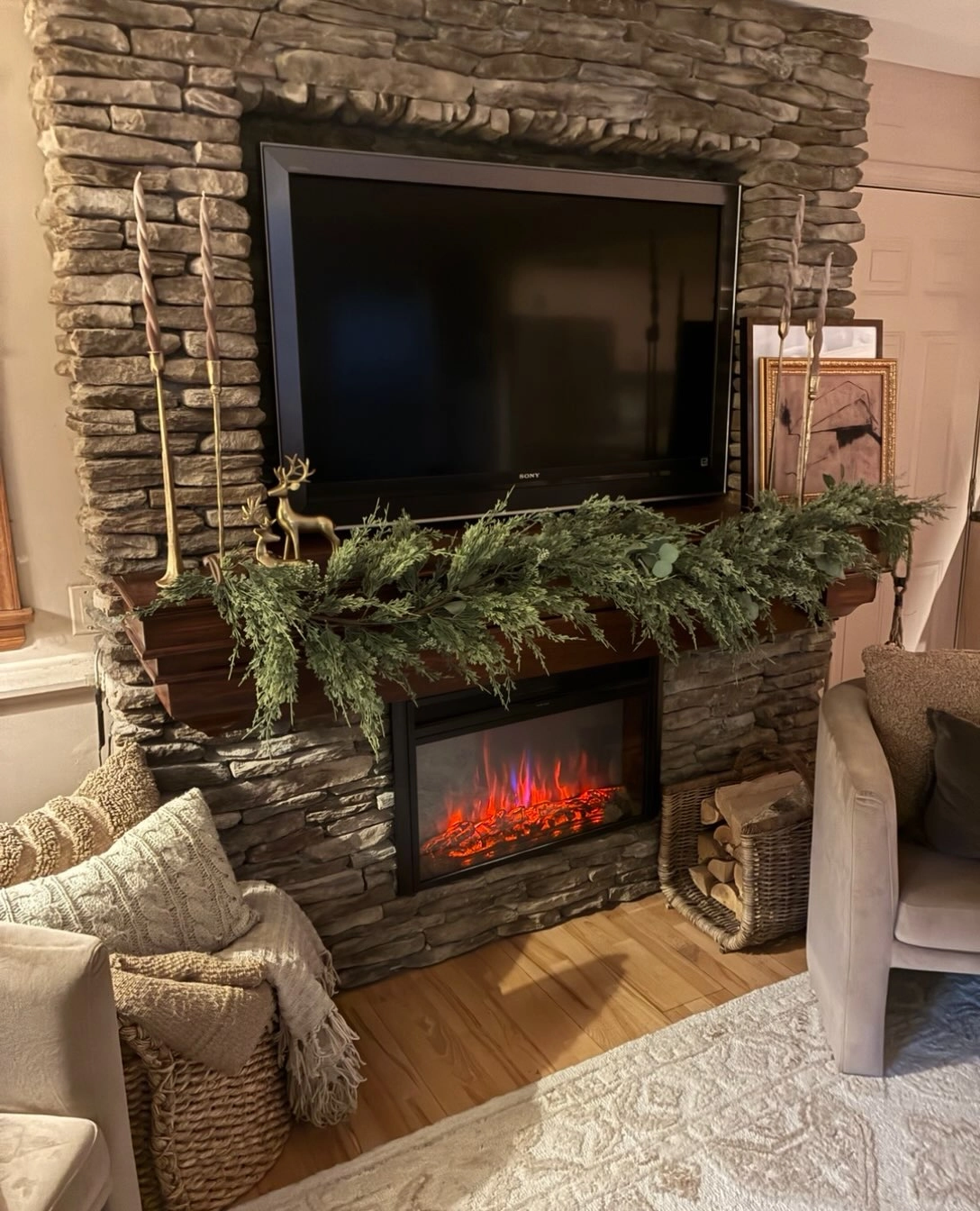
Photo: @wendys_homestyling on Instagram
File 3: Let the stone be the whole decoration
A stone fireplace needs nothing else on its wall. The stone is the art, the texture, and the colour story, and the small room is finished the moment the fire is lit. One strong material beats three weak ones.
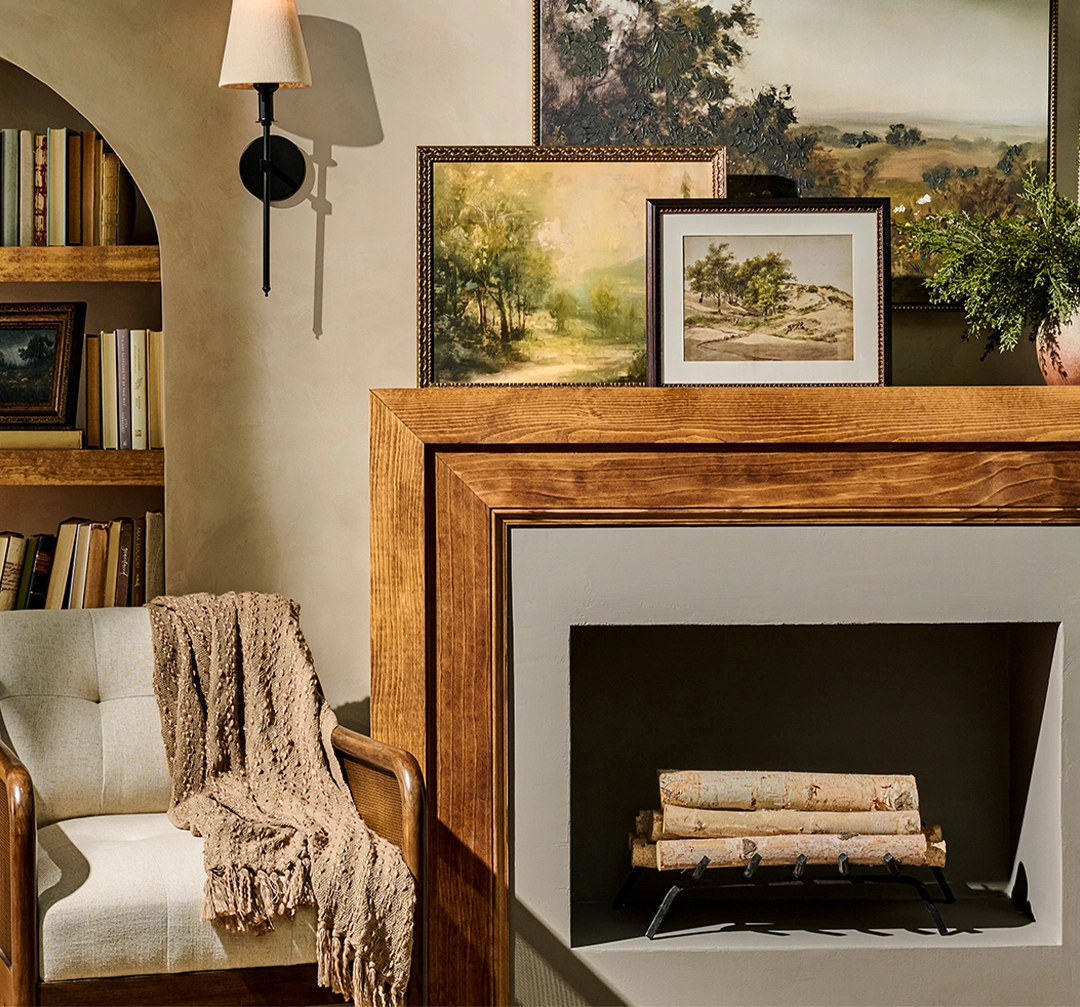
Photo: @hobbylobby on Instagram
File 4: Stack birch logs even if you never burn them
A wood mantel dressed with birch logs is styling, not fuel, and it works whether the fire is real or not. The logs add the cabin signal, the mantel adds the shelf, and the fireplace looks alive in July. Decorative logs are the cheapest fireplace upgrade there is.
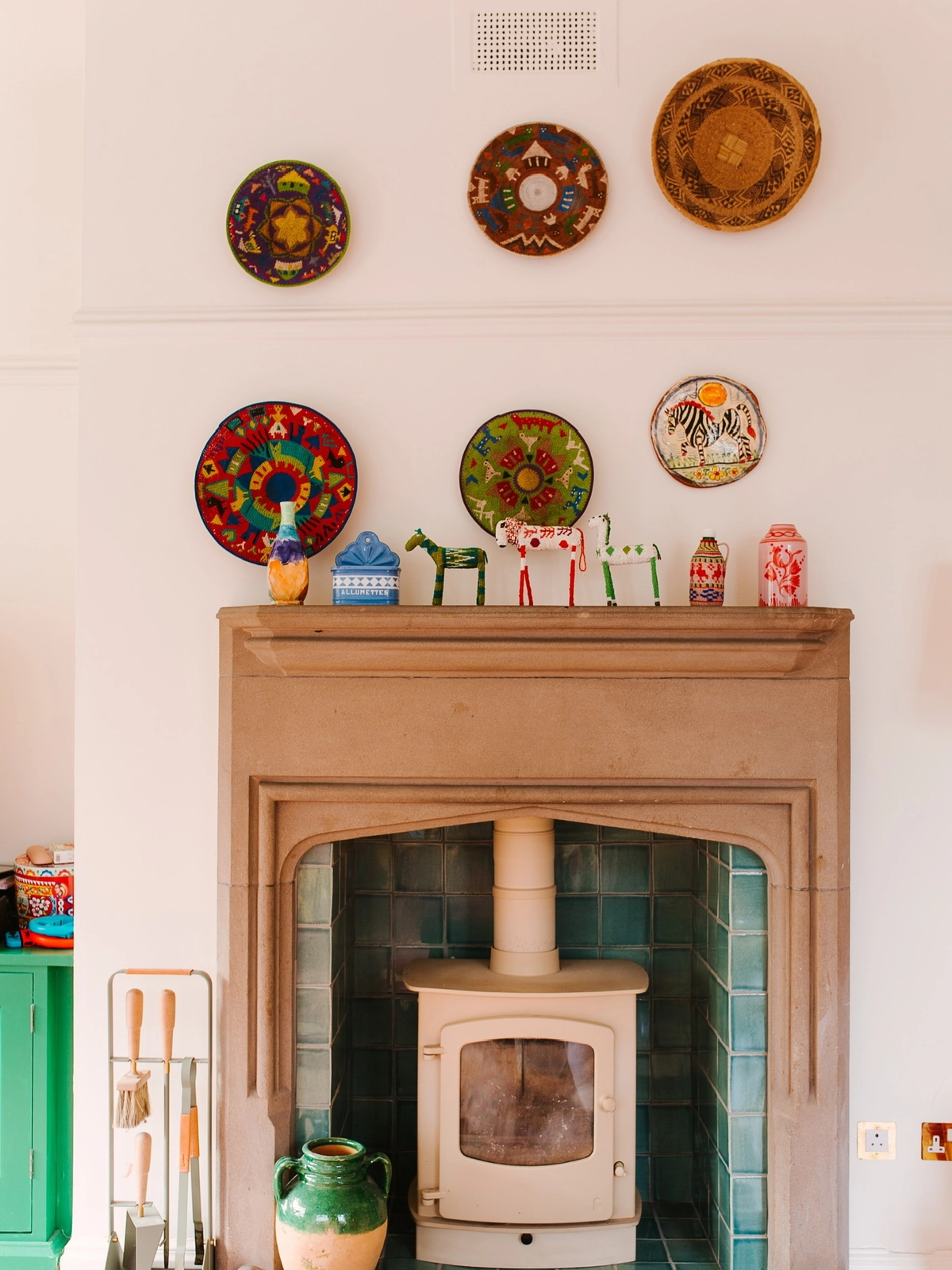
Photo: @bluebellgray on Instagram
File 5: Tile the surround for a jewel-box fire
A stone fireplace with teal tile turns the firebox into a jewel box. The tile catches the firelight, the colour gives the small room its one bold move, and the fireplace becomes the room’s jewellery. One tiled surface is enough; two is a theme park.
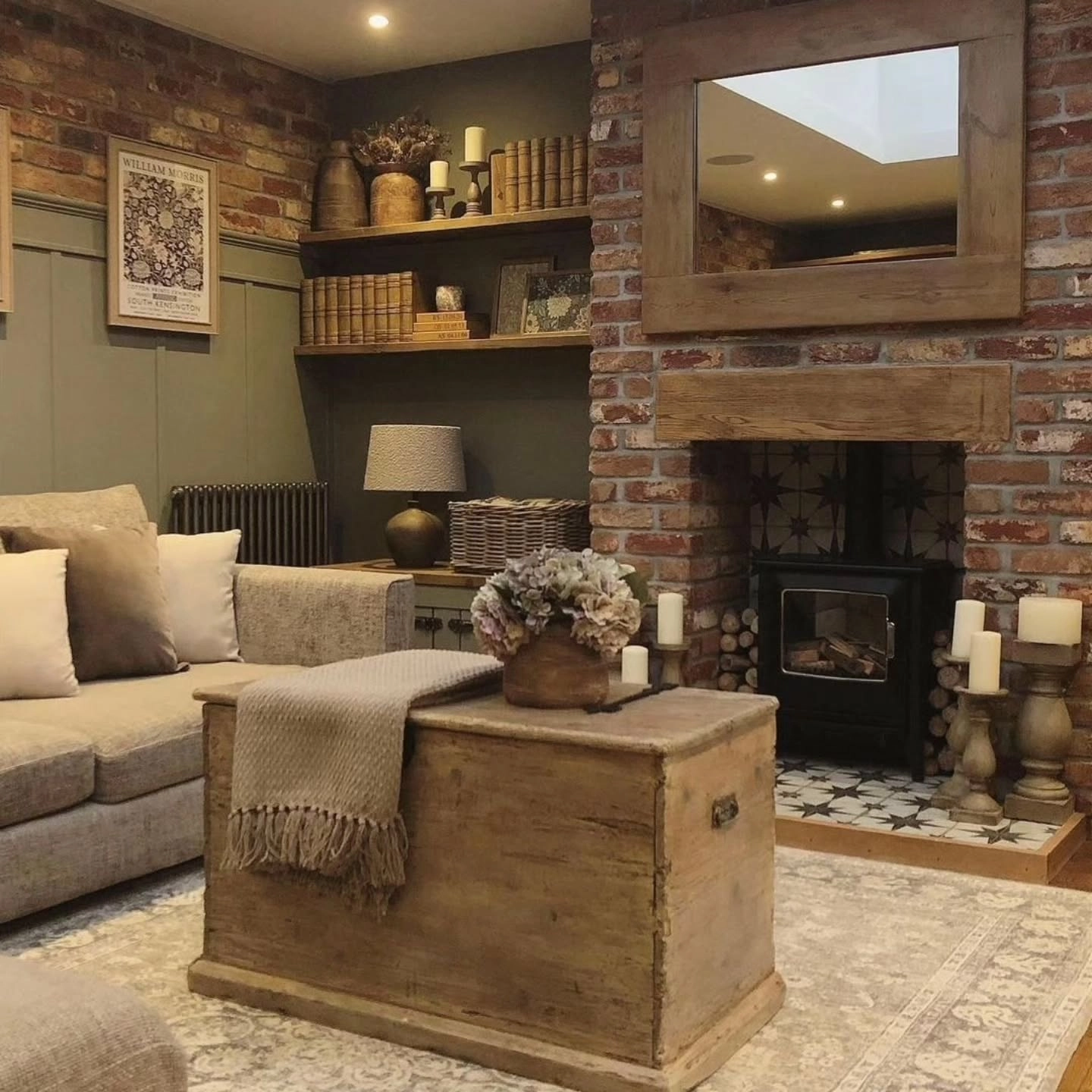
Photo: @farmhouse.decoration on Instagram
File 6: Keep the red brick honest
A red-brick fireplace left exactly as it is has a confidence no renovation can buy. The brick is warm, the mortar is honest, and the small room inherits decades of character. Not every fireplace needs updating; some need leaving alone.
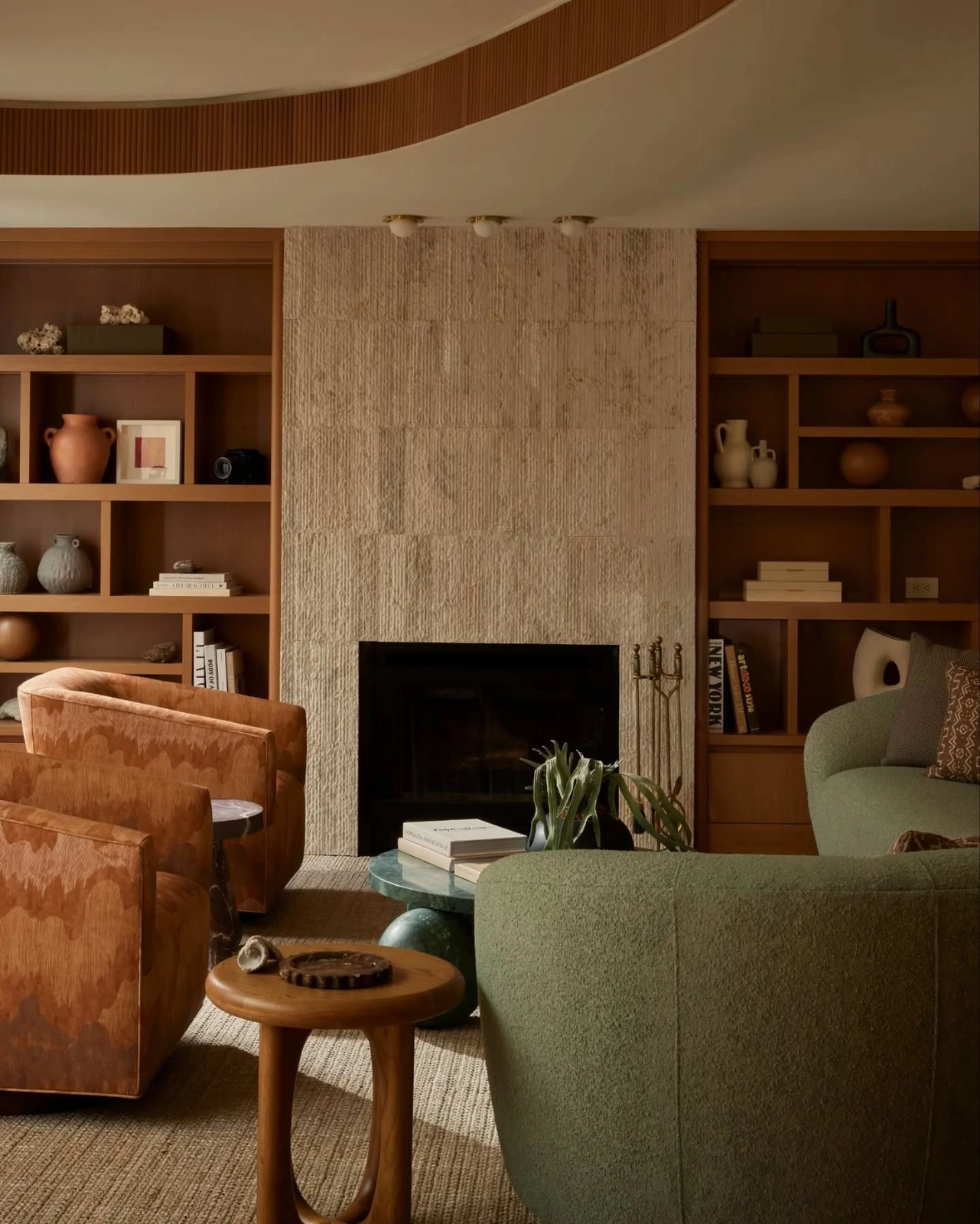
Photo: @aspiredesignandhome on Instagram
File 7: Flank it with bookshelves and call it a library
A stone fireplace between built-in bookshelves makes the small living room feel like a library that happens to have a fire. The shelves give the fire company, the books give the room brains, and the whole wall works. Symmetry optional, books mandatory.
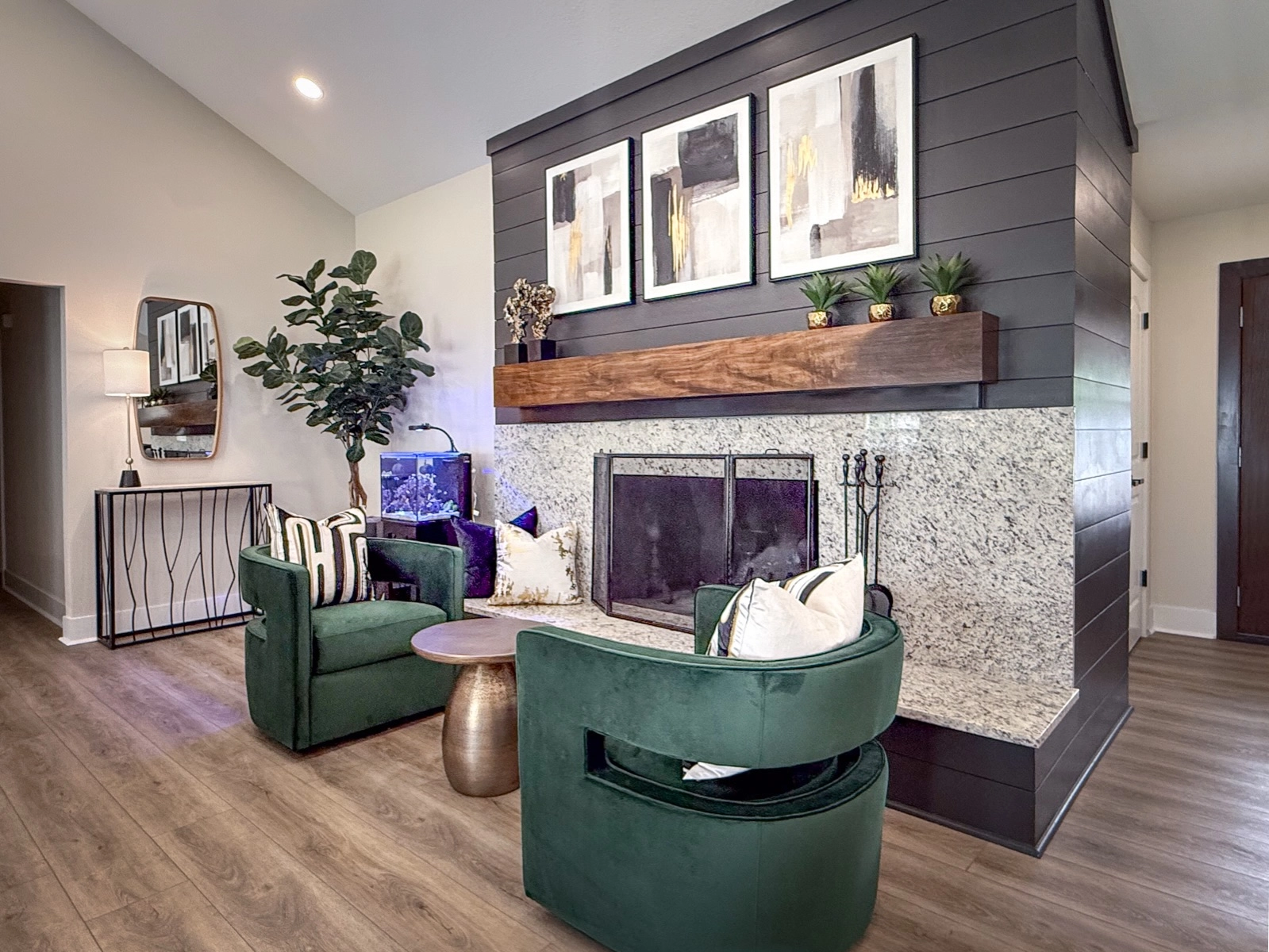
Photo: @thedesignfirmtx on Instagram
File 8: Pull green chairs up to the stone
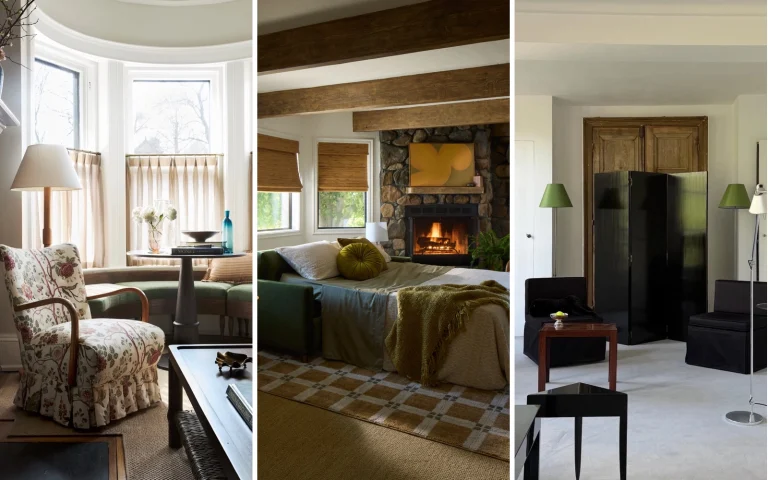
A stone fireplace with a wood mantel and green swivel chairs shows the classic done socially: the chairs turn, the fire holds court, and the small room hosts. Swivel chairs are the secret weapon of fireplace seating, because everyone gets the fire view.
The moderns
Linear flames, electric glow, and fireplaces that disappear into the wall. The moderns prove that a small room does not need a chimney to have a hearth, and they suit renters and apartments where a flue is a fantasy. The trade-off is ceremony: modern fires are convenient the way classics are atmospheric. If the TV is going above the fire, read our TV fitting guide first, because the two fight for the same wall and the plan matters.
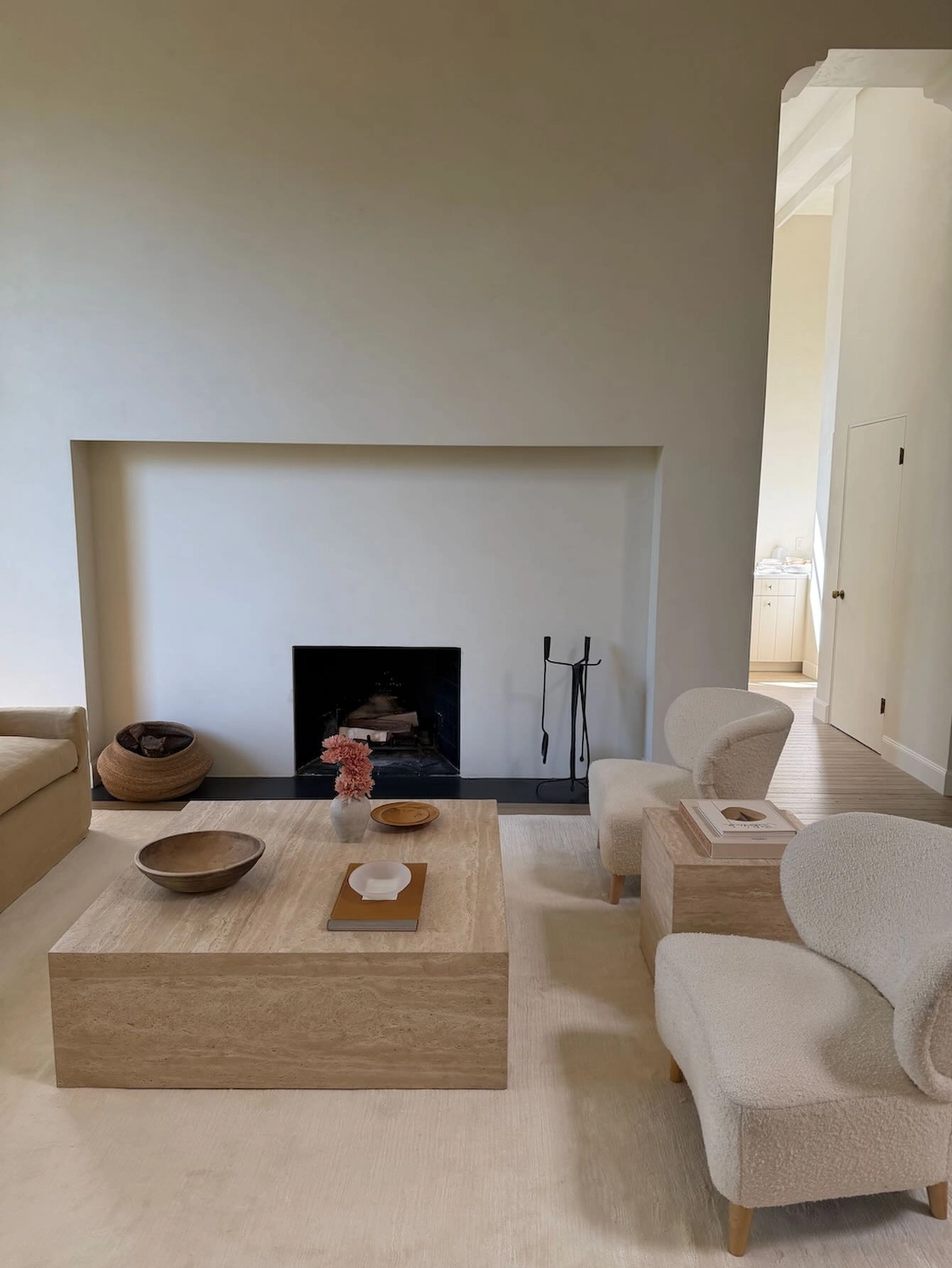
Photo: @jennikaynehome on Instagram
File 9: Recess it and gain the floor
A recessed white fireplace sits flush in the wall and gives the room its floor back. No hearth jutting out, no mantel shelf to dust, just warmth in the wall. Small rooms should recess whenever the wall allows.
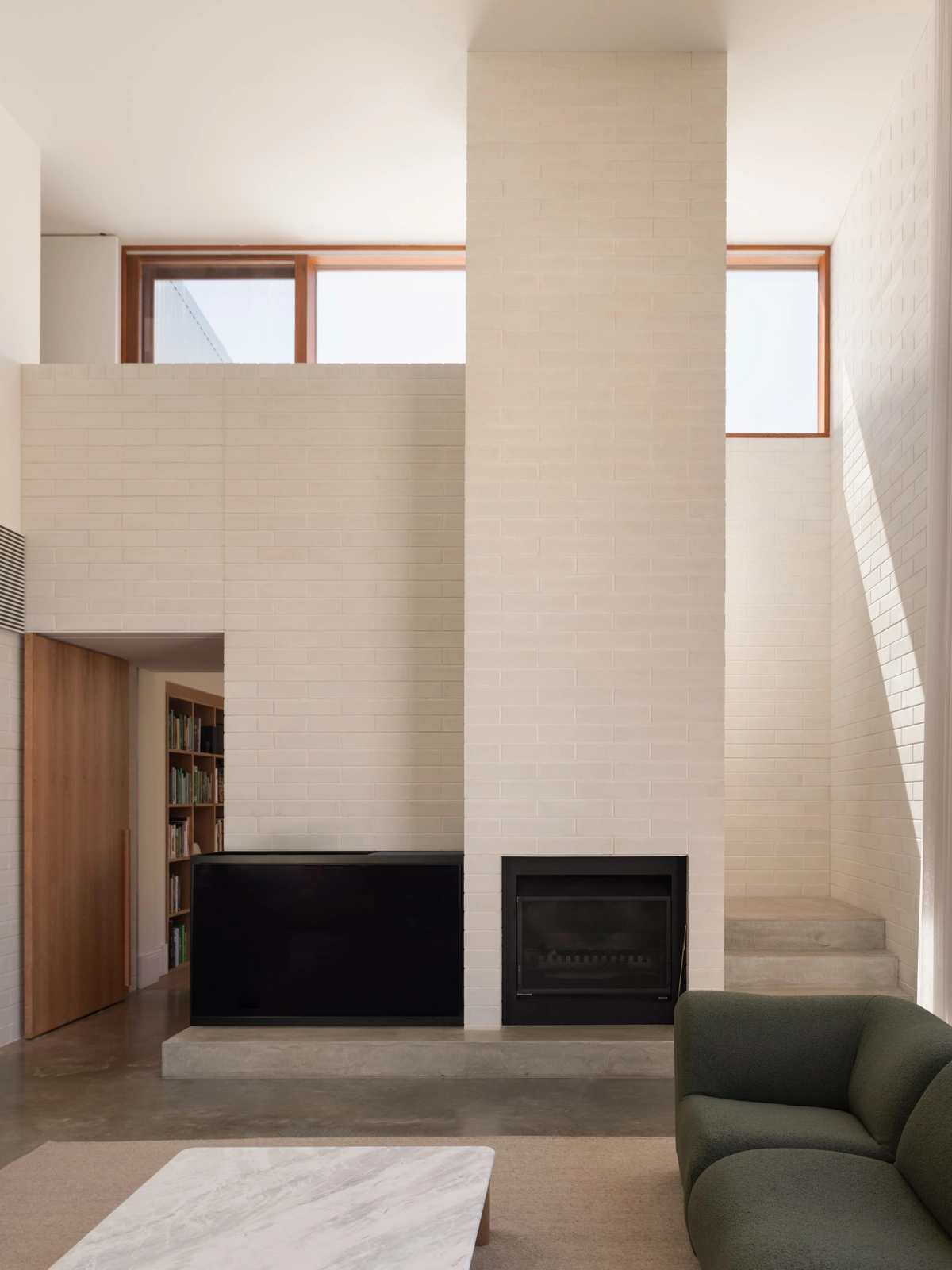
Photo: @architectsink on Instagram
File 10: Keep the lines clean and the brick pale
A minimalist white-brick fireplace is the modern classic: all the texture of brick, none of the weight. The pale brick keeps the small room bright, the clean lines keep it calm, and the fire provides the only movement. Minimalism needs one warm thing, and this is it.
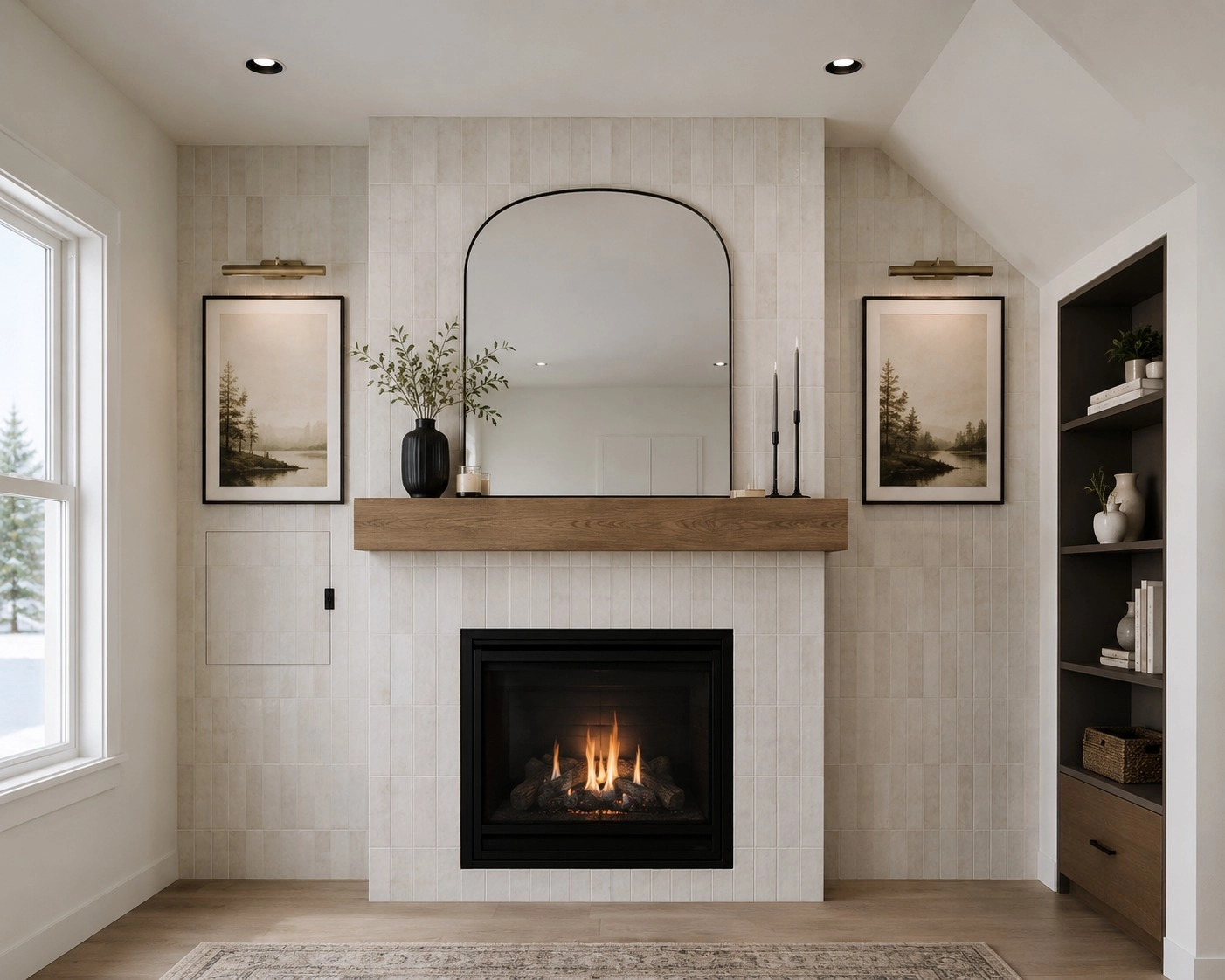
Photo: @ashayinteriordesign on Instagram
File 11: Let the modern fire be a slot of light
A modern fireplace as a horizontal slot of flame turns the fire into a design line. It reads as architecture, not appliance, and the small room gets warmth without visual bulk. Linear fires suit rooms where a traditional firebox would dominate.
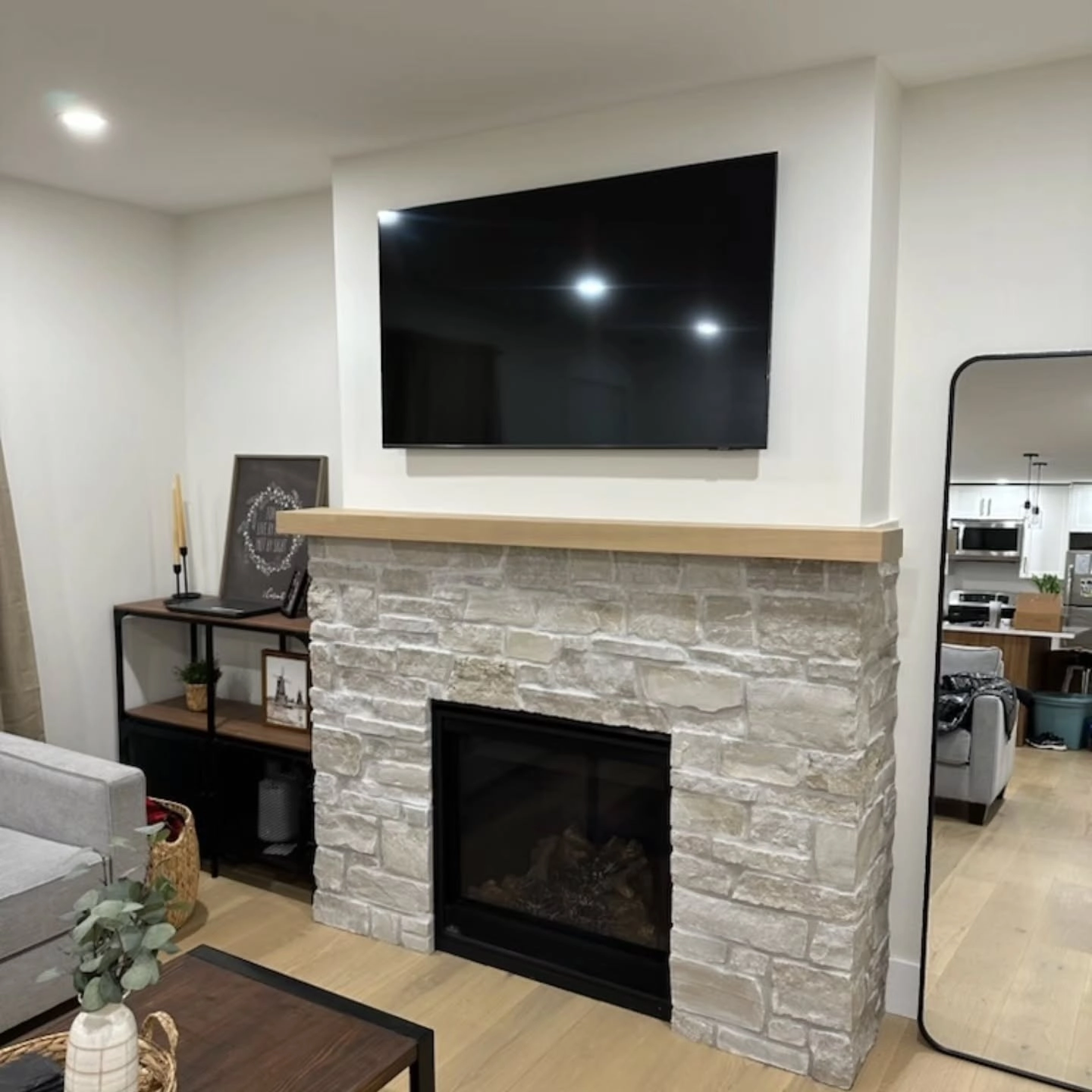
Photo: @pure_masonry on Instagram
File 12: Put the TV above, but plan the wall
A modern living room with the TV above the stone fireplace is the wall every household wants and every designer argues about. It works when the mantel is low, the TV is sized to the fire, and the cables vanish. The fire wins the wall; the TV rents space on it.
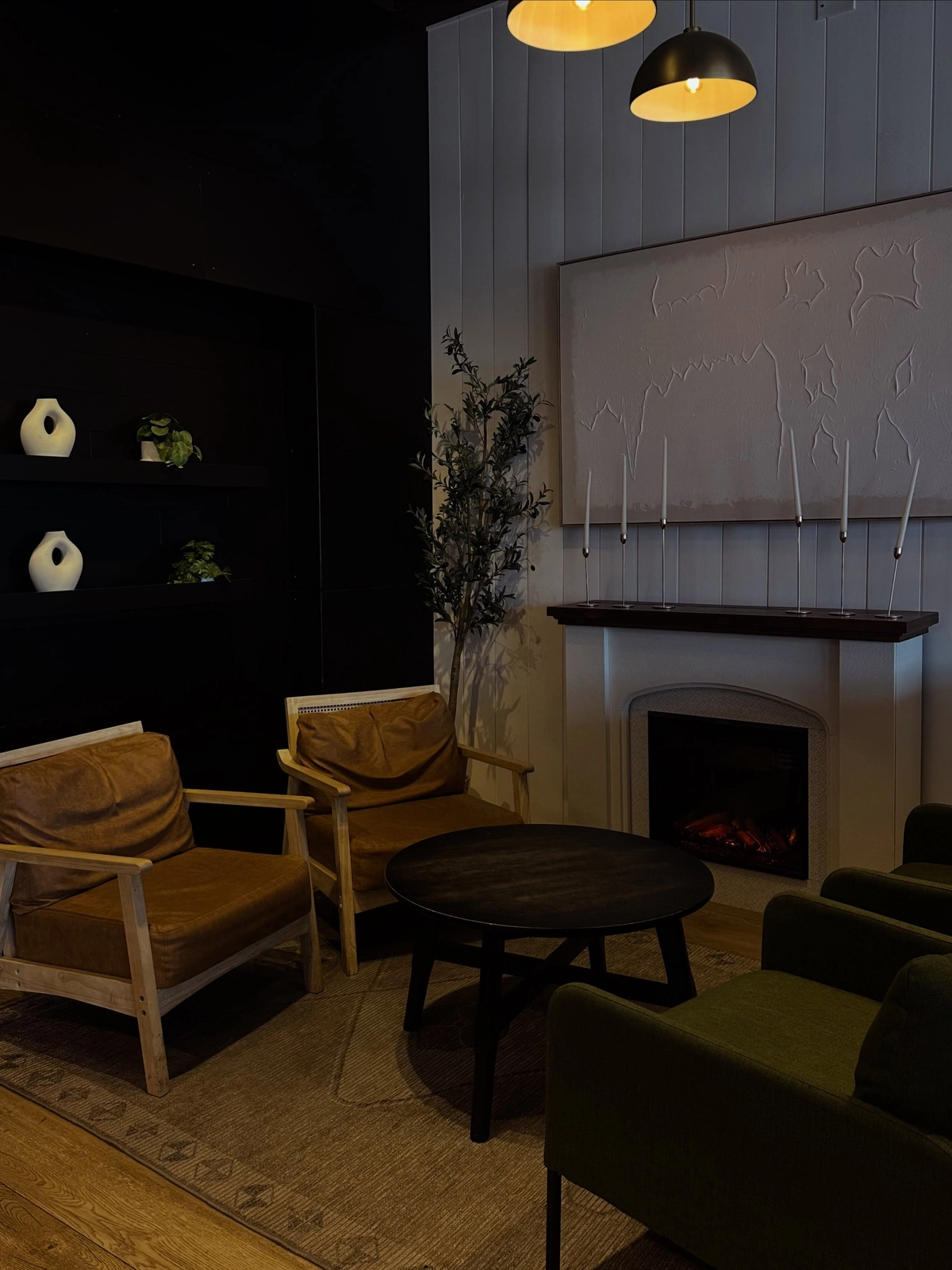
Photo: @sarahmegumi on Instagram
File 13: Fake the fire convincingly with electric
A cozy lounge with an electric fire proves the flame does not need to be real to be felt. The glow, the flicker, the warmth on the face: electric does ninety percent of it for ten percent of the hassle. Apartments should stop apologising for electric.
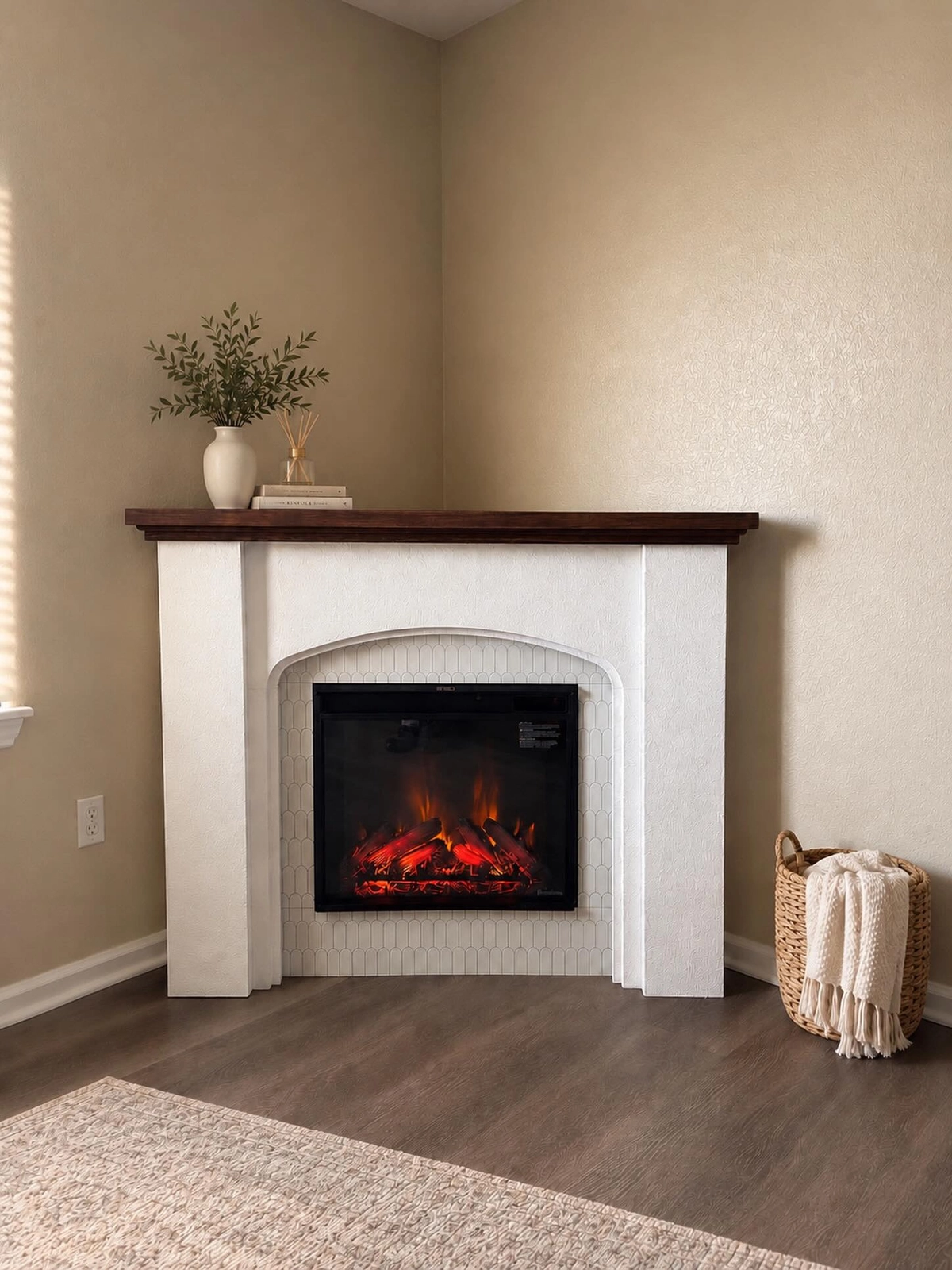
Photo: @sophia.review on Instagram
File 14: Tuck the electric fire in the corner
A corner electric fireplace turns the room’s most awkward angle into its warmest spot. The corner that held nothing now holds the glow, the seating angles toward it, and the small room gains a destination. Corners want fires.
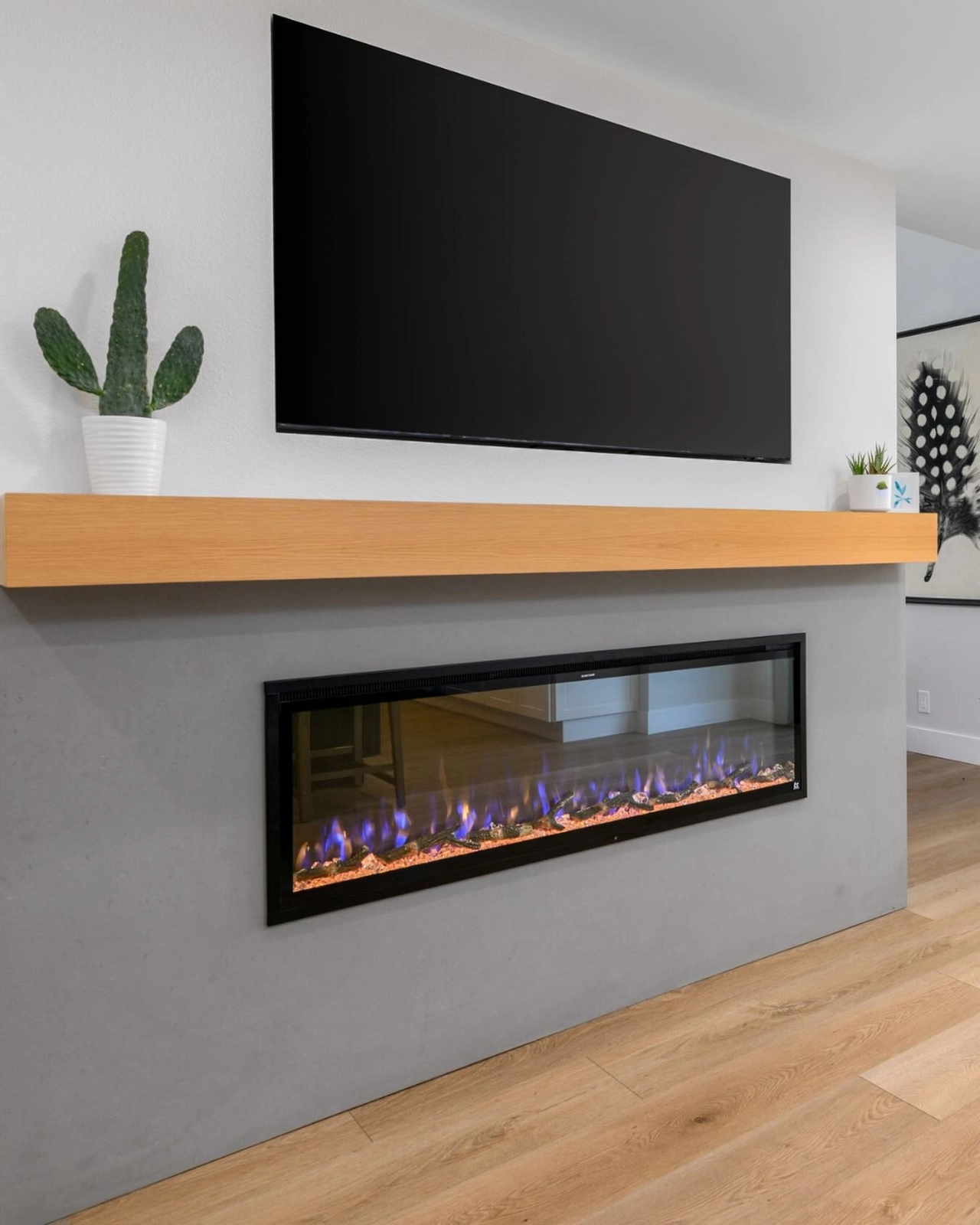
Photo: @designwithintegrity on Instagram
File 15: Go linear for the gallery wall
A linear electric fireplace stretched low along the wall is fire as furniture. It anchors the seating the way a sideboard would, it needs no chimney, and the small room gets a hearth that is also a design line. Long and low suits long and narrow rooms.
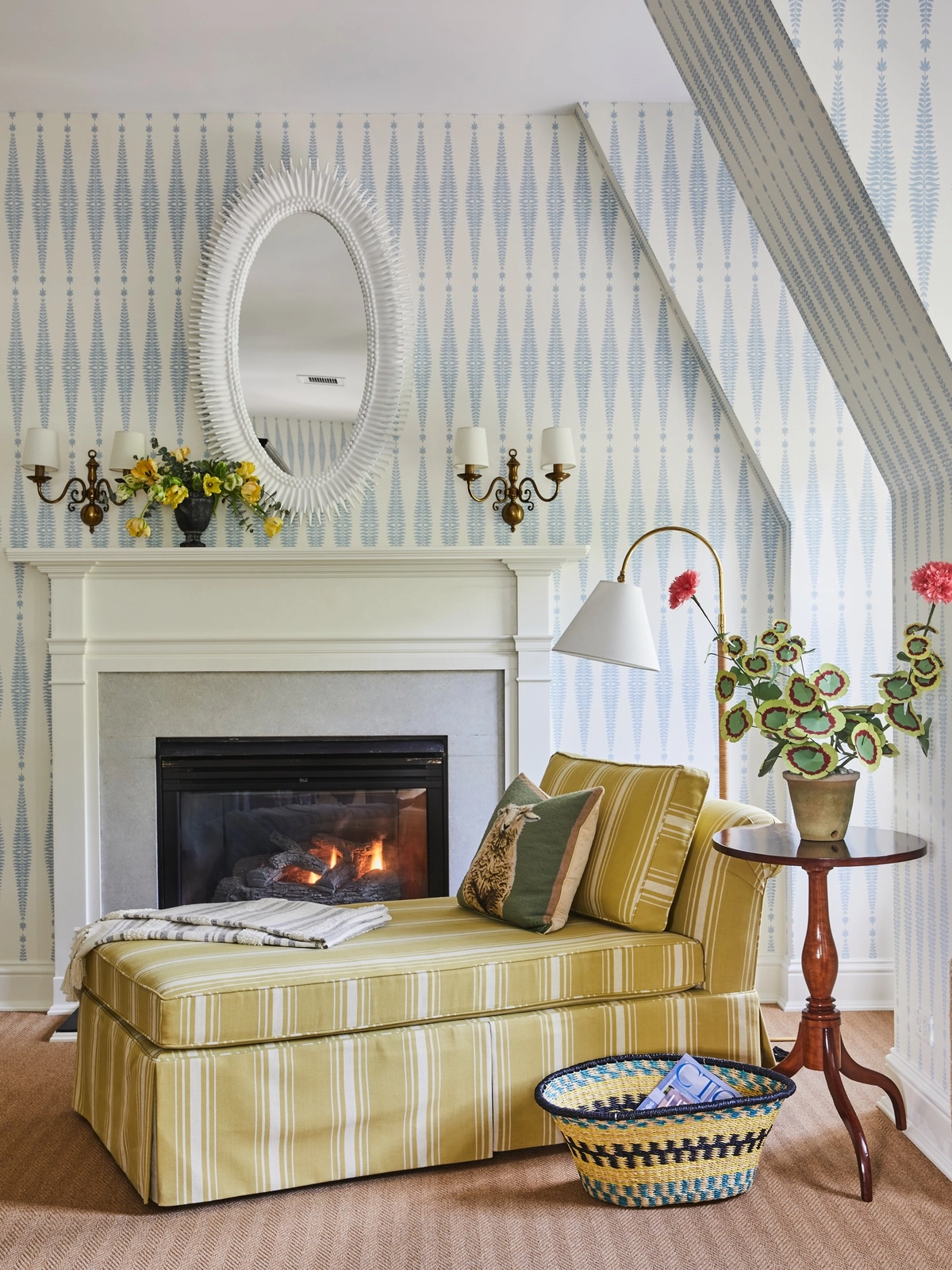
Photo: @serenaandlily on Instagram
File 16: Keep the mantel classic, hide the gas
A white mantel gas fireplace is the traditional look with modern manners: instant on, instant off, no ash. The mantel keeps the ceremony, the gas keeps the convenience, and the small room gets both. Tradition on the outside, remote control on the inside.
Field note: the best fireplace for a small room is the one you will actually use. A working stove beats a decorative firebox, and a lit electric beats an unlit wood burner. Buy for your evenings, not your photographs.
The stoves
Freestanding, black, and gloriously efficient. Stoves heat the room they sit in instead of the chimney, which makes them the rational choice and, happily, the beautiful one. They are also the most honest fire for a small room: no fake chimney breast, no wasted surround, just heat where the people are. If your room can take a flue, a stove is the answer.
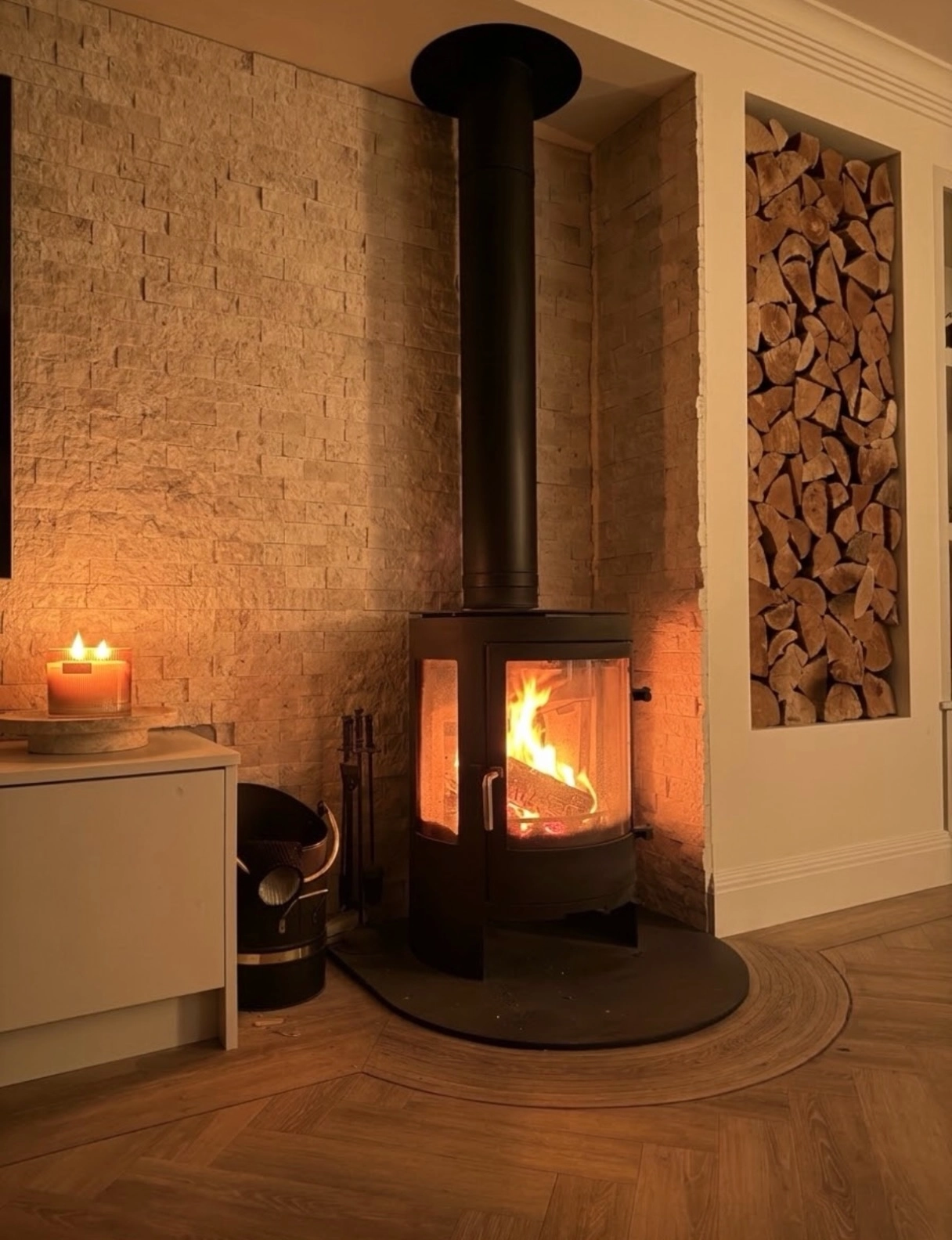
Photo: @theriverhouseproject_ on Instagram
File 17: Let the black stove be the sculpture
A freestanding stove in black is a sculpture that heats. It needs no surround, no mantel, no styling, and the small room gets a focal point with a six-inch footprint. Black stoves suit every style because they read as essential, not decorative.
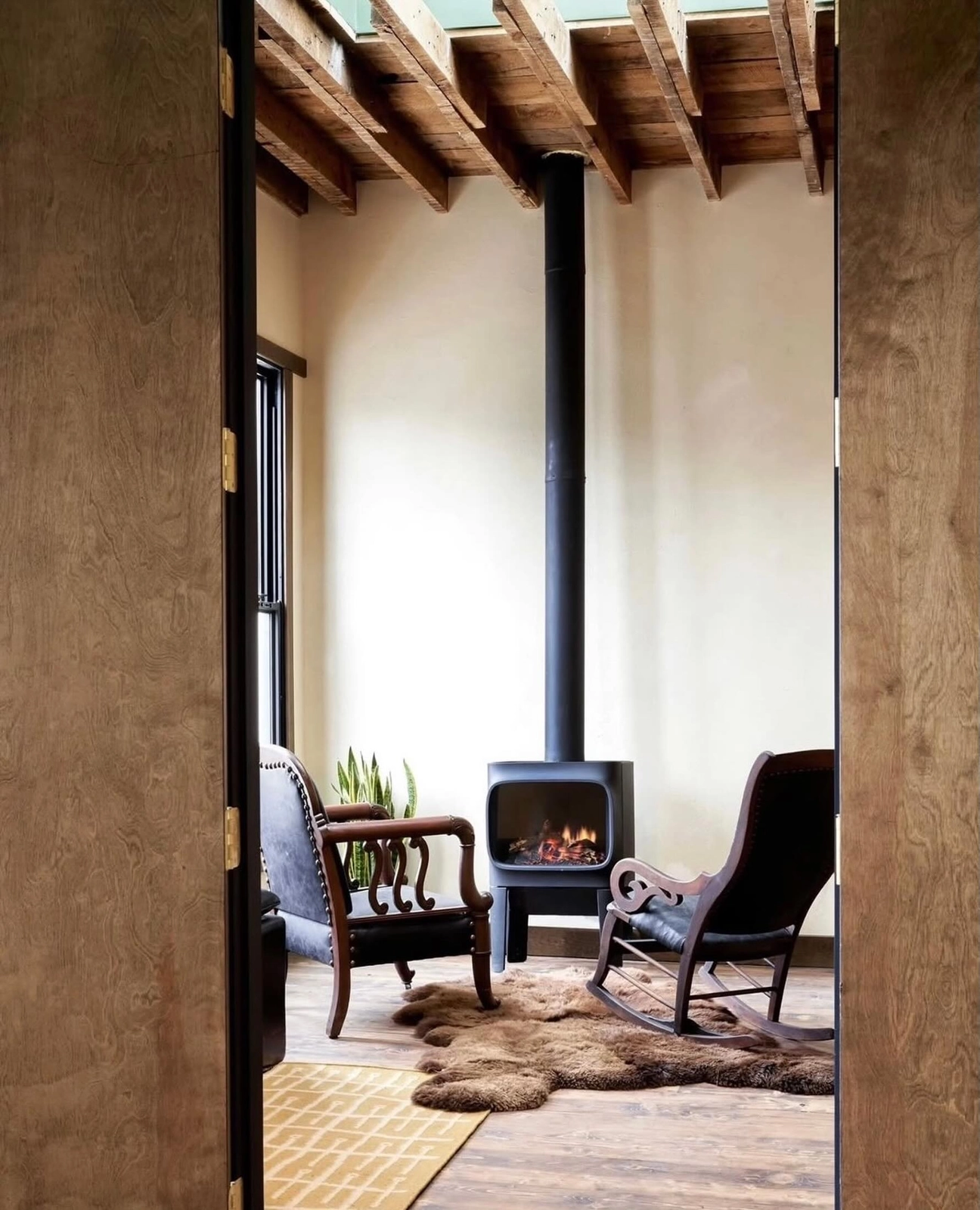
Photo: @opulencestoves on Instagram
File 18: Give the stove a stage, not a room
A freestanding stove on its own hearth pad shows how little a stove needs: a safe base, a flue, and clearance. The small room keeps its floor, the stove keeps its dignity, and the installation costs less than a built-in fire. Stoves are the budget hearth.
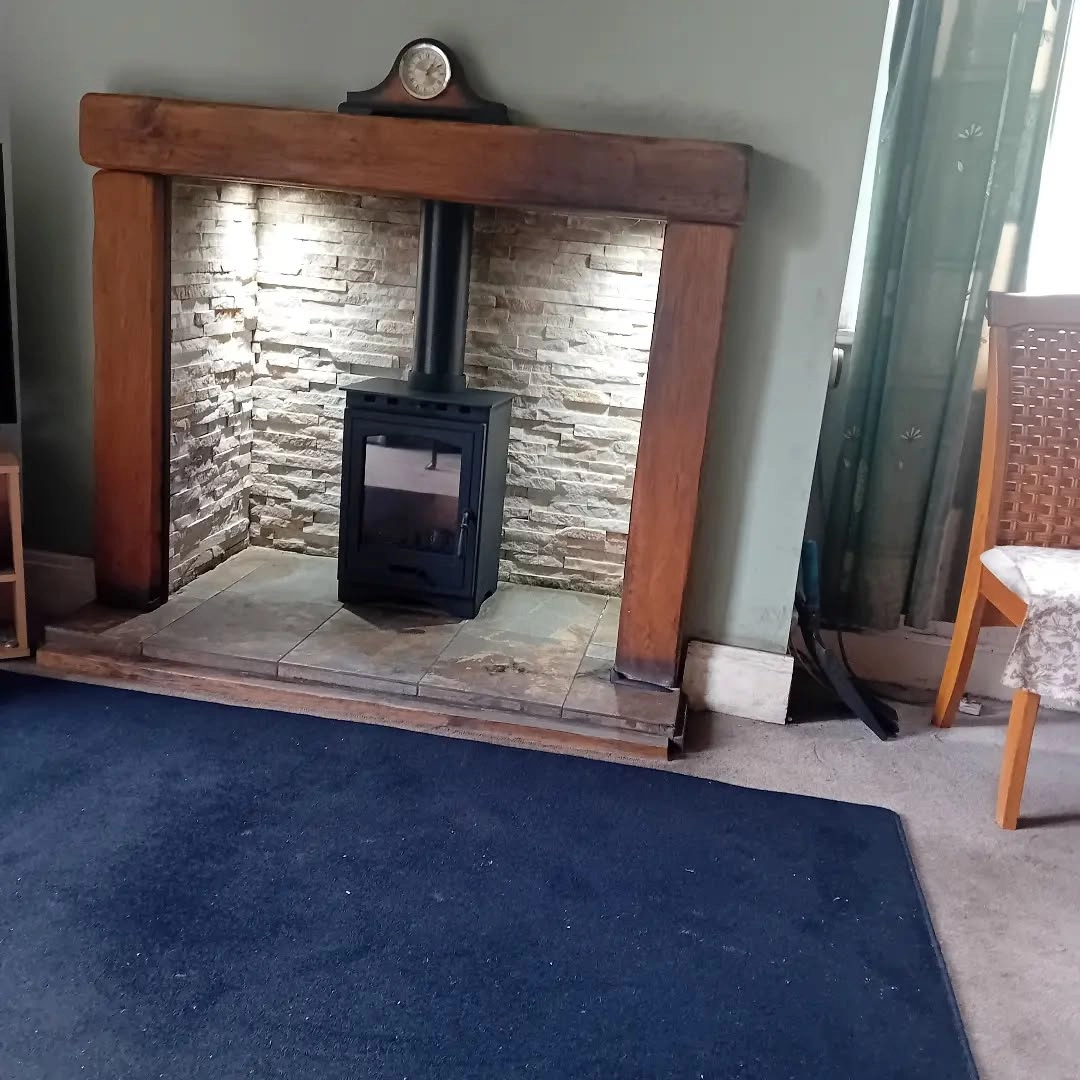
Photo: @arthurashton.367 on Instagram
File 19: Set the stove in stone for the full story
A black wood stove in a stone-tiled recess under a thick wood mantel is the complete hearth in miniature. The stone holds heat, the mantel holds decor, and the small room gets a fireplace with the efficiency of a stove. Best of both, footprint of one.
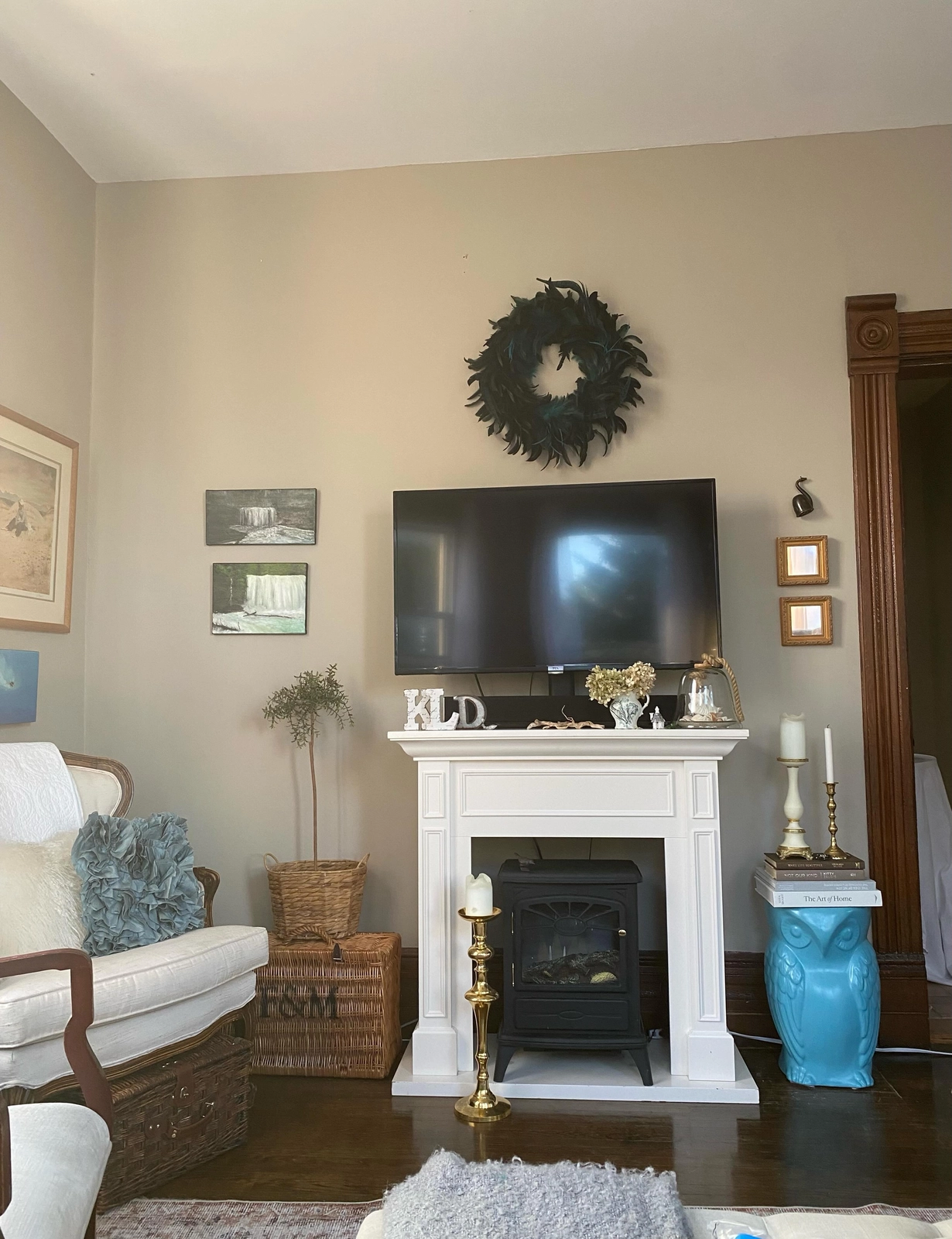
Photo: @lewishabart on Instagram
File 20: Put an electric stove in the mantel opening
A white mantel with an electric stove inside is the rental-friendly hearth: the mantel gives the ceremony, the stove gives the glow, and nothing is permanent. When the lease ends, the fire moves with you. Commitment-free coziness.
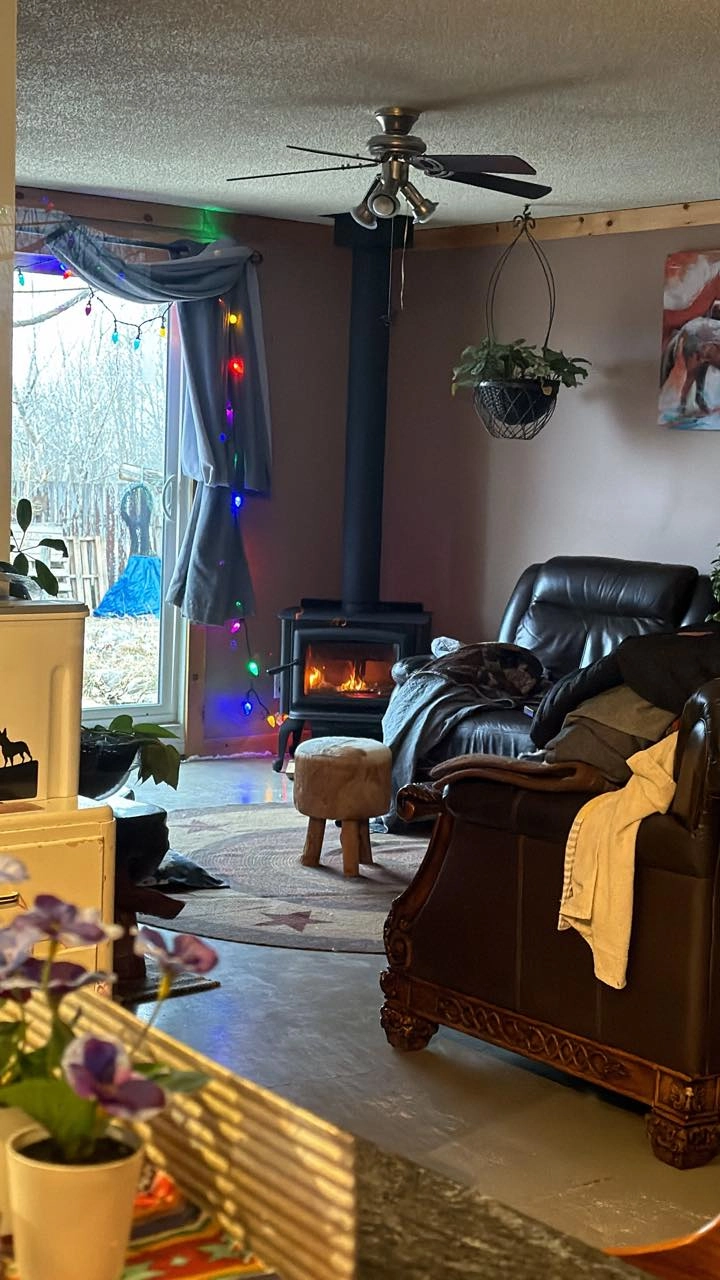
Photo: @scubasteve691028 on Instagram
File 21: Burn wood where the room allows
A wood-burning stove with its door glowing is the primal hearth, and no technology improves on it. The crackle, the smell, the real heat: if the room allows a flue, this is the fire. Everything else is an approximation.
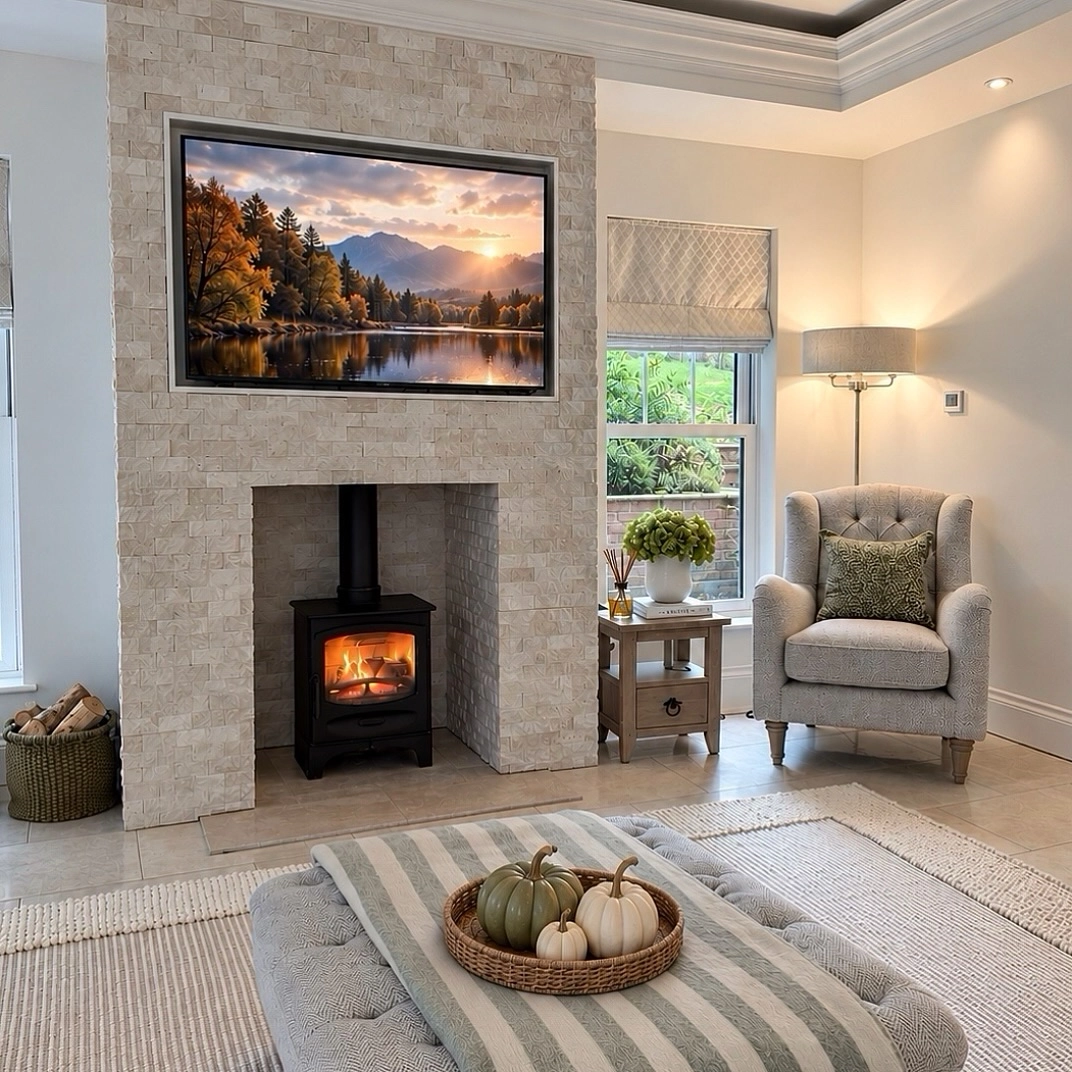
Photo: @theroseberrybuild on Instagram
File 22: Keep the stove small and the room will follow
A compact wood-burning stove proves that heating power is not about size. The small stove warms the small room completely, the footprint stays tiny, and the evenings arrange themselves around it. Size the stove to the room, not the fantasy.
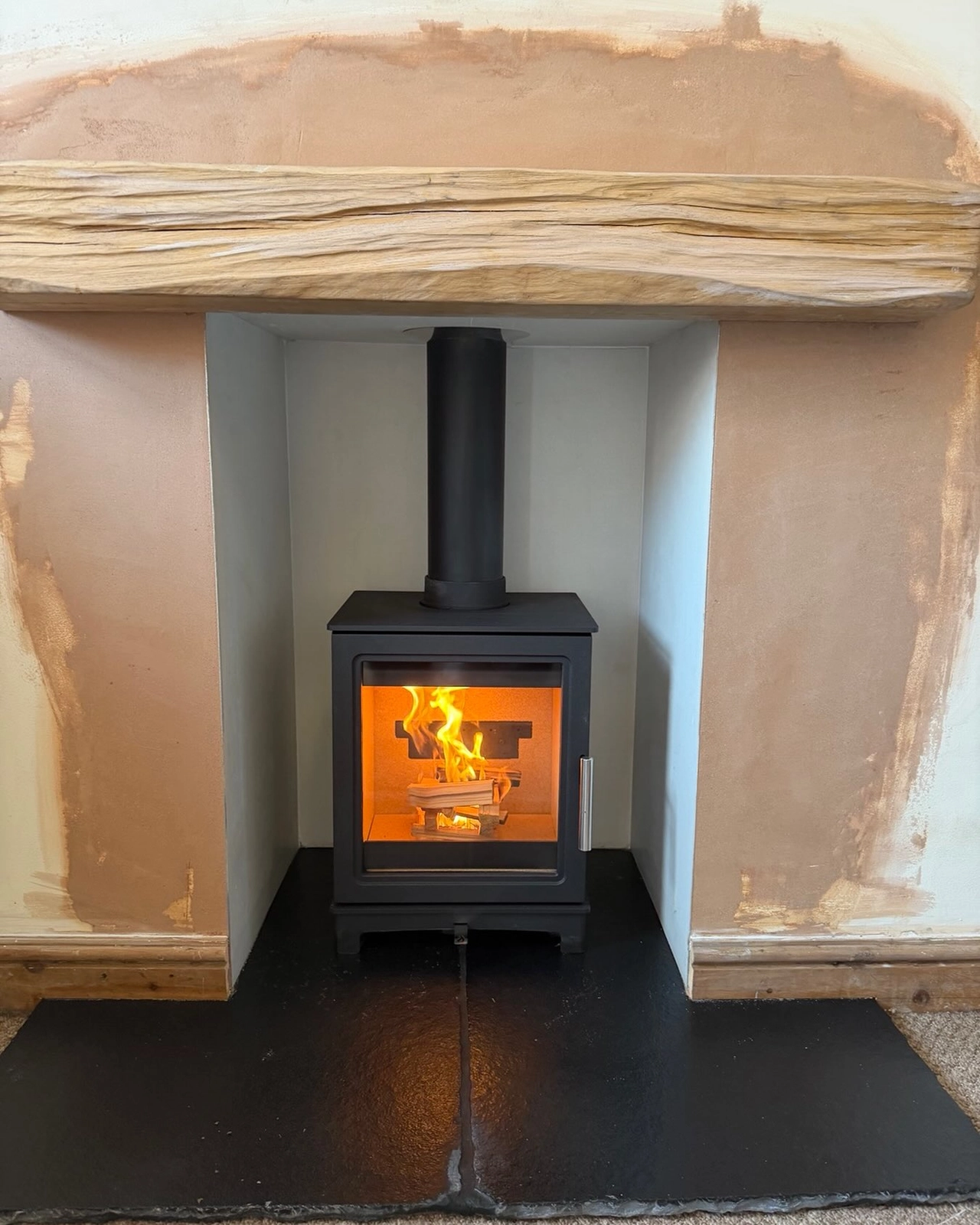
Photo: @m.richards190 on Instagram
File 23: Choose the freestanding fire for freedom
A freestanding wood-burning stove placed where the room wants it, not where the chimney was, is the layout advantage no built-in fire has. The stove goes where the seating is, the flue follows, and the small room’s plan stays yours.
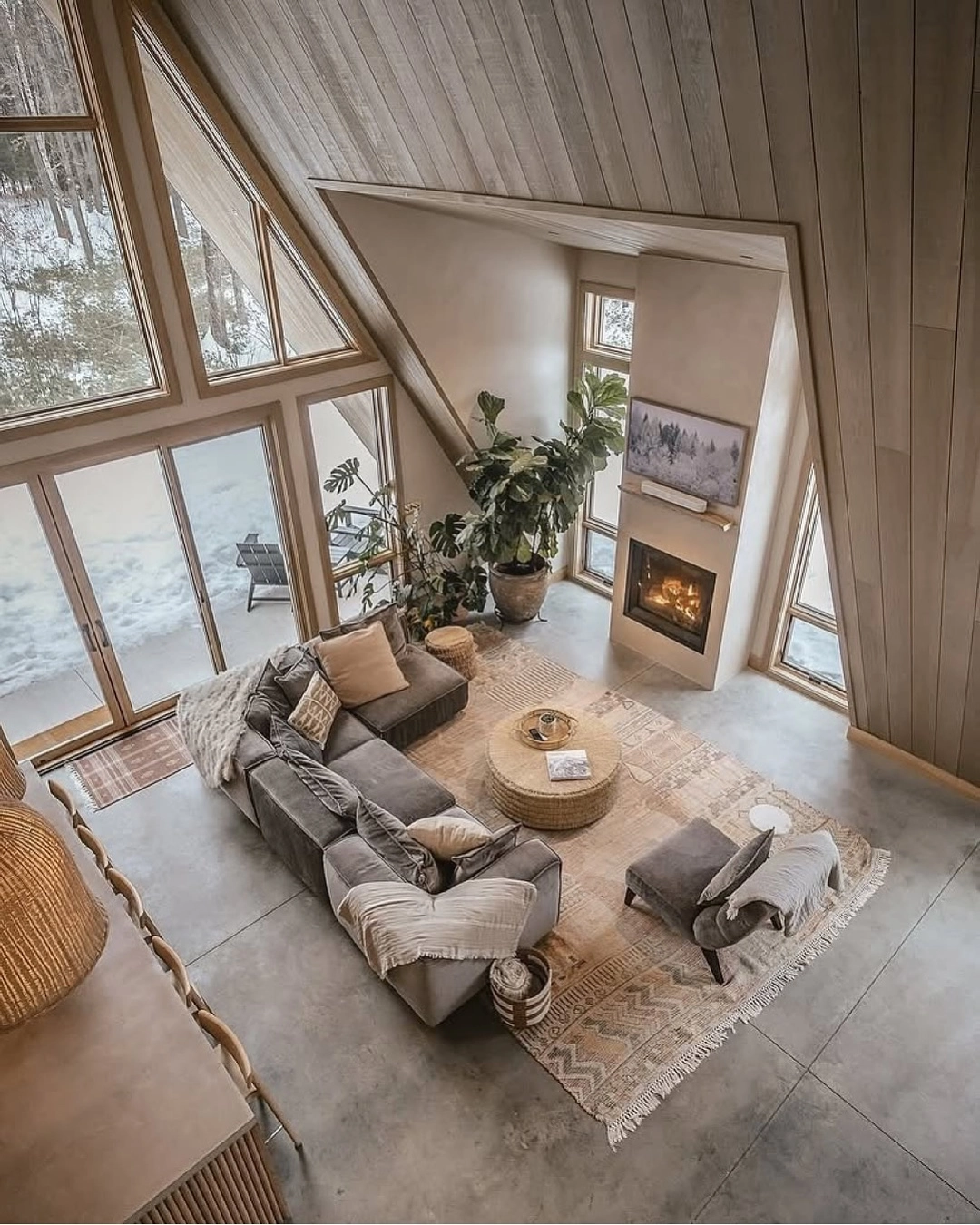
Photo: @tinyhouse.comfort on Instagram
File 24: Heat the tiny house with a tiny stove
An A-frame tiny house with its small stove shows the formula at minimum scale: one stove, one room, total coziness. The stove is proportioned to the space, the space is proportioned to the life, and nothing is wasted. Small rooms should envy tiny houses.
Light it
Twenty-four files, one verdict each, and they all point the same way: the best fireplace is a lit one. Pick the type your room allows, size it to your evenings, and light it tonight. A small room with a fire in it never feels small after dark.
The seating will arrange itself. It always does, around fire.