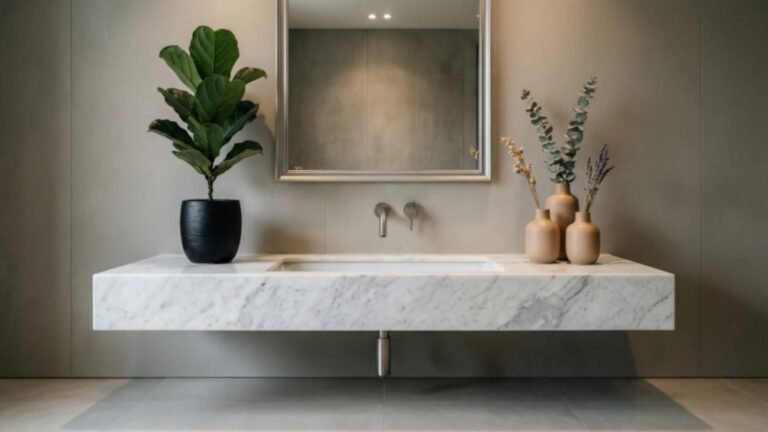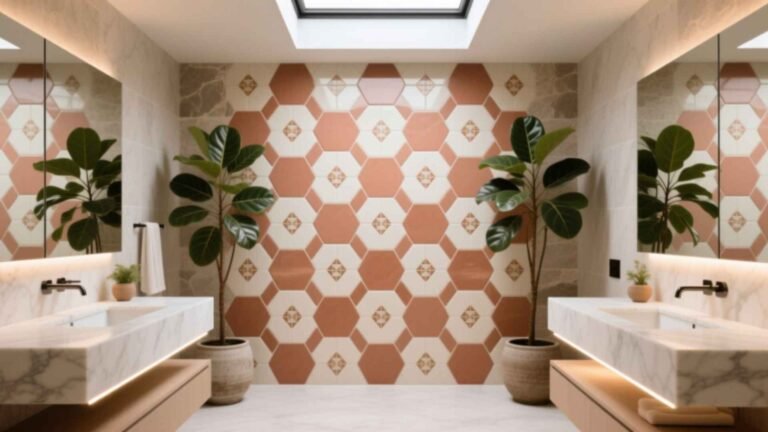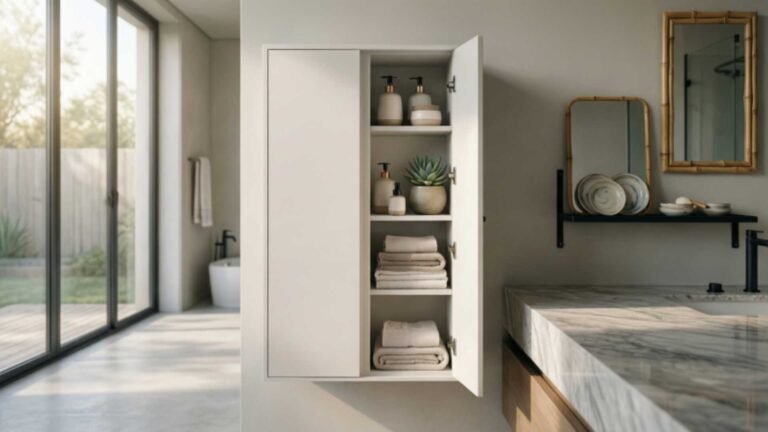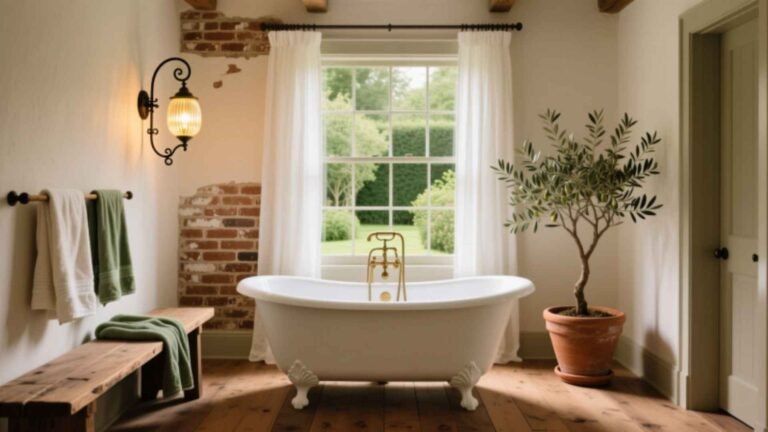
Serene Sage Sanctuaries: 20 Refreshing Bathroom Design Concepts
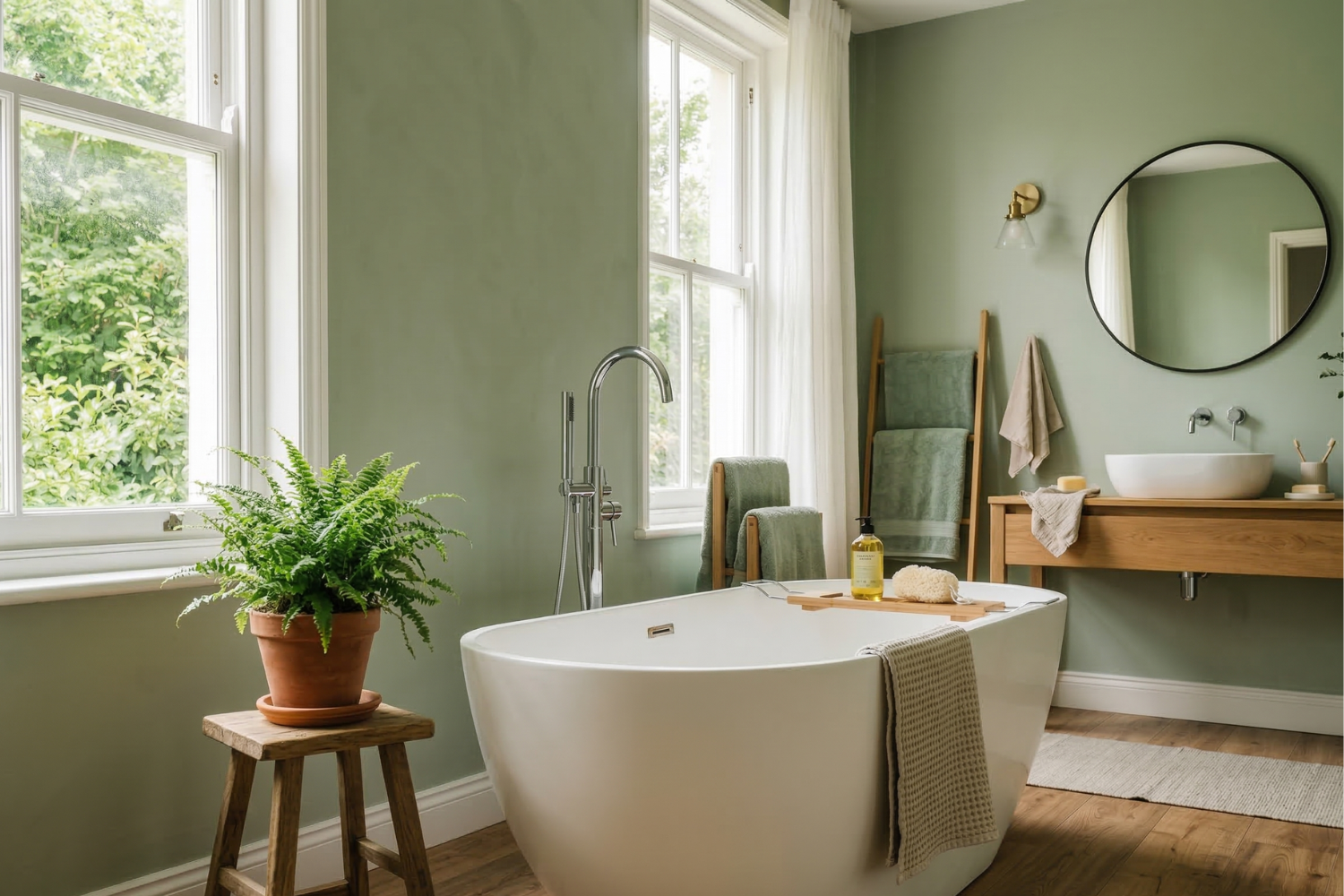
There is something quietly extraordinary about walking into a bathroom that feels like a breath of fresh air. Not the sterile white-on-white of a hospital corridor, and not the overwhelming drama of an all-black powder room, but something in between. Something that says calm, natural, alive. Sage green has been doing exactly that in bathrooms for years, and its appeal shows absolutely no sign of fading.
This particular shade sits at a beautiful intersection. It carries the grounding energy of deep forest greens while remaining soft enough to feel airy and light. It whispers of herb gardens in the morning sun, of misty mountain trails, of that particular quality of light that filters through leaves on a quiet afternoon. In a room where people begin and end their days, where they seek refuge from noise and pressure, sage green works almost like therapy on the walls.
What makes sage green especially compelling is how generously it shares the spotlight. It flatters warm wood tones, makes white fixtures glow, and gives metallic accents room to really shine. Whether your taste runs toward sleek minimalism, cozy farmhouse warmth, or luxurious spa-inspired drama, sage green adapts without losing its essential character. In the pages that follow, you will find twenty distinct ways to bring this beautiful color into your bathroom, each one designed to spark ideas and inspire confidence.
Why Choose Sage Green for Your Bathroom?
Color psychology tells us that green, in nearly all its forms, promotes a sense of calm and restoration. Sage sits at the muted, contemplative end of the green spectrum, which makes it especially well suited to a space meant for relaxation and renewal. It avoids the stimulating brightness of lime or the formality of hunter green, landing instead in a register that simply feels good to be around.
Beyond its psychological warmth, sage green has earned a reputation as one of the most versatile neutrals in interior design. It serves as a soft backdrop that allows other elements to take center stage, or it steps forward as a confident statement color when given enough room. It bridges the gap between cool and warm tones, making it easier to combine with a wide range of palettes without risking a clash.
Sage green also photographs beautifully, which matters more than ever in a world where home interiors are constantly shared and admired online. Its muted depth translates well in both natural and artificial light, and it possesses a timeless quality that keeps bathrooms from feeling trend-driven or easily dated. Choosing sage green is, in many ways, choosing a bathroom that will still feel fresh a decade from now.
Understanding Sage Green: Shades and Undertones
Not all sage greens are the same, and understanding the variations will help you make a more informed choice. At its lightest, sage can appear almost grey, with just the faintest green blush. These paler versions are ideal for smaller bathrooms or north-facing spaces where natural light is limited, as they prevent the room from feeling heavy or closed in.
Moving toward the middle of the spectrum, you find the classic sage tones that most people picture. These have more presence, a richer, more distinctly green character while still retaining that characteristic softness. Deeper sages, almost approaching olive or eucalyptus territory, bring a sense of drama and sophistication that suits larger bathrooms, en-suites, and spaces designed to feel immersive. Undertones matter enormously too. Sage with a blue or grey undertone reads cooler and more serene; sage with a yellow or brown undertone feels earthier and warmer. Always test paint samples in your specific space before committing.
20 Sage Green Bathroom Ideas
1. Modern Minimalist Sage Escape
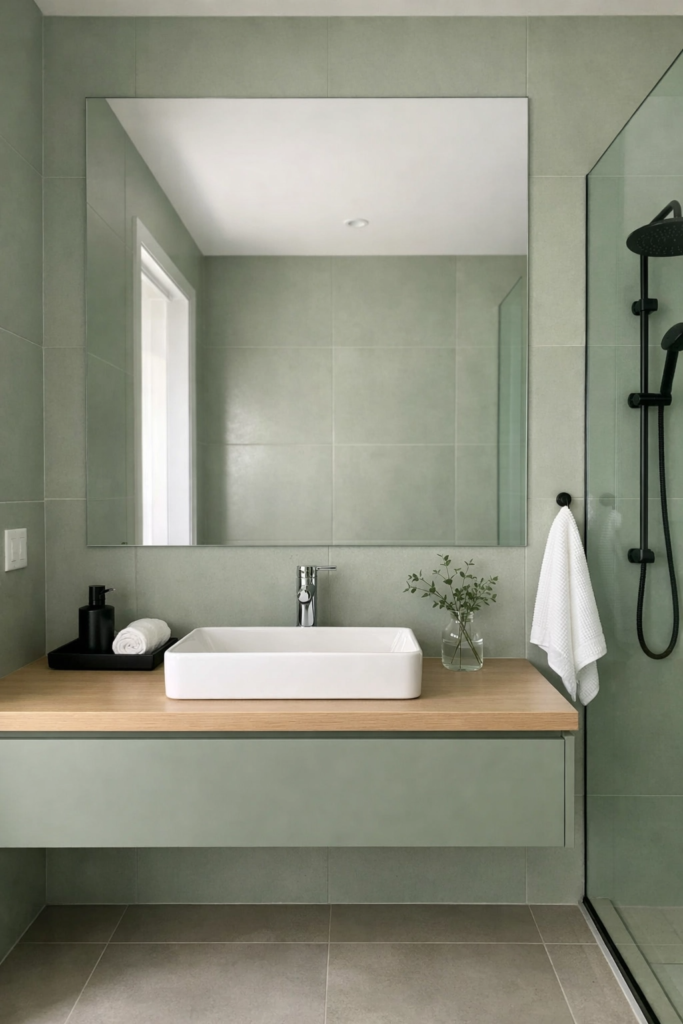
The minimalist bathroom has never gone out of style, and sage green slides into this aesthetic with remarkable ease. Picture a room stripped back to its essentials: a floating vanity with flat-front doors in soft sage, walls kept intentionally neutral in white or pale grey concrete, and a floor of large-format porcelain tiles in a warm off-white tone. Nothing fights for attention. Every element earns its place.
Fixtures in matte black provide the punctuation this kind of space needs. A wall-mounted tap, a slender towel rail, a round frameless mirror with a simple black surround. These details read as deliberate and refined without adding visual noise. For warmth, introduce a slim shelf in light oak or ash, just enough wood to prevent the space from feeling cold.
Lighting should be recessed and even, with a single feature pendant above the vanity if the ceiling height allows. Keep accessories to an absolute minimum. A single plant, perhaps a trailing pothos or a compact succulent, a quality soap dispenser, and a folded linen towel are all you need. The beauty of minimalism is that restraint becomes its own luxury.
2. Rustic Farmhouse Sage Charm
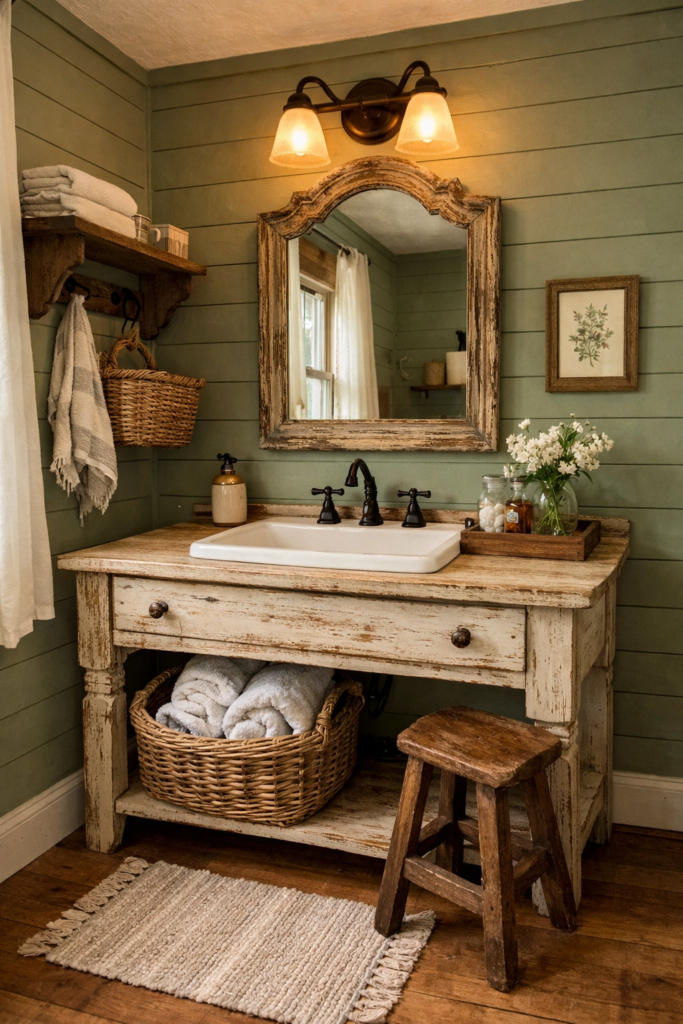
Farmhouse style is fundamentally about warmth, honesty in materials, and a lived-in quality that feels welcoming rather than fussy. Sage green finds a natural home here. Start with walls painted in a mid-tone sage, slightly dusty and matte, and introduce a vanity made from reclaimed or distressed wood. The grain and character of older timber plays beautifully against the green, adding texture that no painted surface can replicate.
A farmhouse apron-front sink in white ceramic anchors the space with authenticity. Pair it with oil-rubbed bronze or antique brass taps, which carry a warmth and patina that feels entirely at home in this setting. Open shelving rather than upper cabinets encourages a more casual, approachable display of towels and everyday items.
Vintage-inspired pendant lights with exposed Edison bulbs or wire-cage shades reinforce the farmhouse mood. For the floor, consider wide-plank wood-look tile in a warm honey tone, or classic black and white encaustic tiles if you want a nod toward old-fashioned charm. Complete the look with a distressed mirror, a woven basket or two, and a generous potted plant like rosemary or lavender, which ties back beautifully to the sage color story.
3. Luxurious Spa-Inspired Sage Haven
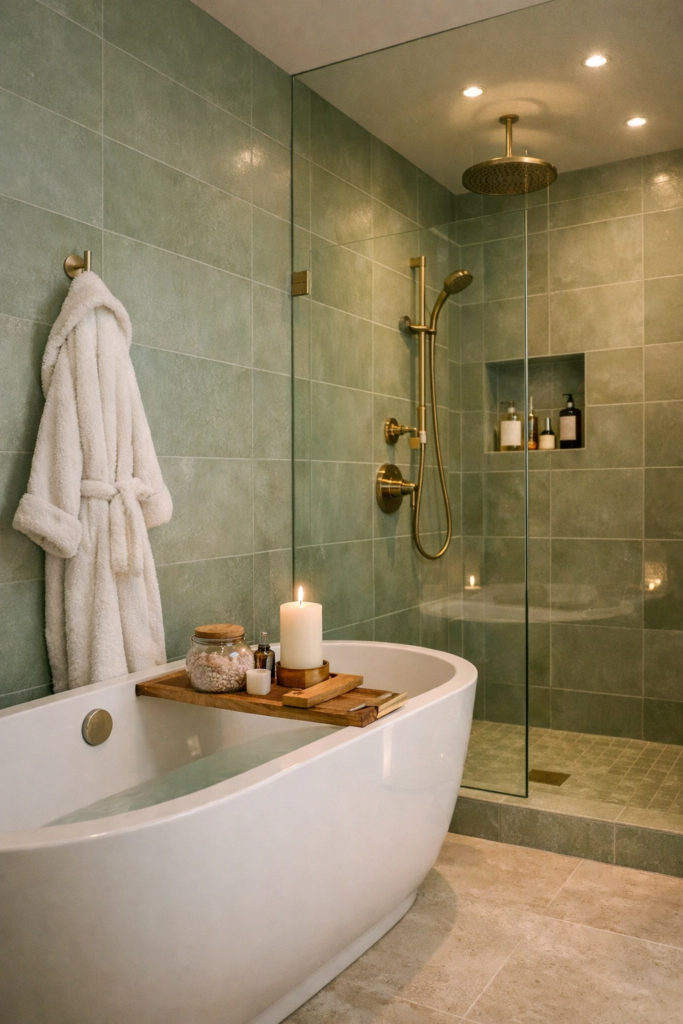
Creating a spa-like bathroom is about choreographing the senses. It is about what you see, yes, but also what you feel underfoot, what you smell, and how the light falls. Sage green forms an ideal backdrop for this kind of total sensory experience. Begin with large-format tiles in a cool, earthy sage tone, running them floor to ceiling in the shower enclosure for a seamlessly immersive effect.
A freestanding soaking tub positioned to catch natural light is the undisputed centrepiece of any serious spa bathroom. Pair it with a floor-mounted brushed gold tap and a matching hand shower for practical elegance. A rainfall shower head set into the ceiling, combined with a full suite of brushed chrome or matte gold fittings, brings the experience firmly into the realm of indulgence.
Lighting deserves as much thought as any other element here. Layer ambient light from recessed ceiling fixtures with softer, warmer sconces positioned at face height beside the mirror. A dimmable system allows you to shift the atmosphere effortlessly from efficient morning routine to evening ritual. Finish with plush organic cotton towels in white or warm cream, a wooden bath tray stocked with bath salts and a candle, and a discreet essential oil diffuser tucked onto a shelf.
4. Airy Coastal Sage Retreat
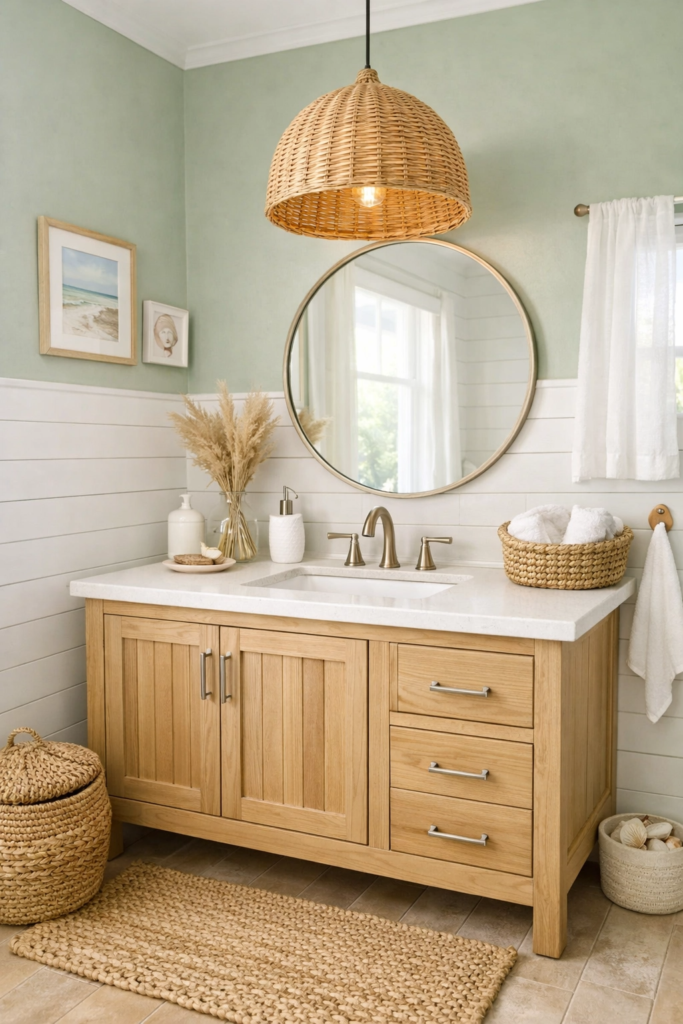
Coastal design, at its best, captures a feeling rather than a theme. It is less about starfish on every shelf and more about the quality of light and ease that comes from being near water. Sage green in a coastal bathroom leans into the connection between sea and land, evoking the grey-green of coastal grasses and the muted tones of a morning beach walk.
Keep walls light, using a very pale sage or white with sage accents on the vanity or in the tile choice. White shiplap on one wall adds texture and an unmistakably coastal character without being heavy-handed. Brushed nickel fixtures are ideal here, cool and clean without the formality of chrome. Natural fiber rugs and woven seagrass baskets add organic warmth.
Maximize natural light above all else in this design. Keep window treatments minimal, perhaps a simple white linen panel or a white roller shade. Mirror placement should be generous, reflecting daylight deeper into the space. Accessorize with genuine sea glass in a small bowl, driftwood-framed mirrors, or a few carefully chosen shells in a simple ceramic dish. Less is always more in coastal design; let the light and the color do the heavy lifting.
5. Industrial Chic Sage Bathroom
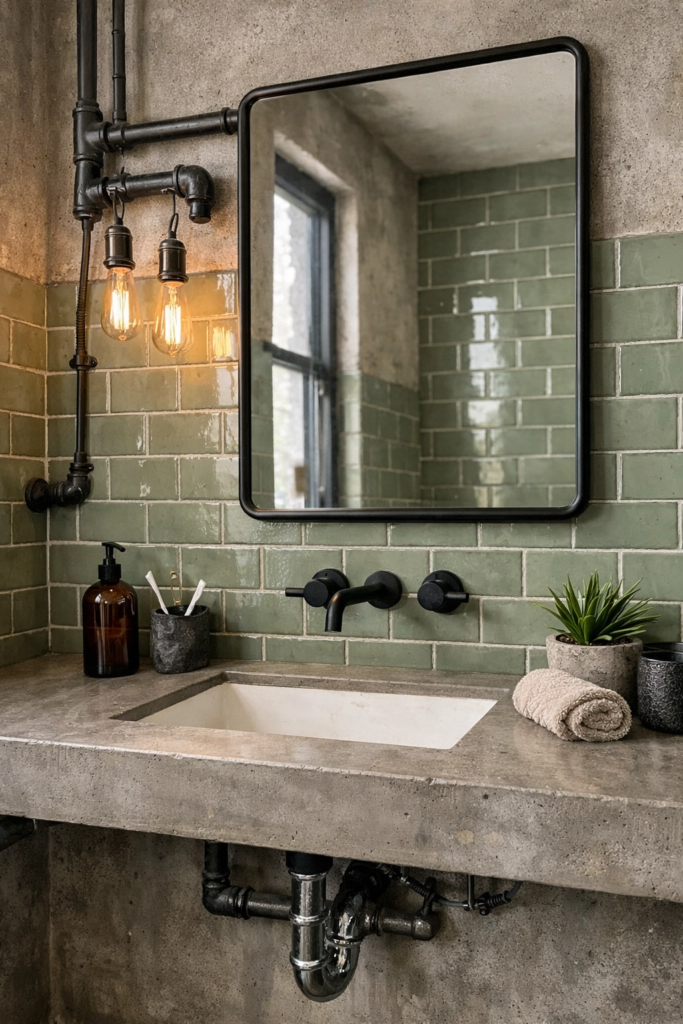
Industrial design has an edge to it, a preference for raw materials and honest construction that can occasionally tip into coldness. Sage green is exactly the counterbalance this style needs. Try sage green subway tiles in a classic brick lay pattern, covering the walls of the shower and the area above the vanity. The slight sheen of ceramic tile works well with industrial metal accents, catching the light differently throughout the day.
Concrete countertops in a cool mid-grey pair powerfully with sage tiles. A wall-mounted vanity with open steel-framed shelving below keeps the structural, unfussy quality of the aesthetic intact. Black metal-framed mirrors, whether circular or rectangular, serve as a design anchor and feel entirely natural in an industrial space.
Edison bulb pendant lights or black metal wall sconces with visible filament bulbs reinforce the industrial mood. Where exposed pipework exists, embrace it rather than concealing it. Finish with dark grout between the sage tiles, which emphasizes the grid and adds graphic definition. A deep charcoal or black floor tile ties the lower half of the room into the industrial palette while allowing the sage to breathe above.
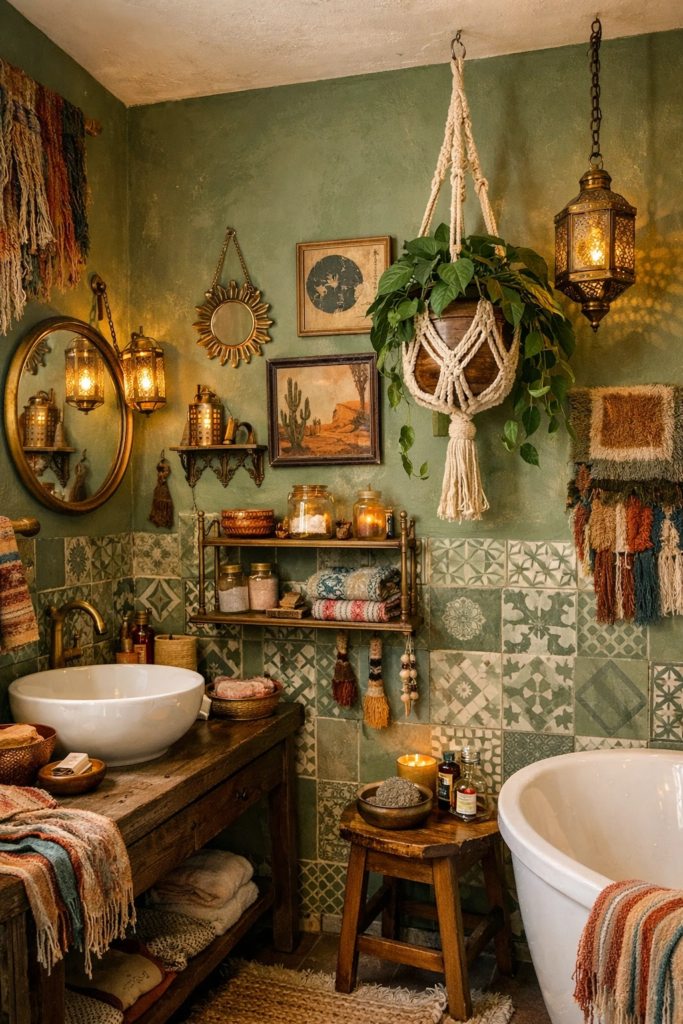
6. Bohemian Rhapsody in Sage
Bohemian bathrooms celebrate freedom and personality, layering textures, patterns, and found objects in a way that feels personal and irreplaceable. Sage green gives this abundance a grounding note, preventing the space from feeling chaotic. Paint walls in a warm, slightly dusty sage and introduce patterned encaustic tiles on the floor in terracotta, cream, and deeper green tones.
Mixed metallic accents are a bohemian signature. Combine brushed brass drawer pulls with a tarnished silver mirror frame and a copper vase on the windowsill. Macrame plant hangers holding trailing vines or air plants add texture at multiple heights and reinforce the handcrafted, natural spirit of the aesthetic. Open shelving provides the opportunity to display an eclectic collection of ceramics, books, and natural objects.
Lighting should be warm and layered, perhaps a rattan pendant shade over the vanity area and a cluster of small candles on a reclaimed wood shelf. Artwork matters here too, choose pieces that resonate personally rather than matching perfectly. A richly colored print, a small oil painting, or a framed botanical illustration all feel at home in a bohemian sage bathroom. The rule, if there is one, is simply that everything should feel chosen and loved.
7. Scandinavian Sage Serenity
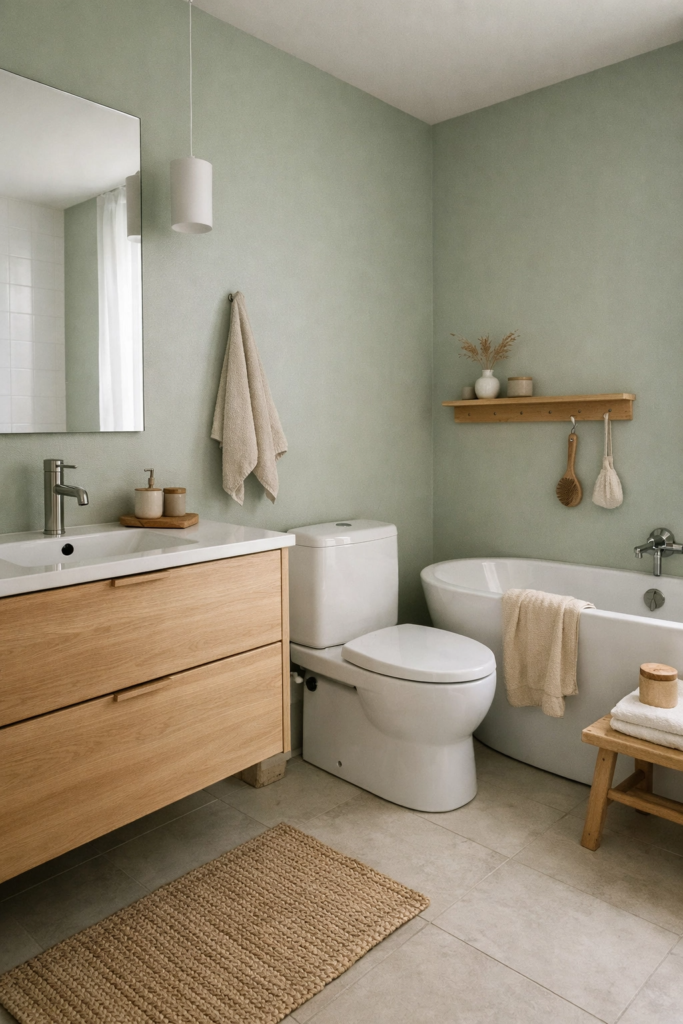
Scandinavian design philosophy centers on the idea that beautiful, functional objects make everyday life better. Applied to a bathroom, this means clean lines, high-quality materials, considered storage solutions, and a color palette that promotes quiet and ease. A muted, almost grey sage on the walls provides the perfect backdrop for this kind of thoughtful restraint.
Light birch or ash wood cabinetry introduces natural warmth without disrupting the airy, uncluttered feel. Simple white ceramic fixtures, a rectangular basin, and a wall-hung toilet keep the floor clear and visually expand the space. Hardware should be simple, perhaps a slim brushed nickel bar handle or a minimal recessed pull.
The Scandinavian concept of hygge, that quality of coziness and contented comfort, translates beautifully into bathroom accessories. Think thick, soft towels in natural undyed cotton, a small stack of books or a simple plant on the windowsill, and a candle in an unscented wax. The lighting should be soft and flattering, achieved with a warm-toned bulb rather than clinical cool white. This bathroom is not designed to impress visitors but to make every morning feel like a small, private luxury.
8. Vintage-Inspired Sage Elegance
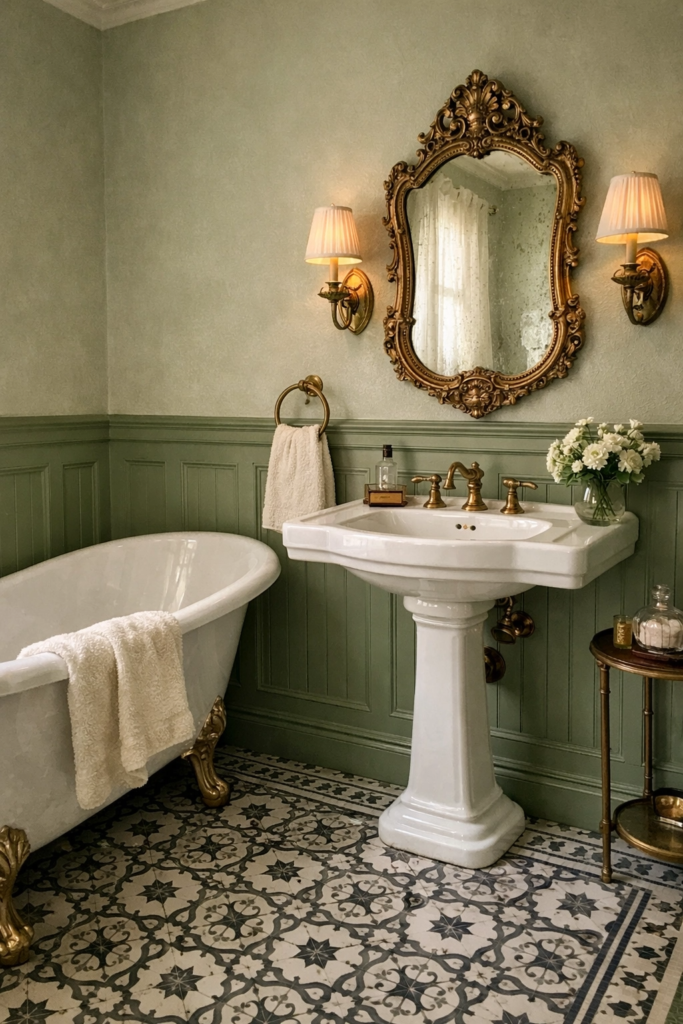
There is a particular charm to vintage bathroom design that no amount of modern minimalism can entirely replicate. It speaks of an era when bathrooms were considered proper rooms rather than functional afterthoughts. Sage green wainscoting, paneling that rises to chair rail height or beyond, immediately establishes this mood while adding architectural interest to walls that might otherwise feel flat.
A clawfoot bathtub painted on the outside in the same sage as the wainscoting, with a gleaming white interior and antique brass feet, becomes an instant heirloom. A pedestal sink with a single polished brass mixer tap, positioned beneath a beveled mirror in an ornate frame, adds period-appropriate elegance. Classic hex or checkerboard floor tiles in black and white ground the room in Victorian or Edwardian tradition.
Accessories here should feel curated and timeworn. A ceramic soap dish with a worn glaze, a vintage glass apothecary jar for cotton balls, a silver-plated tray holding well-chosen toiletries. Wall sconces with frosted glass shades provide the kind of warm, diffused light that flatters faces and flatters the room. This is a bathroom that tells a story, even if that story is entirely invented.
9. Zen Garden Sage Sanctuary
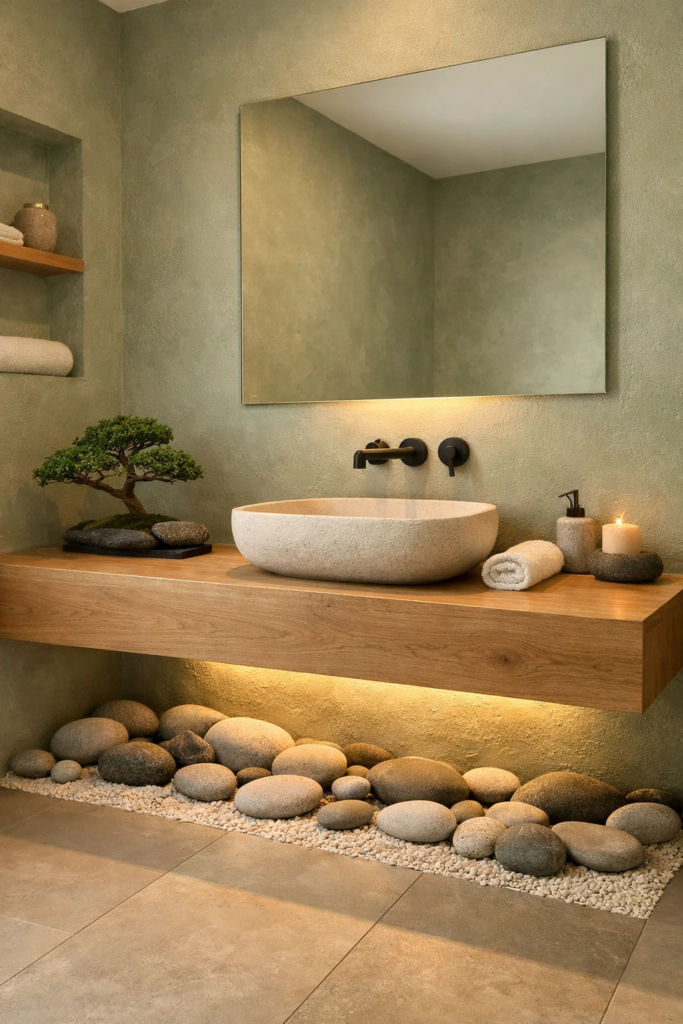
The principles of Zen design are simplicity, asymmetry, and a quiet reverence for natural materials. A sage green bathroom conceived through this lens is one of profound calm. Walls in the softest, most muted sage imaginable, almost the color of morning mist over still water, create a background that asks nothing of you. A floating vanity in lightly oiled dark walnut or blackened oak contributes an organic heaviness that anchors the space without crowding it.
Natural stone features prominently in a Zen-inspired bathroom. Smooth river pebbles set in mosaic on the shower floor provide a gentle reflexology-like sensation underfoot. A stone basin, rough on the outside and smooth within, celebrates the beauty of imperfect surfaces. A single bamboo stem in a slim ceramic vase, or a carefully placed piece of driftwood, adds life and interest without demanding attention.
Indirect lighting is essential in a Zen bathroom. Concealed LED strips behind floating elements, a soft glow beneath the vanity, or a simple paper lantern hanging at low height all create light that feels gentle and undemonstrative. Sound matters here too; if the space allows, a small wall-mounted speaker playing ambient nature sounds or quiet instrumental music completes the sensory experience.
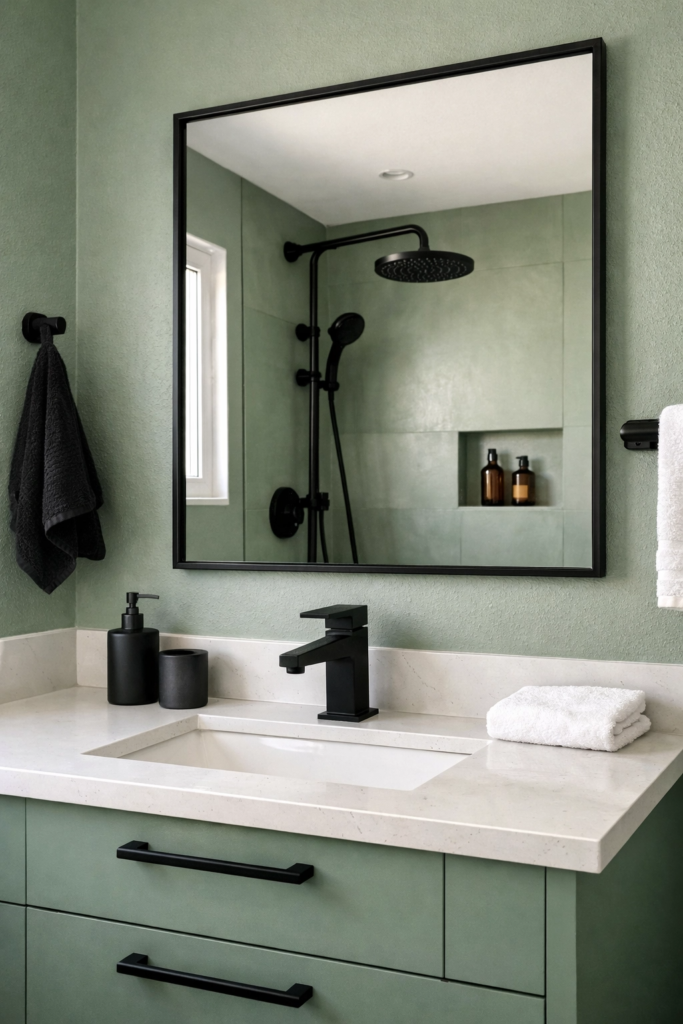
10. Sage with Bold Black Accents
Black and sage green is one of the most striking and satisfying combinations in contemporary interior design. The pairing works because sage, with its earthy undertones, provides a softness that prevents black from feeling harsh, while black in turn gives sage definition and depth it sometimes lacks on its own. Together they feel both current and enduringly stylish.
Sage green walls or full-height cabinetry form the foundation. Against this, matte black fixtures, taps, towel rails, toilet roll holders, and hook rails create a sharp, considered contrast. A large black-framed mirror, especially one with an industrial or warehouse aesthetic, anchors the vanity wall and becomes an instant statement.
For the floor, consider a large-format black tile with a subtle texture to prevent it from reading too flat. Alternatively, a classic black and white geometric pattern adds visual interest without competing with the sage walls. White counter surfaces and white sanitaryware lighten the combination and prevent the room from feeling too heavy. A single indoor plant, something architectural like a snake plant or a fiddle leaf fig, adds a third natural element that ties the palette together.
11. Warm Sage and Wood Harmony
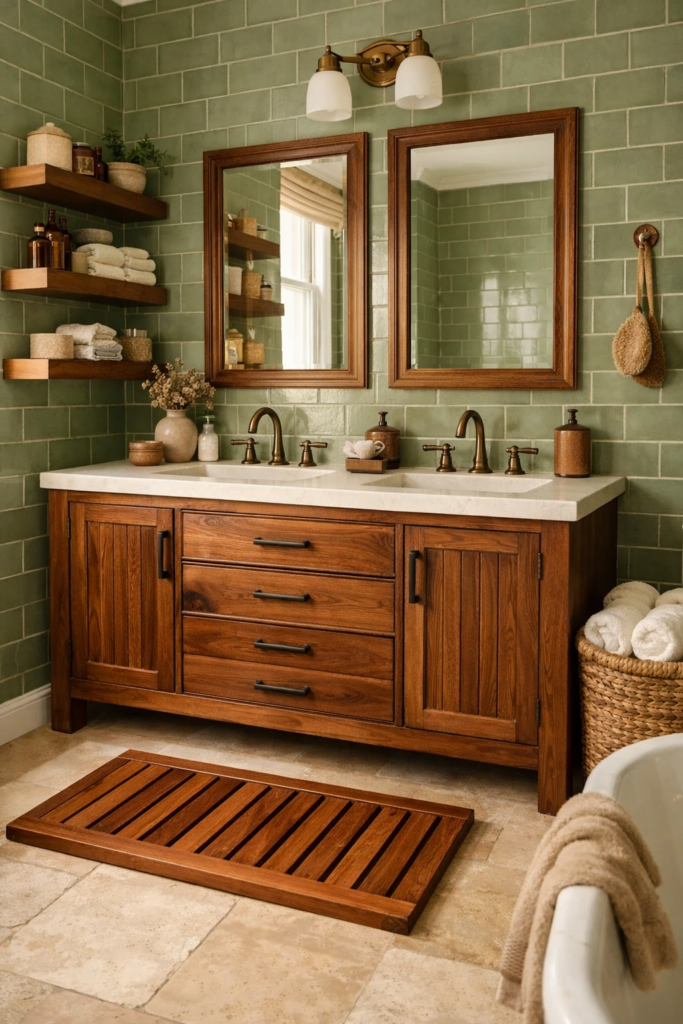
The combination of sage green and natural wood is arguably the most intuitive pairing in this entire collection. Both belong to the same natural world, and together they create a bathroom that feels genuinely organic rather than decoratively nature-inspired. The key is choosing the right wood tone for the shade of sage you have selected, as this combination can go several different ways.
Light oak or ash in its natural, barely-treated state pairs with medium sage tones to create something fresh and Scandinavian in feeling. Move to a richer walnut, with its red and brown depths, and the same sage green suddenly feels warmer and more sophisticated. Darker, almost charred woods create a more dramatic pairing that suits deeper sage shades and larger, well-lit spaces.
Introduce wood as a vanity, as floating shelves, as a bath mat surround, or as wall paneling. Even a single wooden element, a small stool, a towel ladder, changes the temperature of the whole room. Use satin or matte finishes on wood in a bathroom to keep the look soft and natural rather than glossy and formal. A few carefully placed plants complete the picture, reinforcing the idea that this bathroom belongs to the natural world.
12. Sage Green Feature Wall
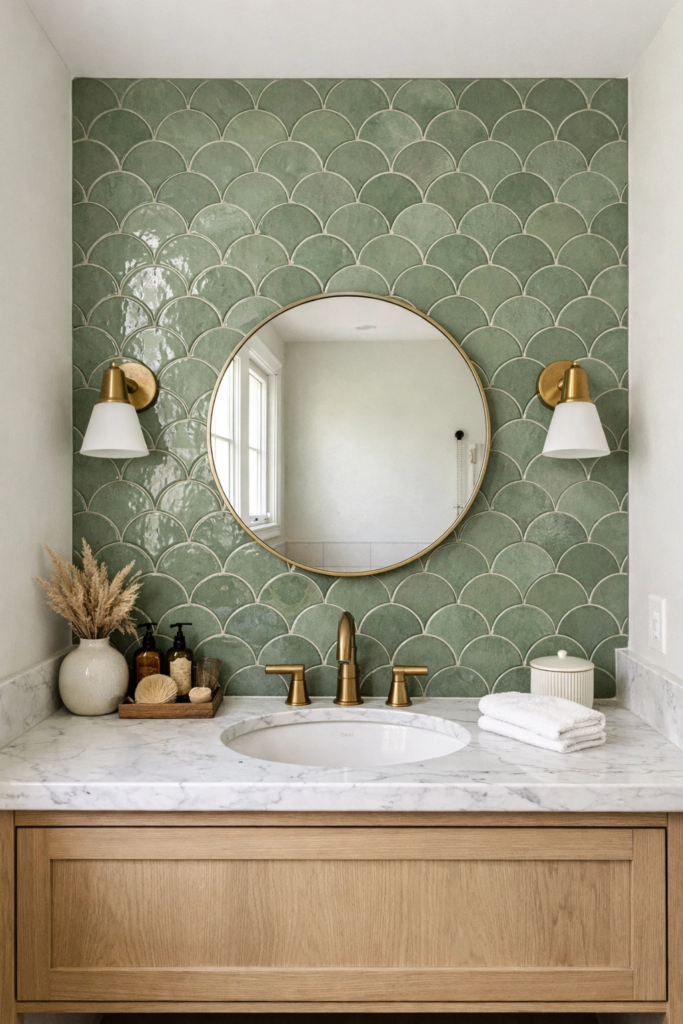
Not everyone wants, or needs, to commit sage green to every surface. A single feature wall approach allows you to introduce the color with impact while keeping the rest of the room light and neutral. This is particularly valuable in bathrooms with limited natural light, where covering all four walls in even a muted green might make the space feel smaller.
The feature wall works best behind the vanity, where it becomes the visual backdrop for the mirror and creates a natural focal point. Tile this wall in large-format sage green ceramic or porcelain for maximum drama and easy maintenance. Alternatively, paint it in a rich, matte sage and keep the adjacent walls in a complementary white or very pale greige.
This approach also works beautifully in the shower enclosure, where floor-to-ceiling sage tiles on three sides create an immersive bathing experience without affecting the broader visual volume of the bathroom. Whatever surface you choose, ensure the rest of the room is pulled together with consistent hardware and a coherent accessory palette so the feature wall reads as intentional rather than unfinished.
13. Sage Green Vanity Statement
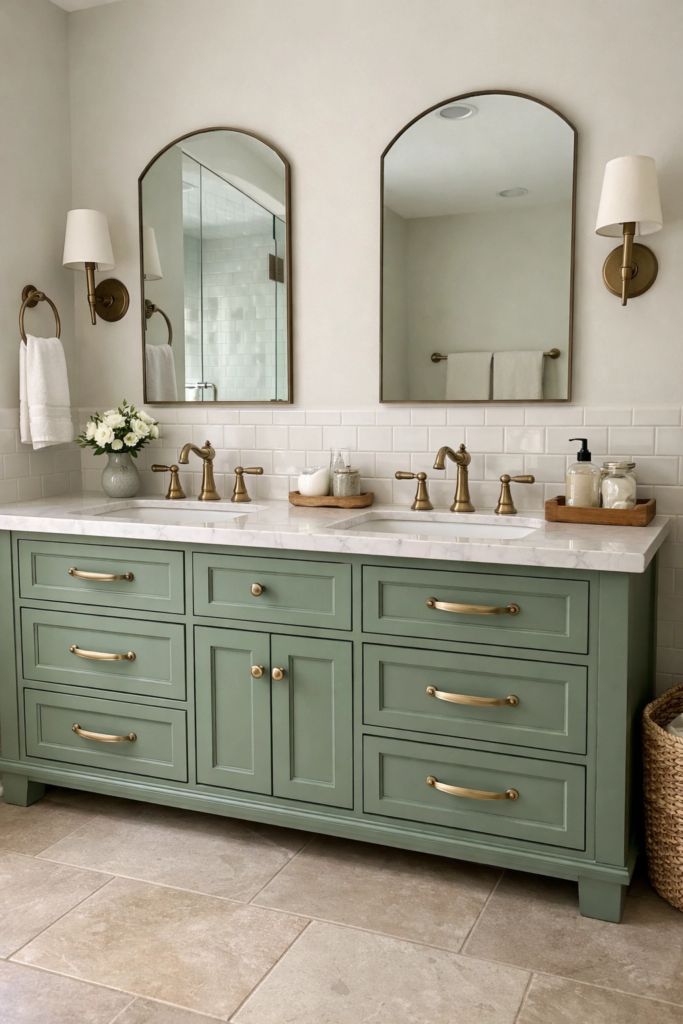
When the walls, floor, and ceiling are kept deliberately neutral, a sage green vanity steps forward as the undisputed star of the room. This approach is perfect for anyone who loves the color but wants the flexibility to change their mind later, since a painted or replaced vanity is a far smaller undertaking than retiling an entire bathroom.
The vanity itself can take many forms. A floor-standing unit with shaker-style door fronts in a soft sage works beautifully in a transitional or traditional space. A floating slab unit with handleless doors and a slightly deeper, dustier sage suits a more contemporary direction. Consider the finish carefully, matte paints feel relaxed and modern, while satin or semi-gloss offer slightly more durability and a touch more polish.
Hardware choices amplify the personality of the vanity. Brushed brass knobs lend warmth and period character. Matte black bar handles feel graphic and current. Antique bronze adds an earthy, organic note. A white marble or quartz countertop is the ideal complement, its cool elegance providing just the right contrast to the warmth of the sage. Complete the look with a well-chosen mirror and warm, flattering light, and this vanity will carry the entire room.
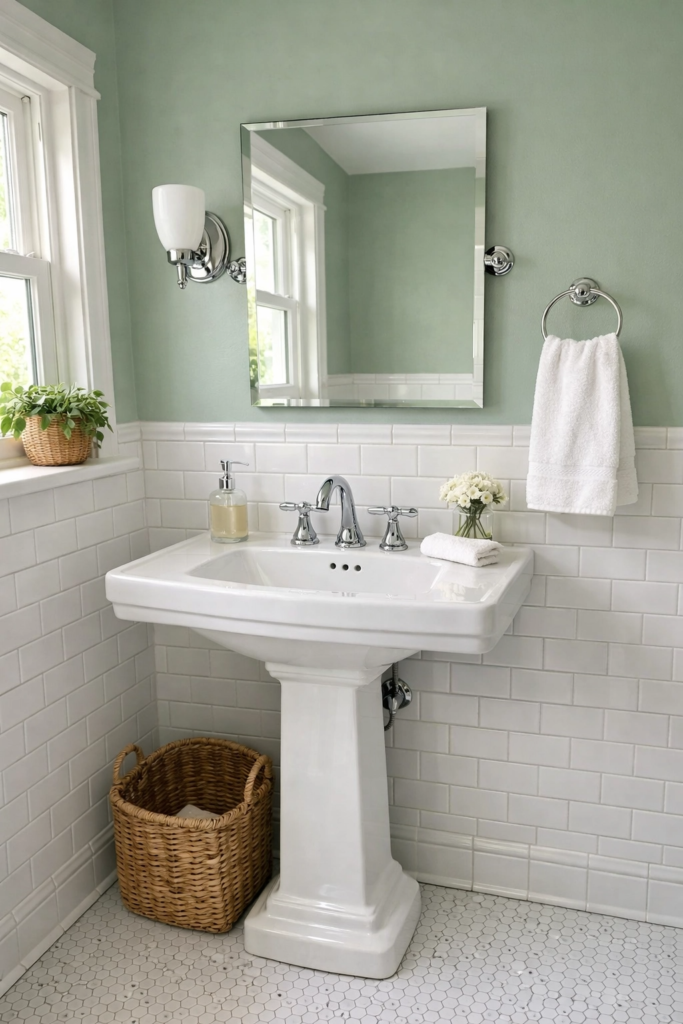
14. Crisp Sage and White Classic
Sage and white is a pairing so instinctively right that it barely requires justification. It is fresh without being cold, natural without being rustic, and sophisticated without being intimidating. The secret to getting it right lies in the specific whites you choose and how you distribute the two colors across the space.
Warm whites, those with a cream or yellow undertone, pair best with sages that lean toward olive or khaki. Cool whites with a blue or grey undertone suit greyer, more silvery sages. Mixing different whites in the same room, pure white sanitaryware with off-white painted walls, for instance, adds subtle depth without visual conflict. Use sage on the walls and bring in white through tiles, fixtures, and textiles.
This combination works across all styles. In a contemporary setting, think large white subway tiles with sage-painted upper walls and matte chrome fixtures. In a more traditional bathroom, consider white tongue-and-groove paneling below a sage chair rail with white ceramic sanitaryware. The beauty of this palette is its innate timelessness. It will still feel relevant in twenty years, which makes it an excellent investment for any bathroom renovation.
15. Deep Sage for Dramatic Flair
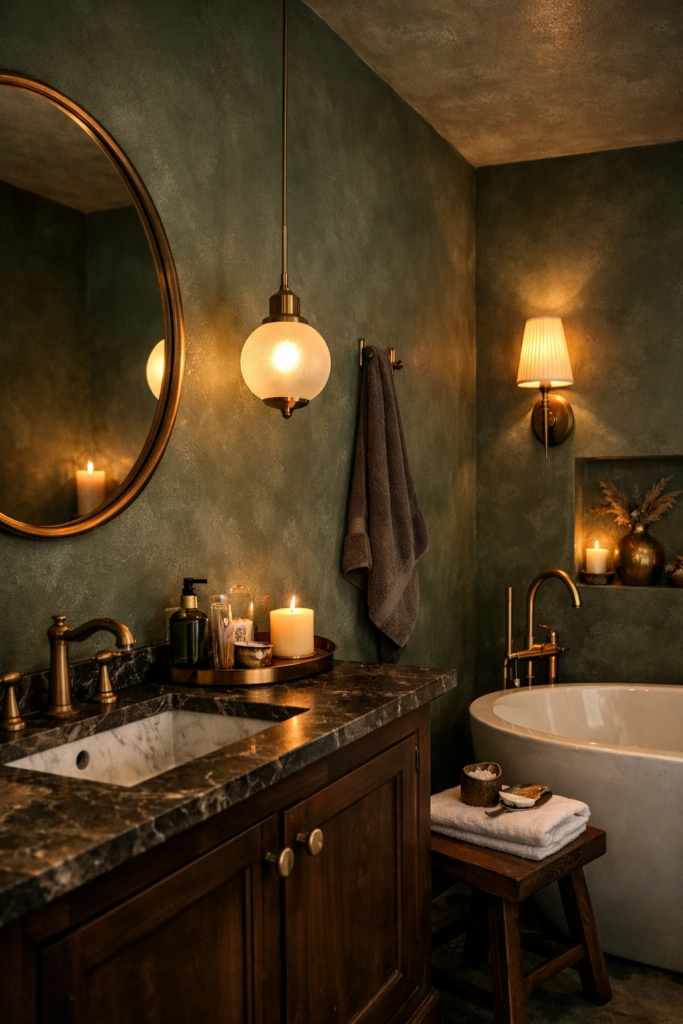
Deep, rich sage is a different proposition entirely from the paler, airier versions of the color. Moving closer to olive, to eucalyptus, or even to a muted forest green, these darker shades create bathrooms of real drama and visual weight. They are best suited to larger spaces, rooms with high ceilings, or en-suite bathrooms where windows are generous enough to prevent the color from dominating.
The moody quality of deep sage rewards opulent fixtures and rich materials. Think unlacquered brass taps that develop a patina over time, marble countertops with strong veining, and large-format floor tiles in a warm dark stone. A ceiling painted the same deep shade as the walls envelops the room in color and creates a jewel-box effect that is genuinely extraordinary in the right space.
Lighting is especially critical with dark sage walls. You need more of it, positioned more thoughtfully, to prevent the room from feeling dim rather than dramatic. Warm-toned Edison bulbs, well-positioned vanity lighting at face level, and perhaps a statement pendant or chandelier all contribute to a space that feels richly lit rather than simply dark. Pale accessories, white towels, creamy ceramics, provide the highlights that allow the deep sage to recede and breathe.
16. Sage with Terracotta Touches
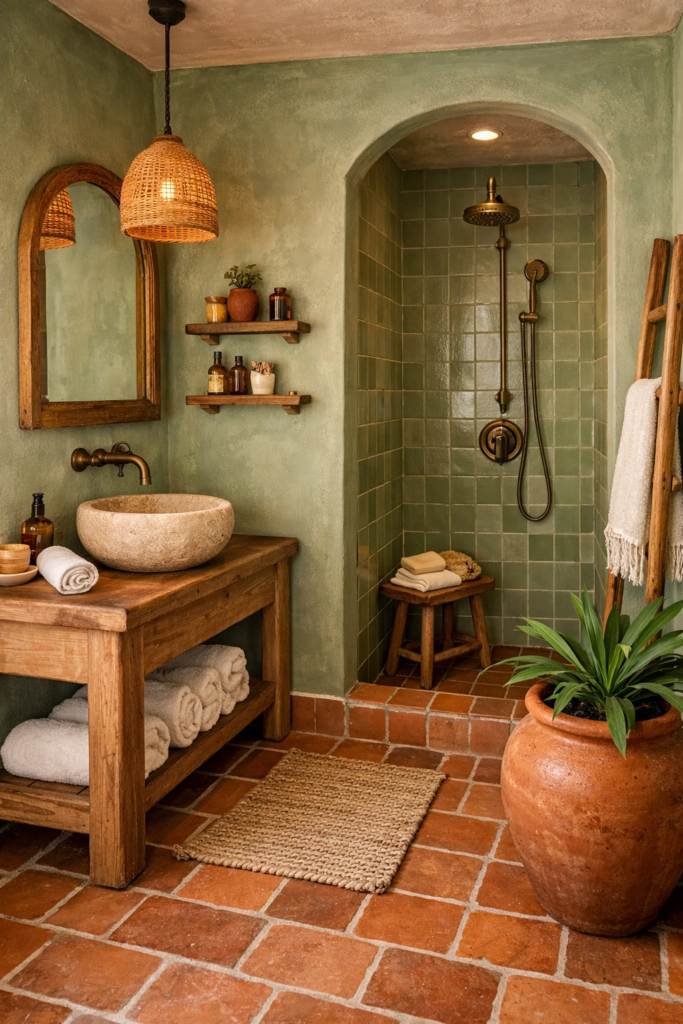
Sage and terracotta is a combination rooted in the Mediterranean landscape, where grey-green olive trees grow above sun-baked earth in shades of burnt orange and ochre. In a bathroom, this pairing creates warmth, earthiness, and a vacation-like quality that is deeply appealing. The two colors sit opposite each other on the color wheel, which gives their pairing a natural visual tension that feels energizing rather than discordant.
Use terracotta as an accent rather than an equal partner. Terracotta zellige tiles on the floor, with their characteristic handmade variation and warm glow, work beautifully beneath sage green walls. A row of terracotta tiles as a border or detail element in the shower adds visual interest without overwhelming the sage. Even a single terracotta plant pot or a terracotta-glazed ceramic accessory is enough to activate the combination.
Natural materials are essential companions in this palette. Raw linen towels, woven grass baskets, rough-hewn stone accessories, and unglazed ceramics all reinforce the sun-drenched, handcrafted quality of the design. Fixtures in brushed brass or aged bronze tie the metallic element firmly to the warm side of the spectrum. A terracotta and sage bathroom, done well, feels like a boutique hotel in Marrakech or a farmhouse in Tuscany.
17. Geometric Sage Tile Play
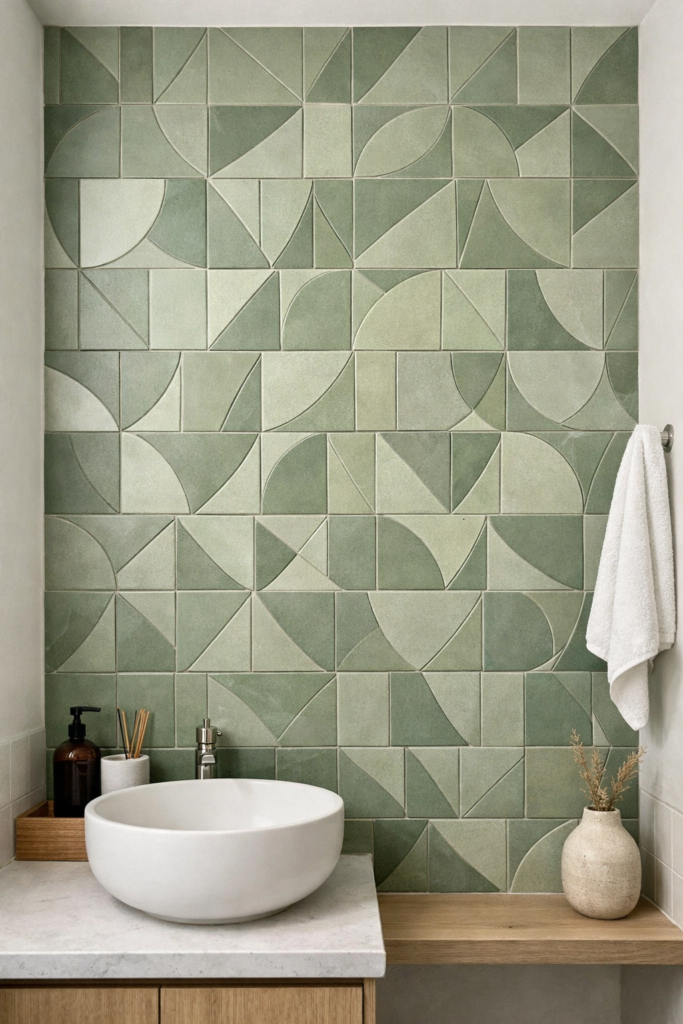
When used in a bold geometric pattern, sage green takes on an entirely different energy. The color itself remains calm and grounding, but the pattern adds movement, playfulness, and a graphic confidence that elevates the space beyond the simply serene. This is a great approach for bathrooms where you want to make a design statement without committing to a dramatic, heavy color scheme.
Hexagonal sage tiles on the floor, combined with a simple white surround, create a honeycomb pattern that feels simultaneously modern and timeless. Elongated diamond tiles in sage on the shower wall, arranged with alternating lighter and darker shades, add depth and dimension. Fish-scale tiles, sometimes called scallop or fan tiles, in a soft sage bring an organic, almost Art Nouveau elegance to any surface they cover.
The key to making geometric tile work is restraint in the rest of the room. Keep walls simple, fixtures clean, and accessories minimal. The tile is the star; give it the stage it needs. Grout color has an enormous impact on the finished look. White grout keeps things crisp and fresh; a grey grout softens the graphic quality; a dark grout in charcoal or even black makes the pattern almost neon in its definition.
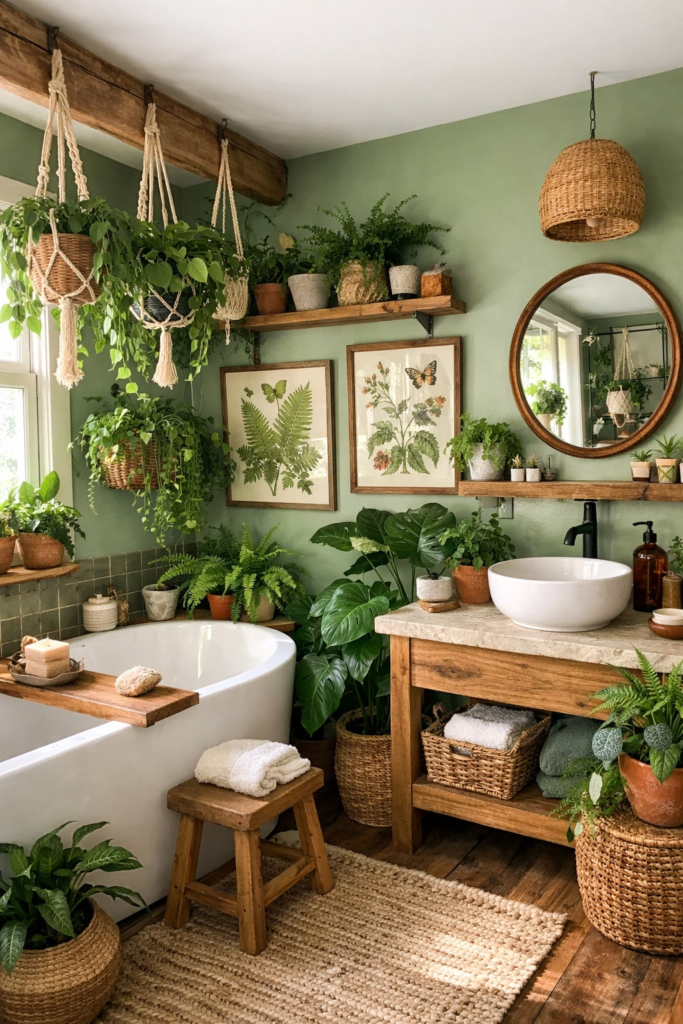
18. Botanical Sage Oasis
The botanical bathroom takes the color cue from the plant world and then invites the plant world in to make itself entirely at home. Sage green walls become the background for a genuinely lush, garden-like space where plants of every shape and texture soften every surface and corner. This is a bathroom that is alive in the most literal sense, and it provides a connection to the natural world that is genuinely restorative.
Choose plants that genuinely thrive in humid bathroom conditions. Peace lilies, devil’s ivy, spider plants, ferns, and certain orchids all do well with the moisture and indirect light typical of most bathrooms. Group them at different heights, on the windowsill, on a tall plant stand, in a hanging planter near the ceiling, and trailing from a shelf. The layering of heights creates a lush, immersive quality that transforms the room.
Botanical prints in simple frames, perhaps a collection of antique botanical illustrations or a set of modern watercolor plant studies, reinforce the theme even in the spaces where living plants cannot reach. Natural materials throughout, wicker, stone, bamboo, and unbleached cotton, keep the room grounded. This is a bathroom that asks very little in terms of decoration because the plants are doing all the work.
19. Sage and Gold Glamour
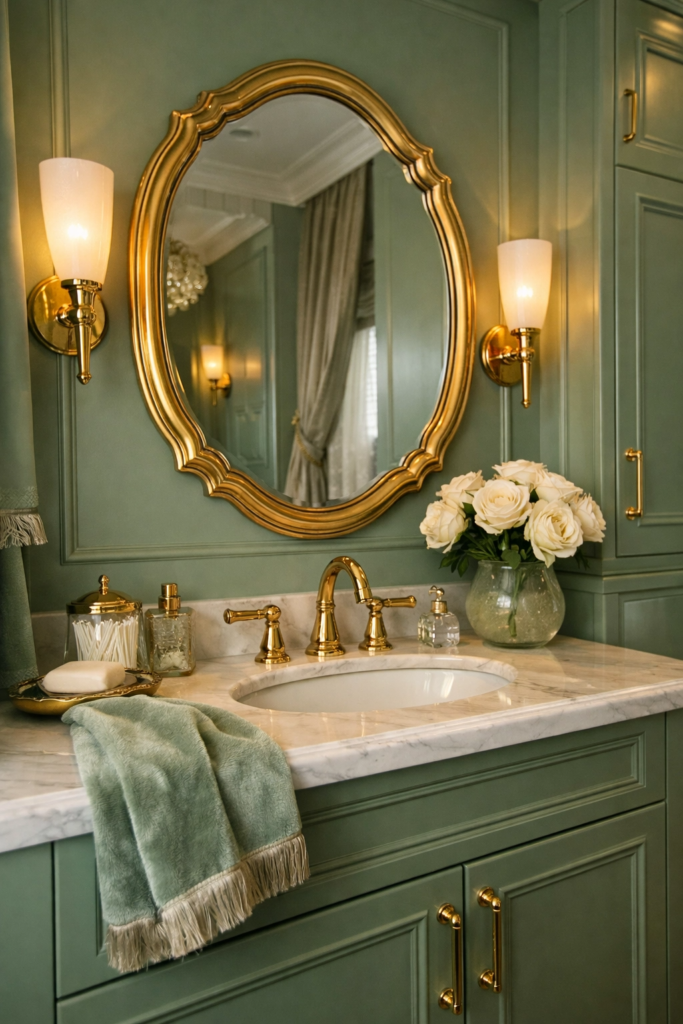
There is something genuinely magical about the way gold and sage green interact. The warmth of polished or brushed brass lifts the muted earthiness of sage, and the sage in turn prevents gold from feeling garish or excessive. This is a pairing that manages to be both calming and glamorous, a combination that is rarer and more valuable than it might sound.
Invest in quality gold or brass fixtures in this design. A sculptural freestanding bath tap in a warm brushed gold, wall-mounted sconces with a brushed brass finish, a large ornate mirror with a gold leaf frame. These elements feel intentional and considered rather than incidental. Sage green walls or a sage green vanity provide the foil against which these golden details truly sing.
Complete the glamorous mood with luxurious textiles. Velvet cushions in deep emerald or rich cream on a small bathroom stool, thick waffle-weave robes on a brass hook, a faux fur bath mat on marble floors. Fresh flowers in a gold vase, a crystal perfume bottle on the vanity, and a large art print in a gilded frame raise the overall opulence of the room to a level that feels genuinely special. This bathroom is designed to make getting ready feel like an occasion.
20. Compact Sage Green Solutions
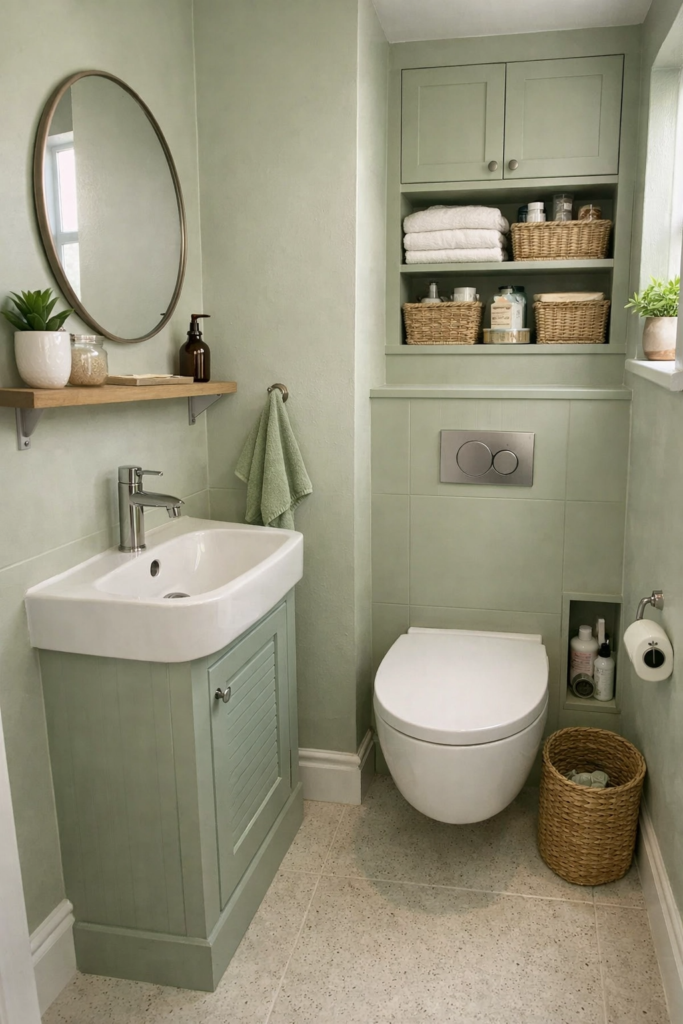
Small bathrooms present real design challenges, but sage green can actually be an asset rather than a liability in a compact space if chosen and applied thoughtfully. The key is to select the lightest, most silvery sage available, one that reads almost as a pale neutral with just the faintest green warmth. This tone expands the visual volume of a small room rather than contracting it.
Clever storage is non-negotiable in a small bathroom. A recessed mirrored cabinet above the basin provides storage without protruding into the room. Vertical shelving on an otherwise empty wall maximizes capacity while keeping the floor clear. A wall-hung vanity and wall-hung toilet lift the floor entirely visible, which makes even a small room feel more spacious.
Large mirrors are your best friend in a compact sage bathroom. A mirror that fills most of one wall doubles the perceived depth of the space and reflects both natural and artificial light around the room. Keep accessories to an absolute minimum, choosing only what is beautiful and functional. A single small plant, a quality soap dispenser, and a neat stack of towels are sufficient. In a small bathroom, restraint is not a compromise; it is good design.
Complementary Color Palettes for Sage Green
Sage green plays well with others in a way that very few colors manage quite so graciously. Its muted, complex character allows it to act as a neutral in some palettes and as the dominant color in others, making it extraordinarily versatile to work with.
White and cream are the most natural companions. Pure white sanitaryware against sage walls creates freshness and contrast. Warm cream or off-white tiles with sage cabinetry feel softer and more intimate. Natural wood tones, from pale birch to deep walnut, add warmth and organic texture at every intensity level. Warm grey complements sage without competing, creating a palette that is calming to the point of meditation.
Metallics deserve particular attention. Brushed gold and brass warm a sage bathroom considerably, tipping it toward glamour and richness. Brushed chrome and nickel keep things cooler and more contemporary. Matte black is the most graphic choice, adding definition and a modern edge. For those who want something unexpected, deep navy or indigo used as an accent color, perhaps in towels or a small piece of artwork, creates a sophisticated pairing that nods to the natural world’s grandest color contrasts.
Key Materials and Textures to Enhance Sage Green
The materials you choose will determine whether your sage green bathroom feels casual or formal, contemporary or period, minimal or abundant. Getting the material mix right is as important as getting the color right.
Natural stone is sage green’s most elegant companion. White marble with grey veining creates a palette of quiet luxury. Warm limestone, textured sandstone, and rough-hewn travertine add earthiness. Even a simple stone soap dish or a marble tray on the vanity elevates the quality feel of the entire space. Ceramic and porcelain tiles offer almost unlimited options: glossy subway tiles for freshness, matte large-format tiles for calm sophistication, handmade zellige for texture and character.
Textiles in natural fibers, cotton, linen, and bamboo, complement sage green beautifully. Their inherent texture adds warmth and softness to a room that might otherwise feel hard-surfaced. Choose undyed or naturally dyed towels and bath mats for the most coherent palette. Wicker and rattan in baskets, shelves, and accessories introduce another organic texture that sits naturally alongside both the sage color and any wood elements in the room.
Lighting Design for a Sage Green Sanctuary
Sage green is a color that changes considerably under different light sources, and planning your lighting scheme carefully will ensure your bathroom looks its best at every hour of the day. Under cool daylight, sage leans slightly blue and silvery. Under warm incandescent or Edison bulb light, it reads warmer and earthier. Understanding this helps you choose bulbs and fixtures that achieve the mood you want.
A layered lighting scheme works best. Ambient light from recessed ceiling fixtures provides the overall illumination. Task lighting at face level beside or above the mirror is essential for practical activities and should be warm and shadow-free. Accent lighting, perhaps a picture light above a piece of artwork or an LED strip beneath floating shelves, adds depth and interest. Where natural light is available, maximize it by keeping windows clear and placing mirrors to amplify and distribute it throughout the space.
Accessorizing Your Sage Green Bathroom
Accessories are where a sage green bathroom becomes truly personal. They are the details that no designer can prescribe for you, because they reflect your own tastes, habits, and the small rituals that make daily life a pleasure.
Plants are the most transformative accessory in any sage bathroom. A single well-chosen specimen, a trailing string of pearls, a sculptural aloe vera, or a generous Boston fern, changes the temperature and vitality of the whole room. Mirrors beyond the purely functional are worth considering too: an antique with a beautiful patinated frame, an oversized contemporary round, or a series of smaller mirrors arranged with intention all make a significant impact.
Towels in complementary tones, deep ivory, warm terracotta, dusty blush, or simply the purest white, contribute more to the room’s color story than they are often given credit for. A small piece of art, a scented candle in a beautiful vessel, a ceramic catchall for rings and earrings: these ordinary objects, chosen with care and displayed with intention, are what elevate a well-designed room into a genuinely beloved one.
Conclusion
Sage green has endured as a bathroom color because it offers something that is genuinely difficult to find in a single color: the warmth of nature combined with the serenity of a spa, the freshness of something new combined with the comfort of something timeless. It is a color that works hard without demanding attention, that adapts to your style rather than imposing one, and that makes every space it inhabits feel slightly more considered and calm.
The twenty ideas in this article represent just a starting point. Every bathroom has its own character, its own constraints and possibilities, and the best version of your sage green bathroom will be one that takes these concepts and makes them specific to your space and your life. Perhaps that means borrowing the spa-inspired calm of one idea and the warm wood details of another. Perhaps it means taking a single color combination and applying it in a way none of these descriptions quite anticipated.
Whatever direction you choose, begin with confidence. Sage green is one of the most forgiving and versatile colors in the interior design palette, and the room you create will reward you every morning when you step into it and feel, for just a moment, that you are somewhere genuinely beautiful.

Hi, I’m Aria Emma the founder and voice behind Trandy Edge. With years of passion for home styling, interior trends, and practical design solutions, I’ve turned my personal love for décor into this blog.